Tag Archives: haunted grave

The Queen of Wildegg Castle and the Grave of Marie Louise St. Simon-Montleart in the Forest

Advertisements

A true story morphed into a fairytale, the life and death of the French Countess Marie Louise St. Simon-Montleart has become the stuff of legends. Buried in the forest close to Wildegg Castle in Switzerland, it is said she is haunting the castle and the forest, her sanctuary.

High above the Aare River, perched on the Chäschtebärg hill near Möriken-Wildegg in the Swiss canton of Aargau, stands Wildegg Castle. With origins dating back to around 1200, built by the powerful Habsburgs, this proud fortress has witnessed centuries of wars, dynasties, and secrets. 

Read More: Check out all ghost stories from Switzerland

Yet among its long and tangled history, one ghostly tale still lingers in the mists of local legend of an outsider who took sanctuary within the castle walls from the French Revolution. This is the story of the sorrowful queen, Marie Louise St. Simon-Montleart (1763-1804).

A Tale of Loneliness and Loss

They call her a queen of Wildegg Castle in the legends, but she was actually a French Countess. Long ago, Marie Louise lived at Wildegg Castle with her husband, according to legend, a king known more for his indulgence in hunting, carousing, and feasting than for any affection toward his wife. 

She was however married to Louis Marie de Montléart. Originally from Paris, she had fled to Switzerland after the French Revolution. It is however true that she was unhappy in their marriage. 

Marie Louise St. Simon-Montléart (1763-1804)

In Versailles at the French court, she became close friends with Baroness Sophie von Effinger, who was herself unhappily married and whose ancestral seat was at Wildegg Castle. As the French Revolution ravaged the French Court and Paris, she fled to her friend who took her in as the battle went on. She was accompanied by another Duchess, but it’s unsure if her husband even followed her. 

As the legend goes however, her husband neglected the countess, leaving her to wander the vast and shadowed forests surrounding the castle, seeking solace among the ancient trees. Around the Wildegg Castle as her own country went up in flames in the bloody revolution. 

The forest, wild and eternal, became her only refuge. It’s said that within its depths, she found peace from her sorrows, the trees whispering comfort to her heavy heart. There, far from the noise of courtly revels, she is believed to have breathed her final breath. 

During a later visit to Wildegg in 1804, Marie Louise St. Simon-Montléar died of tuberculosis. As her spirit left her body, a mournful rustling wind swept through the forest, carrying away the last traces of her grief.

The King’s Guilt and a Haunting Memorial

According to the legend of her being the queen of the castle, her husband was overcome with guilt for his neglect, and is said to have built a grand tomb for his lost queen deep within the castle grounds, near her beloved woods. This part is not true, but her grave does really sit in the nearby forest.

The simple rectangular gravestone bears the inscription written by Count von Redern of Bernsdorf : 

“Here rests, after the storm of life, a noble woman. Marie Louise St. Simon-Montléart, born in Paris on October 12, 1763, died in Wildegg on June 21, 1804. She was born a violet among thorns and thistles. She fought courageously against bitter misfortune from early childhood to her grave. She died peacefully among friends, happily sensing a higher destiny, for her actions were just and her words true.” 

Count von Redern was the business partner of her brother Henri Claude and had accompanied her from Montpellier to Wildegg Castle.

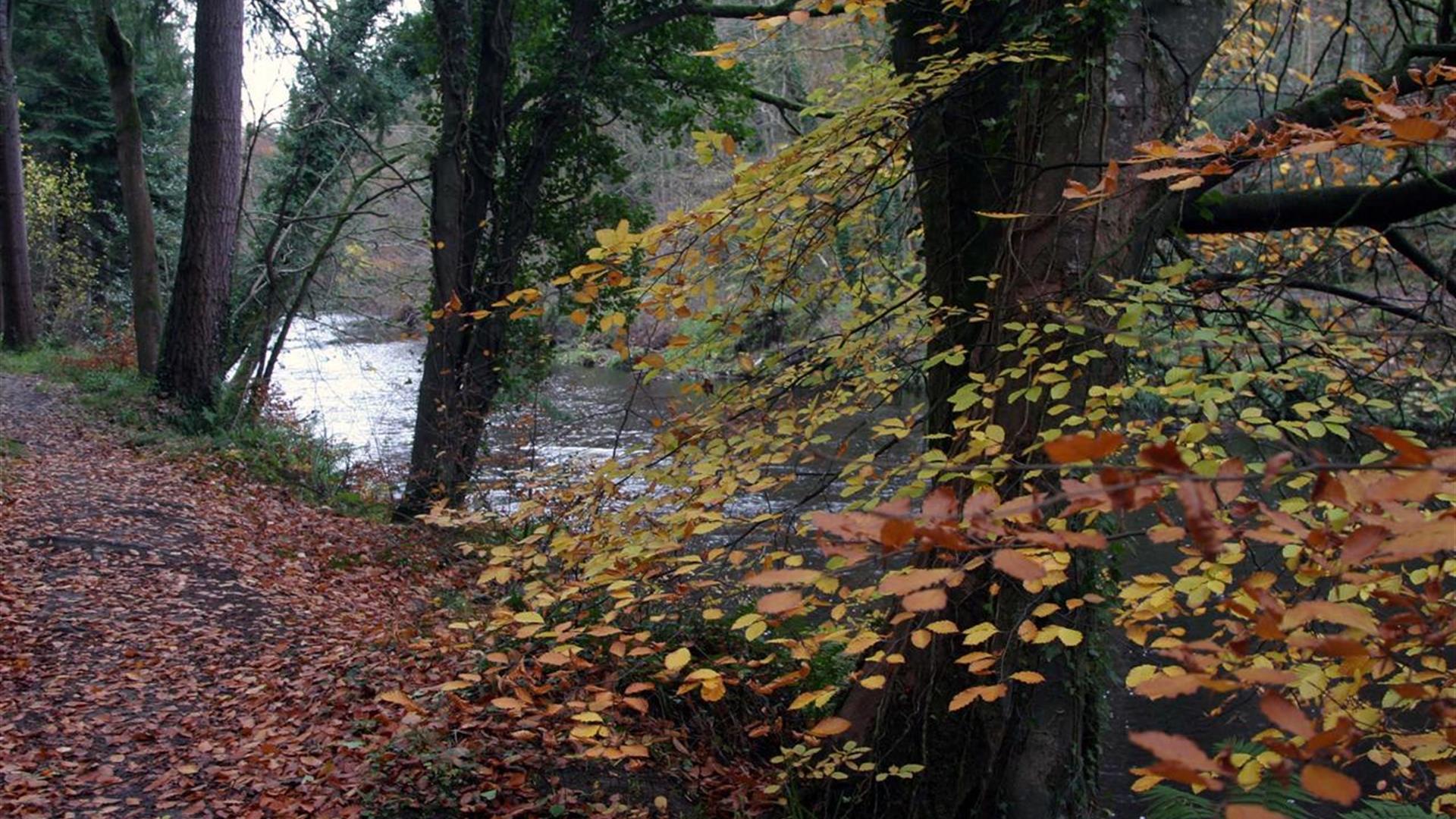
The Forest Grave: The forest grave of Countess Marie Louise St. Simon-Montléar near Wildegg Castle. // Source: Michael Frey & Sundance Raphael / Wikimedia.

To this day, visitors claim to feel a strange, uneasy presence when approaching the grave. On still nights, when the wind stirs the branches and the leaves sigh like whispered words, many say it’s the queen’s restless spirit, forever roaming the forest she loved.

In time, nature reclaimed the resting place, dense trees and creeping vines entwining it as though fulfilling Marie Louise’s unspoken wish to forever be part of the forest. The grave inspired Walter Fähndrich when he wrote “Music for a Forest Grave” in 2001 and The 15-minute piece begins at the time of local sunset from loudspeakers in the vicinity of the grave.

The Girl and the Ghosts

There is another ghostly legend retold by El Rochholz: Swiss Legends from Aargau from 1856 about a girl seeing a ghost around Wildegg Castle. It is said that all those born around midnight on Lent are capable of seeing spirits. But if they keep silent about what they last saw for 24 hours, no ghosts can harm them. There was such a child in the village of Holderbank.

Once upon a time a girl and her colleagues were walking home from work at Wildegg Castle to Holderbank village. It was between 10 or 11 o’clock. As she was crossing, over the mountain to their village, a man dressed in green and armed with a rifle suddenly stepped into her path. She immediately changed her route and after a long detour, she reached her house by 1 o’clock. 

The other girls that had been walking with her, didn’t know where she had gone and had already spread the word that she had been shot by a huntsman. She didn’t say a word about it. 

Later, as she was on her way from Holderbank to Saffenwil as a bride, a small black dog ran between them. She immediately crossed to the other side of the road, evading once more the spirits she could see. And despite all her fiancés’ questions as to why she was leaving him, she failed to answer him for a full 24 hours, believing the legend about not saying a word after seeing ghosts. 

A Castle of Secrets

Wildegg Castle, with its commanding view of the Aare and its centuries of layered history, remains one of Switzerland’s most atmospheric historic sites. Though the Effinger family, the castle’s last noble residents, passed away in 1912 and the property now belongs to the Canton of Aargau, echoes of its haunted past still cling to its stones.

And on certain misty evenings, as the wind stirs the trees on the Chäschtebärg, one might sense a faint rustle — and wonder if it is merely the wind… or Marie Louise St. Simon-Montleart still walking among her trees.

Newest Posts

References:

Hier spukt es: Unheimliche Orte in der Schweiz | WEB.DE

Schloss Wildegg – Alemannische Wikipedia

Das Fraufastenkind und die Hasenpfoten – Schloss Wildegg

Marie Louise St. Simon-Montléart – Wikipedia 

https://www.fairyhills.com/waldtreu.htm

The Legend of Ireland’s Vampire King Abhartach and the Haunted Giant’s Grave

Advertisements

In the rural areas of Derry, Northern Ireland, there is a small dolmen grave under a hawthorn tree. It is said to be the grave of the vampire king, Abhartach who is said to still be lusting after blood. 

Ireland’s ancient hills and mossy graveyards are no strangers to ghost stories and restless spirits. Yet among these tales of banshees and fairies lies one of the island’s oldest, darkest legends — the story of Abhartach, a tyrant chieftain whose insatiable thirst for blood refused to end, even in death. 

Thought by some folklorists to be Ireland’s original vampire myth, Abhartach’s grim story predates Bram Stoker’s Dracula, and may well have been its inspiration.

The Tyrant of Slaghtaverty

According to legend, Abhartach was a cruel and malevolent chieftain who ruled in what is now Slaghtaverty in the parish of Errigal in Derry, Northern Ireland. Although he is remembered as a vampire, the name and description of him is much closer to a dwarf. As the name suggests, he might have been remembered for his height. 

Irish Hero: In some accounts Abhartach is combined with the similarly named Abartach, a figure associated with Fionn mac Cumhaill and pre-christian irish mythology. Fionn mac Cumhaill,[a] often anglicised Finn McCool or MacCool, is a hero in Irish mythology, as well as in later Scottish and Manx folklore. He is the leader of the Fianna bands of young roving hunter-warriors, as well as being a seer and poet. He is said to have a magic thumb that bestows him with great wisdom. He is often depicted hunting with his hounds Bran and Sceólang, and fighting with his spear and sword. In modern retellings it is said the hero was called Cathán or O’Kane.

He is said to have lived in the 5th or 6th century, at a time when the Glenullin area of Ireland was a patchwork of small kingdoms of tribal warlords were the mysterious druids still lived and practiced their magic and when the catholic saints started settling on the emerald island. 

Feared by his own people, he was said to possess dark powers and a fascination with the occult. Through his practice of dark magic, he killed his subjects for fun. His tyrannical ways became so unbearable that local warriors, desperate for relief, conspired to kill him.

In one version of the tale, a neighboring chieftain named Cathán rose up against Abhartach and struck him down, burying him in a standing grave, marked by a solitary stone. Burying in a standing position was a custom at the time for high-ranking chieftains. But peace would not come so easily.

In other versions his first death was through no fault but his own and he died when he was stalking his wife. He was a jealous man and trusted no one. He thought she was having an affair and crept on the ledge outside of the castle to the window outside her bedroom. He slipped and fell to his death and they quickly buried him for the first time. But it would not be his last. 

The Undying Menace

The day after his burial, Abhartach returned — clawing his way out of the earth, demanding blood from his terrified subjects to collect in a bowl for him to consume. In some versions of the legend, his subjects were so afraid of him and submitted to him, making blood sacrifices to him, waiting for someone to save them.

Again, Cathán slew him, and again, Abhartach returned. It was then the people sought counsel from a druid or wise elder who revealed the grim truth: Abhartach was no ordinary man, but one of the neamh-mairbh, the undead. In more modern retellings of the story it was a Christian Saint giving the solution to the undead. 

Druid Forest: There are several hermitages in the area. According to tradition, these were the dwellings of particularly holy men. The most notable is in Gortnamoyagh Forest on the very edge of Glenullin, where local people will still point out the saint’s track, a series of stations near a holy well.

To stop his monstrous resurrection, he could not be buried in consecrated ground. Instead, he must be killed with a sword made of yew wood, buried upside down, and his grave encircled with thorns and heavy stones to prevent his escape.

Cathán followed the instructions, and Abhartach was finally trapped — but local legend holds that his restless spirit still lingers beneath the earth.

The Cursed Grave of Slaghtaverty

According to a lecturer in Celtic history at the University of UIster, Bob Curran, the real castle he lived in an be found between the towns of Garvagh and Dungiven, where a small hill now stands. He says that it was here that the fortress of a 5th or 6th-century chieftain with magical powers called the Abhartach once resided. 

The Slaghtaverty Dolmen: By locals called the Gian’ts grave, associated with the legend of Abhartach, under a solitary hawthorn tree in rural Derry, Northern Ireland. Strange things are said to happen around this grave.

Today, the place believed to be Abhartach’s grave is a modest site known as Slaghtaverty Dolmen or The Giant’s Grave. Nestled in a field near the village of Slaughtaverty in Londonderry in Northern Ireland, it’s marked by an ancient stone surrounded by a ring of Hawthorn trees and undergrowth. It used to be more stones as remnants of an old monument, but these have been removed over time by local farmers for building purposes.

Locals claim the spot is cursed; farmers avoid working the land around it, and strange misfortunes are said to befall those who disturb the grave. Some say on misty nights, you can hear faint whispers, or catch the flicker of a shadow moving between the trees — as though Abhartach himself still walks, searching for blood.

In 1997, attempts were made to clear the land, but, if local tradition is to be believed, workmen who tried to fell the tree found that their brand-new chainsaw stopped for no reason on three occasions. When attempting to lift the great stone, a steel chain suddenly snapped, cutting the hand of one of the labourers and, significantly, allowing blood to soak into the ground.

The Dracula Connection

We first have the legend written down in Patrick Weston Joyce’s The Origin and History of Irish Names and Places from 1870. In modern versions of the lore, the story is said to be solved by an earlier Christian, and not a druid. 

Intriguingly, scholars have speculated that Abhartach’s legend may have inspired Bram Stoker’s Dracula. Stoker, an Irishman born in Dublin, would have likely been familiar with the story of the blood-drinking undead chieftain. While Dracula is commonly associated with Vlad the Impaler and Eastern European folklore, it’s possible that the sinister figure of Abhartach left its own mark on Gothic horror’s most famous vampire.

Newest Posts

References:

Abhartach – Wikipedia 

The Abhartach / Irish Vampire: Terrifying Tale For 2025

Does Abhartach, the vampiric chieftain, still stalk the Derry hills?

Abhartach the Dwarf King | Emerald Isle Irish and Celtic myths, fairy tales and legends

Abhartach – Ireland’s Vampire King – by Siobhán Rodgers 

The Ghost of Madeline La Framboise at Mackinac Island

Advertisements

One of the most successful fur traders in the Northwestern Territory was a Metis woman named Madeline La Framboise. After her grave was disturbed she has been known to haunt Saint Anne’s Church as well as her former home, Harbor View Inn. 

In the glistening waters of Lake Huron between Michigan’s Upper and Lower Peninsulas, Mackinac Island is a serene retreat known for its picturesque beauty, historic charm, and an eerie reputation for the supernatural. In fact, Mackinac Island was called the most haunted town in America in 2021, with many stories having been covered over the years. And with only a full time population of around 583 people, the ghosts perhaps even outnumber the living. 

Read More: Check out all ghost stories from the USA

With no cars allowed and transportation limited to bicycles and horse-drawn carriages, the island offers a unique step back in time. Some come to enjoy the quiet seaside and enjoy the famous fudge. The island has become a perfect summer destination for Americans, but after the tourists leave in the fall, the fog from the Straits comes rolling in, and the leaves turn color, the ghost of the island remains to haunt it. 

A Brief History of Mackinac Island

Mackinac Island’s history stretches back thousands of years, with indigenous peoples such as the Odawa, Ojibwe, and Huron considering it a sacred place long before European settlers arrived. The island’s name itself, derived from the Ojibwe word “Michilimackinac,” means “big turtle,” referring to the island’s shape when viewed from above.

Read more: Check out all ghost stories from Mackinac Island

The French established a fur trading post here in the 17th century, and the island later became a strategic military outpost during the Revolutionary War and the War of 1812. In the late 19th century, it became more of a summer colony and a tourist destination that it still is. 

Chateau La Framboise: House of Madeline La Framboise on Mackinac Island taken sometime prior to 1900. Her home as well as her church are said to be haunted by her spirit after her grave was disturbed.

The Ghost of Harbour View Inn or Chateau La Framboise

Born Marguerite-Magdelaine Marcot: The youngest child of a French fur trader and his Odawa wife, Marie Nekesh. Her maternal grandfather was Chief Kewinoquot of the Odawa.

The mansion now known as the Harbour View Inn used to belong to the successful business woman, Madeleine La Framboise. Back then it used to be called Chateau La Frambouise. Her husband was murdered and she took over his fur business and expanded, doing well and amassing a fortune, becoming one of the most successful fur traders in the Northwest Territory. Born in 1780, she was of French and Odawa descent, speaking English, French and native languages, giving her an advantage in the trade. 

The mansion Madeline La Framboise built on Main Street as a place for her to retire in 1822 from the trade, often nicknamed as The Chateau La Framboise. Her plan was to live a quiet life with her family, sitting on the massive fortune she had amassed. In her time at Mackinac Island she founded a catholic school for native children and was a big supporter for the catholic church on the island. 

Madeline La Framboise life of tragedy and death didn’t stop when she came out from the fur business filled with conflict and intrigue. She had a daughter who died in 1820 during childbirth and it hit her very hard. Madeleine herself died in April, 1846. The whole family was buried on Mackinac Island together, under the white marble sepulcher altar of Sainte Anne Church. 

This church was a Roman Catholic one. After the War of 1812, the parish was saved by Madeline La Framboise, who worked with a succession of visiting priests to restore the church’s status as a place of worship. Built on the land Madeline La Framboise donated, she was hoping for eternal rest underneath the altar.

The Haunting starts in the Saint Anne’s Church

But Madeline La Framboise eternal rest seemed short lived. During the 50s or 60s, the church wanted to add to the basement and moved the remains of Madeleine, her daughter as well as the daughter’s baby. The reason for it was that they wanted to build a gift shop in the basement. Meanwhile, they were storing them in a yard crypt for a time before returning them in 2013 and giving them a proper burial. 

The Haunted Church: St Anne’s Church where Madeline La Framboise were buried

Many believe that this is when the haunting started, as if Madeline La Framboise had cast a curse on the church and a ghostly presence at the old mansion as well within the church. Even the foundation of the church itself started to crumble, leaning to the side. Some say it started even earlier, perhaps as far back as her time of death. 

Many people staying at the inn claim to feel a strange presence, like if they are being watched by an unseen entity. Could this be the ghost of Madeline La Framboise?

Madeleine La Framboise Haunting Mackinac Island

Because of her grave being disturbed, they think she is haunting this place as well, and churchgoers claim to have encountered her spirit, even after her body was re-interred in her final resting place. There is also said to be a strange blue mist hovering above the altar where her grave was originally, which individuals have reported seeing during late-night vigils, casting an otherworldly glow that both fascinates and terrifies those who witness it.

Despite the church having upgraded their wiring four times due to the persistent electrical problems believed to have been caused by her restless spirit, the lights continue to flicker sporadically, casting an eerie glow on the ancient stone walls. This unsettling phenomenon has led many to speculate about the lingering presence of the spirit, with some congregants even reporting ghostly whispers during evening services and unexplained cold drafts that sweep through the nave.

To appease her spirit, the church decided to install two statues in the courtyard of Saint Anne’s Church. Perhaps this will soon give her ghost peace. 

More like this

Newest Posts

References:

Ghostly or ghastly: There’s a Mackinac Island tour for you when you win $500 prize – mlive.com

St. Anne’s Church | Upper Peninsula Wiki

Magdelaine Laframboise – Wikipedia

Haunted Places to Sleep at in Michigan

Mary’s Ghostly Lament in Dagshai Cemetery

Advertisements

A grave in Dagshai Cemetery is said to be haunted by Mary, a woman haunting the place after people started to chip away at her tombstone for good luck. 

In the hills of Himachal Pradesh, Dagshai town stands as a testament to time, bearing witness to a history. The very name of the town means a royal stain, and comes from when the Mughal rulers sent criminals for capital punishment here. A jail was built to house the criminals and the jail was known as Himachal’s black water at that time. 

Read more: Check out all of the ghost stories from India

Situated just 11 kilometers from Solan and perched at over 5,600 meters above sea level, this old cantonment town, though devoid of the typical touristy allure, harbors a story of a ghost said to be haunting the Dagshai Cemetery.

The Mystery of Dagshai’s Haunting

Dagshai primarily comprises an army cantonment, various military structures, a handful of schools, local residences, and a cemetery. It is the cemetery, steeped in history and mystery, that has garnered the most attention, both positive and negative. 

The Original Grave: The statue and the grave of Mary Rebecca Weston and her unborn child as it used to be before people started coming for it inside of the Dagshai Cemetery in the pine forest.

Although Dagshai has a notoriously haunted cemetery with a lot of stories, most locals talk about the single ghost haunting the cemetery known as Mary or Mem Ki Qabr by the locals. 

A Tale of Love and Tragedy

Dagshai Cemetery is believed to date back to the British colonial era in India when the British made Dagshai into an army cantonment. 

Read more: Check out more ghost stories from cemeteries around the world

The story goes that a British man named Major George Weston, lived in Dagshai with his wife, Mary Rebecca Weston. While Major Weston practiced medicine, his wife served as a nursing assistant. After years of childlessness, the couple’s fortunes took a turn when they met a wandering Muslim saint who bestowed upon them a blessed amulet. Following this divine intervention, Mary, George’s wife, became pregnant with their first child.

However, fate dealt them a cruel hand, as Mary tragically passed away during the eighth month of her pregnancy on 10th of December in 1909. Grief-stricken and deeply in love, George Weston erected a splendid grave in memory of his beloved wife and their unborn child in Dagshai Cemetery. The exquisite marble used for this poignant structure was imported all the way from England.

Mary’s Misguided Legacy

As the years passed, tales of Mary’s grave possessing miraculous powers began circulating within the region. A misconception took root: if a pregnant woman took a piece of marble from Mary’s grave, she would be blessed with a male child. Consequently, countless visitors flocked to Mary’s resting place, foolishly attempting to disfigure her beautiful monument to avoid giving birth to a daughter. This relentless carving at the grave close to ruined the marble grave. A local woman even started selling marble pieces by mail order. 

Chipped Away: Over the years, the grave of Mary in Dagshai Cemetery with the statue started to disintegrate as people sought it out because of the legend. On the grave it was written: “To the sacred and in loving memory of my wife Mary Rebecca Weston, who died at Dagshai 10th December 1909, and our unborn Babe” // Source

Many visitors to the Dagshai Cemetery have claimed to witness the spectral apparition of Mary herself, meandering through the grounds close to her grave. Some suggest that Mary’s spirit may have intervened to protect her and her unborn child’s final resting place, preventing it from further desecration and warding off unwanted visitors.

Protecting Mary’s Legacy in Dagshai Cemetery

Since then, the locals took business into their own hands and started to restore the broken grave and desecrated statue. It got a protective cage over it and inside the grave was fixed back to how it first was made. Perhaps this will help to deter the haunting of Mary herself?

More like this

Newest Posts

References:

Your Soul will Tremble after Reading the Horror Story of this Beautiful Place of Himachal 

Dagshai – Haunted Place in Himachal – BikingMystery 

Stories about Dagshai, the haunted town of Himachal | Times of India Travel 

The Haunting Of Dagshai: Himachal Pradesh’s Scariest Town

Why childless couples visit the grave or Mary, also known as ‘Mem Ki Qabr,’ in Dagshai? – my mountain – QuoraIn memory of the beloved : The Tribune India

The Ghost Temple of Gata Loops: A Haunting Tale on Manali-Leh Road

Advertisements

A huge pile of trash marks on the side of Manali-Leh Road by the Gata Loops marks the grave and the ghost temple put up for a ghost allegedly haunting the area after dying in a snowstorm. What is the strange story behind The Ghost Temple of Gata Loops?

Are you planning an adventurous road trip from Manali to Leh in the Indian mountains of Himachal Pradesh? Chances are you’ll pass through the famous Gata Loops along the way through the mountainous landscape, a pretty unknown place except for the locals. While this stretch of road is known for its challenging 21 hairpin bends, it also holds a spine-tingling story that travelers often encounter.

Read more: Check out all of the ghost stories from India

Gata Loops, true to its name, is a series of winding and looping roads that form 21 hairpin bends. Situated on the Manali-Leh road at an elevation of approximately 17,000 feet, these loops stretch over 10.3 kilometers, with each loop spanning between 300-600 meters. However, the last two loops deviate from this pattern, being 800 and 1,000 meters long, respectively.

Gata Loops in the Indian Mountains: Sharp turns, remote mountainous area and treacherous weather can make driving on the Gata Loops on Manali Road dangerous and one particular ghost story about one who died on these roads have given rise to its own ghost temple at the side of the road.

What is the Ghost Temple in Manali

Among the bikers hiking up the mountains, or travelers passing through, they gather around and tell tales of mystery about the area. One of those tales is about the strange Ghost Temple of Gata Loops with a harrowing story behind it. 

A huge pile of trash and plastic water bottles and cigarettes marks the place of the Ghost Temple in Manali at around the 19th bend of the Gata Loops. But what exactly is it, and who is the ghost haunting this particular stretch of road?

Read more: Check out all of the Haunted Roads around the world

Exactly when this happened varies according to those that tell it. Some place it in 1999, perhaps an October night. A truck carrying goods found itself in a dire situation as the winters in these parts can be quite treacherous. 

The Ghost Temple of Manali-Leh Road: On the loops of Manali-Leh Road, a pile of trash have collected around the believed ghost temple of a driver that supposedly died and haunts these parts. //Source: The Ghost Of Gata Loops – Vargis Khan

While trucks are known to navigate these loops, for those seeking a less challenging route, shortcuts are available. The steeply elevated roads are wide enough for trucks, making them a preferred choice for transporting goods.

Crossing the treacherous Rohtang Pass during the cold autumn going to winter night when it had already snowed in places, this truck faced mechanical problems and the trucker was unable to fix it. With no help in sight and facing harsh weather conditions, the driver and his assistant helper decided to wait for assistance.

A Desperate Journey

The driver embarked on a challenging walk to the nearest village, Sarchu, to find a mechanic, leaving his unwell helper behind to protect the cargo. However, heavy snowfall held the driver and stopped him from returning.

Several days later, when the weather cleared, the driver returned to find his helpmate’s lifeless body. The severe cold, hunger, and thirst had claimed his life. Local villagers buried the deceased by the road’s 19th bend that soon turned into The Ghost Temple of Gata Loops.

The Ghostly Apparition of The Ghost Temple of Gata Loops

Over the years, travelers reported encountering a young man along their journey who sought water and provisions close to The Ghost Temple of Gata Loops. Those who stopped and gave the man a water bottle saw it slipped right through his hands. 

The Ghost Temple of Gata Loops: Source

Believing this figure to be the ghost of the deceased helper, local villagers established a small shrine to placate his spirit. Passersby often leave mineral water and cigarettes at the shrine to prevent potential wrath or calamities along the way.

What happened that winter night is hard to prove or disprove. People are still giving away water to the bricks that make a little clearing by The Ghost Temple of Gata Loops. Inside it is a real human skull placed inside. Or so the saying goes at least. 

Regardless, some travelers claim to have experienced the apparition of the ghostly helper around the area of The Ghost Temple of Gata Loops. If you dare to venture along this eerie path, tread with caution, but remember that a world of enchanting landscapes awaits you beyond Gata Loops.

More like this

Newest Posts

References:

https://gomissing.in/blog/travel/ladakh/ghost-of-gata-loops-other-mysteries-of-leh-ladakh

The Ghost Of The Gata Loops | TDA Global Cycling 

Do you know of the ghost temple on Gata Loops on Manali-Leh Road? | Times of India TravelThe Ghost Of Gata Loops – Vargis Khan

The Haunted Morgan-Monroe State Forest and Stepp Cemetery

Advertisements

There is not only one ghost story from Morgan-Monroe State forest and the Stepp Cemetery in the middle of it, there are many. Legends about creatures and ghosts keep the silent forest and burial ground alive. 

Morgan-Monroe State Forest stands as a silent witness to a myriad of chilling tales that have woven an enigmatic tapestry of supernatural lore. The forest in south-central Indiana is more than 25 000 acres and has steep ridges and deep valleys. 

Morgan-Monroe State Forest: Source: TrailSeeds/wikimedia

From inexplicable deaths to whispered rumors of satanic rituals and elusive encounters with mythical creatures like Yeti and Bigfoot, the Morgan-Monroe State Forest has earned its reputation as one of the most infamous haunted woodlands in the United States. It is in this forest most reported sightings of the Sasquatch in the state and there is a large and active group investigating these claims. 

Read More: Check out all ghost stories from USA

There are also said to be UFO sightings as well as more classical tales of something mysterious and ghostly lingering in the Morgan-Monroe State Forest. 

The Draper Cabin in the Morgan-Monroe State Forest

In the midst of the Morgan-Monroe State Forest itself, there is a cabin where hikers can spend their night. Draper Cabin offers a night of spine-tingling encounters for those daring enough to spend it within its timeworn walls – all for the modest price of $25, throughout the year. 

It is said that many hikers have to give up on staying in Draper Cabin through the night though, as they hear loud footsteps and weird noises outside, coming closer and closer to the cabin. 

Read More: Check out more ghost stories from Haunted Forests around the world

What the source of these hauntings varies. One version includes a murder that occurred there quite a long time ago. Another story states that from the time of the cabin’s existence over 130 years ago, a murderer still stalks their premises and waits for the next guests to arrive and rent out the cabin.

Draper Cabin: This cabin deep inside of the Morgan-Monroe State Forest is thought to be haunted. // Source

However, the true heart of the forest’s haunting reputation lies in the ethereal realm of Stepp Cemetery where legends and urban legends of ghosts and mysterious religious sects never let the buried rest. 

Stepp Cemetery

In the middle of the Morgan-Monroe State Forest you will find Stepp Cemetery, the source of many of the haunted legends of the forest. The cemetery in the Morgan-Monroe State Forest dates back to the early 1800s and is found just north of Bloomington.

There are not many graves in the cemetery, perhaps only around 30, (other sources say 114) or so, but they surely have some stories connected to them.  

Stepp Cemetery: In the forest you will find a small cemetery with big legends. It is said to be haunted by more than one type of ghosts. //Source: Shelly/Flickr

The Crabbites and their Snake and Sex Rituals

According to historians, Stepp Cemetery might have been used by a religious sect to perform rituals that came in the early 20th century. The group’s leader, William Crab, had strange practices like getting people to be bitten by a snake. A snake handler himself, he held more circus-like sermons and claimed that a true believer would not be bitten or die from the venom. 

The sect known as Crabbites had strange beliefs, like that the earth was squared because of a part in revelations in the bible. They also had to be chased away from the cemetery because of performing a ”ritualized sexual license.” They were apparently participating in these orgies while handling the snakes as well as giving animal sacrifices. 

It is also said they believed in resurrection and that the reverend could wake people from the dead. Once they were even arrested after trying to stop a burial of a woman who was once one of them. 

It is worth noting though that the sect went largely undocumented and it is difficult to say today what was true and what was hearsay. But they said that there were roughly 600 of them in Brown and Morgan counties in 1912. 

The Crabbites didn’t stay in the area of Morgan-Monroe State Forest and Stepp Cemetery for long as they are said to have moved over to Brown county, but they undeniably left an enduring mark on the cemetery’s reputation. Some even say that their mocking of the cemetery and strange rituals evoked some spirits to come back and haunt the place as they left the cemetery with a dark energy. 

Teenage Parties on Stepp Cemetery and the Birth for Local Legends

Most of the stories from Stepp Cemetery are said to have been developed or happened from the 1950s to 1970s. Then the cemetery had become so remote and forgotten and was more as a gathering place for youth than for mourners. More people had access to cars in the following decades and used the place to party. 

Many stories that were told were about the ghost of someone that had died in a car crash in the surrounding area, but also the cemetery itself became a part of the stories. 

During the Great Depression the cemetery fell into the hands of the Civilian Conservation Corps and they carved a tree stump in the cemetery into a chair. This tree stump is today called the Warlock’s Chair, although it is gone now that it was burned down in 1974. 

In many stories the chair was cursed and whoever sat on it would be so as well. It also became a part of the haunted legends as well, even after it was gone. 

Some of the ghosts

It is also said that an old woman is haunting the Stepp Cemetery within the Morgan-Monroe State Forest after some fraternity boys hanged her beloved German Shepard from a tree. What they didn’t know though was that she apparently was a witch and cursed them as well as the cemetery. 

Read More: Check out more ghost stories from Haunted Cemeteries around the world

One of the other legends speaks of a young girl who was murdered in the Morgan-Monroe State Forest close to Stepp Cemetery and that her body wanders through the trees in search of justice and her way home because her killer was never found. 

The Woman in Black

By far the most told story is about people seeing the ghost of The Woman in Black. The air thickens with an eerie stillness as the ghostly apparition of a grief-stricken mother dressed all in black is said to materialize on the haunted Stepp Cemetery at night, sitting on a hauntingly familiar tree stump crying over her dead child. 

There are many stories about what happened, and this is also a tale we can trace back to the 1950s. Some say she was a woman named Anne, and that her man died in a dynamite explosion in the quarry and her daughter died in a car crash. The mother is said to have rarely left the grave of her child, who was the only thing she had left in her life. After she died, she is still coming to the grave to grieve. 

There are also people saying that the child was a newborn and that she never recovered from the loss. The variations and details surrounding the legends are endless. Even in 1972, there were around 30 different versions of them.

There are some details that keep popping up though, like the tree stump. Sometimes the woman in black is only sitting on it, weeping close to her child’s grave. Sometimes she was a witch and murdered her husband after he murdered their child. Sometimes she has two white wolves by her feet mourning her child’s death after she was hanged for taking revenge.

The most horrendous tale though are the stories where people claim that she is sometimes trying to exhume her dead child from the grave to hold his bones, before burying him again and leaving.

The Story of Baby Lester

But what grave and who is she grieving? Sadly, there are plenty of graves belonging to children in Stepp Cemetery and the Morgan-Monroe State Forest. For some reason, the grave most associated with the legend of the Woman in Black at Stepp Cemetery is the grave of Baby Lester. His grave is in the back in a corner and has been there for many decades now. The faded letters on the grave say 1937. He was the child of O’Leatha Pryor Lester and Harley Lester for only a few hours before he passed. They named him Paul.  

Still to this day, some people place little toys on the grave. In respect perhaps, but the urban legend of Baby Lester really hurt the family of the stillborn child.  On several occasions the grave has been vandalized, broken or the headstone removed so they had to cement it down. On July 24 in 2021, the toys were set on fire by some vandals, or by accident after a candle set fire to them on accident.

Baby Lester’s Grave: This is how the grave looked after it caught fire as the negative consequences of being the source of a ghost story. Source: Photo by Jeremy Hogan/The Bloomingtonian

The mother was only 16 when she gave birth and went on to live a long life with more children after. When she heard about how her child’s grave was the center of this urban legend, she was distraught, horrified and disgusted. Although the family tried to shield her from the legend of Baby Lester and the Woman in Black, it had come in many forms until she died in 2007.

The Dangers of Ghost Stories

As night descends upon Morgan-Monroe State Forest, the line between the living and the otherworldly blurs, leaving those who dare to explore its depths to grapple with the unsettling mysteries that lurk in the shadows and the whispers that echo through the ancient trees.

Is it Bigfoot, the Woman in Black? Perhaps a remnant of the strange cult that used the cemetery all those years back. Perhaps there are just a couple of teenagers that can’t comprehend how stories about the dead can still hurt the living. 

More like this

Newest Posts

References:

Stepp: A Small Rural Cemetery That Looms Large In Hoosier Lore | news-2018 – Indiana Public Media 

Gallery: Baby Lester grave at allegedly haunted Stepp Cemetery set on fire – The Bloomingtonian 

Paul “Baby” Lester (1937-1937) – Find a Grave Memorial 

Stepp Cemetery 

Stepp Cemetery — Astonishing Legends 

Paul “Baby” Lester (1937-1937) – Find a Grave Memorial 

Let Baby Lester Rest in Peace | OrangeBean Indiana 

Division of Historic Preservation and Archaeology Site of the Month | WBIW

A Requiem For Baby Lester — The Hauntings of Stepp Cemetery – PARAHOLICS®  

https://www.bloomingpedia.org/wiki/Draper_Cabin

The Ghostly Duel with Seath More in Rothiemurchus Forest

Advertisements

Up in the wild Scottish Highlands, inside the dark Rothiemurchus Forest it is said that the ghost of the Great Shaw warrior, Seath Mor is ready to challenge everyone passing for a final duel to show your bravery.

In the Scottish Highlands close to Aviemore in Inverness-shire, the dark Forest of Rothiemurchus stands as a silent witness to centuries of history and folklore and is a remnant of the ancient Caledonian Forest in Scotland. 

Sir David Attenborough once called the Rothiemurchus Forest, One of the glories of wild Scotland. Beyond its verdant canopy and ancient trees lie tales of spectral encounters and haunted legends of the highlands.

The Ghost of Seath Mor, The Great Shaw

The most well known ghost story from the depths of Rothiemurchus Forest is about the 14th-century tribal chief of the Clan Shaw, Seath Mor Sgorfhiaclach, meaning Bucktooth.

Read More: Check out all ghost stories from Haunted Forests around the world.

He was known as a good warrior, with a twisted smile that would scare everyone. He was also called The Great Shaw by his contemporaries, was also 6 feet tall and even his own people feared him according to the legends. 

The Ghostly Challenge

It is said that he is still haunting the Rothiemurchus Forest. As legend has it, those who venture into the woods may chance upon his ghostly apparition, still ready for battle it seems. Seath Mor, adorned in the vestiges of a bygone era, allegedly challenges unsuspecting walkers to a spectral duel of bravery.

Rothiemurchus Forest: Lochan Deo. Lochan Deo in Rothiemurchus forest in, Cairngorms. It is said to be haunted by the old chieftan of the clan. // Source: Scot Tares / Lochan Deo / CC BY-SA 2.0

According to local lore, those who stand their ground and accept the spectral challenge are granted safe passage through the forest’s depths. But those who succumb to fear and attempt to flee are condemned to an eternal wandering within the shadowy embrace of Rothiemurchus and they are never heard from again.

The Guardian Stones

Out of the woods of Rothiemurchus Forest you will find the Old Doune Church Burial ground in the kirkyard of St. Tuchaldus and Seath Mor’s grave who is rumored to be cursed for anyone who dares tamper with it. 

At the grave it reads: “Victor at the battle of Perth in 1396”, a battle where only he was left alive and that helped carve his legacy as a fearsome warrior. Some people even leave the grave a couple of coins for protection. 

Five stones rest upon Seath Mor’s tomb found close to the Doune of Rothiemurchus, possibly symbolic of the comrades who fell alongside him in battle. They are certainly put there to protect the grave and Seath Mor’s soul. 

Tampering with these stones is deemed a reckless act, tempting fate itself and it is said that many have fallen ill or even died from touching them. They will feel the wrath of the Shaw Clan’s guardian spirit, an elf-like spirit or a familiar called Bodach of Gealic folklore. Bodach is a Duin, a goblin of the Doune. Although mostly acting like a boogeyman in folklore, the Bodach an Duin is its protector.

The Protective Iron Cage

It is said that it happened once in the early 19th century, and a man that stole a center stone from the grave threw it into the River Spey. He was apparently a footman set to protect the graveyard from body snatchers. He wanted to prove to everyone that the curse was nonsense. Four days later the stone was back and the man was found dead, floating down the river four days later.

In the 1940s, it is said that a journalist lifted one of the stones over his head, only to die in a car crash a couple of hours after he did it. 

In 1978 a Mr Leslie Walker and his two friends were working in the graveyard when Mr. Walker touched the stones to show it to his friends. He told the story to Aberdeen Evening Press where he fell ill with a mysterious disease right after and had a temperature of almost 40 degrees. He had to spend the next 6 weeks in hospital. 

His friend did the same and joined Mr Walker with the same mysterious illness, suffering stomach pains after identifying the last friend who was even more unlucky. 

The friend was not so fortunate though as he was found dead the following day in the graveyard after he rearranged the stones. He died after a cerebral hemorrhage.

In any case, the stones kept getting stolen, and curse or not, they decided to do something to the grave after the stones were missing for two weeks before returning. 

To safeguard this ancient resting place, a wrought-iron cage was erected in the 1980s, standing as both a physical barrier and a metaphysical deterrent against the restless spirit that dwells within.

The Final Battle of Seath Mor

As sunlight filters through the towering trees of Rothiemurchus Forest, the legends of Seath Mor linger like shadows among the ancient roots, ready to challenge any wanderers for another battle. 

The wrought-iron cage on his grave, though a symbol of protection, also hints at the delicate balance between preserving history and allowing the spirits of the past to weave their tales within the heart of Rothiemurchus.

More like this

Newest Posts

References:

The Cursed Grave of Seath Mor Sgorfhiaclach 

Loch An Eilein (and Seath Mor’s cursed grave) – Tartan Trailblazers

Mysterious Grave of the “Great Shaw” – Bagtown Clans 

Take the Haunted Subway in Beijing

Advertisements

Discover the spine-tingling secrets of the Haunted Subway in Beijing. It is said that the Metro Line No. 1 was haunted by ghosts and had to have an exorcism when they started building it. But did it work?

From tales of ghosts to reported sightings of supernatural entities, the Beijing subway has a hidden side that will leave you feeling spooked. If you’re looking for a thrilling adventure, take a ride on Metro Line No. 1 that runs underneath Chang’an Avenue and to the heart of Beijing, Tiananmen Square. 

Read More: Check out all our collection of ghost stories from China

Line 1 is the oldest and most used train line in the city since it opened in 1971. The Red colored metro line has some stories to it though – some say it was so haunted that an exorcism was required when they started building it. 

The Beijing Subway System

The Beijing Subway system is not just an efficient way of transporting commuters around the city – it also comes with some mysterious stories that will have you on the edge of your seat. From spirits to ghosts, tales of strange encounters abound in this underground labyrinth – with many passengers claiming to have experienced something extraordinary while riding along Metro Line No. 1. 

According to legends, people have disappeared into the tunnels and simply vanished into thin air, never to be seen again, and some people claimed that something sinister had pushed passengers onto the rails. Whether true or not, these spine-tingling stories have given Beijing’s subway a supernatural twist.

Metro Line No. 1 was mired in mystery from the very beginning when construction workers encountered strange events that seemed to be of supernatural origin. Some workers reported seeing apparitions and hearing eerie sounds coming from deep within the tunnels as they were working and it looks like the passengers are still experiencing some form of paranormal stuff when commuting. 

Others even alleged that ghosts had instigated mysterious accidents which led to costly delays in the building process. Despite this, the exorcism seemed to have worked as the subway lines have only expanded over the years. Or perhaps it has expanded only despite the paranormal stuff happening in the underground labyrinth? 

History of the Haunted Subway in Beijing

Beijing’s subway system has quite a long and mysterious history of haunting since they started construction back in 1965. Legend has it that when Line No.1 was being built, construction workers encountered multiple strange occurrences and dangerous accidents, broken equipment that halted the project. Some even claimed that it was because of something supernatural. 

There were multiple explanations as to why this was happening and one of them was the theory that during the construction, several bones of dead humans were disturbed and destroyed, angering the spirits.

Due to this fear of angering the spirits, they brought in monks to perform some sort of ceremony, a sort of exorcism before being able to complete the work on what would be known as Line 1. 

The Blessings and Rituals Performed by Monks

To get rid of the spirits on the Haunted Subway in Beijing, local monks were brought in to perform traditional rituals, blessings and prayers in and around the ground where subway construction was underway. The ceremonies were meant to purify the area to prevent any further hauntings and accidents. Whether or not it worked remains a mystery but one thing is certain – a ride down Line No. 1 may be an experience that will leave you with a shiver!

The ceremony went on for days supposedly and the monks advised that the last train would be at 11 pm as they thought that between 11 and 1 am was the time when the souls needed rest. They also said that the train would take a last tour without any living passenger, only to deliver the souls back to where they belonged. 

Since then, rumors have spread about encounters with ghosts throughout the subway system. Whether these rumors are true or not remains a mystery – but they certainly add some excitement to your daily commute!

The Princess Tombs at Gongzhufen Station

But what bones exactly were disturbed during the construction? There are more than one story about what graves they encountered when building the metro line. On Line 1 there is a subway station called Gongzhufen Station, or The Princess Tombs that have several local legends connected to the place. 

It is named after the tomb of two princesses from the Qing Dynasty, and when they started building in 1965, it was verified that the two princesses were Princess Zhuang Jing Heshuo and Princess Zhuang Jing Gulun, the third and fourth daughter of Emperor Jiaqing. 

The two princesses died only two months apart aged 30 and 28 in 1811, so they decided to bury them together. 

The tombs were not left alone over the years though and they had to go through tomb robbing in 1937, and finally in 1965 when the subway line was built straight through it and the tombs had to be relocated.

After this, a ghost story centered around this subway station started, when the passengers and staff started seeing a female ghost on the station platform, wearing a traditional Qing dress and sometimes being carried in a sedan chair. 

One story about the sighting of the ghost of the princesses was that a boy working in the station encountered the ghost in the middle of the night and ran off, refusing to come back and quit his job at once. This story is however also connected to the urban legend of the Yonghegong Lama Temple Station. 

The Last Train Still Leaves at 11 PM

Whether they took the monks’ advice into consideration when making the train schedule, the last train on Line 1 leaves Pingguoyuan stop at 10:55 pm. The last west-bound train leaves Sihui East at 11:15 pm. 

With the darkened passages and deserted stations, many avoid traveling on Line No. 1 after dark. The last train departs at 11 PM – any later than that and you’ll find yourself alone with only a few brave souls wandering the tunnels. The lit lights flicker and dim, surrounding you with an eerie darkness. 

Stories abound of apparitions on the Haunted Subway in Beijing, some even say they’ve seen a ghost train run empty through the long lifeless corridors. So hurry back home before the last train takes off, or else there will only be the ghost ride left with no living passengers. 

More like this

Newest Posts

References:

Beijing horror story – Global Times

https://kknews.cc/story/kb2q43p.html

公主坟- 维基百科,自由的百科全书 

https://m.tanling.com/archives/1487.html

公主坟闹鬼事件,抬轿子的地铁站-灵异事件

https://kknews.cc/emotion/y88bbn.html

北京公主坟闹鬼事件真相,地铁一号线竟是坟场改建 

The Haunted Tomb of General Yuan

Advertisements

In the middle of the busy and modern city of Beijing is an old tomb of a Chinese hero hidden away. And the Tomb of General Yuan is said to be haunted by the military leader who were framed and sentenced by the death of a thousand cuts. 

The Tomb of General Yuan is shrouded in mystery and legend as it is said to be haunted by the one that resides in it. It is the tomb of a famed General of China who died in 1630 after he was framed by his own court and sentenced as a traitor to the country he gave his life to protect. 

Read More: Check out all our collection of ghost stories from China

The final resting place of General Yuan Chonghuan is hard to find as it is smacked in the middle of the busy city of Beijing. In a small park behind apartment buildings and offices there is a small memorial house and museum for him that a certain family has been protecting since he died. 

Who Was General Yuan?

General Yuan Chonghuan (袁崇煥) was one of the most important figures in Chinese history and is remembered as a national hero today. He lived from 1584 to 1630 during the Ming Dynasty and is best known for his defense against the Jurchen tribes coming from the north and regarded as a great patriot of the country. 

General Yuan Chonghuan was a well traveled man and is said to have taken a particular interest in European cannons to use in the military as his speciality. He quickly rose through the ranks after passing his imperial examination, even though he didn’t really have any formal military training prior to working his way up. 

The History of the Ming Dynasty

General Yuan Chonghuan is perhaps best known for protecting China’s southwestern borders and Liaoning from attacks from Jurchen and Mongolian forces under the rule of the Tianqi Emperor. 

His greatest military achievement was defeating the Later Jin ruler, Nurhaci in the first Battle of Ningyuan in 1626. General Yuan managed to hold back 130 000 of Nurhaci’s soldiers with just 9000 of his own. 

In the last years before his arrest and execution he served as the governor in Liaodong, a place of great importance to him in life, and if we are to believe the legend, also in death.

Death by a Thousand Cuts

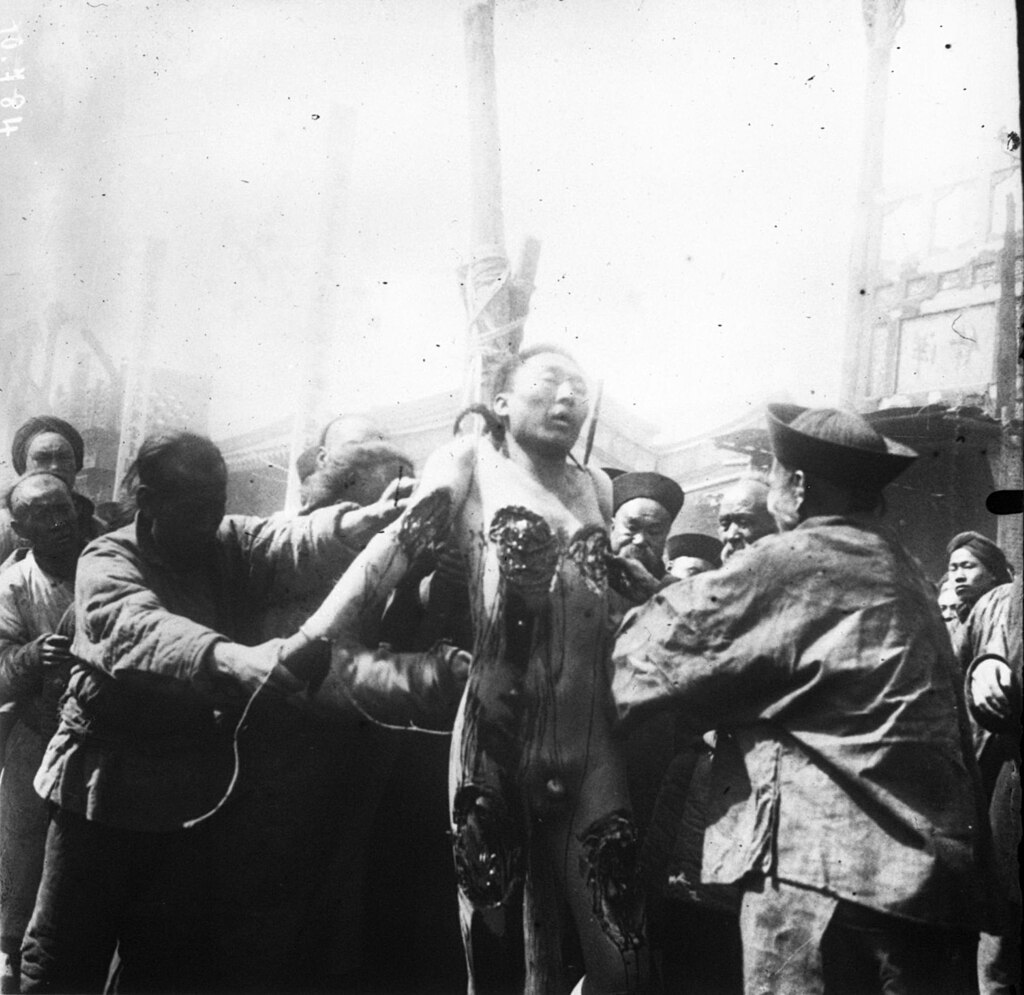
Death by a Thousand Cuts: One of the more gruesome methods of execution during the Qing dynasty was death by a thousand cuts or Lingchi (凌遲) as it was known in China. This method typically involved a series of deep cuts being inflicted on the criminal’s body and then left to bleed until the person died from extreme blood loss.

Although he is remembered as a hero today, he died a traitor. His fame also gave him a lot of enemies and he was accused of treason and collaborating with the enemy he was a part of defeating. 

The Chongzhen Emperor had General Yuan arrested in 1630 and despite lack of evidence he was sentenced to death by lingchi, or death by a thousand cuts, a punishment meant for the most severe crimes and heinous criminals. 

Apparently, General Yuan last words before his execution was a poems he produced that went like: 

“A life’s work always ends up in vain; half of my career seems to be in dreams. I do not worry about lacking brave warriors after my death, for my loyal spirit will continue to guard Liaodong.”

According to the imperial records it took half a day to day and according to legend people were so enraged thinking that he had betrayed his country that they lined up to buy and eat his remains as soon as they were sliced off his body. 

His Reputation Restored After a Century

After the execution, there was only his head that remained, which  a guard named She brought outside the walls of Beijing to bury. He and his family were assigned to guard his tomb, which they did for generations to come, and the last caretaker is said to have died in 2021 in her 80s after a lifetime of caretaking of the Yuan Chonghuan Memorial and tomb. 

After the fall of the Ming Dynasty nearly a century later it was replaced by the Qing Dynasty and the Emperor Qianlong. He was the one finding the evidence in the imperial archives that General Yuan had been framed and ordered to restore his reputation and find his descendants to be compensated. They were never found. 

The Haunted Tomb of General Yuan

Over the years the tomb has gotten a haunted reputation and it is said that it is General Yuan that is haunting his final resting place that the She family has been guarding since his death. 

He vowed that his soul would guard the Liaodong Peninsula forever. Who is to say his exact reasons to haunt the place? To revenge those who wronged him? Or perhaps he did as he said and will forever guard the land?

More like this

Newest Posts

References:

Museums of Beijing: Yuan Chonghuan Memorial – Koryo Tours

Yuan Chonghuan – Wikipedia 

袁崇焕纪念馆- 维基百科,自由的百科全书