Tag Archives: harry price

The Mysterious Tale of Borley Rectory – Was it Really Haunted?

Advertisements

Tucked away in a remote corner of Suffolk lies a building with a sinister past – Borley Rectory. For centuries it had ghostly tales of nuns and headless horsemen in the night, but how much of it was true and how much was a hoax?

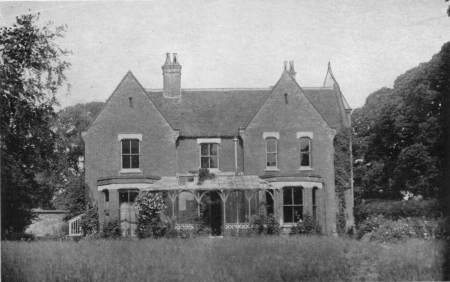
Borley Rectory, located in a remote corner of Suffolk, has long been shrouded in mystery and speculation of the paranormal kind. It even used to be described as the most haunted house in England, and that is saying something.

Rumors of hauntings in the large Gothic-style rectory have swirled around the property since its construction in 1862, but to this day no one can say for sure what lies beneath – are the stories simply urban legends, or is something even more sinister at work?

A Closer Look at the History of Borley Rectory

Borley Rectory was constructed in 1862 by Reverend Henry Bull, who served as Rector of the church of St. Mary between 1862 and 1892. 

During this time, many paranormal occurrences were reported by members of the Bull family and visitors to the property, including sightings of phantom figures, unexplained noises and strange lights in the surrounding woods. The case remains unsolved to this day, with experts and amateurs alike still trying to uncover its secrets.

The Headless Horsemen

One of the things people claimed to have seen was the headless horsemen over four decades on various occasions, pulling a phantom coach. This was also the thing the wife of Reverend Smith saw when she later would call the Daily Mirror and get an investigation going in 1929. 

The Death Coach: The “Death Coach,” a prominent figure in the folklore of Northwestern Europe, particularly in Ireland. The death coach is typically described as a black carriage, driven or led by a headless horseman known as the Dullahan. The appearance or sound of the death coach is believed to be an ominous sign, foretelling imminent death either for the observer or a close relative.

The Paranormal Activity in the Borley Rectory

Long before 1929 and the investigation that would follow, the rectory had been talked about as haunted for years. Paranormal activity was reported frequently in and around the Borley Rectory all the way back in 1863. Witnesses described mysterious footsteps, disembodied voices, and unexplainable lights in the surrounding woods. 
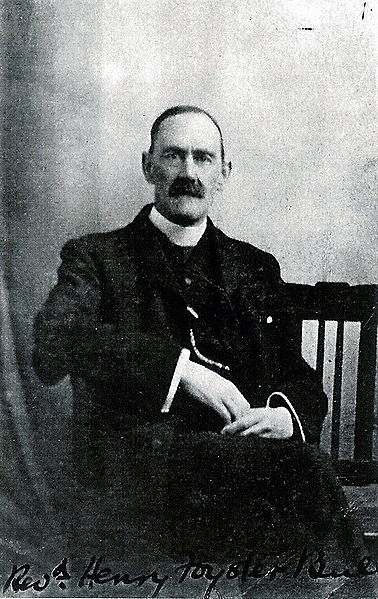
The Bull Family: The Rectory used to belong to the Bull family that told countless of ghost stories about the place over the years. This image is photograph of Reverend Henry Dawson Ellis Bull made before 1892

Others even claimed to have seen supernatural figures wandering around the rectory grounds. These reports were collected by investigators that visited the location over the years, creating an intriguing mystery that maintains its fascination today.

The Legend of the Monk and Nun

Before Reverend Smith and his wife moved into the rectory, the Bull family lived there for decades. On July the 28th, 1900, the 4 daughters of the rector claimed to have seen a ghost of a nun in the twilight, just outside of the house. They tried to talk to her, but when they got closer, the spirit seemed to just disappear. 

So called ghost historians talk about a legend from the Benedictine monastery that according to legend was built around 1362. One monk allegedly had a relationship with a nun from the convent not far from the monastery. 

Their affair was apparently discovered  and the monk was executed and the nun was bricked up in the convent walls. 

The Ghost of the Nun: One of the more enduring legends from the Borley Rectory was that it was haunted by a nun. Something that the children from the Bull family told about, as well a different mediums that held a seance at the place.

There was also once conducted a planchette seance in London about the spirits in the Rectory held by the medium Helen Glanville in 1938. She told that she had made contact with a young nun named Marie Lairre. She was a French nun that left her order in France to follow a man, a member of the Waldegrave family and owner of the Rectory in the 17th century. 

She never got that far though and she was murdered inside of the house. Her body was buried in the cellar, or perhaps even thrown in a well that wasn’t in use anymore. She had tried to write on the walls for help from the afterlife to try to get the people to find her body. 

The Skull at Borley Rectory

Fast forwarding to when Reverend Smith and his wife moved into the rectory in 1927, the wife soon started getting suspicious that something wasn’t quite right. Once she was cleaning the cupboard and came across a brown paper bag. When she peered inside, she found the skull of a young woman, and this is when things really started to take off. 

The servant bell would go off, despite not being connected, there were lights in the windows and she kept hearing footsteps and this phantom coach carried by horses at night. 

She got in contact with the Society for Psychical Research through the Daily Mirror, and they then sent a reporter writing about all the strange things that were happening in the rectory. 

Paranormal Investigation of Price

Harry Price was a celebrated investigator who visited Borley Rectory in 1929 and really made the haunted house famous for the country as his accounts were printed in the Daily Mirror. He was attempting to uncover the truth of the supernatural phenomenons. 

Harry Price

During his time there, Price recorded his experiences, noting mysterious phenomena such as cold spots in certain areas of the rectory and inexplicable noises. There were also things like a vase and other objects being thrown and mysterious spirit messages that were being tapped out on the mirror.

According to Mrs Smith, all of these haunted phenomena stopped as soon as Harry Price left the rectory, and she suspected it was him that was behind all the hauntings. 

When Price published the study by the Society for Psychical Research, he rejected most of the rumors that people had reported on, however, most ghost historians discredit this report and books and TV are continuing to be intrigued by the story of the Borley Rectory.

The Exorcisms and Poltergeist Activity

The Smiths left in 1929 and Reverend Foyster moved into the rectory with his wife, Marianne and their adopted daughter, Adelaide. 

Reverend Foyster wrote in 1930, a detailed report to Harry Price about the strange things they had experienced while living there. The bell ringing the Smiths had heard continued, the windows shattered and there were stones and bottles thrown by no one. 

Marianne Foyster even reported to her husband that something had even thrown her out from her bed. 

Reverend Foyster tried twice to repel the hauntings by exorcisms, but it didn’t go so well. In one of the exorcisms he was even hit by a stone in the shoulder. 

After they moved out from the rectory in 1935, people speculated on what was going on in the house. Most blamed Marianne to be the mastermind behind the hauntings, and even though she blamed her husband and psychic researchers that came by to investigate, she later came forward with shocking news. 

She had an affair with one of their lodgers called Frank Pearless, and she had used the paranormal rumors to cover up her lies and deceits. She also had a habit of making her friends fake hauntings to prank her husband. But everything? Marianne claimed not, and said that she really did believe some of the hauntings had been something real, although most could have been the wind. 

The Borley Rectory Report

Harry Price couldn’t let the Borley Rectory be and rented the place in 1937. He let 48 observers stay in the house for longer periods of time and interviewed them about their stay there. 

In 1937, Price published his findings from Borley Rectory in a report which has since become known as ‘The Borley Rectory Report’. In it, he concluded that the rectory was indeed haunted by several distinct entities and spirits. 

Despite decades of debate, no one has been able to conclusively explain or disprove Price Harry’s findings. While some people suggest hoaxes or natural occurrences are behind the phenomena experienced at Borley Rectory, others remain adamant that its walls still echo with supernatural activity – mysteries we may never be able to explain.

The Fire

During the planchette seance in 1938, there was a second spirit that turned. The spirit identified himself as Sunex Amures, and claimed he would set fire to the rectory that year. He also said that the bones of a murdered person would be revealed then. 

There was no fire in 1938, but in 1939, the new owner was unpacking boxes and knocked over an oil lamp. The fire spread quickly and the house was severely damaged. After they investigated, they concluded that the fire seemed to have been started on purpose. 

After they did a quick search in the cellar of the burnt down house, they discovered two ones, something Price thought to have been the bones of a young woman. 

Burnt Down: The Borley Rectory after the fire.

Borley Rectory – a Hoax?

Debate continues over the precise source of the paranormal disturbances experienced at Borley Rectory. While some suggest hoaxes or natural occurrences are behind the phenomena experienced, others remain adamant that its walls still echo with supernatural activity – mysteries we may never be able to explain. 

Many investigators have revisited Borley Rectory since Harry Price’s initial investigation and it is still considered to be a site of major paranormal importance today. Even if Price himself has been thought to have faked many of the phenomenon when he conducted his investigation. Whether it was a hoax or not remains to be seen, but it remains an enduring mystery in the world of ghost hunting.

In 1938 it was confirmed that the legend of the monk and the nun bricked up in the convent had no basis in facts and now many speculate that it was the children in the rectory that made the story up for fun. 

The skull Mrs. Smith supposedly was never accounted for, and the bones they found in the cellar was also debated. The parish refused to have a ceremony because they believed that the bones they had found belonged to a pig. 

In 1944 it was demolished and the land divided before getting new buildings built. 

More like this

Newest Posts

References:

https://en.wikipedia.org/wiki/Borley_Rectory

The Brown Lady of Raynham Hall

Advertisements

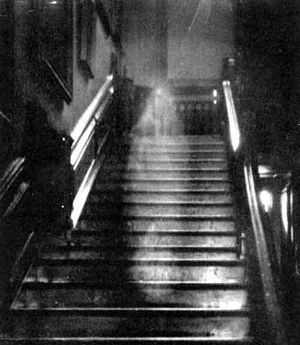
The Brown Lady of Raynham Hall is probably one of the most iconic ghost pictures out there. But what is the story behind it? And who is that ghostly figure?

Is it real? Was it just a double exposure? The picture of The Brown Lady of Raynham Hall has been viral since 1936. A photographer that year took the infamous picture, forever putting it in the mystery box for people to wonder about ever since.

It was just another day in the upper class England, with their old and haunted mansions and stories. Up in Norfolk lays the old Raynham Hall, that were about to become one of the most famous hauntings in Great Britain.

Brown Lady of Raynham Hall: This is the picture taken in the staircase that is now perhaps one of the most famous ghost photos.

Captain Hubert C. Provand, was a working in London as an photographer for the Country Life magazine. On September 19th, 1936, he and his assistant, Indre Shira were taking photographs of the Raynham Hall for an article.

Inside the 300 year old mansion, they were setting up the cameras to take another of the old Hall’s main staircase. Suddenly, Shira saw a ” vapoury form gradually assuming the appearance of a woman” The figure was “moving down the stairs towards them.” Shira directed Provand to take the cap of the lens while Shira pressed the trigger to take the picture.

After the negative was developed for the article, they saw more clear what they had gotten on camera that day. And the famous legendary photo of the Brown Lady of Raynham Hall was born. And after the photo, so was the legend.

Read More: This is not the only ghost picture that caused a stir: The Haunting in Pasir Ris Park 

Who was the Brown Lady of Raynham Hall

So who was this lady? According to legend, the Brown Lady of Raynham Hall is the lost ghost of Dorothy Walpole. She was born in 1686 and according to gossip, the prettiest sister of Robert Walpole, seen as the first prime minister of Great Britain.

Walpole was neighbour with Charles Townshend, 2nd Viscount Townsend in Norfolk. And it just so happened that his sister Dorothy married Townshend in 1713. Although they were good neighbours, and even brother-in-laws, there was bad blood between the men. Especially in politics and when Walpole built his own mansion, Houghton Hall. Did this affect poor Dorothy at all?

What we know is that it wasn’t a particularly happy marriage. Dorothy was Charles second wife. He looked upon the Hall as his pride, as a Lord Hervey said: “Lord Townshend looked upon his own seat at Raynham as the metropolis of Norfolk, and considered every stone that augmented the splendor of Houghton, as a diminution of the grandeur of Raynham.”

Lady Dorothy Walpole: The Brown Lady of Raynham Hall is believed to be the ghost of Lady Dorothy Walpole who died in 1726.

Charles was also well known for his violent temper. Dorothy Walpole was rumored to have been a mistress of a Lord Wharton, a well known womanizer, and that no woman could be twenty four hours under his roof and walk out with her reputation intact.

When Charles discovered his wife and her affair with Lord Wharton, the story says he punished her by locking her in her rooms in the family, Raynham Hall. To make matters worse, there are still rumours that she was in fact entrapped by the Countess of Warton, inviting Dorothy to stay a few days, knowing full well, her husband wouldn’t let her walk out with her reputation intact.

Read More: This is not the only ghost story involving a husband imprisoning his wife in her own home: The Prisoner of Château de Puymartin

After this, Dorothy Walpole remained at Raynham Hall until her death in 1726. She died of smallpox. But did she really leave the Halls? Is she still roaming the place, still locked up, still trying to get out and are forever trapped as The Brown Lady of Raynham Hall?

Sightings of the Brown Lady at Raynham Hall

Raynham Hall was thought to have been haunted long before the picture was taken. People that stayed in the mansion, experienced visitation and paranormal activity that most believed to be the ghost of The Brown Lady of Raynham Hall.

1835

Whatever the truth is, the legend was there to stay. And the first recorded sighting of the The Brown Lady of Raynham Hall was in 1835. One Christmas the new Lord Charles Townshend invited some guest to the Hall for celebrations. Among the guest were Colonel Loftus and another guest named Hawkins. One night night as they approached their bedrooms, they saw the Brown Lady, noticing the dated and brown dress she wore.

The following night, Loftus claimed he saw The Brown Lady of Raynham Hall again. he said he was drawn to the spectre’s empty eye-sockets, dark in the glowing face, the once so pretty Dorothy Walpole. After Loftus reported what he saw it ended with some of the staff permanently left Raynham Hall. It was all recorded by another guest, Lucia C. Stone.

Read More: Ghost Stories of Christmas Hauntings

1863

Just a year after, the The Brown Lady of Raynham Hall was seen again. This time it was Captain Frederick Marryat, a friend of Charles Dickens. He originally wanted to prove a theory of his that the hauntings was caused by local smugglers. According to him, the smugglers spread the story to keep people away from the area. That night hi requested that he spent the night in the haunted room at Raynham Hall.

Marryat’s daughter, Florence wrote about her father’s experience in 1891:

…he took possession of the room in which the portrait of the apparition hung, and in which she had been often seen, and slept each night with a loaded revolver under his pillow. For two days, however, he saw nothing, and the third was to be the limit of his stay. On the third night, however, two young men (nephews of the baronet), knocked at his door as he was undressing to go to bed, and asked him to step over to their room (which was at the other end of the corridor), and give them his opinion on a new gun just arrived from London. My father was in his shirt and trousers, but as the hour was late, and everybody had retired to rest except themselves, he prepared to accompany them as he was. As they were leaving the room, he caught up his revolver, “in case you meet the Brown Lady,” he said, laughing. When the inspection of the gun was over, the young men in the same spirit declared they would accompany my father back again, “in case you meet the Brown Lady,” they repeated, laughing also. The three gentlemen therefore returned in company.

The corridor was long and dark, for the lights had been extinguished, but as they reached the middle of it, they saw the glimmer of a lamp coming towards them from the other end. “One of the ladies going to visit the nurseries,” whispered the young Townshends to my father. Now the bedroom doors in that corridor faced each other, and each room had a double door with a space between, as is the case in many old-fashioned houses. My father, as I have said, was in shirt and trousers only, and his native modesty made him feel uncomfortable, so he slipped within one of the outer doors (his friends following his example), in order to conceal himself until the lady should have passed by.

I have heard him describe how he watched her approaching nearer and nearer, through the chink of the door, until, as she was close enough for him to distinguish the colors and style of her costume, he recognised the figure as the facsimile of the portrait of “The Brown Lady”. He had his finger on the trigger of his revolver, and was about to demand it to stop and give the reason for its presence there, when the figure halted of its own accord before the door behind which he stood, and holding the lighted lamp she carried to her features, grinned in a malicious and diabolical manner at him. This act so infuriated my father, who was anything but lamb-like in disposition, that he sprang into the corridor with a bound, and discharged the revolver right in her face. The figure instantly disappeared – the figure at which for several minutes three men had been looking together – and the bullet passed through the outer door of the room on the opposite side of the corridor, and lodged in the panel of the inner one. My father never attempted again to interfere with “The Brown Lady of Raynham”.

1926

When the son of Lady Townshend and his friend saw the ghost next, they knew who The Brown Lady of Raynham Hall was. They saw her on the staircase, and identified the ghost with the portrait, hanging on the wall in the haunted room. Of course, the portrait of Lady Dorothy Walpole.

Raynham Hall: The haunted hall is a country house in Norfolk and was for 400 years the seat of the Townshend family. The hall is reported to be haunted, providing the scene for possibly the most famous ghost photo of all time, The Brown Lady of Raynham Hall descending the staircase.//Source: Wikimedia

What is the truth?

After Provand and Shira took the picture of The Brown Lady of Raynham Hall, they published their experience in Country life magazine, December 26th, 1936. They were published again in Life magazine on January 4th, 1937. So all in all, they did profit on this. But could it be that they just took a picture?

After the picture was taken, a paranormal investigator, Harry Price interviewed both Provand and Shira. He said: “I will say at once I was impressed. I was told a perfectly simple story: Mr. Indre Shira saw the apparition descending the stairs at the precise moment when Captain Provand’s head was under the black cloth. A shout – and the cap was off and the flashbulb fired, with the results which we now see. I could not shake their story, and I had no right to disbelieve them. Only collusion between the two men would account for the ghost if it is a fake. The negative is entirely innocent of any faking.”

But there have been numerous attempts of debunking the picture of The Brown Lady of Raynham Hall and its status of “proof”. Some claim Shira faked the image by putting grease or something in the lense in shape of a lady, maybe moved down the stairs himself during an exposure? Or maybe it is as simple as an accidental double exposure or light somehow got in the camera. Some even claim that the figure looks eerily like the Virgin Mary statue, and that the image is of her in the staircase, the statue that is, not the Virgin Mary.

Among the examiners trying to debunk the validity of the picture of The Brown Lady of Raynham Hall is Joe Nickell’s detailed writings that the photograph is nothing more than double exposure. And the magician John Booth wrote that the photograph could be easily made. Booth had the magician Ron Wilson cover himself in a bed sheet and walk down the staircase at the Magic Castle in Hollywood. It apparently turned out very similar to the photograph.

More like this

Newest Posts