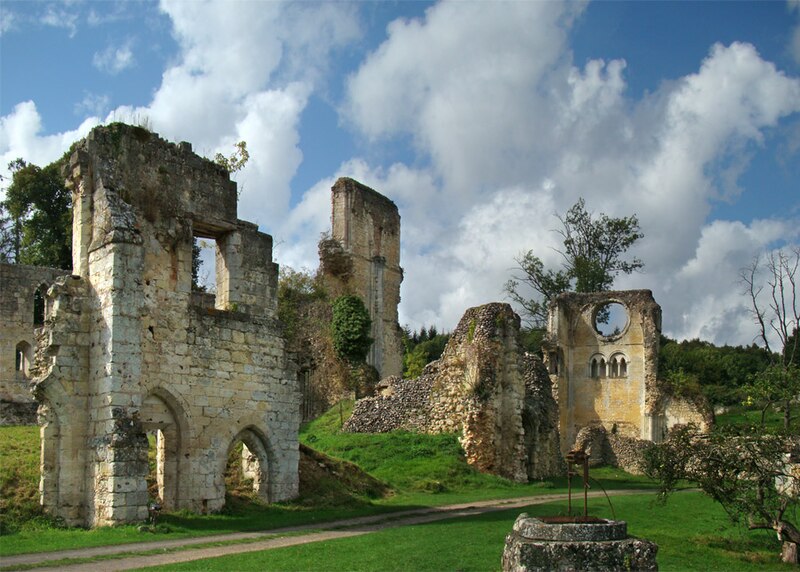
Crammed into the ancient towers and dark corner of St Donat’s Castle in the Vale of Glamorgan in Wales, the ghosts lingering within these walls are old and persistent.
On the cliffs overlooking the restless waters of the Bristol Channel, St Donat’s Castle in the Vale of Glamorgan has stood for nearly a thousand years 25 km west of Cardiff. Some claim that for the longest time, ghosts have been roaming the area.


Built in the twelfth century and once the proud seat of the powerful Stradling family, its towers and battlements have seen war, wealth, and whispered tragedy. Since 1962, it has housed an international secondary school called Atlantic College.
The St. Donat’s Castle History
Antique ceilings, fireplaces, a moat, battlements, dungeons – in short, over 800 years of history, which also included Celtic kings defying the Romans, the Norman invasion of Wales and centuries of slowly decaying neglect.


The oldest parts of St Donat’s castle were built in the 12th century by the De Hawey family, though the only surviving parts left are the keep and what is now the inner curtain wall.
Read More: Check out all haunted castles around the world
The castle was passed into the ownership of the Stradling family in 1298 with the marriage of Sir Peter Stradling to Joan de Hawey. The new owners spent a fortune expanding the castle and added many features including the outer gatehouse and curtain wall in 1300, as well as making the keep larger, with the inner court being built some 200 years later.
The Ghost of Lady Stradling
The most fearsome spirit said to haunt St Donat’s is Lady Stradling, a restless ghost whose sorrow has never found peace. It is also one of the ghost stories told the longest, and there are written sources about her haunting to at least the pre-1880s.
There are tales about seeing a Lady in White drifting through the corridors, bearing a sense and atmosphere of intense melancholy. It is said that her husband died in one of the many crusades Europeans took in medieval times. Her name or who her husband supposedly was has been up for speculation.
There are many variations to her story though. Some versions tell of betrayal and murder within her own family. Some say her haunting is because of her mourning as her husband fell in battle, some she was slain by a jealous husband, others that a violent relative ended her life in a fit of rage.


Whatever the truth, her spirit lingers, bound to the castle that witnessed her end. She has most commonly been reported in the Long Gallery area. Around the Lady Anne Tower, an apparition of a woman dressed in Medieval clothing, believed to be Lady Stradling has been spotted. It is also said that screams and moans are coming from the haunted tower.
The Hag of the Mist
Witnesses who claim to have seen Lady Stradling describe her in many unsettling forms. Some say she appears as an old, haggard woman with eyes hollowed by centuries of grief, her long fingers scratching at the windows as she cries into the storm. Others speak of a figure of an elegant lady clad in a gown of fine silk, her footsteps light and rhythmic, the soft click of high heels echoing through the corridors long after midnight.
Like the banshee of Irish lore, her wailing is said to herald death within the family. In Wales, this form of a ghost is called The Gwrach y Rhibyn, or the Hag of the Mist. When her voice is heard piercing the night air, the Stradlings or those connected to their legacy know that loss is soon to follow.
Ghost of Pirates and Phantom Pipers
In 1449, Henry Stradling, along with his wife and child “while sailing from his house in Somersetshire to his house in Wales” were captured by the notorious Breton pirate, Colyn Dolphin, who plundered the Welsh coast from Lundy Island. The pirate demanded a large ransom which was met by the Stradlings after they sold off two of their manors (Tregwilym in Wales and one in Oxfordshire) and a large quantity of wool.
After the stories spread and were exaggerated by poems, songs and legends, and ghost stories of pirates haunting the area around the castle started.
Many visitors have recounted hearing the distant sound of bagpipes echoing through the castle, despite there being no visible source for the music. Local legend suggests this phenomenon is the work of a Scottish piper who met his demise at St. Donat’s Castle.
The Headless Horseman
Stories of a headless horseman riding through the castle grounds have persisted over the years. While rare, those who claim to have seen him describe a spectral figure mounted on a ghostly horse, illuminated by an eerie glow. Although not a very descriptive haunting, a very common one around the British Isles.
Some visitors have reported hearing the plaintive cries of a child reverberating through the castle, particularly during the night. The origin of these sorrowful wails remains a mystery, though local tales speculate they may belong to a child who met a tragic end within the castle’s walls.
There was even a witch called Mally-y-Nos. a perplexing lady named Mallt-y-Nos (Matilda of the Night), said to haunt the area around the castle.
The Ghost of Thomas Stradling
The Stradling’s managed to hold onto the castle until the death of Sir Thomas Stradling in 1738, when ownership passed to Sir John Tyrwhitt, his friend.
Sir Thomas Stradling was unmarried and in his twenties when he planned to go on the Grand Tour with his close friend from university, Sir John Tyrwhitt, the fifth baronet of Stainfield. Before the two young gentlemen set out on this great adventure, they made a pact with each other. If either was to die while on this tour, then the other would inherit the estate of the deceased. Or so it was claimed.
While travelling Sir Thomas Stradling was killed in a duel on the 27th of September, 1738 in Montpellier in France. According to folklore, Sir Thomas Stradling’s nurse, who had raised him since he was a baby, wished to pay her respects and invited to see his body.
She was convinced that the man in the coffin was not Sir Thomas, but an imposter. She knew that, as a small boy, Sir Thomas had lost a finger on his left hand as it had been bitten off by a donkey, at least that’s what the story said.. But the man inside the coffin had all his fingers intact. But where then was Sir Thomas?
Gossip was rife on the subject, and for years afterwards, locals visiting St Donat’s Church would point at Sir Thomas’ tomb and declare: “That is where the imposter lies”.


Sir Thomas had left no heir, but made a verbal agreement with Sir John Tyrwhitt as well as a written will. In it, he had left the castle and his entire estate to his cousin, Bussey Mansel, the 4th baron of Margam. But when Bussey had visited St Donat’s Castle after his death, he had been confronted by the ghost of one of the Stradling ancestors. The ghost had declared that it would never give the castle to a Mansel. Terrified, he turned his horse and fled as fast as it would carry him, never again to return to the castle.
The answer to who actually owned the castle remained in litigation for over 60 years. Ultimately, St Donat’s Castle did pass to the Tyrwhitts, much to the dismay of the people of St Donat’s. In fact, it is claimed that the vicar of St Donat’s Church was so incensed that ‘in his fury’ he destroyed a windmill and two watermills. It was despite all of the work, never used as a primal residence, and it started to fall into disrepair.
Hollywood Connections
American millionaire William Randolph Hearst who bought the castle after seeing photographs of the castle in Country Life magazine. Hearst, who at the time was having an affair with the actress Marion Davies, spent a fortune renovating the castle, bringing electricity not only to his residence but also to the surrounding area. The locals enjoyed having Hearst in residence at the castle as he paid his employees very well, and his arrivals always created a big stir in a community not used to American excesses.


Hearst spent much of his time entertaining influential people at his estates and holding lavish parties at St Donat’s with guests like Charlie Chaplin, Douglas Fairbanks, and a young John F. Kennedy. Upon visiting St Donat’s, George Bernard Shaw was quoted as saying: “This is what God would have built if he had had the money.”
He spent a huge amount of money turning the castle back into its former self but due to economic reasons put the castle up for sale again in the late 1930’s.
Godfrey Williams and the Exorcism
An exorcism was reportedly performed in the early 20th century, which was claimed to have succeeded in ridding the castle of several apparitions, including a hag and a mysterious disembodied eye in several guest rooms. The owner at the time, Godfrey Williams, disliked the castle and may have been responsible for the spread of these stories.
The castle was bought by Morgan Stuart Williams in 1901 and after his death in 1909 it went to his son Godfrey. But Godfrey was so “disturbed” by the castle hauntings that he put the place up for sale. Godfrey had seen a ghostly panther prowling the castle corridors at night and reported seeing a single giant glowing eye appearing nightly in one of the bedrooms.
It’s said that Godfrey brought an exorcist to the castle and after the usual rituals a great gust of wind swept down the staircase and out went the panther and the glaring eye.
After being used by British and American troops during the war it was finally bought again in 1962 by Monsieur Antonin Besse II, and given to the Governing Body of Atlantic College. Today it still functions as an international college but is also open to the public for general viewing.
The Feline Haunting in the 90s
There are also tales of a phantom cat, a large, semi-transparent black creature that prowls the corridors and stairways. This was said to have been reported on in the 90s when the castle was used as a boarding school for the richer kids around the world. Was it the black panther coming back? Or simply the stories of it? Those who have seen it claim it brings with it a feeling of dread so heavy that the air seems to thicken around it.

And then there is the piano that is said to be one of the more haunting objects in the castle in modern times. In one of the great halls of St Donat’s, a piano stands near the window that overlooks the sea. It is said that when the castle lies quiet, its notes begin to play by themselves. The melody is never the same twice, as though the unseen player improvises a song of sorrow for each soul the castle has claimed. Staff, visitors, and even students from Atlantic College, which now occupies the castle, have all spoken of hearing the music late at night when no living hand could possibly touch the keys.
The Haunting supposedly got so bad that they had an exorcism done to deal with it. Again.
Newest Posts
- The Cursed Black Cat at Promenadeplatz in Munich

 Once the house of a greedy grain speculator, the haunted house at Promenadeplatz in Munich is said to be haunted by the man in the form of a cat, as penance after a curse drove him to ruin.
 - The Kuntilanak and the Pontianak: Vampiric Ghosts of the Banana Tree
 At the cusp of a vengeful ghost and a vampiric entity, the Kuntilanak of Indonesia, or the Pontianak as she is called in Malaysia, is after both vengeance and to devour her victims.
 - The City of Pontianak and the Vampiric Ghost its Named After
 How haunted is a city to be named after its ghosts? This is the case of the Indonesian city of Pontianak, said to have been haunted by the fearsome ghosts known as the Pontianak or the Kuntinalak ghosts, thirsting for blood and vengeance.
 - The Lady in White Haunting Ebersberg Forest
 Said to haunt the area around The Hubertus Chapel in the vast Ebersberg Forest in Bavaria, Germany, the Lady in White is seeking revenge for those refusing her a ride. But is she truly the only thing haunting this old and mystic forest?
 - The Plague Dance and the Dragon who Brought it to Munich
 Once, a plague ridden Lindworm was said to crawl out from the darkness, and attack the people of Munich. After defeating the dragon, and ridding themselves of the plague, a ceremonial dance has been danced through the city for over 500 years.
 - The Plague Visits Munich at Alter Peter Church
 Fantastical legends foretelling the Black Plague exist throughout Europe that would leave whole cities without any living. In Munich, Germany, a legend talks about a mysterious black hooded figure at the cemetery of St. Peter’s church being the omen of death.
 - Langsuyar: The Night Vampire of Malay Folklore
 From the despair of a mother dying in childbirth, a blood thirsty spirit rises in her place. With her alluring appearance and ability to transform into flying entities, she is one of the feared vampires from Malay folklore.
 - Ghostly Kittens at Radlsteg in Munich
 After being drowned in the river by Radlsteg in Munich, it is said that the ghosts of the discarded cats are still roaming and following passerby’s.
 - The Lady in Black at the Munich Residenz and the Wittelsbach Curse
 Before their deaths, members of the royal Wittelsbach family claimed to have seen the mystical Lady in Black appearing to them. Although the woman behind the black clothing is a mystery, her message has been clear: in the soon future, you will die.
 - The Walled Up Man’s Echoes at Sendlinger Tor
 From within the old city gate, Sendlinger Tor in Munich, it is said that the voice of the ghost is haunting its remains. If you listen carefully, it is said the laments of the man walled up inside of the gate lingers.
 - Theresia Kaiser The Last Witch of Munich
 Known as the last witch of Munich, Theresia Kaiser was condemned to death in 1701. Still, her legend and what happened to her accuser bares a haunted mystery of what really happened to this young teenager at trial.
 - The One-Legged Jungle Ghost Kong Koi of Thai Folklore
 In the thick and dark jungle in the mountainous regions in Thailand, it is said something ghostly lingers. The Kong Koi ghost is said to be thirsty for travellers’ blood. But what exactly lurks behind the trees?

References:
Exploring St. Donat’s Castle: Wales’ Haunted Past | Mary Ann Poll
Haunted Castles Wales Sorted by Name
British goblins : Welsh folk-lore, fairy mythology, legends and traditions
The imposter of St Donat’s Castle | Glamorgan Star Newspaper
https://www.walesonline.co.uk/news/medieval-welsh-castle-princes-princess-26682356