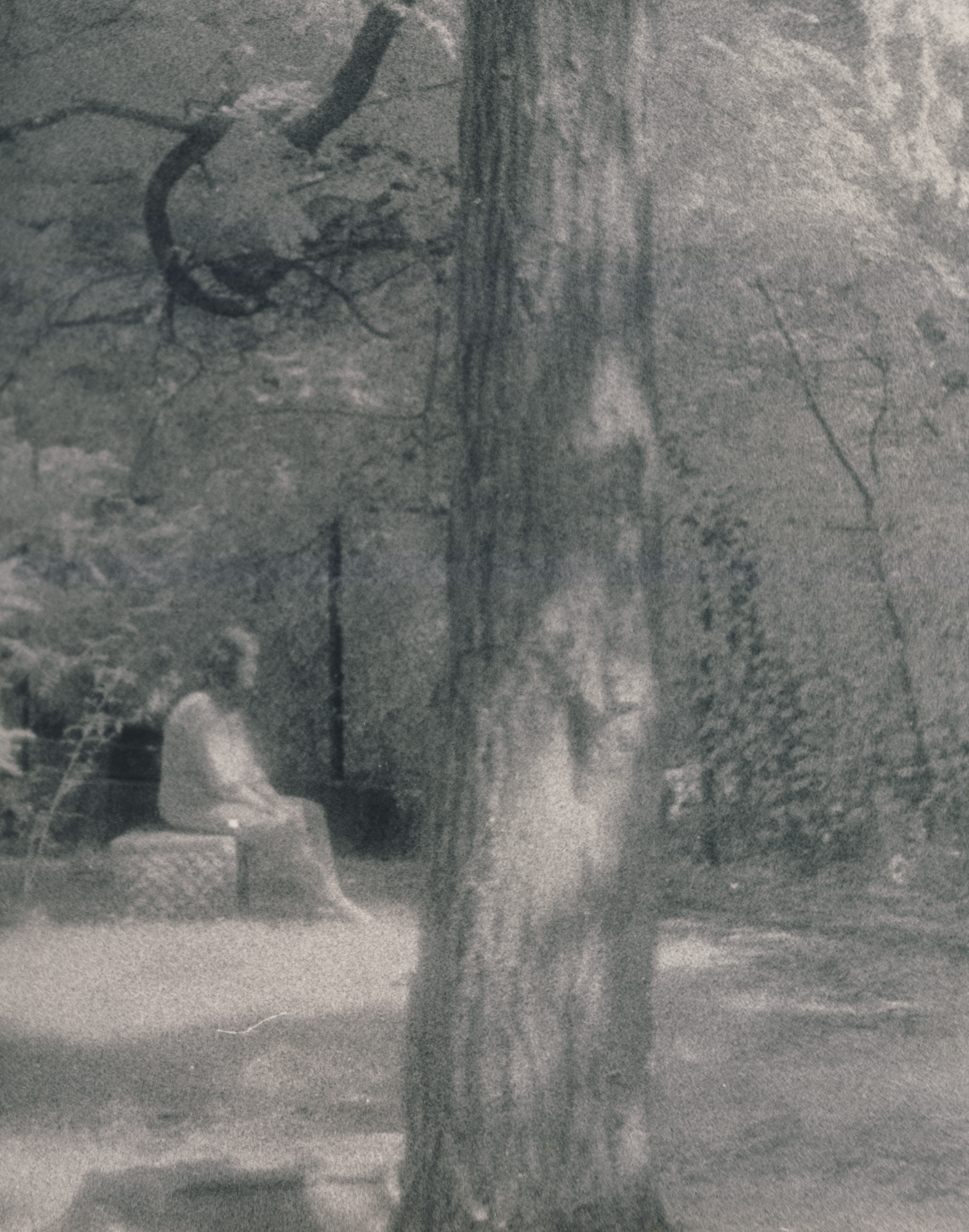
The two adjoining cloisters by Basel Cathedral are said to be haunted by a couple of spectres entombed within the building. In the darkness of Basel’s Double Cloister, it is said you can hear the moaning of a man slowly suffocating and feel the unsuspected slap from a man, as mean in death as he was in life.
Basel is a city where history lingers not just in its ancient streets and Gothic spires but in the very earth beneath its feet. Nowhere is this more palpable than in the Cathedral and its adjoining Double Cloister of Basel Minster. solemn, shadow-cloaked place where the line between the living and the dead has always felt unsettlingly thin.
Read also: Check out all ghost stories from Switzerland
Built in the 15th century, the cloisters once rang with sacred hymns and church rites, housing as many as six altars for medieval services. There are actually two different cloisters, connected by the open gardens surrounding them.
After the Reformation, one of the cloisters turned into a marketplace, but also a cemetery for the city’s upper middle class. Long after the Reformation’s sweeping changes silenced the rituals of the monks, the ritual of burial within the cloister’s cold embrace.


A Cemetery Hiding in Plain Sight
For centuries, this peaceful cloister functioned as a cemetery for the city’s wealthy and influential, seen as their graves marked with ornately carved stones, some still intact within the shaded arcades. This was known as Münster Cemetery. Even as the world outside modernized, these hallowed grounds remained a final resting place, with burials continuing into the 19th century. The place is heavy with history, and as any Basler will tell you, such places seldom stay quiet after dark.
When the evening mists curl in from the Rhine and the last of the daylight dies behind the Minster’s towers, strange things are said to stir amid the cloister’s arches.


The Moaning of Emanuel Büchel
Among the restless souls tied to these ancient stones is Emanuel Büchel (1705–1775), a respected draftsman and master baker whose demise is steeped in grim folklore. He also painted, mainly nature and landscapes.
Emanuel Büchel completed his apprenticeship with a master baker in Basel in 1723. He then set out on a journeyman’s journey, and upon his return in 1726, he applied for membership in the city’s bakers’ guild. In 1728, he applied for the position of gatekeeper to the Steinentor. He married Susanna Felber in 1726.


In 1773 he was assigned the task of copying the dance of death in Basel, a huge honor for an artist. At that time he was 68 and he died 2 years later at 70, 24 September in 1775. The question his legend asks though, did he truly die on that day though?
Legend insists that poor Büchel was buried alive, mistaken for dead in an era when death’s finality could sometimes be tragically premature. On long, hushed nights, visitors claim to hear his ghost moaning, wheezing, and rustling beneath the cloister’s stones, a soul forever reliving the terror of suffocation in his tomb.
The Malevolent Shade of Master Tailor Schnyyder Hagenbach
But if Büchel is a sorrowful spirit, Master Tailor Schnyyder Hagenbach is an entirely different creature of the night. Even in life, the tailor was, by all accounts, an unpleasant man. It was said he was cruel to his family, dishonest in business, and feared by neighbors. It comes as little surprise, then, that his spirit would choose to linger in malevolence.

For generations, tales have spoken of an invisible, vindictive specter haunting the cathedral cloister. Passersby walking the dim, ancient pathways have felt sudden, icy slaps on their faces or hands, delivered by unseen forces. Locals blame Hagenbach’s ghost, a being said to emerge not at the witching hour, but as early as dusk, prowling the arcades in search of fresh victims to torment.
His ghost, it’s said, lashes out without warning — a sudden blow accompanied by mocking laughter, leaving the victim shaken, their skin cold where the invisible hand landed.
A Living Monument to Basel’s Darker Past
The Double Cloister stands as both a treasured historical site and a place of uneasy quiet. Its arched walkways and sun-dappled courtyards are beautiful by day, but at night, the air thickens with something ancient, something watching.
A cemetery masquerading as a courtyard, a sanctum where moaning spirits and unseen hands remind the living of the unforgiving past.
Newest Posts
- Rathfarnham Castle and the Lingering Ghosts Haunting itThe whole estate of Rathfarnham Castle in south Dublin is said to have its ghosts. From the antique ballroom, its icy lakes and roads leading up to it, ghosts are said to linger.
- The Ghost of the Psychic Anne Brandfjell Haunting the old Sjømannsskolen in Oslo

 Is the ghost of Anne Brandfjell, a famous fortune teller and wise wife from Norway haunting the old Maritime school in Oslo?
 - John Mulligans and the Pub Ghost on Poolbeg Street
 A stop on the haunted pub crawl through Dublin, one of the stops would be John Mulligan’s. Stories about glass and bottles flying from the shelves has haunted the place for decades now according to the people behind the bar.
 - The Ghost of General Birthe of Elingaard
 Ruling her Elingaard Manor house with an iron fist, the noble Birgitte Kaas is said to haunt it in her afterlife as well. But what is the truth of her strange disappearance and whispers about a deal with the devil?
 - Loogaroo: The Shape-Shifting Vampire of Caribbean Folklore
 Hanging her skin in trees every night, the vampiric Loogaroo across the Caribbean goes out to hunt for blood to quench her thirst as well as pay her dark lord for her dark powers.
 - The Devil’s Castle in the Aubinger Lohe and the Hidden Treasure
 Said to be the location of a hidden treasure, the old nobles from the Devil’s Castle in the Bavarian hills are said to roam the forest, still searching for it.
 - The Devil’s Footprint in Frauenkirche in Munich
 Inside one of Munich’s landmark churches, something devilish is said to be stamped on the floor. In the middle of the room, a black footprint is clearly seen, named The Devil’s Footprint, as he was said to have left it there.
 - The Cursed Black Cat at Promenadeplatz in Munich
 Once the house of a greedy grain speculator, the haunted house at Promenadeplatz in Munich is said to be haunted by the man in the form of a cat, as penance after a curse drove him to ruin.
 - The Kuntilanak and the Pontianak: Vampiric Ghosts of the Banana Tree
 At the cusp of a vengeful ghost and a vampiric entity, the Kuntilanak of Indonesia, or the Pontianak as she is called in Malaysia, is after both vengeance and to devour her victims.
 - The City of Pontianak and the Vampiric Ghost its Named After
 How haunted is a city to be named after its ghosts? This is the case of the Indonesian city of Pontianak, said to have been haunted by the fearsome ghosts known as the Pontianak or the Kuntinalak ghosts, thirsting for blood and vengeance.
 - The Lady in White Haunting Ebersberg Forest
 Said to haunt the area around The Hubertus Chapel in the vast Ebersberg Forest in Bavaria, Germany, the Lady in White is seeking revenge for those refusing her a ride. But is she truly the only thing haunting this old and mystic forest?
 - The Plague Dance and the Dragon who Brought it to Munich
 Once, a plague ridden Lindworm was said to crawl out from the darkness, and attack the people of Munich. After defeating the dragon, and ridding themselves of the plague, a ceremonial dance has been danced through the city for over 500 years.

References:
Emanuel Büchel – Personenlexikon BL
Spuk und Geister im alten Basel
Happy Halloween! 🎃 Ein Streifzug durch Basels grusligste Orte — Bajour
Basler Phänomene: Spuk, Phantome, Poltergeister | barfi.ch