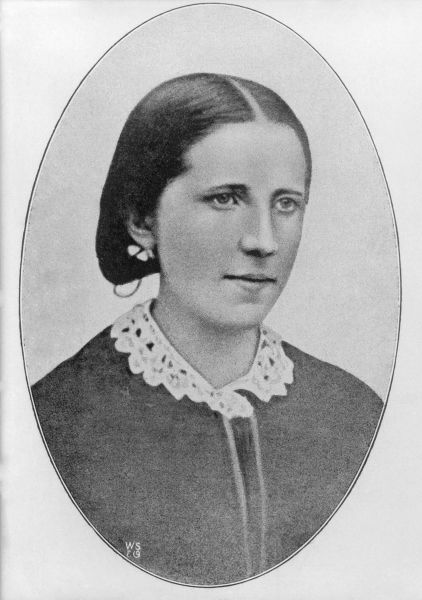
Teresa Prieto, known as the Witch of Jove, has captivated the imaginations of many through the centuries as the first recorded case of a vampire in Spain that reached the court. What was she? A witch? A vampire? Or was she one of many innocent women accused of something supernatural.
Long before the vampire became a figure of Gothic fiction, the fear of blood drinking witches already haunted the villages of medieval Spain. One of the earliest recorded cases emerged in the late fifteenth century in the coastal settlements around Gijón in Asturias. There, a woman named Teresa Prieto became the center of one of the strangest accusations in Spanish history. To her neighbors she was not simply a witch. She was believed to be a creature that slipped into homes at night and drank the blood of children.
Read More: Check out all ghostly stories and legends from Spain
The case of Teresa Prieto, later known as “the Witch of Jove” or “the Vampire of Xove,” sits at the crossroads between folklore and historical reality. It reveals how medieval fears of night demons, witchcraft, and vampirism could merge into a single terrifying accusation.


Night Visitor of the Village
In the late 1400s the area of Jove, today called Xove, was not the modern district of Gijón known today. It consisted of small scattered villages connected by narrow paths and surrounded by forests and fields. Oral traditions and superstition shaped daily life. Local healers lived on the margins of society, gathering herbs from the woods to make remedies and potions.


Within this environment strange rumors began to circulate.
Parents claimed that something entered their homes during the night. The intruder moved silently while families slept and approached the beds of children. When morning came, some children were found dead. According to the stories told by villagers, the bodies bore two small marks on the neck, signs that their blood had been sucked during the night.
Fear quickly turned toward a human suspect. The villagers accused Teresa Prieto.
The Shadow of the Strix
The accusations against Prieto did not arise in isolation. At the end of the fifteenth century European folklore still carried strong beliefs in striges or strigias, monstrous female beings said to prey on infants. These creatures were described as winged women with the claws and beaks of birds of prey who drank the blood of children to use in magical brews.
Such beliefs had deep roots in classical mythology and medieval superstition. The Roman strix and the Greek lamia were both imagined as female night predators who attacked infants. In medieval Europe these creatures slowly merged with the idea of witches. A woman accused of sorcery could easily be accused of vampiric acts as well.


In the isolated communities of Asturias, the old legends were still alive. When children died unexpectedly, the ancient explanation returned. A blood drinking witch must be responsible.
Accusation and Trial
Around 1480, Teresa Prieto was formally denounced by her neighbors. She was accused of being a striga, a night witch who entered homes and drained the blood of children. The case reached the attention of the Spanish Inquisition, which opened proceedings against her.
The accusations described her as a woman who wandered through villages at night and entered houses secretly, harming Christians and sucking blood from children. In essence, the first documented case of vampirism in Spain, although the lore behind the blood sucking entity looked a little bit different than the modern version.
She was turned in to Juan de Acebal, at the time a prosecutor and litigant who would lead the first Asturian case in the renewed Tribunal of the Inquisition, which had just been re-established in the kingdom of Castile, precisely on All Souls’ Day in 1478.
Prieto was arrested and subjected to interrogation and torture. She was bound hand and foot, twisting and turning on her back, and she was forced to drink liters of water continuously for at least an hour. Despite the ordeal she maintained her innocence and never confessed to the crimes attributed to her.


The tribunal or the Bachelor Brecianos, eventually condemned her to death by hanging. There, it was ordered that she be taken “on horseback, riding a donkey, her hands and feet bound with an esparto rope around her neck,” publicly and shamefully before the townspeople, to the stone gallows where the witch or sorceress of Gijón would be hanged and her flesh burned to ashes.
Yet the case did not end in the way many witch trials did.
Escape From the Gallows
Before the sentence was carried out, Teresa Prieto appealed the verdict. As she stated in her protest, when she was arrested she was not informed of the charges or anything else; she had not been told who had denounced her; the accuser turned out to be the only witness and, aside from contradicting himself, was a personal enemy of hers, which should legally disqualify his testimony; furthermore, she had not been provided with the required legal representation, and the lieutenant corregidor had acted against her unjustly and contrary to the laws of the kingdom. She also emphasized that she had been subjected to torture without cause or reason and was summoned repeatedly without any new evidence or proof appearing. To conclude her plea, she stressed that by appearing before the court she demonstrated her good faith and should be able to atone for any possible crime.


The appeal succeeded. Instead of execution she was imprisoned while the case continued. Her conduct during the proceedings appears to have influenced the authorities, and eventually the sentence was overturned.
In November of 1500 she was released from prison and allowed to return to Asturias as a free woman. Neither party was ordered to pay costs, but Teresa requested a written copy of the sentence and the return of the property and assets that had been confiscated from her.
In the end the supposed vampire of Jove was never proven to be anything more than a victim of fear and rumor.
The Birth of a Spanish Vampire Legend
Even though Teresa Prieto survived the trial, her reputation never disappeared. Folklore continued to describe her as a vampire witch who crept into houses at night to feed on children. Later historians and folklorists such as Julio Caro Baroja and Juan Uría Ríu recorded the story as one of the earliest examples of vampiric belief in Spain.
The witch of Jove belongs to a darker chapter of European folklore. She stands at the boundary between legend and historical record. A woman once accused of slipping through the night to drink the blood of children. A case where ancient fears of witches, demons, and vampires converged in the life of a single unfortunate person.
Newest Posts
- The Demonic Omen of Disaster at Mödling Castle Hill
 Sometimes called the Devil’s Stone, the ruins of the former Mödling Castle is said to be haunted by a demonic bird-like entity, screeching at night as an omen of death and disaster.
 - The Brewer Haunting Nockherberg and the Beer Garden in Munich
 Could a beer festival be haunted? Many have spoken about the ghost of an old brewer at Nockherberg haunting the beer festival, creating havoc to retaliate to what his descendants did to his brew.
 - The Girl in the Tower of the Munich Frauenkirche
 After her public death in the tower of the Munich Frauenkirche, many have claimed to have seen the ghost of Fanny appearing at her death anniversary wearing white.
 - The Cursed Weilheim Plague Chapel
 What really happened around the Pollingsried Chapel, and its supposed plague cemetery? Is there really a curse around the area? As far as the ringing of the bells can be heard?
 - The Restless Spirit of The Utburd Child Ghost in Norway
 Searching for its name, the utburd ghost from Norwegian folklore haunts the forests, waters and houses its parents left them to die. For the most part, they remained in folk tales, but sometimes, the stories about the dead children got real life consequences.
 - The Banshee: Ireland’s Wailing Spirit of Death
 Perhaps one of the most well known figures from Irish mythology is the Banshee, the omen of death, wailing as death comes to a house. But where does she come from? And what does she want from the dead?
 - The Vanished Village and the Munich Connection to Dracula
 Before meeting a vampire in Transylvania, a short story places Jonathan Harket facing the undead outside of Munich. Could it have a connection to the village that according to legend, vanished suddenly in the middle ages.
 - The Death Coach: Ireland’s Omen of Doom Racing Through the Night
 One of the dark entities on the emerald island, there is the Death Coach who comes to collect the souls of the dead. Pulled by headless horses, the Cóiste Bodhar stops at nothing before its mission is complete, and misfortune happens upon those getting in its way.
 - The Utburd of Skålvoll or the Nille-Case in Norway
 In 1687, the ghost of a murdered child started to testify against its mother in northern Norway and people took it seriously. Today, the Utburd of Skåvoll or the Nille-case is remembered as the ghost story that condemned a woman to her death.
 - The Dullahan: Ireland’s Headless Horseman of Doom
 One of the deadly omens in Irish folklore, The Dullahan, or the Headless Horseman is said to bring certain death to those he calls by their name.
 - Most Haunted Places in Dublin
 Have a look at some of the most haunted places in Dublin, from the mysteries of the Hellfire Club, churches where you can supposedly summon the devil and the dead lingering in the dusty libraries and colleges.
 - The Utburd of Erstad: A Ghost That Led to the Court and Punishment
 After strange knocking and poltergeist activity made the people at Erstad Farm believe it was haunted. And when they asked the ghost what it wanted, it unraveled the lives of more than one person forever.

References:
Mito y realidad de Teresa Prieto, la bruja de Jove
Un zumbido mortal. Theresa Prieto, la vampira de Jove | El Comercio: Diario de Asturias
https://citaclio.blogspot.com/2022/11/teresa-prieto-la-asturiana-condenada.html