A soldier hanged for the murder of another is said to haunt the Rifle Range Trail at Mackinac Island in Michigan. Appearing for those venturing onto the trail where he was once hanged, he tries to plead his innocence.
Mackinac Island, located in Lake Huron between Michigan’s Upper and Lower Peninsulas, is a peaceful getaway famous for its scenic beauty, historic appeal, and spooky legends. In fact, Mackinac Island was called the most haunted town in America in 2021, with many stories having been covered over the years. And with only a full time population of around 583 people, the ghosts perhaps even outnumber the living.
Read More: Check out all ghost stories from the USA
With no cars allowed and transportation limited to bicycles and horse-drawn carriages, the island offers a unique step back in time. Some come to enjoy the quiet seaside and enjoy the famous fudge. The island has become a perfect summer destination for Americans, but after the tourists leave in the fall, the fog from the Straits comes rolling in, and the leaves turn color, the ghost of the island remains to haunt it.
Fort Mackinac: The Straits of Mackinac quickly became an important French fur trading location. The British took control of the Straits after the French and Indian War and built Fort Mackinac to protect their settlement from attack by French-Canadians and native tribes.//Source: Wikimedia
A Brief History of Mackinac Island
Mackinac Island’s history stretches back thousands of years, with indigenous peoples such as the Odawa, Ojibwe, and Huron considering it a sacred place long before European settlers arrived. The island’s name itself, derived from the Ojibwe word “Michilimackinac,” means “big turtle,” referring to the island’s shape when viewed from above.
The French established a fur trading post here in the 17th century, and the island later became a strategic military outpost during the Revolutionary War and the War of 1812. In the late 19th century, it became more of a summer colony and a tourist destination that it still is.
The Hanging of Private James Brown on Rifle Range Trail
On February 1 in 1830, there was a hanging on Rifle Road on Mackinac Island between 10 am and 2 am. There was a lot of talk in the small town about it, but if it was ever made a spectacle remains a mystery. Many say that all the locals came to see the hanging, but we don’t really know.
Corporal Hugh Flinn had been found dead, and Private James Brown was found guilty of his murder and hanged. They had argued the day he died and Brown walked by Flinn, sitting down at the mess room of the Soldier’s Barracks at Fort Mackinac. It was December 5 in 1828 and private James Brown entered the hall. A shot was heard and Flinn bled to death after the bullet hit his neck.
What really happened that day at Fort Mackinac? Brown confessed that the shot had come from his rifle, but claimed that it had gone off by accident. There were 15 witnesses to the aftermath, not the shooting itself, and they claimed Brown had lowered his musket as he cried out: “My God, what have I done?”
Many believed in his innocence, including Governor Lewis Cass, who even asked the president, Andrew Jackson for a pardon for him. As they tried him, they kept him in the fort’s guardhouse.
This pardon was not granted and he was found guilty of murder and hung to death on what is now close to the Rifle Range Trail. It was the only execution of its kind here. But it was not the end of the story of Brown. According to the locals, his spirit is still roaming the island, trying to convince the people who he appeared in front of to believe he was indeed innocent.
Ghost Haunting the Rifle Range Trail: There are miles and miles of trails on Mackinac Island. Some of them, like the Rifle Range Trail where the hanging occurred are said to be haunted by the ghost of the soldier. // Source/Zachary V. Sunderman
The Rifle Range Trail Ghost
On Mackinac Island there are over 70 miles of hiking trails, one of them going past where they once built a gallow especially for James Brown’s hanging, the only public hanging on the island. This particular trail known as Rifle Range Trail is said to be the place his ghost is appearing to haunt.
For eternity, his ghost roams Rifle Range Trail between Fort Holmes and Fort Mackinac. People sometimes hear footsteps and get a feeling of being watched when they walk it. Some stories claim that he will appear to some and plead his innocence he insisted on until his death, still trying to get someone to believe in him.
In addition to his spirit of James Brown haunting the Rifle Range Trail, there are plenty of military hauntings around the island. The sound of a fife has also been heard playing old military tunes in the morning fog close to the fort’s North Sally Port Entrance. In the end, who knows how many soldiers posted at this place is lingering as ghosts?
Listing countless of spooky occurrences from those who have dared to visit the McInteer Villa in Kansas, the mansion is now the blueprint for a classic mansion. Who are the spirits behind the hauntings?
Tucked away in the historic town of Atchison, Kansas, the McInteer Villa stands as a breathtaking relic of Victorian architecture along the Missouri River. The most famous thing that ever came out of this place was the legendary Pilot, Amelia Earhart, but they are also something for the ones interested in the paranormal.
With a striking red brick facade and ornate turrets, the house looks like how haunted mansions are described in movies and books. Its history also harbors a darker reputation—one steeped in mystery, tragedy, and a host of restless spirits.
Haunted Mansion:McInteer Villa, located at northwest corner of 13th and Kansas Streets in Atchison, Kansas; seen from the southeast.// Source: Wikimedia
A House with a History of Tragedy
McInteer Villa was built between 1889 and 1890 by John McInteer, an Irish immigrant who came to the states when he was young boy, all alone. Over the years he earned a fortune and became a wealthy harness maker. The McInteer Villa was originally a proud testament to his success after chasing the American dream alone as a boy. Now it’s more a reminder of the tragedies his family had to go through.
His first wife, Alice Conley died from a long suffering illness and was the first to die in the house. Perhaps she was its first ghost too? They had met in Cincinnati, Ohio and married in 1861. She was also born in Ireland, and had come to seek a new life. Together they had no children but had both nieces and nephews living with them at times. After being ill for a year she died in December 1891 at 9 o’clock in the morning.
As one of the confirmed deaths in the house, some visitors attribute some of the haunting to her. Could it be that people notice when the smell shifts? The air is often thick with the scent of a powdery perfume, as if a spectral woman still lingers in the hallways.
He remarried to a woman called Anna Donovan with three kids from a previous marriage, Peter, Fred and Carles. After McInteer’s death in 1902, his second wife and her family took over the McInteer Villa and she lived there until her death in 1916. The McInteer Villa stayed in the family for years until 1925 and many believe that she and her children are some of the spirits lingering. Could it be her who is behind the cabinets opening by themselves as well as doors around the house as if she was still the lady of the house? Or perhaps it is she who is playing the piano on the ground floor when everyone else has gone to bed.
Charles Donovan Pacing the Villa for Eternity
Most reported occurrences in the McInteer Villa are the disembodied voices coming from nowhere as you walk through the building. Those who step inside McInteer Villa describe an overwhelming sense of being watched, particularly on the second floor. From the hallway on this floor there are also said that heavy steps are heard, pacing back and forth.
But who is the one walking through the house after dark, when no one is supposed to? Strange voices and rattling of doorknobs is said to be the ghost of Charles Donovan, who died on the second floor.
Charles Donovan was the son of Anna Donovan. Like his mother, he also ended his life in the mansion. When he served during the first world war he contracted Influenza he didn’t really recover from and was sick a lot. He was 34 and a veteran, and probably had more than a lingering influenza from the war plaguing him. October 10th in 1922 he committed suicide by shooting himself with a 22 caliber in his bedroom upstairs.
Boarding House and Strange Haunted Rumors Starts to Form
The last in the line of the family to live in the McInteer Villa was Anna’s brother Charles Conlon until he died in 1930.
Over the years, the villa transformed into a boarding house for the next 25 years. Many came and went over the years and perhaps one of the temporary tenants is still staying here? Perhaps this is where a faint hint of cigarette smoke that follows visitors comes from, despite no one in the house smoking. No one is still alive.
In recent years there have also started to spread wilder stories than rattling of doorknobs and vague heavy energy in the house. One story passed around is that one of the biggest rooms they believe that were used for funeral ceremonies for a time, were the bodies were laid out for viewing and this is why there is so much paranormal activity. Perhaps it was, perhaps it was only for the families staying there, it’s not much proof to go on here. It is however not the only legends that have been spread from this house.
In the basement of McInteer Villa there are seven different brick-walled rooms that the mere sight would give goosebumps to those venturing down there. There are rumors of illegal abortions and even darker things happening. There is however no proof that this actually happened. According to the stories, the previous owners refused to go down there.
It’s really not easy to prove what really happened during these years, but we do know of some of the people who stayed here that are said to still haunt it.
In 1929 William T and Naomi Wood lived in the rooming house and had a daughter they named Romona Wood. She was only four years old before she died of unknown causes on September 20th that year. The Wood family moved away to Eugene Oregon, but many believe that the baby cries said to be heard in the house, belong to this little soul.
Goldie in the Rocking Chair
Among the most infamous residents was Goldie, a woman who allegedly passed away in her rocking chair—an item that now moves on its own, as if she still lingers in the space she once called home. The chair is still in the house, with a Raggedy Ann doll sitting in it and a framed obituary of the woman who died at its side.
Her name was actually Isobel Altus, a professional violinist who used to live here after she bought the house in 1952. Or was she actually a violinist? According to some sources she was actually a laundress and a stenographer. Although she did actually teach violin at the Colorado Women’s College for between 1922-1926.
She was said to be quite eccentric according to her neighbors and wanted to restore the house but didn’t manage it because of the expenses. She was said to have worn only black and her neighbors called her a witch because of her eccentricity and house. She also never married and never had any children. She died in 1969 and most likely, some of the wildest haunted rumors of it being a haunted house comes from this period if we are to speculate. An unmarried woman living by herself, wearing all black in a mansion? Of course it must be haunted then!
Story has it that the rocking chair was where she took her life according to some sources. But is it true? She is also said to have died in her sleep in her chair by the fireplace of natural causes. Right before she did die, she sold the house to George Gerardy who actually did end up renovating it. He let her stay in the house until she died on December 21 (15). She was left for 24 hours before she was found by her neighbor Dorothy Bond.
According to those visiting the house, they have seen the rocking chair go back and forth without anyone touching it. She is also said to be the one appearing throughout the house wearing a long black dress.
The Attic and the Shadows Lurking
Both George Gerardy and his wife Thelma Gerardy also died in their home from natural causes according to most sources, but strange tales started to be told about these two as well. It is said from the current owner of the house that Thelma did experience strange things in their home. It was most likely them who said they didn’t want to go down to the basement for example. How did they feel about the attic though?
The sound of footsteps over the floor with no one present is also said to happen in the attic as well. The very room feels heavy with all the spirits lingering there. The atmosphere has been described as uncomfortable, especially from women who report about being touched or even scratched by unseen hands. There is also a shadow figure said to have growled on occasion, and is perhaps connected to this alleged entity.
Who this entity is supposed to be, is unknown, but a shadowy figure is said to be lurking in the shadows. Some are claiming that it is the ghost of George Gerardy, who is said to have hung himself in the attic in 2006. Seems rather unlikely though, as he was 86 years.
The Flickering Lights in the Tower
It is a strange design of the house, and one of the architectural features of the house is the tower. Here, also the people walking past the house from the outside are also said to experience the paranormal things happening from the villa.
Read also: Check out all ghost stories from haunted houses
The light is said to go on and off in a strange and flickering manner, perhaps not so strange if the wiring or light bulb is an old one. But the strange thing here is that the tower of the villa has no electricity whatsoever, so what is the light then?
Now, the thing about the light flickering is perhaps a bit outdated now, as there is in fact electricity there today on the third floor. But what happened before the lights got installed and how long it was however is unknown.
A Paranormal Hotspot for the Brave
Unlike other historic haunted locations, McInteer Villa welcomes visitors looking to explore its ghostly corridors. Stephanie O’Reilly bought the mansion in 2018 and outfitted it to take visitors back in time. She bought it from the children of Charles Gerardy.
She started to fill her new home with old stuff, some of it said to be haunted by spirits brought inside from outside of the house. This is the story behind the creepy marionette doll who is said to be haunted. Certainly a haunted appearance, this marionette doll dates back to the 1800s, and has real human hair coming out from his head.
The house regularly hosts public events, including overnight stays, guided ghost hunts, and themed holiday gatherings and throughout the year most weekends are fully booked up. O’Reilly invites paranormal researchers into her home to investigate, keeps the cameras running in some of the more active rooms as well as placing toys reacting to movements around the house to catch some ghosts.
This is from where most of the rumors of the haunting comes from, and there are countless blogs and forum comments talking about their stay at the villa and how their investigation went. How the doors kept opening, strange things they captured in their photos, that time a speaker was allegedly thrown off the counter by a mysterious force as well as being able to move around boxes without anyone touching it.
The most unnerving occurrences include dramatic temperature shifts. It is said that a news crew visited the mansion once, and the temperature shifted over 40 degrees without an explanation. Unexplained noises, and shadowy figures glimpsed in the villa’s windows are also seen, only to vanish upon closer inspection.
Whether you’re a skeptic or a believer, the stories surrounding McInteer Villa are hard to ignore and the experience of staying at a haunted mansion hard to pass up for a lot of people. Is it the spirits of past residents refusing to leave? Or is the house itself a conduit for something far more mysterious?
The cemeteries on Mackinac Island are said to be haunted, some more than others. After her children died from illness, a grieving mother is said to be haunting the Post Cemetery on the island.
In the glistening waters of Lake Huron between Michigan’s Upper and Lower Peninsulas, Mackinac Island is a serene retreat known for its picturesque beauty, historic charm, and an eerie reputation for the supernatural. In fact, Mackinac Island was called the most haunted town in America in 2021, with many stories having been covered over the years. And with only a full time population of around 583 people, the ghosts perhaps even outnumber the living.
Read More: Check out all ghost stories from the USA
With no cars allowed and transportation limited to bicycles and horse-drawn carriages, the island offers a unique step back in time. Some come to enjoy the quiet seaside and enjoy the famous fudge. The island has become a perfect summer destination for Americans, but after the tourists leave in the fall, the fog from the Straits comes rolling in, and the leaves turn color, the ghost of the island remains to haunt it.
Fort Mackinac Post Cemetery: Located a half mile north of Fort Mackinac, near Skull Cave, a burial site for American Indians. The earliest interments in the post cemetery likely date to the mid-1820’s and is considered haunted. The military occupation of Fort Mackinac throughout the 18th century suggests there was an earlier post cemetery, yet the location of pre-1820’s burials remains elusive.//Source
A Brief History of Mackinac Island
Mackinac Island’s history stretches back thousands of years, with indigenous peoples such as the Odawa, Ojibwe, and Huron considering it a sacred place long before European settlers arrived. The island’s name itself, derived from the Ojibwe word “Michilimackinac,” means “big turtle,” referring to the island’s shape when viewed from above.
The French established a fur trading post here in the 17th century, and the island later became a strategic military outpost during the Revolutionary War and the War of 1812. In the late 19th century, it became more of a summer colony and a tourist destination that it still is.
The Haunted Post Cemetery
Mackinac Island is also home to several cemeteries, each with its own ghostly legends. One of them is the Mackinac Island’s Post Cemetery, the oldest cemetery on the island. It was built in the early 1800s to house both British and American soldiers who were killed in the War of 1812. After this, civilians and veterans of the American Civil War were also buried here. The cemetery’s history is closely knit together with the reportedly haunted Fort Mackinac.
Many have been buried here, not many are named. The wooden crosses marked with their name have long since decayed and only 39 of the 108 souls under the ground are identified with headstones. A lot of mystery lingers over the cemetery as a lot of its history is forgotten because of how bad they were at keeping records at the fort.
The Graves: The story told about the Post Cemetery is that a grieving mother can be seen mourning over the graves. Here, the grave of Isabel Cowles and her brother, thought to be the graves the ghost mother is visiting. //Source
Visitors have reported seeing ghostly apparitions among the gravestones and hearing the faint sound of weeping, believed to be the spirits of those who met tragic ends during the island’s tumultuous history. One such story tells of the ghost of a weeping mother. She is seen over the 19th century graves of her two young children.
The Cowles Siblings Haunting Fort Mackinac
There were a lot of children staying at the fort who died, including Josiah and Isabel Cowles who died in infancy. Could these be the children behind the haunting happening at the Stone Quarter? Could the ghost of their mother be the one said to haunt the Post Cemetery?
Mary Ella Cowles who buried her children at the Post Cemetery. Could she be the one said to haunt it?
The family had moved from post to post the last ten years and came to Fort Mackinac in 1884, a booming tourist town. Mary Ella Hitchcock was born in 1855 in Rochester New York and married Calvin Duvall Cowles six months after they met. They had children and were known to be caring and loving parents, the opposite Victorian stereotype of a strict and not very affectionate upbringing model.
The move to the island was supposed to be a fresh start, but shortly after they arrived, Josiah died, only five months old. They moved away for a while, but came back with their daughter, Isabel, born in New York. Just before her first birthday, she died as well on the island in 1887.
Their mother never recovered and deeply mourned their passing. Although she spent the rest of her life traveling from post to post, taking care of her family, she never forgot or got over the children she lost on the island and buried next to each other.
She died in 1906 after watching both the Spanish-American war and the Philippine-American wars from the posts. She was buried at Arlington National Cemetery in Virginia.
It is also said she is haunting the fort, often seen in the Officer Hills Apartment Quarters, standing helpless and watching her babies die of a sickness she no one could cure.
Thirteen other children died at the fort over the years and were all buried at the Fort Mackinac Post Cemetery, and if the haunting is real, there could be plenty of mothers coming to mourn for their little ones for all eternity.
The infamous haunted Sallie House is said to be one of the more haunted places in Kansas. What happened inside the house where it is said that the life of a young girl ended after a botched operation. Is she really lingering and haunting the house to the point of hurting people?
One fateful day, a terrified mother arrived with her six-year-old girl to the house of Dr. Finney in Atchison, Kansas. Sallie, as the little girl was named, was suffering from a severe case of appendicitis and had collapsed from the terrible pain. In a desperate bid to save her life, as the appendix would burst at any moment, Dr. Finney attempted emergency surgery.
But the anesthesia failed, or perhaps he didn’t have time to wait until it took effect before cutting into her. As the scalpel sliced into her abdomen, she awoke to searing pain, her screams piercing the walls before she succumbed to shock and blood loss.
Her screams suddenly stopped as she died, her last memory being in excruciating pain and the image of a man cutting into and torturing her.
Sallie House: Said to be haunted by a little girl who died on an operating table after an operation, the Sallie House is now a popular haunted house destination to stay and explore for a fee. What really happened that day, is it really Sallie haunting the place, or is it actually something more demonic s some people claim. // Source
The Haunted Town of Atchison
In the heart of Atchison, Kansas, 50 miles northwest from Kansas City along the Missouri River. It’s a town known for its famous female pilot, Amelia Earhart, it is also known for its ghostly lore. Some believe Sallies restless spirit remained behind, forever tethered to the place of her suffering. Left of her is only the infamous residence of where she died—the Sallie House on 508 N. Second Street, right up the street from Amelia Earhart’s birthplace.
A place where shadows move of their own accord, unseen hands scratch the skin, and the air hums with a presence both tragic and malevolent. Some say it is the most haunted place in Kansas, if not in the country! Many have dared to step inside, but few leave without an unsettling story to tell.
A House with a Dark Past
The Sallie House, built in the mid-1800s or perhaps at the turn of the century or perhaps somewhere in the middle like 1871, the sources vary by Michael Finney who had a son, Charles in 1865.
Building a Haunted House: Michael Finney, the father of Dr. Finney, came from Ireland and married Kate Kathryns and moved to Atchison in 1856. Michael and Kate bought several properties on N 2nd Street and Sallie House is thought to have been built for Charles and his family. Some are saying that in addition to the little girl, Michael is also one of the ghosts haunting this place.
By 1903, Dr. Charles Finney and his family are listed as the city directory as residents. The Sallie House is a basic two-story home built in the mid-1800’s with a basement. The front served as office space and examination rooms, while the doctor and his family lived upstairs. In the early 1900s, operating from one’s private home was still common in the U.S.
Some believe that the home doubled as his medical practice, where he examined and treated patients in the lower rooms while his family occupied the upstairs.
Though architectural details have led some to question whether the house was ever used as a clinic, the legend persists, fueling the eerie reputation that shrouds the building. The operation of Sallie has never been confirmed but it is mostly stated to have happened around 1905 and according to stories, Charles moved out from the house in 1906 after the surgery.
His family are said to have lived in the house until 1947 and more than one member of the family died in the house. Michael C. Finney in 1872, James Finney in 1900 and Kate Finney in 1918., all of natural causes though.
So what happened to Charles though? He actually ended up as mayor for a while, although he had to step down after an alcohol scandal. When he was elected mayor in 1913, the Globe’s headline said that the mothers of Atchison had elected him, as he had officiated at so many births
The Haunting Begins to get Violent
Although the locals had already deemed the house haunted, it wasn’t until 1993 when the legend about it took full effect. When the tragedy of Sallie is said to have happened, the house had already passed through many hands. On 2nd Street in December of 1992, a young couple moved into it and they started to notice strange things happening after a month or so.
Debra and Tony Pickman moved into the place with their little baby and dog, thinking to live a peaceful life, but the house had other plans.
Read More: Check out all ghost stories from haunted houses
Their dog started to growl at nothing, especially in the upstairs rooms they used as a nursery. Around the place where the operating table had been, it started to grow cold and objects would move. Mold started to grow out of nowhere after their son was born and the activity increased. Voices started to seep from the walls without a source. This was said to only happen to the man in the house, never his wife or his baby.
One day however, they returned home and entered the nursery room. There, they found all of their son’s stuffed animals in a circle on the floor.
Drawing of Sallie: Although Debra Pickams has gone out and said that the ghost of Sallie was actually a demon possessing her to gain her trust, apparitions of a little girl is said to have happened still. This is a sketch that Tony Pickham drew of what he saw.Source
The strange things escalated until it turned violent after that day, leaving scratches on his chest and across his abdomen. Even fires were said to break out when candles lit themselves. During the birthday party of their child, a doll was said to have caught fire for no reason as well.
Scratches left on Tony Pickham
When they reached out to Past owners Kelly Elias and Les Smith said that they also had some experiences while they lived in the house. Two years in, the Pickams moved out.
A Haunting Unlike Any Other
The echoes of Sallie’s agony are said to reverberate through the house to this day. Male visitors have reported the most violent encounters—deep scratches appearing out of nowhere, burning sensations crawling across their backs, and unseen forces pushing them. This has led to the chilling moniker “The Man-Hating Ghost.” Some theorize that, in her final moments, the young girl associated all men with pain, her spirit now lashing out at any male presence in the house. People have stated that they have seen the apparition of a young girl as well.
Electric equipment stops working, battery drains are only some of the things that paranormal investigators claim to experience. But is Sallie the only ghost haunting the place? According to some, the house seems to be a magnet for supernatural activity, drawing in forces that may be far more sinister than a child’s lingering spirit.
Some simply don’t believe that young Sallie would be behind the violent attacks and there are reports of a middle-aged woman who is said to be behind the frightening attacks. She is said to have been seen standing in the windows when people are passing by.
The Haunted House Next Door
In addition to Sallie, the story gets intermingled with the tragic story of Frank Jr. He was a child who died in Kansas City a year after Sallie died when his mom botched a suicide attempt that killed him but that she survived.
James Finney, the older brother of Charles built a house next door in 1889 and deeded it to the child’s mother. Joanna Barnes who was his mother was divorced, had three previous children and had also been sent to an asylum for being violently insane. She gave birth to Frank Jr at the institution.
She was then discharged, believed to be cured of her affliction. On September 24 in 1906, she turned the gas stove on and laid down with her five year old who died of the fumes. She survived, but is still haunting the place according the stories.
Johanna is also said to haunt the place, appearing as a “dominant female” who lived next door to Sallie House until 1906 and whose ghostly voice was allegedly captured on audio.
Despite the compelling stories, no historical record confirms the existence of a young girl named Sallie who died in the house. There are many theories and versions of the legend now. Was Sallie the result of an affair with Dr. Finney and her mother were black maids and because of this, they couldn’t go to the hospital.
Some skeptics argue that the legend was concocted as a tourism stunt to put Atchison on the map as one of America’s most haunted towns.
Ethel Anderson owned and lived in this home from 1958 to 1990. Until her death in 2000, she insisted that the home was not haunted. Debra Pickam published a book about their experiences, so they certainly had monetary motives for fabricating a story like this.
After the Pickman’s moved out Gloria Fish and her family moved in. They claimed nothing paranormal occurred when they lived there.Paranormal investigators said that the ghost must have moved on or followed the Pickman’s as they had experienced scratches after moving into their new home.
A Destination for the Brave
Today, the Sallie House stands as both a curiosity and a challenge to the boldest of ghost hunters. Public tours, overnight investigations, and eerie personal accounts continue to cement its reputation as one of the most haunted locations in the United States. They keep finding strange things about this house.
In the early 2000s it was said that a pentagram was drawn on the basement floor of the home and that satanic things for a ritual have been found. When doing a luminol test, blood splatter was discovered in the closet of the master bedroom and a bloody sweater was said to be found in the attic.
Some believe that both the mother and Sallie is not found, because they are still on the property after the doctor buried them there, or perhaps even in the basement.
Whether the haunting is the tortured soul of a little girl or something far more malevolent, one thing is certain—the Sallie House does not rest. And although you must sign a waiver before entering, there hasn’t been a reported incident since the last tenants left in 1993.
Built to hold the British away, Fort Mackinac has seen its fair share of death, both in war times and times of peace. Soldiers dying in wars, children taken by diseases are only some of the many ghosts said to haunt the old fort on Mackinac Island.
In the pristine waters of Lake Huron, situated between Michigan’s Upper and Lower Peninsulas, Mackinac Island stands as a tranquil retreat renowned for its striking beauty, rich history, and a notable reputation for paranormal occurrences.In fact, Mackinac Island was called the most haunted town in America in 2021, with many stories having been covered over the years. And with only a full time population of around 583 people, the ghosts perhaps even outnumber the living.
Read More: Check out all ghost stories from the USA
With no cars allowed and transportation limited to bicycles and horse-drawn carriages, the island offers a unique step back in time. Some come to enjoy the quiet seaside and enjoy the famous fudge. The island has become a perfect summer destination for Americans, but after the tourists leave in the fall, the fog from the Straits comes rolling in, and the leaves turn color, the ghost of the island remains to haunt it.
Mackinac Island: Cars were banned at the end of the nineteenth century due to health and safety concerns for the island’s residents and horses, as local carriage drivers said it scared their horses. This, together with the old historic houses and lush nature makes you feel like stepping back in time and welcoming old ghosts to linger.
A Brief History of Mackinac Island
Mackinac Island’s history stretches back thousands of years, with indigenous peoples such as the Odawa, Ojibwe, and Huron considering it a sacred place long before European settlers arrived. The island’s name itself, derived from the Ojibwe word “Michilimackinac,” means “big turtle,” referring to the island’s shape when viewed from above.
The French established a fur trading post here in the 17th century, and the island later became a strategic military outpost during the Revolutionary War and the War of 1812. In the late 19th century, it became more of a summer colony and a tourist destination that it still is.
Fort Mackinac and the Echoes of War
Fort Mackinac, perched atop a bluff overlooking the island, is not just a historical site from the Revolutionary War era, but also one of its most haunted. As most haunted places in America, they believe the fort was built on top of a native burial ground.
The military fort dates back to 1779 founded by Patrick Sinclair, a British commander. Three years after its construction it was supposed to be handed over to the Americans, but Captain Robinson refused to. It was in the end handed over in 1796, but the fight of the fort was not over yet.
Read More: check out all ghost stories from haunted forts
During the war in 1812 it was known as Fort Michilimackinac and the British returned. They came back for the fort with the help of the natives and Canadians. It was a surprise attack with cannons, and the sixty American soldiers stationed at the fort were easily defeated. 13 died during the attack and 51 injured.
In 1814 however, it was given back to the Americans via a treaty, remaining with them without any more fights before being decommissioned in 1895.
Fort Mackinac: The Straits of Mackinac quickly became an important French fur trading location. The British took control of the Straits after the French and Indian War and built Fort Mackinac to protect their settlement from attack by French-Canadians and native tribes.//Source: Wikimedia
Soldiers and civilians alike have reported unexplained phenomena, including disembodied footsteps, sudden cold spots, and the spectral figures of soldiers in 18th-century uniforms. There are mysterious orbs showing up in tourists’ holiday pictures. And it seems like the haunting is not only confined to one of the 14 historic buildings of the fort.
At War: Today the Fort Mackinac is used as a museum and reenactments of the battles it used to be a part of and has shaped the many ghost stories around the island. //Source: Wikimedia
The Hospital Haunting
There used to be a hospital now operating as an exhibit within the fort, showing how it was done back in the 19th century. A doctor known as the father of gastric physiology worked here and studied in detail the digestive system after a fur trader shot a hole in his stomach and survived. Dating back to 1828, it’s the oldest hospital building in Michigan. As many who died in battle, even more died from diseases like typhoid fever outbreaks and other illnesses.
In the hospital, many visitors have felt an overwhelming feeling of sadness overcome them, thinking it has to have a paranormal source. It is also said that the sound of crying babies can be heard. Furniture is mysteriously moving around and the motion detectors in place keep going off, even when no one is there.
There is also the mysterious case of the people claiming to have seen floating phantom limbs in the air and them showing up in pictures.
The Children Haunting the fort
The Fort Mackinac was not only a military outpost, but also served as a home for those stationed there. At the Officer’s Stone Quarters the families of those deployed at the fort lived, including the children. It is now a tea room, and has toys for children that seem to constantly be played with after hours.
This building is said to be Michigan’s oldest building from 1780, and no wonder that ghost stories have formed inside. It’s said that a group of ghost children is playing around, leaving toys for people to find on the floor in the morning. It is believed that the children used to have a father stationed there, but do we know their names?
The Cowles Siblings Haunting the fort
Mary Ella Cowles
There were a lot of children staying at the fort who died, including Josiah and Isabel Cowles who died in infancy. Could these be the children behind the haunting happening at the Stone Quarter?
The family had moved from post to post the last ten years and came to Fort Mackinac in 1884, a booming tourist town. It was supposed to be a fresh start, but shortly after they arrived, Josiah died. They moved away for a while, but came back with their daughter, Isabel, born in New York. Just before her first birthday, she died as well on the island. The two children were buried next to each other in the Post Cemetery.
Their mother, Mary Ella Cowles never recovered and deeply mourned their passing. It is also said she is haunting the fort, often seen in the Officer Hills Apartment Quarters, standing helpless and watching her babies die of a sickness she no one could cure. She is also said to be haunting their graves at the Fort Mackinac Post Cemetery.
The Fort After Hours
Thirteen other children died at the fort over the years and were all buried at the Fort Mackinac Post Cemetery, so there is not really known which one of them who is thought to be playing at the fort during the night.
As the sun sets on Mackinac Island, casting long shadows over its historic buildings, the past continues to linger in the cool evening air. The tales of Fort Mackinac and its spectral inhabitants serve as a reminder of the island’s rich, albeit haunting, history.
Moonville Tunnel is some of the few remains of the mining community that used to be there. Now, the railroad tracks are gone, but it is said the ghosts of those who died along the tracks are still there, warning everyone for the oncoming train.
Tucked deep within the dense, shadowy expanse of Zaleski State Forest lies Moonville, an abandoned railroad community whose eerie tales and spectral residents have remained, even though the living moved away.
While the town itself is long gone with only foundations of a few buildings, a cemetery as well as the railroad tunnel where the ghost stories come from. Its haunted legacy endures, centered around the infamous Moonville Tunnel—a foreboding passageway that continues to stir the imaginations of those who dare to visit.
Moonville Tunnel: Graffiti now covers the tunnel with no rail road tracks running through it anymore. It has become a local hot spot for local lore and ghost stories, many fueled by actual deaths that occurred along the dangerous railroad tracks.Source: Wikimedia
The Birth and Death of Moonville
Founded in the mid-19th century, Moonville was a modest mining community that sprang to life thanks to the railroad cutting through the rugged landscape. Its location, remote and isolated, made it an ideal spot for transporting coal and clay, but a dangerous one for the people who lived there. A small cluster of homes, a general store, a post office, and a cemetery where the heart of this tiny settlement of a few families.
However, Moonville was destined for an early grave. By the late 1940s, with the decline of the mining industry and the advent of more accessible transport routes, the town’s population dwindled. Eventually, the last remnants of the community faded into obscurity, leaving behind only whispers of its haunted past and the enduring structure of the Moonville Tunnel.
The Moonville Tunnel: A Portal to the Past
Today, the Moonville Tunnel stands as one of the few physical reminders of the town’s existence. The Moonville tunnel was also used as a footpath of the miners and their family walking along the tracks. This together with trains coming from both east and west on a single track caused a lot of deaths over the years, some say at least 27 deaths around the station and the tracks.
The tracks that once carried freight trains through this lonely stretch of forest have been removed, leaving a rugged path that winds through the trees, leading curious adventurers to the tunnel’s yawning mouth. Graffiti marks its ancient walls, and the tunnel’s darkness beckons with the promise of the unknown.
But it’s not just the tunnel’s history that draws visitors—it’s the ghosts that reportedly haunt its shadowy depths.
Moonville Tunnel: No railroad tracks run through the old tunnel anymore and the place is started to be reclaimed by nature. Even so, there are those who claim to see the ghosts of those trying to warn about oncoming trains. //Source: Wikimedia
The Ghosts of Moonville Tunnel
Since the late 1800s, stories of ghostly encounters in and around the Moonville Tunnel have been passed down through generations. The most famous of these spectral sightings is that of the Lantern Man. Described as a towering figure, close to eight feet tall, with a long white beard and glowing eyes, the Lantern Man is said to appear from the darkness swinging a luminous lantern. Clad in dirty overalls and a miner’s hat, he releases a terrifying scream that echoes through the tunnel, sending chills down the spines of those who hear it.
Legend has it that the Lantern Man was a brakeman who met a gruesome end beneath the wheels of a train. He fell asleep around 1859 according to some sources at work. Some say he had been drinking and just laid down to sleep on the tracks. It was a stormy night and he woke up when the sound of the train left the depot. Stumbling to the tracks, he fell and died.
There is a newspaper article from the McArthur Democrat from MArch 31 in 1959. It says: “A brakesman on the Marietta & Cincinnati Railroad fell from the cars near Cincinnati Furnace, on last Tuesday March 29, 1859 and was fatally injured, when the wheels passing over and grinding to a shapeless mass the greater part of one of his legs. He was taken on the train to Hamden and Doctors Wolf and Rannells sent for to perform amputation, but the prostration of the vital energies was too great to attempt it. The man is probably dead ere this. The accident resulted from a too free use of liquor.”
His ghost now wanders the tracks, eternally searching for the lantern he lost in life, warning trespassers of impending doom as he tries to catch his train.
The Ghost from the Trainwrecks
There is also a story about the man being an engineer called Frank Lawhead, or sometimes called Theodore, who was driving his train along the tracks around 1880. The dispatch forgot to tell him about an oncoming train and they collided. Both he and a fireman onboard were killed.
“Cincinnati, Ohio, Nov. 5. – Two freight trains ran together on the Marietta and Cincinnati Railroad, near Moonville, on the eastern end of the road, yesterday. Engineer Frank Lawhead and Fireman Charles Krick were killed and six of the crew wounded, none fatally. The cause of the collision is said to have been the failure of the train dispatcher to notify the east-bound train of an order to the west-bound train to run on its time.” – Chicago Tribune – Saturday, November 6th, 1880
His ghost is now haunting the tracks and the tunnel, and was said to be spotted by other engineers traveling the route, said to hold his lantern in his hand, still trying to stop the trains. These sightings are said to have happened all the way up to the 1980s until the railroad came to an end and the tracks were removed.
The Lavender Lady
Another haunting figure is the Lavender Lady, an elderly woman whose presence is often accompanied by the faint scent of lavender. Sometimes she is called Mary Shea. According to local lore, she was gathering lavender near the tracks when she was tragically struck by a train. Others say that she was looking for her fiance who worked on the rail line when she was struck by the train and died.
When this is said to have happened is rarely mentioned, some citing it around 1905. Visitors to the tunnel have reported seeing her ghostly figure, dressed in old-fashioned clothing, gliding silently through the mist, smelling of lavender.
The Bully on the Tunnel
There is also the story of the ghost of Baldie Keeton being told. He was a resident of Moonville they say and a mean drunk who liked to fight, often bear hugging his opponent. One day he was kicked out from the Saloon and was found dead on the tracks, many believing it was murder. The legend says he throws pebbles from above the tunnel at those visiting, staring at you.
It seems that this legend is a more recent one and not as often told as the other ones. The story of The Bully is often told by mothers to their children, telling them not to stay out after dark as The Bully would get them.
Beyond these apparitions, there are tales of formless spirits—shadows that flicker just beyond the range of vision—and an unseen entity that hurls pebbles at those brave enough to enter the tunnel. These playful yet unsettling encounters leave visitors questioning the reality of what they’ve experienced.
A Pilgrimage to the Paranormal
Despite its chilling reputation, Moonville has become a popular destination for ghost hunters and those intrigued by the paranormal. The hike along Raccoon Creek to the tunnel offers a serene, if eerie, journey through nature, where the line between the living and the dead seems to blur.
In recent years, local efforts have worked to preserve the history and mystique of Moonville. Guided tours, ghost walks, and Halloween events invite the curious to explore the tunnel and surrounding areas, offering a glimpse into the town’s haunted legacy..
Here are some of the many haunted legends and places where the story centers around love and romance. Enjoy these ghost stories for Valentine’s Day.
“Every love story is a ghost story” said the author, David Foster Wallace once. Ghosts are always lingering in stories, yearning for something, much like the greatest love stories. Although most romance in the haunted places and people is dark, violent and often bloody, there are still ghosts not jaded or turned vengeful of their lover. This is not a list of all the ghost stories that started when the love story ended badly (most often the boyfriend killed the girl), but a collection of where the ghosts are still loving in their afterlife.
And although the story ended in them dying, often horrible deaths, here are some more or less wholesome ghost stories for Valentine’s driven by love… most of them. Happy Valentine’s
The Romantic Ghost Haunting the Castle of Buen Amor | Spain
The Castle of Good Love: Castillo de Buen Amor is said to be haunted by the lady in white, the woman the castle was built for.//Source: El Pantera/wikimedia
The Castle of Buen Amor, nestled in the countryside of Salamanca, Spain, is a place where love and legend intertwine. Once a fortress, it became the secret retreat of Bishop Alonso de Fonseca Quijada and his mistress, Teresa de las Cuevas. Though their love was forbidden, the bishop transformed the castle into a lavish home for their romance, earning it the name “Castle of Good Love.” However, their story ended in tragedy, and to this day, visitors report seeing the ghostly figure of a Lady in White, believed to be Teresa, wandering the halls in search of her lost love. Now a hotel designed for romantic getaways, the castle continues its legacy as a place of passion—both in life and beyond.
The Ghostly Lovers Haunting the Castle of Pedraza | Spain
The Castle of Pedraza: The castillo de Pedraza is thought to be haunted by two lovers the lord of the castle murdered in a fit of jealousy// Source: Wikimedia
The Castle of Pedraza in Spain is a hauntingly beautiful fortress steeped in history and legend. Dating back to the 13th century, this imposing stronghold has witnessed centuries of noble rule, battles, and betrayal. However, its most chilling tale is that of two lovers, Elvira and Roberto, whose tragic fate sealed the castle’s supernatural legacy. According to legend, their forbidden love enraged the jealous lord of the castle, who ordered their execution. Yet, death could not part them, for their spirits are said to still wander the battlements at night. Some claim the vengeful lord vanished upon seeing their ghosts upon his return from war, while others whisper of eerie voices and spectral figures lingering in the shadows.
The Hauntings of the Chute de la Dame Blanche | Canada
Chute de la Dame Blanche: The White Lady Waterfall has been pictured many times in both books, stamps and postcards. This shows just how much a part of the culture and history this ghost story has become.
The legend of Chute de la Dame Blanche, or the White Lady Waterfall, tells the tragic tale of Mathilde Robin, a young woman whose love story was cut short by the brutal Battle of Beauport in 1759. As she prepared to marry her beloved Louis Tessier, war intervened, and Louis was killed in the fight to defend New France. Overcome with grief, Mathilde donned her wedding gown and threw herself from the falls where they had once shared stolen moments, her bridal veil blending forever with the cascading waters. To this day, locals and visitors report sightings of her ghost, still clad in white, mourning the lover she lost to war. Whether fact or folklore, the story of the White Lady Waterfall endures, a haunting reminder of love, loss, and the unrelenting power of grief.
The Start of Golconda Fort: The Kakatiya dynasty was an Indian dynasty that ruled most of eastern Deccan region in present-day India between 12th and 14th centuries. //Source: Photo by Sharath G.
The tragic tale of Taramati, the famed courtesan of the Qutb Shahi dynasty, lingers in the haunted corridors of Golconda Fort. Known for her enchanting dance and song, she captured the heart of Sultan Abdullah Qutb Shah, who adored her performances from his durbar atop the fort. Though history offers little insight into her true fate, legend suggests that she either met a sorrowful end or lived in heartbreak after being separated from her king. Today, her presence is still felt—visitors report hearing the eerie sound of ghunghroos echoing in the night at the baradari where she once performed. Paranormal activity, from moving paintings to unseen forces hurling objects, fuels the belief that Taramati’s spirit still lingers, forever tied to the fort that witnessed her glory and grief.
Ross Castle and the Tragic Haunting of a Doomed Love | Ireland
The Doomed Love: To finally be together, Sabrina and Owen tried to escape on a boat over Lough Sheelin, away from Ross Castle and their families. It ended in tragedy. It’s one of those ghost stories for Valentine’s Painting: Lovers by Arthur Georg von Ramberg
Ross Castle, standing on the shores of Lough Sheelin in County Meath, Ireland, is a place where history and the supernatural intertwine. Built in 1536 by the infamous “Black Baron” Richard Nugent, the castle is said to be haunted by both him and his daughter, Sabrina. Sabrina, a gentle soul unlike her cruel father, fell in love with Orwin, the son of her father’s enemy. Their forbidden love led to a tragic attempt to escape across the lake, but their boat capsized, and Orwin drowned. Devastated, Sabrina locked herself in the castle tower and starved to death. Now, her spirit is said to wander Ross Castle, searching for her lost love, while the Black Baron roams in torment, haunted by his past deeds and his daughter’s fate. Visitors report eerie encounters—ghostly whispers, shadowy figures, and sudden chills. Beyond the castle, Lough Sheelin holds its own spectral tale, where a doomed funeral procession is said to replay its tragic fate on the frozen lake every hundred years. Whether drawn by history or ghostly legends, those who visit Ross Castle leave with an undeniable sense of its lingering presence.
The Djinns of Jamali Kamali Mosque and Tomb in Mehrauli | India
The City of Djinns: Arches of Jamali Kamali Mosque, Mehrauli, Delhi.// Source: Abhishek Khanna/ Wikimedia
The Jamali Kamali Mosque and Tomb, nestled within Delhi’s Mehrauli Archaeological Park, is shrouded in mystery and tales of the supernatural. Built in the 16th century by the Sufi saint Jamali, the site is believed to be haunted by djinns—mysterious spirits that are said to dwell in the city’s ancient ruins. The tomb, shared by Jamali and an enigmatic figure named Kamali, has sparked speculation about their relationship, with theories ranging from mentor and disciple to lovers. Visitors often report eerie encounters, including shadowy figures, strange laughter, and an unsettling sensation of being watched. Some have even claimed to experience physical attacks, such as slaps that leave lingering handprints.
Castle of Loarre: Tells one of the heartbreaking ghost stories for Valentine’s
The Castle of Loarre, a medieval fortress in Spain, is steeped in history and ghostly legends. Built in the 11th century, it served as both a military stronghold and an abbey, where tragedy struck during a conflict, leading to the haunting of an imprisoned abbess who is said to appear on the night of San Juan. Another specter said to roam its halls is Count Don Julian, a traitor from Spain’s turbulent past. Most intriguing, however, is the tale of Violante de Luna, a rebellious noblewoman excommunicated by her own uncle, Pope Benedict XIII, for her forbidden love and political defiance. After leading a doomed siege to protect her refuge in the castle, she was captured and vanished from historical records, yet legend claims she still lingers. Some say she appears on the queen’s balcony, awaiting her lover, while others report seeing her wielding a ghostly sword, eternally defending the castle she once called home.
The Haunting of Dona Paula Beach and the Pearl Wearing Ghost | India
Dona Paula Cliff: It is also said that she actually did marry the fisherman, but he went to sea, but never returned. She waited for him at the cliff for the rest of her life, eventually turning into stone. Here from the unrelated statue on Dona Paula Beach that have started to merge with the legend. // Source: Wikimedia
Dona Paula Beach in Goa, India, is a popular tourist destination known for its scenic beauty and vibrant atmosphere. However, it is also steeped in a tragic legend of unrequited love. The beach is named after Dona Paula de Menezes, a noblewoman who, in the 18th century, fell in love with a local fisherman, defying societal norms. Her aristocratic family forbade the relationship, and heartbroken, she leapt to her death from the cliffs into the Arabian Sea. Some versions of the story suggest she was pushed off by the wife of a Portuguese governor. Locals claim her ghost, wearing only a pearl necklace, emerges from the ocean on moonlit nights, wandering the shoreline in search of her lost love. The area is still referred to as “Lover’s Paradise,” and is believed to be haunted by her sorrowful spirit.
The Star Shaped Fort: Charles Fort was built on the site of the ruins of an earlier stronghold known as Barry Óg Castle, at Rincurran. The Ringcurran defences had featured prominently during the Siege of Kinsale in 1601. Now the fort is in ruins and only ghost story remains. //Source: Dieglop/Wikimedia
Charles Fort in Kinsale, Ireland, is steeped in history and haunted by tragedy. Built in the 17th century as a strategic stronghold, the fort witnessed countless battles, but its most famous tale is that of the White Lady of Kinsale. According to legend, Wilful Warrender married her beloved, Sir Trevor Ashurt, only to have her father, Colonel Warrender, mistakenly kill him on their wedding night, believing him to be a sleeping guard. Overcome with grief, Wilful threw herself from the battlements, and her father took his own life soon after. Now, her ghost, dressed in a wedding gown, is said to haunt the ruins of Charles Fort, appearing in rooms, walking through walls, and even terrorizing visitors. Some claim she watches over sleeping children, while others tell of encounters where she turns vengeful, dragging the unsuspecting down staircases. Her spirit is also rumored to wander the streets of Kinsale and a nearby hotel named in her honor, ensuring that her tragic story lives on.
The Haunted Face in the Rocks Under Santa Barbara Castle | Spain
Ghost stories for Valentine’s: Santa Barbara Castle have a tragic love tale ending in a haunting.
Perched atop a rocky hill overlooking the white sands of Alicante, Santa Barbara Castle has stood for centuries, witnessing battles, conquests, and whispers of the supernatural. Built by the Moors in the 9th century, the fortress later fell into Christian hands and became a key military stronghold. However, beyond its historic walls lies a tragic legend that shaped the city’s name. The Arab princess Cantara was caught between two suitors—Ali, her true love, and Almanzor, a wealthy warrior chosen by her father. To win her hand, the men were given tasks: Almanzor sailed to India to bring back riches, while Ali toiled to build a water channel for the city. Despite Ali winning her heart, Almanzor returned first, securing victory. Heartbroken, Ali leaped from the castle, leaving an imprint of his face on the mountain. Unable to bear the loss, Cantara followed him, and their love became eternal in Alicante’s name. Today, visitors report eerie whispers and ghostly apparitions, said to be the restless spirits of the ill-fated lovers and other lost souls that haunt the castle’s ancient halls.
Lovers Leap: Among other stories, it holds a ghost stories for Valentine’s .Source/Flickr
Nestled in the heart of Waco, Texas, Cameron Park is known for its natural beauty, but beneath its scenic trails and towering trees lies a world of ghostly legends. Among its most haunting tales is that of Lovers’ Leap, where a Native American princess from the Wah-Wah-Tee tribe and her forbidden Apache lover chose to embrace eternity together by leaping from a cliff into the river below. Their tragic love story, first documented in 1912, has endured through time, with visitors claiming to see their ghostly figures dancing above the water on full moon nights. Alongside this sorrowful legend, the eerie ruins of the Witch’s Castle and the perilous climb of Jacob’s Ladder add to the park’s mysterious allure, making Cameron Park a place where history and the supernatural intertwine.
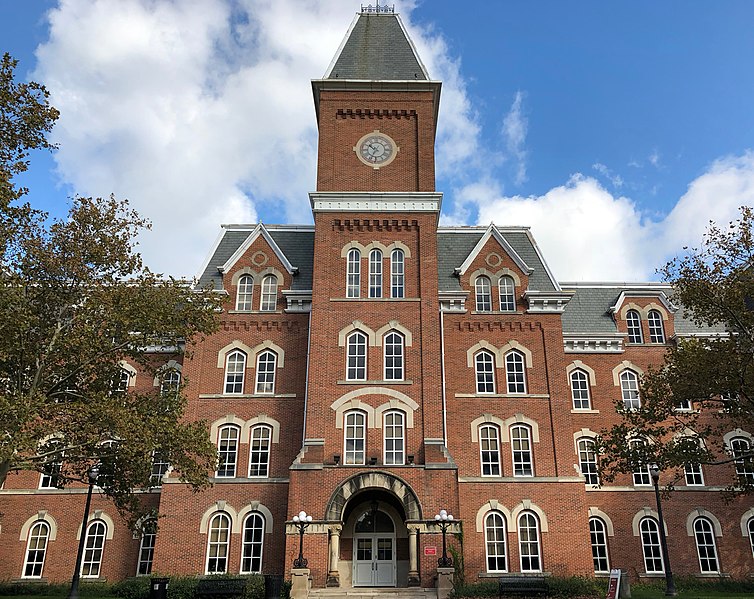
It is said that room 428 was forever sealed off at Wilson Hall dormitory after several bizarre deaths with ties to the occult in the 1970s. Now, the University of Ohio is considered one of the most haunted all these years later.
In the rolling hills of southeastern Ohio, Ohio University in Athens boasts a rich history that dates back to its founding in 1804. However, it’s not just academic accolades that have put this university on the map—it’s also one of the most haunted campuses in the United States.
Read More: Check out all ghost stories from the USA
At Brown House, ghostly children are splashing around in the long-gone swimming pool, in Jefferson Hall there is a “marble sound,” which happens most often on the top floor of the building as if someone’s dropping hundreds of marbles on the floor above. At Washington Hall the entire girl basketball team is haunting, while the men’s team is haunting the attic.
Many locations at one University with many stories, but at the center of these spine-chilling tales stands Wilson Hall, a dormitory that has gained a notorious reputation for its eerie and unsettling paranormal activity.
The University of Ohio: A very old university, the place have gotten a reputation for being one of the most haunted universities that are. One of the more famous story talks about the sealed off room at Wilson Hall dormitory, supposedly built on top of a very spiritual plasce. //Source
A Brief History of Wilson Hall
The Wilson Hall is the building most people talk about when they talk about the haunted legends of the University. The red brick building is towering on the green grass, looking quaint and peaceful from the outside. However, on the inside, the legend says it’s anything but. The most infamous aspect of Wilson Hall is room 428, a space that has become synonymous with ghostly encounters and unexplained phenomena.
Wilson Hall, located on the university’s West Green was built in 1964, named after the former student, Hiram Wilson and it has housed generations of students. However, beneath its unassuming exterior lies a darker, more mysterious past.
The building is said to be built in the middle of five cemeteries in the region. When you look at it on a map, you can draw out a pentagram, the symbol of power and magic in pagan lore. Just a myth? After all, anything within five points can make a pentagram. But this origin lore comes with a legend that tells of its consequences.
There is also the persistent myth about the hall being built on top of an Indian burial ground, as many supposed haunted spots in America claim. There is a fairly large tribe from the Shawnee natives in Athens, even today. Who knows if this is true, but they did find out in the 1980s that the hall is built on top of the early cemetery of the Athens Mental Institute. Although, also this is something that they say is not really true. There is, however, worth to note that there are in fact two Wilson Halls, one being a historic building with closer ties to the tuberculosis hospital and asylum with its own ghost stories.
The legend of Wilson Hall centers on room 428, which has been sealed off and is no longer used for student housing. The room’s haunted reputation dates back to the 1970s, when a female student reportedly died by suicide under mysterious circumstances. Or was it in fact a male student as some former student pointed out that the 4th floor was for boys back in the late 70s? The true identity has been lost over the years, if it even happened. Some say it was in fact two deaths, one being the tragic suicide of the male student, and then a female student moved in and started to dabble with the occult.
According to campus lore, the student was deeply involved in the occult and had been conducting rituals in her room. It is said that she experienced a powerful spiritual encounter that drove her to take her own life. According to the lore, the student was practicing astral projection, a technique for the spirit to travel without its body. In addition there were several attempts to contact the dead.
Following her death, subsequent residents of room 428 began to report strange occurrences—disembodied voices, objects moving on their own, and inexplicable cold spots. The disturbances were so persistent and unsettling that university officials eventually decided to lock the room permanently, preventing anyone from entering.
Paranormal Activity in Wilson Hall
The hauntings in Wilson Hall are not confined to room 428. Students living in the building have reported a wide range of supernatural experiences, particularly in the hallways and other nearby rooms. The comment sections in forums flood with people’s experiences staying at the dorm.
Students have frequently heard faint, whispering voices emanating from the walls, especially near room 428. Some have claimed to see shadowy figures lurking in the hallways or standing at the end of their beds. These apparitions are often described as indistinct and fleeting, vanishing as quickly as they appear. Objects have been known to move on their own—books flying off shelves, doors slamming shut, and lights flickering without explanation. Sudden drops in temperature are a frequent occurrence, with some rooms feeling unnaturally cold despite the heating being on full blast.
Theories Behind the Hauntings
While the legend of the student’s suicide provides a compelling backstory, some believe that Wilson Hall’s paranormal activity could have deeper roots. Athens itself is steeped in folklore, with numerous reports of hauntings and ghostly encounters throughout the town. The university is built near the site of an old mental asylum, and many locals believe that the area is a hotspot for supernatural activity due to its history of suffering and tragedy.
Additionally, the alleged pentagram shape formed by the university’s buildings has led to theories that the campus was designed with occult purposes in mind, further fueling the idea that Wilson Hall is a focal point for paranormal energy.
Honoring the Legends
Despite its dark reputation, Wilson Hall remains a popular topic of fascination for students and paranormal enthusiasts alike. Ghost tours and investigations often include the building as a key stop, drawing those eager to experience its eerie atmosphere firsthand.
For those who dare to delve into the mysteries of Wilson Hall, the question remains: what truly happened in room 428 all those years ago, and for what reason was it sealed off so no other student would live in it. And why do its restless spirits said to linger in the dormitory hall refuse to move on?
In the middle of the night in the Lower East Side hotel in New York City, the elevators of The Bowery Hotel are said to act in a paranormal manner. Every night at one in the morning, they go up and down of their own will, carrying their ghostly guests.
On Manhattan’s Lower East Side, The Bowery Hotel stands as a beacon of luxury and historical intrigue on 335 Bowery in the East Village. Although the hotel is not really that old, it has already managed to have conjured up a haunted rumour.
Read More: Check out all ghost stories from the USA
This iconic hotel, steeped in the charm of New York’s Gilded Age inspired decor, offers more than just opulent decor and sumptuous comfort—it harbors a dark, spectral history that has become part of its allure. Beneath the velvet drapes and within the shadows of its oil-painted hallways, legends of hauntings and paranormal activity have taken root, giving the hotel an eerie reputation.
The Bowery Hotel is more than just a boutique retreat; it’s a window into New York City’s storied past. The neighborhood itself, once a hub of the city’s gritty underbelly, has evolved through the centuries from a bustling thoroughfare for immigrants and artists to a chic destination for travelers and residents alike.
The Bowery: Making a throwback to a cozy time, it sticks out from modern New York City. Is the nostalgic interior something that evokes a haunted vibe? Source: Wikimedia
Opening its doors in the early 2000s, The Bowery Hotel was designed to evoke the grandeur of New York’s Gilded Age. Its interiors, adorned with plush velvet, antique furnishings, and oil paintings reminiscent of the late 19th century, create an atmosphere that is both inviting and haunting. The charm of the hotel’s decor is undeniable, yet many visitors have reported an unsettling undercurrent—a sense that they are not alone.
Read More: Check out all ghost stories from haunted hotels.
Since then big celebrities have partied their way into the night. And if we are to believe the legends, some of the guests checked into the hotel rooms, sitting having a sip at the bar and riding the elevators, are not of the living kind.
The Haunting Legends of the Bowery Hotel
Perhaps the most famous legend associated with The Bowery Hotel revolves around its elevators. Guests and staff alike have reported strange occurrences involving the lifts, particularly at the stroke of one in the morning.
According to the tales, the elevators often go haywire—doors opening and closing without cause, buttons lighting up at random, and sometimes even stopping between floors. This phenomenon has been attributed to the hotel’s resident poltergeists, mischievous spirits that seem to revel in the disruption of the hotel’s nightly calm.
One popular theory suggests that these spirits are tied to the hotel’s location, which has a long and storied past. The location wasn’t always so swanky, as the Lower East Side used to be one of the city’s poorest places. The Bowery neighborhood was once home to theaters, flophouses, and speakeasies, places where revelry often ended in tragedy. Even when it was built, it was next to the Salvation Army shelter and methadone clinic. Some believe that the spirits of those who met untimely ends in the area have found a new home in the hotel, bringing with them the chaos and unrest of their former lives.
The hotel is also right next to The New York Marble Cemetery, and many think that the ghostly happenings are from the spirits lingering in the cemetery and having taken a trip into the hotel.
The New York Marble Cemetery: With its entrance at 41 Second Avenue between 2nd and 3rd Streets in the East Village neighborhood of Manhattan, New York City, was founded in 1830 and was the first non-sectarian cemetery in the city and is right by the Bowery Hotel. Could this be the source of the haunted rumors? Source: Wikimedia
Ghostly Encounters at the Bowery
Beyond the mischievous elevators, guests have reported other ghostly encounters throughout the hotel. Shadowy figures have been spotted in the dimly lit hallways, disappearing around corners or vanishing into thin air. The hotel’s oil paintings, some depicting somber and mysterious subjects, seem to watch over visitors, their gazes following passersby in a disconcerting manner.
One story passed around the halls, talks about a guest that got his beer spilled over himself, or knocked out of his hand, although he was sitting by himself. The doing of a malevolent spirit, or one too many beers?
Some visitors have even claimed to hear disembodied whispers in their rooms at night, the faint murmur of voices that cannot be traced to any living source. Cold spots, sudden drops in temperature One story in particular talks about one of the guests who was welcomed by the ghost of a woman wearing white as he was checking into his room.
Room at the Bowery: Some claim to have met the ghost of a woman as they entered the room. Who could this mysterious woman that people claim to have seen, but know nothing of? Source: Wikimedia
This was not the only time the legend of the woman in white at the hotel has been told, and it looks like the legend is spreading. Some sources claim over 700 guests have spotted her, asking for directions before vanishing into thin air.
Perhaps the worst is the talk about the feeling of being strangled in the bed as you are asleep. Would you dare to check in?
On the rocky shores of Connecticut, the Sheffield Island Lighthouse in Norwalk is said to be haunted by mysterious music, a blaring foghorn that doesn’t exist and distant cries for help from the island or worse, the deep dark water.
On the edge of Long Island Sound, the Sheffield Island Lighthouse in Norwalk, Connecticut, is a beacon of history and mystery. Built in 1868, this Victorian-style lighthouse stands as a reminder of the bygone era of maritime navigation when the light of the lighthouses along the shore guided passing ships supplying oysters safely to shore.
With its ten rooms and distinct architectural charm, the lighthouse has guided countless ships safely to shore. However, beneath its picturesque facade lies a series of chilling tales and unexplained phenomena that have captured the imaginations of visitors and locals alike.
A Glimpse into History
Sheffield Island Lighthouse was erected to aid navigation through the treacherous waters surrounding the island, a task it performed for over a century. The island itself was initially purchased in the early 1800s by Captain Robert Sheffield, back when the island was known as “White Island”. Sheffield was a war veteran and a man known for his eccentricity and fondness for unusual musical instruments.
Over time, the lighthouse became a critical fixture for seafarers, its light a reassuring presence in the dark, fog-laden nights. In the beginning, the lighthouse had a rather unique system with ten lamps with parabolic reflectors turning using a clockwork mechanism, producing alternating red and white flashes. The system was replaced by a fourth-order Fresnel lens in 1857.
The Ghostly Legends of Sheffield Island Lighthouse
In 1972, the keeper of the lighthouse met an untimely and mysterious end. While watching passing ships through his spyglass, he suddenly collapsed and died, with no clear cause of death ever determined. This incident marked the beginning of the lighthouse’s reputation for being a site of unexplained occurrences.
In 1991, an archaeologist working on site preservation experienced a series of unsettling events. Karen Orawsky was working on Sheffield Island. One day she came to the island by boat. She first heard something that she described as a “hypnotic and mystical music” coming from the island, although she was unable to pinpoint the source.
She then reported hearing distant cries for help, although no one was ever found. Even more bizarre was the sound of a foghorn blaring. A foghorn or fog signal is a device that uses sound to warn vehicles of navigational hazards such as rocky coastlines, or boats of the presence of other vessels, in foggy conditions. This would not have been such a weird thing to hear, except, there being no foghorn on the island. These eerie sounds have fueled speculation that the lighthouse and its surroundings are haunted by restless spirits.
Mystical Music and Mysterious Sounds
The reports of mystical music are not isolated incidents around the Sheffield Island Lighthouse. Numerous visitors have described hearing melodies that seem to float on the wind, vanishing as suddenly as they appear. Some have suggested that these tunes are the spectral echoes of Captain Sheffield’s musical past, a ghostly serenade that defies explanation.
After a paranormal group investigated the island, they also claimed to have met the ghost of a young girl named Abby who has been stuck on the island ever since she died for unknown reasons. Can she be the reason behind the cries for help that visitors have reported on?
The cries for help and the phantom foghorn add to the lighthouse’s spooky reputation. These sounds are often heard during the quiet, still nights, leaving those who hear them with a lingering sense of unease. The lack of any logical source for these noises only deepens the mystery.
An online magazine about the paranormal, haunted and macabre. We collect the ghost stories from all around the world as well as review horror and gothic media.