Tag Archives: 1400s

Palazzo Ca’Dario – The Cursed Palace in Venice

Advertisements

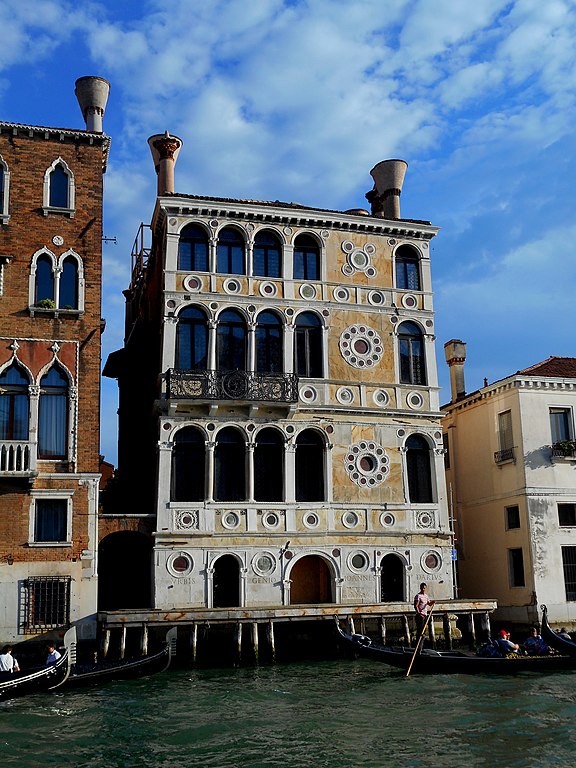
Along the Grand Canal in Venice there is this gothic palace called Palazzo Ca’Dario. For centuries the owners have met an unfortunate end and today it is most known as the most cursed palace in Venice.

Taking a walk in Venice’s narrow streets or from a boat on the shallow canals, there are many spectacular buildings towering over the shallow canals. Each with its long and sometimes dark history. 

One of these wonderful buildings is the small, but exquizit palace in Venetian gothic style named Ca’Dario on the Canal Grande. It has a marvelous facade of Istrian stone and is decorated with marbles and medallions. 

Read More: Check out all of the ghost stories from Italy

Palazzo Ca’Dario is often for sale, it is said though, as the owners don’t seem to linger for too long in this place, something that doesn’t happen very often in Venice. But for this particular palace, there is a very particular reason for its vacancy. According to local venetians, the place is cursed and has been for centuries. 

The Palazzo Ca’Dario is often called the house that kills and is today, perhaps one of the most famous cursed houses to this day. The owner that takes up residence in the palace will soon after meet a violent death or at least live to be ruined. 

The Dario Family

For evidence for this legend, or perhaps more accurately, the reason for this legend behind Palazzo Ca’Dario, is the track record of owners that died in horrific ways or lost all of their fortune, tracing back to the 16th century to modern day. 

According to legend, it all started with the daughter of Giovanni Dario. Giovanni Dario was the Secretary of the Senate of the Republic of Venice and built Palazzo Ca’Dario in the 15th century. On the facade of the palace there is an inscription that reads Urbis Genio Joannes Darius, meaning Giovanni Dario to the Genius of the City. 

His daughter Marietta Dario was the first person to have died in a horrible way. After her husband Vincenzo went bankrupt and in some variation of the story, stabbed to death, she fell into a darkness she didn’t manage to climb out from. She committed suicide it that very palace her father built. Not long after their son followed after being murdered in Crete by assassins. 

The Curse Continues to this Day

Since then there have been over 10 dramatic deaths connected to the owners of Palazzo Ca’Dario, and even people like Woody Allen, who considered buying the house, refused after he heard about the curse of the house. The owners don’t necessarily have to live in the palace to be struck by the curse, they simply have to buy it. 

The Barbaro family was one of the families that lost all of their fortune shortly after they bought the place. 

In 1842, an Englishman named Radon Brown lost all of his money as well and committed suicide together with his male lover after their romantic relationship were revealed. A very similar fate fell upon the American Charles Briggs who were accused of being gay living their. Together with his lover, they fled to Mexico, but his lover died by suicide. 

The Cursed Palace: Palazzo Ca’Dario as it is today along the Grand Canal in Venice. For so many centuries it has been considered to be one of the most cursed places in the entire city of Venice as the owners have often met an unfortunate end.

The French poet Henri de Régnier lived there until he was so seriously ill he had to return back to France. The manager of The Who, Christopher Lambert was also one of the owners that seemed to get ill after purchasing the house in the early 1970s. 

In 1979, Fillippo Giordano delle Lanze, a count from Turin was killed by his lover inside the palace. His lover, a Croatian sailor fled to London were he in turn was murdered. 

In the 1980’s a financier named Raul Gardini bought the place. He was later found guiltu of being implicated in the Tangentopoli government corruption scandal and committed suicide in 1993. 

The Reason Behind the Curse of Palazzo Ca’Dario

Why is Palazzo Ca’Dario so cursed you asked? There are several legends to it. Some claim it is from the original death of the daughter of Dario that is still echoing as a curse in the building, some say it is a building built on top of an old Templar cemetery or built on a crossroad. 

Perhaps, there is more to say about who can afford to live in a palace in the first place, and how far they fall when they lose everything. 

There is noted however by people that the inscription on the facade praising the builder of Palazzo Ca’Dario to mean something completely different as an anagram. Sub ruina insidiosa genero, meaning I bring treacherous ruins to those who live under this roof

The Palazzo Ca’Dario on the Canal

As the sun sets over the shimmering waters of the Grand Canal, a sense of foreboding surrounds Palazzo Ca’Dario. The legacy of tragedy and misfortune that has plagued its owners for centuries continues to cast its dark shadow upon the palace. The curse, intertwined with the very fabric of the building, has become an indelible part of Venice’s history.

Despite the tales of doom and the cautionary whispers of locals, there are always those who are drawn to the enigmatic allure of Palazzo Ca’Dario. Through the years, the curse has claimed its victims with ruthless precision. Lives lost, fortunes squandered, and dreams shattered. The hallways echo with the silent cries of the past, a testament to the insidious nature of the curse that has plagued this cursed palace.

Legends and theories abound, attempting to unravel the origins of the curse. Is it the tortured spirit of Marietta Dario, unable to find peace after her tragic demise? Or does the curse stem from a darker force, buried deep within the ancient foundations, waiting to consume those who dare to call it home?

Perhaps one day, the curse will be broken, the darkness lifted from this ill-fated palace. But until then, Palazzo Ca’Dario remains a testament to the fragility of human existence, a haunting reminder that some places are best left to the whispers of legends and the pages of history.

More like this

Newest Posts

References

Venice Legends and Ghosts

https://www.atlasobscura.com/places/palazzo-dario

The White Lady of Burg Wolfsegg

Advertisements

In the old gothic castle of Burg Wolfsegg in Germany, there is a local castle legend about a White Lady haunting the place. The ghost is supposedly of one of the Countess living there who was murdered by her husband.  

Burg Wolfsegg is a wonderful old gothic castle in Germany, built in the 15th century and still standing today in Bavaria. It’s a piece of history and culture that is full of mystery and legends and filled with ghost stories.

This majestic building was once home to German nobility and is one of the few castles that over the years, never was destroyed and rebuilt. The walls still echo the tales of heroism, love, and tragedy, financial trouble and a possible murder. There are stories told around campfires about the haunted old castle— stories of ghosts that roam its corridors and in the underground caves beneath the castle. 

One of the ghosts said to roam around the castle to this day is that of the White Lady. There have been tales about her since the 1600s. In European ghost stories, there are often women who are restless spirits that died buried with guilt or shame about something. 

The White Lady in the Castle

At Wolfsegg however, the White Lady is said to be a woman who died in the 1400s. There are many variations to the story today, but one of them is the tale about a woman left to her own devices when her husband was away. To run the castle, she turned to the owner of a neighboring manor for his help in managing the big castle. 

When her husband and lord of the castle returned, however, he suspected his wife was having an affair with the man and was overcome with jealousy and rage. The husband ended up hiring two people to murder her. 

In another variation of the legend, the husband was even in on the plot of seducing the manager to blackmail him. When the feelings between the two turned out to be real however, he killed her with his own hands. 

The White Lady: Basking in the sunlight, hiding in the shadows, her dress is always white. In German legends and folklore the stories of the Weiße Frauen, meaning White Women used to be a name meant to the elven-spirits and the stories of the light elves from pagan times.

The Real People Behind the Legend

A legend like this will always be hard to prove, and even harder considering all the different variations of it. The real people behind this legend are thought to be that of Lord von Laaber and his wife. The couple resided in Wolfegg in the 145th and 15th centuries. 

Ulrich V. von Laaber and his wife Klara von Helfenstein was struggling with their finances at the start of the 15th century as the owners of Burg Wolfsegg. Although there is not really much evidence to it as the historical records shows that Klara von Helfenstein survived her husband by many years. But the story of the haunting of the castle is very old, and can be found in written accounts back to the start of the 1900s. 

The Castle: It is an old medieval castle from the gothic period with more than one ghost story to tell of. The most famous one in Burg Wolfsegg is that of the White Lady. Source// Wikimedia

The story is about the White Lady though, and according to the castle’s own website, the first written account they have found about the White Lady ghost is from 1952 when it gained traction through travel accounts. 

This is not the only castle with a legend about a lady in white haunting the place. Read also: The Haunting of the House of Hohenzollern

From then on the legend about the White Lady and Klara von Helfenstein sped up and the owners of the castle started putting on plays in front of the castle to further drive the legend from the dark corners of the Burg Wolfsegg and into the world. 

A Medium Visits the Burg Wolfsegg

In 1966, the legend reached its peak when a weekly magazine published an article about the legend inside of Burg Wolfsegg. The castle was visited by a parapsychologist from New York named Hans Holzer in 1968 together with a medium called Edith Riedl.

The medium was contacted by the Lady in White and she was identified as Klara von Helfenstein where she told them about the story that on October 17, 1463, a young man was murdered in one of the chambers known as the Weizkammer and that the husband had been involved with the murder. 

Other than tales from the medium aout Klara von Helfenstein and the murder, there are reports about strange light phenomena and strange noises from the underground cave are heard throughout the castle sometimes. 

So what reason did the countess have to haunt the Burg Wolfsegg after her death though? Considering Klara von Helfenstein didn’t really get murdered by her husband’s hand, was she rather full of regret about her dead lover then? Or is the White Lady a mystery still not solved of who it’s behind the white vail?

More like this

Newest Posts

References

DETAILS & RECHERCHE ZUR BURG | Burg Wolfsegg

The Warrior Countess Ghost of Eltz Castle

Advertisements

Few castles capture the European medieval feeling as Eltz Castle does. The long lasting Eltz family has always watched over the place, and even in death, there is an ax wielding countess in full armor, haunting the place. 

Steeped in history and mystery, Germany’s old castles are some of the most fascinating pieces of architecture in existence. These majestic fortresses are stories in themselves, filled with centuries-old legends and ghost stories. From dark fairy tales about princesses and knights to hidden passages and hidden rooms – these castles have something to captivate even the most jaded spirit! Every stone tells a tale of intrigue, from ancient battles to wicked plots. Without a doubt, a tour through Germany’s haunted old castles will leave you with an experience unlike any other.

The Eltz castle is definitely on that type of list and is a medieval castle on the top above the Moselle river in the Rhineland, west in Germany. The castle has belonged to the House of Eltz who have lived there since the 1100s and is one of the few castles that have never been destroyed and rebuilt. 

The armory and treasury in the Eltz Castle is considered to be one of the most important collections of its kind in Europe, and holds so much history. The castle is also said to hold more than one ghost, but the most well known of them is that of Countess Agnes of Eltz. 

The Countess Agnes

Agnes was the daughter of the 15th count of the Eltz Castle at the time. She was said to have been a beautiful girl and was promised to be the wife to the knight of Braunsberg. They had been engaged since they were children, and the time for a proper wedding and marriage were approaching. However, the Countess didn’t like her betrothed at all as he was a ruthless and mean man and far from a chivalry knight as they are often painted to be in fairytales. 

On the day of their engagement, they held an engagement party for the two families to come together. The knight of Braunsberg turned out to be even more despicable now as the marriage was more than just a distant future and Agnes refused to kiss him when he went for it as she was known to have a will of her own and out of a fight if she had to. 

According to some testaments, she usually hung out with her warrior brother more than her female companions. In some reports, it is said she only refused his advances, in others, she outright slapped him back when he forced himself onto her. This threw him into a rage and he declared a war on the entire family to repay for him being embarrassed in that manner. 

The Revenge of the Eltz

A few months passed, some say a whole year as the knight of Braunsberg waited, planned and came back for his revenge. And he returned to Eltz Castle with an army. He managed to lure the count and his knights out of the castle into an open battle, and some say he waited until the Count of Eltz went out hunting. 

Agnes remained in the castle together with only some servants, just as the knight of Braunsberg had planned. Alone in the castle the single Countess would be an easy target for the knight and his men. 

As he advanced with his soldiers to the Eltz Castle, he was one step closer to Agnes. The knight of Braunsberg had planned to take Agnes back with force, but had never anticipated that she would fight back the way she did. Just as she had done at the engagement party, she chose to hold her ground, but this time with an battle ax.  

She put on her brother’s armor and picked up weapons together with her servants. Together they fought side by side against the attackers. She is said to have had a battle-axe she wielded against her enemies. 

An arrow from the knight hit her and she died from the wound almost immediately. The servants who had loyally fought by her side were enraged and defeated the knight, killing him and ending the attack. 

The Ghost of the Countess

The bravery and steadfastness of the Countess is said to represent the Eltz family and their 800 years of history in the Eltz Castle. The ghost of Agnes is said to still linger inside of the castle. In her former room , the breastplate still hangs on the wall, with the hole from the arrow still visible. Her battle-axe also remained, protecting herself from the horrible knight to this day. 

She can be seen by the entrance of the Eltz Castle to this day, still wearing her suit of armor. It is also said that a phantom horseman is also riding outside of the gates, and the knight of Braunsberg is still seeking forgiveness for what he did. 

More like this

Newest Posts

References

Eltz Castle: A Fairy Tale in Stone – Discover Germany

The Lady in Green Haunting Château de Brissac

Advertisements

The tragic story of Château de Brissac and the murder of Charlotte de Brézé is a haunting one, but not a rare one as it houses the ghost of a woman murdered by her own husband and is forced to remain as a ghost.

It’s no secret that the Château de Brissac holds centuries of ghostly secrets in the Loire Valley. As one of the highest, grandest and oldest castles in France, it has been home to some of the most mysterious occurrences in all of Europe, including that of the Lady in Green. Unearth the tales about its ghosts, spirits and supernatural activity inside!

Discover the History of Château de Brissac

Château de Brissac has a long, colorful history that provides a backdrop for its resident spirits. Built in the 11th century by the Counts of Anjou but renovated in the 16th century, it stands as an impressive monument to France’s past. Its past inhabitants have left behind a tale of murder and misfortune – one that still haunts the castle today.

Rebuilt in 1611 after the French Wars of Religion, the architecture of the Château de Brissac is unlike any other in France. It features a unique combination of early Renaissance and classic Renaissance styles. It’s surrounded by seven towers and many turrets, windows, and balconies. 

Its main reception hall is one of the largest in Europe, measuring an impressive 80 feet long by 30 feet wide. The walls are actually double-walled to prevent fires and its design includes a mezzanine for extra storage space. Even its natural environment acts as a defensive wall against intruders since it’s located deep in dark forests!

The Ghost of the Green Lady or La Dame Verte

Many ghosts in French ghost story lore are said to be Dame Blanches or Ladies in White. And although the ghost of the Château de Brissac follows in the same pattern, the ghost is remembered and rumored to be a Lady in Green or La Dame Verte. 

The spirits of Château de Brissac are said to still linger in its walls, though sightings of them have become rarer over the years. 

Legends of La Dame Verte, the Green Lady, are some of the most popular tales told about the Château de Brissac. It is said that she was murdered by her own husband and now wanders the halls in search of vengeance. Some believe these stories are real, while others think they’re far-fetched. 

The Murder of Charlotte de Brézé

One of the reasons why Château de Brissac is so famously haunted is due to a tragic event that took place there. Charlotte de Brézé, the wife of Jacques de Breze and mistress of the castle, was mysteriously murdered inside one of its rooms. 

She was the illegitimate daughter of King Charles VII and his mistress, Agnes Sorel. She married Jacques de Breze, the lord of Château de Brissac in 1462 and had 5 children with him. The match was not a success however and Charlotte found the boring country life too much. 

Jacques de Breze suspected her of having an affair with another man, one of his huntsmen, Pierre de Lavergne. On the night of May 31 in 1477 she was murdered by her husband when he ran his sword through her as well as her lover because of his jealousy. 

She is said to haunt the tower room of the chapel of Château de Brissac, wearing her green dress and it is said that Jacques de Breze had to move out from the castle as he was tormented by her ghost. Years later, visitors still report hearing cries in the night at Château de Brissac, perhaps forever labeling it as one of France’s most haunted places!

More like this

Newest Posts

References

Charlotte de Brézé – Wikipedia

Château de Brissac – Wikipedia

The Ghost of the Green Lady Haunts this Spectacular French Chateau

Joan of Arc Haunting the Basilique du Bois-Chenu

Advertisements

Explore the mysterious Basilique du Bois-Chenu, a church dedicated to the French national hero and saint Joan of Arc, where rumor has it is haunted by her spirit.

Have you ever heard the dark and mysterious tales of the haunted Basilique du Bois-Chenu? This neo -Romanesque style church in Domremy is dedicated to Joan of Arc close to her hometown and is also called Sainte-Jeanne-d’Arc de Domrémy-la-Pucelle. 

Bois-Chenu basilica is rumored to be a hotbed for paranormal activity where it is nestled far away from the crowd in the French countryside. Learn about its history and legends here, and find out why it’s one of the most haunted spots in Europe!

History of Basilique du Bois-Chenu

The Basilique du Bois-Chenu was originally built in 1881 close to the place where it is said that Joan of Arc started hearing voices in the hills where she was herding sheep. These visions were those that would eventually lead her to fight the English. It took a long time to build the Basilica and it wasn’t completed until 1926.

It was originally meant to be dedicated to SAint Michael as Joan of Arc wasn’t made into a saint until 1922. Since the building of the Basilica, many strange events have been reported at the church, attributed to the saint that it was dedicated to.

wikimedia

Saint Joan of Arc and her Prophetic Visions

But who was really Joan of Arc before she became a symbol? The young girl were a French heroine and now a patron saint of France who fought against the English in the Hundred Years War before being burnt at the stake. 

Before becoming this iconic warrior of her country under God’s command, Joan of Arc was born into a peasant family in Domremy in northeastern France in the middle of the long war. She didn’t read or travel much, but was regarded as a very intelligent person and well spoken that would convince even the King of France that she was the chosen one. 

Prophetic Visions: Joan of Arc claimed she was visited and given visions from God when she was a young girl. The portrait depicts Joan of Arc’s awe upon receiving a vision from the Archangel Michael. Painted by Eugène Romain Thirion

In 1425 when Joan of Arc was around 13, she started having these visions from the archangel Michael that she was chosen to be guided to help save France from English attacks. But where did this girl even get this idea from? Was it really from an angel, or did she have a personal ambition to be the country’s savior?

The Prophecies about the Maiden Saviour

During Joan’s youth, a prophecy circulating in the French countryside, based on the visions of Marie Robine of Avignon, promised an armed virgin would come forth to save France from the English. Marie Robine, known also as Marie of Gascony, or of Avignon, had arrived at Avignon in 1387, on a pilgrimage in the hope of being cured of an illness.

Another prophecy, attributed to Merlin from the Arthurian Legends, stated that a virgin carrying a banner would put an end to France’s suffering. 

Joan of Arc herself meant she was this promised maiden, reminding the people around her that there was a saying that France would be destroyed by a woman but would be restored by a virgin. Now the only thing that remained was to make people believe in her. 

Becoming a National Hero Before Being Burnt at the Stake

Joan of Arc claimed that she was under God’s guidance and became a military leader despite her gender, her social status and gained recognition as a savior of France. Her arrival had already been predicted by multiple so-called prophets before her and when she came as a hope it was much needed as France was in turmoil politically and financially and needed a hero.

Battle Heroine: Joan of Arc is well known for leading France to victory during the battle of Orleans. Painted by Eugène Lenepveu .

She insisted on going to Charles VII of France and he was convinced of her and sent the 17 year old girl to Orleans to fight. The battle was a French victory and helped boost the morale of the troops and the Hundred Years War ended in French victory a couple of decades later. Because of this she is also known as The Maid of Orléans.

However, all of her battles were not as successful and she failed under the siege of Paris in November 1429 and siege of La Charite in November. This made the court lose faith in her. 

In 1431 Joan of Arc was put on trial for heresy, blasphemy because of wearing men’s clothes, acting upon demonic visions and not doing as the church told her. She was declared guilty and burned at the stake on 30 May in 1431, just 19 years old. 

The Paranormal Phenomena at Bois-Chenu

After her death there have been a number of reports that claim they have seen the spirit of Joan of Arc around in France. Little girls in particular claimed they have spoken to her, and there are between 50 to a 100 people written reports of it. 

There have been several claims that people have seen her ghost close to the Basilique du Bois-Chenu as well as around her birth home and the church she attended and started having visions.

It is said that strange noises and apparitions have been experienced throughout the grounds of Bois-Chenu, both during the day and in the dead of night. Mysterious presences have been spotted roaming around the desolate Basilique du Bois-Chenu and it’s thought that at least two ghosts are permanently resident here. 

Visiting the Basilique du Bois-Chenu Today

Today, a visit to Bois-Chenu is still an experience filled with mystery and intrigue. The Basilique du Bois-Chenu is far out in the French countryside where a young and illiterate girl started out before becoming one of the most famous people in history.

More like this

Newest Posts

References

Joan of Arc – Wikipedia

Joan of Arc Returns

Women Prophets and Visionaries in France at the End of the Middle Ages | Encyclopedia.com

The Burning Skeleton in Venice

Advertisements

In Cannaregio district in the city of Venice, there is a burning skeleton of a mean man that is cursed to haunt the city around Campo de l’Abazia. 

Walking around the picturesque streets and canals in Venice you might think you are so safe. There are people everywhere and the windows so close to the street are always open. Wandering over the curved bridges and walking over the old cobblestone, you might not even notice other people as you are so preoccupied by the wonderful old architecture in the Cannaregio district. But you should never feel too safe. 

Read More: Check out every ghost story from Italy

According to old Venetian legend, there is a story about the ghost of a man still haunting the streets, especially around Campo de L’Abazia where he made a sin so great, he was cursed to walk around the area for eternity. He comes in the shape of an old man with a big bag on his back, begging for help. According to legend you must never help him, and whatever you do, never look him in the eyes. If you do this, he will turn into the burning skeleton and frighten you, maybe even to death?  

The skeleton is said to be of the usurer or a moneylender known as Bartolomeo Zenni that was so mean that he was condemned to be transformed into the burning skeleton. He lived in the 1400s, a time where Venice and Milan fought off territory in Northern Italy. Venice was at this time one of Europe’s wealthiest and most powerful cities. The Renaissance period which would change the world forever had just begun to take root in Italy and would bring them into a new area. 

Amidst all of these world changing events, everyday life went on in the streets of Venice, for people like Bartolomeo Zenni on Campo de L’Abazia. But tragedy struck the small neighborhood. 

On 13th of May in 1437, a fire broke out at Campo de l’Abazia and several of the houses were engulfed in flames. The neighbors of Bartolomeo Zenni asked him to help them, trying to save their children from the fire that was devouring everything. Bartolomeo Zenni refused to help his neighbors and instead grabbed all of his gold and jewels to save himself. Perhaps he escaped the fire safely, but in the afterlife, he will never escape from the fire as he was cursed to haunt these streets forever without a coin of gold to his name. 

So if you walk these cobbled streets and someone asks for your help, do you offer it?

More like this

Newest Posts

References

Haunted Venice – Legends, Mysteries and Stories

Venice Legends and Ghosts