Tag Archives: UK

Agnes Sampson — The Wise Wife of Keith

Advertisements

The story of the ghost of Agnes Sampson, known as The Wise Wife of Keith in Scotland is a story where a simple midwife was accused of witchcraft so powerful she caused a storm trying to kill her own queen. 

Agnes Sampson was a Scottish healer and a purported witch. Sampson was born in the village of Kirktoun, East Lothian in Scotland and worked as a midwife. She was believed to have healing powers long before she was accused of being a witch. 

She became known as the Wise Wife of Keith and was involved in the North Berwick trials that happened during the 16th century, one of Scotland’s most notorious witchcraft trials. Agnes Sampson is also known for being one of the main accused at this trial. 

There were and still are many tales about who Agnes Sampson really was. Some of them are true tales, some tall tales. She is said to have been married three times, once to William Keith with whom she had two children. She is also said to have been married to two other men and had 14 children with each man. 

So how did this simple midwife become the center of a conspiracy of witches trying to sink the ships belonging to their new queen and threatening her own King? To find out we have to travel across the pond to the court in Denmark-Norway and their fear of black magic and a series of unfortunate events on the sea. 

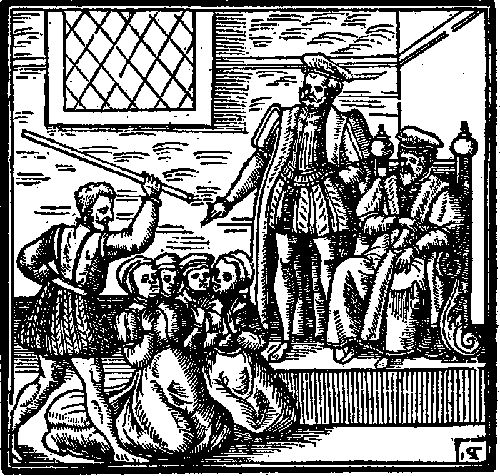
The King as the Judge: Suspected witches with Agnes Sampson kneeling before King James VI from the book Daemonologie (1597). He himself oversaw the trial and ended up sentencing many to be burnt as witches.

The Storm of Contrary Winds

By the autumn of 1590, Scotland was deep into witch hunts, and many of those sent to trial were questioned by the King himself. Today, the city of Edinburgh and the rest of the country is riddled with the memory of those who were burnt at the stake as a witch. King James VI, the son of Mary, Queen of Scots had just returned from Denmark-Norway where he had married Anne of Denmark who was only 14 at their wedding. 

Read Also

Edinburgh Castle Ghosts and Legends

Witches, dragons and ghosts, Edinburgh castle are said to have it all. The sound of bagpipe and drummers can be heard without anyone playing, and those accused for witchcraft as well as prisoners of wars are said to haunt the old castle.

Keep reading

The Danish court at this time was extremely wary of all things black magic and witchcraft. The fear of demons and witches had tightened the European continent and it was probably a fear that the Scottish King James adapted and brought back as well after spending time there. 

The King of Scotland was impatient awaiting his bride from Denmark to cross the seas after the wedding to stay by his side, but on her voyage to Scotland the fleet experienced heavy storms and ended up starting not only one, but two major witch trials that ended in several executions.  

A Series of Unfortunate Events

So how did a simple midwife like Agnes Sampson get accused of something that happened all the way over in Denmark? To this we have to go through the Danish court and the witch trials that happened there before it started in Scotland. 

Peder Munk of Estvadgård was a Danish navigator, politician and ambassador and in charge of carrying the fleet of 18 ships with Anne of Denmark to Scotland to bring her to her throne by her King. They set out on their voyage in 1589 from Copenhagen and were riddled with bad fortune, taking years to reach their final destination.

First they had to stop in a port in Norway to repair a leaking ship and had to stay there for a very long time, on their way to a very impatient king. When they reached The River Forth in central Scotland a ferry boat collided with one of the vessels in a storm and all of the passengers drowned. This was all attributed to witchcraft. 

Back in Denmark, the navigator Peder Munk blamed it all on witchcraft, especially on a certain woman whom he had insulted and believed to be the main witch behind the storms. This became the beginning of the Copenhagen witch trials, which ended in executing 17 people by burning. 

This inspired the King to hold his own trials, and it would be known as the North Berwick Witch Trials, and Agnes SAmpson was one of the main accused. 

Accused of Witchcraft

More than a hundred suspects were arrested in North Berwick, several of them confessed during torture and named other people. Agnes Sampson was accused by Gillis Duncan, another one of the accused. 

Duncan was really the one that linked the other accused of causing the storms that ended up sinking the Queens ships. She worked as a servant and confessed after torture that she was a witch and there were several more. The reason she was accused herself was that she was far too skilled of a healer in her master David Seton’s mind who also thought that Duncan had been sneaking out at night. 

Agnes Sampson ended up being one of the more significant accused persons, as an elderly and respected woman that had healed more than one in the local area. Many attributed their good health to her good work. Now, they all turned on her because of the rumors and her unfortunate circumstances. The fact that she was a widow with children and acted as an independent woman and educated midwife was a part of the indictment against her. She had also been accused of witchcraft and investigated before. 

Witches Sabbath: According to the accusers, Agnes Keith and the rest of her witch coven had met up and created a storm to keep a ship from Denmark arriving to Scotland, carrying Anne of Denmark.

The Wise Wife of Keith was imprisoned and put to torture for a long time before saying anything. She started off refusing to confess at first, but after a long time in the dark and in pain, she as the rest of the accused gave up. 

In the end she was brought before King James VI himself and a council of nobles at the Palace of Holyroodhouse. Sampson denied all the charges, but they kept torturing her until she said otherwise. Her head and body hair were shaved and she was pinned to the wall of her cell with a witches bridle. This was a torture instrument with four sharp prongs pressed into the mouth, meant to humiliate as well as hurt the ones wearing them. 

She was forced to stay awake with no sleep in her cell with a rope around her head, always reminded just how close to death she really was. And in the end, how freeing that prospect must have seen compared to the torture she went through. 

Finally, after all that torture, Agnes Sampson confessed to whatever they asked of her in front of her own king who oversaw the trial. In all she confessed to 53 indictments against her, including attending a Sabbat she led and that she was indeed a witch with supernatural power she used to harm others with. 

According to her testimony, she ended up saying she made a charm that caused a storm that ended up drowning Jane Kennedy. She sank a dead cat with parts of a dead man into the sea near Leith. The same charm she used to threaten the King and his wife on her voyage. 

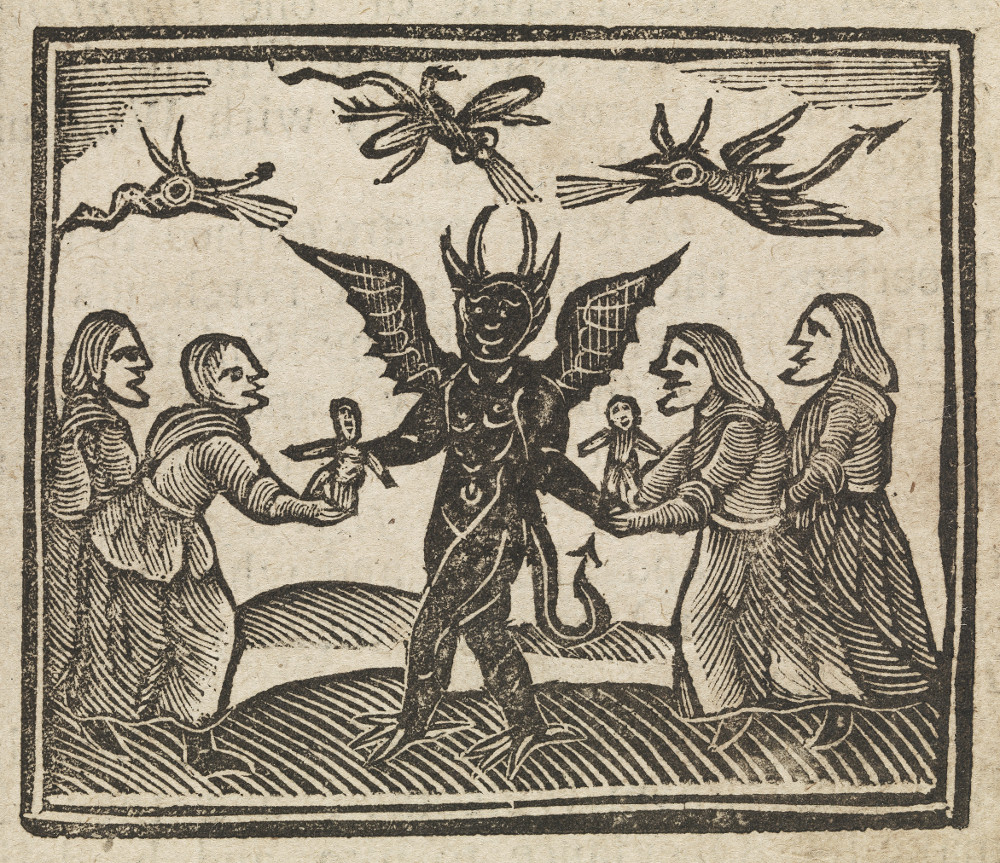
In League with the Devil: Depiction of the Devil giving magic puppets to witches, from Agnes Sampson trial and North Berwick Witch Trials where she and many others ended up being burnt as witches in 1591.

It was her last testimony that was her downfall in the King’s eyes. In it, she disclosed things he and his wife had on their wedding night in Oslo. A conversation she had no way of knowing:

“Item, the said Agnes Sampson confessed before the Kings Majesty sundry things which were so miraculous and strange, as that his Majesty said they were all extreme liars, whereat she answered, she would not wish his Majesty to suppose her words to be false, but rather to believe them, in that she would discover such matter unto him as his majesty should not any way doubt of. And thereupon taking his Majesty a little aside, she declared unto him the very words which passed between the Kings Majesty and his Queen at Oslo in Norway the first night of their marriage, with their answer each to other: whereat the Kings Majesty wondered greatly, and swore by the living God, that he believed that all the Devils in hell could not have discovered the same: acknowledging her words to be most true, and therefore gave the more credit to the rest which is before declared.”

— News from Scotland

Execution and Haunting

King James was allegedly not completely convinced of Agnes Sampson guilt until her last confession. After it however he changed his mind and sent her to be burned. On 28th of January 1591 she was taken to the scaffold on Castlehill where she was garroted before being burnt at the stake. 

Although the exact numbers of the executions are hard to be certain of, it is estimated that around 1500 people were killed as witches by the state of Scotland during this time. 

Agnes Sampson’s naked ghost is said to roam the castle grounds, bald headed roaming around the Palace of Holyroodhouse. 

More like this

Newest Posts

References

The Colorful Ghosts at Stirling Castle

Advertisements

Stirling Castle keeps the dramatic events of Scotland’s history as it stands firmly on the castle hill. Just beware of seeing ghosts in all colors, whether it is the Lady in Green, the Pink Ghost Lady or The Woman in Black. 

Stirling Castle sits atop a dramatic hill in the heart of Scotland and has been a witness to centuries of battles and royal drama as it stands on an important crossroad through Scotland and has been attacked no less than 16 times. 

The castle has also seen many kings and queens come and go and has been a place of crowning them, including Mary, Queen of Scots who held her coronation there in 1542.

Black, green, pink and white, the ghosts of Stirling Castle come in them all, each of them bearing a different story and meaning if you spot them in the old castle. Beyond tales of human history, the castle is shrouded in ghostly legends of mysterious figures that have been seen during dark nights. 

The History Of Stirling Castle

Stirling Castle is an ancient royal fortress located in the city of Stirling, Central Scotland. Built within a dramatic volcanic plug commanding the route north into the Scottish Highlands, the castle was once an impenetrable stronghold of power and influence for Scotland’s monarchs. 

Stirling Castle is a unique and grand castle, boasting an impressive history dating back to the 12th century. Castle Hill as it is built on has had some type of fort built on it since Roman times, perhaps settled even earlier, as far back as the 600s. 

Stirling Castle: Is the old castle in Scotland really haunted? According to the rumours, it is more than one ghost said to wander the haunted castle even today.

The architecture of the castle reflects its changing history; striking evidence of its evolution can be seen in the stone walls and turrets that surround it. Visitors to the castle can explore four levels of magnificent stonework designed by Robert Adam, from a Great Hall and Chapel Royal to guard towers and residential quarters.

Is Stirling Castle Really Haunted?

Many believe that the strange apparitions and ominous sounds are signs that Stirling Castle is truly haunted and not only by one ghost, but by many. Over the years, numerous visitors have encountered mysterious sightings or felt a presence of some kind while visiting this ancient monument. 

Read More: Check out more Haunted Castles from all over the world.

Whether or not these accounts can be trusted is up for debate, but there’s no denying the castle’s long and formidable history makes it a perfect place for paranormal activity.

The Green Lady at her Queen’s Service

Legends of Stirling Castle tell tales of many spooky specters haunting its walls. One of them is referred to as the Green Lady with many stories trying to name her. She is thought to be the daughter of a Commander of the fortress that threw herself from the Elphinstone Tower because her father separated her from her lover, a common soldier and shot him dead.

The most retold legend though is that the Lady in Green could be one of the servants to Mary Queen of Scots who worked there when Mary returned to Scotland in 1562 after spending two decades in France after her husband Francis died. 

A Highlander girl was sent to serve her, and many claim she was gifted with the Second Sight and could foretell the future. The servant girl had seen something in her dreams and stayed with the Queen and had a bad feeling that something wasn’t right.

When the Queen was sleeping in her chambers her bed curtains went up in flames because of a candle on her bedside. This part is an actual event that happened. According to the legend though, the servant went straight for the flames and lost her life when saving the Queen. 

Still Fortelling Tragic Events

There have been countless sightings of her over the years, both by visitors and staff that have stayed in the Castle. When she has appeared, she has frightened the people stiff, as not only is seeing a ghost a scary thing, but her sightings are also said to be a bad omen. 

The Lady in Green: Although there are many variants to the legend, the most told one is that the ghost is that of a former servant that died in the flames while protecting her queen. It is thought that seeing her is a bad omen.

One evening the chef was preparing dinner at the garrison in the Officer’s Mess when he felt like someone was watching  him. He turned around and saw a see through green shape in front of him and he fainted from fear. 

Usually seeing the Green Lady is a bad omen and often she has been seen right before things like a fire or deaths on the castle has occurred, just like how she perished. 

The Pink Lady in the Kirkyard

The ghost of the pink lady can be seen outside of the castle as she is walking to the church next door in her flowing pink dress. The Church of the Holy Rude at Ladie’s Rock was a place court ladies went to watch the knights in jousting tournaments. 

People have speculated that the Pink Lady is actually the ghost og the only survivor after the castle became under siege in 1304 by Edward I. She escaped the siege and returned to the castle after only to find her husband who starved to death. 

The Lady in Pink: Who could this mysterious woman in pink be, and why is she still haunting the castle?

It has also been speculated that it could be Mary Queen of Scots herself that is said to haunt the castle. 

A third option of who this pink lady can be is the Widow Witherspoon. She was an old townswoman who died in 1823 and her corpse was robbed from her grave by the Resurrection Men to be sold to surgeons for further studies.  

The Steps on the Battlements

In the 1820s there used to be castle sentries that made their rounds on the battlements around the Governor’s Block. When they were walking they reported about hearing mystic sounds and seeing unexplainable things. 

One night a sentry was making his way to start his shift when he saw the guard he was replacing dead on his post. His mouth was wide open and his eyes had the look of pure fear and shock. Some say that he ended up meeting the gaze of the woman in green, something legend tells can be deadly.

Ever since then, even after the guards stopped patrolling on the battlements you could still hear footsteps from it as if the sentry was still making his rounds. 

The Lady in Black on the Back Walk

The Lady in Black is a mysterious figure that is seen roaming on the Back Walk that circles the Holy Rude graveyard. She is thought to perhaps be the ghost of a nun that is looking to reunite with her secret lover, a priest as the legend goes. 

Because of her mortal sin, her ghost is thought to be dangerous and said to bring death if you meet her gaze. 

The Ghost in the Kilt

Can you see the man in kilt?

There have also been spotted a male ghost wearing a traditional Highland kilt. Many have mistaken him for a tour guide working at Stirling Castle and are shocked when he just turns and passes through the wall. 

The ghost of the man in the kilt is often seen walking around the corner and disappearing through the wall near a dungeon of Stirling Castle. Back in the day, there used to be a door there, but today it is bricked up and just a solid wall.

The ghost has been talked about in the more modern times as it was allegedly caught in a photograph. In 1935 the Highland ghost is said to have been pictured by an architect, when he was planning for some upcoming building work of the castle.

It must be said that many of the people that owned the picture of the supposed ghost that they claimed could be seen in the picture and passed it around as a ghost picture, was known to be fond of practical jokes. 

Still, the mystery and intrigue of the picture has kept the story of the lonely man in kilt alive at Stirling Castle.

Watch out for the Harbinger of Misfortune

As centuries passed and the castle stood as a symbol of Scotland’s resilience, the ghosts came to understand the importance of their presence. The Lady in Green, the Pink Ghost Lady, The Woman in Black, and the other spectral figures were not simply omens of tragedy, but reminders of the castle’s enduring spirit.

Through their ethereal presence, the ghosts sought to protect the castle from any harm that may befall it. They would appear before devastating fires, revealing themselves as a warning and allowing enough time for the flames to be extinguished. The tragic stories of their origins served as cautionary tales, ensuring that history would not be repeated.

Over time, the castle staff and visitors learned to respect and honor the ghosts, recognizing their role as custodians of Stirling Castle. Instead of fear and superstition, they felt a sense of gratitude for the protection and connection to the past that the apparitions provided.

So, if you happen to visit Stirling Castle and catch a glimpse of a ghostly figure in black, green, or pink, remember to show respect and gratitude. For they are not harbingers of misfortune, but eternally loyal guardians of Scotland’s past, ensuring that the legacy of Stirling Castle lives on for generations to come.

More like this

Newest Posts

References:

Stirling Castle – Wikipedia 

The Green Lady of Stirling Castle 

Ghosts of Stirling Castle

The Haunted Stirling Castle, Scotland  

Stirling Ghostwalk :: The Pink Lady of the Auld Kirkyard 

The History and Hauntings of Jamaica Inn

Advertisements

In the outskirts of the moors in Cornwall with a dark history of smugglers and gothic romances. The Jamaica Inn is a perfect setting for a british ghost story, and according to the legends, it has many. 

“Dead men tell no tales, Mary.”
― Daphne duMaurier, Jamaica Inn

Located in the rugged landscape of Cornwall, England, Jamaica Inn is said to be one of the most haunted places in Britain. Its walls are steeped with stories of ghosts, dust and deep secrets of smugglers and stolen goods and murdered guests – it’s a place that has enticed many looking for paranormal activity. 

The Jamaica inn is said to be haunted by small children being mischievous, old smugglers lurking in the corners, blacksmiths that burned to death but are still handsy with the female guests and mysterious Victorian women in the dark shadows. So let’s put on our tricorn hat and bring our smuggled rum for a stay at the haunted Jamaica Inn. 

History of Jamaica Inn

Jamaica Inn was built in 1750 as a coaching inn and has a long history of being a hideout for smugglers during the 19th century. It was originally known as The Jamaica Arms, but underwent many changes over time, including the addition of drunkards’ dens and clandestine accommodation for smugglers. 

Over the years, it has served several purposes, most notably a coaching inn for local travelers. But what really sets it apart is its mysterious stories of hauntings by spirits that lurk in its passageways and hidden doorways.

Jamaica Inn lies upon the ancient Bodmin Moor – a wild and untamed landscape which has held a certain allure for centuries. The moor is full of legends, myths, and stories from both ancient Britain and more recent times. It was once home to people living in remote settlements and Iron Age Hillforts, as well as a hideout for smugglers and pirates. 

Jamaica Inn The Novel

Jamaica Inn is perhaps best known for its namesake novel, written by Daphne du Maurier in 1936. She was inspired by the real Inn when she was staying there in 1930. It is also a song by Tori Amos which she wrote when she was driving along the cliffs in Cornwall and was inspired by all the legends she had heard of at the inn.  

The book is a classic example of gothic romance, and tells the story of a young woman called Mary Yellen, who moves to the Cornish inn and becomes involved in the murderous activities of its inhabitants. 

While some argue that Jamaica Inn is purely a work of fiction, many locals have cited uncanny similarities between their own experiences at the inn, and Daphne’s descriptions of unexplained events and hauntings in her novel.

The Ghosts of Jamaica Inn

Many believe that Jamaica Inn still remains haunted, with multiple unexplained occurrences taking place in the inn over the years. There have been countless investigations, even TV shows about the Inn. Especially an episode of the TV show Most Haunted in 2004 sparked a new interest in the old inn. 

Most of the ghosts and paranormal things that have been spotted have been at The Smugglers Bar, The Stable Bar, which now is a museum, in the old bedrooms upstairs as well as in the restaurant and gift shop area. 

Some claim to have seen faceless figures wandering through the corridors, while others have heard strange noises coming from empty rooms. Staff and visitors have many times heard conversations in a completely different language than English, some speculating that it could be old Cornish, meaning that these spirits can be really old as the language became extinct for a long time at the end of 18th century. 

Ghost Hunting at the Jamaica Inn

Now the Jamaica Inn has opened up for its own weekends and late nights for ghost hunting at the inn. Perhaps you as well can experience seeing the highwayman in the traditional three cornered hat often seen passing through the doors before vanishing into thin air. Or perhaps the young mother in distress with her crying baby that also has been seen. 

One thing the ghost hunters got on tape was a strange thing that happened on a Sunday on October 23rd in 2017, when the CCTV camera picked up something strange when the wall phone hanging by the bar looked like it was lifted before dropping to the floor. The staff member April was startled, and had earlier heard the bar door open without anyone entering. Nobody alive at least. 

Have a look at the footage and see for yourself. What do you think?

The Mother with her Crying Baby

As mentioned, one of many possible ghosts at the inn is the many reports about people having heard a baby crying at the inn. This has apparently mostly been close to room 3 and 7, and the baby has been heard even if it has been confirmed that no baby has been staying at the inn at the time. 

Most often this ghost is linked to the tragic story of Mary Downing. She was young and single, but had an illegitimate son. In 1934 she sued the landlord at the time, Thomas Dunn to make him recognise their son. Thomas Dunn was a married man, but the son ended up being christened Thomas Downing Dunn at Altarnun Church. 

Hannah the Child Ghost

The baby crying is not the only child haunting the inn if we are to believe the rumors. There is the ghost of a small girl that has been dubbed Hanna that is said to roam the inn barefoot. One guest that stayed in room 5 once woke up and saw her wet footprints in the carpet that led to the wardrobe where there used to be a bathroom. 

People have heard her running around their bedrooms at night and even claim that their feet have been touched in their sleep as they see her transparent figure by the side of their bed. There is a story about a service man that was so frightened that he fled his room and spent the rest of the night in his car. 

In the later years there seems to be a bigger interest for the ghost of Hannah and people have started to write her letters and send her toys. And even these toys are said to sometimes move on their own. 

The Murdered Stranger

Perhaps the most talked about ghost is the stranger that ended up murdered in the moors by the inn. His apparition around 1911 were especially noticeable as many reported about seeing someone who shouldn’t be there on the walls by the inn. 

The inn has become shrouded in myths and legends over the centuries, with tales of apparitions seen near hidden staircases and secret rooms, eerie noises coming from the old stables even though no horses were ever kept there, ghostly figures roaming the grounds at night, and strange sightings in each of its many otherworldly locations. 

One of the tales is the ghost of the murdered stranger that passed through the inn. Once a man was in the bar having an ale before someone called him to come outside. The stranger didn’t even finish his drink, but went into the night and was never seen again. 

The next morning they found his dead body in the moors, but how he died and murderer was never found. 

There have been reports of a stranger by the wall outside the Inn that neither moved or responded when people greeted him. Sometimes when the bar is closed and the inn is empty, there have been footsteps heard towards the bar, but no one reaching it, and some have speculated that it is the man returning to finish his ale.

More like this

Newest Posts

References:

Jamaica Inn (novel) – Wikipedia 

Jamaica Inn – Wikipedia 

Ghost Hunting Tours in Cornwall | Haunted Hotels | Jamaica Inn 

Top Ten Most Haunted Places to Visit in Cornwall 

10 biggest scares at Cornwall’s most haunted Jamaica Inn 

The Headless Ghost of the Lady in White at Corfe Castle

Advertisements

Haunted by ghosts and other supernatural creatures, Corfe Castle has been the source of many spine-tingling tales and in the night the light of the Will-o’-the-wisp flicker as the ghost roams the ruins.  

Step into Corfe Castle and explore its notorious history of hauntings, ghastly apparitions, and spine-tingling folklore in the Isle of Purbeck in Dorset, England. 

With tales of mysterious spirits walking the halls, eerie sightings on misty mornings, and other supernatural phenomena, this castle is considered to be among the most haunted places in Britain.

The History of The Corfe Castle

Corfe Castle has been both a Saxon stronghold and a Norman fortress before it became a royal castle and was established by William the Conqueror on the steep hill way back between 1066 and 1087 and saw the wars, coronation and the ebb and flow of British history take form over the years. 

Read More: Check out all of the Haunted Castles from around the world

The castle was partially destroyed in the English Civil War in 1646 when the Parliamentarians laid siege on it. They toppled the once great castle and laid it to the ruins you see today on top of the hill. Corfe castle remains now a majestic ruin and an image of how medieval castle used to be.

The Strange Lights from the Ruins

When people have walked through the abandoned ruins stripped for its royal glory, they have also encountered strange things some claim have been of the paranormal sort. 

Read Also: The Pagan Haunting of Die Karlsteine in Osnabrück for more stories of Will-o’-the-wisp

More than once there have been reports of strange flickering lights moving like pixie light or Will-o’-the-wisp around the grounds at night. Some speculate that it is the soldiers from the English civil war, some say it is something more ancient. 

Will-o’-the-wisp: In Welsh folklore, it is said that the light is “fairy fire” held in the hand of a púca, or pwca, a small goblin-like fairy that leads lone travellers off the beaten path at night. As the traveller follows the púca through the marsh or bog, the fire is extinguished, leaving them lost. The púca is said to be one of the Tylwyth Teg, or fairy family. In Wales the light predicts a funeral that will take place soon in the locality.

The Starved Child Ghost in the Cottage

There have also been said that they have heard a child’s cry from inside a small cottage that is located next to the castle ruins and on the castle grounds. When checking both the cottage and the grounds, there have been no children to be found. 

People speculate that it is the child of the 4th Lord of Bramber, William de Braose who fell out of favor with the king and is most known for carrying out the Abergavenny Massacre where he lured three Welsh Princes and other Welsh leaders to their death. It is said that his wife and child starved to death at Corfe Castle. 

The young son William and his wife Maud de Clare were starved or possibly killed by King John in 1210 when they were held in prison in  Corfe Castle because of the crimes of his father as he fled the country and died in exile. 

The Lady in White of Corfe Castle

One of the most famous legends about Corfe Castle is that of the Lady in White. It is said that she wanders the castle grounds, clad in a long white dress. It is said to be the ghost of Lady Mary Bankes who fought through two sieges during the Civil War before being betrayed by her own in 1646 when the Parliamentary soldiers took the castle.

The most frightening thing about seeing her specter though is that she is said to be headless as she is drifting through the ruins. 

The Lady in White In Wales: Y Ladi Wen or Dynes Mewn Gwyn (Woman in white) is dressed in white, her presence most notable during Calan Gaeaf, the Welsh Halloween. Known for being a ghostly figure, sometimes terrifying, and is often invoked to caution children against misbehavior. She is characterized in various ways and may even seek help if spoken to. Y Ladi Wen is also associated with restless spirits guarding hidden treasures. Throughout Wales, places inspired by sightings and tales of Y Ladi Wen can be found. For example, Ewenny has White Lady’s Meadow and White Lady’s Lane, while St Athan also has a tradition associated with Y Ladi Wen.

Brave Dame Mary and her Defence of the Castle

Mary Bankes earned the title Brave Dame Mary and was a Royalist and defended the castle for three years under a siege during the English Civil War from 1643 to 1645 when she took control over the castle as her husband was sent to fight in London and Oxford.

Brave Dame Mary: holding the keys with Corfe Castle in the distance.

She defended the castle with her daughters, her servants and five soldiers against 600 troops as the Corfe Castle was the last garrison on the Dorsetshire coast belonging to the Royalists still standing.  

She survived the siege after being betrayed by one of her officers who led the Parliamentarians into the castle via a sally gate and she was forced to surrender. But she never gave up reclaiming the castle, and when she died in 1661, the ruins of the castle was bought on her behalf and went to her daughter, Joanna, who in turn passed it to her own daughters and the Bankes family held the castle for centuries before giving it back to the Dorset community.

Not even in her death she gave up on the castle and still roams the ground. Sightings of her have been reported by visitors and employees alike on coronation days and other special occasions. People swear they have seen her walking through walls and walking up staircases leading to nowhere, mostly by the castle gate before fading into thin air.

More like this

Newest Posts

References:

Lady Mary Bankes and the Siege of Corfe Castle 

Mary Bankes – Wikipedia 

Corfe Castle – Wikipedia

Corfe Castle is fourth most insta-worthy haunted building in England | Dorset Echo 

The ‘haunted’ history of Dorset’s Corfe Castle 

William de Braose, 4th Lord of Bramber – Wikipedia 

Lady Janet Douglas, Ghost of Glamis Castle

Advertisements

Lady Janet Douglas is said to haunt the Glamis Castle in Scotland after being burned at the stake after being entangled in court politics and being an enemy of the King. 

Glamis Castle is said to have inspired one of Shakespeare’s most famous plays, Macbeth, a play so haunted you are not supposed to say the title out loud inside of a theater. The old castle is located in Angus, Scotland, not far from Edinburgh and is considered one of Scotland’s most haunted castles.  

There are many mysteries surrounding this place, from the monster of Glamis, the ghost playing cards for the rest of the eternity and many more apparitions and legends. One of the ghosts residing in Glamis Castle is that of Lady Janet Douglas, also called Lady Glamis. 

Lady of the Castle

The story behind Lady Janet Douglas and her death is rooted in the bloody battle for power and revenge in 1500s Scotland. King James V was remembered as the vindictive king and of his paranoid fear of his nobility, leading to the death of many of them, Lady Glamis being one of them. 

King James V had Lady Janet Douglas accused of treason against him, although it was clear that the accusations were false. Her only crime was that she was the sister to the King’s stepfather, Archibal Douglas, Earl of Angus, which the king hated after having been imprisoned by him for years before escaping. 

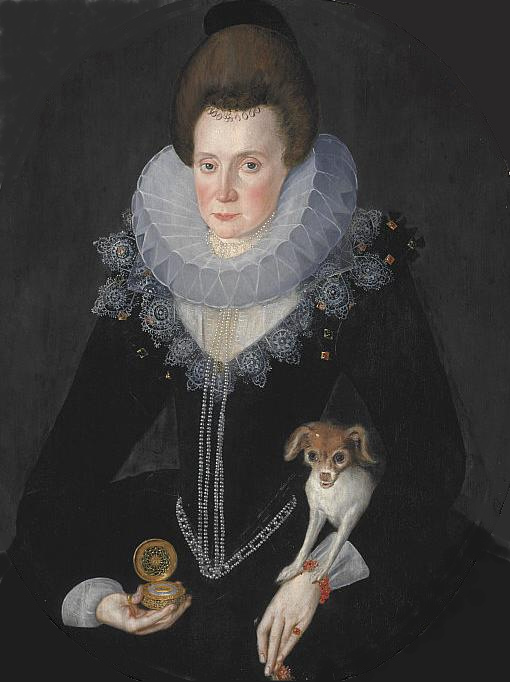
Lady Janet Douglas: A portrait of the Lady Glamis as she was seen as a great beauty when she lived.

The Douglas and Stewart families had been battling for power in Scotland for generations. When King James V’s mother, Margaret Tudor became a widow, Archibald Douglas married her and took control over the kingdom as King James was just a child. 

Living as Archibald’s prisoner for years and having taken the power away from him, the hatred King James V had for the Douglases grew. His hatred for Angus extended to the whole family and he wanted them gone when he finally escaped. 

Charged for Murder and Treason

In 1528, upon the death of Lady Glamis first husband, John Lyon, 6th Lord of Glamis, Lady Janet Douglas was immediately summoned for treason, accused of supporting the civil war against the King and of poisoning Lyon who died on 17th of September 1528. 

Her being unwed left her vulnerable and a target for the King’s vengeance against her brother. Lady Glamis brother, the king’s stepfather was already exiled and King James had seized all his land and property he was once a prisoner in. Now he sought revenge on the one he could get his hands in.

Charges were eventually dropped, and Lady Glamis were free to go back to Glamis Castle. She went on to marry Archibald Campbell in 1532, having ceased all communication with her brother and the rest of the Douglas clan to prove her innocence in any plot against the King. 

Her Final Arrest

Lady Janet Douglas’ reprieve was short-lived, however, as in 1537, she was once again summoned away from Glamis Castle for treason, and this time the King was going to have her punished. There were several reasons as to why she was picked out, one of the reasons was because of her beauty. She was seen as a unique and one of a kind beauty among the nobles and when her first husband died, she had several suitors. 

One of them was William Lyon, a close friend of her first husband. His obsession for her only grew and when she married Campbell, it turned sour. He started whispering in the king’s ear about her plans to poison him, and the king, looking for any excuse to get back at the Douglases, listened intently. 

Lady Janet Douglas was imprisoned with her husband and her son John in a dungeon of Edinburgh Castle, a castle riddled with rumored ghosts as well. Her husband managed to escape from prison, but was later killed when he was found. 

This time, the charges brought against Lady Glamis included being in secret talks with the Douglas clan, attempting to poison the King. To capture Lady Janet Douglas was easy enough, but to convict her for being a witch was more difficult as Lady Glamis reputation was impeccable and a loved character.  

The Lady Burnt at the Stake

To gather enough evidence for a conviction, King James had Lady Janet Douglas family members and servants imprisoned and tortured until they gave answers that he wanted.

In later years she has been remembered as being an accused witch, but nowhere in her files does it say she was ever accused of witchcraft as well. Perhaps it would have been better for her, as those accused of witchcraft were often strangled before being burned. Traitors didn’t have that luxury. 

In the end they all talked and Lady Janet Douglas was convicted. When they led her out from the dungeon, she was nearly blind after being kept behind bars in the dark for so long. Lady Glamis was burned at the stake on 17 July 1537 by Edinburgh Castle and It is said King James forced her young son, John from her first marriage to watch her agonizing death before letting him go.

Lady Glamis’ son was also sentenced to death, but because of his young age, he was not to be executed until he reached eighteen. Luckily for John, the king died before then and was pardoned, reclaiming his property of Glamis Castle and becoming the seventh Lord Glamis.

The Haunted Glamis Castle

Not many years after Lady Glamis’ execution, reports about a gray lady started to appear around the Glamis Castle grounds and people kept seeing this ghost, believing it to be her.  The castle is not the only place her ghost is said to have been seen though. In Edinburgh Castle, were she was held captive and at last burned alive, there have been reports about a ghost reminding them about the Lady Glamis as well.

The Haunted Castle: There are many mysteries if you delve into the legends surrounding Glamis Castle, from the monster of Glamis, the ghost playing cards for the rest of the eternity and many more apparitions and legends.

Back at Glamis Castle, she has been reported around the Clock Tower as well as in the chapel of the castle. People report an atmosphere of great sadness when they have seen her kneeling at the altar. For a long time one seat in the chapel was reserved for her and no one was allowed to sit in that seat. 

Once, The James the old pretender, during the Jacobite Rising in 1716, a direct descendant of her killer saw her sitting there, still haunted by his forefathers actions. 

More like this

Newest Posts

References

Featured Image: Ian Robinson/Wikimedia

The Ghost of Theatre Royal Drury Lane

Advertisements

In one of the oldest theaters there are also famous ghosts for those enjoying the drama of the stage. In Theatre Royal Drury Lane those working there as well as visitors keep reporting on several ghosts, one of them being the well known Man in Grey. 

There is not only one ghost haunting the old Theatre Royal Drury Lane. From the end of the front row in the upper circle to the wall near the royal box, many have claimed to have seen the ghost of W. J. MacQueen-Pope, an English theater historian and publicist. 

Also actors are said to have been haunting the stage, like the ghost of the Irish actor Charles Macklin who is haunting the backstage and wandering the halls where he once killed a fellow actor when they argued over a wig. Macklin threw a cane into the actor named Hallam’s left eye and murdered him in what was known as ‘The Green Room’. The murder was considered back then as an accident and he went free, but since then he has been haunted by the place of his crime. 

The pantomime actor from the Regency Era Joseph Grimaldi is seen as ‘the father of the modern clown’, and is also said to be a helpful ghost that guides nervous actors on the stage. 

There is also the ghost of Dan Leno that you can notice by the smell of lavender, a scent he often wore when alive. He can be mostly heard clog dancing in empty dressing rooms, still practicing without anyone to see. 

The Man in Grey

But perhaps the most famous ghost in the theater is the most mysterious one. The Man in Grey is a ghost that appears dressed as a nobleman in 18th century style of clothes. He has powdered his hair, wearing a tricorn hat, with riding boots and a sword. Who this man is, his name and what he does in the theater, no one knows for sure. 

Even before they built this theater in this place in 1812, there was another one before and is one of the oldest places for theater in continuous use and was even the place where the first version of the national anthem was sung. Several buildings burned down all the way back to when the original Theatre Royal Drury Lane was built already in 1663.

So its not so strange that ghost stories like about the Man in Grey started being told in the old and murky hallways when the stage light was low and there are no laughter from the audience or lively drama from the stage. And all the legends thinks the ghost of the Man in Grey is the haunting of the skeleton they found bricked up in the walls of the glorious theater. 

The Ghost on Fourth Row

In 1848 they did some renovations on the building and according to the legend, they discovered the skeleton of a man who appeared to have been stabbed inside. Builders are said to have broken into a secret room behind the wall that the ghost were always seen disappearing into. 

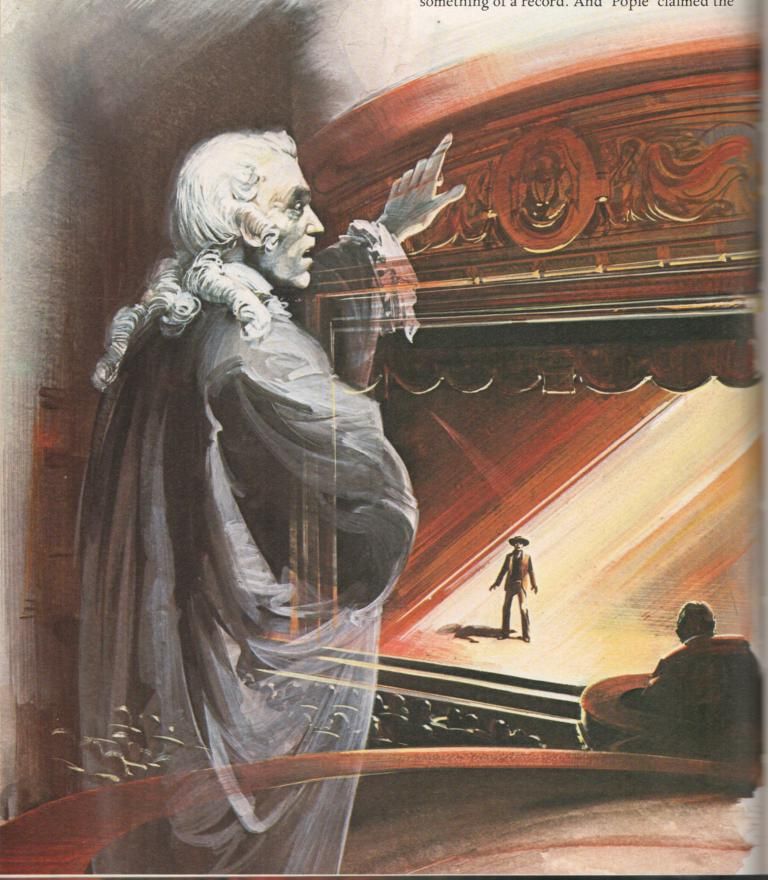
The Ghost: The Grey Man haunting the Theatre Royal Drury Lane. From the Hamlyn Book of Ghosts.

Many have reported about strange things happening in the Theatre Royal Drury Lane, mostly between 10 am to 6 pm. People hear doors being slammed when they are alone in the building. Seeing a fleeting image of a gray man before he disappears into the walls. 

The entire cast of The Dancing Years reported seeing him in 1939. One time a cleaner came in and saw him sitting in the fourth row in the Upper Circle and she thought he was an actor. She tried to speak with him, but then he vanished. When she looked around she could see him disappearing into the wall, the same wall where his skeleton was found. 

Actor Clive Carter told about a paranormal experience he had in the changing room were the TV kept changing the channel without anyone touching it. It first started when they talked about the Drury Lane Ghost, as if something was being summoned or could hear them very well. 

The Good Omen

Who was this man found inside the walls of Theatre Royal Drury Lane though? Only legends live on and many of them tell that the Man in Grey was killed because of a love affair with one of the actresses. He was once called to their usual meeting spot, but on one particular night it was his love rival who waited for him and killed him when he showed up. The murderer later walled up the alcove to cover up his crime. 

In contrast to many other ghosts out in the world, seeing the Man in Gray in the Theatre Royal Drury Lane is considered a good omen as sightings of the ghost have been seen before successful theater productions like The King and I, Oklahoma and Miss Saigon. 

More like this

Newest Posts

References

Inside the world’s most haunted theatre

About The Theatre Royal Drury Lane

Is the ghost at the Theatre Royal Drury Lane a good omen? 

Ghost of Nan Tuck Haunting the English Countryside

Advertisements

The Ghost of Nan Tuck is the haunted legend about an accused witch from England still haunting the woods; she, according to legend, was killed by the villagers chasing her down. Now she is haunting the place she was killed on.

The parish of Buxted in southeast England looks quaint and peaceful enough today if you don’t know its bloody history. The rural parish is green with farmland and woodlands stretching out to the coast. But between the green trees, there is a haunted legend from darker times still haunting the woods.

Nan Tuck is a ghost that is said to haunt the village of Rotherfield in Buxted, England. The story goes that she was a woman who lived in the 17th or possibly 18th century and was accused of poisoning her husband.

The Witch Hunting in England

Nan Tuck was sentenced to death by hanging as the punishment for murder as well as witchcraft was in England. But before she could be executed, she escaped and fled into the woods to escape punishment. Whether she actually did murdered her husband or not is never really discussed or how the trial was. In any case, she was guilty in the public eye and fair game to all.

Read more about witches like: The Legend of the Witch Moll Dyer or The Witches of the Black Diamond Mines

The public not only believed she was a murderer, but a witch on top of it. This was a time were the fear of witches was at an all time high in Europe and it is estimated that as many as 30 000 – 60 000 people were executed between the 13th to 18th century. In England there is estimated that around 500 were convicted as witches, 90 percent of them women. In England they didn’t burn the witches, but they hanged them.

Many of these deaths had no records of them, and we can see this with this story, that has no written records of it whatsoever, and solely relays on oral tales throughout times. This is what the legend of the Ghost of Nan Tuck tells us.

Nan Tuck’s Escape Into the Woods

Nan Tucks Lane: Heading through Solomon’s Wood. Named after the Ghost of Nan Tuck who was chased down this lane by the irate villagers of Buxted who believed she was a witch. // source

The whole village rallied and started to chase the wicked witch and murderer down in the woods. For days Nan Tuck evaded them by hiding in haystacks, climbing hedges and sneaking around in the woods to escape certain death.

Read More: Haunted Forests across the world

It is said that she was attempting to take sanctuary in Buxted Parish Church known as St Margaret’s Church– according to the right of asylum, fugitives were allowed to escape punishment by touching the altar of a church if they were able to reach it – when local officials who were in pursuit forced her into the woods, and she never reached sanctuary.

Nan Tuck disappeared that night and was never seen again – alive. According to some versions of the tale she was caught up by the angry villagers and it was them who murdered her. In some versions she was killed in the woods, in others, she was taken back and they held a trial by water.

The trial by water was a highly deadly method of finding out whether or not someone was a witch by dunking them in water to see if they floated or sank. And with so many other women accused of witchcraft, she drowned during the trial, which ironically meant she was not a witch as the holy water didn’t repel her, causing her to float like a witch.

The Ghost of Nan Tucks Lane

The legend of Nan Tuck is one that has been told ever since. Sometimes the Ghost of Nan Tuck is depicted as a young woman, sometimes as an old one. It is said that her ghost can be seen wandering the woods near Rotherfield at night.

Legend holds that a circular patch of land in the woods near Nan Tucks Lane, were she supposedly tried to escape through, stays infertile and no vegetation will grow there. And the question if the Ghost of Nan Tuck really was a witch, still remains to this day.

Read more about: Haunted Roads across the world

So if you are walking down Nan Tucks Lane late at night and meet someone, perhaps hide and duck as it might very well be the Ghost of Nan Tuck coming for you.

The Nan Tucks Lane poem by Roy Carnon

Whether there really was a woman behind the legend is also a bit uncertain. But the legend of the Ghost of Nan Tuck haunting the woods has made into songs and poems, like this by Roy Carnon:

The new moon older by a memory threw this sinuous line down and round Poundsley way.
Following feet that trod the centuries across the weald – deepening contoured tracks unknowing.
The way imprinted to Hadlow, Framfield, Buxted, – on to Blackboys, cruciform neeting, pointing the fingerpost of death.
Following feet – feet following years crushed harsh in grass; tearing the flowers wond – gaping raped petals laid cold on the lane.
Congealing tar concealing blood, the shape of your agony lays still on bruised grass still on earth maimed by you fall. Tear-blurred, memory retreats beneath track-patterned clay but a Sussex lane remembers.

More like this

Newest Posts

References

Buxted – Wikipedia 

Nan Tucks Lane – The story of the Ghost

Unveiling the Dark History of the Tower of London and its Ghosts

Advertisements

Uncover the hidden shadows of England’s majestic Tower of London, home to stories of more than one ghost haunting the rooms, the hallways and the prison cells from many dark parts of England’s history.

Shrouded in centuries of fear and mystery, the ancient walls of the Tower of London on the north bank of the River Thames, hide within them a plethora of ghost stories that have been passed down through generations. 

From secret passageways to encounters with mysterious apparitions, visit the legendary Haunted Ghosts Tower to uncover its dark history and uncover its spine-tingling tales of beheaded royals, tortured prisoners and missing princes as well as menacing forces following the guards.

The History of the Tower of London

Since its inception in 1066, the Tower of London has served as a royal residence, prison, armory and execution site. The White Tower gave the castle its name and was built by William the Conqueror in 1078. It was a symbol of the oppression over London after the new Norman ruling class.

Over the centuries it has seen kings and queens come and go, watched prisoners be tortured and witnessed countless executions within its walls. It ended up being a symbol of royal power and one of the most secure fortresses in the country. It is not only a stronghold of history but also an enduring source of horror stories that continue to haunt us today.

The Tower of London is known for its grisly past, having been the home to many famous and infamous prisoners until 1952. These included some of England’s most treasured monarchs, such as Anne Boleyn who was beheaded on May 19th 1536 and Sir Walter Raleigh, imprisoned in 1603 by King James I. 

Other more notorious prisoners held at the tower were Guy Fawkes and conspirators involved in the Gunpowder Plot, who were later hung, drawn and quartered.

Ghosts in the Tower of London

The Tower of London is reportedly one of the most haunted places in England, possibly due to its long and dark history. Ghostly figures are said to wander the dungeons, some even claiming to have seen Anne Boleyn’s headless ghost roaming its corridors. 

Lady Jane Grey

One of the most recorded ghost sightings is that of Lady Jane Grey, a young girl who was crowned Queen for nine days before she was imprisoned and eventually beheaded at the ripe age of 17.

The Execution of Lady Jane Grey: An often spotted ghost in Tower of London is Lady Jane Grey. This is an oil painting by Paul Delaroche, completed in 1833, which is now in the National Gallery in London. It was enormously popular in the decades after it was painted

She was originally put as a queen to prevent the Catholic Mary Tudor from sitting on the throne. She first came to the Tower for her coronation, but was soon back as a prisoner. Mary I was ready to spare both her and her husband’s lives if they converted to catholicism. Lady Jane, a devout protestant refused. She was executed on 12 February in 1554 on Tower Green. 

She is seen as a lonely ghost, wandering the battlements of the Tower. Her husband, Lord Guildford Dudley is also supposedly haunting the place. He can be seen in Beauchamp Tower, sitting in his cell and crying in the middle of the night. 

Ghost of Henry VI

Henry IV was the only English monarch to have been crowned King of France as well and he inherited the Hundred Years War from his uncle. He was crowned king of England at only nine months, the youngest person to have succeeded the English throne. 

This was also the start of The War of Roses, a series of civil wars and Henry VI was imprisoned in the Tower of London in 1465, reinstated as king in 1470, but then imprisoned again in 1471.

Henry VI died that year, possibly killed on orders from King Edvard IV who took his crown. 

Henry VI: Depiction of Henry enthroned, from the Talbot Shrewsbury Book, 1444–45. Although the official death was that he died of melancholia, however, many think he was assassinated in The Tower of London.

Strange legends started to form around the late king after his death and he was hailed as a martyr and a saint that had done plenty of miracles. It is also said that he is one of the ghosts still haunting the tower.  

It is said that he is seen at the last stroke of midnight in the Wakefield Tower, where some say he was praying when he was stabbed to death. 

Margaret Pole

Margaret Plantagenet, Countess of Salisbury was a powerful woman who was one of the few of the House of Plantagenet to have survived the Wars of the Roses. 

She was tried and sentenced to death to be executed whenever the king wanted. She spent two and a half years in the Tower of London as a prisoner before her execution happened in 1541. 

Margaret Pole claimed her innocence until her last hour. This poem was found carved on the wall of her cell:

For traitors on the block should die;
I am no traitor, no, not I!
My faithfulness stands fast and so,
Towards the block I shall not go!
Nor make one step, as you shall see;
Christ in Thy Mercy, save Thou me!

Margaret Pole: This is an Unknown woman, formerly known as Margaret Pole, Countess of Salisbury, by unknown artist, given to the National Portrait Gallery, London in 1931. Margaret Pole led an especially bloody execution in the Tower of London.

The execution is said to have been bloody and grisly and the proud lady refused to kneel on the scaffold as that was for traitors, and she was none. The executioner had to chase her around as she tried to run and hacked her to death. She is now thought to be one of the many nobles that are haunting the Tower of London with her screams echoing on the Tower Green.

The Many Ghosts of Anne Boleyn

Many believe that the ghost of Anne Boleyn haunts the Tower of London due to her untimely demise. She married Henry VIII and altered the British church forever when she did so as the king had to divorce his original queen and wife for it. They were only married for three years though and she was unable to give him any sons. What she did though was give birth to what would be Queen Elizabeth I that would be one of the longest regents in the country.

During King Henry VIII’s reign, she was famously arrested, accused of treason and beheaded in 1536 at the Tower and has since become one of the most famous people in England’s history. 

Haunted: The ghost of Anne Boleyn are said to be haunting, not only the Tower of London, but have been seen on several locations. Here is a painting depicting Anne Boleyn imprisoned in the Tower.

Anne Boleyn is supposedly a very busy ghost and she is said to haunt not only the tower but Hever Castle, Blickling Hall, Salle Church as well as Marwell Hall.

In the Tower of London she supposedly haunts the chapel of Church of St Peter ad Vincula in the tower where she is buried. She is also said to walk around the White Tower and on the Tower Green where she was held captive until her execution. 

Her ghost is often spotted wearing a gray dress and walking with her head tucked under her arm—mirroring how she was killed. According to legend, if you see her apparition it means that death is soon to come.

The Mystery of the Missing Princes

One of the greatest mysteries in English history remains unsolved—the fate of the two young princes whose uncle, Richard III, had them sent to the Tower of London in 1943 where they were never seen again. 

The Murder Mystery of the Tower of London: King Edward V and the Duke of York (Richard) in the Tower of London by Paul Delaroche. The theme of innocent children awaiting an uncertain fate was popular amongst 19th-century painters.

They were the sons of the late King Edward IV and were 9 and 12 years old when their father died and they were sent to the Tower of London. They grew up in great political turmoil during the Wars of the Roses, a series of civil wars of two branches of a family were fighting for the seat of the throne. 

During their disappearance many assumed that Richard III was responsible for their murder, although this has since been disproven, or at least, bare little hard evidence to. But the most talked about theory is still that they died or were murdered pretty soon after they disappeared. To this day no one knows what happened to them, giving rise to a host of different theories about the missing princes.

Many of the paranormal activity and ghost sightings have been connected to the two missing princes, and many believe they are some of the ghosts that never left the tower at all. They are seen holding hands and wearing nightshirts in the White Tower as well as playing and giggling on the battlements. 

Sir Walter Raleigh

Other ghosts that are said to haunt the Tower is that of Sir Walter Raleigh who were imprisoned in the tower once for a secret marriage and the second time for treason. The second imprisonment ended in an execution and his ghost is said to haunt the Bloody Tower where he was held. 

The Ghost in the Bloody Tower: Many of the prisoners were political prisoners, often charged of being traitors. Sir Raleigh just before he was beheaded – an illustration from circa 1860.

The Ghost of Sir Walter Raleigh is also said to be seen along the battlements who is now known as Raleigh’s Walk

Arabella Stuart and the Unknown Ghosts

The Gray Lady is an unidentified ghost as well, but she is haunting the Queen’s House of the Tower and her presence is only seen by female visitors. This place is also where the ghost of Arbella Stuart is seen after she was either murdered or refused to eat at all. 

Lady Arabella Stuart: She was at one time considered heir to the English and Scottish thrones, though she did not aspire to them. She died of self-inflicted starvation in the Tower of London, in 1615.

Other unnamed ghosts that have been reported on are the White Lady whose presence is made known by the smell of cheap perfume that has made visitors sick. 

The Legendary Guy Fawkes

Remember, remember the Fifth of November,
The Gunpowder Treason and Plot,
I know of no reason
Why the Gunpowder Treason
Should ever be forgot.

Fawkes led the infamous Gunpowder Plot with a group of English Catholics that planned to kill the Protestant King James by blowing up the parliament. They were found out though and the plot failed and Fawke was arrested and sent to the Tower. 

After torture, possible “on the rack” a famous torture instrument in the Tower, he gave in and told them all about their plan and named his accomplices as well. 

Interrogated and Tortured: Guy Fawkes 1570-1606 interrogated by James I 1566-1625 and his council in the King’s bedchamber, from Illustrations of English and Scottish History Volume I (1884).

For his execution in 1606 he was dragged from the Tower to Westminster to have the last sight be the building he tried to destroy. He was the last to die and had to watch his accomplices be hanged. He begged forgiveness of the King and the state as he walked to the scaffold. He was hanged and his body parts were distributed to the four corners of the kingdom as a warning sign to others that had their mind on treason. 

Guy Fawkes are also one that are said to haunt the grounds and some claim to hear his screams from where he supposedly was tortured. .

The Animal Ghosts

Can animals become ghosts? According to the lore in the Tower of London, there are plenty of them. Having exotic animals like lions, pumas, tigers and elephants were something the rich often were gifted and a popular thing to have in your home to show off your wealth and power. 

The most famous animal ghost in the Tower was a grizzly bear that supposedly charged at a guard around the Jewel Room who died of a fever two days later. There have also been spotted a Black Bear near the Martin Tower in 1816. 

More like this

Newest Posts

References

Tower of London – Wikipedia

Tower of London Ghosts | Haunted London | Authentic England

The 13 Ghosts Of The Tower Of London

Ghosts of Mary King’s Close

Advertisements

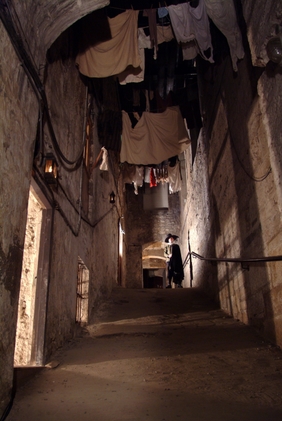
Scratching sounds from the chimney, plague victims left for dead and floating heads, the haunted underground of alleyways known as Mary King’s Close haunts under the city. 

Today much of what you see of Edinburgh is an old town built on top of an even older town. Right opposite St Giles Cathedral you will find The Mary King’s Close or alleyways which are said to be haunted.

It used to be a normal street in the old town by the Royal Mile with narrow alleyways and cobbled streets. It was named after a successful business woman named Mary King working as a fabric merchant in the 1630s. 

Advertisements

So first off, what is a close? A close was a private area that got locked up at night to keep unwelcomed out. The richer lived on the top floors, away from the stench of the sewer and where most light came through the claustrophobic streets. 

The Plague

During the 1645 plague the city became overrun with rodents carrying diseases and it hit the Mary King’s Close pretty hard. They would hang out white sheets to show they were infected and in need of food and a plague doctor. Only the bravest plague doctors, one named Dr George Rae dared to venture into the close filled with plague ridden people.

Victims of the disease were quarantined and left for dead to die in the streets. One by one the residents either died or left the Close and were relocated to Burgh Muir, and they didn’t return until almost 40 years after the plague hit its peak. When they returned however, everything seemed to have changed. Since then there have been reports about strange things going on in the underground narrow streets. 

Plague Doctor: On the 13th of June 1645, Dr George Rae was appointed as Edinburgh’s second Plague Doctor. During the plague he went around to treat the plague victims. He cut open and cleaned out the puss from the swellings caused by the bubonic plague. He would then burn the wound to catheterize it. He was considered to be one of the more successful doctors during the plague.

What was it that made people see ghosts during this time? Was it the plague victims that were left behind? Or could it be the methane gas from the polluted march right by that caused everyone to see things?

Many tell the tale that it was to cover up the corpses of the plague victims that they built another street on top of it. The true story though is that they built the new street on top of the decaying old one in the 17th century to make a place where tradesmen could be. 

Advertisements

Life continued to go on underneath the surface though as not everyone wanted to leave. The last residents didn’t leave Mary King’s Close until 1902. And if we believe the legends, the last resident named Andrew Chesney never truly left as he is said to be one of the ghosts that haunts the place.

The Hauntings of The Colthearts

Back to the aftermath of the plague. Decades had passed since the plague had reached its peak and people started to return to the Mary King’s Close. But as mentioned earlier, the place had started gaining a notorious rumour of being haunted. And that was according to the residents themselves.

Claustrophobic: The narrow streets of Mary King’s close.

In 1685 a well respected lawyer named Thomas Coltheart moved into the close together with his wife. But their stay was not a happy one at all times.

The maidservant ran off claiming the house was haunted. And it was not long until Coltheart and his wife also noticed strange things. According to them when the Mrs. Coltheart sat reading her bible, she saw a head without a body float in the house, causing the wife to faint. 

First, Thomas Coltheart didn’t believe her when she tried to explain. But It returned later that night with the spirit of a child and a floating severed hand beckoning them to come towards them. They tried to pray the spirits away, but to no avail.  

Lastly they saw the spirit of a dog running after a ghost cat, creating a chaos of spectres and noises that night. And according to them, that was not the only time they were bothered by the spirits.

Apparently they claimed that the dog returned again and again, not leaving them in peace,

Surprisingly, the couple chose to never leave the Close and stayed there until their death. Needless to say, it turned them mad according to some sources. Or did the madness create the visions?

Abandoned Annie

One of the ghosts that are suppose to haunt the place is that of Abandoned Annie. She is the ghost of a little girl that is allegedly reaching out to grab your hand in the darkness.

She was named that by the Japanese psychic Aiko Gibo who visited the Mary King’s Close in 1992 and found the child ghost crying in a corner of a room. Aiko claimed that Annie was a plague victim who was abandoned by her parents. According to the psychic Annie wanted a doll to not feel so lonely. 

Today she has her little altar in what is now known as Annie’s Room with thousands of dolls, toys and money left by her visitors. They are all collected by the city council to donate to and help sick children. 

Visit the Underground

The Close was mostly forgotten after the last residents moved out and they didn’t really remember the old place until they once knocked through the walls during construction. 

The place was not opened for the public until 2003, but is now perhaps more busy than it was before they closed it up. Today you can access the underground alleyways from the Royal Mile as a tourist attraction. You can now experience the uniquely preserved cobbled streets as it would have been before the 1800s. 

Advertisements

More like this

Newest Posts

References

The Most Haunted Places in Edinburgh’s Old Town – Dickins

The Story Behind Edinburgh’s Mary King’s Close

Mary King’s Close: Underground Edinburgh’s buried street

The Ghosts of Mary King’s Close, Edinburgh | Haunted Rooms®

Mary Kings Close – Dark Hauntings

Edinburgh Castle Ghosts and Legends

Advertisements

Witches, dragons and ghosts, Edinburgh Castle are said to have it all. The sound of bagpipe and drummers can be heard without anyone playing, and those accused for witchcraft as well as prisoners of wars are said to haunt the old castle.

Although the castle as we know it today wasn’t built until the 12th century, the Castle Rock has been lived on for more than 2000 years. It is built on top of an extinct volcano formed 350 million years ago. The castle itself has been built and rebuilt over the years but you can still find traces of the castle that are over 900 years old. 

It is also the place in Britain that has been attacked most times with a record of 23 attempts to take over the castle. It has a story filled with wars, bloody battles and tortured, and is said by many to be a haunted landmark that watches over the old town. 

Edinburgh Castle: There are so many alleged ghost stories coming from Edinburgh Castle perched on Castle Rock. Among them is the Grey Lady, the missing Piper and little drummer boy. There are also ton of older legends about dragons, black hounds and ties to ancient romans and Arthurian legends. How much of it is really true?

History of Edinburgh Castle

Nine Maidens: Morgan le Fey is said to be one of the Nine Maidens in Arthurian legend. By Anthony Frederick Sandys from 1864.

The castle holds many legends to its name. According to the origin story, the first castle that was built on the hill was named The Castle of the Maidens, built as a shrine to the Nine Maidens, a mysterious and old cult of religion that can be found throughout many countries in Europe. One of these supposed Nine Maidens in Scotland are often attributed to being Morgan le Fay, a mythical figure in Arthurian legend that are said to hold magical abilities.

Even if there are no real substance to her being a real figure, the legends of fantastical magical things keeps being told around the castle grounds. Another legend from older times is the dragon. As far back as 1558 there were several reports about a dragon that was supposedly seen on one of the biggest towers at the time.

Even if there are no more reports about dragon sightings, there are still many urban legends about the castle that lives on to this day. There is also an urban legend that if students pass through the castle gates, they will never pass their exams. Many students are following this rule, and never visit the castle during their stay here, just in case.

Ghosts of the Castle and Haunted Legends

As well as fantastical rumors about dragons and mythical sorceresses, there are legends of ghosts and hauntings. Among the many haunted rumors of the castle, there are reports of the strange sound of drums and music. You can also hear the vague knocking sound you can never be sure to be the wind or something more ominous. 

People report of A sensation of being touched, pushed as well as a feeling of dread and despair can follow you when walking along the stony walls. There are also reported sightings of curious lights and flaky figures in the shadows. It is said a black dog is haunting in connection to the pet cemetery on the castle grounds as well as a man in an apron. But there are some ghostly legends more told than others:

Ghosts from the Witches Burned at the Stake on Castle Ground

One thing the castle was in the lead for was for burning more witches during the 16th century than the rest of the country. Over 300 women were tortured before being burned at the stake at Castle Hill, everything from simple peasants to noble women.

Among them, Dame Euphane MacCalzean, accused of witchcraft in the North Berwick witch trials. She was found guilty and burnt alive on 25 June 1591 on the southern slope of the Castle Hill below Edinburgh Castle.

The North Berwick Witch Trials: Dame Euphane MacCalzean was a notable figure in the North Berwick witch trials of 1590-1591, one of Scotland’s most infamous witch hunts. A well-educated woman of noble birth, she was accused of conspiring with witches to raise storms against King James VI’s ship during his return from Denmark.

Some believe the spirits of these women linger still, their pain echoing across time. if we are to believe the haunted legends, there are perhaps one or two of the accused witches that are haunting the castle.

Red More: Check out Agnes Sampson — The Wise Wife of Keith to read about another haunt from one of the victims who were convicted and killed in the North Berwick Witch Trials.

The Lone Piper Boy Playing Under the Royal Mile

Walking in the historical city of Edinburgh, the sound of bagpipes is heard on every occasion. On a random street corner, from the tourist shops, during a parade or as a part of the historical landmarks. Bagpipes are the thing, perhaps even from the ghosts of the city.

The Piper: The Bagpiper by Johann Christoph Erhard.

The most famous ghost that is said to haunt the castle is the piper that was sent down to explore some tunnels they found ran under the castle towards Holyrood Palace a couple of hundred years ago. A young and small boy that would get through the network of tunnels. 

According to the legend, the regimental piper played his pipe as he ascended down the Royal Mile, stretching through the old town from the castle. Halfway down the mile to Tron Kirk the music suddenly stopped.

A search party was sent down to investigate after the music stopped, but the piper was never found again, and they sealed the tunnel’s shut so no would could get in… or out… According to legends though, he was certainly heard. He is said to walk the royal mile to this day and the unmistakable sound of bagpipes can be heard from underground. 

So perhaps walking down the Royal Mile, the sound of the bagpipes echoing throughout the whole city might as well be from the ghost piper?

The Headless Drummer Boy

Another ghost that has been sighted on several occasions is that of a little drummer boy without a head. He was first seen in the central courtyard of the castle in 1659, a year after Charles I was beheaded. He was walking in circles, drumming his drum playing an Old Scottish war tune. When the castle servants looked closer, they saw that he didn’t have a head. It is said that he drummed all through that night and continued until the morning. 

Although he has not been seen again, he is considered a bad omen if he ever appears again. The same year he showed himself, Oliver Cromwell invaded Scotland and laid siege to the castle. Is this enough to give credit to the legend?

Even though no one has seen him since that fateful night, the servants working at the castle have throughout the years claimed to have heard his drumming in the quiet hallways of the castle from time to time. Who knows… Perhaps the next time someone sees the drummer boy, the castle will once again come under attack?

The Grey Lady Haunting the Halls of Edinburgh Castle

A mysterious lady has been reported staying in the older parts of the castle. Sometimes she is just seen wandering around in her 16th century dress and sometimes she is reported to weep. 

Janet Douglas: Lady Glamis was a noblewoman accused of witchcraft, who was executed by burning during the reign of James V of Scotland.

There are several real nobles she is thought to be: The first one is Janet Douglas or Lady Glamis. She was accused of witchcraft and burned to the stake outside the castle on July 17th in 1537 with her son watching it all. It is said that even back then, they knew that the accusations were wrong, but King James V held a grudge towards her brother and took it out on her. 

Janet also haunts Glamis Castle as The Grey Lady of Glamis, wandering through the family chapel and clock tower.

Read Also: Check out Lady Janet Douglas, Ghost of Glamis Castle to read more about Lady Janet Douglas and how she is said to haunt the Glamis Castle as well.

Others think that the Grey Lady haunting Edinburgh Castle could be the French Marie de Guise, mother of Mary Queen of Scots. She died a catholic and the Protestant nobles held her body inside the castle for nine months before returning her to France, wrapped in a cloth inside a lead coffin. She was then secretly taken to France for a proper burial in the Convent of Saint-Pierre in Reim.

The Prisoners in the Dungeon and Towers

There are also the castle dungeons where they housed criminals for centuries that are supposedly haunted. There were many wars that the castle dungeon saw: the Seven Years War, The American War of Independence and the Napoleonic Wars just to mention a few.  

According to legend, from one of these wars, the ghost of a prisoner is said to haunt the castle to this day. In 2003, construction crew members restoring the Queen Anne Tower claimed ghosts of prisoners from the Napoleonic Wars harassed them and refused to work there. Who knows what they really saw, but there are certainly rumors. The hazy blue orbs mentioned earlier are said to appear more frequent in this tower than in the rest of the castle.

But who was this prisoner? The legend tells of a prisoner who tried to escape in a wheelbarrow filled with dung that were taken out of the castle. The cart was dumped over the high castle walls and the prisoner broke his neck when he hit the rocky ground below. He now haunts the place and tries to push visitors down Castle Rock. What gives him away is the lingering smell of dung in the air. 

The Legends Living on in Edinburgh Castle

That was some of the ghosts that are said to be haunting the castle. Old places like these will have its history, and through all the bloodshed and Even today, myths surround Edinburgh Castle. Students avoid crossing its gates, fearing it may curse their exams still to this day.

But it’s the ghostly activity that chills the hearts of visitors. Phantom touches, flickering lights, and shadowy figures have been reported. The sounds of drums, faint knocking, and whispers stir something restless in the castle—perhaps spirits that will never truly leave. legends surrounding the place since the first people arrived on the rock, the place will hold its stories.

More like this

Newest Posts

References

The Most Haunted Places in Edinburgh’s Old Town – Dickins

Edinburgh’s most haunted locations | The Scotsman

The Headless Drummer Boy – Folklore Scotland

Edinburgh Castle Ghosts

Facts, Fiction And Urban Legends About Edinburgh Castle

Ghosts of Edinburgh Castle

The Most Haunted Place in Scotland | Ghosts of Edinburgh Castle | My Macabre Roadtrip 

Spooky sightings at Edinburgh Castle and the ghosts that are claimed to haunt the halls 

Edinburgh Castle Ghosts – Is Edinburgh Castle Haunted? – Wandering Crystal