Tag Archives: tradition

The Haunted Yongin Folk Village

Advertisements

In a town made up of old houses or replicas of homes from the Joseon Dynasty, Yongin Folk Village has today status as one of the more haunted places in South-Korea. 

Nestled right amid the modern city in Seoul, where high risers, public transportation and life are all from the 21st century, a small place where the traditional ways are allowed to remain in peace. 

The place of Yongin Folk Village perhaps looks a bit familiar to those interested in Korean period dramas, and famous TV series like Kingdom, 100 Days My Prince and The Moon Embracing the Sun for instance. But for many it has also been known in the later years as one of Korea’s most haunted places. 

Read also: Top Korean Horror TV-Series

Top Korean Horror TV-Series

The last few years, K-dramas has certainly taken over much of the media the world consume today. And although it is largely remembered from the overly romantic dramas with umbrellas in the rain and watching over people with a cold like they are on their deathbed, some more darker series has caught on. In fact…

Keep reading

The Traditional Folk Town

Though the town Yongin Folk Village (한국 민속촌)  itself looks real enough it was first opened in 1973 as a response of the rapid westernization as well as the industrialisation of Korea at the time. 

Read More: Check out all of our ghost stories from Korea

This first open air museum in the country was supposed to work as a living museum and a destination to experience Korean culture, not only for foreigners to learn, but for Koreans to remember. 

Traditional houses: Traditional thatched roofed houses from the late Joseon Dynasty are all around the Yongin Folk Village.

Yongin Folk Village is found in the Gyeonggi province right by the capital, and the over 260 houses were relocated from across the country and put together to be a replica of a village and how it would have worked and looked from the late Joseon period. So although the museum is a fairly new and modern thing, the things inside it are old, very old. And believing the many legends about the place, also very haunted. 

The staff working in the folk village are all dressed up in costumes as well, representing characters from the Joseon Dynasty, contributing to the special atmosphere of the place. You can also attend workshops, watch performances or even host a traditional wedding ceremony there.  

Ghost Month of Summer

So where do the tales of the Yongin Folk Village being haunted come from? With the old and mysterious atmosphere there are no wonders legends about the place started to come. The events that are held by the village have perhaps also been a contributing factor to the ghost rumors. 

During the summer months the folk village hosts ghost events to highlight the ghost season which in Asia for most parts is in the late summer months. But also in later years Halloween later in the fall has become much more popular as well, and there are more than one ghost and haunted related events in the village. 

But there are those who claim that the folk village is not only haunted by ghosts or gwisin during ghost month or Halloween, but all year. 

Read also: The Obon Celebration

The Korean Virgin Ghost

Because there are those claiming to have seen actual ghosts around the village and in the supposed haunted old houses. Mainly tales of the Korean Virgin Ghost have been spotted with her dark long hair and wearing traditional burial clothes. 

Performance: Dancers holding a traditional Korean dance performance for the visitors in Yongin Folk Village.

According to legend, virgin ghosts were women that died before being married, and very often held a grudge and power to avenge herself in the afterlife. 

Read also: The Korean Virgin Ghost

The Korean Virgin Ghost

The Korean virgin ghost may be based on the ideals that all a woman needs is a husband, but the anger of these spirits tells of a woman with another purpose. And that is mostly vengeance. 

Keep reading

Question is, could it be nothing more than an actor wearing a costume and being too good at their job in the haunted house section of the village, or could it actually be something supernatural afoot?

The wildest claim though is the rumor that this is the place where the legends of the Virgin Ghost started. Especially since most written notices about ghosts being spotted in the village are vague or connected to the haunted house events.  

But when we look at the history of the Korean Virgin ghost, the legends about them trace back longer than the village itself. Although, perhaps the legend is as old as some of the houses that were relocated?

More like this

Newest Posts

References

Pagbag — The Filipino Way to Shake Off a Ghost

Advertisements

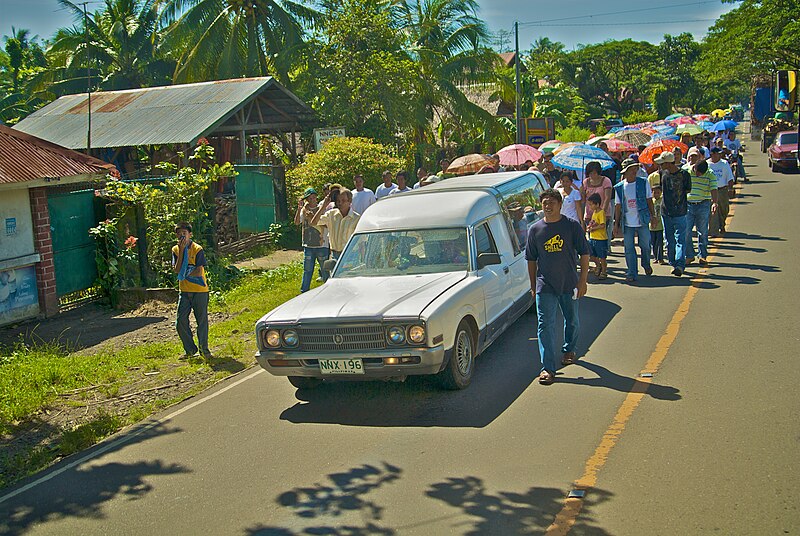
If you have been to a wake or a funeral in The Philippines, you may not go straight home after so you don’t bring the ghost with you. 

Around the world there are all kinds of different customs to funerals and wakes, everything from what you wear, eat and behave. And in The Philippines, there is a specific custom to not draw the spirits or ghosts with you home. 

Funeral: Philippines Funeral Procession. // Photo: moyerphotos

There is a superstition that you are not supposed to go straight home after a wake or a funeral. Pagbag is a tagalog term that means ‘to shake off dust or dirt’, and it is believed that you should not welcome ghosts and spirits into your home. It should not be confused with the term that is also used to talk about leftover food, scavenged and collected outside of supermarkets and restaurants.  

So instead of going directly home after a wake or a funeral, you are supposed to wander around after to help shake off the ghost and spirit so as not to bring them home. After an event like that, you supposedly carry too much bad energy you must get rid of. 

Perhaps today not everyone believes that they would drag a ghost with them on their way home, but still do it because of tradition. People usually go to places like a cafe, a park, a shopping mall or something before heading home, just in case. 

There are several superstitions surrounding the Filipino wake, ranging from the belief that you shouldn’t bring home food from the wake as a guest or to look into a mirror when you are in the presence of the dead.  

Advertisements

More like this

Newest Posts

References

http://folklore.usc.edu/pagpag/

‘Pagpag:’ Stylish superstition

Ghost Marriage — The Chinese Way to Marry the Dead

Advertisements

In China there was a tradition of ghost marriage where the family of the dead arrange a marriage from beyond the grave, and there are still cases where the old tradition is not quite dead. 

The practice of mínghūn (冥婚), yinhun (阴婚) or Ghost Marriage in China, has been practise for over three millennials in some form in the country. There have also been found forms of Ghost Marriages in Sudan, India and France, Germany in various forms, but not like in the traditional sense that mínghūn is considered to be. 

The mínghūn is used about a marriage when one or both of the parties in a marriage are deceased at the time of the wedding. The bride’s family demands a dowry, all in the form of paper tributes, which is what you offer the dead. 

Read More: Check out the article about the book about ghost marriage and the real history behind it: The Ghost Bride – The Book and the Real Ghost Marriage

There is even a ceremony and a banquet to marry the two for eternity. The one thing that sticks out from a normal wedding between two living people is the digging up the bones of the bride if she was buried to place them inside her new groom’s grave. 

Why Marry The Dead

The reason for the Ghost Marriages is so that the dead won’t be alone in the afterlife. Many elders particularly believe that people dying without fulfilling their wishes to get married will not rest and come back to haunt the living. There is also the case of connecting family bonds for the living. 

The Horror Marriage: The Ghost Marriage or mínghūn have strong traditional ties that are still hanging on in modern day China. It is often used a motifs in Asian horror movies and series. Here from the movie, The House That Never Dies (2014), featuring a Ghost Marriage. Read here about the haunted mansion it is set in.

One of the more practical reasons for marrying off your dead relative in a Ghost Marriage, was the custom that dictated that a younger brother shouldn’t marry before the elder one was. And if the elder brother was dead, a Ghost Marriage would be proper to not disturb the brothers ghost. 

In many cases, Ghost Marriages were and are means to bury their loved ones in a proper way. A nice idea and sentiment, but can this practice be dangerous for the living or even the unvilling dead?

An Old Tradition that Lives On

Although the origin of this practice and the ritual is mainly unknown, there are still some cases that still uphold the tradition of Ghost Marriage, especially in northern China and other more rural parts. 

Read More: Check out all our collection of ghost stories from China

In 2015, there were no less than 14 female corpses stolen in one village in the Shanxi province to meet up the demand of corpse brides. There was a market for it, and so was the opportunity of making money from it as the price of a corpse of a young woman has skyrocketed, and could go for up to 100 000 yuan, even if the sale of corpses was made illegal in 2006. 

The price is determined by how complete the bones are, how pretty she was, family background, and cause of death. For example would a woman that died of an illness be worth more than one that died in a traffic accident. 

Stealing and Murdering for the Dead

The Living Ghost Brides: In modern media, Ghost Marriages are often presented were a living woman is being sacrificed to a dead man as his wife. Here from the Filipino horror movie, The Ghost Bride (2017).

In 2021 the ashes of a popular live-streamer were stolen from Shandong province in eastern China. The internet celebrity named Luoxiaomaomaozi had taken her own life during a lifestream, but her ashes were stolen by a staff member of the funeral home to be sold to a local family as a ghost bride to their dead son. And this is not the only case in recent times where some went too far to get a body.

Like a case from April 2016 were a man was charged with the murder of two women with a mental disbility, claiming he wanted to sell their corpses to be used in ghost weddings. This happened in Shaanxi province, north-west in China, but it isn’t the only place. 

In 2015, a man in Inner Mongolia was arrested because he killed a woman so he could sell it to a family, looking for å ghost bride. The man, only known as Ma, had promised the woman to find them husbands, but ended up killing them instead to sell their corpses. 

Why are these cases so prominent in northern and central China such as Shaanxi, Shanxi, Henan and Inner Mongolia provinces? There are several factors included here as well as cultural beliefs and strong traditional practices. There are also very practical reasons. The ratio of men to females is extremely high, and the coal mining community sees many young men die before their time and before their marriage. A gift from a ghost bride seems like a small compensation.

How to Arrange a Ghost Marriage

Although the practice was banned in 1949 by the Chinese Communist government, there are still those who practice this in secret, and in many cases it is considered almost a profitable business. There are several ways the Ghost Marriage can be arranged. 

Often it is a standard arranged marriage where the parents seek a matchmaker to find a suitable spouse for their child. In fact, ghost marriage matchmakers have seen a big profit in their business over the years. 

Sometimes, the family of the deceased goes to a divination and hears about the wishes from beyond the grave that the family member is seeking to be married or they have a dream themselves. Then it is up to the family to seek out a suitable spouse the deceased already has pointed out or help in the quest of finding one. 

The Dangers with Ghost Marriage: Even though, in the rare cases it happens, most ghost marriages happens between two already dead children with both their parents consent to join the families. However, there have been instances with the corpses of women being stolen in order to use them as ghost brides.

Then when the two families are all agreed, it is just to host the ceremony, where they give gifts to the couple. They do this by burning either paper money or paper pictures of things they would need in their home, like a fridge, chairs, a bed, tables. They burn these papers as the costume is to bring it to the spirit world where they can use it. Then there is the banquet and a feast to join the two families. And then the similarities between the marriage of the living and the marriage of the dead ends. 

Then the rest of the marriage ceremony takes a darker turn. Because then all that is left is to dig up the corpses and bury the two dead together in a grave where they will be together for the rest of time. 

Variations of the Ghost Marriages

However, in recent times, some have begun to practice to marry off a living person to the dead. If the girl’s fiance died before their wedding, she could choose to go through with it to be married. This is not only seen in China, but also in places like Korea and Japan. Some would be hesitant to this though as it would require her to go through with a funeral ritual as well as take a vow of celibacy and live with his family. 

It is not only in mainland China where this practice is held. In Taiwan, there is also a tradition of marrying off an unmarried woman, although no bones dug up are necessary. 

In this tradition, the family of the woman places a red envelope with paper money, a lock of hair or a fingernail in the open and waits for a man to pass by and pick it up. The first man is the winner and it is seen as bad luck to refuse the marriage. He may be allowed to marry a living woman later in life, but the ghost bride should always remain as the first and primary wife. 

More like this

Newest Posts

References

China’s ghost weddings and why they can be deadly – BBC News

China’s ‘ghost marriages’ see dead dug up for macabre marriages despite government crackdowns | South China Morning Post

GHOST MARRIAGES IN CHINA | Facts and Details

Chinese internet celebrity’s ashes stolen for ghost marriage – Global Times

Huaka’i Pō – The Night Marchers of Hawaii

Advertisements

When the moon peak out after the long and sunny days in Hawaii, there are things to beware in the dark like the Huaka’i Pō. The Hawaiian Night Marchers is legend told for a long time, and will continue to be so.

In sunny Hawaii, the island of Oahu is hot, palms swaying in the wind soaking up the sun during the day. Along the streets, people from all over the streets are walking side by side and no one thinks of these modern marches of the modern people. But there are other types of marches that are still held in high esteem by the locals.

The day time Hawaii is a light place, a sunny place. That is during the day. Then the night comes and darkness prevails. You know, the nights are long, even though they are hot and the ghost walks among us, just as any other place.

A majority of Hawaii residents can tell about a supernatural or at least creepy encounter in their life. But these encounters are not only creepy, they are holy. One of the most popular legend to tell is of the Hawaiian Night Marchers, or the Huaka’i Pō.

Huaka’i Pō The Warriors of the Afterlife

The Hawaiian Night Marchers come in groups as they mark their presence by blowing a conch shell, beating their pahu drums, pounding out a rhythm, keeping everyone in the march in line as they chant an oli, giving everyone around a heads up. Make way, a march is on the way.

Pahu Drum: The Night Marchers comes to the sound of drums.

The locals on the Hawaiian islands claim they are the spirit of warriors coming home from, or more ominous, to a battle. Why are they doing this? What war are they still fighting?

Some claim the Night Marchers are the ancestors reclaiming of lost territory, spirits of warriors from a battle gone wrong or spirits avenging their death. And considering the Hawaiian history, the Hawaiian Night Marchers might consider the battle still ongoing.

The spirits of the Huaka’i Pō are the proud Hawaiian warriors, bound to protect their ali’i in life, and the afterlife. They are also said to be spirits, either going somewhere or welcoming new warriors to their beating band.

More than mere ghosts, the Huaka’i Pō reminds more of the wild hunt from European pagan mythology and folklore.

Marching Through the Night

Although some accounts of the the Hawaiian Night Marchers legend have been reported during the day, most Huaka’i Pō is marching through the night. They are recognized with their torches held high and chanting the same olis over and over again.

Perhaps they at first glance just looks like a group of living human beings are doing a traditional march, but when one looks more closely, one can see their feet are a couple of inches above ground. Local accounts tell that the only remains that the Hawaiian Night Marchers ever marched there, is the mysterious footprints in the soil or sand just after passing.

Pathways for the Huaka’i Pō: Along the highway, deep in the jungle, it doesn’t matter, the the Hawaiian Night Marchers will find their way// Photo by Kehn Hermano on Pexels.com

The Night Marches has been documented by white settlers as far back in 1883 by Captain Cook’s arrival on the islands. Hawaiian language was only a spoken one, so this is one of the first written account. But of course, the marches have been going on, long before any white settler put their foot on the islands. And the stories the locals know about, is the ones that have been passed down for generations.

The reports from Captain Cook though, tells of a mighty phantom army, led by spirit of King Kamehameha, marching angrily over the Big Island of Hawaii. In these account, the night marchers were written down as ‘oi’o.

The Hawaiian Night Marchers to Honor the Ancestors

Over the years the marchers have become somewhat of a boogeyman tale for children. But this is not the origin story of them. The Huaka’i Pō are originally holy processions, a manifestation of Hawaiian gods. The Hawaiian also had a strict caste system were the ali’i (chief) passed, commoners was not to look at them. Consequence of disobeying this rule was death.

Hawaiian storyteller and author that has taken a deep dive into the Hawaiian ghost lore as well as the legends of the Night Marchers, Lopaka Kapanui had this to say to OluKai:

The night marchers’ job wasn’t to terrorize people. It was simply to protect the most sacred, high-ranking chiefs (depending on kapu status, the Chiefs marched in front or behind the procession). The night marchers showed mercy by traveling at night to spare people from harm.

Warriors of Hawaii: Night Marchers of Hawaiian legend is not only ghosts and lingering people of people that have died, but have said to also be ancient warriors or manifestations of the Hawaiian gods. /Flickr/Jai Mansson

It is not all cozy history though, as the Hawaiian Night Marchers have been blamed for many accidents of the road. Especially along he Oahu’s Pali Highway after dark, an established pathway for the marches, and there have been reports about car accidents elsewhere as well. Perhaps a note city planners should keep in mind. Listen to the old lores of the land. In any case, just to be safe: Do not travel alone on these paths at night.

Read Also: More ghost stories about Haunted Roads across the world

How to Show the Huaka’i Pō Respect

But what to do when you are out and about and suddenly the drums and chanting of the marchers are heard. How to act when you are in presence of warrior souls?

According to the warnings you must never interrupt these marchers, they have been going on long before your time, and will continue to do so, long after you’re gone. This is a custom that have been in place, even when the Hawaiian Night Marchers was done by the ancient living warriors. It was so sacred, their mission that they could not be interrupted. This is also a theory as to why the Huaka’i Pō are known to travel at night as well, because they disturb less people then.

If you can’t get out in the way before the marchers are right by you, there are some things to keep in mind: You can’t meet anyone’s eye or look at them. Unless some of your relatives are one of the spirits and acknowledged you, you are most likely dead. It is considered a bad omen and bad luck for you, your friends or family.

A foul scent of decay comes before anything else, before anything is seen. the Hawaiian Night Marchers blow their conch shells and beat their drum to announce their arrival. So what to do? Especially if there is a marching path, right through your house?

To ward off the Huaka’i Pō, Hawaiian people plants Ti plants around their home, to keep them away. But if you don’t have time to cultivate plants? It is advised that the best thing is to run and get the hell out of there. But if it’s too late it is advised to crouch down and play dead. Remember, don’t look at anyone. The Night Marchers already have their destination, don’t let it be to you.

Protection from the Night Marchers: The Ti plant of Hawaii is said to have protective abilities on the Hawaiian Night Marchers. Among a lot of ethnic groups in Austronesia it is regarded as sacred and they believe they can hold souls and thus are useful in healing “soul loss” illnesses and in exorcising against malevolent spirits, their use in ritual attire and ornamentation, and their use as boundary markers. Red and green cultivars also commonly represented dualistic aspects of culture and religion and are used differently in rituals. Red ti plants commonly symbolize blood, war, and the ties between the living and the dead; while green ti plants commonly symbolize peace and healing. / source

Where the Hawaiian Night Marchers have been Observed

There are stories about the Huaka’i Pō marching on most Hawaiian islands, but reports tell mostly about places on Oahu. These are some specific locations were it is said that the Night Marchers have a pathway:

La Perouse Bay (Maui) – The Hawaiian name for this bay is Keoneʻōʻio. It has a a lava landscape that according to legends are and have been visited by night marchers.

Kamehameha Schools Campus (Oahu) – In Kapalama on Oahu. This school is over a hundred years and is said to have been visited by the Huaka’i Pō many times.

Kualoa Ranch (Oahu)– It is said to be housing the remains of hundreds of Hawaiian chiefs and the night marchers have been spotted here several times. This is also a place that the car accidents happening have been because of the Huaka’i Pō.

La’ie (Oahu) – Historically this was a city of refuge. A place where criminals were held were they didn’t get harmed and could get out free after a certain time of service.

Oahu’s Highway (Oahu)– once there was a site for a famous Kamehameha battle. Now there are many road accidents attributed to the Huaka’i Pō that are marching through this area.

Kaunakakai town (Molokai) – a sacred temple site of the Ili’ili’opae Heiau is nearby on this small and tranquil island.

When to see the marching of Huaka’i Pō

Although there are no specific days set that limits the night marchers, there are some days of the calendar that seems more important than other for the Huaka’i Pō. That includes:

Po Kane – Nights of the Hawaiian God Kane, the first of the Gods that created the universe. This day falls on the 27th day of the moon cycle of Kaulana Mahina or the Hawaiian Moon Calendar. This is the main day were they say the Huaka’i Pō is about.

Po Akua – 14th night of the new moon has also been a date were they say the Huaka’i Pō is especially active. This is a night were the spirits of chiefs, warriors and aumakua (guardian spirits) march between sunset and sunrise.

More like this

Newest Posts

Sources

  1. https://www.to-hawaii.com/legends/night-marchers.php
  2. https://www.hawaiinewsnow.com/story/27171113/exploring-the-legend-of-the-night-marchers/
  3. https://olukai.com/blogs/news/legends-hawaiis-night-marchers
  4. https://theculturetrip.com/north-america/usa/hawaii/articles/huakai-po-the-legend-of-the-hawaiian-night-marchers/