Tag Archives: norway

The Haunted Natural History Museum in Bergen

Advertisements

There is not only one ghost story inside of the Natural History Museum in in the cobbled streets of Bergen in Norway. From everything from the ghost of a former zoologist, cursed Egyptian statues and an executed revolutionary, the museum has it all to see at the price of an entrance ticket. 

The Natural History Museum in Bergen, west in Norway, was built at the end of the 1800s at Nygårdshøyden close to the city center in the cobbled streets were it only seems to go uphill. On top of it all, close to the Dragon Top, you find the place that has been operating as a museum since it opened and has several famous collections from all over the world. And some of the artifacts are said to be of the haunted kind.

There have been reports about several strange and disturbing things occuring at the Natural History Museum in Bergen, especially at night time when there is no one around for many years, even from before the museum was built. Several people working as staff claimed to have heard footsteps and seen strange shadows and the exhibitions seems to have a will of its own and moves around when the lights are off and the living has gone home. 

The Resting Zoologist Haunting the Museum

The ones that have looked into the supposed hauntings have usually attributed it to a former zoology worker working at the Natural History Museum in Bergen named James Alexanderssøn Grieg. After he donated his skeleton to the museum after his death, strange things started happening. The people working there have a theory about him needing a place to rest as he was known for working long nights at the museum and frequently sleeping there as well. 

Night at the Museum: The museum is known for having things that looks a bit unnatural outside of its contexts and for some it can get a little scary, especially when the lights are out and the ghosts are out. One of the alleged ghosts is a former worker that donated his skeleton to the museum after he died. Here is from The Whale Hall: Natural History Museum in Bergen.//Source: Adnan Icagic © Universitetsmuseet i Bergen

But there can be someone older that has taken the steps inside the museum as well. Because, even though the museum itself only opened in the 1800s, the location it is built upon has a much longer history. 

Rakkerdammen or the Swamp of the Executed

Outside in the garden belonging to the Natural History Museum in Bergen, there is a small pond known as the Rakkerdammen with only a couple of water lilies to show for its once grandeur. It was here long before the building was made and perhaps it will stay there long after, although it is much smaller now than it used to be. 

Rakkerdammen used to be a swamp that were much larger and it was also the place where they executed people. Rakke means executioner and Dammen means The Pond. Many convicts met their unfortunate end at this place. 

A long time ago, children were warned to not go near the swamp as they were told that the ghost of the executed people would drag them into it. According to the legends, there are some of the executed that are still haunting the place. Perhaps the children are not warned to go close to the pond today, and the warnings have been forgotten.

Rakkerdammen in the Botanical Garden: Outside of the Natural History Museum in Bergen you will find a small pound thought to be haunted by the people that died there when it was used as a place for executions: //Source//May Lis Ruus 29.05.2013

The last execution at Rakkerdammen took place in 1803 when Anders Lysne from Lærdal led a farmers’ revolt against the forced military service. For this he was beheaded at this place. 

Along with former workers at the museum and revolutionaries, there are also reports about the ghost of a monk haunting the church exhibition area. Who this monk is suppose to be or from were he originated from is uncertain, but the story goes that he shows himself in the darkest of nights.

The Haunted Egyptian Statues that Moves

Perhaps the strangest thing happening at the Natural History Museum in Bergen is the moving statues that are believed to be the most haunted, and the little statues even made the national news because the staff working in the museum was so freaked out by them.  

Inside the Natural History Museum in Bergen they have a huge collection of Egyptian artifacts they started collecting as soon as the museum opened. Some of them are 3000 year old statues that are concealed inside a glass case that is the location of the haunting. 

Restless Statues in the Museum: The ushabti or shabti was a funerary figurine used in ancient Egyptian funerary practices. Ushabtis were placed in tombs among the grave goods and were intended to act as servants or minions for the deceased, should they be called upon to do manual labor in the afterlife. The figurines frequently carried a hoe on their shoulder and a basket on their backs, implying they were intended to farm for the deceased. They were usually written on by the use of hieroglyphs typically found on the legs. They carried inscriptions asserting their readiness to answer the gods’ summons to work. Source// The NRK article of the Shabti at The Natural History Museum in Bergen

The Natural History Museum in Bergen opened the exhibition in 2001 and the staff noticed soon after opening that something strange was happening with the statues. When the guard at the museum came to work, he kept noticing strange things happening. Allegedly they turn and move around inside the glass, but the staff have no idea how it is happening. 

The glass the statues is locked and no one have been close to the statues at all except the staff working there. Still, they kept moving, bit by bit until it became so noticable the staff couldn’t ignore it any longer. One of the statues has moved over five centimeters and turned towards the door. Three of the total seven statues are about to turn. 

The staff at the Natural History Museum in Bergen tried to speculate how this can be explained by something else than the supernatural. 

Maybe there are vibrations in the floor, but why is it just on this floor and in this glass case they move? asked Saure, one of the staff. Perhaps someone was pulling a prank, but they knew everyone that had access to them. And when you know the history of the little statues, you know they have a rumor of being haunted.

The Runaway Shabtis at the Natural History Museum in Bergen

The statues in question are shabtis , or death helpers and had, according to legend, magic powers. They were put in the coffins together with the mummies with the idea that they would work for the dead one in the coffin when they reached the death realm. Rich people had maybe over 300 shabtis statues buried with them, while poor people had maybe one or two, if any. 

But what exactly are they? Many believe that the Egyptians used these statues to entrap souls of servants or family to make them more manageable to travel with them to the afterlife. That is why the shabtis is thought in many ways to carry the souls of servants of the rich.

Read Also: More haunted stories from Egypt like: Khonsuemheb and the Ghost of Theban Necropolis

The shabtis statues were brought up from the basement of the Natural History Museum in Bergen where they had been gathering dust for over 100 years. 

But it isn’t just the shabtier statues that are restless inside their glass cases. There is also a female God figure in wood that appears to have turned 180 degrees and facing towards the wall in the case. Specks of dust show she has moved many centimeters already, although other figures in the same glass case have not moved at all. Is this also a case of vibration of the class cage solely?

The Natural History Museum in Bergen is not the only place where the shabtis statues have exhibited strange things when left alone. Hans Frode Storaas, responsible for the Egyptian collection at the Natural History Museum in Bergen, said he was contacted by many having experienced the same.

People from all over the world contacted him about similar experiences with the shabtis. And several merchants in Egypt wouldn’t have them exhibited in their shop because of strange things happening. He told this to the NRK broadcast site in 2012. 

So if you have a look at the Egyptian collection of the museum, don’t only look at the huge statues, mummies and coffins in the collection. Have a look at the smaller ones instead and see if there is a trail of dust that shouldn’t be there.

More like this

Newest Posts

References

Her er Norges mest kjente spøkelser – NRK Vestland

Dødens hjelpere spøker – NRK Vestland

https://www.ilovebergen.net/bergen/the-most-haunted-places-in-bergen/

The Haunted Restaurant Bryggen Tracteursted

Advertisements

The Medieval buildings on the old harbour in Bergen, there is a restaurant that has continued with the old tradition. And on Bryggen Tracteursted, it is said that a ghost still lingers.

Behind Bryggen in Bergen, Norway there are small restaurants and shops in the old Hanseatic wooden buildings that are an old fusion of German and Norwegian culture. Bryggen Tracteursted was one of the schøtstuene or an assembly room that people gathered to eat, originally built way back in 1708. 

Today Bryggen Tracteursted is a fancy restaurant serving traditional food in the UNESCO world heritage place as it has done since medieval times when the schøtstuene started to be a thing. But although the restaurant has been modernized, there are still some ghosts from the past still clinging to the old buildings.  

The Ghost in the Kitchen

Of course this old building filled with history is allegedly haunted, and many of the guests as well as the staff working at Bryggen Tracteursted have a story or two to tell. 

A chef was working one night while he played some music to keep him going. Suddenly, all the pans on the shelves came flying up. As the chef was all alone in the kitchen, he was sure that there had to be something supernatural afoot. 

Why was this particular place haunted? According to the legends, it is by one of the former apprentices that worked there that died. They had a rather peculiar hazing ritual for the newcomers. 

The Hazed Apprentice

On Bryggen in the 1700s they had a particular punishment towards the apprentices that misbehaved or did something wrong. They gathered a lot of trash and lit a pyre in the outhouse with a fireplace where they processed food. The apprentice was placed over the fire and had to hang there for half a day. If you lived you were considered to be a true hanseater and forgiven. 

Unfortunately not everyone survived the trials and it is said that more than one of the apprentices diede and are now haunting the place. Because the place they were hazed today is located where the kitchen of the Bryggen Tracteursted restaurant now is. 

Advertisements

More like this

Newest Posts

References

Her finner du spøkelser i Bergen – Let’s get lost 

Schøtstuene – del av hanseatenes Bryggen

The Eternal Guest at Radisson Blu Hotel

Advertisements

Before it was renovated, the staff working at Radisson Blu Hotel in Bergen kept seeing the same ghostly guest over and over that never checked out. 

The Radisson Blu Hotel is built all the way on Bryggen in Bergen and is some of the oldest parts of the city. And although the way it looks now seems modern enough, some old things are maybe still lingering. 

Before they did some major renovations at the Radisson Blu some years ago, the staff that worked at the hotel kept noticing strange things on the second floor close to the nightclub located inside the hotel. 

According to them, the staff kept seeing the same guest over and over again around the hotel but when they looked further into it, strange things about this man were revealed. Turns out, no one had checked him in, but then again, no one had checked him out either. 

The Ghost on the Dancefloor

In the mornings the staff would bump into him in the hallways, especially around the second floor. The man would look like he was ready to party and he would be holding a glass of beer. Other stories from the staff was that they kept finding the glass lying around even if they were certain they had cleaned everything the day before. 

There were also stories about something making the revolving door into the kitchen move without there being someone entering. The ones working there blamed the supposedly eternal guest from the dancefloor. 

The employees at the Radisson Blu Hotel felt so uneasy and they kept reporting about a shadow that followed them through the corridors or seeing someone on the dancefloor, long after closing. 

The Haunted Elevator

It was especially in the elevator that they noticed strange things that seemed out of place. To use it you had to have a special code and was reserved for staff use. But it started to stop at the second floor, close by the nightclub constantly. When the door opened, there was no one there, and the hallway was dark. 

So who could the ghost that never left the hotel? Some unfortunate soul that ended his days on the dancefloor, or perhaps just a man that roamed around the hotel without a room? 

Advertisements

More like this

Newest Posts

References

Her finner du spøkelser i Bergen – Let’s get lost 

The Mantelgeist of the Fortress

Advertisements

Because of the cold winter with no food, people starved to death, even inside the castle walls. And ever since then, the ghost of the queens chambermaid still haunts the castle, known as the Mantelgeist.

The Queen: Left alone in the castle begging for food, Queen Margrete I of Norway was left.

It was a hard winter in medieval times in Oslo in Norway, a place known for its cold and harsh winters. So far north, the cold was biting, sparing no one. The plague had returned to the country again, and the King’s coffins were empty.

There was nothing to buy food with and people fell dead were they were standing either by starvation or the cold. Not only by the deadly plague that killed every one it touched, but the hunger as well was a silent killer.

Norway was a much different country than today, yes it was in the middle ages, but even by medieval standard, the country was poor, uneducated, and ravaged by hunger, weather and wars. Even the royals didn’t escape the plagues clutch.

A hard winter in the 1370s, there was not much food at the Akershus fort, were the queen resided. King Håkon IV Magnusson was king, and the queen was Margrete I, the one that were going to rule all of Scandinavia. But before that, she would go through her hardest winter.

The Cold Winters in the North

There were only decades since the Black Death had put the country in ruins. No another plague was at it and even behind the heavy doors at the fortress the repercussion of the killing plague hit them.

Advertisements

The queen sat alone at the fortress as her husband was away. Pregnant, hungry and desperate. In a letter, she detailed that she and her servants no longer could sustain themselves on the food available. She asked a prayer, begging the King her husband make sure she got credit at a tradesman so that she could manage through the winter with the rest of the court. The nation was in her hands, that’s how bad it was.

The Starved Chambermaid

Queen Margrete made it through alive. As the queen she was, she got the food. Not everyone was that lucky. One of her chambermaids are supposed to have died of starvation that winter. A servant that was much closer to the queen than many, that dressed her and took care of her every need. No she will never leave the fortress.

It is said that she still wanders through the fortress, through the Margrete hall in particular, were she ended her days that cold winter with no food. Her ghostly figure enters in a long robe, thereby the name Mantel, meaning robe or cloak. When she turns to those in the room, she has no face, only a blank surface stares back.

We have no name to the poor girl at the fortress. She is only called the Maiden at the fortress or the Mantelgeist. And that is how she will spend the remaining years, nameless and faceless.

Advertisements

More like this

Newest Posts

Ghost of the Cathedral — The Bloody Monk in Nidarosdomen

Advertisements

From medieval times, history and bloody memories lingers in one of the only and longest standing cathedrals in Norway. This is the story of the Bloody Monk in Nidarosdomen and the haunting of the Cathedral.

Once upon a time in history, the Nidarosdomen in Norway was the most visited place for pilgrimage in Northern Europe and is situated in Trondheim in Norway. People came a long way to seek salvation, peace and God in that holy place. That was those days and today it is mostly a big tourist attraction as well as some of Norway’s most well known buildings.

Nidarosdomen in Trondheim: The Cathedral has been rebuilt many times and started as a wooden chapel and the cathedral was finished by the 1320s. This is Nidarosdomen from 1821 by Carl Johan Fahlcrantz. This was how the cathedral looked before its major restoration and additional towers and much more like how it would have looked in medieval times.

Perhaps far from it today, Norway was a country of Catholics in medieval times, having nearly rid itself with its pagan roots of the Vikings and Norse Mythology, much later than rest of Europe perhaps. It was a church, much more mysterious than the one today that built upon both the learned Catholic as well as the pagan viking traditions.

Read more: Check out all of our ghost stories from Norway

Today the monasteries in Norway is from ancient times and most of them are turned to ruins, made to museums and stands as a memory of the power the catholic church once had of the country. Other cathedrals and churches from the time like Nidarosdomen were transformed to act as a house of God, even after the country became protestant.

The Haunted Cathedral in Trondheim

A place where the fantastical cathedrals continues its mission in a new suit is the Nidarosdomen, in the heart of Trondheim and one of the countries most precious religious buildings. But one can still hear the echoes of the past in the big halls and the memories of the monks still lingers in the walls.

Read More: check out our other ghost stories about ghost monks in Norway like The Ghost Monks at Lyseklosteret and The Haunted Natural History Museum in Bergen

Monks were men that gave up most of the earthly life to serve their lives in God’s service. They forsake the right to marry, have children and own properties in their name. The monks became anonymous, one of many and a part of an order with a strong hierarchy. They all dressed the same as their order, in robes to hide, to look the same. Even the face could be covered to not give away the identity. And at least on of these monks are said to still be wandering the halls of the cathedral in Trondheim.

The Bloody Monk: The Cathedral Nidarosdomen in Trondheim, Norway is said to be haunted by the ghost of The Bloody Monk. Tales of ghosts that looks like monks or nuns are often reported on appearing in old churches and even just the ruins of them, haunting after a great dishonor to their faith was done or perhaps they themselves couldn’t live the strict life of a monk without a sin?

Nidarosdomen is built over the burial site of King Olav II (c. 995–1030, reigned 1015–1028), who became the patron saint of the nation after his death as he was the one who really brought Christianity to the country, and is the traditional location for the consecration of new kings of Norway.

Over centuries the cathedral grew from a small chapel to one of the biggest churches in Norway. It has withstood fires, the reformation, the roof blowing off and if we are to believe the rumours, it has even managed to preserve one of the long residence ghosts.

The Bloody Monk in Nidarosdomen

The first encounter we have found on the monk haunting the Nidarosdomen, comes from the month of January in 1924. It is a cold day in the city of Trondheim and the stone walls do little to keep the cold winter outside from the Maria Chapel in Nidarosdomen. Still, the people flock to Sunday service, now turned to a protestant church.

Read More: Check out all our ghost stories about Haunted Monasteries and Churches from all over the world like The History and Legends of the Haunted Abbaye De Mortemer, Dracula and Ghost Nuns in Whitby Abbey and The Evil Bishop Against the Maiden in Love – The Ghost of Haapsalu Castle.

The congregation gathered together in the hall in prayer and song. Perhaps that is what brought the The Bloody Monk in Nidarosdomen forward this day? A hymn sung for centuries, a prayer heard this Sunday that acted as a summoning for ghosts? Was is the chanting voices from the whole congregation joined in the song as a choir? Something the monk recognized from the time he was alive?

People were gathering, chanting songs and prayers as the monk themselves once did, wandering with their incense? It’s hard to know exactly what with this particular sermon that brought him out. But since then, he has been a ghost observed many times in the cathedral and has been dubbed The Bloody Monk.

Holy Church: The Cathedral of Nidarosdomen is important for Norwegian christians as it is the resting place to one of the greatest saints in Norway, King Olav the Holy that died on the battlefield after bringing the religion to the country. After his death it was said his hair and nails continued to grow after death. Is it the holiness of the cathedral that keeps the ghosts haunting it, or is the place just built upon haunted ground already?

Marie Gleditch, wife of the bishop was the one that saw The Bloody Monk first. She claimed she saw a ghostly figure glide through the crowd gathered for service. She described him as a middle aged man with the monk robe hanging over him. This would not have been an unusual sight in medieval times, but in 1924, long after the monk orders had disbanded, this was not normal. Furthermore, Gleditch described the The Bloody Monk in Nidarosdomen to have glowing eyes when she got a better look. But perhaps more striking is that he had a bloody stripe across over his throat, almost as if it was cut right through, giving him his name.

The Ancient Chant of the Ghost Monk

What really happened to this ghost? Was he really beheaded as the bloody throat would suggest? Was he murdered in cold blood? Or perhaps executed for a crime? We will probably never now as details of who came and went to this place was too may to count and keep track of.

Since that time, the ghost of The Bloody Monk in Nidarosdomen with glowing eyes have created headlines several times in the country. It was for instance also seen by a bishop Alex Jonson who saw the figure in the cathedral in 1933. The Bloody Monk has perhaps become one of the more famous ghosts in Norway and people have visited the cathedral, just to try to get a glimpse of The Bloody Monk.

In 1966 a guy named Jon Medbøe forward with his story when he claimed to have encountered The Bloody Monk with his students when they had nightly walks in the cathedral and could hear something that sounded like footsteps dragging over the floor as well as a mysterious chant.

Medbøe who was a music historian and tried to pinpoint exactly what the music was like. He claimed the monk chanted a song, more specific, a choir song from the middle ages. A well known melody from the composer Perotinus from 1208. Was this perhaps the song that was played in 1924? Or something similar?

The Chanting Monk: This is one of Perotinus compositions and gives an idea of the type of chanting The Bloody Monk were doing. Perhaps this or something similar is the reason he is haunting the Cathedral?

Several have tried to come to the bottom of this mystery and after these modern sightings, it was written a lot about it it, even in German magazines. Who was this lonely monk, still wandering the halls, chanting old forgotten songs? How did he die? Even famous Norwegian, like horror writer Andre Bjerke tried to get into the cathedral to film it for a series of paranormal places he did, but he didn’t gain entrance. The church was not really forthcoming with information when it had anything to do with the Bloody Monk’s ghost. Medbøe was banned from his nightly trios into the cathedral after all the fuss it created.

Nidarosdomen tried for decades to cover the story of The Bloody Monk haunting Nidarosdomen up and shift its focus to it being an active church, not a common ghost house. So perhaps the Nidarosdomen still holds onto old traditions, more mystics and secrets we are not meant to know.

More like this

Newest Posts

References:

Nidaros Cathedral – Wikipedia

Munken i Nidarosdomen – Wikipedia  

The Malcanis Guarding the Fortress

Advertisements

In Akershus Fortress in Oslo, Norway, there are rumours about something strange haunting the former castle. There is a legend of a ghost of a dog haunting the place, called the Malcanis, or Evil Dog as it means.

In medieval times it was a king’s castle were Akershus fortress in Oslo is today, looking out over the fjords. Under the building of the castle the workers bricked in a living dog. It was a relative normal custom in those days. According to them, they meant that it would bring good luck. Coincidentally, the custom was also meant to warn about accidents.

But when the castle was done around 1299 the “Malacanis” as they called it, “the evil dog” haunts the place, and seemed to be something else than an omen.

Read also: There are many ghost stories about dogs and cats haunting places. Check out The Story that Inspired The Hound of the Baskervilles, The Poltergeist of Greyfriars Kirkyard and The Black Cat of War.

The Dark Hallway

Among its first victims that would feel the wrath of the Malcanis was the commander at the fortress at the time. Around the year 1550 the hallway were the dog was bricked in collapsed.

Unrest crept into the guards at the fortress. “What about the Malcanis? It was right there the collapse happened”, they whispered among themselves when they were standing guard. Everyone knew about the legend about the poor dog that had been bricked up. And reports about people spotting the ghost there was plenty of.

The Ghost Under Jomrutårnet: The ghost of the Malcanis is said to be put to rest in the walls around the Virgin tower when it was bricked up there for good luck. Allegedly a tower difficult to penetrate and many thought it was because of the ghost dog.

A sound was heard in the hallway under the fortress and everyone feared that the castle was under attack. No one was brave enough to investigate the cause of the ruckus. Not even if the intruders was Swedish forces. The Malcanis put fear in the soldiers.

Read Also: This is not the only ghost thought to haunt Akershus Fortress. There is also rumours about the ghost of a former maid that are still lingering inside. Check out The Mantelgeist of the Fortress for the full ghost story.

In the end, commander Peder Hanssøn Litle walked down Mørkegangen (The dark hallway) himself, as the rest of the guards refused because of fear from the ghost dog. With a single torch he closed in on the fallen stones and started investigating the dark hallway and tried to get a sense of what had happened.

From the shadows he saw a dog, red-glowing eyes appeared with fangs and a chain around its neck. He got into a bloody fight with the ghost dog, that didn’t disappeared until Peder threw a torch right at it and it retreated back into the darkness. The commander came crawling out on all four, more dead than alive, stuttering only one word: The Malcanis!

The Bad Omen

The hero commander survived – but around a month later he died after being thrown off the horse. Unrelated perhaps, but rumours about his death started to circulate among the guards. Others that have seen the Malcanisen in the eyes suffered a similar fate, according to legends. Could it be that it was because of this the commander died? And if so, was seeing the dog then the warning or the curse?

Read Also: Check out all of the ghost stories from Norway

It was also spotted a ghost hound in 1550, then called Malcanisten in the same hallway under the Virgin Tower that was built at that time. After a soldier was killed by a horse in 1567 it is said it was observed several times under the same tower, and those who observe it, won’t live the year.

More like this

Newest Posts

References:

«Spøkelseshunden er også blitt filmet nå» 

The Ghost Girl in the Pond at the Manor House in Larvik

Advertisements

There is more than one ghost at the old manor house in Norway. In addition to a classical Lady in Grey, there are stories about an orphan girl is forever confined to a strange country without her family, trying to lure other children to the same pond she died in at the Manor House in Larvik.

Far back in 1671, a ship came over from Denmark across the Nordic sea. In a time when Norway didn’t have its own king, the Lord High Steward of Norway, Gyldenløve, ruled the country in the danish crown service. He was also the founder of the city this story takes place in, Larvik, still a city today. And with it, he built the Manor House in Larvik that is today rumored to be haunted by more than one ghost.

Read More: Check out all of our ghost stories from Norway

The late 1600s was a time of living large. The wigs were tall, the makeup overdone and the dresses were huge. The french fashion was the only fashion and the kings and nobility had never been stronger.

The Haunted Mansion: The Manor House in Larvik was built to be finished to Gyldenløve’s third wedding in 1677. The Baroque mansion is today rumored to be haunted.

This lifestyle was however only reserved for the rich, like the people owning The Manor House in Larvik. But it was also a more modest soul crossing the ocean to work for these people.

The Young Seamstress with Half of a Medallion

When Gyldenløve came to Norway to found the Countship of Larvik and build the Manor House in Larvik he brought his Danish tailor as well. A young girl followed the tailor because of her skills as a seamstress to work for the High Steward of Norway. The young Danish girl was an orphan and the only relative was a brother, working as a blacksmith in Denmark and had no way of following her.

Before the two orphan’s mother died, she had given her daughter a medallion split in two. The children got each one of the half. They promised they would reunite the medallion when they met again after working. All alone she traveled to work at the Manor House in Larvik, hoping she would one time be back with her brother and see her country again.

Read also: Banchō Sarayashiki — the Ghost of Okiku or The Mantelgeist of the Fortress about the ghosts of servants haunting the mansions they used to work in like the ghosts of the Manor House in Larvik.

It had only been a few years since she got to Norway and the year was 1677. It was just after Gyldenløves wedding with his third wife, 17 year old Antoinette Augusta Komtesse Aldenburg. The city of Larvik was still in a wedding frenzy as it wasn’t everyday the Count himself got married.

For the young girl however, the festive wedding days got an abrupt end and she died at the Manor House of Larvik. She never would see the white beaches of Denmark again, never the open flat fields. The last she would see was the bottom of a carp pond.

The Ghost of the Girl from the Koi Pond

The girl was found dead, floating in the koi pond in the garden at the Manor House in Larvik. She liked to sit there, feeding the carps, watching them swim under the surface. What happened that fateful day only she and the depth of the pond knows. People figured it was an accident as she didn’t know how to swim. Most think that the girl fell into the koi pond when she was feeding the fishes and no one heard her cries of help.

Read Also: The Child Coffin in the Venetian Lagoon, another ghost story about a child that drowned.

The 1600s and 1700s was a restless one for the ghost of the little girl. The locals in Larvik reported on observing her, haunting the mansion in this strange country she had found herself in and named her Piken fra Karpedammen (Girl from the Koi Pond). Young children seemed to see the ghost of her the most. Her ghost lingered for years, trying to lure children down to the pond. For what reason is uncertain. To help her in some way? Something more ominous like make them suffer the same faith she did?

The Girl from the Koi Pond: The Manor House of Larvik was said to be haunted by the ghost of a young girl that used to work in the mansion. She was said to appear close to the koi pond were she was found drowned.

In any case, the legend has it one can only make her find rest with reuniting her medallions she and her brother shared and thereby giving them peace in the afterlife. The fact that people have reported about seeing her ghost less and less in the later years, gives hope that she somehow found peace.

This is what is told in the legend of Comtesse Juliane Sophie, the daughter of the Count a hundred years later. The young Comtesse came from Denmark when she was 9 years old in 1766. She was said to have seen the ghost of the girl and somehow reunited the medallion the girl was rumored to carry and therefore giving the siblings spirits the rest and peace they were looking for.

The Grey Lady of the Manor House in Larvik

But the ghost of the girl in the koi pond isn’t the only one walking the Manor House in Larvik after her death. There is also suppose to be a grey lady haunting inside the mansion that have been called the Grey Lady in Larvik, or Den Grå Damen i Larvik as she is known as in Norwegian.

The Grey Lady of Larvik: The Manor House in Larvik is also haunted by a woman wearing grey that moves around the furnitures in the mansion.

Old castles and mansions have often legends about women haunting the place wearing a particular color. Most often we talk about women wearing white, like in the legends of La Llorona in Mexico or The Korean Virgin Ghost for example. In Norway together with the other Nordic countries they are often described as the Grey Lady like The Grey Lady of Stavern at Hotel Wassilioff or the Woman in Grey like in Hvítárnes — The Haunted Hut on Iceland.

But of her ghost and who she is, we know less of. We know the Grey Lady in Larvik is supposedly the woman in a painting hanging in the hall called the knight hall. It is the only picture were the people isn’t identified hanging in the Manor House in Larvik.

Read Also: Check out Cursed and Haunted Paintings and The Friendly Ghost Octavia at Den Nationale Scene for more haunted paintings.

People that have visited the Manor House in Larvik claim that the picture itself is creepy and perhaps the thing that ties the ghost to the house. When visitors walk around the room it hangs in, they claim the woman in the painting watches and her eyes are following them.

In the addition of the eerie painting and appearing in the corner of the eyes for the staff and visitors, the Grey Lady of Larvik also reported to be somewhat of a classical poltergeist according to the legends. It is said that her ghost is moving around the chairs and other furniture in the mansion.

According to people that have visited the mansion, the ghost of the Grey Lady seems to be active even to this day. Unlike the ghost of the girl in the koi pond, it seems that this ghost still has some unfinished business and haunts the halls of the Manor House in Larvik until further notice.

More like this

Newest Posts

References:

Den grå dame i Larvik – Wikipedia

Her møter du spøkelser – Underholdning 

Piken i dammen – Skyggeverdenen 

Piken fra karpedammen – Wikipedia 

5 Haunted Attractions to Visit

Advertisements

Perhaps this is not the greatest summer to travel, but as the borders are opening up, so do we as well move over greater distances than we have. Perhaps some of these places are even closer to you than you think? Here we have gathered some of the most haunted attractions around the world you can visit for a ticket.

Winchester Mystery House
San Jose, California

The Mystery House: Front view of the Winchester Mystery House/Ben Franske

This strange house, built upon the money, wealth and grief of the family fortune, the gun trade, this house is something else. Wind winding staircases going nowhere, doors leading to unknown destination and who know how much else secrets and hauntings the house holds.

Akershus Fortress
Oslo, Norway

By the Sea: Akershus Castle in Oslo, Norway/Pudelek (Marcin Szala)

The fortress was built in medieval times, withstanding plague, starvation from the cold winters and as a last stand during wars. It is also the location of several ghost the fortress has claimed as its own over the years. Smacked in the middle of the modern city of Oslo, it stands as a stark contrast of old and new, living and dead.

Advertisements

Island of the Dolls, (La Isla de las Muñecas)
Mexico City, Mexico

Isla de las Muñecas: nearby the Xochimilco canals/Esparta Palma/wikicommons

If not for the ghost, go for the creepy decor. Allegedly a man found a dead girl and her doll. He started collecting dolls to appease the girls spirit. Now the island is full of them, hanging from trees, looking at all the tourists taking their holiday at this peculiar place. For around 200 pesos you can get a boat to take you there. On the island, there is also a bar. So, hey, holiday!

The Catacombs
Paris, France

Bones: Wall made of skulls, catacombs of Paris/Djtox/wikicommons

A final resting place for some, not so restful for others. The catacombs were created in 1786 and are 500 miles of an underground maze, built of bones of the dead. And for a ticket, you can walk them. It has been held several scary paranormal claims, and it will only probably be more of them.

The Tower
London, England

The Tower: This is a picture of the so called White Tower of the Tower of London/Dietmar Rabich, London, Tower of London, White Tower — 2016 — 4679, CC BY-SA 4.0

Yes, the tower, how many ghosts do you have captured? The fortress smacked in the busy streets of Londong have been a infamous spot for death and misery for over 900 years. It also holds some royal ghosts that never found peace, among them Anne Boleyn and Mary, Queen of Scots.

Advertisements

More like this

Newest Posts

The Lingering Presence of a Nazi Ghost at Skaugum

Advertisements

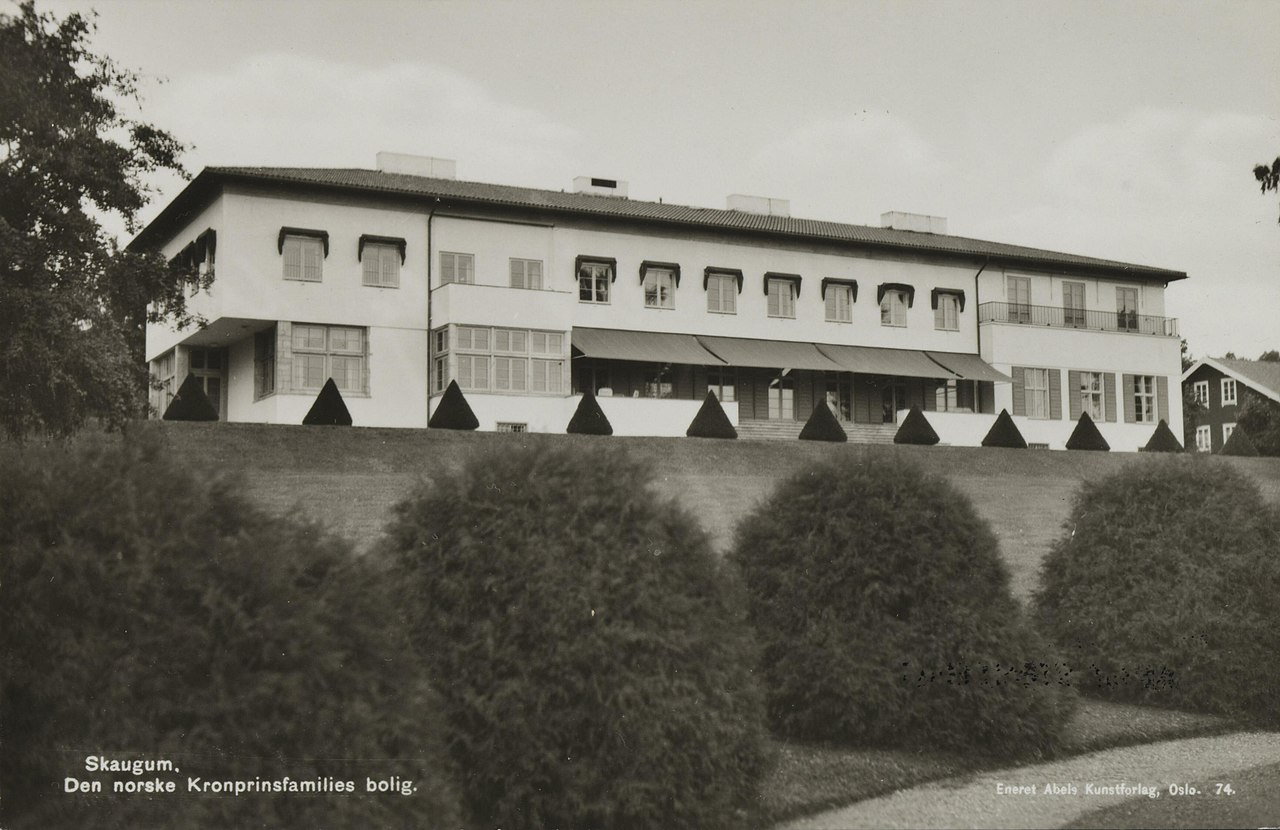
In the bunkers at one of the Norwegian Royal Family’s residents, Skaugum, there is a rumor of the place being haunted. One of the ghost that haunts the place, is the former Nazi Reichskommissar from the war, Terboven.

Skaugum, Asker, Norway: 1945.

No one has flagged with the Norwegian flag in a long time since the German occupation five years earlier and only the nazi flag with the black swastika on the white disk was allowed. But it is all about to change as the allies are closing in on Berlin and the second world war is coming to an end.

High Ranking Nazi’s: Terboven (seated 2nd from right) with minister president Quisling, SS boss Himmler and von Falkenhorst in 1941. Foto: Deutsches Bundesarchiv

8th of May is approaching, the liberation day and the freeing of the nation are a couple of minutes from being announced. People are gathering in the the streets, ready to celebrate and start anew in a peace.

Read Also: Check out our entire collection of ghost stories from Norway.

But there are some the freedom is nearing its end however. The German Reichskommissar for the occupied Norwegian areas, Josef Terboven have an arrest order on his name and is one of the number one nazi officials the Norwegians are after.

Read More: Check out more ghost stories from the Second World War like The Black Cat of War

Terboven knows the war is over and that it will be showed no mercy from the allied forces, not from the people he spent five years at oppressing. He decided to end his life to avoid capture, but according to the rumours, his spirit never managed to escape.

The Reichskommissar in the Bunker

As Reichskommissar, Terboven was the one giving the orders that would send the people of the nation to the working and death camps. He was responsible for the imprisonment, executions- everything.

The Reichskommissar: Josef Terboven. Source: Riksarkivet (National Archives of Norway) @ Flickr Commons

When he took office in Norway it was he who brought death penalty back to a country that had made it unlawful. You could end up dead by leaving the country without permission, listen to illegal radio, taken with illegal newspapers and help war prisoners and refugees. He was by the end of the war, one of the most hated men in Norway.

Read Also: Check out more ghost stories involving nazis like Conn Barracks Ghosts of Nazi Soldiers and Bloody Nurses

All of this is hanging over his shoulders that day in May when people are celebrating. He sits in his bunker at Skaugum, a farm originally owned by the Royal Family outside of Oslo. He once barged in, chased the royal family away and started living there. Now, he himself is the one that is about to be chased away.

The bunker at Skaugum is only 200 meter from the main house the crown prince of Norway owns of and stays in today. There the next King and Queen of Norway lives together with their children.

On that day in 1945 Terboven realized that all hope for a German victory was out of question and hid in the bunker together with the last of the German officials left.

Wilhelm Redieß, the SS boss in the country had already killed himself by gun. “That was early, he beat me to it”, he commented on the suicide.

But Terboven would follow shortly and he had brought 50 kg of dynamite to his bunker at Skaugum and that is how he ended his days. He blew himself up to avoid being prosecuted for his crimes. At 23:30, he detonated the bomb exploded along with the body of Redieß.

The remaining crew of SS spent the rest of the dynamite the next day when Norwegian police came to burn it all down.

The Ghost in the Bunker

According to the legend, the bunker at Skaugum is also were Terboven will spend his eternity. For a long time after the war, it has been reports about activities that no one has been able to explain close to the bunker where nazi officers ended their days.

Early days of the Nazi Party: Josef Terboven rose quickly in the ranks, here with the national party: NSDAPs paramilitary street troops in 1926 in Germany. Foto: Deutsches Bundesarchiv

His Majesty The King’s Guard; the Royal Guards, a battalion of the Norwegian army are the ones guarding the Royal property and residents, including Skaugum today. And there is also from the soldiers the stories comes from.

They tell they have experience many strange things they believe to have a paranormal origin walking the empty places near the bunker at Skaugum. Strange tracks from or to the bunker is spotted for example by the forest surrounding the estate close to the fence. The soldiers have to patrol there and comes back with stories about strange sounds and apparitions, even during the day. Late at night close to the bunkers, the keep hearing the sound of voices and when they go to check it out, they find that they are alone. At least the only living thing there.

Skaugum Farm: The big farm has been the Norwegian residency for decades and even today the place is the home of the crown prince and princess. Right by the big house there is a bunker that is said to be haunted by the former Nazi officials that took over the place during the war.//Source: wikimedia

There are also placed calls from the outer guard post when no one is placed there to make them.

A common factor for all of this is that it is all happening right by the bunker Terboven blew himself up in. The royal guards working at Skaugum are of the opinion of that it is all contributed to Terboven and his ghost lingering in the bunker forever. He never got peace after his death and roams the property were the next royal heir of Norway resides.

More like this

Newest Posts

The Grey Lady of Stavern at Hotel Wassilioff

Advertisements

On the fortess island outside of Stavern in Norway as well as one of the rooms at the historic Hotel Wassilioff, it is said that the ghost of The Grey Lady of Stavern is haunting, calling the name of her former lover that left her.

 “Peter!

……..Peeeeter!”

The wailing screams echoes through the corridors of hotel Wassilioff in Stavern, Norway in the dead of night. But when people peek their head out to look, there is no one there. The same can be heard at the coastal fortress on the Citadell island were a shadowy figure has been spotted. The same echo of a voice calling after the same person. Peter.

Stavern is a quaint and picturesque summer town in east of Norway by the coast. Several make it their vacation place during the summer times with the cute medieval architecture and history and the white beaches. But during the night, the old and not so pretty side of the seaside town start to appear through the cracks.

The Quiet Seaside City: Stavern is a popular summer destination as it is right by the beautiful coast of Eastern Norway. View on Skagerrak from Stavern, Norway//Source: wikimedia

The old seaside city is filled with ghost stories about drowned sailors and lost shipwrecks next to happy summer days by the shore, picking seashells and taking a swim.The most famous ghost story is the tragic tale of the Grey Lady of Stavern or Den Grå Damen in Norwegian.

The haunting allegedly happens at the historic Hotel Wassilioff right by the seaside just around the corner from the stature of Tordenskiold. The hotel today was founded in 1844, around a century after this tragic event is said to have happened. If it used to operate as a hotel before this though, is unclear.

Read More: All of the ghost stories from Haunted Hotels across the world

But who was the Grey Lady of Stavern when she was alive, and who was this Peter, that she keeps calling for, even in the afterlife?

The Maid Elise and Tordenskiold the National Hero

The Grey Lady of Stavern was supposedly a maid named Elise fell in love with the sea hero Peter Wessel (1690-1720), he is better known in Scandinavian circles as Tordenskiold, a very well known figure in Norwegian history, although the myths about him sometimes overshadowed the truth.

Tordenskiold: A Norwegian war hero at sea, it is believed that the ghost is calling out his name after he left the Grey Lady of Stavern.

A true patriot and a war hero that fought many battles for Denmark-Norway against Sweden. Tordenskiold is even mentioned in the national anthem they still sing today and his monument is standing in Stavern. However this is not the whole story as he was grealy showed in a much better light than reality. For one, he had economic interests in the slave trade and worked on a slave ship when he was a teenager. He was also a notorious womanizer that left many women in a deep predicament.

Elise on the other hand was only eighteen years old when she met Tordenskiold and fell for his charm. When people started calling her Elise is unclear though, as there is no last name and there are many variations to the legend. In some version of the story she was already engaged with a lieutenant named Heber, making her relationship with Tordenskiold even more dramatic.

As the story of the Grey Lady of Stavern goes, he seduced the young maid and brought her to room 216 on the coastal hotel, now called Hotel Wassilioff, or at least whatever establishment there was there at the time in the early 1700s.

Tordenskiold didn’t really come from Stavern, but lived there for a period when he worked for the navy. They were stationed in a commander’s building that are still standing today, and the ships used in the sea battles often passed by the Stavern and the fortress there was an important base.

Their romance was however short lived and superficial. When Elise became pregnant, he abandoned her in Stavern and sailed his way to glory. He died however shortly after, only 30 years old in a duel.

The Well at Citadell Island

As said, the Hotel Wassilioff didn’t open until 1844, long after this story takes place, and the narrative that they spent any time there is slim, as what the building was used to before that is unclear. But the original legend about the Grey Lady of Stavern doesn’t even mention the hotel, but it does mention the fortress on the small island just outside of the city.

Read Also: Does the concept of haunted islands seem intriguing to you? Read our ghost stories set on Haunted Islands from all over the world.

Right across the harbour of Stavern city there is a military fort built to protect from the Swedes during the Scanian War. You can see it from the windows of Hotel Wassilioff. It leads over to the small island, connected to the mainland. Today it’s only a tourist attraction, as well as Elise’s final resting place.

Citadell Island: The place Elise is said to have gone to drown herself and haunts, roaming the old fortress.//Photo credit: Jørn Tore Røed / visitvestfold.com/flickr

According to the legend, Elise was desperate, despaired and abandoned and went out to this island. Full of grief and with no hope she was driven to suicide and drowned herself out on Citadell island in a well there and rose from the dead as Grey Lady of Stavern.

Elise probably did what she did to escape the place she was trapped in. But perhaps she didn’t intend to be roaming along the fortress and in the hotel corridors, looking for the man leaving her for the rest of eternity.

Read Also: Banchō Sarayashiki — the Ghost of Okiku who also was drowned in a well.

Whether this was true is unclear, but the drowning in the well is also connected to Heber, who had many tragic legends around himself, even outside the legend of Grey Lady of Stavern. One was that he killed his fiance because he suspected a relationship with Tordenskiold another about his widow who drowned herself in the well because she had too many kids and no pension on October 11th in 1746.

The Grey Lady of Stavern at the Haunted Hotel

Back to Hotel Wassilioff, the place most people claim to have seen the Grey Lady of Stavern, even though the historic reasoning for this is weak. How do they know that it is the Grey Lady of Stavern haunting the rooms and corridors of the hotel?

Guests at the hotel can wake up to nightly callings from the maid, screaming the name of the lover who left her in a situation so dire she couldn’t live with it. As mention, it is especially outside or inside the room 216 her desperate wailing has been heard.

In addition to the nightly terror of a woman screaming there are reports of something moving over the floor inside of the room, like there is furniture that being moved around even if there is no one checked into it.

When the hotel management were asked about the alleged haunting, they confirmed that there was something going on and had this to say about it:

One guest asked in the end to be given another room, that is how creepy it was with all the sounds,” hotel management tells to a national newspaper when they interviewed about the legend of the Grey Lady of Stavern.

The Woman in Grey in the Realm of Fables

The legend of the Grey Lady of Stavern has today many variants and it is difficult to differentiate the original legend from the many plays and writings about it. Perhaps the best known version of it from a summer play Klar til å Vende (Ready to Turn) by Herman Wildenvey from 1938. He explained the ghost haunting the place like this:

“She still lives in the realms of fables, sometimes seen by the naked eye here, a woman clad in grey.”

Read Also: There are many stories about ghost dressed in grey. Some of the ghost stories featuring these Ladies in Grey are: Hvítárnes — The Haunted Hut on Iceland, Janet Douglas in Edinburgh Castle Ghosts and Legends or the Lady in Grey at The Haunted Vicarage — Sweden’s most ghostly crowded house.

If her name really was Elise, if she really were jilted by the war hero or drowned herself, the ghost story about the Grey Lady of Stavern continues to cast a shadow on the bright summer nights. Gliding along the fortress on the island, calling out and looking for the one who tricked her, tourist thinking they will enjoy the blue sea can observe Grey Lady of Stavern as a slim grey figure that never found rest. A weeping woman in a grey dress.

More like this

Newest Posts

References:

Historien | Hotel Wassilioff

Den grå dame i Stavern – Wikipedia 

Citadellet

Jakten på Den grå dame – VG