Tag Archives: mongolia

The Ghost of the Mongolian Princess in Venice

Advertisements

Following her husband Marco Polo back to Venice from the Mongolian court, the princess never felt at home in this strange land. And today it is said the Mongolian Princess is still haunting the place, wishing for home.

Many of the places in Venice have rememberancing to their hero and legend, the merchant Marco Polo. He is most known for his travels to the silk route to the east where he released the book ‘The Travels of Marco Polo’. There he spent time at court at the powerful Kublai-Khan of Mongolia and Northern China in the late 1200s. 

After several decades on his travels, he finally returned home to Venice where he was from. However, he didn’t return alone. One of the houses in Corte del Milion used to belong to him and he lived there with his wife he brought back from the east. 

The Mongolian Princess Wife

According to the legend, Marco Polo married the daughter of Kublai-Khan’s and she followed her husband back to Venice, but never felt that the Venetians embraced her as their own.

Marco Polo’s wife was alone in a foreign country with a foreign customs and language. And then her husband disappeared as well when he was imprisoned. 

The Mongolian Princess: Did Marco Polo marry one of the Khan’s daughters? According to the legend she followed him back to Venice, although she suffered a tragic fate and is supposedly haunting their former mansion.

In 1298, Marco Polo was imprisoned in Genoa for a period of time. He returned to Venice in 1295 with his wealth converted into gemstones. Venice was at war with the Republic of Genoa at that time. Marco Polo joined the war by equipping a galley with a trebuchet.

Read More: Check out all ghost stories from Italy

He spent several months in prison dictating his travels to a fellow inmate named Rustichello da Pisa. The detailed account, which included tales from China, was spread throughout Europe in manuscript form and became known as “The Travels of Marco Polo”. Marco Polo was released from captivity in August 1299 and returned to Venice, where his family had purchased a large palace.

According to this legend, the Mongolian Princess sister in law was jealous of her and lied to the princess and told that Marco Polo had died in prison. This was the last straw for Marco Polo’s wife as she was both alone and homesick and she ended up committing suicide. Some say she set her clothes on fire and jumped into the canal.

They say that she was a good singer, and to this day, you can sometimes hear a soft and sweet song, singing in her native language. If you pass through the Milion courtyard where Polo’s houses stood you may even spot a ghostly figure holding a small candle, looking back to her homeland in the east she never returned to. 

Marco Polo’s Real Venetian Wife

If the legend is true or not is difficult to say, as little of his life is known or how much of his writings were actually true, and we know even less about his supposed Mongolian Princess wife from the east. Did she even exist?

We actually have documented that Marco Polo married a Venetian lady named Donata Badoer. They married after he got out from prison in 1300 and together they had three daughters together and were married for 24 years. 

The Real Princess Kököchin Khatun

So where did the rumor about the Mongolian princess come from then? It is true that Marco Polo’s father and uncle were given a last mission before returning to Venice to escort the 17-year old Mongolian princess called Kököchin Khatun (阔阔真). They were chosen as escorts for her to her wedding where the Mongolian Princess was marrying a Persian ruler in the Mongol Empire.

In some version of the story, she had died when they arrived, and from there rumors about Marco Polo marrying her started. Did she even die though? They did set out from what is today Beijing in 1291, and started travelling. Most accounts tell about the Polo’s leaving her at the wedding in 1293 before continuing on their way back to Venice. In the meantime her would be husband had died though, and she married his son instead and died herself in 1296.

The Ghost of the Mongolian Princess in Venice

As the sun set over the picturesque canals of Venice, a soft breeze rustled through the ancient alleyways. In the heart of the city, the ghostly figure of the Mongolian Princess still roamed, her luminous presence illuminating the darkness. And so, as the Venetians ventured through the Milion courtyard, they would occasionally catch a glimpse of the spectral figure.

A huge theater was built on top of the old family house and is today known as Malibran Theatre. There has been excavation done that uncovered pieces of information about the time Marco Polo and his family lived there. If that included something relating to an Mongolian princess is unclear though. 

More like this

Newest Posts

References

Featured Image: Erik Törner/Flickr

Legend Marco Polo Chinese Wife in Venice | Milion courtyard

19 Facts About Marco Polo’s Wife That Are Surprising! | Kidadl

Kököchin – Wikipedia 

The Ghost of Khar Khot, The Black City in the Gobi Desert

Advertisements

Hidden by sand in the Gobi desert for centuries, the abandoned city of Khar Khot is still haunted by the ghosts of the inhabitants that didn’t manage to escape. 

Secluded in the Gobi desert, hidden by sand and stands the test of time, the abandoned city of Khar Khot houses no dwellers except for sandstorms, deadwood and ghosts. 

Khar Khot or Khara-Khoto (ᠬᠠᠷᠠ ᠬᠣᠲᠠ) is Mongolian and means, Black City. It is located in Inner Mongolia, a region in China bordering with Mongolia. The Chinese name for it, Hēichéng (黑城) also means Black City and it certainly marks a dark spot in history considering all the bloodshed that ended the once important trading city. 

Read More: Check out all our collection of ghost stories from China

There are also the legends about the city being haunted by demons and spirits. And when explorers from all over the world came to have a look at the legend of the abandoned city, the locals refused to go near it because of the ghosts still roaming the area around Khar Khot.

The City at the Silk Road

The city was founded in 1032 and used to be a busy and important trading place in the 11th century as a part of The Western Xia, also known as the Tangut Empire. In 1226, the city was taken over by Genghis Khan and many blame the Mongolian ruler that the city is now destroyed. That is not true as the city under Kublai Khan’s time, the city expanded three times and flourished. 

The city was important as a trading hub along the Silk Road and even Marco Polo wrote about it in his travels along the silk road in The Travels of Marco Polo, where he called Khar Khot for Etzina. 

When you leave the city of Campichu you ride for twelve days, and then reach a city called Etzina, which is towards the north on the verge of the Sandy Desert; it belongs to the Province of Tangut. The people are Idolaters, and possess plenty of camels and cattle, and the country produces a number of good falcons, both Sakers and Lanners. The inhabitants live by their cultivation and their cattle, for they have no trade. At this city you must needs lay in victuals for forty days, because when you quit Etzina, you enter on a desert which extends forty days’ journey to the north, and on which you meet with no habitation nor baiting-place.

— Marco Polo, The Travels of Marco Polo, translated by Henry Yule, 1920

The Fall of Khar Khot

In 1372, Khar Khot was under charge of the Mongol general Khara Bator when the army of the Ming Dynasty attacked.The city was surrounded and under siege for a long time, but the city was more of a fortress, built to withstand any attacking army, and the soldiers outside needed to think of a way to breach the walls.  

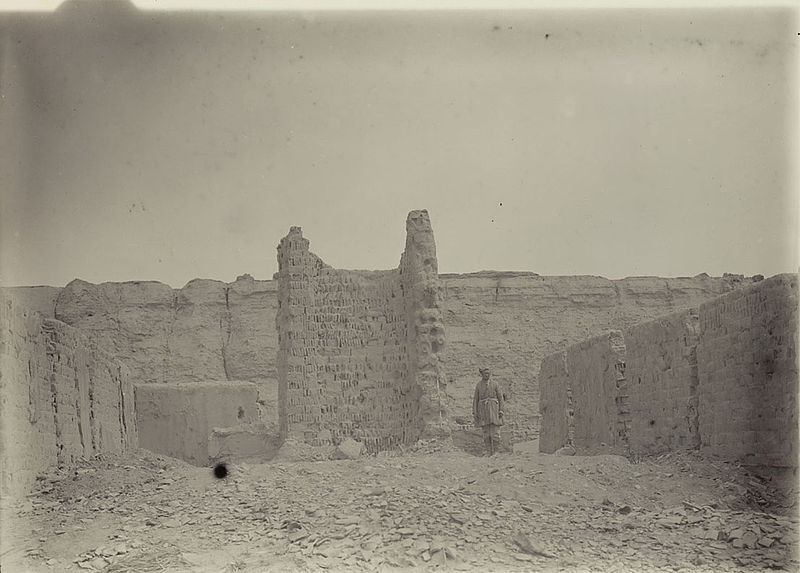
Rediscovered: Ruin At Kharakhoto from east, 30 May 1914.//Photo: Aurel Stein

So to speed things up on the outside, the Chinese went for the fortress one weak spot, the water supply. The name Gobi basically means waterless in Mongolian, and that is what they became. The city was cut off from its water supply by diverting the Ejin River that flowed right outside the city walls away from the thirsty people inside. 

The inhabitants inside began desperately to dig in the ground, trying to find drops of water according to the legend, but to no avail. When Khara Bator realized that the siege was not something they could withstand he threw all the valuables of the city into the well so as not to give that up to the invaders, even though they had to give up their life.

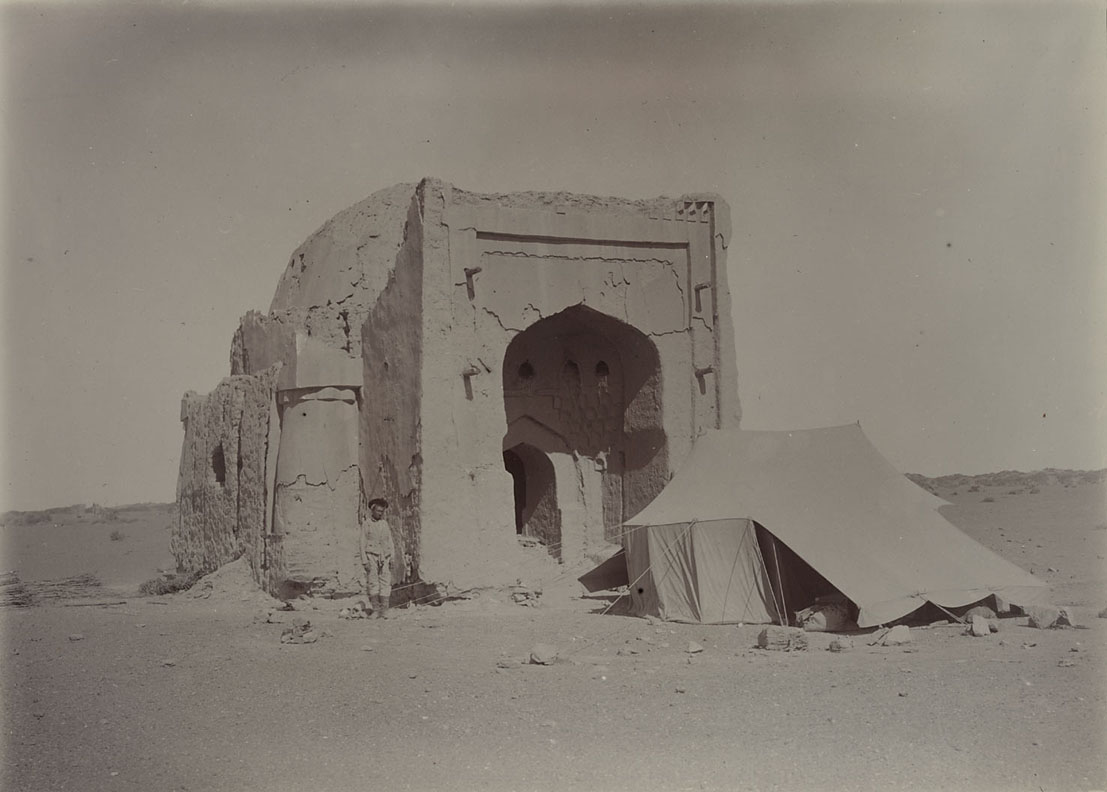
Ruins of Khar Khot: Muhammadan Tomb K.K.VI. at southeast corner of Kharakhoto, from east, 3 June 1914.//Photo: Aurel Stein

As time went on with no water with the Han Chinese army banging on their doors, Khara Bator murdered his family before taking his own life. The Mongols’ reign over Asia was slowly dwindling away. 

His soldiers waited until the Ming Dynasty finally breached the walls and attacked, killing the rest of the inhabitants of the city, not burying the bodies and making them live on as the ghost they are today. 

Another Version of Escaping

There are alternate versions we can find in the Ming Dynasty annals that tell a different story about Khar Khot. In this version, the leader together with his ministers actually escaped from this ancient Mongolian city. 

No matter who died and who escaped, the city was abandoned after the defeat and left in ruins to be swallowed by the desert. 

The Black City Today

600 years passed before people returned to the desolated city buried under the dry sand. Because of being so far from any other sign of civilization, the city was largely safe from looters and people seeking to destroy Khar Khot. 

When they first started excavating they found a rich amount of manuscripts of the Tangut language along with other important cultural artifacts, untouched because of its remote location, and perhaps because of the ghosts still protecting the city?

Today, tourists can come on a day trip to see the once magnificent city in the desert that the sand has filed down, softened the edges and buried its secrets. But in the night, they go back and miss the action that goes on after the sun goes down. Reports of flames burning for hours and strange lights that lead people astray in the desert are told from the guards watching over this place. 

Their ghost haunts the ruins of the garrisons, the walls and the very sand itself. In a way, giving the ghost city of Khar Khot a sort of life other than just being pieces of crumbling stone walls.

More like this

Newest Posts

References

Featured Image: BabelStone//Wikimedia

Khara Khoto Article, Black City Information, Alashan Plateau Facts — National Geographic

The spirit of ‘dark castle’ shines – Travel – Chinadaily.com.cn

Khara-Khoto | China & Asia Cultural Travel

https://www.ancient-origins.net/ancient-places-asia/khara-khoto-0014063