Tag Archives: lost city

The Lost City of Kilstuitheen at The Cliffs of Moher

Advertisements

In the watery depths off the Cliffs of Moher in Ireland, it is said that the phantom island and The Lost City of Kilstuitheen appears every seven years. There are still legends that it will return for those that holds the key.

Between the picturesque towns of Lahinch and Spanish Point lies the Liscannor Bay. Its tranquil surface hints at the mysteries concealed beneath its waters, and one of its most intriguing enigmas is the phantom island and The Lost City of Kilstuitheen. 

The coastline of County Clare has been shaped by nature’s fury over millennia. Ancient earthquakes and tidal waves have left their mark on this rugged terrain. In the bay’s vicinity, once-verdant forests and bogs have become submerged, and the dramatic events of centuries past split Mutton Island into three separate isles during the tsunami of approximately 800 AD.

Read More: Check out all of the ghost stories from Ireland

This could explain the legends of the lost city of Kilstuitheen. It is also called Kilstapheen, Kilstiffen or Cill Stuifin and is supposedly an ancient city that is now lost outside the coast. It is said that the city sank down into the ocean when the chieftain lost its golden key in a battle. According to the legend, the city will not return until the key is found. 

The Cliffs of Moher: The cliffs are well known for its legends. In addition for the legends about the lost city, there are also legends about mermaids, witches, a corpse eating eel as well were the pagan deities took refuge when Christianity came to Ireland.

The Lost City of Kilstuitheen’s Forgotten Splendor

Long ago according to legend, the city of Kilstuitheen was a place of unparalleled magnificence and riches. Its skyline was adorned with golden turrets that graced castles and glistening spires that adorned churches. These structures were a testament to the prosperity of its inhabitants, particularly the Chieftain and his esteemed clan.

However, even the most prosperous of places can succumb to the capricious whims of fate. Kilstuitheen’s fortunes took a dire turn when defeat befell the Chieftain in a fierce battle. What followed was a calamity of epic proportions—an immense tidal wave surged forth, engulfing the island and all its inhabitants. The once-mighty Kilstuitheen lay buried beneath the turbulent waters, its glory swallowed by the relentless sea.

Read More: Check out all of the ghost stories on Haunted Islands

There is a legend telling how to find the island though. It used to be a key which opened the door  that the chieftain had lost during the fateful battle. It was later believed to be entombed beneath a towering monolith on Mount Callan.

When the long-lost golden key is unearthed and returned to its rightful place, it is said that Kilstuitheen shall rise once more from the depths of the sea. The valiant Chieftain, now relegated to the annals of history, will reawaken to lead his people anew, and the island’s golden splendor will once again grace the surface.

Glimpses of a Submerged City

Over the centuries, fishermen have claimed to catch fleeting glimpses of The Lost City of Kilstuitheen’s submerged city beneath the restless waves of Liscannor Bay. Every seven years, the phantom island performs a tantalizing upsurge, just enough to be visible from the shores of Lahinch. 

This is also the case with the mythical phantom island of Brasil said to be off the coast of Ireland as well. 

However, this remarkable sighting comes with a dire warning: those who behold the lost island from the shore shall not live to witness its reemergence and will die before The Lost City of Kilstuitheen appears again.

The Mysteries Beneath the Waves

As we ponder the legends of Kilstuitheen and its submerged treasures, we are reminded that the sea has long been a capricious mistress, capable of concealing the most remarkable of secrets. In the heart of Liscannor Bay, The Lost City of Kilstuitheen’s lost splendor lies beneath the waves, its golden turrets and spires hidden, awaiting the return of the golden key that may one day resurrect its glory. The enigma of Kilstuitheen endures as a testament to the enduring mysteries of Ireland’s coastal landscapes, where legends and history are eternally intertwined.

More like this

Newest Posts

References:

A Legend of the Cliffs of Moher – The Lost City of Kilstiffen > What Boundaries? Live Your Dream! County Clare: 5 Haunted Places To Visit | Spooky Isles

The Haunted Ancient City of Nan Madol Floating in the Pacific Ocean

Advertisements

The once grand seat for the chiefs of the Pohnpei in Micronesia, is now abandoned and feared. The floating city of Nan Madol is thought to be haunted by spirits and locals believe you will die if you spend the night there. 

In the heart of the vast Pacific Ocean lies the enigmatic island of Pohnpei, part of Micronesia, home to one of the most mysterious and haunting places on Earth: Nan Madol also used to be called “Reef of Heaven”. This ancient city, built upon a series of artificial islets connected by a network of canals, has long been shrouded in legends and whispered tales of the supernatural.

The place has inspired many and is even said to have been the inspiration of H.P Lovecraft’s city of R’lyeh from his Cthulhu Mythos.

The city found on Temwen  and Pohnpei Island was called the Eighth Wonder of the World when the European explorer came across it and was compared to the lost island of Atlantis and many thought it was the lost continent of Lemuria and Mu. It used to be near impossible to get to because of how remote it was, but now, people are starting to research more about this strange place. 

Nan Madol and the Haunting: The ruins of the ancient and supposed haunted city of Nan Madol in Pohnpei from 2001 with its canals by the ruins along the canal. // Source: Flickr

The Legend of its Creation

Research says that human activity can date back to the first or second century, but the megalith structures were built in the 12th and 13th. There are no written records at the Pohnpeians operated without one, so there is no recorded history that tells us exactly how the city came about.

It is uncertain how the giant stone foundation of Nan Madol came about, but the local legend is that they were flown in by the use of black magic or that it was giants that placed the rocks there. What we do know that the black rocks is around 750 000 metric tons and was more work than with the Egyptian pyramids according to some reports.

The Mystery of the Rocks: One of the enduring mysteries they haven’t quite been able to figure out how to get there. Local lore say it was giants that brought them, or that the founding fathers of the city brought the rocks back to the city on dragons. // Source: Flickr

According to local lore, Nan Madol was not constructed by mortal hands, but rather by sorcery. There once came two twins from the mythical Western Katau or Kanamwayso that came in a large canoe in search for a place to build an altar. 

The island was inhabitable, so the twin brothers, Olishipa and Olosohpa were sorcerers. They started to worship, Nahnisohn Sapw, the goddess of agriculture they wanted to build the altar in honor of. They then brought the basalt rock back to the island on the back of a flying dragon and then created the Saudeleur dynasty.

It is said that the dynasty was destroyed when Isokelekel invaded and moved in. But the lack of food and being so remote made his ancestors leave, eventually leaving the city to be reclaimed by the lagoon and its palms.

The City of Nan Madol

In the middle of nowhere, one might wonder why such a grand city was built here. Some of the walls are over 25 feet tall and 17 feet thick and the ruins are spread across 92 artificial islands. Nan Madol was the capital of the Saudeleur Dynasty until 1628, which consisted of a series of artificially constructed islets off Temwen’s southern coast. The ruins include tombs, baths, and temples and was clearly meant for the elite of Polynesia with the city itself perhaps not inhabited by more than a thousand at most.

As with most of the abandoned cities, the question remains: Why? The eventual fate of the Nan Madol civilization remains a haunting mystery for many to say for sure. Theories range from natural disasters to the island being engulfed by the encroaching sea, leaving its advanced society lost to time.

The name Nam Madol means “the space between”, something researchers remain unsure of its root. Perhaps more accurate is the translation “within the intervals” and refers to the canals the ruins are built upon. Worse perhaps is that people often also call it “ghost city” and that the local Pohnpei people refuse to get near it as it is said to be extremely haunted.

Haunted Rumors in the City

As Nan Madol rose from the ocean, so too did stories of its cursed nature. Locals whispered of strange happenings within its crumbling walls – of voices heard in the dead of night, of shadows that moved with a will of their own, and of unsuspecting travelers who vanished without a trace upon entering its labyrinthine passages.

The very foundations of the city is a type of magnetic rock, and when you bring a compass close to them, they spin and spin, losing all sense of direction. 

The locals are said to be terrified of the island because of some strange glowing orbs they claim to have seen there. According to popular superstition, if you spend the night on the island, they will die. 

Read More: Check out more stories about haunted abandoned cities like The Ghost of Khar Khot, The Black City in the Gobi Desert or Lac de Paladru and the Ancient City of Ars

Why you might ask, but there are more questions than answers of this place. The island used to be a burial site for the chiefs in the area and was also the location for important religious rituals. So the way the island is both spiritual and religious important goes way back. 

The Haunted Island and City

Many brave souls sought to unravel the mysteries of Nan Madol, only to meet a fate worse than death, like when German governor Berg opened what was believed was Isokelekels tomb on the island. He died of a sunstroke, reinforcing the local superstition about the place.

It is said that Isokelekel saw his reflection in the water and decided to kill himself as he was getting so old. According to one gory legend, he decided to tie his penis off the top of a palm tree. His penis was cut off and he bled to death. After his death it is believed he was buried in a big mortuary on the island and perhaps he himself is haunting the area. 

Even to this day, Nan Madol remains a place of mystery and dread, its secrets locked away beneath the waves, waiting for those foolish enough to seek them out. And as the winds howl through its crumbling ruins and the waters of the Pacific churn with an otherworldly energy, the whispered legends of its creation and the haunted rumors that surround it serve as a chilling reminder of the darkness that lurks within us all.

More like this

Newest Posts

References:

Featured Image: CT Snow/Flickr

Mysterious ‘haunted’ city found floating in the middle of the ocean which terrified locals call ‘Island of Ghosts’ – Mirror Online 

Nan Madol: A Mysterious Hi-tech City Built 14,000 Years Ago? 

Nan Madol – Wikipedia 

Isokelekel – Wikipedia 

Lac de Paladru and the Ancient City of Ars

Advertisements

Discover one of France’s most beautiful natural wonders, Lac de Paladru or the Blue Lake. A place of wonder as it is said that it was once a place of the Ancient City of Ars that suddenly disappeared after it was cursed.

The beautiful Lac de Paladru is one of Southeastern France’s most stunning natural wonders. From its lush forests around to its many attractions and its abundance of fish, this lake has something for everyone, including some paranormal rumors about how an ancient city that once stood where the lake is, suddenly disappeared.

The Blue Lake

Lac de Paladru is a picturesque lake located in the Isère region of France that is nicknamed the Blue Lake because of its bright color. The 36 meters deep lake was formed by two rivers, the Paladru and the Séranne, which irrigated this area for centuries before. 

Lac de Paladru: The beautiful blue lake in France may hold entire settlements within its depth.//Source: wikimedia

The lake itself dates back to the 10th century and has since become renowned for its beauty, making it a popular destination for locals and tourists alike. Whether you want to explore its history or practice some fishing, Lac de Paladru offers something for everyone, even a local legend or two.

Legends of a Sunken Village

Many of the legends coming from the lake, comes from the myths of the Ancient city of Ars that once stood where the lake is now. It is said that it was a great city with riches and existed under the Holy Roman Empire. 

We do know that there were settlements to places that now are covered by the blue lake, but how big they were, and for what reasons the settlements disappeared is still up to debate.

The written accounts and locals called the city for Ars that means burned in French and the popular opinion was that it disappeared after a volcanic eruption and turned to ash. But even before the city supposedly disappeared there were written accounts of it by that name. Whether the name gave rise to legend or its faith were simply written under the stars is hard to tell. 

But did this city really exist? There are those saying it really did, although perhaps more of a village and interestingly enough, there is archaeological excavation that shows that there are abandoned settlements after a flooding of the lake around 1040. 

The Peasant Knights of Lake Paladru

What we do know is that at the beginning of the 11th  century, the Lac de Paladru had a lower level than today. Around the year one thousand, probably in 1008, about sixty settlers built a fortified wooden habitat on a chalk beach.

It was settled by farmers and craftsmen that had a second mission. They were also chosen to defend the territory as knights, and are remembered in songs and legends today. As the water rose gradually, the peasant knights eventually left the settlement around 1040. 

Is this the settlement that gave rise to the legend of the City of Ars, or was it something completely separate?

The Ancient City of Ars

The settlement of the peasant knights around Lac de Paladru are well documented in writing and archeological findings, but we can also find stories and remarks about this City of Ars as well throughout the times. 

But what really happened to it? Did there really exist a place like it? There are plenty of legends tied to the mythical city, and some of them were written down by Louise Drevet who published it in her book Les Légendes de Paladru from 1896. 

The Legend of the Pilgrim’s Curse

One of the legends tells that the Ancient City of Ars was a proud, rich and greedy city by Lac de Paladru that didn’t care for other outsiders. And in an almost biblical manner, it also led to its destruction. 

Once a pilgrim wandered to the Ancient City of Ars near the lake and was only met with cold inhospitality even though he was starving and exhausted. Except for two women, a mother and her daughter who gave him food and shelter. 

This angered the pilgrim so much that he put a curse on the village that was first heard by the ringing of the golden church bell, opening a chasm that swallowed the hostile village and sent it to the bottom of the lake. 

Only the two hospital women are spared from his curse and it is said you can still hear the sound of the bell from the bottom of the lake. 

The Legend of the White Lady

There is no complete legend in France without the appearance of the Dame Blanches, or the Lady in White. 

The beautiful Countess of Ars accompanied by her young lover will plead the cause of her village with the Emperor Frederic Barbarossa of the Holy Roman Empire. He ruled the Empire from 1155 until his death in 1190. 

The Ancient City of Ars wanted to be free from the emperor and the Countess of the city was chosen to go to the Emperor Frederic Barbarossa in today’s Germany to ask him in person.

Emperor Frederic Barbarossa agrees to spare the village on condition that the countess of Ars marries his nephew. The Countess accepts, although it’s not what her heart wants, and returns to her village. 

Here there are more than one version of what happens. In one version of the legend, she returns to her village but sees that it’s completely destroyed by an earthquake and a volcanic eruption, and her sacrifice was all in vain. 

The White Woman of the City of Ars: According to the legend, there was no city when the countess of Ars returned and she was never seen again. jsamwrites/wikimedia

Both her and her lover take a boat to try to return to it, but there is nothing to return to. Some versions say they just kept the boat floating, reaching new shores and disappearing together. Some say that the boat never returned from the lake, and they both perished in the blue lake. 

The Legend of the Chevalier d’Ars

Another legend that tries to explain the city engulfed by the Lac de Paladru is that of the Chevalier d’Ars from the village. He was chosen by the beautiful Béatrice de la Buisse as her man and it sent another man into a fit of rage and jealousy. 

The lord of Maurienne had wanted that position for himself and decided to take extreme measures for his revenge. He sold his soul to the Devil himself and in return, the village of Ars were cursed and engulfed.

Still Water with Deep Secrets

Locals still tell tales about old fishnets, pottery and other things that don’t belong to them at all. And under the still waters of the blue waters of Lac de Paladru, the legends of the mythical City of Ars continue to ring the ghostly bells for anyone to hear.

More like this

Newest Posts

References

Legendes | Lac de Paladru | France

La légende de la Dame Blanche | Villes et Pays d’art et d’histoire en Auvergne-Rhône-Alpes

La légende d’Ars, ville engloutie | Dossier

Habitat fortifié de Colletière — Wikipédia

https://en.wikipedia.org/wiki/Frederick_Barbarossa

Lac de Paladru – Wikipedia 

Lac de Paladru — Wikipédia 

The Ghost of Khar Khot, The Black City in the Gobi Desert

Advertisements

Hidden by sand in the Gobi desert for centuries, the abandoned city of Khar Khot is still haunted by the ghosts of the inhabitants that didn’t manage to escape. 

Secluded in the Gobi desert, hidden by sand and stands the test of time, the abandoned city of Khar Khot houses no dwellers except for sandstorms, deadwood and ghosts. 

Khar Khot or Khara-Khoto (ᠬᠠᠷᠠ ᠬᠣᠲᠠ) is Mongolian and means, Black City. It is located in Inner Mongolia, a region in China bordering with Mongolia. The Chinese name for it, Hēichéng (黑城) also means Black City and it certainly marks a dark spot in history considering all the bloodshed that ended the once important trading city. 

Read More: Check out all our collection of ghost stories from China

There are also the legends about the city being haunted by demons and spirits. And when explorers from all over the world came to have a look at the legend of the abandoned city, the locals refused to go near it because of the ghosts still roaming the area around Khar Khot.

The City at the Silk Road

The city was founded in 1032 and used to be a busy and important trading place in the 11th century as a part of The Western Xia, also known as the Tangut Empire. In 1226, the city was taken over by Genghis Khan and many blame the Mongolian ruler that the city is now destroyed. That is not true as the city under Kublai Khan’s time, the city expanded three times and flourished. 

The city was important as a trading hub along the Silk Road and even Marco Polo wrote about it in his travels along the silk road in The Travels of Marco Polo, where he called Khar Khot for Etzina. 

When you leave the city of Campichu you ride for twelve days, and then reach a city called Etzina, which is towards the north on the verge of the Sandy Desert; it belongs to the Province of Tangut. The people are Idolaters, and possess plenty of camels and cattle, and the country produces a number of good falcons, both Sakers and Lanners. The inhabitants live by their cultivation and their cattle, for they have no trade. At this city you must needs lay in victuals for forty days, because when you quit Etzina, you enter on a desert which extends forty days’ journey to the north, and on which you meet with no habitation nor baiting-place.

— Marco Polo, The Travels of Marco Polo, translated by Henry Yule, 1920

The Fall of Khar Khot

In 1372, Khar Khot was under charge of the Mongol general Khara Bator when the army of the Ming Dynasty attacked.The city was surrounded and under siege for a long time, but the city was more of a fortress, built to withstand any attacking army, and the soldiers outside needed to think of a way to breach the walls.  

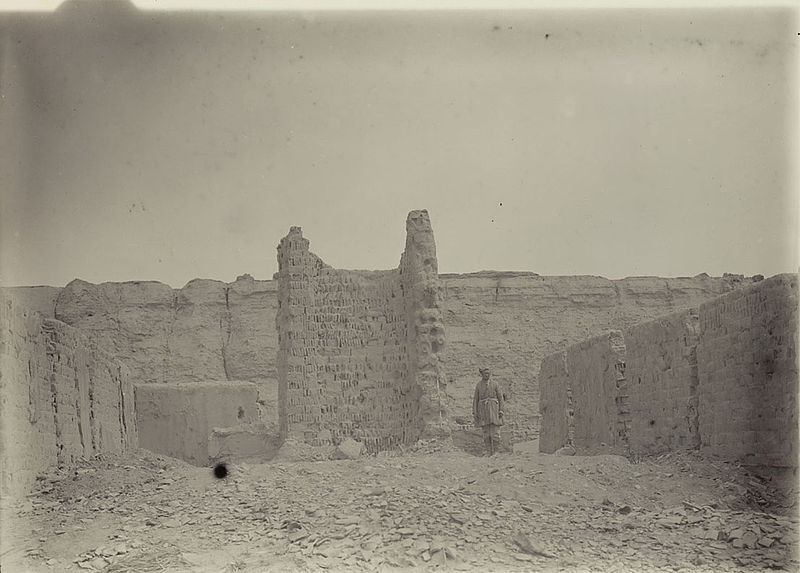
Rediscovered: Ruin At Kharakhoto from east, 30 May 1914.//Photo: Aurel Stein

So to speed things up on the outside, the Chinese went for the fortress one weak spot, the water supply. The name Gobi basically means waterless in Mongolian, and that is what they became. The city was cut off from its water supply by diverting the Ejin River that flowed right outside the city walls away from the thirsty people inside. 

The inhabitants inside began desperately to dig in the ground, trying to find drops of water according to the legend, but to no avail. When Khara Bator realized that the siege was not something they could withstand he threw all the valuables of the city into the well so as not to give that up to the invaders, even though they had to give up their life.

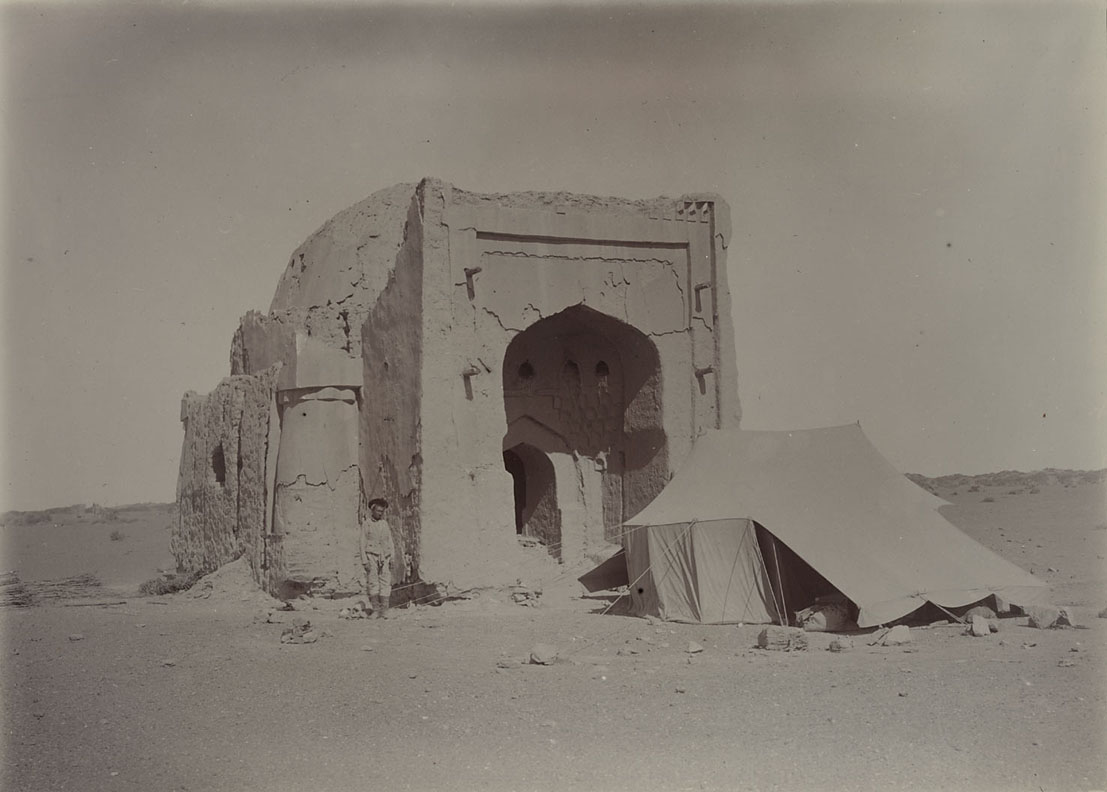
Ruins of Khar Khot: Muhammadan Tomb K.K.VI. at southeast corner of Kharakhoto, from east, 3 June 1914.//Photo: Aurel Stein

As time went on with no water with the Han Chinese army banging on their doors, Khara Bator murdered his family before taking his own life. The Mongols’ reign over Asia was slowly dwindling away. 

His soldiers waited until the Ming Dynasty finally breached the walls and attacked, killing the rest of the inhabitants of the city, not burying the bodies and making them live on as the ghost they are today. 

Another Version of Escaping

There are alternate versions we can find in the Ming Dynasty annals that tell a different story about Khar Khot. In this version, the leader together with his ministers actually escaped from this ancient Mongolian city. 

No matter who died and who escaped, the city was abandoned after the defeat and left in ruins to be swallowed by the desert. 

The Black City Today

600 years passed before people returned to the desolated city buried under the dry sand. Because of being so far from any other sign of civilization, the city was largely safe from looters and people seeking to destroy Khar Khot. 

When they first started excavating they found a rich amount of manuscripts of the Tangut language along with other important cultural artifacts, untouched because of its remote location, and perhaps because of the ghosts still protecting the city?

Today, tourists can come on a day trip to see the once magnificent city in the desert that the sand has filed down, softened the edges and buried its secrets. But in the night, they go back and miss the action that goes on after the sun goes down. Reports of flames burning for hours and strange lights that lead people astray in the desert are told from the guards watching over this place. 

Their ghost haunts the ruins of the garrisons, the walls and the very sand itself. In a way, giving the ghost city of Khar Khot a sort of life other than just being pieces of crumbling stone walls.

More like this

Newest Posts

References

Featured Image: BabelStone//Wikimedia

Khara Khoto Article, Black City Information, Alashan Plateau Facts — National Geographic

The spirit of ‘dark castle’ shines – Travel – Chinadaily.com.cn

Khara-Khoto | China & Asia Cultural Travel

https://www.ancient-origins.net/ancient-places-asia/khara-khoto-0014063

The Lost City of Dode

Advertisements

In the heart of the British countryside, the past of the plague, death and history haunts the desecrated church. But amid the mystery of the paranormal and pagan ley lines, the once cursed site has found back to being sacred. 

There are a lot of magical and mysterious things surrounding the church that stands in solitude in the countryside in Kent. The original building on top of the hill was built around 1100 during William the second rule. But the man made ground it was built on has perhaps been used as a holy place to gather long before Christianity reached the British shores. 

Around this church there also used to be a village, alive and thriving. But together with the black death the villagers were swept away, and with them, the village of Dode died as well. 

Ley Lines and Ghosts

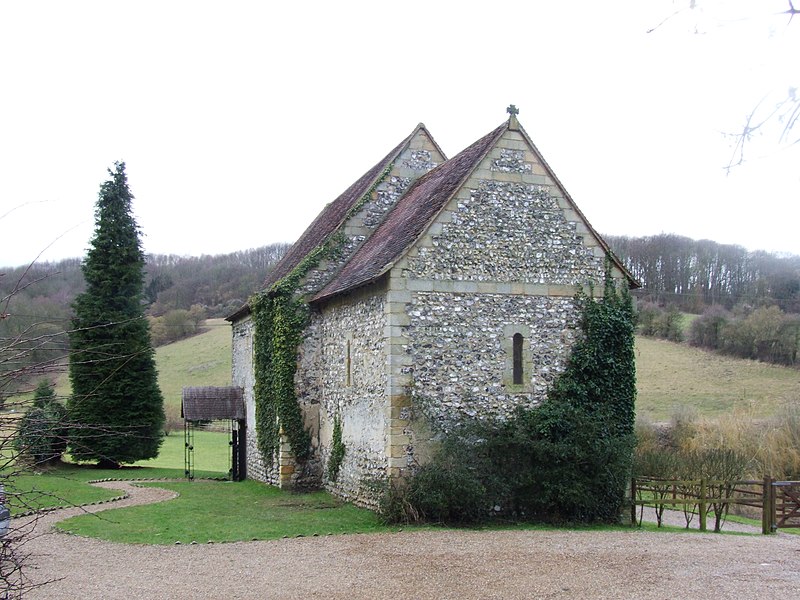
Haunted church: Dode church was left abandoned for centuries with rumours of being haunted and used for black magic rituals.
Source: Chris Whippet

All left from the lost village of Dode is the old Norman church that is said to be haunted by a little girl. This is not the only paranormal and mystical rumours surrounding this place, this particular church. The old ruins are built on not only one, but eight ley lines, mystical lines that allegedly connect several holy buildings, monuments and places around the world according to modern paganism.

The place is filled with history as archeologists have found evidence of it being inhabited since the roman empire, perhaps even much further back in time. 

The church was eventually not used as a place of worship and they changed the name of the land it was built on. Because of the rumours about it being cursed, the name Holy Hill was changed to Holly Hill as no one felt the presence of anything holy there anymore, as rumours and legends of it being cursed grew.

The Dodechild

But who was this ghost said to haunt the abandoned church? Legend has it it was the last survivor of Dode village. After the Black Death in the 14th century, the village of Dode was abandoned. Nature claimed back the signs of living, leaving only the church as proof humans once lived there.

Advertisements

However, there was still one of the villagers left. A seven year old girl was one of the last survivors in the village, seeing how everyone was being taken by the plague. She took refuge inside the church, eventually dying herself, but never really leaving. And according to local legends, she would appear on the first Sunday morning of every month, haunting the grounds of were her and her entire village perished in the plague that killed millions of people across Europe. 

Since the time of the plague, the village was abandoned, the church forgotten and time, weather tore down the roof, the stones taken to build a medieval church nearby. It was only known as the haunted and lost place to the locals. It was believed the place was a cursed one, and that it was used for black magic rituals. Thus the Holy Hill was renamed Holly Hill and the church boarded up, taken apart and left for centuries until someone would find the place sacred once more. 

A Sacred Place for All

Wedding: The church is now used as a wedding venue for all types of ceremonies.

The church was rebuilt in the 90s after being abandoned for centuries, with the vision of bringing the holiness back to it and the work to get it back to how it would have looked originally began. With the restoration, life also came back into the hidden valley. Although this time, not a strictly catholic religious house as it used to be, but more of a sacred place for all, both for Catholics, members of the Church of England and pagans alike. 

Since then it has been a venue for weddings, making it a place for eternal love declarations, bringing the serenity back over the once holy hills. Other events such as baby namings, memorials and other cultural events also takes place in it, as long it is more of a spiritual than religous event.

And with the new life that has been breathed into the valley and nearby woodland, the ghost of the little girl also has been seen less and less.

Advertisements

More like this

Newest Posts

References

One man’s revival of ancient English rites

‘Ghost village’ 72 mins from London that was destroyed by the Black Death 

Ley line