Tag Archives: london

Chilling Legends of Ham House, London’s Most Haunted Mansion

Advertisements

Ham House in England is said to be the eternal home to no more than 15 ghosts, at least! From the ambitious Duchess to former servants and even pets, the spirits of the old mansion far outweighs the living. 

London is a city with a rich history full of tales of intrigue, mystery, and the paranormal. One of the most intriguing places in the city is Ham House, located in Richmond upon Thames. Ham House is a beautiful mansion that has been around for over 400 years, and it is known to be one of the most haunted places in London. 

The chilling legends that surround this mansion have made it a popular destination for ghost hunters, paranormal enthusiasts, and curious visitors alike and has been dubbed the mansion with most ghost stories in the country. From the ghost of a woman dressed in white wandering the halls to the eerie sounds of children crying in the night, there is no shortage of spine-tingling stories to be told about Ham House. 

The Ghostly Legends Surrounding Ham House

Ham House is a beautiful mansion that has been around for over 400 years. Built in 1610, it is one of the finest examples of 17th-century architecture in England. However, the mansion has a dark and mysterious history, and it is said to be one of the most haunted places in London with reports of at least 15 different ghosts.

Mysterious footprint appears in the dust of the staircase and the upstairs floors when no one has walked there. There is a wheelchair in the house kept in one of the servants’ rooms at the top of the house that are said to move around and appear when no one intends to put it. 

There are many ghostly legends surrounding Ham House. Some of the most famous include the ghost of Elizabeth Murray, Duchess of Lauderdale, the ghost of the Green Closet, and the ghost of the Lady in White. These ghosts are said to haunt the mansion to this day, and many visitors have reported seeing or hearing them.

The Ghost of Elizabeth Murray, Duchess of Lauderdale

Elizabeth Murray, Duchess of Lauderdale, was a powerful and influential woman who lived in Ham House in the 17th century. She was the daughter of William Murray, the whipping boy to King Charles I that gifted the house to him when they grew up. 

She was married to John Maitland, the Duke of Lauderdale, who was a close friend and advisor to King Charles II. Elizabeth was known for her beauty, her intelligence, and her strong personality. Some even think that she murdered her first husband to marry the Duke.

The Duke and Duchess of Lauderdale: Elizabeth Murray had strong opinions and was also political active. One of the more darker rumours surrounding her was that she poisoned her first husband who only was a Baron to climb the social ladder by marrying a Duke.

Legend has it that Elizabeth haunts Ham House to this day. In her later years she was known to have been walking with a cane, and many claim to have heard the tapping of her cane upstairs, and on the Grand Staircase of the mansion.

Visitors have reported seeing her ghostly figure wandering the halls of the mansions. Some have even claimed to have seen her reflection in the mirrors in her old bedchamber were she died. 

People that have stayed in the room have reported about an oppressive force in the room and the smell of roses, something she was known for smelling lingering in the air. The staff have been known to say: Good afternoon your ladyship, before entering just for good measure. 

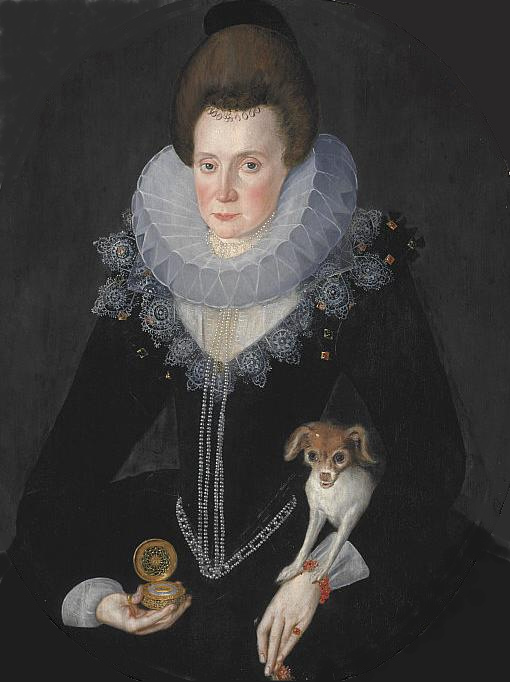
One of the most famous haunted objects in Ham House is the portrait of Elizabeth Murray, Duchess of Lauderdale. Legend has it that the portrait is haunted by the ghost of Elizabeth herself. Visitors have reported seeing the portrait move or change expression when they are alone in the room.

The Lady in Black Pushing People on the Stairs

Elizabeth Murray: Countess of Dysart, later Duchess of Lauderdale (1626-1698)

As mentioned, people have reported about the sound of the Duchess cane tapping by the grand staircase. They have also reported about seeing a lady in black they think must have been the Duchess haunting the mansion and seeing who comes and goes in her mansion. 

What is scary is that one of the tour guides told a story about standing on it during one if his tours and suddenly felt like someone gave him a push and almost came tumbling down the stairs. 

Several of visitors have also claimed to have a feeling of being pushed when walking up and down the stairs.

Visitors are advised to not use the third step and it is often marked with something to remind people. There are many theories as to why this step is said to be haunted and one of those stories is that this is where the Duchess decided to poison her second husband as well. Or was it perhaps the first?

The Haunted Staircase: Beware the third step of the stairs, as it is said to bring the ghosts forth and give people a puh.

The Hag in the Wall

One of the enduring legends and mysteries is whether or not the Duchess really did kill her first husband. According to one story there used to work a butler that had his 6 year old daughter living there with him. She kept complaining about scratching on the walls of her room, and an old hag that kept visiting her at night. 

When they investigated the wall, they found a hidden panel. There were the documents that proved that the Duchess really did kill her first husband. But what butler, when or behind what panel has never been pinned down, and is now one of the many legends of the house. 

The Servant on the Terrace

There used to be a servant called John MacFarlane that worked in the mansion. He was said to be very young, around 17 years old. In 1790 or 80 he fell in love with one of the kitchen maids. She rejected him however and her refusal made him suicidal. 

According to the legend he scratched his name on a window panel, or in some version in a pane of glass upstairs before he jumped to his death. According to legend, he is now haunting the terrace underneath the window. 

Countess Charlotte Walpole

The Countess of Dysart used to live in Ham House and used to love it. Charlotte Walpole was the youngest of the three illegitimate daughters of Sir Edward Walpole. In 1760 she married Lionel Tollemache, Lord Huntingtower, son of the 4th Earl of Dysart (1734-1799), who wed her in secret without the knowledge or consent of his father.

After her death it has been said that she has haunted the upstairs chamber and has happily been waving at visitors. Seeing this has been thought to be a good omen. 

Charlotte Walpole: The Countess of Dysart (1738-1789) is said to be a happy ghost and a good omen if seen at Ham House.

Prince Charles II

The Murray family that Elizabeth, Duchess of Lauderdale was a daughter of, was loyal royalists during and after the English Civil War. They used to be members of a secret society known as the Sealed Knot that supported Charles II who was in exile. 

When he was given the throne, he awarded the Duchess for her and her family’s loyalty. He visited the Ham House many times during his lifetime, and according to the legend, he still visits, even in his afterlife. 

Many people claimed to have seen the ghost of Charles II in the gardens, or even smelled the tobacco he used to smoke in the hall. 

Coronation portrait: Charles was crowned at Westminster Abbey on 23 April 1661.

The Christmas Haunting

No mansion ghost story is complete without its Christmas Haunting. At Ham House there is a cottage that used to belong to the driver to the 9th Earl of Dysart. 

It is said that it is haunted by a 19th century house and every Christmas Eve or Day, people staying in the cottage can hear the sound of a walking stick over the cobbled path to the cottage. 

It is said that every year he brought presents over to the cottage. He died in 1935, but apparently his nice yearly gestures seem to continue. 

Have a look at more Christmas Hauntings

Ghost Stories of Christmas Hauntings

Christmas Christmas is supposed to be the merry season with joy and light in the darkness. But many places is haunted by ghosts and paranormal activity in during this time. In fact, many of these ghost stories are haunted especially around Christmas. Here are some of the ghost stories that are told during Christmas times.

The Ghost Pets

Another curious ghost supposedly haunting the house is that of the pet dogs the Duchess used to keep. 

Visitors have been confused as to why they are not allowed to bring their dogs, when there clearly are dog prints in the dust and the faint barking indoors of one. Except it isn’t. It is believed that it is a King Charles spaniel.

They found the bones of it in a basket in the kitchen garden. The ghost dog is seen running on the first floor with its tail disappearing behind doorways and jumping at unsuspecting guests.  

The Haunted Ham House

Ham House is one of the most haunted places in London, and its ghostly legends have captivated visitors for centuries. And it is said when the darkness comes over the house, especially during the Christmas season, the eternal residents of Ham House comes out. 

More like this

Newest Posts

References:

England’s Haunted Ham House: The Complete Guide 

https://www.getsurrey.co.uk/lifestyle/fun-stuff/haunted-mansion-richmond-home-16-13758122

My night locked inside a house haunted by its gout-suffering mistress, suicidal servant and a dog 

The Haunted Townhouse of 50 Berkeley Square in London

Advertisements

One of the most haunted houses in London was 50 Berkeley Square, which according to the stories had a dangerous ghost that could kill the people staying in the attic. 

Once there was a house that was thought to be London’s most haunted house. The Georgian townhouse was located on 50 Berkeley Square in upmarket Mayfair. 

Back in the 18th and 19th century the place was linked with many horrific deaths and mysterious things happening. Residents as well as guests claimed to have seen ghosts in the house before they themselves were found dead. Their mouths and eyes wide open as if they died of pure fear. 

In 1879, reports of the house were published in Mayfair Magazine, telling about a maid who stayed in the attic and was found mad and died in an asylum the day after. In the same article there was also said a nobleman spent the night in the same attic and by morning he was found paralyzed, so scared that he couldn’t even speak. Also he died shortly after.  

The Victorian Christmas Deaths

Britain is known for its ghost stories tied to Christmastime, and this is one of those. One of the more haunted happenings in the house is said to have taken place on Christmas Eve, at least it was published in the magazine as it. 

This is what happened on Christmas Eve in 1887 when two sailors came to London. Blunden and Martin were on leave from HMS Penelope from the Royal Navy and walked through the dark and foggy winter streets, trying to find a place to stay for the night. 
If they were allowed to come in for the night or if they broke into the house is unclear, but they at least settled for the night in the attic. 

What they didn’t know at the time when they found lodging at 50 Berkeley Square when they stumbled upon it, happy to find someplace warm in the cold night, was all the haunted rumors and that the previous occupants of their room had been found mysteriously dead in the very room. 

During the night, Blunden felt uneasy and unable to fall asleep. Something wasn’t right in the house. He woke up Martin when he saw a ghost hanging over him. Blunden acted quickly and went for his weapon to protect them. The ghost came toward him as Martin managed to get out to the streets and found a policeman. 

Martin came back with the bobby and went inside of the house. They found Blunden at the bottom of the stairs, dead. His neck had been broken, probably because of the fall from the stairs. His eyes were wide open, as if from pure terror and fear. 

The Woman in the Attic

The most told legend is that the house was haunted by the spirit of a young woman who killed herself in the attic. After being abused by her uncle for a long time, she is said to have thrown herself out from the top-floor window in the attic. 
She is said to be the one behind the strange deaths as well, as her sight is so frightful people have died from fear of it. Depending who you ask, her spirit takes mostly form as a brown mist or a white ghostly figure.

The Starved Man

Another version of the haunted legends of the house is that there once was a man who was locked in the attic room and was only fed through a hole in the door. His brother, Mr. Du Pre of Wilton Park had to lock him inside because of his violent madness. In some versions he wasn’t mad to start with, but he eventually went mad and died. 

After his death he became a ghost and his moans and screams haunted the whole neighborhood. 

The Strange Thomas Myers of 50 Berkeley Square

So who was haunting the house that in modern times were owned by the Maggs Bros, Antiquarian Booksellers? Most stories are thought to have come from one of the peculiars occupants, Thomas Myers. He slept during the day, and in the night he made strange noises that many believed became exaggerated later. 

He moved into 50 Berkeley Square in 1859 after having been rejected by his fiancee according to the stories. He lived there alone and was said to be slowly getting mad as he locked himself in all day until he died in 1874 at 76. 

When he stayed there, the house with the sweeping stairs, high plaster ceilings and marble floors slowly started decaying more and more and rumors about it being haunted started to form around this time. 

When he was summoned to court for not paying his rates of 50 Berkeley Square, the magistrate excused him because they all knew he lived in a haunted house. So what came first? Thomas Myers or the hauntings?

The Haunted House

The spirits of the house at 50 Berkeley Square are said to be so strong that you only need to touch the Gregorian exterior of the house to feel the shivering hauntings that have infected the house. 

In modern times, we don’t really hear much about any more of the haunted incidents as before, and owners have refuted that the building is haunted. 

So the question is really, was the strange behavior of Mr. Myers the cause behind all of the haunting in the house, or did he see something that made him so?

More like this

Newest Posts

References:

Nightmare before Christmas: The history of festive ghost stories

50 Berkeley Square – Wikipedia

https://web.archive.org/web/20140122120101/http://www.walksoflondon.co.uk/37/50-berkeley-square-the-mo.shtml

https://london-beyond-time-and-place.com/50-berkeley-square-the-most-haunted-house-in-london/

The Bizarre Story of the Highgate Cemetery Vampire

Advertisements

The supposed haunted Highgate Cemetery in London left to decay suddenly became the hotspot for paranormal and occult phenomenon in the 1970s, when reports about the Highgate Vampire became a sensation and the hunt for it began. 

Settled in the heart of North London lies a place that’s shrouded in mystery and intrigue – Highgate Cemetery. With its overgrown pathways, eerie Victorian tombs, and gothic architecture, it’s no wonder this place has developed a reputation for being one of the most haunted cemeteries in the world and was certainly one of the most spookiest places in the 60s and 70s. 

From tales of ghostly apparitions to reports of unexplained phenomena, the dark secrets of Highgate Cemetery have captivated the imaginations of many over the years. But what is it about this place that has people so fascinated? 

The Dark History of Highgate Cemetery

Highgate Cemetery was opened in 1839 in Camden and quickly became the resting place of choice for wealthy Victorians and has today over 170 000 people buried there. The cemetery was designed by architect Stephen Geary and was intended to be a place where the rich and famous could be buried in style. However, as the years went by, the cemetery fell into disrepair and began to attract a less desirable clientele. 

Highgate Cemetery: The Cemetery was really made to make a more peaceful place to rest compared to the crowded churchyard graveyards. Today, it can seem like we have come full circle.

By the turn of the 20th century, Highgate Cemetery had become a shadow of its former self, with many of its tombs and monuments falling into a state of disrepair.

Famous Graves and their Mysterious Stories

Highgate Cemetery is home to many famous graves, each with its own fascinating story. One of the most famous graves in the cemetery is that of Karl Marx, the father of communism. Marx’s grave is a place of pilgrimage for many socialists and communists, who come to pay their respects to one of the most influential political thinkers of the modern era.

Another famous grave in the cemetery is that of Douglas Adams, the author of The Hitchhiker’s Guide to the Galaxy. Adams’ grave is a popular destination for fans of his work, who often leave tributes and memorials at the site.

Pathways: Green pathways with tombs on each side fills the Highgate Cemetery in London.//Source: Panyd at English Wikipedia

But perhaps the most mysterious grave in Highgate Cemetery is that of Elizabeth Siddal. Siddal was a model and artist who was married to the pre-Raphaelite painter Dante Gabriel Rossetti. After her death, Rossetti buried a manuscript of his poems in her coffin. The manuscript was later exhumed, and the poems were published, but were not a commercial success. Her husband was haunted by his action for the rest of his days. 

The Ghosts of Highgate Cemetery

There have been tales about the paranormal surrounding the cemetery for decades. After WW2 the cemetery fell into disarray and had little to no maintenance for a long time. In 1960 and 70s, it was so overgrown and left to decay that it was a perfect setting for horror movies like Taste the Blood of Dracula from 1970 and Tales from the Crypt in 1972. 

There were reports of locals from 1965 about seeing ghosts around the premises. There were especially two different figures that had been seen. One was that of an older woman wearing all white that was haunting the graves, looking after the graves of her murdered children. Another thing that was talked about was the skeleton that was standing guard by the main gate. 

There were also those that told that occult and even satanic rituals were held in the cemetery, people rising from the graves and other strange phenomena that attracted the attention of seekers of the strange and the paranormal. 

The Grey Figures Haunting the Cemetery

Over the years, there have been countless reports of strange sightings and unexplained phenomena at Highgate Cemetery in addition to the strange case of the Highgate Vampire. Many visitors to the cemetery have reported feeling a sense of unease or being watched, while others have claimed to have seen ghostly apparitions moving among the graves.

Seekers of the Paranormal: David Farrant in Highgate Cemetery caught the attention of the media when he claimed something strange was lurking in the cemetery. Was it a ghost? Was it a vampire?

In 1970 there was a man that wrote to the paper about seeing strange figures at the cemetery. On 24th of December he had passed the cemetery and seen what he described as a “gray figure” and asked if people had seen something similar. 

Read More: Check out all of the ghost stories from haunted cemeteries around the world.

The man was David Farrant, an investigator for the British Occult Society and in his article headlined: “Why do foxes die?” he claimed that the foxes that had been found dead in the cemetery with their throats slit had been killed by the Vampire. 

Vampire Hunter: Sean Manchester in an interview. He claimed that the supernatural thing in Highgate was a King of Vampires.

People replied and told about many different figures that they had seen that they thought had to be of a supernatural origin. There was one tall man in a hat, a ghost of a cyclist as well as a woman wearing all white that was glaring at them through the bars. Another figure had been seen wading through a pond. 

There was then a man named Sean Manchester that claimed that the gray figures they had seen was that of a vampire practicing black magic and even made a claim that this phenomena they were now witnessing was the King of Vampires from Wallachia, the home of Dracula before having being buried in the cemetery but awakened by satanists. 

Manchester was a bishop of the Old Catholic Church, not related to the Vatican, and a self-proclaimed exorcist as well as a vampire hunter. Soon the two men were on a mission to be the first to stop and capture the vampire and restore the peace of the holy ground of the cemetery. 

The Highgate Vampire Frenzie

The legend of the Highgate Vampire quickly spread, and soon the cemetery was attracting visitors from all over the world who were keen to catch a glimpse of the legendary creature.

Storming: Vampire hunters jumping over fences and gates of Highgate for vampire hunts.

Read More: Check out the story of Paris’ Haunted Père Lachaise Cemetery or Poveglia Island — The Most Haunted Place in the World for more stories about vampires.

Farrand and Manchester both claimed they were the one to get rid of the figure and Manchester said he was going to hold an exorcism in the cemetery the 13th of March in 1970 and they were filmed and interviewed about it. 

After they were shown on TV a mob of people that wanted to see for themselves flooded the cemetery. The police tried to control the masses by locking the gates, but they got over the gates and walls in the chaos. They were armed with stakes and roamed the cemetery to find the vampire and opened graves, beheaded and staked the corpses. 

Despite the fact that the vampire was never actually seen, the legend had a profound effect on the cemetery. Over the years, Highgate Cemetery has become synonymous with the supernatural, and many people believe that the cemetery is haunted by the ghosts of those who were buried there.

The Finding of the Staked Body

Months later the case was still widely discussed. On August 1st, a woman’s body was found headless and burnt close to the catacomb by two school girls. It was the body of a woman that had died a 100 years ago, been dragged from her coffin and staked through the heart before being left on the pathway. The police suspected she had been used in some sort of black magic ritual. 

When the police were searching the next couple of days, they found Farrant wandering around in the churchyard next to the cemetery with a crucifix and a wooden stake on the 17th of August.

He had gathered his Society to do an exorcism by holding a seance. He tried to run for the exit when the police arrived, but was caught and arrested, but when the case came to court it was dismissed. 

From BBC 24 Hours in Oct 1970 after Ferrant was aquitted.

It was not the last time Manchester visited Highgate Cemetery either. According to him his psychic helper guided him to a family vault where they broke open the door. He claims he lifted the lid of one of the coffins that he thought didn’t belong in the vault and had mysteriously been moved there from another catacomb. 

Right before he was about to stake the body in the coffin, another one of his helpers stopped him. He reluctantly listened and left garlic and incense in the vault before they exited out from the vault. 

After the Media Circus Died Down

Both Farrant and Manchester kept the legends about the strange satanic things going on at Highgate Cemetery, long after the other moved on. 

Farrant was arrested and jailed in 1974 for vandalism and desecration of the graves and the dead at the cemetery. He kept insisting that it was the work of Satanist’s and not him. He was also involved in politics and ran as the sole candidate for the Wicca Workers Party. His cases were for free nudity and sex as well as establishing state brothels. He was less keen on communism which he wanted to ban as well as leaving the EU Common Market. 

Their feud about what happened at Highgate Cemetery until Farrant died in 2019. They even challenged each other to a “Magician’s Duel” that was supposed to take place on Parliament Hill on Friday 13th in 1973, although that never happened. 

There were rumors that the two were going to sacrifice a cat in front of naked virgins. When a man’s cat never returned home one day after this, Farrant was persecuted by the RSPCA and the media as they thought he was behind the disappearance of the man’s beloved pet. 

Later he did sue News of the World for him being portrayed as a cat killer. And for the RSPCA inspectors, he sent them voodoo dolls with pins stuck in their heads, as well as two of the police officers that were involved in the arrest in 1974.

Staking the Vampire of Highgate Cemetery

Manchester on his end continued to write blog posts about Farrant, illustrating paintings of him looking like a demon and said he had a narcissistic personality disorder. 

On his quest to rid London of what he called the King of Vampires, he claimed to have tracked it down to a house in Crouch End. There he had staked the vampire and burnt the body, finally ridding them of the vampire tormenting Camden Town. 

Dracula A.D 1972 were inspired by the bizarre events:

Trailer for the movie Dracula AD 1972 that were supposedly inspired by the events that happened at Highgate around that time.

Behind the Hunt for Media Attention

What really happened in Highgate Cemetery is up for speculation. How much occult rituals and pagan sex parties with the devil really did happened or was blown up in the media’s satanic panic headlines is uncertain.

Today we don’t really hear much about vampires or ghosts from the cemetery other than hardcore paranormal investigators or curious tourists that wants to have a look at what it’s all about. Because who really knows, it is certainly not the first, nor the last cemetery were a vampire is rumoured to roam.

More like this

Newest Posts

References:

Featured Image: Nick Garrod/Flickr

Highgate Cemetery – Wikipedia

Highgate Vampire – Wikipedia 

The strange tale of the Highgate vampire 

The hunt for a vampire in Highgate Cemetery that led to a real magician feud – MyLondon 

The Many Ghosts of The Langham Hotel in London

Advertisements

In this luxury hotel in London, there have been talks about ghosts for many decades now. From a murderous doctor, a German Prince and even Napoleon III himself, there are many guests at the hotel who never checked out from The Langham Hotel in London. 

For over 150 years, The Langham Hotel in London has been a beacon of luxury and elegance, hosting some of the world’s most famous guests. However, behind the glamorous façade lies a darker side to the hotel’s past, one that is shrouded in mystery and intrigue. 

From unexplained sightings to eerie noises and unexplained occurrences, The Langham’s reputation as a paranormal hotspot has grown over the years, attracting thrill-seekers and ghost hunters from all corners of the world. Join us as we delve into The Langham’s mysterious past and uncover the secrets that lie within its walls. 

The History of The Langham Hotel

The Langham Hotel is an iconic hotel located in the heart of London. Built in 1865, it was the largest and most luxurious hotel in the city at the time with its Florentine palace style with over 500 rooms. 

Read More: Check out all of the ghost stories from Haunted Hotels

The Langham Hotel was the first hotel to have hydraulic lifts, air conditioning, and hot and cold running water in every room. It was also the first hotel to offer a full-service restaurant, which quickly became one of the most popular dining spots in London.

The Langham Hotel: The old hotel in London houses some very famous ghosts, and especially the room 333 is said to be the most haunted and both guests and staff tries to avoid to stay in the room.//Source: Wikimedia

It used to be owned by the BBC after it was damaged after WW2 and many of the ghostly sightings were done by some of the broadcaster and company staff. 

Over the years, The Langham Hotel has hosted some of the world’s most famous guests, including royalty, celebrities, and politicians. However, behind the hotel’s grandeur lies a darker side to its history. The Langham Hotel has been the site of numerous paranormal incidents over the years, with many guests and staff members reporting unexplained sightings, eerie noises, and unexplained occurrences.

When the Cricket Team Fled the Hotel

It was so bad that in 2014 there were reports that the British National Cricket Team refused to stay in the rooms with their partners they were given at the hotel, because it was supposedly so haunted. As they told the Daily Mail:

“It was so hot in the room I just couldn’t sleep. All of a sudden the taps in the bathroom came on for no reason. I turned the lights on and the taps turned themselves off. Then when I turned the lights off again the taps came on. It was very weird.

It really freaked me out. I ended up asking to move rooms. Bealey (Broad’s girlfriend) was pretty spooked, too, and I know Moeen Ali’s other half won’t stay there because she’s so frightened of the ghosts.

Ben Stokes has had some problems sleeping as well. He’s on the third floor, which is where a lot of the issues are. I’m telling you, something weird is going on.” 

The Haunted Room – Room 333

Room 333 is one of the most famous rooms at The Langham Hotel, with many guests and staff members reporting unexplained occurrences in the room and is a place said people try to avoid. The room is said to be haunted by a Victorian doctor who murdered his wife before killing himself in the room.

Guests staying in Room 333 have reported hearing unexplained noises, feeling a cold breeze, and seeing ghostly figures throughout the night. Some guests have even reported waking up to find their belongings moved or the room rearranged.

The Langham Hotel has embraced the room’s haunted reputation and now offers ghost tours and paranormal investigations for guests who want to experience the room’s paranormal activities for themselves.

The Famous Paranormal Incidents at The Langham Hotel

One of the most famous paranormal incidents at The Langham Hotel occurred in 1973 when a BBC radio producer, James Alexander Gordon, was staying in Room 333. He reported seeing a ghostly figure of a man standing at the foot of his bed. The figure was wearing Victorian evening dress and had no face. According to Gordon, the figure disappeared as soon as he turned on the light.

Another famous incident occurred in 2014 when a guest staying in Room 333 reported seeing a ghostly figure standing at the foot of her bed. She described the figure as a man wearing a top hat and Victorian clothing. The guest also reported feeling a cold breeze and hearing unexplained noises throughout the night.

These are just two of the many paranormal incidents that have occurred at The Langham Hotel over the years, with guests and staff members reporting unexplained sightings and eerie noises throughout the hotel.

The Ghostly Sightings of Famous Guests

The Langham Hotel has hosted some of the world’s most famous guests over the years, including Oscar Wilde, Mark Twain, and Princess Diana stayed there several times.

Napoleon III: Charles-Louis Napoléon Bonaparte; 1808 – 1873 is said to haunt Room 312.

Dickens claimed in 1879 in his guide book that it was the most expensive hotel meal in London that charged 14/6d (or 72½p) for a bedroom, breakfast with coffee and cold meat, and dinner with soup and meat. But for large dinner parties, there was nowhere else to go.

Sir Arthur Conan Doyle was also one of the frequent hotel guest, and Doyle used the hotel as the setting for several Sherlock Holmes stories.

However, some of these guests have reportedly never left the hotel and are said to haunt its halls to this day.

One of the most famous ghostly sightings at The Langham Hotel is that of Emperor Napoleon III, who is said to haunt Room 312. According to legend, Napoleon III stayed at The Langham Hotel in 1870 while in exile. 

He died in 1873, but his spirit is said to have never left the hotel. Guests staying in Room 312 have reported seeing his ghostly figure standing at the foot of their bed as well as loitering down in the basement area.

The German Prince by the Window

Another high ranking ghost said to haunt the hotel is said to be of a German prince who jumped from a window on the 4th floor. 

This ghost is said to have been seen by the BBC announcer, Ray Moor. He described the ghost as a big guy with short hair and a military jacket that was buttoned up to the neck. 

This ghost is said to also be the most active ghost at Langham Hotel and is seen walking in the early morning through the doors. It is also said that he enjoys hanging out in Room 333.

The Other Ghosts Haunting

But there are not only high ranking military or royals or murderous doctors said to haunt the hotel. There are also seen a butler wandering around in the corridors wearing holey socks as well as a man with a gaping wound on his face. 

There is also said a footman in blue with a powdered wig is roaming in the halls that creates a sudden drop in temperature. 

A Stay at the Most Haunted Hotel

The Langham Hotel has been the site of numerous paranormal investigations over the years, with ghost hunters and paranormal enthusiasts flocking to the hotel to experience its haunted reputation for themselves.

The hotel has even been featured on numerous TV shows, including Most Haunted and Ghost Adventures, which have documented the hotel’s paranormal activities.

The Langham Hotel’s mysterious past and paranormal reputation add to its allure and make it one of London’s most fascinating and intriguing hotels. 

More like this

Newest Posts

References:

England cricketers seek change from their ‘haunted’ London hotel – The Hindu 

Room 333: The Most Haunted Hotel Room in London | HuffPost Life 

Our History | Luxury Hotel in West End | The Langham, London 

Unveiling the Dark History of the Tower of London and its Ghosts

Advertisements

Uncover the hidden shadows of England’s majestic Tower of London, home to stories of more than one ghost haunting the rooms, the hallways and the prison cells from many dark parts of England’s history.

Shrouded in centuries of fear and mystery, the ancient walls of the Tower of London on the north bank of the River Thames, hide within them a plethora of ghost stories that have been passed down through generations. 

From secret passageways to encounters with mysterious apparitions, visit the legendary Haunted Ghosts Tower to uncover its dark history and uncover its spine-tingling tales of beheaded royals, tortured prisoners and missing princes as well as menacing forces following the guards.

The History of the Tower of London

Since its inception in 1066, the Tower of London has served as a royal residence, prison, armory and execution site. The White Tower gave the castle its name and was built by William the Conqueror in 1078. It was a symbol of the oppression over London after the new Norman ruling class.

Over the centuries it has seen kings and queens come and go, watched prisoners be tortured and witnessed countless executions within its walls. It ended up being a symbol of royal power and one of the most secure fortresses in the country. It is not only a stronghold of history but also an enduring source of horror stories that continue to haunt us today.

The Tower of London is known for its grisly past, having been the home to many famous and infamous prisoners until 1952. These included some of England’s most treasured monarchs, such as Anne Boleyn who was beheaded on May 19th 1536 and Sir Walter Raleigh, imprisoned in 1603 by King James I. 

Other more notorious prisoners held at the tower were Guy Fawkes and conspirators involved in the Gunpowder Plot, who were later hung, drawn and quartered.

Ghosts in the Tower of London

The Tower of London is reportedly one of the most haunted places in England, possibly due to its long and dark history. Ghostly figures are said to wander the dungeons, some even claiming to have seen Anne Boleyn’s headless ghost roaming its corridors. 

Lady Jane Grey

One of the most recorded ghost sightings is that of Lady Jane Grey, a young girl who was crowned Queen for nine days before she was imprisoned and eventually beheaded at the ripe age of 17.

The Execution of Lady Jane Grey: An often spotted ghost in Tower of London is Lady Jane Grey. This is an oil painting by Paul Delaroche, completed in 1833, which is now in the National Gallery in London. It was enormously popular in the decades after it was painted

She was originally put as a queen to prevent the Catholic Mary Tudor from sitting on the throne. She first came to the Tower for her coronation, but was soon back as a prisoner. Mary I was ready to spare both her and her husband’s lives if they converted to catholicism. Lady Jane, a devout protestant refused. She was executed on 12 February in 1554 on Tower Green. 

She is seen as a lonely ghost, wandering the battlements of the Tower. Her husband, Lord Guildford Dudley is also supposedly haunting the place. He can be seen in Beauchamp Tower, sitting in his cell and crying in the middle of the night. 

Ghost of Henry VI

Henry IV was the only English monarch to have been crowned King of France as well and he inherited the Hundred Years War from his uncle. He was crowned king of England at only nine months, the youngest person to have succeeded the English throne. 

This was also the start of The War of Roses, a series of civil wars and Henry VI was imprisoned in the Tower of London in 1465, reinstated as king in 1470, but then imprisoned again in 1471.

Henry VI died that year, possibly killed on orders from King Edvard IV who took his crown. 

Henry VI: Depiction of Henry enthroned, from the Talbot Shrewsbury Book, 1444–45. Although the official death was that he died of melancholia, however, many think he was assassinated in The Tower of London.

Strange legends started to form around the late king after his death and he was hailed as a martyr and a saint that had done plenty of miracles. It is also said that he is one of the ghosts still haunting the tower.  

It is said that he is seen at the last stroke of midnight in the Wakefield Tower, where some say he was praying when he was stabbed to death. 

Margaret Pole

Margaret Plantagenet, Countess of Salisbury was a powerful woman who was one of the few of the House of Plantagenet to have survived the Wars of the Roses. 

She was tried and sentenced to death to be executed whenever the king wanted. She spent two and a half years in the Tower of London as a prisoner before her execution happened in 1541. 

Margaret Pole claimed her innocence until her last hour. This poem was found carved on the wall of her cell:

For traitors on the block should die;
I am no traitor, no, not I!
My faithfulness stands fast and so,
Towards the block I shall not go!
Nor make one step, as you shall see;
Christ in Thy Mercy, save Thou me!

Margaret Pole: This is an Unknown woman, formerly known as Margaret Pole, Countess of Salisbury, by unknown artist, given to the National Portrait Gallery, London in 1931. Margaret Pole led an especially bloody execution in the Tower of London.

The execution is said to have been bloody and grisly and the proud lady refused to kneel on the scaffold as that was for traitors, and she was none. The executioner had to chase her around as she tried to run and hacked her to death. She is now thought to be one of the many nobles that are haunting the Tower of London with her screams echoing on the Tower Green.

The Many Ghosts of Anne Boleyn

Many believe that the ghost of Anne Boleyn haunts the Tower of London due to her untimely demise. She married Henry VIII and altered the British church forever when she did so as the king had to divorce his original queen and wife for it. They were only married for three years though and she was unable to give him any sons. What she did though was give birth to what would be Queen Elizabeth I that would be one of the longest regents in the country.

During King Henry VIII’s reign, she was famously arrested, accused of treason and beheaded in 1536 at the Tower and has since become one of the most famous people in England’s history. 

Haunted: The ghost of Anne Boleyn are said to be haunting, not only the Tower of London, but have been seen on several locations. Here is a painting depicting Anne Boleyn imprisoned in the Tower.

Anne Boleyn is supposedly a very busy ghost and she is said to haunt not only the tower but Hever Castle, Blickling Hall, Salle Church as well as Marwell Hall.

In the Tower of London she supposedly haunts the chapel of Church of St Peter ad Vincula in the tower where she is buried. She is also said to walk around the White Tower and on the Tower Green where she was held captive until her execution. 

Her ghost is often spotted wearing a gray dress and walking with her head tucked under her arm—mirroring how she was killed. According to legend, if you see her apparition it means that death is soon to come.

The Mystery of the Missing Princes

One of the greatest mysteries in English history remains unsolved—the fate of the two young princes whose uncle, Richard III, had them sent to the Tower of London in 1943 where they were never seen again. 

The Murder Mystery of the Tower of London: King Edward V and the Duke of York (Richard) in the Tower of London by Paul Delaroche. The theme of innocent children awaiting an uncertain fate was popular amongst 19th-century painters.

They were the sons of the late King Edward IV and were 9 and 12 years old when their father died and they were sent to the Tower of London. They grew up in great political turmoil during the Wars of the Roses, a series of civil wars of two branches of a family were fighting for the seat of the throne. 

During their disappearance many assumed that Richard III was responsible for their murder, although this has since been disproven, or at least, bare little hard evidence to. But the most talked about theory is still that they died or were murdered pretty soon after they disappeared. To this day no one knows what happened to them, giving rise to a host of different theories about the missing princes.

Many of the paranormal activity and ghost sightings have been connected to the two missing princes, and many believe they are some of the ghosts that never left the tower at all. They are seen holding hands and wearing nightshirts in the White Tower as well as playing and giggling on the battlements. 

Sir Walter Raleigh

Other ghosts that are said to haunt the Tower is that of Sir Walter Raleigh who were imprisoned in the tower once for a secret marriage and the second time for treason. The second imprisonment ended in an execution and his ghost is said to haunt the Bloody Tower where he was held. 

The Ghost in the Bloody Tower: Many of the prisoners were political prisoners, often charged of being traitors. Sir Raleigh just before he was beheaded – an illustration from circa 1860.

The Ghost of Sir Walter Raleigh is also said to be seen along the battlements who is now known as Raleigh’s Walk

Arabella Stuart and the Unknown Ghosts

The Gray Lady is an unidentified ghost as well, but she is haunting the Queen’s House of the Tower and her presence is only seen by female visitors. This place is also where the ghost of Arbella Stuart is seen after she was either murdered or refused to eat at all. 

Lady Arabella Stuart: She was at one time considered heir to the English and Scottish thrones, though she did not aspire to them. She died of self-inflicted starvation in the Tower of London, in 1615.

Other unnamed ghosts that have been reported on are the White Lady whose presence is made known by the smell of cheap perfume that has made visitors sick. 

The Legendary Guy Fawkes

Remember, remember the Fifth of November,
The Gunpowder Treason and Plot,
I know of no reason
Why the Gunpowder Treason
Should ever be forgot.

Fawkes led the infamous Gunpowder Plot with a group of English Catholics that planned to kill the Protestant King James by blowing up the parliament. They were found out though and the plot failed and Fawke was arrested and sent to the Tower. 

After torture, possible “on the rack” a famous torture instrument in the Tower, he gave in and told them all about their plan and named his accomplices as well. 

Interrogated and Tortured: Guy Fawkes 1570-1606 interrogated by James I 1566-1625 and his council in the King’s bedchamber, from Illustrations of English and Scottish History Volume I (1884).

For his execution in 1606 he was dragged from the Tower to Westminster to have the last sight be the building he tried to destroy. He was the last to die and had to watch his accomplices be hanged. He begged forgiveness of the King and the state as he walked to the scaffold. He was hanged and his body parts were distributed to the four corners of the kingdom as a warning sign to others that had their mind on treason. 

Guy Fawkes are also one that are said to haunt the grounds and some claim to hear his screams from where he supposedly was tortured. .

The Animal Ghosts

Can animals become ghosts? According to the lore in the Tower of London, there are plenty of them. Having exotic animals like lions, pumas, tigers and elephants were something the rich often were gifted and a popular thing to have in your home to show off your wealth and power. 

The most famous animal ghost in the Tower was a grizzly bear that supposedly charged at a guard around the Jewel Room who died of a fever two days later. There have also been spotted a Black Bear near the Martin Tower in 1816. 

More like this

Newest Posts

References

Tower of London – Wikipedia

Tower of London Ghosts | Haunted London | Authentic England

The 13 Ghosts Of The Tower Of London

Georgiana Houghton and her Spirit Drawings in Watercolor

Advertisements

From beyond the veil, some mediums claimed that ghosts and spirits guided them to paint and draw. One of them was Georgiana Houghton and her spirit drawings.

Now mainly referred to Spiritualist art, spirit art, mediumistic art or psychic painting, this was and to a certain extent, still is a form of painting or drawing highly influenced by spiritualism. Spiritualism was a movement where connecting with the spirit world was both a performative and at times lucrative business. And the mediums that held these seances had different ways of reaching out to the spirits. One of the ways was by the pen. 

Advertisements

Although perhaps not the psychic or spiritual part of the art is put much weight in today, the movement had a huge impact on modern art as part of the abstract art department. There are perhaps more famous men behind this genre of abstract art known today, like Piet Mondrian, Vasily Kandinsku, Kasimir Malevish and František Kupka. 

Often overlooked goes the women that may have been the pioneers within this type of paintings and drawings, decades before the textbook pioneers. One of them is Georgiana Houghton (1814–1884)

The Artist and the Medium

The Spiritualist painter: Georgiana Houghton was both a medium and a trained artist.

She was a British artist and medium born on Las Palmas de Gran Canaria, but moved and lived in London. She was remembered more like an eccentric amateur artist that was more known for her medium role than of an artist. And she gave more credit to the spirits that guided her paintings than to herself as their creator. 

This is also where she produced her first abstract work, or as they called it then, spirit drawings. Many of the pieces remind more of 196 or 1970 psychedelic art then Victorian from the 1860s and 70s. In 1859 she started having these private seances where she allegedly were guided to paint by different spirits and celestial beings. 

Precipitated Paintings

Often, these particular paintings would come during a seance where the medium claimed that it was in fact spirits that guided the artist to produce the paintings. 

When spiritism was at its peak of popularity, it was very common for the mediums to sketch a portrait of the spirit they were in contact with during their seances. Another form of this was by automatic drawing where mediums and other practitioners controlled the body of the artist. 

Georgiana Houghton started her spirit art career first by drawing and then with watercolors. She was one of those relying on an automatic process where she told she was directed by spirits. First she drew flowers and fruits, and was somewhat of a floral artist. This was the one way of painting that was looked at as more of a respectable practice for Victorian artists. But then her style turned to something else entirely. 

Advertisements

The floral pictures evolved to project the spiritual experience more than objects of the natural world. She had complex pictures with several layers, colors and details. She described the abstract shapes she found in her and colors as sacred symbolism

Not only was spiritualism on the edge of what was perceived as ordinary, at this time, the abstract way of painting was still not a concept, so the reception of the paintings was received more as a curious rarity than art. 

In the beginning, Houghton claimed that it was her dead family members like her sister Zilla that guided her, but as her work evolved, so did her artist spirit guides. And she would later claim that it was the likes of Renaissance artists Titian and Correggio that led her brush. 

The Frauds and the Performers

Spirit photographs: She was not only a painter that drew her seances. Here she is posing for a photograph, also used a lot within the spiritism movement.

She started gaining quite the notoriety for her paintings and even held an exhibition at the New British Gallery in Bond Street in London in 1871. Although it perplexed the visitors and was an eye opener for many of those watching the exhibition, it was not a commercial success at all. It almost bankrupted Houghton.

Despite this, she spent every day for around three months talking about her paintings to visitors and discussing the meaning behind her sacred symbols and what they could have meant. 

In 1882 she published the book: ‘Chronicles of the Photographs of Spiritual Beings and Phenomena Invisible to the Material Eye’. This book featured spirit photographs from many well known spirit photographers that were active in the 1870s like  Agnes Guppy-Volckman, Stainton Moses and spiritualists Alfred Russel Wallace and William Howitt.

There were also pictures from Frederick Hudson, well known for being the first spirit photographer in Britain, but also a well known fraudulent one that was exposed already in the 1870s. The book itself was heavily criticized for featuring dubious pictures where the pictures themselves were unconvincing and could be replicated with double exposure and . 

Her Legacy as the Artist and not the Eccentric

Now, the collection is missing many of her works. Because it is not the museums, galleries or art historians that kept her legacy intact. Most of her works were kept by the Victorian Spiritualists Union in Melbourne. Like so many other women’s achievements they are kept hidden in their diaries, botanical albums and embroideries that not often are looked at as real art. And the irony that she attributes her work to the likes of ghost men speaks echoes with a bitter aftertaste today. 

Although more known for her medium role than that of an artist, her work speaks for itself. Especially when we look at the way the art movement moved in the modern world, and her art were so ahead of its time. In 2016, the The Courtauld Gallery held an exhibition of her paintings where they acknowledged, not only the curious and peculiar origin story behind the paintings, but her craftsmanship and artistry as well. Because no matter how we feel about the spiritualism part, we cannot ignore how in modern art, the pieces we watch in a gallery, can help us see past the realism of the world and our thinking and reach a place in our sub consciousness we otherwise couldn’t see.

Some of Georgiana Houghton Spirit Drawings:

Advertisements

More like this

Newest Posts

References

 Image courtesy of Victorian Spiritualists’ Union Melbourne Australia

Georgiana Houghton 

Spiritualist artist Georgiana Houghton gets UK exhibition | Painting | The Guardian

5 Haunted Attractions to Visit

Advertisements

Perhaps this is not the greatest summer to travel, but as the borders are opening up, so do we as well move over greater distances than we have. Perhaps some of these places are even closer to you than you think? Here we have gathered some of the most haunted attractions around the world you can visit for a ticket.

Winchester Mystery House
San Jose, California

The Mystery House: Front view of the Winchester Mystery House/Ben Franske

This strange house, built upon the money, wealth and grief of the family fortune, the gun trade, this house is something else. Wind winding staircases going nowhere, doors leading to unknown destination and who know how much else secrets and hauntings the house holds.

Akershus Fortress
Oslo, Norway

By the Sea: Akershus Castle in Oslo, Norway/Pudelek (Marcin Szala)

The fortress was built in medieval times, withstanding plague, starvation from the cold winters and as a last stand during wars. It is also the location of several ghost the fortress has claimed as its own over the years. Smacked in the middle of the modern city of Oslo, it stands as a stark contrast of old and new, living and dead.

Advertisements

Island of the Dolls, (La Isla de las Muñecas)
Mexico City, Mexico

Isla de las Muñecas: nearby the Xochimilco canals/Esparta Palma/wikicommons

If not for the ghost, go for the creepy decor. Allegedly a man found a dead girl and her doll. He started collecting dolls to appease the girls spirit. Now the island is full of them, hanging from trees, looking at all the tourists taking their holiday at this peculiar place. For around 200 pesos you can get a boat to take you there. On the island, there is also a bar. So, hey, holiday!

The Catacombs
Paris, France

Bones: Wall made of skulls, catacombs of Paris/Djtox/wikicommons

A final resting place for some, not so restful for others. The catacombs were created in 1786 and are 500 miles of an underground maze, built of bones of the dead. And for a ticket, you can walk them. It has been held several scary paranormal claims, and it will only probably be more of them.

The Tower
London, England

The Tower: This is a picture of the so called White Tower of the Tower of London/Dietmar Rabich, London, Tower of London, White Tower — 2016 — 4679, CC BY-SA 4.0

Yes, the tower, how many ghosts do you have captured? The fortress smacked in the busy streets of Londong have been a infamous spot for death and misery for over 900 years. It also holds some royal ghosts that never found peace, among them Anne Boleyn and Mary, Queen of Scots.

Advertisements

More like this

Newest Posts