Tag Archives: headless horseman

The Ghosts of St Donat’s Castle – The Wailing Lady and the Watchful Eye

Advertisements

Crammed into the ancient towers and dark corner of St Donat’s Castle in the Vale of Glamorgan in Wales, the ghosts lingering within these walls are old and persistent. 

On the cliffs overlooking the restless waters of the Bristol Channel, St Donat’s Castle in the Vale of Glamorgan has stood for nearly a thousand years 25 km west of Cardiff. Some claim that for the longest time, ghosts have been roaming the area. 

The Haunted St. Donat’s Castle: Said to be haunted by plenty of ghosts and phantom figures, it is today used as a school. // Source

Built in the twelfth century and once the proud seat of the powerful Stradling family, its towers and battlements have seen war, wealth, and whispered tragedy. Since 1962, it has housed an international secondary school called Atlantic College.

The St. Donat’s Castle History

Antique ceilings, fireplaces, a moat, battlements, dungeons – in short, over 800 years of history, which also included Celtic kings defying the Romans, the Norman invasion of Wales and centuries of slowly decaying neglect. 

Castle & church, St. Donats, Glamorganshire from around 1835.

The oldest parts of St Donat’s castle were built in the 12th century by the De Hawey family, though the only surviving parts left are the keep and what is now the inner curtain wall.

Read More: Check out all haunted castles around the world

The castle was passed into the ownership of the Stradling family in 1298 with the marriage of Sir Peter Stradling to Joan de Hawey. The new owners spent a fortune expanding the castle and added many features including the outer gatehouse and curtain wall in 1300, as well as making the keep larger, with the inner court being built some 200 years later.

The Ghost of Lady Stradling

The most fearsome spirit said to haunt St Donat’s is Lady Stradling, a restless ghost whose sorrow has never found peace. It is also one of the ghost stories told the longest, and there are written sources about her haunting to at least the pre-1880s.

There are tales about seeing a Lady in White drifting through the corridors, bearing a sense and atmosphere of intense melancholy. It is said that her husband died in one of the many crusades Europeans took in medieval times. Her name or who her husband supposedly was has been up for speculation. 

There are many variations to her story though. Some versions tell of betrayal and murder within her own family. Some say her haunting is because of her mourning as her husband fell in battle, some she was slain by a jealous husband, others that a violent relative ended her life in a fit of rage. 

Whatever the truth, her spirit lingers, bound to the castle that witnessed her end. She has most commonly been reported in the Long Gallery area. Around the Lady Anne Tower, an apparition of a woman dressed in Medieval clothing, believed to be Lady Stradling has been spotted. It is also said that screams and moans are coming from the haunted tower.

The Hag of the Mist

Witnesses who claim to have seen Lady Stradling describe her in many unsettling forms. Some say she appears as an old, haggard woman with eyes hollowed by centuries of grief, her long fingers scratching at the windows as she cries into the storm. Others speak of a figure of an elegant lady clad in a gown of fine silk, her footsteps light and rhythmic, the soft click of high heels echoing through the corridors long after midnight. 

Like the banshee of Irish lore, her wailing is said to herald death within the family. In Wales, this form of a ghost is called The Gwrach y Rhibyn, or the Hag of the Mist. When her voice is heard piercing the night air, the Stradlings or those connected to their legacy know that loss is soon to follow.

Ghost of Pirates and Phantom Pipers

In 1449, Henry Stradling, along with his wife and child “while sailing from his house in Somersetshire to his house in Wales” were captured by the notorious Breton pirate, Colyn Dolphin, who plundered the Welsh coast from Lundy Island. The pirate demanded a large ransom which was met by the Stradlings after they sold off two of their manors (Tregwilym in Wales and one in Oxfordshire) and a large quantity of wool.

After the stories spread and were exaggerated by poems, songs and legends, and ghost stories of pirates haunting the area around the castle started. 

Many visitors have recounted hearing the distant sound of bagpipes echoing through the castle, despite there being no visible source for the music. Local legend suggests this phenomenon is the work of a Scottish piper who met his demise at St. Donat’s Castle.

The Headless Horseman

Stories of a headless horseman riding through the castle grounds have persisted over the years. While rare, those who claim to have seen him describe a spectral figure mounted on a ghostly horse, illuminated by an eerie glow. Although not a very descriptive haunting, a very common one around the British Isles. 

Some visitors have reported hearing the plaintive cries of a child reverberating through the castle, particularly during the night. The origin of these sorrowful wails remains a mystery, though local tales speculate they may belong to a child who met a tragic end within the castle’s walls.

There was even a witch called Mally-y-Nos. a perplexing lady named Mallt-y-Nos (Matilda of the Night), said to haunt the area around the castle.

The Ghost of Thomas Stradling

The Stradling’s managed to hold onto the castle until the death of Sir Thomas Stradling in 1738, when ownership passed to Sir John Tyrwhitt, his friend. 

Sir Thomas Stradling was unmarried and in his twenties when he planned to go on the Grand Tour with his close friend from university, Sir John Tyrwhitt, the fifth baronet of Stainfield. Before the two young gentlemen set out on this great adventure, they made a pact with each other. If either was to die while on this tour, then the other would inherit the estate of the deceased. Or so it was claimed.

While travelling Sir Thomas Stradling was killed in a duel on the 27th of September, 1738 in Montpellier in France. According to folklore, Sir Thomas Stradling’s nurse, who had raised him since he was a baby, wished to pay her respects and invited to see his body. 

She was convinced that the man in the coffin was not Sir Thomas, but an imposter. She knew that, as a small boy, Sir Thomas had lost a finger on his left hand as  it had been bitten off by a donkey, at least that’s what the story said.. But the man inside the coffin had all his fingers intact. But where then was Sir Thomas?

Gossip was rife on the subject, and for years afterwards, locals visiting St Donat’s Church would point at Sir Thomas’ tomb and declare: “That is where the imposter lies”.

Source

Sir Thomas had left no heir, but made a verbal agreement with Sir John Tyrwhitt as well as a written will. In it, he had left the castle and his entire estate to his cousin, Bussey Mansel, the 4th baron of Margam. But when Bussey had visited St Donat’s Castle after his death, he had been confronted by the ghost of one of the Stradling ancestors. The ghost had declared that it would never give the castle to a Mansel. Terrified, he turned his horse and fled as fast as it would carry him, never again to return to the castle.

The answer to who actually owned the castle remained in litigation for over 60 years. Ultimately, St Donat’s Castle did pass to the Tyrwhitts, much to the dismay of the people of St Donat’s. In fact, it is claimed that the vicar of St Donat’s Church was so incensed that ‘in his fury’ he destroyed a windmill and two watermills. It was despite all of the work, never used as a primal residence, and it started to fall into disrepair. 

Hollywood Connections

American millionaire William Randolph Hearst who bought the castle after seeing photographs of the castle in Country Life magazine. Hearst, who at the time was having an affair with the actress Marion Davies, spent a fortune renovating the castle, bringing electricity not only to his residence but also to the surrounding area. The locals enjoyed having Hearst in residence at the castle as he paid his employees very well, and his arrivals always created a big stir in a community not used to American excesses. 

Hollywood Era: Randolph Hearst (centre) with Alice Head (managing director of Good Housekeeping) and Federico Beltran-Masses (Spanish artist) at St Donat’s Castle in Wales, taken in 1928.

Hearst spent much of his time entertaining influential people at his estates and holding lavish parties at St Donat’s with guests like Charlie Chaplin, Douglas Fairbanks, and a young John F. Kennedy. Upon visiting St Donat’s, George Bernard Shaw was quoted as saying: “This is what God would have built if he had had the money.”

He spent a huge amount of money turning the castle back into its former self but due to economic reasons put the castle up for sale again in the late 1930’s.

Godfrey Williams and the Exorcism

An exorcism was reportedly performed in the early 20th century, which was claimed to have succeeded in ridding the castle of several apparitions, including a hag and a mysterious disembodied eye in several guest rooms. The owner at the time, Godfrey Williams, disliked the castle and may have been responsible for the spread of these stories.

The castle was bought by Morgan Stuart Williams in 1901 and after his death in 1909 it went to his son Godfrey. But Godfrey was so “disturbed” by the castle hauntings that he put the place up for sale. Godfrey had seen a ghostly panther prowling the castle corridors at night and reported seeing a single giant glowing eye appearing nightly in one of the bedrooms.

It’s said that Godfrey brought an exorcist to the castle and after the usual rituals a great gust of wind swept down the staircase and out went the panther and the glaring eye.

After being used by British and American troops during the war it was finally bought again in 1962 by Monsieur Antonin Besse II, and given to the Governing Body of Atlantic College. Today it still functions as an international college but is also open to the public for general viewing.

The Feline Haunting in the 90s

There are also tales of a phantom cat, a large, semi-transparent black creature that prowls the corridors and stairways. This was said to have been reported on in the 90s when the castle was used as a boarding school for the richer kids around the world. Was it the black panther coming back? Or simply the stories of it? Those who have seen it claim it brings with it a feeling of dread so heavy that the air seems to thicken around it. 

Source

And then there is the piano that is said to be one of the more haunting objects in the castle in modern times. In one of the great halls of St Donat’s, a piano stands near the window that overlooks the sea. It is said that when the castle lies quiet, its notes begin to play by themselves. The melody is never the same twice, as though the unseen player improvises a song of sorrow for each soul the castle has claimed. Staff, visitors, and even students from Atlantic College, which now occupies the castle, have all spoken of hearing the music late at night when no living hand could possibly touch the keys.

The Haunting supposedly got so bad that they had an exorcism done to deal with it. Again. 

Newest Posts

References:

St Donat’s Castle 

Exploring St. Donat’s Castle: Wales’ Haunted Past | Mary Ann Poll

Haunted Castles Wales Sorted by Name 

British goblins : Welsh folk-lore, fairy mythology, legends and traditions 

The imposter of St Donat’s Castle | Glamorgan Star Newspaper

https://www.walesonline.co.uk/news/medieval-welsh-castle-princes-princess-26682356

Convent of Jesus & Mary in Shimla and the Headless Horseman

Advertisements

The prestigious girl school The Convent of Jesus & Mary, known as Chelsea, is also known for their ghost stories from students that died on the premises as well as a headless horseman after them, luring them away with a red rose on their pillows. 

Shimla, with its enchanting landscapes and colonial-era architecture, conceals a series of eerie stories within its picturesque hills. The Convent of Jesus and Mary, also called Chelsea, is a renowned prestigious school for girls in Navbahar where the royal families of Thailand, Nepal and high class families in India used to send their daughters. Although it harbors chilling tales that continue to haunt its premises. 

The CJM schools that Chelsea is a part of is a network of Roman Catholic schools that have spread all over the world, and so have its ghost stories. 

Convent of Jesus & Mary: The school in Shimla used to be a catholic boarding school for girls, and a legend about haunting from a headless horseman made its rounds around the students.//Source

The Convent of Jesus & Mary was founded by a French nun in 1864 called Marie Claudine Thevenet and was run by nuns, originally as an orphanage for the children of the British soldiers. In post colonial India the school of Convent of Jesus & Mary was re-branded as an elite educational institution. It used to be a boarding school as well, but as of 2000 it has just been a day school. 

Read more: Check out all of the ghost stories from India

While some may dismiss these stories as mere rumors, the spectral legends surrounding the Convent of Jesus & Mary have persisted over the years, adding an air of mystique to this educational institution.

The Legend of the Headless Horseman

During the Convent of Jesus & Mary’s time as a boarding school it was an international close knit community with little to no phones or internet with strong and old traditions with a lot of time to kill in the chilly Himalayan range. No wonder that many ghost stories were passed around at the school, although it is unsure exactly when these stories took shape. 

The Headless Horseman: The figure is found in folklore across Europe since the Middle Ages. Typically depicted as a rider on horseback missing his head, variations of the tale exist in different cultures. In Irish folklore, the dullahan is a demonic fairy who carries his head under his arm and causes death when he stops riding. Scottish tales involve headless horsemen haunting areas after being decapitated in battles. In Welsh folklore, headless horsemen are said to haunt locations until their bodies are found and buried. German folklore tells of revenant headless horsemen who wander until they atone for sins.//Image: The Headless Horseman Pursuing Ichabod Crane by John Quidor

One of the most told stories associated with the Convent of Jesus and Mary revolves around an ominous figure: the headless horseman that have traveled the world and times with its striking imagery. Stories about the Headless Horseman have been told since medieval times, and everyone got their own twist.

It is said that the spirit of the Headless Horseman haunting the Convent of Jesus & Mary, started out as a coachman that used to live close to the school. He was said to have been too interested in ladies, but he died in some sort of accident or was decapitated in a brawl. It is said that on fateful Fridays, specifically the 13th of the month, this spectral rider materializes on the school grounds.

Read Also: Sleepy Hollow by Washington Irving, perhaps the most famous story coming from the folklore of the Headless Horseman.

It is said that when coming to the school, he offers one of the girls a rose. A trope found in many girl boarding school legends, including Convent of Jesus & Mary. In some versions The Headless Horseman gave it directly to her or the rose was left on the girl’s pillow and found when the girls got back from class.

What happens to the girls after being chosen depends solely on their choice. Those girls who accept the rose are led away by the sinister figure, never to be seen again, while those who dare to refuse meet a ghastly fate and are killed. 

The girls attending the school are wearing a red uniform and they are often referred to as Chelseaites and easy to spot. It is said that the fear of the headless horseman got so bad for a while that the girls covered their faces around the time leading up to a Friday the 13th. 

The Dormitory Fire Tragedy

Another haunting tale whispers of a devastating fire that engulfed the Convent of Jesus & Mary’s dormitory during the British colonial rule on April 29 in 1946, taking out a two-thirds of the school building. The present-day play area conceals a grim history, as it is believed to be the final resting place of the 10 year old girl who tragically perished in the flames. 

Ghostly apparitions are said to roam the playground, evoking the spirits of the past. Among these restless souls is a young girl, forever in search of her lost doll. She is not alone, as the spirits of other young women, taken by the headless horseman, are believed to linger in the shadows.

It is also believed to have been a fire that broke out when it was used for orphans, and the current building was built on top of the orphan children buried underneath it, still lingering as ghosts. 

The 2012 Tragedy of Convent of Jesus & Mary

Tragedy struck the Convent of Jesus & Mary in 2012, when two young students, were found lifeless near the school. The grieving families and friends of the victims made a distressing claim: the children had taken their own lives due to mental harassment and torment inflicted by their teachers. 

A pall of sadness and fear descended upon the school community. Some residents and students assert that the souls of these young victims linger within the school’s premises, casting a somber veil over the institution and are haunting the school.

Boarding School Ghost Stories

The Convent of Jesus & Mary in Shimla with its history and culture of young girls with a wide imagination and perhaps a ghost or two following them seems dark. Beyond its academic pursuits, the school has nurtured stories of spectral encounters that are found perhaps at other similar institutions. 

While some may dismiss these tales as mere superstition, the eerie legends continue to linger in the hallways and grounds of the Convent of Jesus & Mary, evoking a sense of both fascination and dread among its students and visitors. Whether real or imagined, these spectral stories add an intriguing layer to the school’s rich history and the enigmatic charm of Shimla’s haunted landscape.

More like this

Newest Posts

References:

Convent of Jesus and Mary Chelsea: Giving young women tools to take over the world | Latest News India – Hindustan Times 

Convent of Jesus Mary and Chelsea School- Some Untold Stories 

7 Most Haunted Places In Shimla: Exploring The Eerie Side In 2023! 

Convent of Jesus and Mary, Shimla – Wikipedia

The Christmas Haunting of Roos Hall of the Headless Horseman

Advertisements

It is not Santa Claus with his reindeer sleigh that comes to Roos Hall for Christmas. According to legend, there is a headless horseman pulling a carriage that takes their annual visit for Christmas Eve. 

In the countryside of Suffolk, just outside the quaint town of Beccles, stands Roos Hall—a red brick mansion among the green woodlands, shrouded in mystery and dark tales. This Grade I listed Tudor manor, built in 1583, has earned its reputation as one of the most haunted places in England and it is said that the site used to be a place for executions. 

It was built by the De Roos family, a Baron family. With its original fireplaces, paneling, and medieval parkland setting, Roos Hall is not only a historical gem but also a hotspot for paranormal activity, especially during the Christmas season.

The Headless Horseman Haunting Roos Hall

Among the myriad of ghost stories associated with Roos Hall, the legend of the headless horseman stands out as particularly chilling. This spectral figure is said to ride down the driveway of the mansion on Christmas Eve, clattering through the night with his phantom coach and two or four horses. This was coincidentally the day the family was appointed a Baron in 1264, although nothing strange is said to have happened on that day Robert De Roos was appointed. 

Read Also: The Mysterious Tale of Borley Rectory – Was it Really Haunted? for more stories about the headless horseman.

Witnesses have reported seeing the terrifying sight of a man on horseback, only to realize in horror that he has no head. The headless horseman is dragging a carriage behind him, barreling up in the driveway before disappearing right when they reach the door.

When they arrive at the door, a woman is said to get out of the carriage, looking to be of flesh and blood, and according to legend, if you meet her gaze, it will turn you mad. 

The Headless Horseman: Painted by John Quidor – The Headless Horseman Pursuing Ichabod Crane .

The apparition’s sudden appearance and eerie silence send shivers down the spines of those who encounter it, cementing its place in local folklore.

Read More: Check out all ghost stories from the Christmas season

This story was first read about in the Eastern Daily Press from January 26th in 1909. The story came from two workers of F.W.D Robinson who owned the Hall then after years of changing hands throughout the times. They claimed they saw the carriage and the woman. In this version of the story though the worker Benjamin Benns saw it four times that year, and Robert Elvin saw it a week before Christmas and again before Christmas Eve. When the legend started to only happen on Christmas Eve though is uncertain.

The Devil’s Footprints in Roos Hall

Inside Roos Hall, the haunting tales continue. Among the most disturbing are the mysterious markings known as the devil’s footprints. These strange indentations have been found in various parts of the mansion, sparking fear and speculation. 

One of these marks are said to be found on the wall of a cupboard or in a wardrobe inside one of the bedrooms. And when saying the devil’s mark, people mostly refer to it as a hoof branded  into the solid brick.

Some believe that these are the remnants of a sinister presence that once roamed the halls, leaving behind physical evidence of its malevolent visits. The origins of these footprints remain unexplained, adding to the eerie atmosphere that envelops Roos Hall.

The Gibbet on the Oak Tree

It is also said that there is the ghost of a woman in white circling the big oak tree on the front of the property. The tree is on the lawn around 100 ft from the driveway. Who she is is uncertain, but it is said she is circling the oak tree six times in order to summon the devil. This particular oak, today with a wooden fence around it, is said to be a tree where criminals were sentenced to death. 

The De Roos’ job as landowners was also to punish criminals. For this, they used a gibbet, looking almost like a gallow where they hung criminals as a way to deter people to follow in their footsteps and show what would happen to them. They were usually dead, but sometimes, hung there for many days as they were just awaiting death. 

Later they planted the three known as Nelson’s tree there instead to hang people from. In addition to the woman, there was also a man wearing torn trousers and a brown jacket. People believe that it has to be people that once were executed here. 

The Ghostly Girl in the Window

Roos Hall’s spectral residents are not limited to headless horsemen and devilish imprints. Visitors and residents alike have reported sightings of a pale young girl peering out from the windows of the mansion on the first-floor. 

This ghostly figure is often seen observing from a distance, waving at you, her expression forlorn and her presence unsettling. The identity of this apparition is unknown, but her frequent appearances suggest a tragic past tied to the history of Roos Hall.

The Oak Tree: Also known as the hanging tree. // (Image: Gerry DeFalco/Suffolk Live)

A Haunted Legacy of Roos Hall

The haunting of Roos Hall is deeply woven into the fabric of its history. Built in the 16th century, the manor has seen centuries of human joy, sorrow, and strife, each leaving its mark on the building. Over time, these emotions have seemingly manifested into the ghostly phenomena that now define Roos Hall.

Christmas, a time of warmth and family gatherings, takes on a different tone within these haunted walls. The festive season’s contrast with the mansion’s dark history makes the haunting experiences all the more jarring for those who witness them.

In the stillness of a Suffolk night, as the Christmas lights flicker and the winter wind whispers through the ancient trees, the spirits of Roos Hall are arriving in the carriage pulled by the headless horseman, ready for its annual haunting.

More like this

Newest Posts

References:

Roos Hall – Wikipedia 

William Ros, 1st Baron Ros – Wikipedia 

Weird Suffolk: The Christmas ghost at one of Suffolk’s most haunted houses | East Anglian Daily Times 

The haunted Suffolk hall where a headless horseman appears every Christmas Eve

Wilton Castle and the Death Coach

Advertisements

Every year on a death anniversary, the Death Coach is said to pull up at Wilton Castle. The Haunted castle in Ireland is filled with ghosts in the fireplace, headless horsemen and strange lights in the towers. 

Wilton Castle in Enniscorthy, Ireland, is a storied 13th-century fortress. This privately owned castle has witnessed the rise and fall of generations, hosting tales of prominent families, arsonist attacks, and ghostly apparitions. 

Built in the 13th century by the De Dene family, Wilton Castle has a rich and varied history and went through the hands of several families. For centuries, it served as the proud abode of the Alcock family, who were locally prominent in the 17th century. 

Read More: Check out all of the ghost stories from Ireland

Tragedy struck in 1923 when an arsonist attack left the magnificent house gutted by fire. Yet, hope was not lost for this architectural gem, as careful restoration efforts in recent years have breathed new life into its ancient stones. 

Wilton Castle

Today, Wilton Castle opens its doors to guests, offering exclusive hire, weekend occupation on a bed & breakfast basis, or the option to stay and cater for oneself.

The Ghostly Tale of Harry Alcock

Within the hallowed halls of Wilton Castle, the ghostly presence of Harry Alcock lingers, tethered to the realm of the living. As the sun sets on the anniversary of his death each year, he embarks on a spectral journey on the famed death coach. Riding in a horse-drawn carriage, Harry’s apparition drifts away from the castle in a somber procession.

Read More: Check out all of the Haunted Castles from around the world

While no specific date is recorded for this ethereal spectacle, historical records indicate that Harry Alcock passed away on the 3rd of December 1840. Locals once gathered annually in eager anticipation, hoping to catch a glimpse of this melancholic phantom as he embarked on his spectral journey.

The Irish Death Coach

The “Death Coach,” a prominent figure in the folklore of Northwestern Europe, particularly in Ireland, is known as the “cóiste bodhar,” which translates to “silent coach.” This eerie legend can also be found in stories from British and American cultures. The death coach is typically described as a black carriage, driven or led by a headless horseman known as the Dullahan.

The appearance or sound of the death coach is believed to be an ominous sign, foretelling imminent death either for the observer or a close relative. In Irish folklore, it symbolizes the inevitability of death, signifying that once it arrives on Earth, it cannot return empty-handed. This belief emphasizes that once a person’s fate is sealed by a higher power, mortals are powerless to prevent it.

Accompanying the death coach in Irish folklore is the banshee, adding to the sense of foreboding and dread. In Scottish folklore, a similar entity is said to appear on the Royal Mile of Edinburgh, collecting the souls of the deceased. Additionally, there are stories of a “hell wain” that can be spotted in the Scottish night sky, further contributing to the eerie tales of the death coach.

The Ghosts of the Cromwellian War

In the castle’s dark and oppressive past, Oliver Cromwell infamously employed the cells beneath its formidable walls as grim interrogation and prisoner holding areas. Within these gloomy chambers, Cromwell and his followers subjected countless innocent Catholics to unspeakable acts of brutality and mutilation, leaving behind a haunting legacy of pain and suffering.

Legend has it that the anguished spirits of these unfortunate prisoners still wander the surrounding forests and forlorn corridors, forever trapped in a spectral realm between life and death. Torn and bloodied, these restless souls continue to bear the marks of their torment, their restless footsteps echoing through the ancient halls.

The lingering presence of these spectral figures serves as a chilling reminder of the past atrocities that unfolded within those very walls. Their ghostly manifestations carry with them an undeniable aura of sadness, their ethereal forms drifting silently through the centuries, yearning for peace and release from their eternal anguish.

So, should you find yourself drawn to the castle’s eerie allure and wish to delve into its dark secrets, prepare yourself for an encounter with the spectral remnants of Oliver Cromwell’s cruel reign and the unfortunate souls who suffered beneath its merciless grasp.

Archibald Jacob: A Magistrate’s Haunting

Another ghostly tale intertwined with Wilton Castle is that of Archibald Jacob, a local magistrate notorious for his brutal methods and was known to flog and torture people in the parish. 

In 1836, tragedy befell Jacob as he fell from his horse and met a fatal end while returning home from a ball at the castle. His restless spirit is said to have lingered, manifesting both at the site of his tragic demise and within the castle itself.

One particular legend recounts a chilling exorcism performed within Wilton Castle. As a Catholic priest made the sign of the cross, the ghost of Archibald Jacob allegedly materialized within the castle’s fireplace, only to vanish in a cloud of eerie smoke. Jacob’s lingering presence serves as a haunting reminder of his controversial reign as a magistrate.

The Mysterious Lights from the Ghost of a Star

Beyond the prominent spirits of Harry Alcock and Archibald Jacob, Wilton Castle is steeped in eerie phenomena. Mysterious lights have been reported in the castle tower, believed to be the manifestation of a former actress who perished in a tragic fire when her dress caught fire as she was carrying an oil lamp. This spectral figure continues to cast her ethereal glow on the castle’s ruins.

It is also believed that it is the ghosts from when the IRA burnt the castle down in 1923. Although this news clip from it doesn’t really mention that anyone died. According to this legend, there were three aspiring actors that burnt with it.

The actress’s ghost stands on the balcony, ready to jump, even though she hesitated to do so the night of the fire, and thus perished. It is as if she relives that decision over and over again.

Additionally, the property echoes with the howls of a phantom dog, its mournful cries echoing through the darkest of nights. These enigmatic occurrences serve as a testament to the enduring mystery and rich tapestry of history that envelopes Wilton Castle.

Tales of Tragedy at Wilton Castle

As the sun sets on each anniversary of Harry Alcock’s death, the Death Coach arrives at Wilton Castle, casting an eerie and melancholic atmosphere over the ancient fortress. The ghostly presence of Harry Alcock, forever tethered to the realm of the living, embarks on his spectral journey in the horse-drawn carriage.

As guests venture through the castle’s hallowed halls, they are not only immersed in its rich tapestry of history but also invited to partake in its ghostly tales. Each creaking floorboard and flickering light whispers the secrets of the past, enticing all who dare to enter into the enigmatic and haunting world of Wilton Castle.

So, if you find yourself drawn to its eerie allure, prepare to immerse yourself in the legends and spirits that dwell within. Wilton Castle stands as a testament to the enduring power of history and the ethereal beauty that can be found within the embrace of the supernatural.

More like this

Newest Posts

References:

Creepy Irish Castles & Houses Halloween Irish culture and customs 

Wilton Castle | Haunted Wexford, Ireland | Spirited Isle 

Death Coach – Wikipedia 

The Best Haunted Castles In Ireland 

The Mysterious Tale of Borley Rectory – Was it Really Haunted?

Advertisements

Tucked away in a remote corner of Suffolk lies a building with a sinister past – Borley Rectory. For centuries it had ghostly tales of nuns and headless horsemen in the night, but how much of it was true and how much was a hoax?

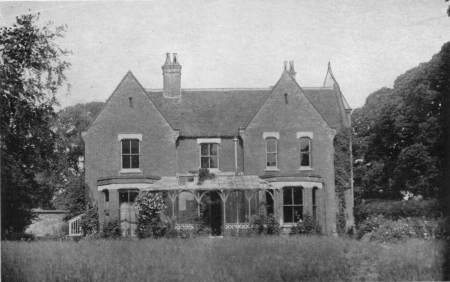
Borley Rectory, located in a remote corner of Suffolk, has long been shrouded in mystery and speculation of the paranormal kind. It even used to be described as the most haunted house in England, and that is saying something.

Rumors of hauntings in the large Gothic-style rectory have swirled around the property since its construction in 1862, but to this day no one can say for sure what lies beneath – are the stories simply urban legends, or is something even more sinister at work?

A Closer Look at the History of Borley Rectory

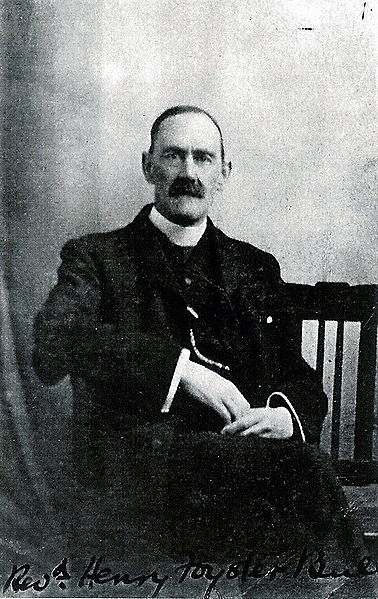
Borley Rectory was constructed in 1862 by Reverend Henry Bull, who served as Rector of the church of St. Mary between 1862 and 1892. 

During this time, many paranormal occurrences were reported by members of the Bull family and visitors to the property, including sightings of phantom figures, unexplained noises and strange lights in the surrounding woods. The case remains unsolved to this day, with experts and amateurs alike still trying to uncover its secrets.

The Headless Horsemen

One of the things people claimed to have seen was the headless horsemen over four decades on various occasions, pulling a phantom coach. This was also the thing the wife of Reverend Smith saw when she later would call the Daily Mirror and get an investigation going in 1929. 

The Death Coach: The “Death Coach,” a prominent figure in the folklore of Northwestern Europe, particularly in Ireland. The death coach is typically described as a black carriage, driven or led by a headless horseman known as the Dullahan. The appearance or sound of the death coach is believed to be an ominous sign, foretelling imminent death either for the observer or a close relative.

The Paranormal Activity in the Borley Rectory

Long before 1929 and the investigation that would follow, the rectory had been talked about as haunted for years. Paranormal activity was reported frequently in and around the Borley Rectory all the way back in 1863. Witnesses described mysterious footsteps, disembodied voices, and unexplainable lights in the surrounding woods. 

The Bull Family: The Rectory used to belong to the Bull family that told countless of ghost stories about the place over the years. This image is photograph of Reverend Henry Dawson Ellis Bull made before 1892

Others even claimed to have seen supernatural figures wandering around the rectory grounds. These reports were collected by investigators that visited the location over the years, creating an intriguing mystery that maintains its fascination today.

The Legend of the Monk and Nun

Before Reverend Smith and his wife moved into the rectory, the Bull family lived there for decades. On July the 28th, 1900, the 4 daughters of the rector claimed to have seen a ghost of a nun in the twilight, just outside of the house. They tried to talk to her, but when they got closer, the spirit seemed to just disappear. 

So called ghost historians talk about a legend from the Benedictine monastery that according to legend was built around 1362. One monk allegedly had a relationship with a nun from the convent not far from the monastery. 

Their affair was apparently discovered  and the monk was executed and the nun was bricked up in the convent walls. 

The Ghost of the Nun: One of the more enduring legends from the Borley Rectory was that it was haunted by a nun. Something that the children from the Bull family told about, as well a different mediums that held a seance at the place.

There was also once conducted a planchette seance in London about the spirits in the Rectory held by the medium Helen Glanville in 1938. She told that she had made contact with a young nun named Marie Lairre. She was a French nun that left her order in France to follow a man, a member of the Waldegrave family and owner of the Rectory in the 17th century. 

She never got that far though and she was murdered inside of the house. Her body was buried in the cellar, or perhaps even thrown in a well that wasn’t in use anymore. She had tried to write on the walls for help from the afterlife to try to get the people to find her body. 

The Skull at Borley Rectory

Fast forwarding to when Reverend Smith and his wife moved into the rectory in 1927, the wife soon started getting suspicious that something wasn’t quite right. Once she was cleaning the cupboard and came across a brown paper bag. When she peered inside, she found the skull of a young woman, and this is when things really started to take off. 

The servant bell would go off, despite not being connected, there were lights in the windows and she kept hearing footsteps and this phantom coach carried by horses at night. 

She got in contact with the Society for Psychical Research through the Daily Mirror, and they then sent a reporter writing about all the strange things that were happening in the rectory. 

Paranormal Investigation of Price

Harry Price was a celebrated investigator who visited Borley Rectory in 1929 and really made the haunted house famous for the country as his accounts were printed in the Daily Mirror. He was attempting to uncover the truth of the supernatural phenomenons. 

Harry Price

During his time there, Price recorded his experiences, noting mysterious phenomena such as cold spots in certain areas of the rectory and inexplicable noises. There were also things like a vase and other objects being thrown and mysterious spirit messages that were being tapped out on the mirror.

According to Mrs Smith, all of these haunted phenomena stopped as soon as Harry Price left the rectory, and she suspected it was him that was behind all the hauntings. 

When Price published the study by the Society for Psychical Research, he rejected most of the rumors that people had reported on, however, most ghost historians discredit this report and books and TV are continuing to be intrigued by the story of the Borley Rectory.

The Exorcisms and Poltergeist Activity

The Smiths left in 1929 and Reverend Foyster moved into the rectory with his wife, Marianne and their adopted daughter, Adelaide. 

Reverend Foyster wrote in 1930, a detailed report to Harry Price about the strange things they had experienced while living there. The bell ringing the Smiths had heard continued, the windows shattered and there were stones and bottles thrown by no one. 

Marianne Foyster even reported to her husband that something had even thrown her out from her bed. 

Reverend Foyster tried twice to repel the hauntings by exorcisms, but it didn’t go so well. In one of the exorcisms he was even hit by a stone in the shoulder. 

After they moved out from the rectory in 1935, people speculated on what was going on in the house. Most blamed Marianne to be the mastermind behind the hauntings, and even though she blamed her husband and psychic researchers that came by to investigate, she later came forward with shocking news. 

She had an affair with one of their lodgers called Frank Pearless, and she had used the paranormal rumors to cover up her lies and deceits. She also had a habit of making her friends fake hauntings to prank her husband. But everything? Marianne claimed not, and said that she really did believe some of the hauntings had been something real, although most could have been the wind. 

The Borley Rectory Report

Harry Price couldn’t let the Borley Rectory be and rented the place in 1937. He let 48 observers stay in the house for longer periods of time and interviewed them about their stay there. 

In 1937, Price published his findings from Borley Rectory in a report which has since become known as ‘The Borley Rectory Report’. In it, he concluded that the rectory was indeed haunted by several distinct entities and spirits. 

Despite decades of debate, no one has been able to conclusively explain or disprove Price Harry’s findings. While some people suggest hoaxes or natural occurrences are behind the phenomena experienced at Borley Rectory, others remain adamant that its walls still echo with supernatural activity – mysteries we may never be able to explain.

The Fire

During the planchette seance in 1938, there was a second spirit that turned. The spirit identified himself as Sunex Amures, and claimed he would set fire to the rectory that year. He also said that the bones of a murdered person would be revealed then. 

There was no fire in 1938, but in 1939, the new owner was unpacking boxes and knocked over an oil lamp. The fire spread quickly and the house was severely damaged. After they investigated, they concluded that the fire seemed to have been started on purpose. 

After they did a quick search in the cellar of the burnt down house, they discovered two ones, something Price thought to have been the bones of a young woman. 

Burnt Down: The Borley Rectory after the fire.

Borley Rectory – a Hoax?

Debate continues over the precise source of the paranormal disturbances experienced at Borley Rectory. While some suggest hoaxes or natural occurrences are behind the phenomena experienced, others remain adamant that its walls still echo with supernatural activity – mysteries we may never be able to explain. 

Many investigators have revisited Borley Rectory since Harry Price’s initial investigation and it is still considered to be a site of major paranormal importance today. Even if Price himself has been thought to have faked many of the phenomenon when he conducted his investigation. Whether it was a hoax or not remains to be seen, but it remains an enduring mystery in the world of ghost hunting.

In 1938 it was confirmed that the legend of the monk and the nun bricked up in the convent had no basis in facts and now many speculate that it was the children in the rectory that made the story up for fun. 

The skull Mrs. Smith supposedly was never accounted for, and the bones they found in the cellar was also debated. The parish refused to have a ceremony because they believed that the bones they had found belonged to a pig. 

In 1944 it was demolished and the land divided before getting new buildings built. 

More like this

Newest Posts

References:

https://en.wikipedia.org/wiki/Borley_Rectory