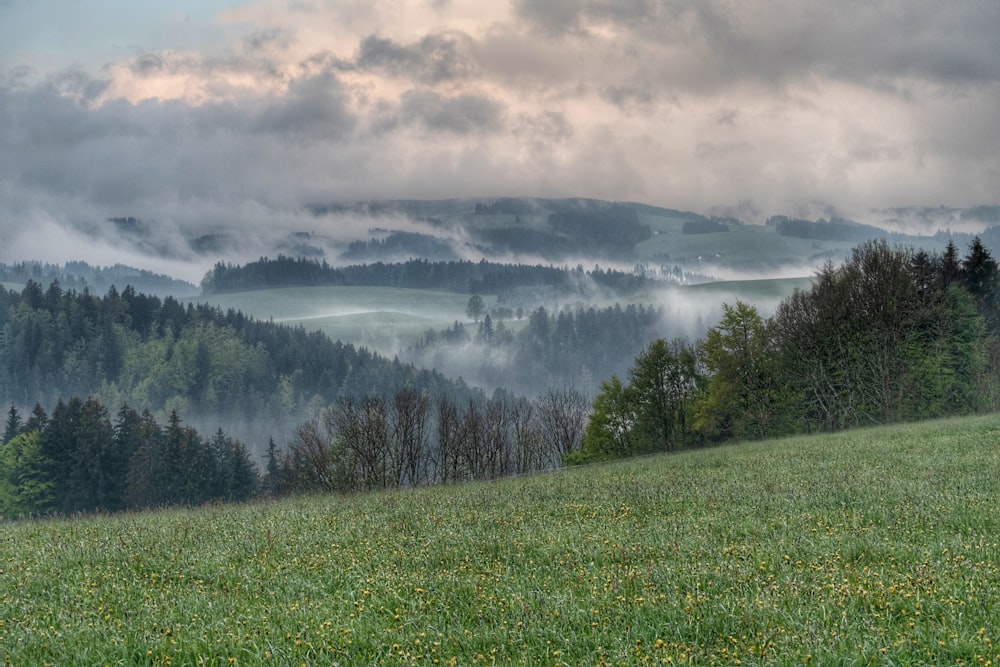
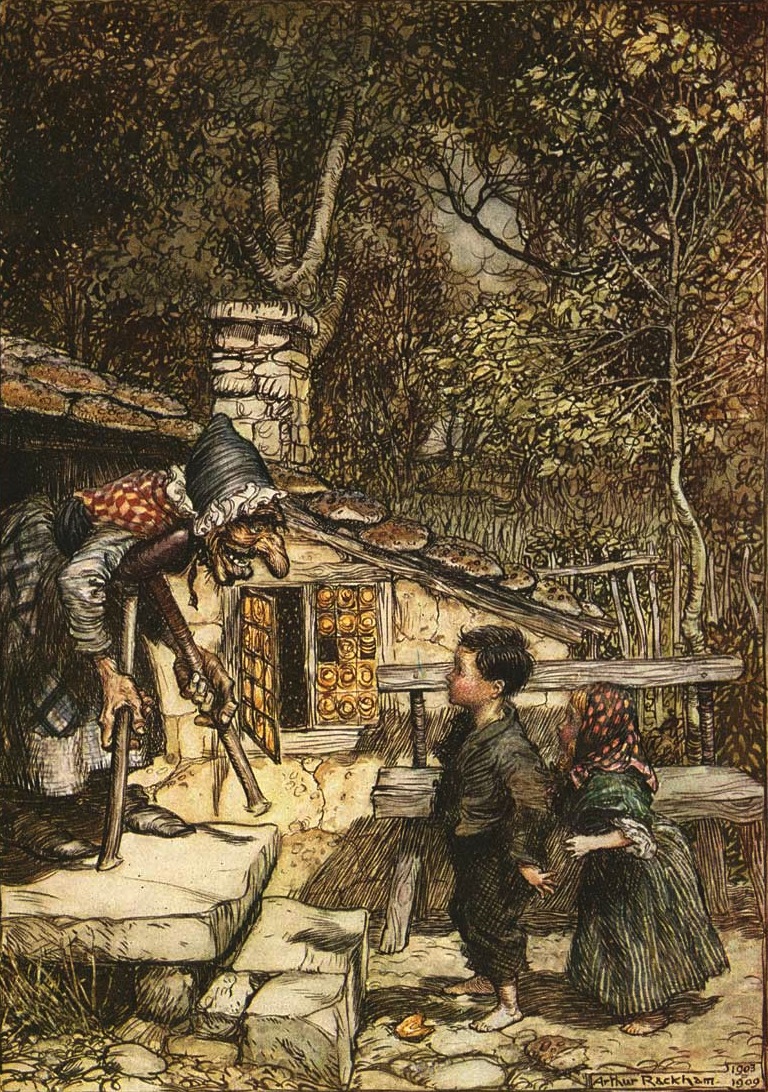
Once a green paradise, the legend says the fairies protected the people of Val Gerina valley in the Swiss alps. Driven by greed to impress a woman however, the son meant to continue the tradition and friendship with the fairies, brought it all down.
Deep in the Swiss Alps, where the mountains whisper ancient secrets and the wind carries echoes of forgotten songs, there once existed a valley so green, so lush, it seemed untouched by time or sorrow. This was Val Gerina, a valley close to the Swiss-Italian border in the alps. In Italian sources, it is also known as Valle Aurina.
Read more: Check out all ghost stories from Switzerland
It looks like the Val Gerina valley is found in San Vittore in the Moesa Region, a place hidden away where a lot of the valleys are uninhabited. There is also a Valle Aurina (Ahrntal) in South Tyrol, Italy. Now, it is not certain this is the valley referenced in the story, as the valley in the story vanishes, or at least becomes barren. Back when the story takes place, it was said to be a lush and fertile land and called The Green One. In the middle of the valley was a lake, and on the shore was a little village. It was a place as beautiful as it was mysterious, veiled in alpine mist and guarded by a legend that has outlived the valley itself: the tale of the fairies of Val Gerina.


A Daily Offering to the Hidden Folk
The story begins with Aimone, an old man who lived in a quiet alpine village on the edge of the valley and owned the lush pastures and fields. Solitary by nature, Aimone was known to carry a bucket of fresh milk every day up the mountain, placing it reverently on a flat stone near the summit. Without fail, by morning, the milk would be gone with not a drop spilled, not a trace left behind.
Villagers grew curious. They whispered about wild animals or spirits, and many tried to follow him to discover the secret. But Aimone, fiercely protective of his daily ritual, always chased them away. None dared question him until his son, Pietro, whose curiosity would prove devastating.
Breaking the Pact
One morning, Pietro trailed his father in secret. He watched as Aimone set down the milk on a large altar-shaped stone beneath a rock and left. Determined to see the truth, Pietro waited and waited… but nothing happened. The milk remained. No fairies, no magic.
Disappointed and confused, Pietro returned home only to discover that his favorite goat had mysteriously died during his absence. Seeing his son’s grief, Aimone finally revealed the truth.
For years, he had been feeding the mountain fairies that lived in a cave on the rock overlooking the valley. In return, they had protected his home, animals, and crops. They were shy, unseen beings, living deep in the caves of the Alps, whose magic depended on being respected and left undisturbed.


For generations, their family had been feeding the fairies that protected them and their lush valley. By watching the offering, Pietro had broken the unspoken pact, and the fairies had exacted a price.
When Pietro looked at the rock from far away the next day, it was like he saw two lights, almost white shapes that floated along the path leading up to their cave.
The Seduction of Greed
Years passed. Pietro grew into a young man and fell deeply in love with a woman from the neighboring valley called Lolanda. In some versions she was a foreigner new to town, coming from the city, daughter of a nobleman. She was nothing like the other valley girls and her taste was more luxurious and refined than what Pietro had to offer..
To impress her, he gave her a small black stone inlaid with gold. He had been given it by a shepherd coming with a token so rare and exquisite, she was overwhelmed. Encouraged by her reaction, Pietro promised to bring her more. In some versions she asked him to find more, even handing him a spell that would invoke the help of the fairies.
But precious stones do not fall from the sky, and Pietro knew just where to find them: the fairy caves his father had once told him about in whispers.
Determined and emboldened by greed, Pietro stole into the mountains. Armed with an ancient scroll, said to contain a blood-written spell that could compel the fairies to give up their treasures, he ventured into the heart of the cave. There, with trembling hands, he read the incantation aloud.
The Fall of Val Gerina
The moment the final word passed his lips, the cave began to shake. Stones tumbled, winds howled, and the very mountain seemed to scream in fury. The ground split open beneath Pietro’s feet. He tried to flee, but it was too late. The earth collapsed, swallowing him — and the entire valley of Val Gerina — into a silent abyss.
By morning, the valley they knew had vanished.
Where once there was a verdant paradise, now stood only jagged rock and alpine scree. A barren landscape with no life. Pietro was never seen again. Nor were the fairies — if they had ever truly shown themselves at all.
It is said that no map ever recorded its existence, and no villager could say whether Val Gerina had been real or simply a dream. So, perhaps the Val Gerina mentioned earlier only bares a similar name.
Newest Posts
- The Born Vjesci Vampire and the Graves they Left Behind
 Unlike many other vampire stories, the legend of the Vjesci says a vampire is not made, it is born. From the northern slavic folklore in Poland, the predestined bloodsucker is found within and even if you follow every precaution, they can still come back.
- The Deildegast: Norway’s Property Line Ghost
 A particular ghost with a specific task to complete before passing on, is the Deildegast ghost from Norway. After moving the boundary stone on their property line, they must spend their afterlife making amends for their trickery.
- The Ghost of the Solemn Fisherman of Lofoten
 The chilling waters of Lofoten are not only home to thriving marine life but also to haunting tales of the past, where spirits linger and ancient legends come to life. One such tale is that of a steadfast fisherman whose unwavering loyalty to his vessel transcended even death.
- Mhachkay: The Turkic Vampire Spirit With Two Hearts
 In Tatar Turkish lore, the Mhachkay, a peculiar and strange creature is one of the few vampire myths from Turkey and the surrounding areas.
- The Lady in Black of Austad Estate
 Now a part of the museums in Drammen, Norway, Austad Estate used to be the home of the rich and powerful. Some say though its eternal resident is the ghost of The Lady in Black, who may or may not have been killed by her husband.
- Ramersdorf Church and the Bell toll for the Damned
 The bells of Ramersdorf Church have been said to have called back ghosts, dancing in the witching hour.
- Hortdan and the Restless Dead
 Thought to come back from beyond the grave, the restless spirit known as Hortdan in Turkey walks the line between being a tragic ghost and a bloodthirsty vampire.
- The Devil’s Stone in Grafrath
 In the Alpine foothills in Bavaria, strange boulders mark the landscape. Many legends linger over these mysterious stones, some claiming it was the Devil himself who placed it there.
- The Calf Haunting of the Käfigturm: Bern’s Grotesque Prison Tower
 Said to be cursed forever after mistreating his prisoners, the jailer in Bern’s former prison tower, Käfitier is said to be haunted by the ghost of a monstrous calf.
- The Lafayette Vampire Grave in Colorado
 For decades, parents have told their children to be home before dark in Lafayette, Colorado. The reason being that local lore tells of a vampire rising from his grave in the cemetery. But who exactly was the man behind the story, buried under the tombstone?
- Grave of the Helhest in Roskilde Cathedral
 Buried in the same place as the Danish kings and queens, a legend about one of the smaller graves haunts the Roskilde Cathedral. It is said that a horse was buried here before any people, and it haunts the graveyard as the three legged helhest, an omen of death.
- The Haunted Ruins of Lier Hospital in Norway
 As a place of dubious drug testing and the place where most lobotomies were done, the Lier Hospital and former asylum was left with a haunted rumor lingering in the decaying walls. Although most of the buildings are now torn down, it is still remembered as one of Norway’s most haunted places.