


Deep in the farmland of Norway, Toten has a lot of ghost stories lingering on the old farms and buildings. Who were the priests said to haunt the Hoff Church and rectory, and who are the ghosts said to linger at the old Stenberg Manor?
The district of Toten is rich in farmland landlocked east in Norway with old churches, and quiet waterways, and a few ghost stories lurking beneath its peaceful surface that have unsettled locals for generations.
Read More: Check out all ghost stories from Norway
Among these tales are three locations bound together by whispers of the supernatural: Stenberg gård, the brook at Bøverbru, and Hoff Church. Each is said to be touched by a presence that refuses to fade.


The Ghost of Stenberg Gård
Stenberg (or Steinberg) is a large open-air museum that shows the cultural landscape, building practices and social conditions in Toten in the 19th century. The museum is built around the county manor Stenberg.


County magistrate Lauritz Weidemann (1775-1856) developed Steinberg into a county magistrate’s residence. He took over the farm in 1802 and laid out today’s yard and an almost 30-acre park in the English landscape style. Weidemann was also known as one of the men at Eidsvoll when Norway received its constitution in 1814.
Stenberg Manor, or Gård (farm) is widely believed to be home to Toten’s most famous ghost. The historic farm, known for its cultural significance and well preserved buildings, has long been surrounded by rumors of unexplained activity. people claim to this day that they have experienced a number of unpleasant incidents on the farm. It has been said that the Weidemann family is going again.


Visitors and staff alike have reported strange sounds after dark, shifting shadows in empty rooms, and the unsettling feeling of being observed. Though the identity of the spirit is never clearly agreed upon, local lore insists that something still walks the halls of the old estate, guarding its past or reliving a tragedy long forgotten.
Blind Ola of Bøverbru
Near the brook at Bøverbru, another chilling legend is often told. According to reports shared in Oppland Arbeiderblad, a blind man known as Blind Ola is said to have drowned in the water long ago.
Since then, swimmers and passersby have described eerie experiences near the stream. Some claim to feel unseen hands pulling at them beneath the surface, while others speak of sudden cold currents and strange sounds rising from the water. The story has made the area a place of caution, especially after dusk.
Whispers Around Hoff Church
Hoff Church in Lena, east Toten is also the subject of debate among those who believe the past never truly rests. Parishioners and visitors have spoken of unexplained noises, shadowy figures, and an uneasy atmosphere within the church grounds. For believers, these phenomena are signs that the dead still linger close to the sacred site, bound by unfinished business or ancient traditions.
In 2009, the legends stirred when the church bells started ringing and the police were called. The priest stopped the bells, but they found no sign that anyone had been there. The bells are controlled by a remote, and when they checked it out, there was no sign of technical faults, although they could never completely rule out that someone had put on an elaborate prank.


But who is haunting the church? Could it have something to do with the old ghost story? At a Christmas party at the widow Bolette Cathrine in Kristiania (Oslo) in the late 1870s in the presence of several witnesses.
The event is said to have taken place at Hoff rectory “some time ago”. Author and the storyteller, Marie Wexel came to Hoff rectory one Christmas Eve with a lady from Kristiania. At the dinner table, the priest said a few words about a haunted room on the second floor, but the priest reproached her for mentioning it; it could only frighten the guests unnecessarily. The two ladies got up early to go to bed.
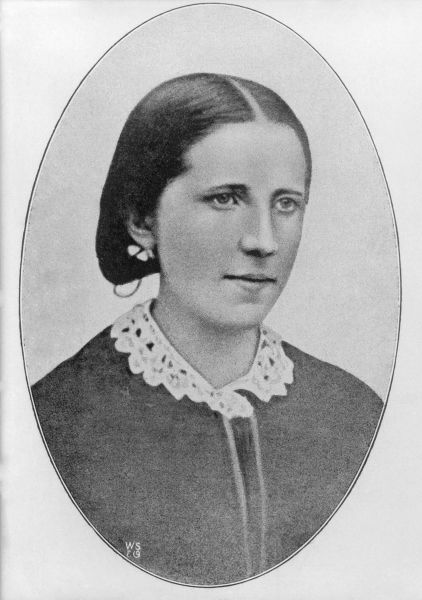
Marie sat down in the armchair instead to read before going to bed as her companion had done. When she had finished, she put the book in her lap to think about what she had read. “As she looked up, she caught sight of a priest in old-fashioned vestments standing just in front of her with a pleading look and pointing in the direction of the cake oven. Then the vision immediately disappeared. She wiped her eyes and thought it was a figment of her imagination, perhaps brought on by what the priest had said. She went to bed, however; but as she extinguished the last candle she saw the same figure standing before the table and bending over it towards her, as he now pointed with the same pleading look towards the cake oven”.


The next morning she took a lighted candle with her to get a better look at the attic and the stairs. But as she was about to go out the door, it went out. To get it burning again she took a match from a container on the wall and struck it against the firewall. At the same moment as the light was lit, the priest stood before her for the third time, but this time next to the tiled stove and pointing towards the firewall. Terrified, she rushed downstairs and told her host what she had seen. He told her to keep quiet about it.


But after the service, he and Miss Wexelsen stayed back in the church, where there were painted portraits of a number of Toten priests. He told her to look at them carefully and point out the one who resembled the ghost. After looking at all the pictures carefully, she went back to one of them and said: “If I haven’t seen a fantasy fetus, then he’s there.”
This was the portrait of a priest (“the name should not be mentioned”) who, according to legend, was supposed to have killed a small child he had with his maid; the child’s body was never found. “Late in the Christmas period, the parish priest quietly made an agreement with a bricklayer and another person – probably the churchwarden – to punch a hole in the firewall in the room upstairs in the rectory. And here they found a child’s skeleton, which was buried in complete silence by the priest. And later there was never a “ghost” at the East Toten rectory. Source
The Ghost of The Yellow Hall
One of the rooms in Hoff vicarage was called “The Yellow Hall” and also have a story of the ghost of a former priest lingering. There is a legend connected to this room, which can be read about both in Totenmål and Anna Mål 12 and in The Great Book of Ghosts (Espeland).
The legend goes that there was a priest who was once a resident of the manor. One evening, as the parish priest was busy with his Sunday sermon, he was said to have seen a figure in a bluish tinge, and he got the feeling that this was someone in deep spiritual distress. The figure led the priest to the yellow hall, where the ghost knelt by a fireplace and appeared to be praying. After the service the next day, the priest recognized the figure in one of the priest pictures in the church. He had the fireplace examined, and there they found the skeleton of a woman. After the skeleton was buried in consecrated ground, the ghost is said to have been seen no more.
Newest Posts
- The Shoemaking Vrykolakas Vampire from Pyrgos Castle

 After a humble life as a shoemaker on Santorini in Greece, a man was said to have come back as a Vrykolakas, the vampire of Greek folklore. But for this Vrykolaka, it wasn’t to devour human life that kept him going.
 - The Sea Draug: The Ghostly Fisherman of the Norwegian Coast
 Thought to be haunting the dark seas of the north, the Sea Draug is a ghost of the drowned fishermen’s and other unfortunate souls who perished on the waters.
 - The Haunted Jane Street Hotel: Echoes of the Lost Sailors
 After tragedy struck and the Titanic sank to the bottom of the Atlantic ocean, the surviving crew members were sent to The Jane Street Hotel in New York. According to stories, they are still haunting the rooms, where the trauma of their tragedy lingers.
 - The Silent Music Haunting Hald Pensjonat
 Who can be haunting the old Hald Pensjonat in Mandal? Playing soft piano music in the afterlife, and rumours about the footsteps of a Norwegian pirate seems to linger.
 - The Mandurugo Vampire Bride of Philippine Folklore
 Hidden among human society, the vampiric Mandurugo creature is slowly draining her unassuming husbands of their blood and life to sustain her eternal youth and beauty.
 - The Ghostly Guardian of MS Nordstjernen
 The MS Nordstjernen spent decades bringing passengers north across the arctic sea, and although the waters can be brought this far north, it always seemed to reach port unharmed. Some think that it could be Ernst, the ship’s ghosts.
 - The Cabin in the Woods where the Forest Watches Back
 The DNT Cabin Flisberget deep in the mystical forest of Finnskogen, bordering Norway and Sweden has a lot of strange tales coming from it. So much so, that it was voted the scariest cabin in the country.
 - The Haunted Devonshire Park Theatre: The Phantom Violinist of Eastbourne
 Could one of the musicians on the Titanic be haunting the Devonshire Park Theatre in Eastbourne, England? Who is the person behind the ghost said to still be playing the violin?
 - The Lady of Soria Moria Haunting Villa Fridheim
 Soria Moria: The Villa Fridheim is often called the Soria Moria castle, a name from Norwegian folktales about the hidden castle where the hero will find the princess. It has also now turned into an expression for expectations about a great place.
 - Dun Dreach-Fhoula – The Blood-Soaked Castle of the Reeks
 Said to be found deep in the mountain range MacGillycuddy’s Reeks in Kerry, Ireland, the ruins of Dun Dreach-Fhoula castle is said to be the home of bloodthirsty fairies of the Otherworld. Question is if it’s an ancient legend or a modern hoax.
 - The Woman Waiting and Haunting Struten Lighthouse
 After being stranded on their little island at Struten Lighthouse in stormy weather with the waves crashing in, a woman succumbed to her illness and has since then been haunting it, still waiting for the help that never came.
 - The Womanizer of Room 315 Haunting at Sauda Fjordhotel
 The once stately Sauda Fjordhotel is said to be haunted by a remorseful colonel, who took his own life when his womanizing ways lost him the love of his life.

References:
https://www.filmweb.no/filmnytt/de-mest-hjemskte-stedene-i-norge
Stenberg, Stenberg gård | Reporterne flyttet inn på spøkelsesgården
Leter etter spøkelser på Toten
Mystisk klokkeklang – NRK Innlandet – Lokale nyheter, TV og radio
Hoff prestegard (Østre Toten gnr. 94/1) – lokalhistoriewiki.no


