Tag Archives: england

The Headless Ghost of the Lady in White at Corfe Castle

Advertisements

Haunted by ghosts and other supernatural creatures, Corfe Castle has been the source of many spine-tingling tales and in the night the light of the Will-o’-the-wisp flicker as the ghost roams the ruins.  

Step into Corfe Castle and explore its notorious history of hauntings, ghastly apparitions, and spine-tingling folklore in the Isle of Purbeck in Dorset, England. 

With tales of mysterious spirits walking the halls, eerie sightings on misty mornings, and other supernatural phenomena, this castle is considered to be among the most haunted places in Britain.

The History of The Corfe Castle

Corfe Castle has been both a Saxon stronghold and a Norman fortress before it became a royal castle and was established by William the Conqueror on the steep hill way back between 1066 and 1087 and saw the wars, coronation and the ebb and flow of British history take form over the years. 

Read More: Check out all of the Haunted Castles from around the world

The castle was partially destroyed in the English Civil War in 1646 when the Parliamentarians laid siege on it. They toppled the once great castle and laid it to the ruins you see today on top of the hill. Corfe castle remains now a majestic ruin and an image of how medieval castle used to be.

The Strange Lights from the Ruins

When people have walked through the abandoned ruins stripped for its royal glory, they have also encountered strange things some claim have been of the paranormal sort. 

Read Also: The Pagan Haunting of Die Karlsteine in Osnabrück for more stories of Will-o’-the-wisp

More than once there have been reports of strange flickering lights moving like pixie light or Will-o’-the-wisp around the grounds at night. Some speculate that it is the soldiers from the English civil war, some say it is something more ancient. 

Will-o’-the-wisp: In Welsh folklore, it is said that the light is “fairy fire” held in the hand of a púca, or pwca, a small goblin-like fairy that leads lone travellers off the beaten path at night. As the traveller follows the púca through the marsh or bog, the fire is extinguished, leaving them lost. The púca is said to be one of the Tylwyth Teg, or fairy family. In Wales the light predicts a funeral that will take place soon in the locality.

The Starved Child Ghost in the Cottage

There have also been said that they have heard a child’s cry from inside a small cottage that is located next to the castle ruins and on the castle grounds. When checking both the cottage and the grounds, there have been no children to be found. 

People speculate that it is the child of the 4th Lord of Bramber, William de Braose who fell out of favor with the king and is most known for carrying out the Abergavenny Massacre where he lured three Welsh Princes and other Welsh leaders to their death. It is said that his wife and child starved to death at Corfe Castle. 

The young son William and his wife Maud de Clare were starved or possibly killed by King John in 1210 when they were held in prison in  Corfe Castle because of the crimes of his father as he fled the country and died in exile. 

The Lady in White of Corfe Castle

One of the most famous legends about Corfe Castle is that of the Lady in White. It is said that she wanders the castle grounds, clad in a long white dress. It is said to be the ghost of Lady Mary Bankes who fought through two sieges during the Civil War before being betrayed by her own in 1646 when the Parliamentary soldiers took the castle.

The most frightening thing about seeing her specter though is that she is said to be headless as she is drifting through the ruins. 

The Lady in White In Wales: Y Ladi Wen or Dynes Mewn Gwyn (Woman in white) is dressed in white, her presence most notable during Calan Gaeaf, the Welsh Halloween. Known for being a ghostly figure, sometimes terrifying, and is often invoked to caution children against misbehavior. She is characterized in various ways and may even seek help if spoken to. Y Ladi Wen is also associated with restless spirits guarding hidden treasures. Throughout Wales, places inspired by sightings and tales of Y Ladi Wen can be found. For example, Ewenny has White Lady’s Meadow and White Lady’s Lane, while St Athan also has a tradition associated with Y Ladi Wen.

Brave Dame Mary and her Defence of the Castle

Mary Bankes earned the title Brave Dame Mary and was a Royalist and defended the castle for three years under a siege during the English Civil War from 1643 to 1645 when she took control over the castle as her husband was sent to fight in London and Oxford.

Brave Dame Mary: holding the keys with Corfe Castle in the distance.

She defended the castle with her daughters, her servants and five soldiers against 600 troops as the Corfe Castle was the last garrison on the Dorsetshire coast belonging to the Royalists still standing.  

She survived the siege after being betrayed by one of her officers who led the Parliamentarians into the castle via a sally gate and she was forced to surrender. But she never gave up reclaiming the castle, and when she died in 1661, the ruins of the castle was bought on her behalf and went to her daughter, Joanna, who in turn passed it to her own daughters and the Bankes family held the castle for centuries before giving it back to the Dorset community.

Not even in her death she gave up on the castle and still roams the ground. Sightings of her have been reported by visitors and employees alike on coronation days and other special occasions. People swear they have seen her walking through walls and walking up staircases leading to nowhere, mostly by the castle gate before fading into thin air.

More like this

Newest Posts

References:

Lady Mary Bankes and the Siege of Corfe Castle 

Mary Bankes – Wikipedia 

Corfe Castle – Wikipedia

Corfe Castle is fourth most insta-worthy haunted building in England | Dorset Echo 

The ‘haunted’ history of Dorset’s Corfe Castle 

William de Braose, 4th Lord of Bramber – Wikipedia 

The Ghost of Theatre Royal Drury Lane

Advertisements

In one of the oldest theaters there are also famous ghosts for those enjoying the drama of the stage. In Theatre Royal Drury Lane those working there as well as visitors keep reporting on several ghosts, one of them being the well known Man in Grey. 

There is not only one ghost haunting the old Theatre Royal Drury Lane. From the end of the front row in the upper circle to the wall near the royal box, many have claimed to have seen the ghost of W. J. MacQueen-Pope, an English theater historian and publicist. 

Also actors are said to have been haunting the stage, like the ghost of the Irish actor Charles Macklin who is haunting the backstage and wandering the halls where he once killed a fellow actor when they argued over a wig. Macklin threw a cane into the actor named Hallam’s left eye and murdered him in what was known as ‘The Green Room’. The murder was considered back then as an accident and he went free, but since then he has been haunted by the place of his crime. 

The pantomime actor from the Regency Era Joseph Grimaldi is seen as ‘the father of the modern clown’, and is also said to be a helpful ghost that guides nervous actors on the stage. 

There is also the ghost of Dan Leno that you can notice by the smell of lavender, a scent he often wore when alive. He can be mostly heard clog dancing in empty dressing rooms, still practicing without anyone to see. 

The Man in Grey

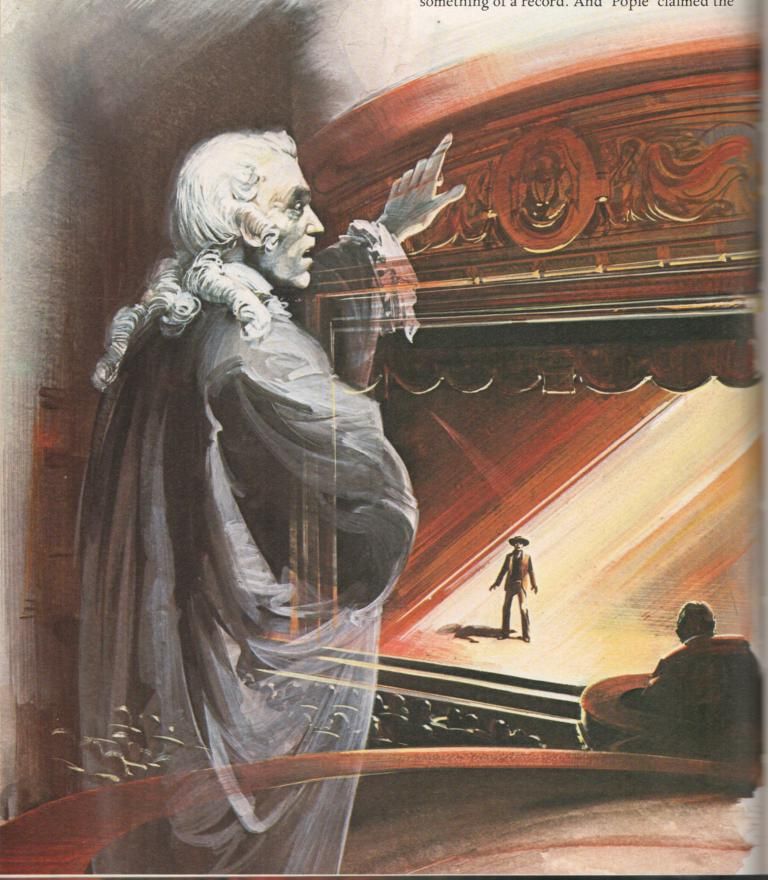
But perhaps the most famous ghost in the theater is the most mysterious one. The Man in Grey is a ghost that appears dressed as a nobleman in 18th century style of clothes. He has powdered his hair, wearing a tricorn hat, with riding boots and a sword. Who this man is, his name and what he does in the theater, no one knows for sure. 

Even before they built this theater in this place in 1812, there was another one before and is one of the oldest places for theater in continuous use and was even the place where the first version of the national anthem was sung. Several buildings burned down all the way back to when the original Theatre Royal Drury Lane was built already in 1663.

So its not so strange that ghost stories like about the Man in Grey started being told in the old and murky hallways when the stage light was low and there are no laughter from the audience or lively drama from the stage. And all the legends thinks the ghost of the Man in Grey is the haunting of the skeleton they found bricked up in the walls of the glorious theater. 

The Ghost on Fourth Row

In 1848 they did some renovations on the building and according to the legend, they discovered the skeleton of a man who appeared to have been stabbed inside. Builders are said to have broken into a secret room behind the wall that the ghost were always seen disappearing into. 

The Ghost: The Grey Man haunting the Theatre Royal Drury Lane. From the Hamlyn Book of Ghosts.

Many have reported about strange things happening in the Theatre Royal Drury Lane, mostly between 10 am to 6 pm. People hear doors being slammed when they are alone in the building. Seeing a fleeting image of a gray man before he disappears into the walls. 

The entire cast of The Dancing Years reported seeing him in 1939. One time a cleaner came in and saw him sitting in the fourth row in the Upper Circle and she thought he was an actor. She tried to speak with him, but then he vanished. When she looked around she could see him disappearing into the wall, the same wall where his skeleton was found. 

Actor Clive Carter told about a paranormal experience he had in the changing room were the TV kept changing the channel without anyone touching it. It first started when they talked about the Drury Lane Ghost, as if something was being summoned or could hear them very well. 

The Good Omen

Who was this man found inside the walls of Theatre Royal Drury Lane though? Only legends live on and many of them tell that the Man in Grey was killed because of a love affair with one of the actresses. He was once called to their usual meeting spot, but on one particular night it was his love rival who waited for him and killed him when he showed up. The murderer later walled up the alcove to cover up his crime. 

In contrast to many other ghosts out in the world, seeing the Man in Gray in the Theatre Royal Drury Lane is considered a good omen as sightings of the ghost have been seen before successful theater productions like The King and I, Oklahoma and Miss Saigon. 

More like this

Newest Posts

References

Inside the world’s most haunted theatre

About The Theatre Royal Drury Lane

Is the ghost at the Theatre Royal Drury Lane a good omen? 

Ghost of Nan Tuck Haunting the English Countryside

Advertisements

The Ghost of Nan Tuck is the haunted legend about an accused witch from England still haunting the woods; she, according to legend, was killed by the villagers chasing her down. Now she is haunting the place she was killed on.

The parish of Buxted in southeast England looks quaint and peaceful enough today if you don’t know its bloody history. The rural parish is green with farmland and woodlands stretching out to the coast. But between the green trees, there is a haunted legend from darker times still haunting the woods.

Nan Tuck is a ghost that is said to haunt the village of Rotherfield in Buxted, England. The story goes that she was a woman who lived in the 17th or possibly 18th century and was accused of poisoning her husband.

The Witch Hunting in England

Nan Tuck was sentenced to death by hanging as the punishment for murder as well as witchcraft was in England. But before she could be executed, she escaped and fled into the woods to escape punishment. Whether she actually did murdered her husband or not is never really discussed or how the trial was. In any case, she was guilty in the public eye and fair game to all.

Read more about witches like: The Legend of the Witch Moll Dyer or The Witches of the Black Diamond Mines

The public not only believed she was a murderer, but a witch on top of it. This was a time were the fear of witches was at an all time high in Europe and it is estimated that as many as 30 000 – 60 000 people were executed between the 13th to 18th century. In England there is estimated that around 500 were convicted as witches, 90 percent of them women. In England they didn’t burn the witches, but they hanged them.

Many of these deaths had no records of them, and we can see this with this story, that has no written records of it whatsoever, and solely relays on oral tales throughout times. This is what the legend of the Ghost of Nan Tuck tells us.

Nan Tuck’s Escape Into the Woods

Nan Tucks Lane: Heading through Solomon’s Wood. Named after the Ghost of Nan Tuck who was chased down this lane by the irate villagers of Buxted who believed she was a witch. // source

The whole village rallied and started to chase the wicked witch and murderer down in the woods. For days Nan Tuck evaded them by hiding in haystacks, climbing hedges and sneaking around in the woods to escape certain death.

Read More: Haunted Forests across the world

It is said that she was attempting to take sanctuary in Buxted Parish Church known as St Margaret’s Church– according to the right of asylum, fugitives were allowed to escape punishment by touching the altar of a church if they were able to reach it – when local officials who were in pursuit forced her into the woods, and she never reached sanctuary.

Nan Tuck disappeared that night and was never seen again – alive. According to some versions of the tale she was caught up by the angry villagers and it was them who murdered her. In some versions she was killed in the woods, in others, she was taken back and they held a trial by water.

The trial by water was a highly deadly method of finding out whether or not someone was a witch by dunking them in water to see if they floated or sank. And with so many other women accused of witchcraft, she drowned during the trial, which ironically meant she was not a witch as the holy water didn’t repel her, causing her to float like a witch.

The Ghost of Nan Tucks Lane

The legend of Nan Tuck is one that has been told ever since. Sometimes the Ghost of Nan Tuck is depicted as a young woman, sometimes as an old one. It is said that her ghost can be seen wandering the woods near Rotherfield at night.

Legend holds that a circular patch of land in the woods near Nan Tucks Lane, were she supposedly tried to escape through, stays infertile and no vegetation will grow there. And the question if the Ghost of Nan Tuck really was a witch, still remains to this day.

Read more about: Haunted Roads across the world

So if you are walking down Nan Tucks Lane late at night and meet someone, perhaps hide and duck as it might very well be the Ghost of Nan Tuck coming for you.

The Nan Tucks Lane poem by Roy Carnon

Whether there really was a woman behind the legend is also a bit uncertain. But the legend of the Ghost of Nan Tuck haunting the woods has made into songs and poems, like this by Roy Carnon:

The new moon older by a memory threw this sinuous line down and round Poundsley way.
Following feet that trod the centuries across the weald – deepening contoured tracks unknowing.
The way imprinted to Hadlow, Framfield, Buxted, – on to Blackboys, cruciform neeting, pointing the fingerpost of death.
Following feet – feet following years crushed harsh in grass; tearing the flowers wond – gaping raped petals laid cold on the lane.
Congealing tar concealing blood, the shape of your agony lays still on bruised grass still on earth maimed by you fall. Tear-blurred, memory retreats beneath track-patterned clay but a Sussex lane remembers.

More like this

Newest Posts

References

Buxted – Wikipedia 

Nan Tucks Lane – The story of the Ghost

Unveiling the Dark History of the Tower of London and its Ghosts

Advertisements

Uncover the hidden shadows of England’s majestic Tower of London, home to stories of more than one ghost haunting the rooms, the hallways and the prison cells from many dark parts of England’s history.

Shrouded in centuries of fear and mystery, the ancient walls of the Tower of London on the north bank of the River Thames, hide within them a plethora of ghost stories that have been passed down through generations. 

From secret passageways to encounters with mysterious apparitions, visit the legendary Haunted Ghosts Tower to uncover its dark history and uncover its spine-tingling tales of beheaded royals, tortured prisoners and missing princes as well as menacing forces following the guards.

The History of the Tower of London

Since its inception in 1066, the Tower of London has served as a royal residence, prison, armory and execution site. The White Tower gave the castle its name and was built by William the Conqueror in 1078. It was a symbol of the oppression over London after the new Norman ruling class.

Over the centuries it has seen kings and queens come and go, watched prisoners be tortured and witnessed countless executions within its walls. It ended up being a symbol of royal power and one of the most secure fortresses in the country. It is not only a stronghold of history but also an enduring source of horror stories that continue to haunt us today.

The Tower of London is known for its grisly past, having been the home to many famous and infamous prisoners until 1952. These included some of England’s most treasured monarchs, such as Anne Boleyn who was beheaded on May 19th 1536 and Sir Walter Raleigh, imprisoned in 1603 by King James I. 

Other more notorious prisoners held at the tower were Guy Fawkes and conspirators involved in the Gunpowder Plot, who were later hung, drawn and quartered.

Ghosts in the Tower of London

The Tower of London is reportedly one of the most haunted places in England, possibly due to its long and dark history. Ghostly figures are said to wander the dungeons, some even claiming to have seen Anne Boleyn’s headless ghost roaming its corridors. 

Lady Jane Grey

One of the most recorded ghost sightings is that of Lady Jane Grey, a young girl who was crowned Queen for nine days before she was imprisoned and eventually beheaded at the ripe age of 17.

The Execution of Lady Jane Grey: An often spotted ghost in Tower of London is Lady Jane Grey. This is an oil painting by Paul Delaroche, completed in 1833, which is now in the National Gallery in London. It was enormously popular in the decades after it was painted

She was originally put as a queen to prevent the Catholic Mary Tudor from sitting on the throne. She first came to the Tower for her coronation, but was soon back as a prisoner. Mary I was ready to spare both her and her husband’s lives if they converted to catholicism. Lady Jane, a devout protestant refused. She was executed on 12 February in 1554 on Tower Green. 

She is seen as a lonely ghost, wandering the battlements of the Tower. Her husband, Lord Guildford Dudley is also supposedly haunting the place. He can be seen in Beauchamp Tower, sitting in his cell and crying in the middle of the night. 

Ghost of Henry VI

Henry IV was the only English monarch to have been crowned King of France as well and he inherited the Hundred Years War from his uncle. He was crowned king of England at only nine months, the youngest person to have succeeded the English throne. 

This was also the start of The War of Roses, a series of civil wars and Henry VI was imprisoned in the Tower of London in 1465, reinstated as king in 1470, but then imprisoned again in 1471.

Henry VI died that year, possibly killed on orders from King Edvard IV who took his crown. 

Henry VI: Depiction of Henry enthroned, from the Talbot Shrewsbury Book, 1444–45. Although the official death was that he died of melancholia, however, many think he was assassinated in The Tower of London.

Strange legends started to form around the late king after his death and he was hailed as a martyr and a saint that had done plenty of miracles. It is also said that he is one of the ghosts still haunting the tower.  

It is said that he is seen at the last stroke of midnight in the Wakefield Tower, where some say he was praying when he was stabbed to death. 

Margaret Pole

Margaret Plantagenet, Countess of Salisbury was a powerful woman who was one of the few of the House of Plantagenet to have survived the Wars of the Roses. 

She was tried and sentenced to death to be executed whenever the king wanted. She spent two and a half years in the Tower of London as a prisoner before her execution happened in 1541. 

Margaret Pole claimed her innocence until her last hour. This poem was found carved on the wall of her cell:

For traitors on the block should die;
I am no traitor, no, not I!
My faithfulness stands fast and so,
Towards the block I shall not go!
Nor make one step, as you shall see;
Christ in Thy Mercy, save Thou me!

Margaret Pole: This is an Unknown woman, formerly known as Margaret Pole, Countess of Salisbury, by unknown artist, given to the National Portrait Gallery, London in 1931. Margaret Pole led an especially bloody execution in the Tower of London.

The execution is said to have been bloody and grisly and the proud lady refused to kneel on the scaffold as that was for traitors, and she was none. The executioner had to chase her around as she tried to run and hacked her to death. She is now thought to be one of the many nobles that are haunting the Tower of London with her screams echoing on the Tower Green.

The Many Ghosts of Anne Boleyn

Many believe that the ghost of Anne Boleyn haunts the Tower of London due to her untimely demise. She married Henry VIII and altered the British church forever when she did so as the king had to divorce his original queen and wife for it. They were only married for three years though and she was unable to give him any sons. What she did though was give birth to what would be Queen Elizabeth I that would be one of the longest regents in the country.

During King Henry VIII’s reign, she was famously arrested, accused of treason and beheaded in 1536 at the Tower and has since become one of the most famous people in England’s history. 

Haunted: The ghost of Anne Boleyn are said to be haunting, not only the Tower of London, but have been seen on several locations. Here is a painting depicting Anne Boleyn imprisoned in the Tower.

Anne Boleyn is supposedly a very busy ghost and she is said to haunt not only the tower but Hever Castle, Blickling Hall, Salle Church as well as Marwell Hall.

In the Tower of London she supposedly haunts the chapel of Church of St Peter ad Vincula in the tower where she is buried. She is also said to walk around the White Tower and on the Tower Green where she was held captive until her execution. 

Her ghost is often spotted wearing a gray dress and walking with her head tucked under her arm—mirroring how she was killed. According to legend, if you see her apparition it means that death is soon to come.

The Mystery of the Missing Princes

One of the greatest mysteries in English history remains unsolved—the fate of the two young princes whose uncle, Richard III, had them sent to the Tower of London in 1943 where they were never seen again. 

The Murder Mystery of the Tower of London: King Edward V and the Duke of York (Richard) in the Tower of London by Paul Delaroche. The theme of innocent children awaiting an uncertain fate was popular amongst 19th-century painters.

They were the sons of the late King Edward IV and were 9 and 12 years old when their father died and they were sent to the Tower of London. They grew up in great political turmoil during the Wars of the Roses, a series of civil wars of two branches of a family were fighting for the seat of the throne. 

During their disappearance many assumed that Richard III was responsible for their murder, although this has since been disproven, or at least, bare little hard evidence to. But the most talked about theory is still that they died or were murdered pretty soon after they disappeared. To this day no one knows what happened to them, giving rise to a host of different theories about the missing princes.

Many of the paranormal activity and ghost sightings have been connected to the two missing princes, and many believe they are some of the ghosts that never left the tower at all. They are seen holding hands and wearing nightshirts in the White Tower as well as playing and giggling on the battlements. 

Sir Walter Raleigh

Other ghosts that are said to haunt the Tower is that of Sir Walter Raleigh who were imprisoned in the tower once for a secret marriage and the second time for treason. The second imprisonment ended in an execution and his ghost is said to haunt the Bloody Tower where he was held. 

The Ghost in the Bloody Tower: Many of the prisoners were political prisoners, often charged of being traitors. Sir Raleigh just before he was beheaded – an illustration from circa 1860.

The Ghost of Sir Walter Raleigh is also said to be seen along the battlements who is now known as Raleigh’s Walk

Arabella Stuart and the Unknown Ghosts

The Gray Lady is an unidentified ghost as well, but she is haunting the Queen’s House of the Tower and her presence is only seen by female visitors. This place is also where the ghost of Arbella Stuart is seen after she was either murdered or refused to eat at all. 

Lady Arabella Stuart: She was at one time considered heir to the English and Scottish thrones, though she did not aspire to them. She died of self-inflicted starvation in the Tower of London, in 1615.

Other unnamed ghosts that have been reported on are the White Lady whose presence is made known by the smell of cheap perfume that has made visitors sick. 

The Legendary Guy Fawkes

Remember, remember the Fifth of November,
The Gunpowder Treason and Plot,
I know of no reason
Why the Gunpowder Treason
Should ever be forgot.

Fawkes led the infamous Gunpowder Plot with a group of English Catholics that planned to kill the Protestant King James by blowing up the parliament. They were found out though and the plot failed and Fawke was arrested and sent to the Tower. 

After torture, possible “on the rack” a famous torture instrument in the Tower, he gave in and told them all about their plan and named his accomplices as well. 

Interrogated and Tortured: Guy Fawkes 1570-1606 interrogated by James I 1566-1625 and his council in the King’s bedchamber, from Illustrations of English and Scottish History Volume I (1884).

For his execution in 1606 he was dragged from the Tower to Westminster to have the last sight be the building he tried to destroy. He was the last to die and had to watch his accomplices be hanged. He begged forgiveness of the King and the state as he walked to the scaffold. He was hanged and his body parts were distributed to the four corners of the kingdom as a warning sign to others that had their mind on treason. 

Guy Fawkes are also one that are said to haunt the grounds and some claim to hear his screams from where he supposedly was tortured. .

The Animal Ghosts

Can animals become ghosts? According to the lore in the Tower of London, there are plenty of them. Having exotic animals like lions, pumas, tigers and elephants were something the rich often were gifted and a popular thing to have in your home to show off your wealth and power. 

The most famous animal ghost in the Tower was a grizzly bear that supposedly charged at a guard around the Jewel Room who died of a fever two days later. There have also been spotted a Black Bear near the Martin Tower in 1816. 

More like this

Newest Posts

References

Tower of London – Wikipedia

Tower of London Ghosts | Haunted London | Authentic England

The 13 Ghosts Of The Tower Of London

The Story that Inspired The Hound of the Baskervilles

Advertisements

Did you know that the famous Arthur Conan Doyle book about Sherlock Holmes: The Hound of the Baskervilles was based on a true legend? The legend about the evil Squire Richard Cabell and his hounds are still haunting the moors in Devon.

When Sir Arthur Conan Doyle stayed at the Duchy Hotel he heard the story of the evil Squire Richard Cabell that lived in the 1600s around those parts in Devon. This led him to write his famous story: The Hound of the Baskervilles which is the third of the four crime novels written by him about detective Sherlock Holmes. This installment of the detective turned out to be one of the most liked and popular book of Sherlock Holmes.

  • The Hound of the Baskervilles is not the only book that based itself on a true legend. Read here about how a shipwreck in Whitby inspired parts of Dracula in the MoonMausoleum.

The Legend of Richard Cabell

The legend tells of the local Squire that lived in the village of Buckfastleigh in Devon, England with a lot of rumors surrounding him. Richard Cabell lived for the hunt and was notorious for his pack of black hounds that were said to be extremely vicious, as the owner himself. 

Sherlock Holmes: Illustration to The Hound of the Baskervilles.

He is though to be the inspiration for Arthur Conan Doyle to the character of Hugo Baskerville in The Hound of the Baskervilles and is remembered by Devon as: “the first of his family to be hounded to death when he hunted an innocent maiden over the moor by night”.

There are many rumours about him as a person and perhaps not all true. Not only did Richard Cabell have a legend about him having sold his soul to the Devil for immortality, but there was also rumours that he murdered his wife, Elizabeth Fowell as the locals wouldn’t put it past him knowing he was an extremely vicious man. 

It is said he accused her of adultery and she tried to flee from him by running away. She was recaptured though and brought back were he murdered her with his hunting knife. This rumoured is to be believed if we ignore the fact that his wife outlived him by 14 years.

In any case if he did or didn’t kill his wife or it was mostly rumours that came from his unpopular political believes, he was described as a monstrous man and he only cared about hunting with his hounds and the other locals shied away from him and his hounds. After he died he was remembered as: Dirty Dick, feared as well as hated by the locals. 

Haunting Hell Hounds

Hell Hounds: Illustration of the black hound in The Hound of the Baskervilles.

On the 5th of July in 1677, Richard Cabell died, but it was not the last the people of Dartmoor saw of him according to the legend. The night of his burial a pack of black hounds like he used to own and hunt with was seen on the moor, howling at his tomb. 

From that night, they were often seen together, the phantom hounds and his ghost, mostly on the anniversary of his death. He would be seen leading the hounds back across the moor. 

“It came with the wind through the silence of the night, a long, deep mutter, then a rising howl, and then the sad moan in which it died away. Again and again it sounded, the whole air throbbing with it, strident, wild and menacing.”
― Sir Arthur Conan Doyle, The Hound of the Baskervilles

The Devon Yeth Hound

In Devon folklore, it is often included a fearsome dog known as the Yeth hound and black hounds or Hell Hounds are often found in European Doom Mythology and used as the base of the mystery in The Hound of the Baskervilles.

The Malcanis Guarding the Fortress

In Akershus Fortress in Oslo, Norway, there are rumours about something strange haunting the former castle. There is a legend of a ghost of a dog haunting the place, called the Malcanis, or Evil Dog as it means.

This is one of the reasons why seeing someone with big black dogs could look so scary for people from Devon. The legend of the Yeth Hound is said to be a headless dog, often thought to be the spirit of an unbaptised child. The black hound that roams through the woods and over the moors at night making wailing noises much like the hounds of Richard Cabell or the mysterious hound we meet in The Hound of the Baskervilles.

To get peace from his ghost, the villagers built a large building on top of Richard Cabell’s tomb to stop him from getting out. It looks almost like a small prison with iron bars. This seems like a dramatic thing to do just because of some rumours.

Even with these measures, people have reported of strange stuff happening around the building as well from the inside. 

More like this

Newest Posts

References

The viking ghosts which still haunt this bloody corner of Devon and 11 other spooky legends you have never heard of

Richard Cabell – Wikipedia

https://web.archive.org/web/20150923184203/http://www.bfronline.biz/index.php?option=com_content&task=view&id=103&Itemid=9

The Pirate Haunting Burgh Island

Advertisements

Treasures hidden in the caves, a restless ghost of a pirate and an endless murder mystery location: The Burgh Island is continuing to serve as a place of mystery to the visitors.

“He thought: Peaceful sound. Peaceful place…. He thought: Best of an island is once you get there—you can’t go any farther … you’ve come to the end of things…. He knew, suddenly, that he didn’t want to leave the island.”
Agatha Christie, And Then There Were None

Burgh Island is today most known through Agatha Christie’s murder mystery novel “And Then There Were None’ and tells the story of a group of people stranded on an island with a murderer in their midst. And considering the story of the Island on the English coast, it is understandable it had to be this place that inspired the crime queen herself. 

Advertisements

It is a tidal island on the coast of South Devon with two of the most famous buildings being the Art Deco Burgh Island Hotel and the pub, the Pilchard Inn. Now it is a cozy place to enjoy the fresh air of the coast, have a few beer and solve the murder mystery evenings the hotel puts on, but it didn’t always use to be a nice getaway place for the bored.

The Pirate Hideout

In the 14th century the coast of Devon was infamous for its piracy. It was great to use as a hideout place as the island is cut off by the tide twice a day and was an easy place to defend against those trying to bring the pirates to justice. 

Today the island is known for hosting extravagant guests where the likes of The Beatles, Agatha Christie and Churchill have stayed. The building that stands today was built in 1929, but the history of this inn comes from a much more scandalous and illegal beginning. 

Tom Crocker was a famous pirate known to have used the Pilchard Inn Pub as well as the island’s southern caves as a hideout for his smuggling business when the island was known as Burr Island. 

The Pirate Ghost

But Crocker’s days as a pirate finally came to an end and he was hanged in the third week of August in 1395, some setting it to the 14th or the 15th of August, but the year however is not confirmed and it could be much later. 

This was not the end of his time on the island though. He is said to haunt the Pilchard Inn Pub where he used to spend his time when he was not at sea. Some even say this is the place he died as he was shot. However which year or of what killed him, it is here he makes his appearance on the anniversary of his death. 

He has been seen rattling doors and walking all over the island, supposedly to search for his hidden treasures, and who knows, perhaps there really is one about? 

Advertisements

More like this

Newest Posts

References

The viking ghosts which still haunt this bloody corner of Devon and 11 other spooky legends you have never heard of

THE PILCHARD INN – Burgh Island

Starters & light treasures The big robbery Sweet and savoury treats Daily treats – available all day

The Ghost on the Moor

Advertisements

In a time when suicide was a sin, a man took his own life when he couldn’t have the woman he loved. His tormented soul is said to haunt the moors in Dartmoor in Devon, England were he was buried. 

An unmarked grave outside the parish boundary lays the body of George Stephens that lived in Dartmoor in Devon, England. In some sources, he is called John. He committed suicide in 1763 or 62, depending on the sources, after his marriage to Mary Bray, a farmer’s daughter fell through. 

There are conflicting variations as to why the marriage fell through. In some cases, it was the parents of the girl that rejected him because they deemed him unworthy of their daughter. In other variations of the legend though, she betrayed his love right before their wedding. 

Advertisements

The Haunting Heartbreak

In his mind, Stephens was so in love with Mary and there could only be her for him. In some accounts of the story he would walk outside her home every night to keep an eye on her. It was then he found out she was cheating on him with his best friend only a week away from their wedding. 

The Grave: The grave to Stephens can still be seen out in the moors in Dartmoor.// Source

In some versions he only spots her with another man at a fair in their village after her parents tore them apart because he wasn’t worthy. No matter if they actually were engaged or not, the pain of him not being able to be with her was too much for him to bear.

In many versions of the tale, Stephens kills her after her betrayal. It is most often by poison. Either a poisonous apple or deadly nightshade. 

In other versions though, he only kills himself with a sort of poison used for rats and Mary lives on without him causing her any harm. It is then said she lived to be very old, but never married. 

The Ghost at the Grave

Because of the manner of his death when he took his own life, he was not allowed a proper burial by the church and was laid to rest near Peter Tavy Moor, only marked by a granite post that you to this day can still see. 

Shortly after his death, locals began noticing strange things happening out on the moor. His ghost was seen several times and the sound of shrieking could be heard in the night at his anguish. It is even said that a certain Rev. Dr. Jago of Tavistock was summoned to lay his spirit to rest. 

If it worked though is not certain as the locals continued to be afraid to walk the moors in the dark in fear of running into the restless spirit of the man so tormented, the pain of it all continued into his afterlife and never gave him the rest he craved for. 

Advertisements

More like this

Newest Posts

References

The viking ghosts which still haunt this bloody corner of Devon and 11 other spooky legends you have never heard of

Stephen’s Grave | Legendary Dartmoor

Georgiana Houghton and her Spirit Drawings in Watercolor

Advertisements

From beyond the veil, some mediums claimed that ghosts and spirits guided them to paint and draw. One of them was Georgiana Houghton and her spirit drawings.

Now mainly referred to Spiritualist art, spirit art, mediumistic art or psychic painting, this was and to a certain extent, still is a form of painting or drawing highly influenced by spiritualism. Spiritualism was a movement where connecting with the spirit world was both a performative and at times lucrative business. And the mediums that held these seances had different ways of reaching out to the spirits. One of the ways was by the pen. 

Advertisements

Although perhaps not the psychic or spiritual part of the art is put much weight in today, the movement had a huge impact on modern art as part of the abstract art department. There are perhaps more famous men behind this genre of abstract art known today, like Piet Mondrian, Vasily Kandinsku, Kasimir Malevish and František Kupka. 

Often overlooked goes the women that may have been the pioneers within this type of paintings and drawings, decades before the textbook pioneers. One of them is Georgiana Houghton (1814–1884)

The Artist and the Medium

The Spiritualist painter: Georgiana Houghton was both a medium and a trained artist.

She was a British artist and medium born on Las Palmas de Gran Canaria, but moved and lived in London. She was remembered more like an eccentric amateur artist that was more known for her medium role than of an artist. And she gave more credit to the spirits that guided her paintings than to herself as their creator. 

This is also where she produced her first abstract work, or as they called it then, spirit drawings. Many of the pieces remind more of 196 or 1970 psychedelic art then Victorian from the 1860s and 70s. In 1859 she started having these private seances where she allegedly were guided to paint by different spirits and celestial beings. 

Precipitated Paintings

Often, these particular paintings would come during a seance where the medium claimed that it was in fact spirits that guided the artist to produce the paintings. 

When spiritism was at its peak of popularity, it was very common for the mediums to sketch a portrait of the spirit they were in contact with during their seances. Another form of this was by automatic drawing where mediums and other practitioners controlled the body of the artist. 

Georgiana Houghton started her spirit art career first by drawing and then with watercolors. She was one of those relying on an automatic process where she told she was directed by spirits. First she drew flowers and fruits, and was somewhat of a floral artist. This was the one way of painting that was looked at as more of a respectable practice for Victorian artists. But then her style turned to something else entirely. 

Advertisements

The floral pictures evolved to project the spiritual experience more than objects of the natural world. She had complex pictures with several layers, colors and details. She described the abstract shapes she found in her and colors as sacred symbolism

Not only was spiritualism on the edge of what was perceived as ordinary, at this time, the abstract way of painting was still not a concept, so the reception of the paintings was received more as a curious rarity than art. 

In the beginning, Houghton claimed that it was her dead family members like her sister Zilla that guided her, but as her work evolved, so did her artist spirit guides. And she would later claim that it was the likes of Renaissance artists Titian and Correggio that led her brush. 

The Frauds and the Performers

Spirit photographs: She was not only a painter that drew her seances. Here she is posing for a photograph, also used a lot within the spiritism movement.

She started gaining quite the notoriety for her paintings and even held an exhibition at the New British Gallery in Bond Street in London in 1871. Although it perplexed the visitors and was an eye opener for many of those watching the exhibition, it was not a commercial success at all. It almost bankrupted Houghton.

Despite this, she spent every day for around three months talking about her paintings to visitors and discussing the meaning behind her sacred symbols and what they could have meant. 

In 1882 she published the book: ‘Chronicles of the Photographs of Spiritual Beings and Phenomena Invisible to the Material Eye’. This book featured spirit photographs from many well known spirit photographers that were active in the 1870s like  Agnes Guppy-Volckman, Stainton Moses and spiritualists Alfred Russel Wallace and William Howitt.

There were also pictures from Frederick Hudson, well known for being the first spirit photographer in Britain, but also a well known fraudulent one that was exposed already in the 1870s. The book itself was heavily criticized for featuring dubious pictures where the pictures themselves were unconvincing and could be replicated with double exposure and . 

Her Legacy as the Artist and not the Eccentric

Now, the collection is missing many of her works. Because it is not the museums, galleries or art historians that kept her legacy intact. Most of her works were kept by the Victorian Spiritualists Union in Melbourne. Like so many other women’s achievements they are kept hidden in their diaries, botanical albums and embroideries that not often are looked at as real art. And the irony that she attributes her work to the likes of ghost men speaks echoes with a bitter aftertaste today. 

Although more known for her medium role than that of an artist, her work speaks for itself. Especially when we look at the way the art movement moved in the modern world, and her art were so ahead of its time. In 2016, the The Courtauld Gallery held an exhibition of her paintings where they acknowledged, not only the curious and peculiar origin story behind the paintings, but her craftsmanship and artistry as well. Because no matter how we feel about the spiritualism part, we cannot ignore how in modern art, the pieces we watch in a gallery, can help us see past the realism of the world and our thinking and reach a place in our sub consciousness we otherwise couldn’t see.

Some of Georgiana Houghton Spirit Drawings:

Advertisements

More like this

Newest Posts

References

 Image courtesy of Victorian Spiritualists’ Union Melbourne Australia

Georgiana Houghton 

Spiritualist artist Georgiana Houghton gets UK exhibition | Painting | The Guardian

The Lost City of Dode

Advertisements

In the heart of the British countryside, the past of the plague, death and history haunts the desecrated church. But amid the mystery of the paranormal and pagan ley lines, the once cursed site has found back to being sacred. 

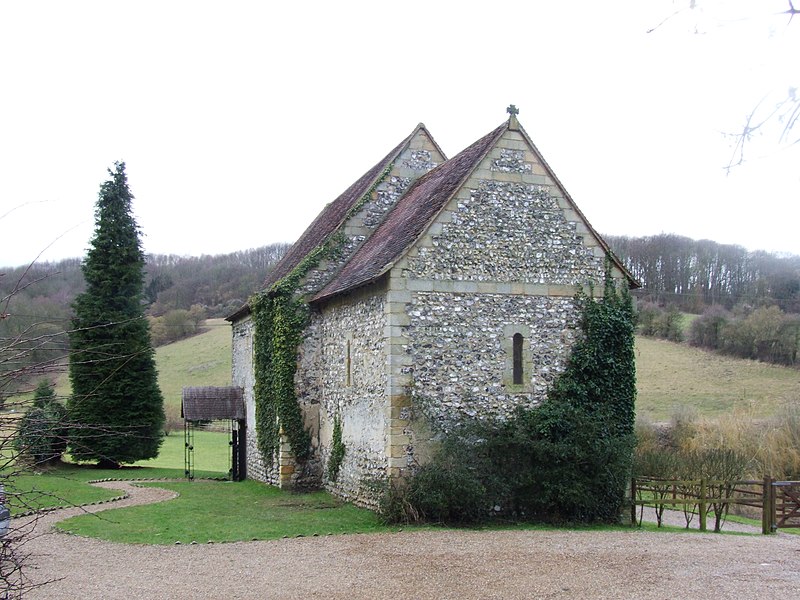
There are a lot of magical and mysterious things surrounding the church that stands in solitude in the countryside in Kent. The original building on top of the hill was built around 1100 during William the second rule. But the man made ground it was built on has perhaps been used as a holy place to gather long before Christianity reached the British shores. 

Around this church there also used to be a village, alive and thriving. But together with the black death the villagers were swept away, and with them, the village of Dode died as well. 

Ley Lines and Ghosts

Haunted church: Dode church was left abandoned for centuries with rumours of being haunted and used for black magic rituals.
Source: Chris Whippet

All left from the lost village of Dode is the old Norman church that is said to be haunted by a little girl. This is not the only paranormal and mystical rumours surrounding this place, this particular church. The old ruins are built on not only one, but eight ley lines, mystical lines that allegedly connect several holy buildings, monuments and places around the world according to modern paganism.

The place is filled with history as archeologists have found evidence of it being inhabited since the roman empire, perhaps even much further back in time. 

The church was eventually not used as a place of worship and they changed the name of the land it was built on. Because of the rumours about it being cursed, the name Holy Hill was changed to Holly Hill as no one felt the presence of anything holy there anymore, as rumours and legends of it being cursed grew.

The Dodechild

But who was this ghost said to haunt the abandoned church? Legend has it it was the last survivor of Dode village. After the Black Death in the 14th century, the village of Dode was abandoned. Nature claimed back the signs of living, leaving only the church as proof humans once lived there.

Advertisements

However, there was still one of the villagers left. A seven year old girl was one of the last survivors in the village, seeing how everyone was being taken by the plague. She took refuge inside the church, eventually dying herself, but never really leaving. And according to local legends, she would appear on the first Sunday morning of every month, haunting the grounds of were her and her entire village perished in the plague that killed millions of people across Europe. 

Since the time of the plague, the village was abandoned, the church forgotten and time, weather tore down the roof, the stones taken to build a medieval church nearby. It was only known as the haunted and lost place to the locals. It was believed the place was a cursed one, and that it was used for black magic rituals. Thus the Holy Hill was renamed Holly Hill and the church boarded up, taken apart and left for centuries until someone would find the place sacred once more. 

A Sacred Place for All

Wedding: The church is now used as a wedding venue for all types of ceremonies.

The church was rebuilt in the 90s after being abandoned for centuries, with the vision of bringing the holiness back to it and the work to get it back to how it would have looked originally began. With the restoration, life also came back into the hidden valley. Although this time, not a strictly catholic religious house as it used to be, but more of a sacred place for all, both for Catholics, members of the Church of England and pagans alike. 

Since then it has been a venue for weddings, making it a place for eternal love declarations, bringing the serenity back over the once holy hills. Other events such as baby namings, memorials and other cultural events also takes place in it, as long it is more of a spiritual than religous event.

And with the new life that has been breathed into the valley and nearby woodland, the ghost of the little girl also has been seen less and less.

Advertisements

More like this

Newest Posts

References

One man’s revival of ancient English rites

‘Ghost village’ 72 mins from London that was destroyed by the Black Death 

Ley line

Fatima’s Harp — A Christmas Haunting

Advertisements

Through the halls of Stubley Hall, a Saracen love song haunts the place with the sound of the harp.

A great hall during Christmas times with good food, merry guests and an unmistakable sound of a harp playing a love song. Scared yet? No? Sounds like the right vibe for a cozy Christmas time perhaps. But if the harp playing comes from nowhere, and no one is playing, scared then? This is what festive guests might hear echoing through the halls every Christmas Eve at Stubley Hall, reminiscing about the tragedy of war and love. 

Not far from Rochdale, Manchester in England, sits the Stubley Hall. Already in the 1600s, the hall was known for being “an ancient mansion with stables, barns, dovecotes and water mill”, so you know it is old, even by British standards. And such an old place carries many tales within the stone walls, and stories about the paranormal and sighting of ghosts has been plentiful. And one of them is the story about Fatima. 

The Crusader With the Diamond Studded Cross

The knight Ralph de Stubley lived here once upon a time, a knight who served Richard the Lionheart during the crusades in Jerusalem. At the beginning of the crusades Ralph joined in on, they saw it as a successful mission as they were able to capture Saladin, the first sultan of Egypt and Syria. But they never quite managed to seize Jerusalem, which they saw as a spiritual symbol and as the holy city. 

Advertisements

One of the more romantic, yet tragic tales from the crusade wars, was about one of Saladin’s daughters. Her name was Fatima and she fell in love with Ralph during the raging battle of the holy city.

However in 1192 the British crusaders had to pull out after the battle of Jaffa, and Ralph was forced to leave Fatima behind. But before leaving, he swore his undying love for her, promising her he would return. As a token, he gave her a diamond studded cross to keep as a reminder of him. 

The Harp of Love Songs

Photo by Jonathan Borba on Pexels.com

Three years went by and Fatima heard nothing of the knight who promised to come back for her. Growing tired of just waiting she disguised herself as a troubadour and sailed across the ocean in search of him. Just bringing her harp she played so well but hadn’t been able to play in her sorrow. But she would never reach the shores of England to return to her beloved Ralph. On the eve of Christmas, she died. The plague had travelled with them on the ship and she and the rest of the passengers and crew perished. 

The same night there was a wedding at Stubley Hall, Ralph’s wedding. He was to marry a wealthy Baron’s daughter. Maybe it was only to save the family who were in need of money, maybe he fell in love with another one. Either way, the song of his past lover came to the hall. During the celebrations he was standing by the window, not enjoying the festivities. He was maybe thinking of her, the woman he truly wanted to marry. It was then he heard it, the harp. The familiar but now so nostalgic sound of Fatima playing the harp, playing none other than the love song she had played for him, a traditional Saracen love song. He rushed into the grounds, thinking he would see her among the trees. 

The guests noticed his disappearance and went after him and found him under an oak tree, dead, clutching a diamond studded cross.

Advertisements

More like this

Newest Posts

References