Tag Archives: desert

The Ghostly of Gram Parsons at the Joshua Tree Inn

Advertisements

Haunting music is said to linger in the Joshua Tree Inn, said to be the ghost of the musician Gram Parsons, who died tragically in one of the rooms of the Inn. Now, musicians from all over the world come to the desert in search of inspiration as well as his ghost. 

In the vast expanse of the Californian desert lies a haven for artists, musicians, and free spirits alike – Joshua Tree National Park. Established on the hauntingly fitting date of October 31, 1994, this arid landscape draws thousands seeking inspiration from its mesmerizing rock formations. 

Read More: Check out all ghost stories from USA

Yet, amid the stark beauty of the desert on a seemingly simple roadside motel, a ghostly legend resonates – the spirit of the legendary musician, Gram Parsons. He is said to haunt the motel Joshua Tree Inn, the place he always stayed in for inspiration as well as the place he died. 

Joshua Tree State Park: There are many ghost stories connected to the desert landscape of the Joshua Tree State Park. The most well known is perhaps the ghost of that of Gram Parson who is said to haunt the Joshua Tree Inn.

Country Music Legend Gram Parson

Gram Parsons, left an indelible mark on the industry through collaborations with iconic bands like the Rolling Stones and Emmylou Harris, found solace and creativity in the desert’s embrace. The Joshua Tree Inn became a sanctuary for Parsons and his musical companions, where drug-fueled nights were spent jamming, creating, and forging memories that would echo through time. Tripping on acid, he also claimed to have seen UFOs there. 

He was raised in Georgia and Florida, and was heir to an orange farming empire with plenty of money, but he was drawn to the mostly penniless musical career. His brief career in bands like the Byrds and the Flying Burrito Brothers as well as trailblazing writing some kind of country with a bit of hippie, he wanted to create a type of Cosmic Country genre. Perhaps this was not commercially successful then, but inspired people like Keith Richard with the Rolling Stones and discovering Emmylou Harris is also attributed to him.

Gram Parsons: The musician who died September 19, 1973 is one of the most well known ghost stories in Joshua Tree National Park. //Source: GAB ARCHIVE/REDFERNS

The career was filled with alcohol, drugs, fighting and at least one arrest. Some performances he was almost unable to stay on his feet, some shows were like magic where everything was right and the music was flowing. 

Tragically, the music came to an abrupt halt on the fateful morning of September 19, 1973, when Gram Parsons succumbed to a drug overdose aged only 26, right before his rise to fame. 

He had checked into room 8 at the Joshua Tree Inn in the Morongo Valley in San Bernardino. A highway motel on the side of the road that attracted musicians, poets, photographers and the like, already before he made the place infamous. He had lost his home and belongings in a fire and was planning to go on another tour in October.

After six double tequilas at the bar with friends, he bought morphine from a woman staying at the hotel who injected him. They tried to revive him, but to no end.

Joshua Tree Inn: Found at 61259 Twentynine Palms Highway, Joshua Tree, the Inn is believed to be haunted, most notably by the musician, Gram Parsons.

In a surreal turn of events, his friends, in adherence to his wishes, “kidnapped” his body before his stepfather could intervene. Friend and road manager, Phil Kaufman remembered a promise they had made to each other drunk: Whichever one of us goes first, we’ll cremate the other’s body in Joshua Tree Park.

Chaos ensued when the stepfather wanted to send his body east, something his friends felt it was the last he would have wanted. They stole his casket and brought it into the desert to Cap Rock. There they put on a big fire of the casket, turning the landscape into a final canvas for the artist’s unconventional farewell in a funeral pyre.

The friends were found, charged with grand theft larceny of the coffin and what remained of Gram were sent back east to his family. 

The Haunted Joshua Tree Inn

Guests, unsuspecting visitors to a musical sanctuary, have reported ethereal encounters – the faint strains of singing in the wind, the lingering aroma of cigarette smoke, and even companionship with the ghostly figure of Gram Parsons himself. 

It is especially the Room 8 that people claim strange things happen, like opening and closing of doors, a mirror on the wall rattling and a nightstand that seems to move. 

Read Also: Check out all ghost stories from Haunted Hotels

Outside the room, a small memorial of guitar shaped stones, beer bottles, candles and guitar picks, vinyl records and cowboy boots in honor of the late musician. A note reads: “It’s good to be back in room 8. Five years ago I almost died here. You kept me company in the early morning hours while I recovered and watched the sunrise & listened to the morning doves.”

Room 8: The Joshua Tree Inn is said to be haunted by the ghost of Gram Parson who died in the room after giving his all to country music. // Source: Wikimedia

Another note hinting to the haunted rumors: “Gram, it was a little trippy when you locked me in here,” 

The motel has leaned into the haunted stories and dark tourism, charging well over 100 dollars for a night at the haunted room. According to the man standing behind the desk at the motel, he says it “It’s definitely our most popular room,”  

Musicians in Search for Ghosts

The place has become a cult place, especially for musicians, wanting to make their tribute to his spirit, some park rangers and hikers call them the Grampires. Kacey Musgrave for example told about her encounter with his spirit when staying at the Inn, filming her Follow Your Arrow music video. 

It is also said that his only child, Polly Parsons sometimes takes the trip anc checks into the room to stay and tries to communicate with his spirit.

Other Haunted Rooms

But could it be that Gram is not the only ghost haunting the Inn, and that there are more haunted rooms? According to people working there, some believe there is. There has been a voice of a woman from Room 6 when there was no one there. There have also been said to be some sort of energy and presence in other places of the motel as well. 

In the realm of ghosts, Gram Parsons emerges as a benevolent spirit, offering a hauntingly beautiful connection to the creative energies that flow through the desert landscape. For those who dare to venture into the mystic realm of Joshua Tree National Park, Gram Parsons’ ethereal melodies and timeless presence await in the starlit nights of the Californian desert.

More like this

Newest Posts

References:

A Joshua Tree Motel Room, Haunted by the Ghost of a Country Legend – The New York Times 

 12 Haunted National Parks | Shaka Guide 

Gram Parsons Room 8 

How a beloved L.A. record store unearthed a long-lost Gram Parsons recording 

An evening at the Joshua Tree Inn and the Spirit of Gram Parsons 

Enough About Gram Parsons’s Death. It’s Time to Celebrate His Music. 

Gram Parsons’ Joshua Tree legacy endures 50 years after he died – Los Angeles Times 

https://eu.desertsun.com/story/desert-magazine/2015/12/09/haunting-allure/76982908

The Gold Fevered Ghost of the Lost Horse Mine in Joshua Tree National Park

Advertisements

On the trails leading up to the abandoned Lost Horse Mine in Joshua Tree National Park, people talk about a ghost said to haunt the place, the spirit of a miner who died starving as he was looking for his lost gold. 

Tucked away in the rugged expanse of Joshua Tree National Park, the Lost Horse Mine stands as a relic of a bygone era of gun slinging cowboys, horse thieves, gold fever, where over 300 mining claims once dotted the landscape. 

Read More: Check out all ghost stories from the USA

Joshua Tree National Park, located in southeastern California, is a vast desert landscape known for its rugged rock formations and iconic Joshua trees. Spanning nearly 800,000 acres, the park encompasses two distinct desert ecosystems: the Mojave and Colorado Deserts. Rich in cultural history, Joshua Tree also preserves evidence of past civilizations, including Native American petroglyphs and remnants of 19th-century gold mining.

Joshua Tree National Park: The desert national park in California has more than one ghost story said to haunt it. One of them is the story about an old miner said to still be looking for his lost gold.

The Lost Horse Mine

Perched on a peak of the San Bernardino Mountains among the cacti, yucca and wildflowers, this historic gold mine lies between Lost Horse Valley to the west and Pleasant Valley to the east, about 15 miles north of the City of Indio in Riverside County.

The Lost Horse Mine Trail winds through the harsh, arid terrain of the Mojave Desert, leading adventurers to the dilapidated remnants of what was once a bustling gold mine. The Lost Horse Mine was one of the few successful mines in the San Bernardino Mountains from 1894 to 1931 when it shut down for good. This was because of the climate of hot summers, lack of water and wood sources as well as being so far from everything made transportation and operating a mine challenging. 

Lost Horse Mine: One of the haunted places in the Joshua Tree National Park is by the abandoned Lost Horse Mines that ended the partnership in quarrels and eventually poverty and death.

The man who started it was a man named Johnny Lang together with his three partners. The name the Lost Horse comes from a story from 1890 when Johnny Lang met two outlaws that threatened him after stealing his horses. 

Legend of the Lost Gold

Johnny Lang: Could the old miner be the thing haunting the trails leading up tp his old Lost Horse Mine, still looking for his gold?

However, the journey is not just a step back in time but also a brush with the supernatural. According to local lore, the mine is haunted by the ghost of a miner who met a tragic end in a horrific accident. His restless spirit is said to wander the area, forever searching for his lost gold. Who was this miner? Although not all sources of the ghost story state his name, the story of Johnny Lang and his ending surely is a haunting one. 

After the Lost Horse Mine ceased operations, Johnny Lang returned to the site around 1923. According to stories, Lang had stashed away stolen amalgam at the mill site, which he couldn’t retrieve when he was driven away from the mill. When he returned, he hoped to find it but continued prospecting without much success. 

Occasionally, he sold “pure gold bullion” to local homesteader Bill Keys. Perhaps he really did find some of it? But it can’t have been much, if any at all as the state of him in his final days were dire. Bill Keys’ son, Willis, recalled seeing a malnourished Lang visit their ranch one day, running his fingers across the teeth of a meat saw, searching for any signs of fresh meat. It was also said he walked everywhere because he had eaten his horse. 

In January 1925, Lang left a note on his cabin door, stating he was going for supplies. Bill Keys found his body two months later, with only a small piece of bacon wrapped in wax paper in his possession. Lang was buried where he was found, but stories of his hidden gold persisted and he didn’t get the chance to rest in peace. Some believed a map to his stash was buried with him, leading to his body being dug up twice. On the second time his skull was stolen, but the gold is still said to be lost.

Lang’s Lost Gold Still Haunting the Lost Horse Mine

As you hike the trail, the scorching desert heat might suddenly be pierced by an inexplicable cold breeze, sending shivers down your spine. This chilling sensation is often reported by those who dare to tread this path, a stark contrast to the typical desert climate. 

Strange noises, too, plague the area. Some hikers swear they hear the unmistakable sound of pickaxes striking rock, an eerie echo of the Lost Horse Mine’s bustling past, despite the surrounding silence. Could it be the ghost of Johnny Lang looking for his gold?

Unexplained movements and shadowy figures are common sightings among those who brave the trail at dusk or dawn. It’s as if the spectral miner is not content with solitude and seeks to make his presence known to all who venture near his domain. 

More like this

Newest Posts

References:

Johnny Lang and the Lost Horse Mine 

3 Haunted Trails To Try Inside Joshua Tree National Park — WKNDR 

Lost Horse Mine – Joshua Tree National Park (U.S. National Park Service) 

The Secrets of the Ghost Village Kuldhara in the Desert

Advertisements

According to legend, the villagers of Kuldhara just left their homes overnight for mysterious reasons. But before they left, they supposedly left a curse upon the village, making it a deserted place forever alone in the desert. 

There is a mysterious and eerie world in Kuldhara, a deserted village located in the Thar Desert in Rajasthan, India. This northern ancient village has been abandoned for over two centuries, and it’s said to be cursed by a powerful spell that has kept it uninhabitable for generations. Many people believe that the ghostly spirits of the villagers who once lived here still haunt the deserted streets, making it one of the most haunted places in India. 

Read more: Check out all of the ghost stories from India

The stories behind Kuldhara’s abandonment are shrouded in mystery and intrigue. Some say that the villagers fled overnight, leaving behind their homes and belongings, while others believe that a powerful curse was cast upon the village by a wealthy landlord. Whatever the truth may be, one thing is for sure – Kuldhara is a place full of secrets and tales yet to be uncovered. 

Historical Significance of Kuldhara

The village was once a prosperous community of Paliwal Brahmins who were known for their business acumen and agricultural skills. There are written records of the village all the way back to the 13th century. 

The Paliwal Brahmins is a class in Hinduism that focuses on priests, teachers, physicians and even kings. The people in the village were mostly bankers, farmers and traders in agriculture. 

A Brahmin family: Bombay; photo by Taurines, c.1880. Brahmin is a hindu caste. Legends say that the Paliwal Brahmins are descendants of Maharaj Haridas, who lived around 6000 years ago. They were priests for Queen Rukmani and played a role in her love marriage with Shri Krishna. Shri Krishna was pleased with him and granted him money and land in Gujarat. Today, Paliwal Brahmins can be found scattered across India, speaking various local languages. Brahmins are often well-educated, which is why they are well-represented among overseas Indians.

They were the first to introduce the concept of underground water conservation in the region called a “khareen”, which allowed them to thrive in the arid desert environment. Water from the local Kakni river and wells supplied the village with fresh water. 

Read more: Check out all of the haunted cities around the world

Kuldhara also played an important role in the history of the region during the 18th and 19th centuries. The village was strategically located on the trade route between India and Central Asia, making it an important center for trade and commerce. 

The streets were neat, all leading to a mother goddess temple in the center. The buildings are well preserved in the dry desert climate and in some places it looks like the inhabitants just left. 

Theories Behind the Village’s Abandonment

Theories behind Kuldhara’s abandonment vary. What we do know is that in the 19th century, some pinpoint it to 1825, the people left, although the reason remains a mystery. 

Some believed in the 20th century that the villagers left due to the tyranny of Salim Singh from the Jaisalmer State called the Diwan, known for his corruption and unethical practices. He was an official or minister that demanded high taxes from the village. Some legends claim the taxes were so high that the villagers had to move as they didn’t have the money to live there anymore. 

Some say that he wanted to marry the daughter of the local chief. When he tried to make her marry him, she denied him and this was something he just couldn’t accept. He sent an ultimatum to the village that demanded that the villagers had to accept his marriage proposal, or he would destroy them. Whether he meant by extra taxes or sending soldiers on them varies according to who is telling the legend.  

Instead of adhering to any of his words, the village chose to leave and protect the daughter’s honor rather than hand her over to the vile man. As well as many of the 85 of the surrounding villages 

After it was abandoned though, strange legends started being told about the once prosperous village. It is said that as the villagers left their home, they put a curse on the land so it would remain deserted. 

People that have tried to settle in the area have left again after experiencing paranormal activity. 

Draught Drove them Away

What we do know though, is that it wasn’t an overnight thing, like the last legend would imply. in the 18th century we recon there lived around 800 people there. In 1890 only 37 and today, only the ghosts remain. 

While others believe that a severe drought and famine forced them to leave. There is evidence to show that by 1815, many of the wells had dried up and in 1850 the only wells functioning was the great stepwell in the village and two other deeper ones. 

The Ruins of the Desert City: The ruins of the village stretches far across the desert. The ruins include three cremation grounds, with several devalis that are memorial stones or cenotaphs. //Source: Pradeep717/Wikimedia

This could go well together with the taxes as well though, as they did not have the money to pay it because the return for the agricultural work dwindled together with the water. 

Some even speculate that the villagers were forced to leave due to an epidemic or an invasion by an enemy tribe. New evidence from 2017 shows that it might have been an earthquake that forced the majority of the villagers out. 

The Legend of the Gold

The legends keep piling up. Did the villagers curse their village themselves or was it the work of a group of wandering Sufi mystics?

Read also: Check out The Ghosts that Drove the Villagers of La Cornudilla out of Town, The Ghost of Khar Khot, The Black City in the Gobi Desert, Lac de Paladru and the Ancient City of Ars or The Lost City of Dode said to be haunted.

Another legend is that the village is a place where there is a buried treasure. According to this story, the villagers couldn’t carry all the gold and silver when leaving. Because of this they decided to bury it under the village. 

Attempts to Revive Kuldhara

Over the years, several attempts have been made to revive Kuldhara. In 2007, the Rajasthan government announced a plan to turn Kuldhara into a tourist destination by restoring some of the abandoned homes and buildings. They also promote the deserted ghost village as haunted in order to attract tourists. 

One could ask if the village really is a haunted one, as most stories seem to come from the visiting tourists, not the locals in the surrounding area.

How it could have been: This is a model house, constructed in the ruins of kuldhara, showing how the buildings and houses could have looked like. //Source: nevil zaveri/Flickr

The deserted streets of Kuldhara are said to be haunted by the ghosts of the villagers who once lived here. Visitors have reported hearing strange noises, footsteps, and whispers in the abandoned homes. Some have even claimed to have seen the apparitions of the villagers, dressed in traditional attire, wandering the streets at night.

The Deserted Kuldhara City in the Desert

Kuldhara is a place full of mystery and intrigue. Its haunted reputation and tragic history have made it one of the most fascinating places to visit in India. The deserted streets and abandoned homes of Kuldhara are a reminder of the tragic events that took place here, and it’s important to respect the history and culture of the village while exploring it.

While the stories of Kuldhara’s abandonment and haunting may never be fully understood, they continue to intrigue and captivate visitors from all over the world. Whether you’re a believer in the supernatural or a skeptic, a visit to Kuldhara is an experience like no other. So, pack your bags, and head to Rajasthan to uncover the ghostly secrets of Kuldhara.

More like this

Newest Posts

References:

Kuldhara Village, Jaisalmer: How To Reach, Best Time & Tips 

Abandoned For Centuries, “Haunted” Rajasthan Village Has A Tale To Tell 

Kuldhara Village Jaisalmer (History, Distance, Images & Location) 

kuldhara village near jaisalmer | Times of India Travel 

Kuldhara – Wikipedia 

Kuldhara Village | Jaisalmer, Rajasthan | Attractions – Lonely Planet 

India’s Haunted Village: Why was Kuldhara Abandoned? – Historic Mysteries 

The Ghost of Khar Khot, The Black City in the Gobi Desert

Advertisements

Hidden by sand in the Gobi desert for centuries, the abandoned city of Khar Khot is still haunted by the ghosts of the inhabitants that didn’t manage to escape. 

Secluded in the Gobi desert, hidden by sand and stands the test of time, the abandoned city of Khar Khot houses no dwellers except for sandstorms, deadwood and ghosts. 

Khar Khot or Khara-Khoto (ᠬᠠᠷᠠ ᠬᠣᠲᠠ) is Mongolian and means, Black City. It is located in Inner Mongolia, a region in China bordering with Mongolia. The Chinese name for it, Hēichéng (黑城) also means Black City and it certainly marks a dark spot in history considering all the bloodshed that ended the once important trading city. 

Read More: Check out all our collection of ghost stories from China

There are also the legends about the city being haunted by demons and spirits. And when explorers from all over the world came to have a look at the legend of the abandoned city, the locals refused to go near it because of the ghosts still roaming the area around Khar Khot.

The City at the Silk Road

The city was founded in 1032 and used to be a busy and important trading place in the 11th century as a part of The Western Xia, also known as the Tangut Empire. In 1226, the city was taken over by Genghis Khan and many blame the Mongolian ruler that the city is now destroyed. That is not true as the city under Kublai Khan’s time, the city expanded three times and flourished. 

The city was important as a trading hub along the Silk Road and even Marco Polo wrote about it in his travels along the silk road in The Travels of Marco Polo, where he called Khar Khot for Etzina. 

When you leave the city of Campichu you ride for twelve days, and then reach a city called Etzina, which is towards the north on the verge of the Sandy Desert; it belongs to the Province of Tangut. The people are Idolaters, and possess plenty of camels and cattle, and the country produces a number of good falcons, both Sakers and Lanners. The inhabitants live by their cultivation and their cattle, for they have no trade. At this city you must needs lay in victuals for forty days, because when you quit Etzina, you enter on a desert which extends forty days’ journey to the north, and on which you meet with no habitation nor baiting-place.

— Marco Polo, The Travels of Marco Polo, translated by Henry Yule, 1920

The Fall of Khar Khot

In 1372, Khar Khot was under charge of the Mongol general Khara Bator when the army of the Ming Dynasty attacked.The city was surrounded and under siege for a long time, but the city was more of a fortress, built to withstand any attacking army, and the soldiers outside needed to think of a way to breach the walls.  

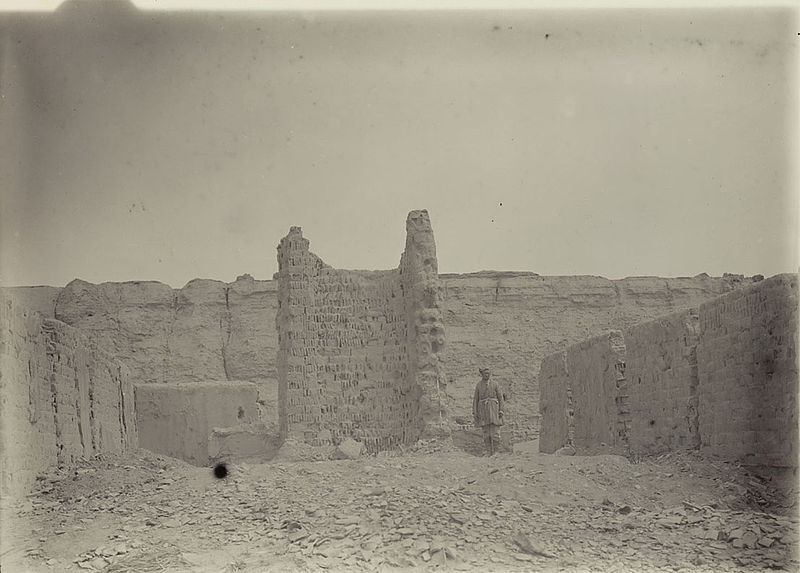
Rediscovered: Ruin At Kharakhoto from east, 30 May 1914.//Photo: Aurel Stein

So to speed things up on the outside, the Chinese went for the fortress one weak spot, the water supply. The name Gobi basically means waterless in Mongolian, and that is what they became. The city was cut off from its water supply by diverting the Ejin River that flowed right outside the city walls away from the thirsty people inside. 

The inhabitants inside began desperately to dig in the ground, trying to find drops of water according to the legend, but to no avail. When Khara Bator realized that the siege was not something they could withstand he threw all the valuables of the city into the well so as not to give that up to the invaders, even though they had to give up their life.

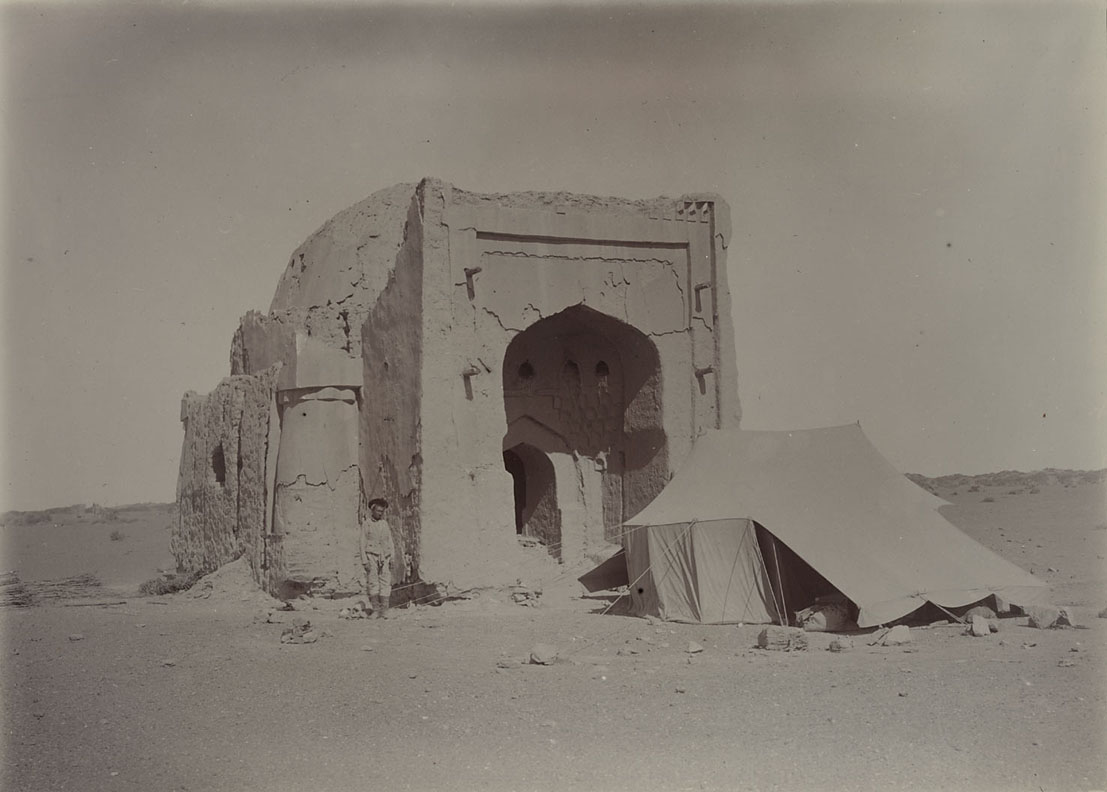
Ruins of Khar Khot: Muhammadan Tomb K.K.VI. at southeast corner of Kharakhoto, from east, 3 June 1914.//Photo: Aurel Stein

As time went on with no water with the Han Chinese army banging on their doors, Khara Bator murdered his family before taking his own life. The Mongols’ reign over Asia was slowly dwindling away. 

His soldiers waited until the Ming Dynasty finally breached the walls and attacked, killing the rest of the inhabitants of the city, not burying the bodies and making them live on as the ghost they are today. 

Another Version of Escaping

There are alternate versions we can find in the Ming Dynasty annals that tell a different story about Khar Khot. In this version, the leader together with his ministers actually escaped from this ancient Mongolian city. 

No matter who died and who escaped, the city was abandoned after the defeat and left in ruins to be swallowed by the desert. 

The Black City Today

600 years passed before people returned to the desolated city buried under the dry sand. Because of being so far from any other sign of civilization, the city was largely safe from looters and people seeking to destroy Khar Khot. 

When they first started excavating they found a rich amount of manuscripts of the Tangut language along with other important cultural artifacts, untouched because of its remote location, and perhaps because of the ghosts still protecting the city?

Today, tourists can come on a day trip to see the once magnificent city in the desert that the sand has filed down, softened the edges and buried its secrets. But in the night, they go back and miss the action that goes on after the sun goes down. Reports of flames burning for hours and strange lights that lead people astray in the desert are told from the guards watching over this place. 

Their ghost haunts the ruins of the garrisons, the walls and the very sand itself. In a way, giving the ghost city of Khar Khot a sort of life other than just being pieces of crumbling stone walls.

More like this

Newest Posts

References

Featured Image: BabelStone//Wikimedia

Khara Khoto Article, Black City Information, Alashan Plateau Facts — National Geographic

The spirit of ‘dark castle’ shines – Travel – Chinadaily.com.cn

Khara-Khoto | China & Asia Cultural Travel

https://www.ancient-origins.net/ancient-places-asia/khara-khoto-0014063