Right outside Basel in Switzerland, the haunted former Rectory in Münchenstein is said to be haunted by one of its former priests.
At the entrance to the tranquil town of Münchenstein, just outside of Basel, stands an otherwise unassuming structure at Hauptstrasse 19, also called the Marini House, were the renowned Berri family used to live, and now are said to haunt..
Read More: Check out all ghost stories from Switzerland
To the casual passerby, it’s merely a relic of centuries past, but beneath its weathered façade lies one of the Basel region’s most quietly unsettling ghost stories: the lingering unrest of a tragic soul and the eerie disturbances that continue to be whispered about to this day.
The former rectory in Münchenstein. // Source: Roland Zumbuehl/Wikimedia
A Birthplace of Brilliance and Darkness
This house was once the rectory of Münchenstein, serving as a residence for local clergy until the 1830s, but the building is much older than that.
Old views from the 17th century clearly show that the house once stood behind the northern gate of the town-like settlement on the east side, facing the castle rock. According to a detailed drawing by G. Pr. Meyer from 1690, the house originally consisted of two buildings.
Münchenstein has had a pastor since 1334. Therefore, it can be assumed that a rectory already stood near the north gate before 1537. Its location arose from the fact that the parish church stands nearby, outside the fortification walls.
It also holds the distinction of being the birthplace of Melchior Berri (1801–1854), the renowned Swiss architect behind some of Basel’s most iconic 19th-century landmarks, including the Museum of Natural History and Ethnology.
Melchior Berri: Portrait of Melchior Berri (1801–1854), Swiss architect. His father bearing the same name was a priest, and he grew up in the former rectory.
But it is not Berri’s legacy that has kept the house in local memory — it is the sorrowful fate of his father, Pastor Berri, and the restless phenomena that followed.
A Life of Restlessness and a Death of Despair
He had served as vicar at St. Peter’s from 1804. After his election as pastor, he moved with his family to Münchenstein, right outside of Basel, where his son spent his youth in rural surroundings at the foot of the castle rock. Berri’s religious streak can probably be traced back to his father, which was evident in the fact that even as a young man he conscientiously kept records of the church services he attended.
The elder Berri, though a man of the cloth, was by all accounts troubled and dissatisfied with both himself and the world around him. Known to lead a restless, melancholic existence, his growing despair culminated in a grim and tragic act: he took his own life, hanging himself from a sturdy beam in the rectory’s attic in 1831.
Almost immediately after his death, the house earned a sinister reputation. Locals began to report unsettling nocturnal disturbances like eerie phantom winds that howled through sealed rooms, the clanking of invisible chains from the attic, and ghostly lights flickering and vanishing without cause. The rectory had become a source of dread.
The tragic family tradition seemed to follow his son, who also took his life on May 12 in 1854 after losing one of his eight children to bronchitis. Because he had taken his life, he was quietly buried next to his son in St. Alban Church, and his grave was lost to memory for ages.
The Shape in the Shadows
In the years that followed, sporadic reports of ghostly activity surfaced. Most notably, witnesses described seeing a black, shadowy figure with glowing eyes within the house. On one infamous night, as townsfolk summoned the courage to investigate, the sinister presence was found crouched within a fireplace — not as a man, but in the form of a black cat with burning eyes.
Haunted Home: Former rectory and family home from 1805 to 1831 of Melchior Berri (1805-1854) at Hauptstrasse 19 in Münchenstein. // Source: EinDao/Wikimedia
Whether this was a mere trick of the light or the physical manifestation of the pastor’s anguished spirit, the answer was never found. The cat vanished as quickly as it appeared, but the story became forever entangled with the house’s already chilling folklore.
After strange knocking and poltergeist activity made the people at Erstad Farm believe it was haunted. And when they asked the ghost what it wanted, it unraveled the lives of more than one person forever.
Was there an iberian vampire before the European vampire panic in Eastern Europe? Who was really Conde Estruch, the vampire of Catalonia, and what happened to the witches of Llers Castle the count was said to use as his lair.
Join a haunted pub crawl through Dublin’s ancient streets for ghosts and a pint of Guinness. From plotting revolutionaries to somber writers, these pubs and bars are said to be a place where some of the patrons have been lingering for a long time.
In 1852, the alleged psychic Erika Larsdatter Bogen, arrived at Børholmen, a small island in western Norway. She claimed that she had found the ghost and corpse of the dead child, and she named the mother who allegedly buried it. But what was the truth?
Ghostly whispers in the old castle ruins, soldiers haunting the bloody battlefields and even the drums of pagan druids still lingering, Ireland is certainly a haunted country. This is only a small portion of the most haunted places in Ireland and the ghost stories behind them.
Who is the ghostly priest in brown, haunting the old Vicarage in Sande? Legend says he still carries guilt for the young boy he failed that had tragic consequences.
In the rural mountainside in Catalonia, Spain, there have long been talk about a vampiric beast of a hound that has tormented the livestock and the unfortunate person walking outside after dark. Could this legend be the one where other iberian vampire legends sprung from?
A story of doomed lovers and haunted ivy leaves, the Lady in Green is said to haunt Caerphilly Castle in Wales together with the spirit of Gwrach-y-Rhibyn, wailing as an omen of death.
After the battles during world war two, Hegra Fortress was a place that became known to withstand the Germans, although they too in the end had to raise the white flag. After the war, people started to believe that one of the fallen soldiers was still there, wandering the deep and damp tunnels.
In a cemetery turned into a public park, the Wolfe Tone Square is said to be haunted by John Toler, one of Ireland’s most haunted man and remembered as the Hanging Judge.
The old cabin high on Hardangervidda, Norway is said to be haunted by its very first caretaker. But although Krækkja DNT cabin is said to be his eternal home, it seems like the more people visiting, the more he retreats to the plateau.
Preying on the blood of the young one, the vampiric Guajona from northern Spain is said to stalk the villages and valleys in Cantabria, thirsting for blood.
Mirroring the famous Dance Macabre mural that used to hang on the walls near the Predigerkirche in Basel, it is said that plague victims were buried in the patch of grass outside of the church. Legend has it that when the city needs it, the dead will rise from it in a macabre procession, as a warning of an oncoming disaster.
In the heart of Basel’s old town, amid narrow cobbled streets and Gothic church spires, there lingers a memory too grim to fully fade of the plague and the deaths of thousands of people, rich, poor, young or old, the death didn’t discriminate. It clings to the city like mist to the Rhine, a shadow of death and ancient disease that once brought the living to their knees.
The story’s origin lies in one of Basel’s darkest chapters: the Black Death and it claims that it’s victim will rise from their graves if the city ever needs a warning from the afterlife.
The 14th century was an era of unimaginable horror for Basel as it was for the rest of Europe. In 1314, a virulent wave of the plague swept through the city, carrying away thousands within weeks. The death was swift and cruel — marked by hideous black buboes beneath the arms and around the groin, followed by high fever and swift decline.
The Dance of Death: (1493) by Michael Wolgemut, from the Nuremberg Chronicle of Hartmann Schedel
Thirty-five years later, the plague returned with even greater ferocity. The city’s cemeteries overflowed, and in desperation, the dead were buried hastily in mass graves, especially in the burial grounds surrounding the Predigerkirche (Church of the Preachers).
It was amid this devastation that The Basel Dance of Death (Basler Totentanz) was born. Beautiful art depicting horrible death.
The Dance of Death Mural
In the 15th century, as plague continued to haunt Europe, a long, striking mural was painted along the inside of the cemetery wall near the Predigerkirche. The Dance of Death was no gentle allegory. Here, death came for all, beggar and merchant, soldier and king. They were all depicted as skeletal figures leading the living in a grim, final waltz. It was a stark, public reminder that death makes no distinction of rank or wealth.
Danse Macabre of Basel: Watercolor copy by Johann Rudolf Feyerabend, 1806 : bottom left. Historisches Museum of Basel.
Miraculously, the mural survived the iconoclasm of the Reformation, was restored in the 17th century, and eventually dismantled in 1805, though parts of it survive in reproduction. But the mural’s power was never solely in paint and plaster and it became a living legend, one that the people of Basel claimed could still be seen, in another form, when darkness fell.
The Procession of the Restless Dead
According to local lore, the countless plague victims interred hurriedly in the soil before the Predigerkirche (Church of the Holy Spirit). Today it is a small patch of grass right in front of the church, said to house thousands of people buried after the plague. According to the legend, they do not sleep peacefully.
When Basel stands on the brink of danger, be it war, famine, disease, or other calamity it is said that the plague dead rise from their mass graves. Silently, in the dead of night, they form a ghostly procession, a macabre parade of spectral figures shrouded in rotting shrouds and hollow eyes, marching through the old city streets.
This ghostly cortege begins at the site of the old Dance of Death mural, winds its way through the alleys, and returns to the churchyard before dawn. Some accounts claim that one can hear the faint rattle of bones, the dragging of weary feet, and the mournful tolling of an unseen bell.
In keeping with the ancient mural’s message, the procession is democratic in its horror where peasants, noblemen, clerics, and merchants march side by side, bound by death and decay march.
After strange knocking and poltergeist activity made the people at Erstad Farm believe it was haunted. And when they asked the ghost what it wanted, it unraveled the lives of more than one person forever.
Was there an iberian vampire before the European vampire panic in Eastern Europe? Who was really Conde Estruch, the vampire of Catalonia, and what happened to the witches of Llers Castle the count was said to use as his lair.
Join a haunted pub crawl through Dublin’s ancient streets for ghosts and a pint of Guinness. From plotting revolutionaries to somber writers, these pubs and bars are said to be a place where some of the patrons have been lingering for a long time.
In 1852, the alleged psychic Erika Larsdatter Bogen, arrived at Børholmen, a small island in western Norway. She claimed that she had found the ghost and corpse of the dead child, and she named the mother who allegedly buried it. But what was the truth?
Ghostly whispers in the old castle ruins, soldiers haunting the bloody battlefields and even the drums of pagan druids still lingering, Ireland is certainly a haunted country. This is only a small portion of the most haunted places in Ireland and the ghost stories behind them.
Who is the ghostly priest in brown, haunting the old Vicarage in Sande? Legend says he still carries guilt for the young boy he failed that had tragic consequences.
In the rural mountainside in Catalonia, Spain, there have long been talk about a vampiric beast of a hound that has tormented the livestock and the unfortunate person walking outside after dark. Could this legend be the one where other iberian vampire legends sprung from?
A story of doomed lovers and haunted ivy leaves, the Lady in Green is said to haunt Caerphilly Castle in Wales together with the spirit of Gwrach-y-Rhibyn, wailing as an omen of death.
After the battles during world war two, Hegra Fortress was a place that became known to withstand the Germans, although they too in the end had to raise the white flag. After the war, people started to believe that one of the fallen soldiers was still there, wandering the deep and damp tunnels.
In a cemetery turned into a public park, the Wolfe Tone Square is said to be haunted by John Toler, one of Ireland’s most haunted man and remembered as the Hanging Judge.
The old cabin high on Hardangervidda, Norway is said to be haunted by its very first caretaker. But although Krækkja DNT cabin is said to be his eternal home, it seems like the more people visiting, the more he retreats to the plateau.
Preying on the blood of the young one, the vampiric Guajona from northern Spain is said to stalk the villages and valleys in Cantabria, thirsting for blood.
The two adjoining cloisters by Basel Cathedral are said to be haunted by a couple of spectres entombed within the building. In the darkness of Basel’s Double Cloister, it is said you can hear the moaning of a man slowly suffocating and feel the unsuspected slap from a man, as mean in death as he was in life.
Basel is a city where history lingers not just in its ancient streets and Gothic spires but in the very earth beneath its feet. Nowhere is this more palpable than in the Cathedral and its adjoining Double Cloister of Basel Minster. solemn, shadow-cloaked place where the line between the living and the dead has always felt unsettlingly thin.
Read also: Check out all ghost stories from Switzerland
Built in the 15th century, the cloisters once rang with sacred hymns and church rites, housing as many as six altars for medieval services. There are actually two different cloisters, connected by the open gardens surrounding them.
After the Reformation, one of the cloisters turned into a marketplace, but also a cemetery for the city’s upper middle class. Long after the Reformation’s sweeping changes silenced the rituals of the monks, the ritual of burial within the cloister’s cold embrace.
Basel Minster
A Cemetery Hiding in Plain Sight
For centuries, this peaceful cloister functioned as a cemetery for the city’s wealthy and influential, seen as their graves marked with ornately carved stones, some still intact within the shaded arcades. This was known as Münster Cemetery. Even as the world outside modernized, these hallowed grounds remained a final resting place, with burials continuing into the 19th century. The place is heavy with history, and as any Basler will tell you, such places seldom stay quiet after dark.
When the evening mists curl in from the Rhine and the last of the daylight dies behind the Minster’s towers, strange things are said to stir amid the cloister’s arches.
Cloister of Basel Minster
The Moaning of Emanuel Büchel
Among the restless souls tied to these ancient stones is Emanuel Büchel (1705–1775), a respected draftsman and master baker whose demise is steeped in grim folklore. He also painted, mainly nature and landscapes.
Emanuel Büchel completed his apprenticeship with a master baker in Basel in 1723. He then set out on a journeyman’s journey, and upon his return in 1726, he applied for membership in the city’s bakers’ guild. In 1728, he applied for the position of gatekeeper to the Steinentor. He married Susanna Felber in 1726.
Self Portrait
In 1773 he was assigned the task of copying the dance of death in Basel, a huge honor for an artist. At that time he was 68 and he died 2 years later at 70, 24 September in 1775. The question his legend asks though, did he truly die on that day though?
Legend insists that poor Büchel was buried alive, mistaken for dead in an era when death’s finality could sometimes be tragically premature. On long, hushed nights, visitors claim to hear his ghost moaning, wheezing, and rustling beneath the cloister’s stones, a soul forever reliving the terror of suffocation in his tomb.
The Malevolent Shade of Master Tailor Schnyyder Hagenbach
But if Büchel is a sorrowful spirit, Master Tailor Schnyyder Hagenbach is an entirely different creature of the night. Even in life, the tailor was, by all accounts, an unpleasant man. It was said he was cruel to his family, dishonest in business, and feared by neighbors. It comes as little surprise, then, that his spirit would choose to linger in malevolence.
The Cloister Cemetery: The cloister of Basel Minster consists of a small and a large cloister. Numerous epitaphs (grave and memorial monuments) are attached to their walls.
For generations, tales have spoken of an invisible, vindictive specter haunting the cathedral cloister. Passersby walking the dim, ancient pathways have felt sudden, icy slaps on their faces or hands, delivered by unseen forces. Locals blame Hagenbach’s ghost, a being said to emerge not at the witching hour, but as early as dusk, prowling the arcades in search of fresh victims to torment.
His ghost, it’s said, lashes out without warning — a sudden blow accompanied by mocking laughter, leaving the victim shaken, their skin cold where the invisible hand landed.
A Living Monument to Basel’s Darker Past
The Double Cloister stands as both a treasured historical site and a place of uneasy quiet. Its arched walkways and sun-dappled courtyards are beautiful by day, but at night, the air thickens with something ancient, something watching.
A cemetery masquerading as a courtyard, a sanctum where moaning spirits and unseen hands remind the living of the unforgiving past.
After strange knocking and poltergeist activity made the people at Erstad Farm believe it was haunted. And when they asked the ghost what it wanted, it unraveled the lives of more than one person forever.
Was there an iberian vampire before the European vampire panic in Eastern Europe? Who was really Conde Estruch, the vampire of Catalonia, and what happened to the witches of Llers Castle the count was said to use as his lair.
Join a haunted pub crawl through Dublin’s ancient streets for ghosts and a pint of Guinness. From plotting revolutionaries to somber writers, these pubs and bars are said to be a place where some of the patrons have been lingering for a long time.
In 1852, the alleged psychic Erika Larsdatter Bogen, arrived at Børholmen, a small island in western Norway. She claimed that she had found the ghost and corpse of the dead child, and she named the mother who allegedly buried it. But what was the truth?
Ghostly whispers in the old castle ruins, soldiers haunting the bloody battlefields and even the drums of pagan druids still lingering, Ireland is certainly a haunted country. This is only a small portion of the most haunted places in Ireland and the ghost stories behind them.
Who is the ghostly priest in brown, haunting the old Vicarage in Sande? Legend says he still carries guilt for the young boy he failed that had tragic consequences.
In the rural mountainside in Catalonia, Spain, there have long been talk about a vampiric beast of a hound that has tormented the livestock and the unfortunate person walking outside after dark. Could this legend be the one where other iberian vampire legends sprung from?
A story of doomed lovers and haunted ivy leaves, the Lady in Green is said to haunt Caerphilly Castle in Wales together with the spirit of Gwrach-y-Rhibyn, wailing as an omen of death.
After the battles during world war two, Hegra Fortress was a place that became known to withstand the Germans, although they too in the end had to raise the white flag. After the war, people started to believe that one of the fallen soldiers was still there, wandering the deep and damp tunnels.
In a cemetery turned into a public park, the Wolfe Tone Square is said to be haunted by John Toler, one of Ireland’s most haunted man and remembered as the Hanging Judge.
The old cabin high on Hardangervidda, Norway is said to be haunted by its very first caretaker. But although Krækkja DNT cabin is said to be his eternal home, it seems like the more people visiting, the more he retreats to the plateau.
Preying on the blood of the young one, the vampiric Guajona from northern Spain is said to stalk the villages and valleys in Cantabria, thirsting for blood.
From poltergeists, ghostly monks, nuns and knights as well as a procession of skeletons, some of the most haunted places in Basel, Switzerland are said to be centuries old. Let’s have a closer look at some of them.
Beneath Basel’s charming medieval streets, vibrant culture, and picturesque riverbanks lies a darker, more unsettling layer of history—one whispered about in hushed tones and kept alive through ghost stories passed down for generations. As one of Switzerland’s oldest cities, Basel is steeped in centuries of war, plague, and religious upheaval, leaving behind more than just ruins and gravestones. From restless spirits in ancient cloisters to poltergeists in quiet apartments, this city is home to eerie legends that refuse to fade and some of the most haunted places in Basel.
The Restless Spirits of Kleines Klingental: Basel’s Haunted Nunnery
Museum Klingental Basel: The old nunnery is said to be haunted by the sinful nuns that used to live there, centuries ago and one of the most haunted places in Basel.// Source: Mikatu/Wikimedia
The former Dominican cloister of Kleines Klingental in Basel, once a house of piety, became a notorious retreat for wealthy, noble-born nuns whose lives allegedly strayed far from monastic vows. Rumors of secret lovers, drowned infants, and defiance of church authority plagued its reputation.
After the Reformation, the cloister was turned into military barracks, where soldiers reported chilling hauntings: ghostly nuns praying, wailing, and wandering the halls in sorrow, still seeking forgiveness for their sins. Today, the site houses the Kleines Klingental Museum, but tales persist of phantom nuns, flickering lights, and shadowy figures that suggest the past has yet to release its grip on this once-sacred ground.
In the heart of Basel’s Old Town, the Spießhof Building harbors the chilling legacy of David Joris, a 16th-century Dutch Anabaptist preacher who fled persecution only to meet a gruesome fate after death. Living under a false name, Joris built a secret life in Basel before his heretical beliefs were posthumously revealed. In a dramatic act of vengeance, his corpse was exhumed, beheaded, and burned—an attempt to erase him from salvation. Since then, his headless ghost, often seen with two eerie black dogs, is said to haunt his former home. Mediums and witnesses claim he won’t rest until his name is cleared, cementing his place as one of Basel’s most enduring and unsettling phantoms.
The Restless Gatekeeper of the Rhine Gate in Basel
In 17th-century Basel, a troubled gatekeeper at the Rhine Gate lost his beloved young daughter when she drowned in the river, a tragedy he witnessed but was too drunk to prevent. Consumed by grief and guilt, he later died—likely by suicide—and was denied burial in consecrated ground beside her at St. Martin’s Church. Instead, he was interred among outcasts at Klingental.
Yet his spirit found no rest; legend holds that his ghost still haunts the churchyard, silently keeping vigil by his daughter’s grave, a spectral figure glimpsed beneath the moonlight, forever bound by sorrow and denied peace.
The Ghostly Monk of Spittelsprung (Münsterberg) in Basel
Back at a time when the hills of Münsterberg were called Spittelsprung in the old parts of Basel, Switzerland, a haunting tale emerged about a spectral monk. This ghostly figure would glide silently through the streets, frightening children while immersed in silent prayers, oblivious to the living around him.
He was often seen illuminated faintly by candlelight, engrossed in his breviary, and indifferent to the fear he instilled in children watching from the shadows. Only when confronted by an adult would he vanish, leaving behind the scent of candle wax.
The reasons for the monk’s haunting remain a mystery—was he a victim of the plagues, seeking penance for sins, or perhaps a witness to grim events? The story of another haunting monk from the 1626 poorhouse adds to the intrigue, where travelers would watch in terror as he glided through their rooms.
Knightly Ghosts Haunting St. Johanns-Vorstadt by the Rhine River
In Basel’s St. Johann district—once home to the medieval Commandery of the Knights of St. John—ghostly legends linger beneath the modern apartments now standing there. Once filled with crusader knights and sod wells, the area was long haunted by the phantom of an armored rider galloping through the Ritterhaus courtyard, ghostly apparitions of a pale-faced man, a cloaked lady, and even a spectral white dog. Most chilling were the cries of a child said to echo from the depths of an old well.
Though the original knightly buildings were demolished by 1929 and archives lost, eerie sightings and stories continue to haunt the district, keeping its haunted past alive and still considered one of the most haunted places in Basel.
The Knocking Ghost of Utengasse 47: Basel’s Poltergeist Case
Utengasse 47: Considered to be one of the most haunted places in Basel
In 1929, a small apartment at Utengasse 47 in Basel’s Kleinbasel district became the center of one of Switzerland’s most infamous poltergeist cases. What began as unexplained knocking sounds soon escalated into terrifying disturbances that seemed to center around a ten-year-old boy named Marcel.
Despite multiple investigations by police, doctors, and even spiritualists, no source for the strange rapping and chilling atmosphere could be found. Marcel’s intense reactions and the persistence of the disturbances, even under observation, only deepened the mystery. As public anxiety mounted, the Basel authorities took the unusual step of ordering the apartment vacated—an extraordinary measure during a housing shortage. Though the building still stands today, no further incidents were reported, and the haunting remains an unsolved and eerie chapter in the city’s folklore.
The Restless Dead Buried Inside of Basel’s Double Cloister
The Double Cloister of Basel Minster, a serene courtyard by day, is said to transform into a haunting ground by night, echoing with the restless spirits of those entombed within its ancient walls and said to be one of the most haunted places in Basel. Among them are two infamous specters: Emanuel Büchel, a respected artist and baker believed to have been buried alive, whose ghost moans and wheezes beneath the stone floors; and Master Tailor Schnyyder Hagenbach, a cruel man in life whose malevolent spirit is said to slap unsuspecting passersby without warning.
Once a sacred site filled with altars and later a cemetery for the city’s elite, the cloister has long been steeped in death and memory. Though modern life carries on just beyond its arches, many locals still avoid the cloisters after dark, wary of the unseen hands and the whispered echoes of Basel’s darker past.
Mirroring the famous Dance Macabre mural that used to hang near the Predigerkirche in Basel, legend claims that plague victims buried in the nearby grass will rise in a ghostly procession to warn the living of impending disasters.
In Basel’s old town, a haunting memory of the plague remains, as thousands perished indiscriminately during the Black Death. The city’s dark history is marked by the rapid deaths caused by the disease and the need for mass graves, particularly around the Predigerkirche.
The Dance of Death mural, painted in the 15th century, depicted skeletal figures leading both the rich and poor alike in a dance, emphasizing that death spares no one. Though the mural was dismantled in 1805, it became a legend, claiming that the dead rise in times of danger.
Local lore states that the plague victims buried near the Predigerkirche do not rest peacefully. When Basel faces calamity, they are said to rise and march in a spectral procession through the streets, symbolizing death’s universal reach, uniting all in decay regardless of their former status.
The Dream of the Basel Rhine Bridge about the Buried Treasure
The Emmental: is a valley in west-central Switzerland, forming part of the canton of Bern, mostly made up by farmers and known for its cheese and pottery. Rafrüti is mostly known for being the place where the first and second latest meteorite was found in Switzerland.
The tale of “The Dream of the Basel Rhine Bridge” tells of a poor farmer from the Emmental who dreams of finding gold at the Mittlere Brücke in Basel were the bridge is considered one of the most haunted places in Basel. After several nights of the same dream, he decides to make the journey to Basel, where he searches for the treasure on the bridge without success. A policeman, noticing his distress, shares a dream about treasure in Rafrüti, prompting the farmer to return home. He digs in his kitchen and uncovers a pot of gold with the help of a mysterious black figure, appearing like a ghost to him.
The figure offers him three piles of gold to choose from but warns him to decide wisely. Instead of choosing, the farmer combines the piles and vows to share the wealth as he sees fit. The figure then disappears, and the farmer’s family lives in comfort thereafter, proving that the bridge indeed brought him fortune.
The Gray Ghost of Claraplatz: Kleinbasel’s Neighborhood Spirit
The Gray One, a haunting spirit, is said to linger around houses in Kleinbasel, Switzerland, especially in the now-demolished Abbess’ Court. The ghost was not confided into a single home, and was one of the more famous ghosts in the city and Abbess’ Court one of the most haunted places in Basel. This eerie ghost, dressed in traditional Franconian garb, particularly troubled the Schetty family in the 19th century, appearing in their daughters’ bedroom and causing unsettling disturbances throughout the house.
The ghost would often retreat to the attic, creating loud noises that disturbed the family. To keep the ghost away, locals painted a pentagram at the house’s threshold, but it’s unclear if this truly worked. After the death of Joseph Schetty, the family patriarch, his ghost was also reportedly seen in the house. Despite the Abbess’ Court being demolished in 1951, legends of haunting phenomena persisted in the area, with reports of phantom footsteps and sightings of a gray figure near the old foundations.
The Evil Eye of Rebgasse: Curses, Shadows, and an Exorcism in Basel
Haus Zur Alten Trotte: The haunted house on Rebgasse 38 in Basel, was said to have had an exorcism twice and considered to be one of the most haunted places in Basel. // Source: Laloom/Wikimedia
The Kleinbasel neighborhood in Basel, Switzerland, is known for its haunted history, particularly at Rebgasse 38. This house, also known as the Haus zur alten Trotte, was home to many ghostly encounters, including spirits associated with a former couple who lived there from 1888 to 1907. Two main ghosts were reported: Grethi Beck, a former maid who was believed to have the Evil Eye, and the deceased wife of Pastor Johann Jakob Übelin, who returned as a ghost after his infidelity.
Despite attempts by local clergy to suppress belief in hauntings, the presence of these spirits persisted, prompting the famous exorcist Johann Jakob von Brunn to be called upon. He successfully banished Grethi Beck’s spirit, though sightings of her continued, and the haunting by Übelin’s wife also lingered until she was expelled.
Although the hauntings ceased, the house retained its ghostly reputation, and the location of Rebgasse 38 is now a kindergarten. The tales of the hauntings continue to live on through local folklore and ghost tours, suggesting that the shadows of Kleinbasel’s past may never fully fade.
Ghosts of the New Moon: The White Death and the Restless Shadows of Basel
Markgräflerhof Palace: An engraving of the Markgräflerhof Palace from 1845 were the White Death was said to roam and being one of the most haunted places in Basel.
In Basel, the ghost known as Weisse Tod, or The White Death, haunts the area around the historic Markgräflerhof building. This terror manifests during the new moon when the veil between the worlds is said to thin, prompting the city’s restless spirits to rise. Locals believed that every new moon, The White Death would emerge from a nearby hole, peering into homes with its dark eye sockets, and those who met its gaze would soon fall ill, as if marked for death.
The Markgräflerhof, built in the early 1700s, was once tied to various rumors, including the suggestion that its haunting is linked to the building’s past as a hospital or an asylum. Compounding the legend, tuberculosis was often referred to as The White Death, possibly intertwining fears of disease with ghostly lore.
Additionally, another ghost appears at an old urban fountain near the Rhine, a man in dark garments whose presence evokes mystery and sorrow, believed to be a soul lost to the river. Each new moon, the church bells toll extra hours to ward off restless spirits, but even as modernity transforms the city, the supernatural aura persists, suggesting the new moon still belongs to the dead in Basel.
The Basilisk of Basel: The Beast Beneath Gerberberglein
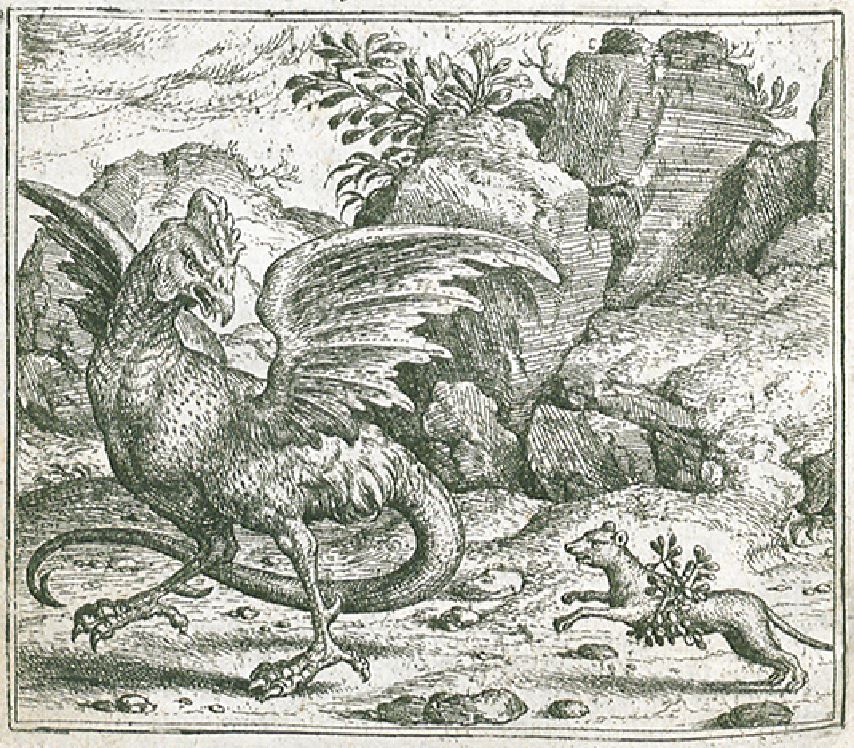
Beneath the quiet street of Gerberberglein in central Basel, legend tells of a deadly basilisk—a mythical creature part serpent, part rooster, with a gaze so lethal it could kill. Said to have lived in a cave beneath the city, the beast terrified locals until a brave apprentice used a mirror to turn the creature’s power against itself. Though the cave was sealed long ago, the basilisk lives on in Basel’s identity, with its fearsome image adorning fountains and railings throughout the city.
From spectral knights riding through vanished courtyards to sorrowful moans echoing in cathedral cloisters, Basel’s haunted places are more than just eerie tales—they are echoes of a city that remembers its dead. Whether rooted in history, folklore, or something stranger still, these stories remind us that even the most beautiful places can hide unsettling secrets. So if you ever find yourself wandering Basel’s narrow alleys at dusk or standing alone on the Mittlere Brücke under a full moon, don’t be surprised if the past comes whispering. After all, in Basel, the line between the living and the dead is thinner than you think.
After strange knocking and poltergeist activity made the people at Erstad Farm believe it was haunted. And when they asked the ghost what it wanted, it unraveled the lives of more than one person forever.
Was there an iberian vampire before the European vampire panic in Eastern Europe? Who was really Conde Estruch, the vampire of Catalonia, and what happened to the witches of Llers Castle the count was said to use as his lair.
Join a haunted pub crawl through Dublin’s ancient streets for ghosts and a pint of Guinness. From plotting revolutionaries to somber writers, these pubs and bars are said to be a place where some of the patrons have been lingering for a long time.
In 1852, the alleged psychic Erika Larsdatter Bogen, arrived at Børholmen, a small island in western Norway. She claimed that she had found the ghost and corpse of the dead child, and she named the mother who allegedly buried it. But what was the truth?
Ghostly whispers in the old castle ruins, soldiers haunting the bloody battlefields and even the drums of pagan druids still lingering, Ireland is certainly a haunted country. This is only a small portion of the most haunted places in Ireland and the ghost stories behind them.
Who is the ghostly priest in brown, haunting the old Vicarage in Sande? Legend says he still carries guilt for the young boy he failed that had tragic consequences.
In the rural mountainside in Catalonia, Spain, there have long been talk about a vampiric beast of a hound that has tormented the livestock and the unfortunate person walking outside after dark. Could this legend be the one where other iberian vampire legends sprung from?
A story of doomed lovers and haunted ivy leaves, the Lady in Green is said to haunt Caerphilly Castle in Wales together with the spirit of Gwrach-y-Rhibyn, wailing as an omen of death.
After the battles during world war two, Hegra Fortress was a place that became known to withstand the Germans, although they too in the end had to raise the white flag. After the war, people started to believe that one of the fallen soldiers was still there, wandering the deep and damp tunnels.
In a cemetery turned into a public park, the Wolfe Tone Square is said to be haunted by John Toler, one of Ireland’s most haunted man and remembered as the Hanging Judge.
The old cabin high on Hardangervidda, Norway is said to be haunted by its very first caretaker. But although Krækkja DNT cabin is said to be his eternal home, it seems like the more people visiting, the more he retreats to the plateau.
Preying on the blood of the young one, the vampiric Guajona from northern Spain is said to stalk the villages and valleys in Cantabria, thirsting for blood.
A legend goes that a simple farmer from the Emmental in the Swizz alps had a dream about finding gold at the bridge in Basel. Visited by a ghostly shadow, he was guided around the country to find it.
Basel’s Mittlere Brücke, the ancient bridge crossing the Rhine, has long been the setting for legends, mysteries, and ghost stories. One of the most curious tales comes not from the city itself, but from the remote Alp Rafrüti in the Emmental, where a poor laborer once lived with his family in hardship.
Read More: Check out all ghost stories from Switzerland
One night, this man was visited by a dream so vivid it unsettled his sleep as he slept in his bed in Emmental. In it, a voice told him that his fortune awaited him on the Rhine Bridge in Basel, over 80 kilometers away. He awoke, dismissing it as nonsense. But when the same dream came a second night, and a third, he grew restless. With no other prospects and an urgent need to provide for his family, he set off for Basel.
The Emmental: is a valley in west-central Switzerland, forming part of the canton of Bern, mostly made up by farmers and known for its cheese and pottery. Rafrüti is mostly known for being the place where the first and second latest meteorite was found in Switzerland.
The Search For Treasure at The Mittlere Brücke
The Mittlere Brücke, or the middle bridge is one of the oldest bridges across the Rhine, dating back to 1223, and has become the very symbol of Basel today, connecting Grossbasel (Greater Basel) and Kleinbasel (Lesser Basel).
When he arrived, the laborer walked slowly across the bridge, eyes scanning the stones and riverbanks, hoping for some sign. But there was nothing unusual to be seen. He spent the entire day pacing the length of the bridge. The next day, he did the same, and again on the third. The old bridge was well-worn by the passing feet of merchants, boatmen, and townsfolk, but none seemed to notice the weary man from the Emmental.
Basel’s Mittlere Brücke: The bridge around 1760. Copperplate engraving by David Herrliberger after a model by Emanuel Büchel.
A city policeman, however, had observed him all this time. Puzzled by the stranger’s constant wandering and troubled look, the officer finally approached him. “What are you doing here?” he asked. “You’ve been walking this bridge for days now. What are you looking for?”
The laborer, exhausted and disheartened, confessed his dream and his fruitless search. The policeman chuckled and shook his head. “Ah, don’t believe in such foolish dreams,” he said. “Last night, I dreamt there was a treasure buried under a kitchen in a place called Rafrüti. But who knows where that is?”
The Treasure at Home
The laborer’s eyes widened. He said nothing, but turned on his heel and hurried all the way back to his humble Alpine hut. Without delay, he began digging a hole in the middle of his kitchen floor. The soil was cold and hard, but he dug deeper and deeper until a dark figure appeared beside him, a silent, black shape that picked up a spade and began to dig as well.
At last, their tools struck metal. Together, they unearthed a large, heavy pot filled to the brim with gold coins. The black figure then separated the treasure into three equal piles and spoke in a voice like the wind through ancient trees:
“Choose, laborer! One pile is for the poor, one for me, and one for you. But choose wisely, or you’ll regret it!”
The man hesitated, fear clutching at his heart. Then, he thought: Why should a creature of shadow need gold? And why should I decide who deserves this wealth? So instead of choosing, he swept all three piles together into a single heap and declared:
“I’ll take this one and share it as I see fit.”
In that instant, the black figure vanished without a sound. From that day forward, the laborer and his family lived comfortably, freed from want and fear. The Basel Rhine Bridge had indeed brought him fortune.
After strange knocking and poltergeist activity made the people at Erstad Farm believe it was haunted. And when they asked the ghost what it wanted, it unraveled the lives of more than one person forever.
Was there an iberian vampire before the European vampire panic in Eastern Europe? Who was really Conde Estruch, the vampire of Catalonia, and what happened to the witches of Llers Castle the count was said to use as his lair.
Join a haunted pub crawl through Dublin’s ancient streets for ghosts and a pint of Guinness. From plotting revolutionaries to somber writers, these pubs and bars are said to be a place where some of the patrons have been lingering for a long time.
In 1852, the alleged psychic Erika Larsdatter Bogen, arrived at Børholmen, a small island in western Norway. She claimed that she had found the ghost and corpse of the dead child, and she named the mother who allegedly buried it. But what was the truth?
Ghostly whispers in the old castle ruins, soldiers haunting the bloody battlefields and even the drums of pagan druids still lingering, Ireland is certainly a haunted country. This is only a small portion of the most haunted places in Ireland and the ghost stories behind them.
Who is the ghostly priest in brown, haunting the old Vicarage in Sande? Legend says he still carries guilt for the young boy he failed that had tragic consequences.
In the rural mountainside in Catalonia, Spain, there have long been talk about a vampiric beast of a hound that has tormented the livestock and the unfortunate person walking outside after dark. Could this legend be the one where other iberian vampire legends sprung from?
A story of doomed lovers and haunted ivy leaves, the Lady in Green is said to haunt Caerphilly Castle in Wales together with the spirit of Gwrach-y-Rhibyn, wailing as an omen of death.
After the battles during world war two, Hegra Fortress was a place that became known to withstand the Germans, although they too in the end had to raise the white flag. After the war, people started to believe that one of the fallen soldiers was still there, wandering the deep and damp tunnels.
In a cemetery turned into a public park, the Wolfe Tone Square is said to be haunted by John Toler, one of Ireland’s most haunted man and remembered as the Hanging Judge.
The old cabin high on Hardangervidda, Norway is said to be haunted by its very first caretaker. But although Krækkja DNT cabin is said to be his eternal home, it seems like the more people visiting, the more he retreats to the plateau.
Preying on the blood of the young one, the vampiric Guajona from northern Spain is said to stalk the villages and valleys in Cantabria, thirsting for blood.
After the gatekeeper’s young daughter died in the Rhine, his only wish was to be buried next to her in the cemetery. As they all believed his own death was a suicide he was denied a burial in a consecrated ground. Now, he is forced to linger in the shadows, his only way to visit her grave.
Basel’s old city once bristled with gates and towers and its guardians of the bridges, streets, and walls that kept the medieval town secure. None was more important than the Rhine Gate on the Grossbasel side, the fortified passage controlling access to the ancient Rhine Bridge, the vital link between Gross- and Kleinbasel. The gate itself was torn down in 1839, but one of its most tragic stories clings to the city like mist over the river.
Read more: Check out all ghost stories from Switzerland
The Mittlere Brücke, or the middle bridge is one of the oldest bridges across the Rhine, dating back to 1223, and has become the very symbol of Basel today, connecting Grossbasel (Greater Basel) and Kleinbasel (Lesser Basel).
Legend has it that there once was a silver bell hanging from the Minster towers in Basel. After the earthquake in 1356, the towers collapsed and the bell sank into the Rhine, only now calling the river spirits to midnight prayer at full moon. It is said that the bell can only be raised when the Minster becomes a Catholic church again. If you look and listen closely from the banks or the bridge, it is said you can see the silver glimmer and hear the faint ringing sound.
The Legend of the Ghostly Gatekeeper
In the 17th century, a drunken gatekeeper served at the Rhine Gate on the Grossbasel side of the river. A man with a weakness for drink, his reputation in the city was poor, and yet there was one bright, innocent light in his otherwise dim existence that was his beloved four-year-old daughter.
The tragedy happened one afternoon as the little girl played near the bridge’s edge, close enough for her father to see, but far enough for danger. He was, as too often, deep in his cups. And though he was clear in the head enough to see the horror unfolding in front of him, he was too drunk to save her when she fell in.
It was the boatmen of the guildhouse at the bridge who reacted first, leaping into their boats and chasing the swiftly moving current. They managed to pull the girl from the water near St. John’s, but it was too late. The child was gone.
The Phantom at St. Martin’s
She was buried in St- Martin’s Church, or Martinskirche, the oldest parish church in the city on Cathedral Hill or the Münsterhügel.
The gatekeeper was crushed and filled with immense guilt. At the girl’s burial in St. Martin’s churchyard, he stood motionless at the grave long after the others had left. He carried his guilt heavily, a man haunted in life.
Die Martinskirche in Basel// Source: Andreas Faessler/Wikimedia
Weeks later, his body was found floating near the Klingental corner tower on the Rhine. Whether from despair or drink, he had slipped into the water. And because suicide was suspected, he was denied burial beside his daughter in consecrated ground. Instead, his remains were laid to rest in the old lay cemetery at Klingental, where plague victims, beggars, and outcasts were consigned.
Yet, his soul found no peace. Even decades, or perhaps even centuries later depending on when this actually happened he was still haunting the churchyard. During the time of Pastor Theodor Falkeysen (1725–1815), people whispered of a spectral figure seen standing in the churchyard of St. Martin’s on moonlit nights. Described as rigid and bent, dressed in the tattered clothes of a gatekeeper, his hollow eyes fixed forever on his child’s grave.
After strange knocking and poltergeist activity made the people at Erstad Farm believe it was haunted. And when they asked the ghost what it wanted, it unraveled the lives of more than one person forever.
Was there an iberian vampire before the European vampire panic in Eastern Europe? Who was really Conde Estruch, the vampire of Catalonia, and what happened to the witches of Llers Castle the count was said to use as his lair.
Join a haunted pub crawl through Dublin’s ancient streets for ghosts and a pint of Guinness. From plotting revolutionaries to somber writers, these pubs and bars are said to be a place where some of the patrons have been lingering for a long time.
In 1852, the alleged psychic Erika Larsdatter Bogen, arrived at Børholmen, a small island in western Norway. She claimed that she had found the ghost and corpse of the dead child, and she named the mother who allegedly buried it. But what was the truth?
Ghostly whispers in the old castle ruins, soldiers haunting the bloody battlefields and even the drums of pagan druids still lingering, Ireland is certainly a haunted country. This is only a small portion of the most haunted places in Ireland and the ghost stories behind them.
Who is the ghostly priest in brown, haunting the old Vicarage in Sande? Legend says he still carries guilt for the young boy he failed that had tragic consequences.
In the rural mountainside in Catalonia, Spain, there have long been talk about a vampiric beast of a hound that has tormented the livestock and the unfortunate person walking outside after dark. Could this legend be the one where other iberian vampire legends sprung from?
A story of doomed lovers and haunted ivy leaves, the Lady in Green is said to haunt Caerphilly Castle in Wales together with the spirit of Gwrach-y-Rhibyn, wailing as an omen of death.
After the battles during world war two, Hegra Fortress was a place that became known to withstand the Germans, although they too in the end had to raise the white flag. After the war, people started to believe that one of the fallen soldiers was still there, wandering the deep and damp tunnels.
In a cemetery turned into a public park, the Wolfe Tone Square is said to be haunted by John Toler, one of Ireland’s most haunted man and remembered as the Hanging Judge.
The old cabin high on Hardangervidda, Norway is said to be haunted by its very first caretaker. But although Krækkja DNT cabin is said to be his eternal home, it seems like the more people visiting, the more he retreats to the plateau.
Preying on the blood of the young one, the vampiric Guajona from northern Spain is said to stalk the villages and valleys in Cantabria, thirsting for blood.
Meant to be a peaceful summer residence in Sissach, outside of Basel in Switzerland, the Ebenrain Castle turned into a haunted one after one of its former inhabitants is still haunting it.
In the peaceful town of Sissach, nestled amid the soft hills and dense forests of Baselland, stands the elegant yet somber Ebenrain Castle. Built as a summer residence for the rich and wealthy from Basel city in 1774–1776, it is considered the most significant late baroque residence in northwestern Switzerland.
Today it serves as a venue for art exhibitions, concerts, and cultural events, but behind its grand Baroque façade lingers a chilling story — one of guilt, scandal, and restless spirits.
Read more: Check out all ghost stories from Switzerland
The ghost said to haunt this stately estate is none other than Johann Rudolf Ryhiner-Streckeisen, a wealthy Basel merchant whose checkered past and tragic end cast a long, eerie shadow over Ebenrain.
Haunted Castle: Ebenrain Castle in Sissach, Basel-Land canton, Switzerland. It is said to be haunted by the ghost of a potential slave trader. // Source: Ikiwaner/ Wikimedia
A Man of Wealth and Sullied Reputation
Martin Bachofen (1727-1814), Basel silk ribbon manufacturer, builder of Ebenrain Castle
The story of Ebenrain begins with Martin Bachofen (1727–1814), a prosperous Basel silk manufacturer who built the castle as his country residence. But it was in the hands of Johann Rudolf Ryhiner-Streckeisen that the estate’s most notorious chapter was written.
Ryhiner was a man of considerable means, but also of questionable morals. Whispers surrounded him — not only for his extravagant lifestyle and tangled personal affairs, but for his alleged ties to the transatlantic slave trade, a grim and unspoken stain on Basel’s mercantile history. These rumors would cling to his name, long after his death.
Faced with accusations of bigamy — a scandal that threatened to unravel both his public and private life — Ryhiner’s world crumbled. On July 29, 1824, he took his own life with a pistol shot in one of the castle’s stately rooms, leaving behind a legacy of shame and whispered curses. Two years later, his widow sold the castle to Ludwig Vest, a businessman from Liestal.
A Restless Presence in the Dusk
But death did not silence Ryhiner. According to local legend, the merchant’s spirit returned to Ebenrain, condemned by his crimes and cowardice to linger in the place of his demise.
At dusk, when the mist gathers low along the castle’s lawns and the evening air turns chill, a tall gentleman has been seen strolling through the park. He swings a walking stick, his posture stiff and his gaze vacant. Some witnesses even claim he is accompanied by another indistinct, shadowy figure — perhaps a former accomplice, or one of the countless lives entangled in his dark dealings.
Those who have wandered the castle grounds after dark speak of sudden cold drafts, of unseen hands brushing their skin, and of a bloodstain in the west room — the very chamber where Ryhiner ended his life — that no servant or owner has ever been able to scrub away. Even after renovations, it is said to bleed through fresh plaster and paint, a grim, unyielding mark of guilt.
The Weight of an Unquiet Past
While Ebenrain Castle today stands as a proud cultural landmark, its ghostly past endures in local memory. The story of Johann Rudolf Ryhiner-Streckeisen is a reminder of the unspoken histories that linger in beautiful places. His restless spirit is said to prowl not for revenge, but tormented by a lifetime of sin and silence — a phantom burdened by the weight of lives lost and wrongs unrighted.
Schloss Ebenrain, Sissach, Schweiz. // EinDao/Wikimedia
So should you find yourself in the gardens of Ebenrain as the sun sinks behind the Jura hills, watch the tree-shrouded paths carefully. You might just glimpse a figure in 19th-century dress, cane in hand, forever pacing through the estate he could neither truly possess in life nor leave in death.
After strange knocking and poltergeist activity made the people at Erstad Farm believe it was haunted. And when they asked the ghost what it wanted, it unraveled the lives of more than one person forever.
Was there an iberian vampire before the European vampire panic in Eastern Europe? Who was really Conde Estruch, the vampire of Catalonia, and what happened to the witches of Llers Castle the count was said to use as his lair.
Join a haunted pub crawl through Dublin’s ancient streets for ghosts and a pint of Guinness. From plotting revolutionaries to somber writers, these pubs and bars are said to be a place where some of the patrons have been lingering for a long time.
In 1852, the alleged psychic Erika Larsdatter Bogen, arrived at Børholmen, a small island in western Norway. She claimed that she had found the ghost and corpse of the dead child, and she named the mother who allegedly buried it. But what was the truth?
Ghostly whispers in the old castle ruins, soldiers haunting the bloody battlefields and even the drums of pagan druids still lingering, Ireland is certainly a haunted country. This is only a small portion of the most haunted places in Ireland and the ghost stories behind them.
Who is the ghostly priest in brown, haunting the old Vicarage in Sande? Legend says he still carries guilt for the young boy he failed that had tragic consequences.
In the rural mountainside in Catalonia, Spain, there have long been talk about a vampiric beast of a hound that has tormented the livestock and the unfortunate person walking outside after dark. Could this legend be the one where other iberian vampire legends sprung from?
A story of doomed lovers and haunted ivy leaves, the Lady in Green is said to haunt Caerphilly Castle in Wales together with the spirit of Gwrach-y-Rhibyn, wailing as an omen of death.
After the battles during world war two, Hegra Fortress was a place that became known to withstand the Germans, although they too in the end had to raise the white flag. After the war, people started to believe that one of the fallen soldiers was still there, wandering the deep and damp tunnels.
In a cemetery turned into a public park, the Wolfe Tone Square is said to be haunted by John Toler, one of Ireland’s most haunted man and remembered as the Hanging Judge.
The old cabin high on Hardangervidda, Norway is said to be haunted by its very first caretaker. But although Krækkja DNT cabin is said to be his eternal home, it seems like the more people visiting, the more he retreats to the plateau.
Preying on the blood of the young one, the vampiric Guajona from northern Spain is said to stalk the villages and valleys in Cantabria, thirsting for blood.
Back at a time when the hills of Münsterberg were called Spittelsprung in the really old parts of Basel in Switzerland, it was also said a monk was haunting the streets. Gliding in and out of the houses frightening the children, he took no notice of the world of the living, always deep in his prayers. The question is, prayer for what?
In the tangled web of Basel’s medieval streets, history lies thick as mist, and nowhere more so than on the Münsterberg, the quiet hill crowned by the grand sandstone edifice of Basel Münster. The old town rises and falls with small hills, each carrying the weight of centuries.
The Münsterberg is the most storied of them, its cobbled alleys flanked by 18th-century palaces, austere official buildings, and the venerable Naturhistorisches Museum. Yet long before these elegant façades graced the streets, this hill bore another name: Spittelsprung.
Read More: Check out all ghost stories from Switzerland
In the days when death came swiftly and often, a hospital and almshouse once stood here. A place where the sick and dying clung to what comfort the Church could offer, and where sins were whispered to unseen ears in dimly lit corners.
And it is from this time that one of Basel’s most quietly unnerving hauntings is said to have begun.
A Monastic Shadow Along the Streets of Münsterberg
According to accounts passed down through generations, a spectral monk used to make his mournful rounds upon the Münsterberg back when it was called Spittelsburg. It is told that on certain nights, when the wind sighs low through the narrow alleys and the bell of the cathedral tolls its midnight note, he appears without warning in one of the houses along the hill.
It was said that the pale glow of a flickering lamp or hearth reveals his dark robes and tonsured head as he silently crosses the living room floor, eyes never lifting from the pages of his ancient breviary. His lips move in soundless prayer, and the room fills with a sense of something ancient and sorrowful.
Children, watching from behind chairs or half-open doors, would scream at the sight of him, but the ghostly monk didn’t seem to even notice them, never pausing in his devotions or lifting his head from his books. It was only when an adult stepped forward to confront him, hand outstretched or voice raised in command, that the figure would vanish like smoke caught in a draft, leaving nothing but the lingering scent of old candle wax and dust.
The Forgotten Sins of Spittelsprung
Why this monk’s restless soul should remain is lost to time. Was he a healer who succumbed to one of the plagues that ravaged Basel? A sinner seeking penance? Or perhaps a witness to unspoken horrors within the hospital walls?
He was certainly not the only monk that used to haunt the city of Basel. On Herbergsgasse there used to be a poorhouse that used to be haunted by one as well. At least back in 1626 where fire crackling in the stove could be heard when there was no fire seen. A monk in a dark robe appeared with a small dog in his arms in the rooms several times and the farmers who stayed overnight at the inn to pay their rent to the landlords were said to have been paralyzed when they laid in their beds, watching the monk glide through their rooms.
The street, now called Münsterberg, seems tranquil in daylight, its medieval square echoing with little but the footsteps of museum-goers and students. But come nightfall, when the ancient stones remember their past, the air can turn heavy. Locals whisper that in certain houses, a shape still moves by lamplight, and prayers too old for memory still pass through unseen lips.
After strange knocking and poltergeist activity made the people at Erstad Farm believe it was haunted. And when they asked the ghost what it wanted, it unraveled the lives of more than one person forever.
Was there an iberian vampire before the European vampire panic in Eastern Europe? Who was really Conde Estruch, the vampire of Catalonia, and what happened to the witches of Llers Castle the count was said to use as his lair.
Join a haunted pub crawl through Dublin’s ancient streets for ghosts and a pint of Guinness. From plotting revolutionaries to somber writers, these pubs and bars are said to be a place where some of the patrons have been lingering for a long time.
In 1852, the alleged psychic Erika Larsdatter Bogen, arrived at Børholmen, a small island in western Norway. She claimed that she had found the ghost and corpse of the dead child, and she named the mother who allegedly buried it. But what was the truth?
Ghostly whispers in the old castle ruins, soldiers haunting the bloody battlefields and even the drums of pagan druids still lingering, Ireland is certainly a haunted country. This is only a small portion of the most haunted places in Ireland and the ghost stories behind them.
Who is the ghostly priest in brown, haunting the old Vicarage in Sande? Legend says he still carries guilt for the young boy he failed that had tragic consequences.
In the rural mountainside in Catalonia, Spain, there have long been talk about a vampiric beast of a hound that has tormented the livestock and the unfortunate person walking outside after dark. Could this legend be the one where other iberian vampire legends sprung from?
A story of doomed lovers and haunted ivy leaves, the Lady in Green is said to haunt Caerphilly Castle in Wales together with the spirit of Gwrach-y-Rhibyn, wailing as an omen of death.
After the battles during world war two, Hegra Fortress was a place that became known to withstand the Germans, although they too in the end had to raise the white flag. After the war, people started to believe that one of the fallen soldiers was still there, wandering the deep and damp tunnels.
In a cemetery turned into a public park, the Wolfe Tone Square is said to be haunted by John Toler, one of Ireland’s most haunted man and remembered as the Hanging Judge.
The old cabin high on Hardangervidda, Norway is said to be haunted by its very first caretaker. But although Krækkja DNT cabin is said to be his eternal home, it seems like the more people visiting, the more he retreats to the plateau.
Preying on the blood of the young one, the vampiric Guajona from northern Spain is said to stalk the villages and valleys in Cantabria, thirsting for blood.
Before a modern apartment complex was built in its place, the area around St Johann district used to belong to the crusader order of St. John. Tales of knights prancing in armor, the anguished screams of children cries coming from the wells as well as ghostly apparitions in the old Ritterhaus have haunted the place for ages.
Tucked within the twisting streets of old Basel, where ancient walls pressed close against the restless Rhine, and a ghost story around every corner. This is especially true for the St. Johanns district, a former working class neighborhood where people have lived since the Celts founded a settlement here that would become Basel city.
Read More: Check out all ghost stories from Switzerland
Among other things to see is the historical St. Johanns-Tor, one of the three remaining entrances to the old medieval city and now the landmark of St. Johann Quarter. Among the quaint streets filled with shops and cafes, there are much older things said to haunt the streets still.
Old Basel: Map of Basel in the olden days. The location of the Johanniterkommende and Church on a map of the city of Basel from around 1650.
The Armored Rider at Johanniterkommende Basel
Before falling apart, the whole area used to belong to The Order of St. John, which was founded after the conquest of Jerusalem by the army of the First Crusade in 1099.
The Knights Hospitaller’s branch first documented in Basel in 1206, a so-called commandery. The order dedicated itself to the care and support of pilgrims, the sick, and the needy. The whole district is now named after this order. When it was founded, the walled complex, comprising the church, churchyard, and commandery, stood approximately 300 meters northwest of the walled old town of Basel on the Rhine.
Equally talked about was the specter of a knight in full armor, his visor down and sword raised high, who was said to ride through the courtyard at the dead of night, the hooves of his phantom steed leaving no mark on the stone.
This would be from The Commandery of the Knights of St. Johns that used to be where St. Johanns-Vorstadt 84 to 88 is now. Especially around the Ritterhaus right by the river was said to be haunted by the armed knights riding through the courtyard.
The Haunted Buildings: The Order of St. John’s settlement around 1640. The B is where the Knight’s House was that were demolished 1929.
Today the Ritterhaus, or Knight’s House is gone as it was demolished in 1929. A modern apartment building has been built in its place. Did the ghost go away with the building? We know little about the commandery as their archives were mostly gone by the 19th century.
The Child in the Sod Well
For centuries, passersby reported hearing the unmistakable sound of a child’s desperate, echoing scream rising from the depths of one of the old sod wells in the district, a type of covered well that used to be plentiful around the city. The source of the cry was never uncovered, though macabre rumors swirled and the legend of the crying child ghost persisted.
The well was said to have been close to the old Ritterhaus as well, although the exact location is unknown. There aren’t many of the old sod wells left in the city anymore however, and the question is, did the ghost of the crying child also disappear?
The Pale-Faced Man and the Lady in Black
Inside the shadowed rooms of the Ritterhaus, other apparitions made their mournful rounds as well as outside. A small white dog, eyes luminous in the dark, would scamper through the halls, vanishing through walls as though chasing after some long-departed master.
But it was the appearance of a man with a deathly, hollow face, his features waxen and drained of all life, that filled residents and visitors alike with a primal dread. He would appear without sound, his dead gaze locking onto the living, before melting away into nothingness.
More unsettling still was the lady in a black cloak, a theatrical figure said to glide soundlessly through the rooms, her face hidden in deep shadow.
Though the Commandery of St. John is long gone, its stones scattered and repurposed, the legends have clung stubbornly to the place like fog. Is it still something left haunting the place?
After strange knocking and poltergeist activity made the people at Erstad Farm believe it was haunted. And when they asked the ghost what it wanted, it unraveled the lives of more than one person forever.
Was there an iberian vampire before the European vampire panic in Eastern Europe? Who was really Conde Estruch, the vampire of Catalonia, and what happened to the witches of Llers Castle the count was said to use as his lair.
Join a haunted pub crawl through Dublin’s ancient streets for ghosts and a pint of Guinness. From plotting revolutionaries to somber writers, these pubs and bars are said to be a place where some of the patrons have been lingering for a long time.
In 1852, the alleged psychic Erika Larsdatter Bogen, arrived at Børholmen, a small island in western Norway. She claimed that she had found the ghost and corpse of the dead child, and she named the mother who allegedly buried it. But what was the truth?
Ghostly whispers in the old castle ruins, soldiers haunting the bloody battlefields and even the drums of pagan druids still lingering, Ireland is certainly a haunted country. This is only a small portion of the most haunted places in Ireland and the ghost stories behind them.
Who is the ghostly priest in brown, haunting the old Vicarage in Sande? Legend says he still carries guilt for the young boy he failed that had tragic consequences.
In the rural mountainside in Catalonia, Spain, there have long been talk about a vampiric beast of a hound that has tormented the livestock and the unfortunate person walking outside after dark. Could this legend be the one where other iberian vampire legends sprung from?
A story of doomed lovers and haunted ivy leaves, the Lady in Green is said to haunt Caerphilly Castle in Wales together with the spirit of Gwrach-y-Rhibyn, wailing as an omen of death.
After the battles during world war two, Hegra Fortress was a place that became known to withstand the Germans, although they too in the end had to raise the white flag. After the war, people started to believe that one of the fallen soldiers was still there, wandering the deep and damp tunnels.
In a cemetery turned into a public park, the Wolfe Tone Square is said to be haunted by John Toler, one of Ireland’s most haunted man and remembered as the Hanging Judge.
The old cabin high on Hardangervidda, Norway is said to be haunted by its very first caretaker. But although Krækkja DNT cabin is said to be his eternal home, it seems like the more people visiting, the more he retreats to the plateau.
Preying on the blood of the young one, the vampiric Guajona from northern Spain is said to stalk the villages and valleys in Cantabria, thirsting for blood.
Roaming around Basel a ghost called Weisse Tod, or The White Death was said to terrorize the neighborhood around the Baroque Markgräflerhof building. Who was this terrifying ghost peering into people’s windows with its empty and dark eye sockets?
In the winding medieval streets of old Basel, where the shadows gather thickly beneath the crooked eaves of centuries-old houses, there was once a peculiar belief. It was said that the new moon, with its empty black sky, was a time when the veil between the worlds thinned, and the city’s most restless dead rose to walk among the living.
Read More: Check out all ghost stories from Switzerland
The citizens of Basel learned to draw their shutters tight on those nights, for the new moon brought not peace, but a procession of specters. Foremost among these was the terrifying figure known simply as the Weisse Tod, or “The White Death.”
Markgräflerhof Palace: An engraving of the Markgräflerhof Palace from 1845.
The White Death of the Markgräflerhof
At the Markgräflerhof, a grand residence facing the Rhine, locals swore that with every new moon, this ghastly apparition called Weisse Tod would rise from a hole in the ground near the water’s edge — a ragged, deathly pale form with empty, dark eye sockets that seemed to drink in the night itself.
The Markgräflerhof was built between 1698 and 1705 by the Margrave Margrave Friedrich V of Baden-Durlach and is the oldest Baroque palace in the country. The Markgräflerhof, purchased by the city in 1808, with its associated gardens and outbuildings, together with the adjacent area of the former Preachers’ Monastery and the University’s Botanical Garden, formed the basis for the new building of the Basel Citizens’ Hospital. Today it is used as an office building by the university.
The White Death was relentless in its habits. It would appear at the windows of the surrounding houses on Hebelstrasse, gazing in silently, its hollow eyes fixed on the inhabitants within. Those who met its gaze were believed to fall gravely ill soon after — as though death itself had marked them.
Who Was the Ghost Behind the White Death?
But what was the lore behind the legend? Although the story of The White Death was widely told, there was little details and information as to who actually was haunting the place. Was the legend from after it turned into a hospital perhaps? Some sorry patient or doctor who perished? There are also some connecting the haunting to its time as an insane asylum.
Was it from the time before the Markgräflerhof was even built? As it turns out, this isn’t the only neighborhood ghost said to have been haunting Basel. In Kleinbasel, the working class district, they also had The Gray One lingering in the streets of the neighborhood.
Now, what about the name, the White Death? Around Europe, this name has often been given to Tuberculosis and its victims were often said to have been taken by The White Death. As if for years there was also an epidemic, could the fear of the disease have created the fear of a ghost personification of the illness close to the hospital?
The Shadowed Man at the St. Urban Fountain
The ghost of The White Death is however not the only ghostly thing haunting the area. Right around the corner, along Blumenrain at the Rheintürlein, another ghost made his mournful appearance around the new moons.
At the old St. Urban fountain, near the city gate, townsfolk claimed a man in dark, ancient garb would appear without warning. He would linger by the water’s edge, staring silently into the depths of the basin, as though seeking some long-lost reflection.
His face was said to be obscured, either by shadow or some unnameable disfigurement, and his presence would chill the very air around him. Many whispered that he was a soul lost to the river — a suicide perhaps, or a murdered man whose body had been hidden in the water.
The city church bells would toll an extra hour before midnight on those nights, a final effort to ward off the restless souls. And though the Marktgräflerhof and the old fountain have long since been changed or lost to modernity, some say the air along the Rhine still feels heavy on moonless nights, and dark shapes move where no one ought to be.
In Basel, it seems, the new moon still belongs to the dead.
After strange knocking and poltergeist activity made the people at Erstad Farm believe it was haunted. And when they asked the ghost what it wanted, it unraveled the lives of more than one person forever.
Was there an iberian vampire before the European vampire panic in Eastern Europe? Who was really Conde Estruch, the vampire of Catalonia, and what happened to the witches of Llers Castle the count was said to use as his lair.
Join a haunted pub crawl through Dublin’s ancient streets for ghosts and a pint of Guinness. From plotting revolutionaries to somber writers, these pubs and bars are said to be a place where some of the patrons have been lingering for a long time.
In 1852, the alleged psychic Erika Larsdatter Bogen, arrived at Børholmen, a small island in western Norway. She claimed that she had found the ghost and corpse of the dead child, and she named the mother who allegedly buried it. But what was the truth?
Ghostly whispers in the old castle ruins, soldiers haunting the bloody battlefields and even the drums of pagan druids still lingering, Ireland is certainly a haunted country. This is only a small portion of the most haunted places in Ireland and the ghost stories behind them.
Who is the ghostly priest in brown, haunting the old Vicarage in Sande? Legend says he still carries guilt for the young boy he failed that had tragic consequences.
In the rural mountainside in Catalonia, Spain, there have long been talk about a vampiric beast of a hound that has tormented the livestock and the unfortunate person walking outside after dark. Could this legend be the one where other iberian vampire legends sprung from?
A story of doomed lovers and haunted ivy leaves, the Lady in Green is said to haunt Caerphilly Castle in Wales together with the spirit of Gwrach-y-Rhibyn, wailing as an omen of death.
After the battles during world war two, Hegra Fortress was a place that became known to withstand the Germans, although they too in the end had to raise the white flag. After the war, people started to believe that one of the fallen soldiers was still there, wandering the deep and damp tunnels.
In a cemetery turned into a public park, the Wolfe Tone Square is said to be haunted by John Toler, one of Ireland’s most haunted man and remembered as the Hanging Judge.
The old cabin high on Hardangervidda, Norway is said to be haunted by its very first caretaker. But although Krækkja DNT cabin is said to be his eternal home, it seems like the more people visiting, the more he retreats to the plateau.
Preying on the blood of the young one, the vampiric Guajona from northern Spain is said to stalk the villages and valleys in Cantabria, thirsting for blood.
An online magazine about the paranormal, haunted and macabre. We collect the ghost stories from all around the world as well as review horror and gothic media.


 After strange knocking and poltergeist activity made the people at Erstad Farm believe it was haunted. And when they asked the ghost what it wanted, it unraveled the lives of more than one person forever.
 Was there an iberian vampire before the European vampire panic in Eastern Europe? Who was really Conde Estruch, the vampire of Catalonia, and what happened to the witches of Llers Castle the count was said to use as his lair.
 Join a haunted pub crawl through Dublin’s ancient streets for ghosts and a pint of Guinness. From plotting revolutionaries to somber writers, these pubs and bars are said to be a place where some of the patrons have been lingering for a long time.
 In 1852, the alleged psychic Erika Larsdatter Bogen, arrived at Børholmen, a small island in western Norway. She claimed that she had found the ghost and corpse of the dead child, and she named the mother who allegedly buried it. But what was the truth?
 Ghostly whispers in the old castle ruins, soldiers haunting the bloody battlefields and even the drums of pagan druids still lingering, Ireland is certainly a haunted country. This is only a small portion of the most haunted places in Ireland and the ghost stories behind them.
 Who is the ghostly priest in brown, haunting the old Vicarage in Sande? Legend says he still carries guilt for the young boy he failed that had tragic consequences.
 In the rural mountainside in Catalonia, Spain, there have long been talk about a vampiric beast of a hound that has tormented the livestock and the unfortunate person walking outside after dark. Could this legend be the one where other iberian vampire legends sprung from?
 A story of doomed lovers and haunted ivy leaves, the Lady in Green is said to haunt Caerphilly Castle in Wales together with the spirit of Gwrach-y-Rhibyn, wailing as an omen of death.
 After the battles during world war two, Hegra Fortress was a place that became known to withstand the Germans, although they too in the end had to raise the white flag. After the war, people started to believe that one of the fallen soldiers was still there, wandering the deep and damp tunnels.
 In a cemetery turned into a public park, the Wolfe Tone Square is said to be haunted by John Toler, one of Ireland’s most haunted man and remembered as the Hanging Judge.
 The old cabin high on Hardangervidda, Norway is said to be haunted by its very first caretaker. But although Krækkja DNT cabin is said to be his eternal home, it seems like the more people visiting, the more he retreats to the plateau.
 Preying on the blood of the young one, the vampiric Guajona from northern Spain is said to stalk the villages and valleys in Cantabria, thirsting for blood.