Tag Archives: automatic writing

Spiritualism and the Occult: Automatic Writing and When Ghosts Slide Into Your DMs

Advertisements

In the height of the spiritualism movement of séances, mediums and table turning, automatic writing was a popular way to communicate with the dead. But what type of writing and messages did the practice leave us with?

Imagine sitting alone in a dimly lit room, pen in hand, paper in front of you, when suddenly—your hand jerks forward, scribbling furiously as if someone else is holding the pen. You sit there, equal parts fascinated and mildly horrified, as cryptic messages, strange symbols, or maybe just some very messy handwriting pours onto the page you have no control over. Is it a deep connection to the spirit world… or did your subconscious just have way too much caffeine?

This is the basic premise of automatic writing—a ghostly communication method that’s part séance, part psychological mystery, and 100% unsettling.

What Exactly Is Automatic Writing?

Automatic writing, also known as psychography, is the act of writing without conscious thought, letting an unseen force (be it your subconscious mind or something a little more… otherworldly) take the wheel. The idea? Spirits, guides, or even higher consciousnesses use your hand as their personal typewriter to deliver messages from beyond.

It’s not only to come in contact with ghosts that automatic writing is used, and is a method used by writers to tap into their subconsciousness and let the words flow on the paper instead. This was particularly popular with French surrealists and was for a while a popular therapy form in Freudian psychology. Unlike brainstorming or journaling, you’re not supposed to think about what you’re writing. Instead, you let the pen flow, giving the spirit world a direct hotline to your notebook. 

Automatic Writing: An alleged psychograph (psychic picture) by the spiritualist medium Francis Ward Monck. Born in 1842, he was a British clergyman and spiritualist medium who was exposed as a fraud. In 1876 a sitter named H. B. Lodge stopped his séance and demanded Monck to be searched. Monck ran out and locked himself in another room, escaping out of a window. A pair of stuffed gloves was found in his room, as well as cheesecloth, reaching rods and other fraudulent devices in his luggage.

When talking about automatic writing within spiritualism, we often talk about mediums letting themselves be used for spirit to talk through. Some claim that they go into a sort of altered state, some not even remembering what happened and what they wrote down, as it came from the afterlife, not their own mind. The handwriting often looks different, even the language could be foreign. 

Read More: Books Written by Ghosts and Channeled Texts

Automatic writing has been a staple within the spiritualist community for centuries now, often combined in a séance as a way to contact the dead, much like Table Turning, Ectoplasma, Spirit Drawing and other means of communications. 

A Brief (and Slightly Haunted) History

Automatic writing isn’t some New Age trend—it’s been around for centuries, quietly creeping through spiritual practices and philosophical circles in all cultures, times and places on earth with a written language.

Some of the more famous traditions of automatic writing includes:

Ancient China:

Spirit writing, known as Fu Ji (扶乩), was practiced as early as 1100 AD, using a suspended stylus to communicate with deities and ancestors. It was considered so powerful that it was eventually banned during certain dynasties—because nothing says “this works” quite like outlawing it.

Read More: China’s Mystical Writing: Fu Ji (扶乩) – When Spirits Pick Up the Pen

The tradition of Fu Ji spread into Taoist lore as well and through this, the kung fu system is even credited to a sage from beyond, given to the living through writing. 

Enochian Magic:

In the west automatic writing has a long tradition long before the New Age takeover as well. One of the earlier examples we can find is through Enochian magic that supposedly gave guidance through the Enochian language, or the language of angels as it was believed to be. 

Here it was particularly John Dee and Edward Kelley in Renaissance England who practiced the art and was advising Queen Elisabeth I, giving this alleged spiritual messaging real life consequences. 

Enochian Magic: John Dee (13 July 1527 – 1608 or 1609) was an English mathematician, astronomer, teacher, astrologer, occultist, and alchemist. He was the court astronomer and advisor to Elizabeth I. As an antiquarian, he had one of the largest libraries in England at the time. As a political advisor, he advocated the foundation of English colonies in the New World to form a “British Empire”, a term he is credited with coining.

Victorian Era:

Pearl Curran: Patience Worth was allegedly a spirit contacted by Pearl Lenore Curran. Starting in July 1912, Pearl Curran, along with her friend Emily Grant Hutchings, began using the Ouija Board. According to their accounts, they soon made contact with several spirits, each bringing their own unique messages and stories from the afterlife.

The 19th century in Europe and USA saw the golden age of spiritualism, where automatic writing made its grand comeback for the popular masses as a means to make the communication quicker than table turning and rapping could. Mediums at candlelit séances would go into trances, letting their hands scrawl out letters from the dead while wide-eyed onlookers gasped (and sometimes fainted for dramatic effect).

Literary heavyweights got in on the action too. Surrealist writers and artists, like André Breton, used automatic writing as a creative tool, believing it bypassed the conscious mind to tap into pure thought. Perhaps his most well known word produced by automatic writing is his book Soluble Fish.  

Then there was Pearl Curran, who in the early 1900s supposedly contacted a 17th-century spirit named Patience Worth, whom she met through a session with a Ouija Board. Together they allegedly wrote several novels, thousands of poems and other writings together. Many people think that this case is one of the best examples that automatic writing is real, mostly because they didn’t think that a housewife would be able to write all of this by herself. Proof of a ghost or just a touch of misogyny? 

From this era, perhaps Hélène Smith, who used the pseudonym of Catherine Elise Muller who was the most well known medium using automatic writing. She was born around 1863 in Geneva, Switzerland and held many séances. She claimed to have been a Hindu princess as well as Marie Antoinette in her previous lives. 

Not only did she produce automatic writing in Arabic, but also in something that she said were the languages of Mars and Uranus translated into French. Although a wild claim to make, and it certainly wasn’t without controversies, she actually had a fair bit of support from believers in her extraterrestrial language. 

Modern Psychology

Although the act of automatic writing still lingers in the corners of religious belief, New Age spiritualism and for those believing in the paranormal, we mostly talk about automatic writing from a scientific and psychological viewpoint today. Documented examples are considered to be the result of the ideomotor phenomenon and a milder form of dissociative state.

How It (Allegedly) Works

Message from Mars: 19th century medium Hélène Smith (Catherine Müller) did automatic writing to convey messages from Mars in Martian language. The “Martian” language looked a lot like her native language French and that her automatic writing was from forgotten sources like books read as a child. The term cryptomnesia is used for this phenomenon.

The process is of automatic writing is a simple concept—at least on paper:

Set the mood: Dim lights, candles, maybe a little incense. Spirits love ambiance.

Grab your tools: A notebook, a pen, and an open mind.

Get in the zone: Many practitioners meditate or use light hypnosis to clear their minds.

Let it flow: Relax your hand, hold the pen loosely, and wait. The theory is that a spirit will “guide” your hand, bypassing your conscious brain.

Decode the chaos: Once you snap out of it, you might find anything from coherent sentences to frantic scribbles that look like your cat ran across the paper.

For believers, automatic writing is a spiritual tool—a direct line to the afterlife or higher planes of existence. Many think that the power comes from themselves as mediums and if it doesn’t work for some, they simply doesn’t have the power and sensitivity for it.

For skeptics, it’s a textbook example of the ideomotor effect (the same involuntary movement theory behind Ouija boards and table tipping).

Read More: Check out The Dark Origins of the Ouija Board: A Mysterious History of Spirit Communication and Table Turning: When Spirits Spill the Tea Through Furniture for more information of the history behind this.

Essentially, your subconscious mind is doing the work, but because you’re not aware of it, it feels like an external force.

Famous Writers and the Art of Automatic Writing

Many famous people have over the years been involved in automatic writing, either doing it themselves or their ghosts have said to have been channeled through other mediums. Charles Dickens unfinished work of The Mystery of Edwin Drood was supposedly finished written through the hand of the itinerant printer T.P James, now remembered as the Brattleboro hoax.

Another famous writer who got involved in the supernatural automatic writing was W.B Yeats who married Georgie Hyde-Lees, a woman who claimed she could channel spirits through automatic writing. This influenced him greatly and his writing after they married.

Read More: Renvyle House and a visit from Yeats

Also the writer Arthur Conan Doyle and his wife explored automatic writing. Once they even held a séance with Harry Houdini where Lady Doyle wrote 15 pages worth of communication with a spirit she claimed was Houdini’s mother. Houdini himself saw it all as a hoax. 

When Things Got… Dark

Of course, no paranormal practice comes without a little side-eye from the dark side. Some caution that automatic writing can be a gateway for less-than-friendly spirits. After all, if you’re leaving the door open, who knows what’s going to walk (or scribble) through it? There are stories of people contacting malevolent entities or receiving unsettling, cryptic messages that seem straight out of a horror film.

And then there’s the famous case of Aleister Crowley—yes, that Aleister Crowley—who claimed to have channeled the text The Book of the Law through automatic writing, dictated by an otherworldly being named Aiwass. He was also very inspired by Enochian Magic. Let’s just say it didn’t exactly help his already spooky reputation.

Aleister Crowley: The book was dictated to him by a beyond-human being, Aiwass, who he later referred to as his own Holy Guardian Angel. Through the reception of the Book, Crowley proclaimed the arrival of a new stage in the spiritual evolution of humanity, to be known as the “Æon of Horus”. The primary precept of this new aeon is the charge, “Do what thou wilt shall be the whole of the Law.” Read the Book.

Exposing the Hoaxes

In the modern era, from Victorian times up to today, there have been people dedicated to exposing charlatans and frauds, trying to pass off their tricks as true communication with ghosts. Some of the more famous paranormal investigators was Harry Price who got involved in many popular mediums and ghost stories. One of them was for example the infamous haunted Borley Rectory where a housewife was trying to cover up an extramarital affair and make it look like ghosts were haunting her house. 

Read More: The Mysterious Tale of Borley Rectory – Was it Really Haunted?

Science largely dismisses automatic writing as a psychological phenomenon. The ideomotor effect explains how subtle, unconscious muscle movements can create the illusion that an external force is at work. Plus, the human brain is really good at finding patterns in randomness. Those looping scribbles? Your brain’s dying to read them as a message.

Harry Price: Harry Price pictured with assorted pieces of his “ghost hunting” equipment

But for spiritualists and believers, automatic writing isn’t about proof—it’s about connection. Whether it’s a voice from beyond, the collective unconscious, or simply a way to tap into deeper layers of your own psyche, the results often feel real to those who experience it.

A Pen, Some Paper, and Maybe a Ghost?

Automatic writing sits at that curious crossroads where psychology and the paranormal shake hands—and then maybe slap each other. Is it a portal to the spirit world? A glimpse into the subconscious mind? Or just a very dramatic way to doodle?

Either way, the next time your hand randomly scribbles something when you’re zoned out in a meeting… Maybe it’s not just boredom. Maybe, just maybe, it’s someone—or something—trying to say hello.

Or maybe you just really need another cup of coffee.

More like this

Newest Posts

References:

Automatic writing – New World Encyclopedia

China’s Mystical Writing: Fu Ji (扶乩) – When Spirits Pick Up the Pen

Advertisements

Since ancient times, Fu Ji was a way of communicating with spirits in China. Not only to get in contact with your dearly departed, but also to get medical advice and spiritual guidance from the other side. 

If you thought the Ouija board was the pinnacle of spine-tingling communication with the dead, buckle up—because China had already mastered this art centuries before anyone even whispered “Goodbye” over Parker Brothers’ infamous talking board. 

Read More: Check out all ghost stories from China

Enter Fu Ji (扶乩), an ancient form of “spirit writing” that Taoist monks, mystics, and the spiritually adventurous used to summon messages from beyond. Cryptic, unsettling, and often wrapped in layers of poetic metaphor, Fu Ji was believed to be a direct line to the deceased, celestial beings, and even Taoist deities.

Fu Ji Planchette Writing: Illustration of the fuji technique during the Qing period, in the book China and the Chinese (1869) by John L. Nevius. Under it, the caption “Writing with a forked pen an oracle on sand”. Two mediums hold the pencil over a sand tray, where characters are written allegedly under spiritual guidance.

A Stroke of the Supernatural – The Origins of Fu Ji

Dating as far back as the Song Dynasty (960–1279 AD), though some sources trace it even earlier to the Tang Dynasty. Perhaps going as far back as 400 CE. The Daoist practice was also called Fu-Luan (扶鸾) or Jiang-Bi  (降筆) and is still done in Taoist temples in Taiwan and China. In comparison, automatic writing to contact the dead was perhaps first started in Europe by  the 1600 by those practicing Enochian magic.

Conversely, most spirit-writing altars promoted the syncretic nature of Chinese religious beliefs and ritual practices, combining Confucian morality, Daoist concepts of immortality, and the Buddhist liturgical method for the universal deliverance of the dead.

Read More: Check out all ghost stories from China

Fu Ji was a divination practice that blended mysticism with the written word. The technique involved a suspended wooden or bamboo stylus (often in the shape of a Y or T) held by one or two participants—think of it as an ancient planchette with a mind of its own. The stylus would then be guided across a tray of sand, or later, over sheets of paper, forming symbols, characters, or even full messages allegedly dictated by spirits.

Unlike the Ouija board’s eerie one-letter-at-a-time approach, Fu Ji sometimes delivered entire sentences in intricate calligraphy—because, apparently, ghosts in ancient China had excellent penmanship.

Summoning Lady of the Privy

Planchette writing began as a method for summoning the Lady of the Privy ( 異苑 Yiyuan ) during the Six Dynasties, and flourished in the Tang and Song dynasties. 

She was said to have been a concubine and the head wife hated her, always making her do the hardest and dirtiest jobs. 

Most likely murdered, she died on the fifteenth day of the first month. Every year that day, people honored her by making her an idol and worshiping her in the washroom or beside the pigsty. If the idol they had made her got heavier, it was a sign she was there. People offered her juices, fruits and the idol allegedly started to move. 

She was said to foretell the future and people asked her about their good and bad luck. 

People think that she was the first spirit they tried to contact with planchette writing because there were writings where they only noted down how they worshiped her. Although it started to only be on the 15th of the first month, it ended up being possible to summon her every day. It was used for years in Chinese folk religion before finding its way into Daoist scriptures.

Read the Whole Story: Zigu (紫姑): The Lady of the Latrine – China’s Most Unsettling Restroom Ghost and Goddess 

Who Was on the Other End of the Line?

The belief was that various spirits could communicate through Fu Ji, but not just any wandering ghost could hijack the stylus. Taoist monks and practitioners often summoned:

Celestial beings and Taoist deities – if you were lucky, you might get words of wisdom from an enlightened immortal rather than some spectral troublemaker. This practice was used by a lot of Daoist practitioners to write down important Daoist books and scriptures. Some instructions were even said to have come from the Lady of the Privy. 

Works like the Complete Works of Patriarch Lü ( 呂祖全書序 Lüzu Quanshu Xu ) and Today’s Infinite Precious Repentance of Patriarch Lü ( 呂祖無極寶懺 Lüzu Wuji Baochan ) were some of the scriptures said to have come through automatic writing. 

Deceased ancestors – because sometimes, the family just won’t let you go, even in the afterlife.

Ghosts of the restless dead – this was where things get dicey. Messages could range from heartwarming reassurances to chilling warnings or vengeful curses.

The Ritual – A Delicate Dance with the Dead

Fu Ji was never just a casual game you pulled out at parties—it required a carefully constructed ritual, often performed within Taoist temples for answers, divination and poems. Usually, the séance takes place in the inner sanctuary of the shrine, an area before a central image of the deity, fenced off with a low wooden railing.

“Feiluan xin yu”; in the illustrated magazine Dian shi zhai hua bao (1884-1889). It represents the technique of fuji (pranchette spirit-writing) during the Qing period, also called “descending of the phoenix” (feiluan), with the pencil being held by two mediums over a sand tray, in which characters allegedly directed by the spirits (in the cloud above) are written.

The space was purified, incense burned, and participants (often a medium and a scribe) entered a focused, meditative state. Through chanting, prayers, or specific incantations, the spirit was invited to take control of the stylus. The stylus, seemingly guided by unseen hands, moved fluidly to inscribe messages in sand or ink. A scribe would then transcribe and interpret the cryptic responses.

Once the session ended, the spirit was respectfully dismissed (because you don’t want lingering guests from the afterlife), and the messages were analyzed for deeper meaning.

And if you think people didn’t take this seriously—historical records suggest that Fu Ji was even used in imperial courts to consult the gods on political matters. Yes, there were actual emperors out there making national decisions based on ghostly pen pals.

The Banning of Fu Ji

The Fu Ji has not the same scary connotations like the Ouija Board have today. Things might have been different for the Ouija Board tradition as well hadn’t it been for the movie, the Exorcist and how the church deemed it to be the work of demons. 

The Fu Ji writing however had other issues, as it was outright banned for other reasons. 

For a practice so intertwined with Taoist spirituality and folklore, you’d think Fu Ji would remain a permanent fixture in Chinese culture. But by the late Qing Dynasty (1644–1912), authorities began cracking down on spirit writing, seeing it as a threat to social order. The fear? That people could fake messages from the beyond to manipulate others.

Later, during the Communist era, Fu Ji and other mystical practices were outright banned as superstition. All types of superstition were forbidden, ghost stories, religion and communicating with spirits. After the founding of the People’s Republic in 1949, these sectarian communities were stigmatized as “reactionary secret societies” and forced to desist from all public activities. Therefore, spirit-writing has

long been abolished in mainland China. 

In contrast, spirit-writing altars (jitan 乩壇) or phoenix halls (luantang 鸞堂) still spread across many Chinese communities in Taiwan, Hong Kong, Singapore, and North America with the Chinese diaspora.

Is Fu Ji Still Practiced Today?

While Fu Ji is no longer mainstream, especially after the ban on supernatural practices, remnants of its influence can still be seen in certain Taoist ceremonies and spiritual communities. In Taiwan and Hong Kong, there are reports of practitioners using modified versions of spirit writing to seek divine guidance.

Fu Ji in the modern era

In modern Hong Kong, The Planchette Writings of Marquis Zhuge ( 諸葛武侯乩文 Zhuge Wuhou Jiwen) have been very popular. This was a collection of predictions written down in the 1930s, many thinking a lot of them have come true. Whether it’s true or was mostly vague in meaning is up to debate. 

Final Thoughts – A Message from the Past

Fu Ji wasn’t just a supernatural parlor trick; it was a deeply spiritual practice that people genuinely believed connected them to the beyond. Whether you see it as a fascinating cultural relic, a legitimate mystical art, or just an ancient way to freak yourself out, one thing is certain—China’s mystical writing carries a legacy that refuses to be erased.

So if you ever stumble upon an old Taoist temple with an ink-stained wooden stylus resting eerily still in a tray of sand… maybe think twice before picking it up. After all, some messages are better left unread.

More like this

Newest Posts

References:

TAOIST SORCERY: Chinese Planchette / Spirit Writing – Fu-Ji (扶乩)

The Strange Tale of How China Lost Its Ghost Stories 

Zigu (紫姑): The Lady of the Latrine – China’s Most Unsettling Restroom Ghost and Goddess

Advertisements

Coming with many different names, Zigu or the Lady of the Privy is said to haunt only one place, the toilet! Although her story started and perhaps ended as a ghost story, there was a time she was worshiped like a God. 

If you thought horror stories were confined to haunted houses and cursed forests, think again—because in Chinese folklore, even the bathroom isn’t safe. Meet Zigu (紫姑), also known as Maogu (茅姑), the Lady of the Latrine or the Third Daughter of the Latrine or the Purple Maiden. She’s China’s resident toilet ghost, a tragic spirit lingering in the most unglamorous of places. Calling her a simple ghost is not correct either, as she has been worshiped as a goddess in Chinese folk religion. 

Read More: Check out all ghost stories from China

While some ghosts haunt grand temples and eerie mansions, Zigu took up residence in the latrine—because apparently, even the afterlife has a dark sense of humor.

And before you write this off as some obscure legend, let’s be clear: toilet ghosts are a whole thing across many Asian cultures. From Japan’s Hanako-san to Korea’s Cheuksin, restrooms seem to be prime real estate for supernatural squatters. But Zigu? She’s one of the oldest, most sorrowful, and eerily venerated toilet ghosts in the game. Perhaps even being the spirit all other toilet ghosts are based on?

The Toilet Goddess of China: Zi gu shen (紫姑神, Chinese Goddess of the toilet) from the “三教源流搜神大全” (Chinese book)

Toilet Gods Across the World

The concept of a toilet god is not as rare as it seems today perhaps. This was a common household deity in both modern and ancient cultures. In Japan it was called Kawaya Kami, often said to be an old man holding a spear. In Korea the toilet god was Cheukshin, known as the young lady of the toilet with a perverse sense of humor. 

In New Zealand you had the atua spirits, focusing on the village latrine as the excrement was seen as the food of the dead. In ancient Rome there was Cloacina, the goddess of Rome’s sewage system, invoking her if the sewers became blocked. 

They are often associated with health, well-being and fertility. This is because of the history and association of human waste and agriculture. The toilets also used to be a dark and unpleasant place to be and there was a high risk of falling in and drowning, therefore a deity that would protect you was nice to have. 

The Legend of Zigu: A Tragic Spirit in the Most Unlikely Place

But unlike many of the other toilet Gods, the Chinese goddess could read like a classic ghost story. Zigu’s story, like many ghostly tales, is steeped in betrayal, suffering, and injustice. Some believe that her cult started in the Shanxi region in North China before spreading during the Tang dynasty (618-907). According to legend, she was a concubine in ancient China, caught in a tragic love triangle that ended in murder.

The Concubine’s Curse

Once upon a time, Zigu was a beautiful and kind-hearted young woman who became a concubine to a high-ranking official or, in some versions, a wealthy nobleman. But as you might expect, his first wife was not amused. The two women lived under the same roof, with Zigu as the younger, more favored companion. Naturally, the wife, seething with jealousy, decided to remove the competition—permanently.

One fateful day, the wife accused Zigu of misconduct, disobedience, or witchcraft, depending on the version of the story. The punishment? She was brutally murdered—but not in a grand hall or a hidden chamber. No, the first wife chose the latrine as the site of her demise, a final act of humiliation meant to degrade Zigu even in death. Her body was either drowned, strangled, or left to rot there, ensuring her restless soul would forever be bound to the filthiest corner of the household. Some versions say that she died of anger. 

And bound she was.

From Tragedy to Worship: The Rise of the Latrine Goddess

But here’s where the story takes a turn. Unlike most vengeful spirits, Zigu didn’t stay confined to whispered ghost stories—she became a deity. Toilet gods have been worshipped since the Six Dynasty Period, from early 3rd century AD to late 6th century AD in China. The toilet gods were very popular during the Tang and Song dynasty but have today almost disappeared. 

She was not the only toilet goddess, but she was certainly the most popular one. Over time, people began to worship her as a toilet goddess, seeking her blessings for cleanliness, good health, and even fortune-telling.

Yes, you read that right—people used to summon Zigu for divination. This was often done through Fu Ji, often called the Chinese Ouija Board. 

On the fifteenth day of the first lunar month, women, especially servants and concubines, would perform rituals to contact her spirit, hoping she would answer their questions about the future. She was a relatable goddess for commoners, and women under the patriarchal society. Some believed she had the power to predict misfortune or reveal hidden secrets. 

These rituals often involved lighting incense in the toilet, offering food, and chanting her name. They would make homemade dolls for her and pray to the doll. The motions of the doll were often manifested as automatic writing and used ad fortune telling. 

As far as the Ming Dynasty (1368-1644), women were putting faces and skirts on figurines and cleaning the outhouse to welcome here in Beijing. Her rituals died slowly, mostly in the 1930’s in the big cities, then in the 50 and 60s in the more rural areas. 

The Lantern Festival: Also known as Shangyuan Festival and Cap Go Meh, is a traditional Chinese festival celebrated on the fifteenth day of the first month in the lunar Chinese calendar, during the full moon. It usually falls in February or early March on the Gregorian calendar and marks the end of the Chinese New Year celebrations. As early as the Western Han dynasty (206 BC–AD 25), it was already a significant festival.

In Search of the Lady of the Privy’s True Story

Some believe that the true identity of Zigu was Consort Qi of the Han dynasty (221-206BC). She was born in Dingtao, Shandong and gave Emperor Gaozu a son, Liu Ruyi, who would become Prince of Zhao. The emperor tried many times to replace Liu Ruyi with the crown prince, Liu Ying unsuccessfully. This made the empress Lü Zhi, her mother, furious. 

Qi was said to be beautiful, a great songwriter and weiqi player, a game she played with the emperor in the bamboo forest on the north side of the palace every year. She would win each time and wish for good fortune for the Han dynasty. 

After the emperor died, Empress Lü Zhi became the dowager and her son took the throne, she had Qi arrested and imprisoned her, dressing her in prison garb, shaving her head and restraining her in stocks. 

She ended up killing both her son and Qi, cutting her limbs off, gouging her eyes, cutting off her tongue, nose, ears and forcing her to drink a poison making her mute and dumb. Then she locked her up in a pigsty and called her a human swine (人彘). 

China’s First Empress: She dominated the political scene for 15 years until her death in August 180 BC, and is often depicted as the first woman to have ruled China. Emperor Hui was shocked by his mother’s cruelty and fell sick for a year, and thereafter no longer became involved in state affairs, and gave more power to his mother. As a result, Empress Dowager Lü held the court, listened to the government, spoke on behalf of the emperor, and did everything .

It’s worth noting that most of the information about her comes from not so historically accurate sources. The tale of Empress Empress Lü Zhi, has often been used as an allegory for the supposed danger when women get power, and therefore Lady Qi could be nothing more than a part of that story. The earliest records of Zigu however is in the 5th volume of Yiyuan, A Garden of Marvels (《异苑》), a book of supernatural tales” by Liu Jingshu or Liu Song of the Southern dynasties (420–479).

Some say that her name was He Mingmei from Laiyang, Shandong.This was said to happen during Empress Wu Setian rule. The governor of Shouyang, Li Jing killed He Mei’s husband and looked at her as his concubine. This made her jealous of his chief wife. On the night of the 15th day of the first lunar month during the lantern Festival, Li Jing’s legitimate wife killed her in the toilet. 

Because He Mei died with resentment in her heart, she became a ghost. Li Jing often heard her crying when he went to the toilet. The Heavenly Court learned about this and established her as the god of toilets, elevating her from a mere ghost to a goddess. 

Who knows what the origin was. Some say that she was not only one person, but a collective of all concubines that had suffered and been maltreated.

Why Bathrooms? The Ghost in the Toilet Trope Across Asia

Zigu isn’t the only supernatural resident lurking around the lavatory—Asian folklore is practically overflowing with bathroom ghosts. There’s something about enclosed spaces, mirrors, and the vulnerability of, well, doing your business, that makes bathrooms the perfect setting for eerie encounters.

Other Famous Toilet Ghosts in Asia:

Japan’s Hanako-san (花子さん) – A little girl ghost who haunts school bathrooms. Knock on the third stall and call her name—if she answers, you might regret it.

South Korea’s Cheuksin (厠神, “Bathroom Goddess”) – A spirit with long hair who lives in the toilet and hates it when you look at her. She’s known to attack people who disturb her.

Japan’s Aka Manto (赤マント) – a malevolent spirit lurking in school bathroom asking if you need red or blue paper. Either choices will leave you dead.

Zigu’s Legacy: The Haunting Echoes of the Past

Zigu’s story is more than just a spooky legend—it reflects the historical oppression of women, particularly concubines and servants, who were often treated as disposable. Her transformation from a murdered woman to a revered deity highlights a shift in how people perceived her suffering. By worshiping her, women acknowledged the injustices she endured and sought her spiritual guidance in a world that rarely gave them power.

Ancient Traditions Dying: Zigu as portrayed in Researches into Chinese Superstitions, a book written by French missionary Henri Doré in 1914 (Fotoe)

Even today, remnants of Zigu’s legacy remain in Chinese culture. While her direct worship has faded, older generations still tell her tale, and echoes of her presence linger in the ghost stories passed down through families.

And who knows? Maybe, late at night, when the wind rattles through an old house and the pipes groan unexpectedly, Zigu is still watching from the shadows of the restroom, waiting for someone to remember her name.

And if you hear a whisper in the stillness, well…

You might not be as alone as you think.

More like this

Newest Posts

References:

Consort Qi (Han dynasty) – Wikipedia
Zigu – Wikipedia 

Toilet god – Wikipedia 

On Her Porcelain Throne: How a Little-Known “Toilet Goddess” Became an Icon for Powerless Women 

Renvyle House and a visit from Yeats

Advertisements

Renvyle House was said to be haunted long before the poet Yeats stepped into the hotel and decided to hold a seance. What they experienced staying there though almost sounded as fantastical as one of his stories and today it bears the fascinating history of modern spiritualism and occult seances. 

Midnight has come and the great Christ Church bell
And many a lesser bell sound through the room;
And it is All Souls’ Night.
And two long glasses brimmed with muscatel
Five bubble upon the table. A ghost may come;
For it is a ghost’s right,
His element is so fine
Being sharpened by his death,
W. B. Yeats, “All Souls’ Night”

Amidst the picturesque landscapes of Galway in Ireland, Renvyle House stands as a charming rural hotel today, exuding warmth and hospitality. But it hasn’t always been like this, and there is a dark story of the occult ricocheting in the many rooms. 

Read More: Check out all of the ghost stories from Ireland

Within its inviting walls, guests, including renowned Irish poet and spiritualist William Butler Yeats, have encountered spine-tingling encounters with the supernatural, and who knows, perhaps even summoned some?

Renvyle House, a low, sprawling gray structure on Ireland’s western coast, boasts a storied history marked by construction, destruction, and rebirth. It has withstood the tumultuous shifts in Ireland’s fate, serving as a testament to the nation’s enduring spirit.

A Hotel with an Eventful Past

Originally, this site was inhabited by the formidable Gaelic clan of Donal O’Flaherty since the 12th century. In 1689, the Blakes, one of the 14 Tribes of Galway, acquired 2,000 acres of O’Flaherty land and eventually took up residence in 1822. They transformed the modest thatched cabin into a grander dwelling. 

Major renovations, including the addition of a shipwreck-sourced timber extension and a slate roof, took place under Henry Blake’s ownership. In 1883, his widow, Caroline Johanna, converted it into the area’s first hotel, opening its doors to guests seeking Connemara’s natural beauty.

In 1923, during the Irish Civil War, the IRA set the house ablaze, erasing the structure along with Gogarty’s priceless library. Surgeon, poet, and statesman Oliver St. John Gogarty, who had acquired the property in 1917, embarked on its reconstruction in the late 1920s. 

The new design reflected the aesthetic of that era, restoring Renvyle House as a hotel. It was during his stewardship that the first eerie tales of spectral encounters began to surface as his guests often included those with a keen interest in the paranormal.

A Haunting Presence at Renvyle House

Oliver St. John Gogarty: Owner of Renvyle House and a writer. He served as the inspiration for Buck Mulligan in James Joyce’s novel Ulysses and often entertained his literary friends at his house.

Even before Yeats came for a visit, the Renvyle House was said to have had a haunted reputation about it. Servants working at the Renvyle House often spoke in hushed whispers of unsettling “presences” that seemed to lurk within the shadows of the home. Bedsheets would inexplicably take flight from their resting places, doors would open and close with no human hand to guide them, and the atmosphere was charged with an otherworldly energy.

One night, the owner himself, the writer Oliver St. John Gogarty experienced something he claimed had to have been something paranormal. In the middle of the night he was jolted from slumber by a haunting disturbance. As the midnight hour approached, he was roused by the sound of heavy footsteps in the hallway outside his room coming closer and closer.

Gogarty lit a candle and ventured out to confront the source of the disturbance. Perhaps it was a guest, maybe a servant walking in the night? Yet, as he stepped into the corridor, a chilling gust extinguished the flame he was carrying. In that moment, he described an inexplicable heaviness in his limbs, as though “exercising with rubber ropes.” The spectral presence had vanished, leaving him in solitude in the pitch dark.

The Arrival of William Butler Yeats

The supernatural activity at Renvyle House reached its zenith when Gogarty’s close friend, the renowned poet William Butler Yeats, and his wife, Georgia, came to stay. Yeats grew up in Sligo, a part of Ireland known for its hauntings and fantastical fairy tales that blended into the locals’ everyday life. 

Yeats believed that when you spoke of a dead man you conjured his ghost, and together with his wife that acted as a medium for them, they had a habit of chasing ghosts and exploring the afterlife. 

Together, they embarked on a journey into the realm of the paranormal. The couple was highly interested in the occult, as it was both new and fashionable in that area, and they took part in many seances. 

One evening, while gathered in the library, the Yeatses and their companions were startled by the creaking of the library door, which slowly swung open of its own volition. Fear swept through the room, yet Yeats, resolute and unyielding, raised his hand and boldly declared, “Leave it alone, it will go away, as it came.” Remarkably, the door obeyed, slamming shut with an unsettling finality.

The Yeats Couple: At the age of 25, Georgie Hyde-Lees received a marriage proposal from the 52-year-old poet W.B. Yeats. This proposal came shortly after Yeats had been rejected by Iseult Gonne, whom he had loved for a long time. Surprisingly, Georgie accepted Yeats’ proposal, and the two were married just three weeks later. During their honeymoon, Georgie began automatic writing, a practice that greatly intrigued Yeats and eventually led to the creation of “A Vision,” which played a significant role in their marriage. Within a year of their marriage, Yeats found Georgie’s name insufferable and began calling her George instead.

The Yeatses decided to delve deeper into the mysteries of Renvyle House through automatic writing, a popular way of communicating with spirits in that era. In a séance, they hoped to unlock the secrets of the house’s restless spirits with a seance. 

There was in particular one room Yeats claimed to get in contact with an entity that said he didn’t like when strangers came to the house. 

His wife told about seeing a red-haired, pallid-faced boy of about fourteen. “He had the solemn pallor of a tragedy beyond the endurance of a child,” recalled Georgia Yeats. They learned that this melancholic figure belonged to the Blake family, the original proprietors of the house.

A Catholic Exorcise

According to the gathered people in the room there was one of them that had just converted to catholicism named Evan Morgan. He felt confident in his abilities to perform an exorcism in the room of the ghosts that resided in there. 

Spiritualism: Spiritualism is a belief system that holds spirits can communicate with the living through a medium. The term was first recorded in 1796 and was associated with 18th-century spiritualist Emanuel Swedenborg. It has evolved to encompass various meanings. In a broad sense, spiritualism includes beliefs in a vital life force within living beings, supernatural or divine entities, and the idea that spirits of the deceased continue to exist after death and can interact with the living.

According to them, he was thrown to the ground by a thick fog and had to get help to get to safety. When he calmed down he claimed to have encountered the same young man that grabbed his throat and threw him down. 

The Rest of the Ghost Haunting the hotel

This ghost from the seance is not the only ghost that is said to have been recognised though. Some claim that there are children haunting some of the rooms, and apparently one man haunting the hotel strangled himself. 

According to those who have stayed there there is a female ghosts known as Old Mrs. Gogarty that have been seen in the hotel 

There is also a man that is all dressed in tweed reported to haunt the place and is known to appear in room 27. There have also been complaints about him watching women in their rooms when they are putting on makeup. When some psychics visited in 1965, they claimed that the ghost had to be that of Yeats himself, and this theory has been passed around as fact ever since. 

A Fiery End, and Lingering Spirits

Despite its fiery end at the hands of the IRA, Renvyle House rose from the ashes, rebuilt and resolute. However, the passage of time has not dissuaded the restless spirits from roaming its corridors. To this day, guests and staff have reported uncanny encounters and inexplicable phenomena within these historic walls. 

Renvyle House remains not only a haven of hospitality but also a portal into the enigmatic world of the supernatural, where the echoes of the past continue to whisper their secrets.

More like this

Newest Posts

References:

A Low, Long, Sea Grey House | Renvyle House Hotel & Resort ****, Connemara, Co. Galway, H91 X8Y8 

Renvyle House Hotel | Haunted Galway, Ireland | Spirited Isle 

Renvyle House Hotel, Galway, Ireland | Haunted Rooms® 

Books Written by Ghosts and Channeled Texts

Advertisements

You probably have heard about Ghost writers, but have you heard about books written by ghosts? Over the years, there have been books and channeled texts that come from the afterlife. These books and the mediums that penned them claim that they were actually written by famous writers as well as long dead and unknown ghosts. 

Through the popularity of spiritualism and mediums at the turn of the century, some books were written through a medium either using a Ouija board or through automatic writings. There were also a surge of writings like this in the spiritual revival period of the 70s.

When you find these strange ghost books in the library, they are often cataloged under the writer’s name, not the medium. They are also known as the last written work of said author if they ever were published because none could prove that they didn’t write them. 

Books written by ghosts: The art of channeling texts challenges the question: who owns this piece of work? The medium who writes it down, or the author the medium claim the text comes from?

Here are some examples of books written by ghosts, or at least that people claim are written by spirits long dead:

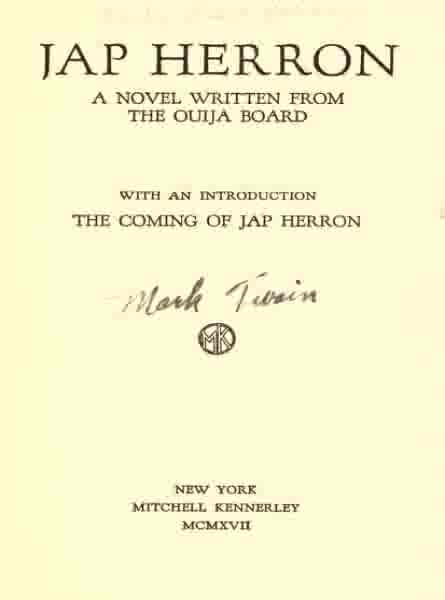
Mark Twain: Jap Herron: A Novel written from the Ouija Board

Seven years after his death, the medium Emily Grant Hutchings together with Lola Hayes, claimed that a book was dictated to them from American author, Mark Twain.

The books written by ghosts was published in 1917 after a two year communications through the ouija board according to Hutchings. The book came into notoriety when the New York Times published a piece on it, and many found the story indeed in Twain’s spirit.

Spiritism was at its peak and it was not an uncommon thing that books were written by ghosts and it was only one of a few books published in that year that came through a medium as a channeled text, although Mark Twain was definitely one of the more well known authors. 

However, the daughter of Mark Twain, Clara Clemens did not find this publication to be that of her father and tried to take the case to court. She managed to get Hutching to stop publishing the book and have copies of it destroyed. 

Check out further and read the book

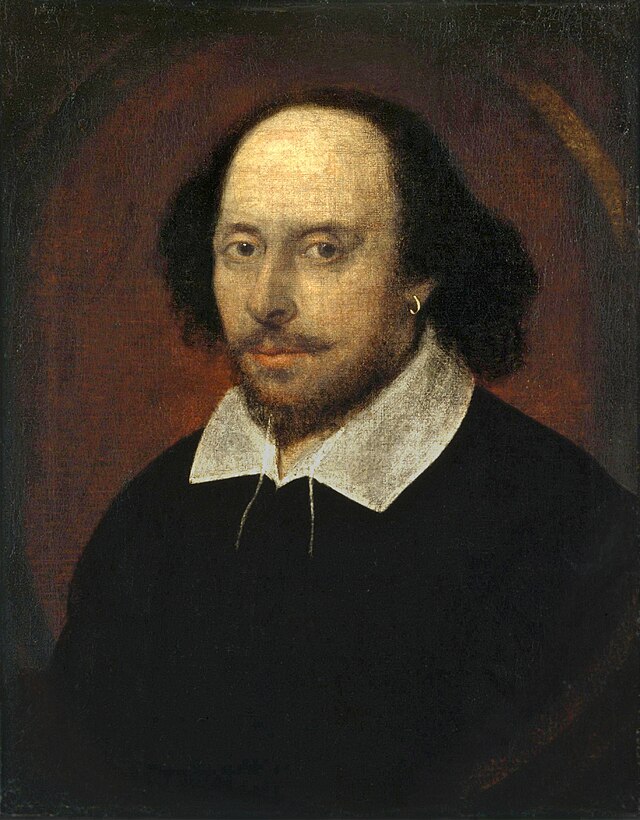
The Writings of Shakespeare’s Spirit

According to the library, there are in fact more than one book written by Shakespeare spirit like in the book Shakespeare’s Revelations and My Proof of Immortality. And in Shakespeare’s bibliography there are more than one volume of books written by ghosts.

The Ghost Writer: These are two of the books allegedly written by Shakespeare’s ghost: Shakespeare’s Revelations and My Proof of Immortality.

It was actually through the medium Sarah Taylor Shatford these works were produced. She was a poet herself, and published the first book of poems in 1919, filled with poems reflecting the wartime, and encouraged readers to follow a Christian life. 

Shatford said that she first encountered the voice of Shakespeare through the Ouija board, but later through a Clairvoyant, where he was basically talking through her. 

Check out the book: Shakespeare’s Revelations

This is not the only medium/writer that claims to have been the ghost writer of the great Shakespeare. In 1920, Gregory Thornton published Sonnets of Shakespeare’s Ghost. This piece of work was closer to Shakespeare’s voice we can find in his other writings from his living days. It turned out, Thornton was actually a pseudonym for a literature professor named T.G Tucker. 

Check out the book: Sonnets of Shakespeare’s Ghost

But it wasn’t only poems Shakespeare allegedly wrote from the afterlife. In 1916, an author by the name Lincoln Phifer self published Hamlet in Heaven, a sequel to Hamlet. Apparently, Phifer received the writings from Shakespeare like he would have a telephone call. 

Check out the Book: Hamlet in heaven : a five act play purporting to have been written by William Shakespeare by automatic writing through the hand of Lincoln Phifer

Ian Fleming and the James Bond Novel Written by his Ghost

In 1964, Ian Fleming, most known for the James Bond novels, died. But it wasn’t the last James Bond novel written under his name. In 1970, a manuscript from a middle aged woman named Vera came to the author’s brother, Peter Fleming’s attention. In 1970 a retired bank officer only known as Mr. A and his daughter, known as Vera, claimed to have transcribed works from the afterlife by more than one deceased authors. The most well known case and novel was called Take over: A James Bond Thriller and was apparently written by his brother’s ghost. 

Vera started corresponding with the dead once after her mother’s death and had allegedly no literary background or desire to write fiction. She continued to explore this medium and found her handwriting becoming her mothers, writing her mother’s words to her from beyond the ground. 

Her mother started to dictate late authors works of fiction, including Arthur Conan Doyle, H.G Wells and Ian Fleming. 

Peter Fleming read the script they claimed was that of his lost brother, but was very skeptical as it was nothing like his brother’s writing. Even though he was skeptical, he was fascinated by Vera and how she wrote on a pad during her seances. 

W. Somerset Maugham Ghost Novel

The work of Ian Fleming was not Vera’s last work though. In 1971, Vera started to transcribe a full length novel by W. Somerset Maugham. He was the author of works like Of Human Bondage, The Painted Veil and The Moon and Sixpence, and now, he had allegedly books written by his ghost.

It was given to Peter Fleming as well, who remarked how the style of the author had changed dramatically since his death. But before she finished transcribing the novel, her husband died. After this, she devoted her time exclusively to correspond through automatic writing with her deceased husband. 

Pearl Lenore Curran Channels the Writings of Patience Worth

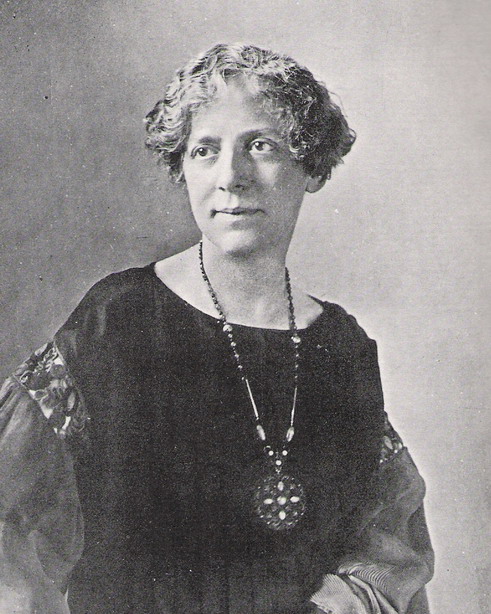
Pearl Curran and her books written by ghosts: (February 15, 1883 – December 2, 1937). A picture from around 1926. In addition to writing her books it was said the spirit of Patience worth also foretold Pearl’s death of pneumonia.

Patience Worth was allegedly a spirit contacted by Pearl Lenore Curran, a remarkable woman whose intriguing journey began in Illinois. However, she spent her formative years in Texas, which greatly influenced her character and perspective on life. Starting in July 1912, Pearl Curran, along with her friend Emily Grant Hutchings, embarked on an unusual adventure as they began using the Ouija Board, a mystical tool that they believed would help them communicate with the beyond. According to their accounts, they soon made contact with several spirits, each bringing their own unique messages and stories from the afterlife.

Among these spirits, it was on June 22, 1913, that the spirit known as “Pat-C” began to make her presence felt, captivating Pearl and Emily with her eloquence and personality. This marked the beginning of a profound exploration of spirituality and creativity, ultimately leading to the publication of numerous works believed to be dictated by Patience Worth through Pearl’s hand.

This purported relationship produced several novels, poetry and prose which Pearl Curran claimed were delivered to her through channeling the spirit of Patience Worth. This case is very different from the mediums claiming to channel the likes of Shakespeare, Fleming and other well known best sellers. This was a complete unknown female spirit with little details around her. It was said she was from England, but not specified any more than that. She apparently lived from 1649–94 and voyaged to America by boat. Pearl later alluded that Patience had actually been killed by Natives.

Pearl and Patience together wrote several novels including TelkaThe Sorry TaleHope TruebloodThe Pot upon the WheelSamuel WheatonAn Elisebethan Mask among some of their work.

She continued to communicate through Pearl until November 25, 1937. Psychologists and skeptics who have studied Curran’s writings are in agreement that Patience was a fictitious creation of Curran, a product of her imagination that reflected her personal struggles and desires. Although debunked in the eyes of many, the case of Pearl and Patience’s authorship continues to intrigue people, sparking lively debates about the nature of reality and the complexities of the human psyche.

Check out the Books: Hope Trueblood or The Pot Upon the Wheel

The Changing Light at Sandover by James Merrill and Spirits

The Changing Light at Sandover: Sandover received the National Book Critics Circle Award in 1983. It is also one of the books written by ghosts.

James Ingram Merrill (March 3, 1926 – February 6, 1995) was an American poet who won the Pulitzer Prize for poetry in 1977 for Divine Comedies. His work is divided into two main styles: the early polished lyric poetry and the later epic narrative about communicating with spirits and angels, titled The Changing Light at Sandover (published from 1976 to 1980). So in contrast to the many other channeled text, he was already a well respected author.

His first contact and writings from the afterlife was Voices from the Other World, first published in book form in The Country of a Thousand Years of Peace (1959).

The Changing Light at Sandover is a 560-page epic poem by James Merrill (1926–1995), widely regarded as one of his most significant works. Sometimes described as a postmodern apocalyptic epic, the poem was published in three volumes from 1976 to 1980. A lot of the installments in this work ended up coming from ‘the other side’.

With his partner David Jackson, Merrill spent more than 20 years transcribing purportedly supernatural communications during séances using a Ouija board, a process that not only influenced the structure and themes of the poem but also invited readers to ponder the boundaries between the living and the dead. The work intricately weaves together elements of mythology, philosophy, and personal history, reflecting Merrill’s keen interest in the nature of existence and the passage of time while simultaneously offering a commentary on the human condition through rich imagery and eloquent verse.

Check out the Book: The Changing Light at Sandover: Including the whole of The Book of Ephraim, Mirabell’s Books of Number, Scripts for the Pageant and a new coda, The Higher Keys

More like this

Newest Posts

References

Sonnets by Shakespeare…’s spirit? – The Collation

Jap Herron: A Novel written from the Ouija Board (1917) 

Book Review – Jap Herron