Tag Archives: 1600s

The Drummer of Tedworth

Advertisements

The story of the Drummer of Tedworth has often been called the first poltergeist in England that has been reported on in writing and the mystery surrounding it stands to this day. 

In March 1661 a man named John Mompesson sued a drummer called William Drury whom he meant made money under false pretenses. Drury was a traveling showman, drumming, juggling, dancing and other forms of “hocus pocus” up and down the entire country. 

Mompesson visited Ludgershall in Wiltshire when he met Drury who banged his drums and begged for money, annoying the people in the town so much that Mompesson took the case into his own hands and turned him in.  

He accused Drury for having false documents that allowed him to drum for cash and decided to sue him. Mompesson won the trial and Drury got his drum confiscated, something that Mompesson would regret dearly after. 

Drury was believed to be a sketchy type of man according to the finer folks in town. He was thought to be hanging out with a group of gypsies and there were rumors that he was involved in witchcraft. Something he would be forever remembered as, long after the drumming ended. 

The Haunted Drumming

Mompesson traveled back home and something strange awaited him there. The drum that were confiscated from Drury, ended up at his doorsteps the following April that year. It was then the strange banging noise started to haunt him. During the night he kept hearing the sound of drums and Mompesson was certain it was witchcraft from Drury. 

The drumming came from everywhere, from the walls, the ground, even from the roof. One night, Mompesson drew his pistol, chasing the sound like a madman, sleep deprived and scared of the haunting of his house. 

“The noise of thumping and drumming was very frequent, usually five nights together, and then it would intermit three. It was on the outside of the house, which is most of it board. It constantly came as they were going to sleep, whether early or late. After a month’s disturbance without, it came into the room where the drum lay, four or five nights in seven, within half an hour after they were in bed, continuing almost two. The sign of it, just before it came was … an hurling in the air above the house, and at its going off, the beating of a drum like that at the breaking up of a guard….”

A month passed and the sound of drums seemed to move from the room where the drum was placed into the childrens bedroom. The bedframes of the childrens bed were beaten, and they kept hearing a scratching sound from under their beds, leaving them shaken and frightened in their beds. 

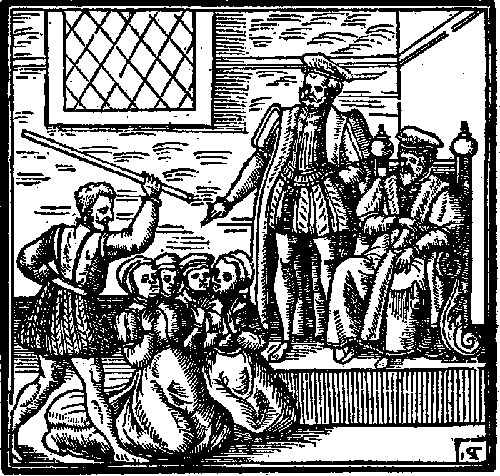
The Drummer of Tedworth: The devil and the drum, from the frontispiece to the third edition of Saducismus Triumphatus (1700).

The only break the family got from the alleged poltergeist was when Monpessons wife was in labor and the house stopped its drumming beat as she gave birth. But afterwards it came back, even more than before. 

It wasn’t just the drumming sound that haunted the house. Lights kept moving around without anybody touching them, staff and family members alike were lifted from their beds, and weird smells of sulfur came from everywhere and nowhere. And it wasn’t even only at nighttime the hauntings occurred either, but even in broad daylight. 

One time a servant claimed to have seen a moving board in the room. He asked the spirit to pass it to him, and the spirit listened. Then, they continued to throw it between them, back and forward around 20 times until the servant stopped after his master ordered him to. 

This continued for the next two years and the sound of drumming grew louder, not only confined to the house, but nearby villagers were woken from the spectacle from the house as well. And even visits from a priest didn’t help with the hauntings in the long run. 

The Drummer William Drury

So what happened to the original drummer, William Drury? He was arrested and sentenced to deportation in 1662. He confessed to the crimes of tormenting Mompesson and his family and being behind the paranormal stuff happening. But before he was deported and could be charged for any more, he escaped deportation and fled. 

But in 1604, he was brought back to court, this time because of witchcraft were he would once again be trialed as The Drummer of Tedworth. He was acquitted because of the lack of evidence, but because of a prior pig stealing debacle he was sentenced for theft and sent to the American colonies, never to be heard of again. 

The Book of Witchcraft

It was not only Mompesson himself that heard these drumming noises, but also his visitors claimed to have been bothered by the sounds. 

Joseph Glanvil published in 1681 a book of witchcraft after his death called Saducismus Triumphatus where the story of the Drummer of Tedworth is detailed. This was a book where he affirmed the existence of witches and dark magic and looked at any skepticism of this like blasphemy. It is also said that this particular book was a big inspiration and influenced the people during the Salem witch trials. 

In 1661 he visited Mompesson’s house in Tedworth in Wiltshire, England and heard the sounds himself. He also claimed to have heard additional scratching noises under a bed in the children’s room. 

Speculations of Fraud

There have been countless people that have tried to debunk the story of The Drummer of Tedworth since it was first heard of. Charles Mackay wrote about it all being a trick of the mind in Extraordinary Popular Delusions and the Madness of Crowds in 1841. Instead of it being a poltergeist at work it was simply Mompesson who was easily deceived by someone holding a grudge, something Drury himself confessed to. 

 In 1881 the American skeptic Amos Norton Craft said this about The Drummer of Tedworth: 

We are to remember also, that the house of Mr. Mompesson contained several servants who doubtless possessed a good degree of human nature; Mr. Mompesson had caused the arrest and imprisonment of a member of a band of gypsies, who were intensely enraged at him

Even Mompesson’s own children were believed to be behind the drumming noises and the culprit of The Drummer of Tedworth, especially his ten year old daughter as much of the mysterious sound came from her bedroom. 

“Mr. Mompesson perceiving that it so much persecuted the little children, he lodged them at a neighbor’s house, taking his eldest daughter, who was about ten years of age, into his own chamber, where it had not been a month before. As soon as she was in bed, the disturbance began there again, continuing three weeks drumming, and making other noises, and it was observed that it would exactly answer in drumming anything that was beaten or called for. After this, the house where the children were lodged out, happening to be full of strangers, they were taken home, and no disturbance having been known in the parlor, they were lodged there, where also their persecutor found them, but then only plucked them by the hair and night clothes without any other disturbance….

The Last Drumming Sound

So how did it all end for the family? Apparently it ended after Drury was sent away to the colonies and the drum burnt to a crisp. And the house, after two years of intense drumming by whoever the The Drummer of Tedworth was, go quiet again. 

More like this

Newest Posts

References

Drummer of Tedworth – Wikipedia 

The Drummer of Tedworth: Britain’s First Poltergeist – Burials & Beyond

The Drummer of Tedworth: a Halloween tale of witchcraft, demons and an extremely noisy ghost | Special Collections and Archives / Casgliadau Arbennig ac Archifau

https://www.jstor.org/stable/1917046?seq=1#page_scan_tab_contents

Drummer of Tedworth | Encyclopedia.com

Curse Of The Demon Drummer Of Tedworth | Spooky Isles

The November Ghost in Château de Bonaguil

Advertisements

Explore the breathtaking Château de Bonaguil in south-western France. Take a journey through history as you uncover this majestic 12th century fortified castle where a Woman in White is said to haunt the castle every November. 

Marvel at the majestic 12th-century fortress of Château de Bonaguil in Saint-Front-sur-Lémance in south-western France! Located near the Lot and Dordogne rivers, this spectacular castle is filled with tales and secrets of centuries past. 

The name comes from bonne aiguille (good needle), referring to the pointy rock it is built upon. From its impressive architecture to the stunning views of its surrounding landscape, Château de Bonaguil offers an unforgettable adventure into history and culture.

Read about more Haunted Châteaus in France.

A Brief History of the Château de Bonaguil

Château de Bonaguil was first built in the 12th century by knight Arnaud de la Tour of Fumel, who later became Lord of Bonaguil. During the Hundred Years War, the Lords of Bonaguil sided with the English and was a location that saw a lot of battle as the castle was taken and retaken by the fighting sides. 

The castle underwent renovations and reconstructions throughout its rich history – most notably, in the late 15th century by the House of Bérenger de Roquefeuil family, it was modified to become an impressive fortress with formidable defenses and it is one of the last fortified castles in France from the Middle Ages. 

Over the last century, the castle’s many towers and bastions have been restored and reinforced, giving visitors a chance to experience the castle’s fascinating heritage firsthand.

Paranormal Investigation of the Haunted Castle

The castle is old, has a bloody history as well as being riddled in centuries of ghost stories and legends. Haunted rumors were so many that a paranormal team once went to do a thorough investigation. People have reported about a burning sensation as well as pressures on their shoulders and temperature drops. 

They have also reported strange sounds around the castle grounds as well as there are photographs people mean captured the ghost on camera. Who can it be that is haunting the old castle?

Dame Blanche of Bonaguil

Château de Bonaguil is said to have its own unsettling paranormal story, in the form of the White Lady or the Dame Blanche in french. It is claimed that a ghostly figure appears both around the grounds of the castle, as well as wandering along its courts and galleries. 

The story of Dame Blanche is plentiful in French folklore and as a sight in old castles especially. In French mythology or folklore, Dames Blanches were female spirits or supernatural beings, comparable to the Weiße Frauen of both Dutch and German mythology.

November Hauntings

Legend has it that there’s a mysterious white lady haunting the Château de Bonaguil known as the Dame Blanch or Dame de Bonaguil. She is thought to be the ghost of Marguerite de Fumel who spent much time in the Château de Bonaguil to fix it up and keep it. 

Dame Blanche de Château de Bonaguil: Local scholar Max Pons has entrusted a photo of his wedding to the Chateau de Bonaguil and claims that a ghost appeared (outlined in red) at the time the photo was developed. © Photo credit: source

For unknown reasons she is said to return in the middle of the night during November month to haunt the castle. Can it be that the castle she spent so much time on were looted and robbed during the French Revolution?   

The Legend of Marguerite de Fumel

It is said that Dame Blanche once was a noble lady and daughter of Béranger de Roquefeuil, a cruel and vicious man that took great pleasure in executing people during the peasant rebellion. 

Marguerite de Fumel was sick of her tyrant father and wished to run away with her lover. But her father set her up for marriage with a wealthy and old count. The legend goes that she fled tearfully from the castle never to be seen alive again, only as the ghost haunting the grounds. 

We do know however that Marguerite de Fumel died in Paris after years of marriage in 1699. But the ghost story about the White Lady haunting the castle in November continues to persist. 

More like this

Newest Posts

References

Featured Image: Josep Renalias

Château de Bonaguil – Wikipedia 

Lot-et-Garonne. En novembre, la Dame blanche revient hanter le château de Bonaguil

Lot-et-Garonne : France 2 consacre un sujet sur les mystères du château de Bonaguil

The Headless Ghost of the Lady in White at Corfe Castle

Advertisements

Haunted by ghosts and other supernatural creatures, Corfe Castle has been the source of many spine-tingling tales and in the night the light of the Will-o’-the-wisp flicker as the ghost roams the ruins.  

Step into Corfe Castle and explore its notorious history of hauntings, ghastly apparitions, and spine-tingling folklore in the Isle of Purbeck in Dorset, England. 

With tales of mysterious spirits walking the halls, eerie sightings on misty mornings, and other supernatural phenomena, this castle is considered to be among the most haunted places in Britain.

The History of The Corfe Castle

Corfe Castle has been both a Saxon stronghold and a Norman fortress before it became a royal castle and was established by William the Conqueror on the steep hill way back between 1066 and 1087 and saw the wars, coronation and the ebb and flow of British history take form over the years. 

Read More: Check out all of the Haunted Castles from around the world

The castle was partially destroyed in the English Civil War in 1646 when the Parliamentarians laid siege on it. They toppled the once great castle and laid it to the ruins you see today on top of the hill. Corfe castle remains now a majestic ruin and an image of how medieval castle used to be.

The Strange Lights from the Ruins

When people have walked through the abandoned ruins stripped for its royal glory, they have also encountered strange things some claim have been of the paranormal sort. 

Read Also: The Pagan Haunting of Die Karlsteine in Osnabrück for more stories of Will-o’-the-wisp

More than once there have been reports of strange flickering lights moving like pixie light or Will-o’-the-wisp around the grounds at night. Some speculate that it is the soldiers from the English civil war, some say it is something more ancient. 

Will-o’-the-wisp: In Welsh folklore, it is said that the light is “fairy fire” held in the hand of a púca, or pwca, a small goblin-like fairy that leads lone travellers off the beaten path at night. As the traveller follows the púca through the marsh or bog, the fire is extinguished, leaving them lost. The púca is said to be one of the Tylwyth Teg, or fairy family. In Wales the light predicts a funeral that will take place soon in the locality.

The Starved Child Ghost in the Cottage

There have also been said that they have heard a child’s cry from inside a small cottage that is located next to the castle ruins and on the castle grounds. When checking both the cottage and the grounds, there have been no children to be found. 

People speculate that it is the child of the 4th Lord of Bramber, William de Braose who fell out of favor with the king and is most known for carrying out the Abergavenny Massacre where he lured three Welsh Princes and other Welsh leaders to their death. It is said that his wife and child starved to death at Corfe Castle. 

The young son William and his wife Maud de Clare were starved or possibly killed by King John in 1210 when they were held in prison in  Corfe Castle because of the crimes of his father as he fled the country and died in exile. 

The Lady in White of Corfe Castle

One of the most famous legends about Corfe Castle is that of the Lady in White. It is said that she wanders the castle grounds, clad in a long white dress. It is said to be the ghost of Lady Mary Bankes who fought through two sieges during the Civil War before being betrayed by her own in 1646 when the Parliamentary soldiers took the castle.

The most frightening thing about seeing her specter though is that she is said to be headless as she is drifting through the ruins. 

The Lady in White In Wales: Y Ladi Wen or Dynes Mewn Gwyn (Woman in white) is dressed in white, her presence most notable during Calan Gaeaf, the Welsh Halloween. Known for being a ghostly figure, sometimes terrifying, and is often invoked to caution children against misbehavior. She is characterized in various ways and may even seek help if spoken to. Y Ladi Wen is also associated with restless spirits guarding hidden treasures. Throughout Wales, places inspired by sightings and tales of Y Ladi Wen can be found. For example, Ewenny has White Lady’s Meadow and White Lady’s Lane, while St Athan also has a tradition associated with Y Ladi Wen.

Brave Dame Mary and her Defence of the Castle

Mary Bankes earned the title Brave Dame Mary and was a Royalist and defended the castle for three years under a siege during the English Civil War from 1643 to 1645 when she took control over the castle as her husband was sent to fight in London and Oxford.

Brave Dame Mary: holding the keys with Corfe Castle in the distance.

She defended the castle with her daughters, her servants and five soldiers against 600 troops as the Corfe Castle was the last garrison on the Dorsetshire coast belonging to the Royalists still standing.  

She survived the siege after being betrayed by one of her officers who led the Parliamentarians into the castle via a sally gate and she was forced to surrender. But she never gave up reclaiming the castle, and when she died in 1661, the ruins of the castle was bought on her behalf and went to her daughter, Joanna, who in turn passed it to her own daughters and the Bankes family held the castle for centuries before giving it back to the Dorset community.

Not even in her death she gave up on the castle and still roams the ground. Sightings of her have been reported by visitors and employees alike on coronation days and other special occasions. People swear they have seen her walking through walls and walking up staircases leading to nowhere, mostly by the castle gate before fading into thin air.

More like this

Newest Posts

References:

Lady Mary Bankes and the Siege of Corfe Castle 

Mary Bankes – Wikipedia 

Corfe Castle – Wikipedia

Corfe Castle is fourth most insta-worthy haunted building in England | Dorset Echo 

The ‘haunted’ history of Dorset’s Corfe Castle 

William de Braose, 4th Lord of Bramber – Wikipedia 

Black Magic at Pfaueninsel

Advertisements

On the beautiful island known as Pfaueninsel in Berlin, there are rumours about the soul of an alchemist doing black magic still remains. 

The Pfaueninsel or Peacock Island is a little island in the River Havel In Berlin. The island is a part of the UNESCO World Heritage Site because of the impressive Prussian architecture. The Pfaueninsel castle looks like something out of a fairy tale, and the island is a heaven for nature and animal lovers.

In the late 1600s the island was called Kaninchenwerder, or rabbit island after they set up a rabbit breeding station by  Elector Frederick William I of Brandenburg of the Hohenzollern dynasty. 

Did you know: The Hohenzollern family has a long history of being a cursed family, and many have claimed to have been haunted by the Lady in White. Read more

The Alchemist on the Island

Peacock Island: The whole island is adorned with prussian architecture//Source: Sebastian Rittau/wikimedia

The island was also a place where alchemist Johann Kunckel built a glass foundry where he produced artificial rubies known as gold ruby glass. The elector who he produced the red colored glass was so pleased with him that he gifted him the island.

Entering and leaving the island was made a punishale offens except for Kunckel himself, and the whole place became shrouded in secrecy. The black smoke and smell of chemicals from the islands made the farmers around the island suspicious and they started to believe it was witchcraft going on out there. 

 After he lost financial support after his patron, the Great Elector died, the foundry went up in flames and he took off to work for the Swedish king. It was very possible that the fire was arson. 

It is here the dark rumors of the island starts as it is said that Johann Kunckel played with black magic as well as chemistry in his laboratory before he set it aflame, making the island an inhospitable place to be after dark. 

It is said that the spirit of him is still wandering restless around as a black ghost with red glowing eyes. 

The Exotic Animals

After this the island was abandoned until the Prussian king Fredrick William II got the island and built the Pfaueninsel castle for his mistress. 

From then on they started putting excotic animals like alligators, buffalos, kangaroos, monkeys, lions and peacocks on the island. At its peak there were over 900 animals there of over 100 species. They stayed on the island until 1842 when they were transferred to the Berlin Zoo. 

Today the remains are a mixture of exotic birds, great architecture and legends about the black soul of a sorcery after witchcraft tainted the very earth. 

More like this

Newest Posts

References

The White Lady In Freihung

Advertisements

Stories about white ladies are plentiful in Europe, especially in Germany, and this particular The White Lady In Freihung ended up winning against the U.S Army. 

The main town in Freihung has a long history of Bavarian culture and the industry of mining lead. There is also a ghost said to be haunting the quaint little Bavarian town. 

This The White Lady In Freihung who is supposedly haunting the city center is said to be a middle aged woman who used the old mining tunnels to glide through, scaring people so much that in the end they destroyed the tunnels altogether. One hotel was greatly bothered by it and ended up taking matters into their own hands to rid themselves of the ghost. 

The Noble White Lady In Freihung

Who The White Lady In Freihung was is not certain, but there are tales that there used to be a castle at this place were it now was a hotel, although there are no direct historical proof of it. 

According to the legend, there lived a noble woman in this mysterious castle who died tragically, although her name and manner of death is not known as with the rest of the facts of the legend. 

According to reports, there are tales about seeing The White Lady In Freihung since 1625. Ghosts that are reported on wearing white are very common in ghost stories from Germany, especially if the ghost is linked to a noble house. This is the case with the haunting of the house of Hohenzollern as well as an example.

Read More:

She is said to haunt the grounds where the castle once stood. Archaeological findings of a castle named Freihung Castle, exist, but in another place than where the hotel is today, and it is unclear whether that has any connection at all.  

Today, most reports come from The Gasthaus Alte Post Hotel that they built over the underground mining tunnels. 

Weiße Frauen in Germanic Folklore

Why exactley is germanic ghost stories riddled with stories about the lady in white or as they are called in german, Weiße Frauen

In German legends and folklore the stories of the Weiße Frauen or White Women used to be a name meant to the elven-spirits and the stories of the light elves from pagan times and has probably evolved to refer to the female ghosts said to haunt castles, forests, homes and everywhere women have met a deadly end.

The Missing Castle: could the ghost of the Lady in White come from the remains of a supposed castle that used to stand in Freihung? Did the castle even exist?

Now the name is also used on women dying in grief, of sorrow or with an urge of revenge. It has spread throughout Europe and is an image with strong connotations, even today.

Even outside of Europe, there are tales about female ghosts clad in all white, from the Korean Virgin Ghosts to the vengeful spirit on the Onryo in Japan. 

The U.S Army on Ghost Hunt

The terror of The White Lady In Freihung got so bad that the local owners of the hotel called in the U.S troops to the The Gasthaus Alte Post Hotel where most sightseeings of her were reported. 

From 1945, the American army had a training center in Grafenwoehr, not far from Freihung. Elvis Presley was once stationed there. It is still used today as a training area by the army. 

The hotel owners were desperate by the 1970s and asked for their help and help they received. The army from the base came and used explosives to seal off all the tunnels under the hotel, hoping it would silence the ghost that supposedly walked underneath inside of the tunnels. 

The Haunting Continues

This was not enough to stop The White Lady In Freihung however, as she just finds new ways to move among the locals to scare them. And if we are to believe the stories, she is still wandering the streets in the city center of Freihung and showing herself in the rearview mirror of passing cars. 

More like this

Newest Posts

References

Featured image: Andrew McFarlane/Flickr

Ghostly encounters transpire close to Grafenwoehr | Article | The United States Army

The Haunted House of The Seven Gables in Salem

Advertisements

In the eerie mansion in Salem of The Haunted House of the Seven Gables, also known as the Turner-Ingersoll Mansion, discover what lurks in darkness and uncover secrets behind its perpetual terror.

Step inside The Haunted House of the Seven Gables and explore its halls of perpetual terror and darkness. The house is a 1668 colonial mansion in Salem Massachusetts, a place known for being a place of mystery and witchcraft.  

From ghostly figures roaming the corridors to mysterious tales of hauntings, prepare to discover what lurks in this fascinating haunted house.

“But as for the old structure of our story, its white-oak frame, and its boards, shingles, and crumbling plaster, and even the huge, clustered chimney in the midst, seemed to constitute only the least and meanest part of its reality. So much of mankind’s varied experience had passed there,—so much had been suffered, and something, too, enjoyed,—that the very timbers were oozy, as with the moisture of a heart. It was itself like a great human heart, with a life of its own, and full of rich and sombre reminiscences.”
― Nathaniel Hawthorne, The House of the Seven Gables

Nathaniel Hawthorne’s Novel

The House of the Seven Gables is a real house that was known as The Turner House or the Turner-Ingersoll Mansion before the novel inspired by it came out. The thing that made it famous was the American author Nathaniel Hawthorne when he wrote a gothic novel inspired by the house in the 1850s. 

Nathaniel Hawthorne: (July 4, 1804 – May 19, 1864) was an American novelist and short story writer. His works often focus on history, morality, and religion. He wrote the novel The House of the Seven Gables inspired by the house in Salem Massachusetts he used to visit.

The novel follows a New England family and their home where he explores guilt, retribution and atonement. The story is filled with hints at the supernatural and witchcraft and influenced horror writers like H.P Lovecraft. 

Read Also: Find some novels about witchcraft like The House of the Seven Gables: Here

Hawthorne, most known for the novel The Scarlet Letter, was himself born in Salem and grew up hearing stories about the house. His great-great-great grandfather was one of the judges in the Salem Witch Trials which the house also had a connection to. 

Explore the Legends of The Haunted House

From legendary tales of cursed spirits trapping guests to mysterious hauntings that have been reported through the ages, explore the legends that make The Haunted House of the Seven Gables one of the most haunted locations in the world. Learn about the curses that lurk in its dark corners, and find out about the secrets this house has been concealing for centuries.

The house was built as a place for peace and quiet, but ended up being in the center of one of the most notorious witchcraft trials in 1692 to 1693 were over 200 people in the puritan New England town were accused of witchcraft. 

John Turner Jr. lived in the house at the time with his sisters and wanted to protect them from the hysteria of the locals that accused their neighbors, their friends and family for being witches and in league with the devil. A part of the protection was to build a hidden staircase with the fireplace. 

In later years there were also uncovered a hidden dining room and accounting room to hide if any in the family were ever accused of witchcraft. 

The Salem Witch Trials

The Salem Witch Trials was a product of mass hysteria that happened in the British Colonies as well as in Europe at the time. It all started when two small girls started having these fits of contorting bodies, making strange noises and speaking gibberish. 

The Salem Witch Trials: A series of hearings and prosecutions of people accused of witchcraft in 1692 and 1693. More than 200 people were accused. Thirty people were found guilty, 19 of whom were executed by hanging (14 women and five men). One other man, Giles Corey, was pressed to death after refusing to enter a plea, and at least five people died in jail.

This type of affliction seemed to spread to other girls and they were all diagnosed with witchcraft. And when the girls were interrogated, they started naming names about who cursed them, and a witch hunt began. 

A total of 14 women and 6 men were executed in the witch trials by hanging, one by being pressed to death. Another 5 died while in prison. 

Although the Turner family remained safe during those trials, the imprint and trauma of the witch hunt remained in all of Salem and ringed back for generations, something Hawthorne also discusses in his book. 

The Ingersoll’s and Hawthorns Ancestral Sins

After being in the Turner family for 3 generations it was sold to Captain Samuel Ingersoll as there were no remaining heirs. He had a daughter named Susannah, a cousin of Nathaniel Hawthorne who knew well and would come to hang out with. 

When inside the house, Hawthorne was inspired by the house and its quirky features and old history. There they also talked about their families involvement in a dark past. Hawthornes involvement in the Salem Witch Trials and Ingersoll’s involvement in slavery as an example. 

Susannah even advised him to put a W in his last name, which originally was Hathorne, to remove himself from his ancestral sin. Hawthorne often wrote about his guilt for his family’s involvement and in his most famed work, The Scarlet Letter, he even opens up with an analogy for it all. 

Is the House of The Seven Gables Haunted?

Mystery and terror await you as you attempt to uncover the secrets of The Haunted House of the Seven Gables. If you ask many of the tour guides, they will be quick to reply with a no. However, there are many who tell about another side of the story. 

One of the ghostly silhouettes that are reported to be seen is that of Susannah Ingersoll. There are not only one, but many paranormal activities that are said to take place within the old house. 

Today the dark wooden house is made into a museum and gets plenty of visitors that are looking for something paranormal, and many claim to have found it. A psychic visiting the house claimed to see a young boy play near the gables as well. Little footsteps can be heard from the attic followed by giggles and laughs.

A man can be seen climbing up and down the infamous staircase and lights are turning on and off and even the water faucets have a habit of turning on and on on their own. 

so, would you like to visit and see for yourself whether or not the house is haunted?

More like this

Newest Posts

References

House of the Seven Gables – Salem Ghosts

House of the Seven Gables – Wikipedia

The Haunted House of the Seven Gables

Edinburgh Castle Ghosts and Legends

Advertisements

Witches, dragons and ghosts, Edinburgh Castle are said to have it all. The sound of bagpipe and drummers can be heard without anyone playing, and those accused for witchcraft as well as prisoners of wars are said to haunt the old castle.

Although the castle as we know it today wasn’t built until the 12th century, the Castle Rock has been lived on for more than 2000 years. It is built on top of an extinct volcano formed 350 million years ago. The castle itself has been built and rebuilt over the years but you can still find traces of the castle that are over 900 years old. 

It is also the place in Britain that has been attacked most times with a record of 23 attempts to take over the castle. It has a story filled with wars, bloody battles and tortured, and is said by many to be a haunted landmark that watches over the old town. 

Edinburgh Castle: There are so many alleged ghost stories coming from Edinburgh Castle perched on Castle Rock. Among them is the Grey Lady, the missing Piper and little drummer boy. There are also ton of older legends about dragons, black hounds and ties to ancient romans and Arthurian legends. How much of it is really true?

History of Edinburgh Castle

Nine Maidens: Morgan le Fey is said to be one of the Nine Maidens in Arthurian legend. By Anthony Frederick Sandys from 1864.

The castle holds many legends to its name. According to the origin story, the first castle that was built on the hill was named The Castle of the Maidens, built as a shrine to the Nine Maidens, a mysterious and old cult of religion that can be found throughout many countries in Europe. One of these supposed Nine Maidens in Scotland are often attributed to being Morgan le Fay, a mythical figure in Arthurian legend that are said to hold magical abilities.

Even if there are no real substance to her being a real figure, the legends of fantastical magical things keeps being told around the castle grounds. Another legend from older times is the dragon. As far back as 1558 there were several reports about a dragon that was supposedly seen on one of the biggest towers at the time.

Even if there are no more reports about dragon sightings, there are still many urban legends about the castle that lives on to this day. There is also an urban legend that if students pass through the castle gates, they will never pass their exams. Many students are following this rule, and never visit the castle during their stay here, just in case.

Ghosts of the Castle and Haunted Legends

As well as fantastical rumors about dragons and mythical sorceresses, there are legends of ghosts and hauntings. Among the many haunted rumors of the castle, there are reports of the strange sound of drums and music. You can also hear the vague knocking sound you can never be sure to be the wind or something more ominous. 

People report of A sensation of being touched, pushed as well as a feeling of dread and despair can follow you when walking along the stony walls. There are also reported sightings of curious lights and flaky figures in the shadows. It is said a black dog is haunting in connection to the pet cemetery on the castle grounds as well as a man in an apron. But there are some ghostly legends more told than others:

Ghosts from the Witches Burned at the Stake on Castle Ground

One thing the castle was in the lead for was for burning more witches during the 16th century than the rest of the country. Over 300 women were tortured before being burned at the stake at Castle Hill, everything from simple peasants to noble women.

Among them, Dame Euphane MacCalzean, accused of witchcraft in the North Berwick witch trials. She was found guilty and burnt alive on 25 June 1591 on the southern slope of the Castle Hill below Edinburgh Castle.

The North Berwick Witch Trials: Dame Euphane MacCalzean was a notable figure in the North Berwick witch trials of 1590-1591, one of Scotland’s most infamous witch hunts. A well-educated woman of noble birth, she was accused of conspiring with witches to raise storms against King James VI’s ship during his return from Denmark.

Some believe the spirits of these women linger still, their pain echoing across time. if we are to believe the haunted legends, there are perhaps one or two of the accused witches that are haunting the castle.

Red More: Check out Agnes Sampson — The Wise Wife of Keith to read about another haunt from one of the victims who were convicted and killed in the North Berwick Witch Trials.

The Lone Piper Boy Playing Under the Royal Mile

Walking in the historical city of Edinburgh, the sound of bagpipes is heard on every occasion. On a random street corner, from the tourist shops, during a parade or as a part of the historical landmarks. Bagpipes are the thing, perhaps even from the ghosts of the city.

The Piper: The Bagpiper by Johann Christoph Erhard.

The most famous ghost that is said to haunt the castle is the piper that was sent down to explore some tunnels they found ran under the castle towards Holyrood Palace a couple of hundred years ago. A young and small boy that would get through the network of tunnels. 

According to the legend, the regimental piper played his pipe as he ascended down the Royal Mile, stretching through the old town from the castle. Halfway down the mile to Tron Kirk the music suddenly stopped.

A search party was sent down to investigate after the music stopped, but the piper was never found again, and they sealed the tunnel’s shut so no would could get in… or out… According to legends though, he was certainly heard. He is said to walk the royal mile to this day and the unmistakable sound of bagpipes can be heard from underground. 

So perhaps walking down the Royal Mile, the sound of the bagpipes echoing throughout the whole city might as well be from the ghost piper?

The Headless Drummer Boy

Another ghost that has been sighted on several occasions is that of a little drummer boy without a head. He was first seen in the central courtyard of the castle in 1659, a year after Charles I was beheaded. He was walking in circles, drumming his drum playing an Old Scottish war tune. When the castle servants looked closer, they saw that he didn’t have a head. It is said that he drummed all through that night and continued until the morning. 

Although he has not been seen again, he is considered a bad omen if he ever appears again. The same year he showed himself, Oliver Cromwell invaded Scotland and laid siege to the castle. Is this enough to give credit to the legend?

Even though no one has seen him since that fateful night, the servants working at the castle have throughout the years claimed to have heard his drumming in the quiet hallways of the castle from time to time. Who knows… Perhaps the next time someone sees the drummer boy, the castle will once again come under attack?

The Grey Lady Haunting the Halls of Edinburgh Castle

A mysterious lady has been reported staying in the older parts of the castle. Sometimes she is just seen wandering around in her 16th century dress and sometimes she is reported to weep. 

Janet Douglas: Lady Glamis was a noblewoman accused of witchcraft, who was executed by burning during the reign of James V of Scotland.

There are several real nobles she is thought to be: The first one is Janet Douglas or Lady Glamis. She was accused of witchcraft and burned to the stake outside the castle on July 17th in 1537 with her son watching it all. It is said that even back then, they knew that the accusations were wrong, but King James V held a grudge towards her brother and took it out on her. 

Janet also haunts Glamis Castle as The Grey Lady of Glamis, wandering through the family chapel and clock tower.

Read Also: Check out Lady Janet Douglas, Ghost of Glamis Castle to read more about Lady Janet Douglas and how she is said to haunt the Glamis Castle as well.

Others think that the Grey Lady haunting Edinburgh Castle could be the French Marie de Guise, mother of Mary Queen of Scots. She died a catholic and the Protestant nobles held her body inside the castle for nine months before returning her to France, wrapped in a cloth inside a lead coffin. She was then secretly taken to France for a proper burial in the Convent of Saint-Pierre in Reim.

The Prisoners in the Dungeon and Towers

There are also the castle dungeons where they housed criminals for centuries that are supposedly haunted. There were many wars that the castle dungeon saw: the Seven Years War, The American War of Independence and the Napoleonic Wars just to mention a few.  

According to legend, from one of these wars, the ghost of a prisoner is said to haunt the castle to this day. In 2003, construction crew members restoring the Queen Anne Tower claimed ghosts of prisoners from the Napoleonic Wars harassed them and refused to work there. Who knows what they really saw, but there are certainly rumors. The hazy blue orbs mentioned earlier are said to appear more frequent in this tower than in the rest of the castle.

But who was this prisoner? The legend tells of a prisoner who tried to escape in a wheelbarrow filled with dung that were taken out of the castle. The cart was dumped over the high castle walls and the prisoner broke his neck when he hit the rocky ground below. He now haunts the place and tries to push visitors down Castle Rock. What gives him away is the lingering smell of dung in the air. 

The Legends Living on in Edinburgh Castle

That was some of the ghosts that are said to be haunting the castle. Old places like these will have its history, and through all the bloodshed and Even today, myths surround Edinburgh Castle. Students avoid crossing its gates, fearing it may curse their exams still to this day.

But it’s the ghostly activity that chills the hearts of visitors. Phantom touches, flickering lights, and shadowy figures have been reported. The sounds of drums, faint knocking, and whispers stir something restless in the castle—perhaps spirits that will never truly leave. legends surrounding the place since the first people arrived on the rock, the place will hold its stories.

More like this

Newest Posts

References

The Most Haunted Places in Edinburgh’s Old Town – Dickins

Edinburgh’s most haunted locations | The Scotsman

The Headless Drummer Boy – Folklore Scotland

Edinburgh Castle Ghosts

Facts, Fiction And Urban Legends About Edinburgh Castle

Ghosts of Edinburgh Castle

The Most Haunted Place in Scotland | Ghosts of Edinburgh Castle | My Macabre Roadtrip 

Spooky sightings at Edinburgh Castle and the ghosts that are claimed to haunt the halls 

Edinburgh Castle Ghosts – Is Edinburgh Castle Haunted? – Wandering Crystal 

The Poltergeist of Greyfriars Kirkyard

Advertisements

Tucked away in the Old Town of Edinburgh, the Greyfriars Kirkyard houses even the restless spirits of the locals. Even a poltergeist known as George Mackenzie.

Cold spots, white figures behind the graves and knocking noises from below the ground, the reports about Greyfriars Kirkyard being haunted are endless. A haunted cemetary is a must for an old town like Edinburgh and just at the end of George IV Bridge by the Museum of Scotland you will find Edinburgh’s one. At Greyfriars Kirkyard the visitors will leave wondering if it was just the wind or something more. 

The cemetery was built in 1562 by Mary Queen of Scots, also known as Bloody Mary throughout history. It is now one of the main attractions on the many haunted bus rides you can jump on in the old town. For good reason if we believe the locals. 

Advertisements

Even today there is gruesome stuff going on in the Greyfriars Kirkyard. Edinburgh was a notorious place where grave robberies of bodies happened as the demand for fresh flesh for the medical schools were in high demand. Something of the past, there are not many cases of grave robbery as this today. But as recently as 2003 two teenagers were arrested for grave robbery as they cut the head from one of the corpses and used it as a glove puppet. 

Famous Graves

Many famous and notable residents of Edinburgh are buried in this place, including Hames Hutton, Robert Adam as well as perhaps the most famous local, the dog Greyfriars Bobby. 

Greyfriars Bobby: Edinburgh’s most beloved dog, Bobby is laid to rest in the cemetery.

Greyfriars Bobby was a dog so loyal to his master that he never left his side, even in death as he watched over his master’s final resting place for 14 years until he died himself and is now buried beside him in the Greyfriars Kirkyard with the queen’s permission. 

Even if they weren’t famous when they were alive, J.K Rowling made many famous today as she is said to have been inspired by the names on many of the tombstones. 

Many ghosts have been reported on this graveyard from when it was first built, however, today the Mackenzie Poltergeist is perhaps the most famed one. 

This is not the only supposed haunted graveyard we have written about. Check out these ghost stories set in cemeteries as well:

Ghost stories from cemeteries:

Advertisements

Bluidy Mackenzie

In 2000 the spiritualist Colin Grant tried to lay one of the restless spirits to rest in the cemetery. A few weeks later he died of a heart attack. After his death, many attributed this death to be caused by the poltergeist of the cemetery, Bloody Mackenzie. 

Since the 19th century children believed that there was something off with this particular grave at Greyfriars Kirkyard. They used to run up to the keyhole and yell:

“Bluidy Mackenzie, come out if ye daur, Lift the Sneck and draw the bar!”

George Mackenzie was known as Bluidy (Bloody) Mackenzie when he was still living and was not remembered as a kind man. He worked as a lawyer for the King and imprisoned around 1200 protestant rebels that refused to pledge their allegiance to the catholic king. 

Advertisements

The nickname comes from the horrible torture he made the prisoners he held captive in an area in Greyfriars Kirkyard known as the Covenanters Prison. It was an open area closed off by the city wall. Hundreds of people died when they went without water, food and shelter from the weather.

It is said that by 1679 there were only 48 Covenanters left alive with the rest heads on spikes along the gate.  

Although Mackenzie ran away to England and died there, he was sent back after his death. After his death he was laid to rest in a mausoleum located on the same place where so many of his victims met their unfortunate end. 

The Black Mausoleum

Apparently the activity around the mausoleum never seems to rest. Dead animals turns up around it without an obvious cause of death and mysterious fires are also often blamed on the strange activity that seems to happen around the Black Mausoleum in Greyfriars Kirkyard. 

The Black Mausoleum: The tomb of ‘bloody’ George Mackenzie in Greyfriars Churchyard from the 1840s.

The story is that a homeless man seeking shelter from the weather broke into the Mackenzie mausoleum known as the Black Mausoleum and disturbed the spirits there, making a poltergeist angry and releasing its fury. Allegedly as soon as the homeless man placed his hand on the grave the floor opened underneath him and swallowed him whole as it dropped him into a grave of plague victims.  

Another version of the story is a criminal that hid inside the mausoleum for six months. John Hayes had apparently gone mad inside the mausoleum he only left to scavenge for food occasionally. According to him, the coffins in the mausoleum moved all on their own and he could hear Mackenzie turning inside his coffin. 

It was also here the teenagers aged 15 and 17 broke in and desecrated the corpse inside. Apparently they are rumored to even have drunk wine from the skull after they cut off the head. This incident was one of the things that made the cemetery and the Black Mausoleum famous

The Poltergeist of the Cemetery

Since then, reports of scratches, bruises and burns on people that have been there as well as people collapsing for no apparent reason in the cemetery. They claim that between 300 and up to 500 guests from the 90s to 2006 felt like they were attacked by this poltergeist. 

Advertisements

More like this

Newest Posts

References

Featured Image: Harry McGregor/Source

The Most Haunted Places in Edinburgh’s Old Town – Dickins

A Guide to Haunted Edinburgh | Authentic Scotland

Haunted Edinburgh | 23 Mayfield

Meet the Mackenzie Poltergeist of Greyfriars Kirkyard – Icy Sedgwick

The Story that Inspired The Hound of the Baskervilles

Advertisements

Did you know that the famous Arthur Conan Doyle book about Sherlock Holmes: The Hound of the Baskervilles was based on a true legend? The legend about the evil Squire Richard Cabell and his hounds are still haunting the moors in Devon.

When Sir Arthur Conan Doyle stayed at the Duchy Hotel he heard the story of the evil Squire Richard Cabell that lived in the 1600s around those parts in Devon. This led him to write his famous story: The Hound of the Baskervilles which is the third of the four crime novels written by him about detective Sherlock Holmes. This installment of the detective turned out to be one of the most liked and popular book of Sherlock Holmes.

  • The Hound of the Baskervilles is not the only book that based itself on a true legend. Read here about how a shipwreck in Whitby inspired parts of Dracula in the MoonMausoleum.

The Legend of Richard Cabell

The legend tells of the local Squire that lived in the village of Buckfastleigh in Devon, England with a lot of rumors surrounding him. Richard Cabell lived for the hunt and was notorious for his pack of black hounds that were said to be extremely vicious, as the owner himself. 

Sherlock Holmes: Illustration to The Hound of the Baskervilles.

He is though to be the inspiration for Arthur Conan Doyle to the character of Hugo Baskerville in The Hound of the Baskervilles and is remembered by Devon as: “the first of his family to be hounded to death when he hunted an innocent maiden over the moor by night”.

There are many rumours about him as a person and perhaps not all true. Not only did Richard Cabell have a legend about him having sold his soul to the Devil for immortality, but there was also rumours that he murdered his wife, Elizabeth Fowell as the locals wouldn’t put it past him knowing he was an extremely vicious man. 

It is said he accused her of adultery and she tried to flee from him by running away. She was recaptured though and brought back were he murdered her with his hunting knife. This rumoured is to be believed if we ignore the fact that his wife outlived him by 14 years.

In any case if he did or didn’t kill his wife or it was mostly rumours that came from his unpopular political believes, he was described as a monstrous man and he only cared about hunting with his hounds and the other locals shied away from him and his hounds. After he died he was remembered as: Dirty Dick, feared as well as hated by the locals. 

Haunting Hell Hounds

Hell Hounds: Illustration of the black hound in The Hound of the Baskervilles.

On the 5th of July in 1677, Richard Cabell died, but it was not the last the people of Dartmoor saw of him according to the legend. The night of his burial a pack of black hounds like he used to own and hunt with was seen on the moor, howling at his tomb. 

From that night, they were often seen together, the phantom hounds and his ghost, mostly on the anniversary of his death. He would be seen leading the hounds back across the moor. 

“It came with the wind through the silence of the night, a long, deep mutter, then a rising howl, and then the sad moan in which it died away. Again and again it sounded, the whole air throbbing with it, strident, wild and menacing.”
― Sir Arthur Conan Doyle, The Hound of the Baskervilles

The Devon Yeth Hound

In Devon folklore, it is often included a fearsome dog known as the Yeth hound and black hounds or Hell Hounds are often found in European Doom Mythology and used as the base of the mystery in The Hound of the Baskervilles.

The Malcanis Guarding the Fortress

In Akershus Fortress in Oslo, Norway, there are rumours about something strange haunting the former castle. There is a legend of a ghost of a dog haunting the place, called the Malcanis, or Evil Dog as it means.

This is one of the reasons why seeing someone with big black dogs could look so scary for people from Devon. The legend of the Yeth Hound is said to be a headless dog, often thought to be the spirit of an unbaptised child. The black hound that roams through the woods and over the moors at night making wailing noises much like the hounds of Richard Cabell or the mysterious hound we meet in The Hound of the Baskervilles.

To get peace from his ghost, the villagers built a large building on top of Richard Cabell’s tomb to stop him from getting out. It looks almost like a small prison with iron bars. This seems like a dramatic thing to do just because of some rumours.

Even with these measures, people have reported of strange stuff happening around the building as well from the inside. 

More like this

Newest Posts

References

The viking ghosts which still haunt this bloody corner of Devon and 11 other spooky legends you have never heard of

Richard Cabell – Wikipedia

https://web.archive.org/web/20150923184203/http://www.bfronline.biz/index.php?option=com_content&task=view&id=103&Itemid=9

The Mistletoe Bough – The Bride in the Chest

Advertisements

The Legend of the Mistletoe Bough or the Mistletoe Bride is a ghost tale that many big houses claim as their own. Bramshill House is one of them, and the story of the dead bride trapped in the chest haunts the already haunted place. 

Buried Alive: On Christmas Day the tale of the Mistletoe Bride that gets trapped in a chest and dies is told and retold throughout England.

A girl will always remember her wedding day, and making the wedding be held on Christmas day will surely make it easier to remember the wedding anniversary. But more people will remember it, if the bride turns into a ghost. 

This is the case of the bride of Bramshill House in Hampshire, one of Britain’s most crowded paranormal places. And although many big houses tries to claim the ghost of the bride in the oak chest as their own, Bramshill could be one of the choices with no less than 14 ghosts they claim wander there. 

Deadly Hide and Seek

In the early 17th century a girl named Anne Cope was to be married in this house. Anne is the name in some accounts, Genevre Orsini in others. English in some accounts while she was believed to be Italian in others. What remains the same is that it was Christmas Day and everyone was in a festive mood. She and her husband, Sir Hugh Bethell celebrated after having taken their vows, and as the old custom went, she was to be escorted to the marital bed.

Advertisements

But before the party was over, the bride wanted to play a round of hide and seek, where the target to be found was her. And after a five minute start the search began, but to no avail.

Searching the whole house, the guest came back empty with no sign of the bride. Perhaps it was a trick from the bride? Could she just be exceptionally good at this game? But as time went on, the innocent prank she could have played on the guest turned into a dangerous one. 

Many believed the bride had fled from her marriage. Her husband Hugh on the other side, spent decades searching for his bride that was lost. It was only after fifty years the mystery surrounding her disappearance came into light, and then her haunting had already began.

It is not the only ghost story from England that starts at a wedding during Christmas.

Read the full story of Fatima’s Harp

Hugh, now an old man, was in the attic, still searching. Having been through the mansion so many times, one should have thought there could be no more things to be found. But then, when knocking on some oak panelling, a secret door he didn’t know about suddenly opened. Inside the door was a room with a wooden chest. It was locked. Inside the chest when he finally got it open, the remains of the bride he had hoped to spend his life with, still in her wedding dress, holding her bouquet of wilted flowers, she had been by his side all this time. 

In the lid of the chest the bride had been trapped in, there were signs of nails scraping in her dying efforts to escape, to get out, but she never would. 

The Bride in the Oak Chest

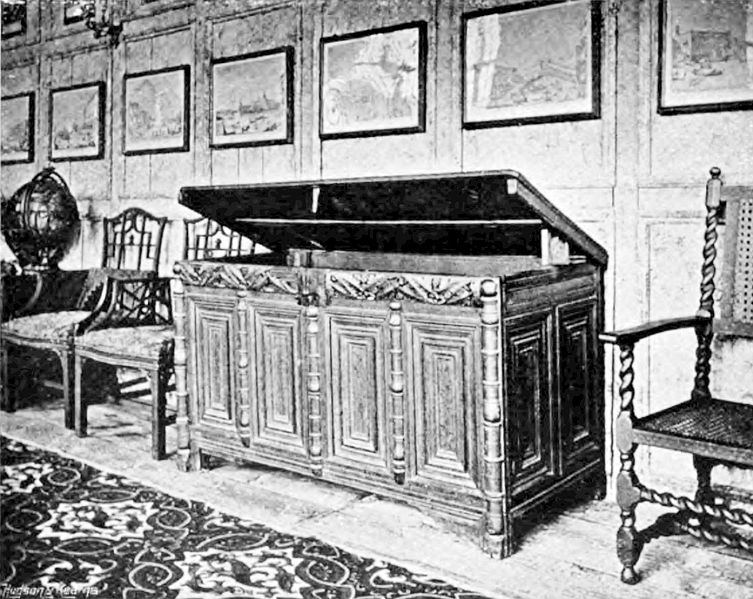
The Chest: Although the original chest was removed in 1812, there is always a chest in the houses claiming the ghost.
Photo: Country Life page 435 by Edward Hudson (1854–1936

So many accounts of the white lady has been reported at Bramshill House. Even Michael the first of Romania asked to move room after the white lady kept passing his room during his stay there. And you can sense her arrival by scent, lily of the valley, which was Anne’s favorite. 

Not so many remember her wedding, her death, all in one. She is remembered as much, although her real name is disputable, the name Mistletoe Bride remains. Poems, movies, books and folklore retells about the young bride in the oak chest. 

The same story was retold by Susan E Wallace in 1887 as ‘The Old Oak Chest’ and by Henry James as ‘The Romance of Certain old Clothes’ in 1868. The old tale also made it onto the silver screen in 1904 when Percy Stow made the short film ‘The Mistletoe Bough.’

And every Christmas, her death is retold again and again, without her ever being found alive. 
“Oh sad was her fate! In sportive jest,
She hid from her Lord, in an old oak chest.
It closed with a spring and her Bridal bloom,
Lay withering there in that living tomb.”

The Mistletoe Bough by Thomas Haynes Bayley
Advertisements

More like this

Newest Posts

References

The Bramshill House Bride, or the Legend of the Mistletoe Bough

https://books.google.no/books?id=dogvornHYEAC&pg=PA33&lpg=PA33&dq=ginevra+chest&source=web&ots=TG2RwFaz3b&sig=SYANGBWZkYlcjQbqizM6iAESkRo&redir_esc=y#PPA33,M1