


In the rural areas of Derry, Northern Ireland, there is a small dolmen grave under a hawthorn tree. It is said to be the grave of the vampire king, Abhartach who is said to still be lusting after blood.
Ireland’s ancient hills and mossy graveyards are no strangers to ghost stories and restless spirits. Yet among these tales of banshees and fairies lies one of the island’s oldest, darkest legends — the story of Abhartach, a tyrant chieftain whose insatiable thirst for blood refused to end, even in death.
Thought by some folklorists to be Ireland’s original vampire myth, Abhartach’s grim story predates Bram Stoker’s Dracula, and may well have been its inspiration.
The Tyrant of Slaghtaverty
According to legend, Abhartach was a cruel and malevolent chieftain who ruled in what is now Slaghtaverty in the parish of Errigal in Derry, Northern Ireland. Although he is remembered as a vampire, the name and description of him is much closer to a dwarf. As the name suggests, he might have been remembered for his height.


He is said to have lived in the 5th or 6th century, at a time when the Glenullin area of Ireland was a patchwork of small kingdoms of tribal warlords were the mysterious druids still lived and practiced their magic and when the catholic saints started settling on the emerald island.
Feared by his own people, he was said to possess dark powers and a fascination with the occult. Through his practice of dark magic, he killed his subjects for fun. His tyrannical ways became so unbearable that local warriors, desperate for relief, conspired to kill him.
In one version of the tale, a neighboring chieftain named Cathán rose up against Abhartach and struck him down, burying him in a standing grave, marked by a solitary stone. Burying in a standing position was a custom at the time for high-ranking chieftains. But peace would not come so easily.
In other versions his first death was through no fault but his own and he died when he was stalking his wife. He was a jealous man and trusted no one. He thought she was having an affair and crept on the ledge outside of the castle to the window outside her bedroom. He slipped and fell to his death and they quickly buried him for the first time. But it would not be his last.
The Undying Menace
The day after his burial, Abhartach returned — clawing his way out of the earth, demanding blood from his terrified subjects to collect in a bowl for him to consume. In some versions of the legend, his subjects were so afraid of him and submitted to him, making blood sacrifices to him, waiting for someone to save them.
Again, Cathán slew him, and again, Abhartach returned. It was then the people sought counsel from a druid or wise elder who revealed the grim truth: Abhartach was no ordinary man, but one of the neamh-mairbh, the undead. In more modern retellings of the story it was a Christian Saint giving the solution to the undead.


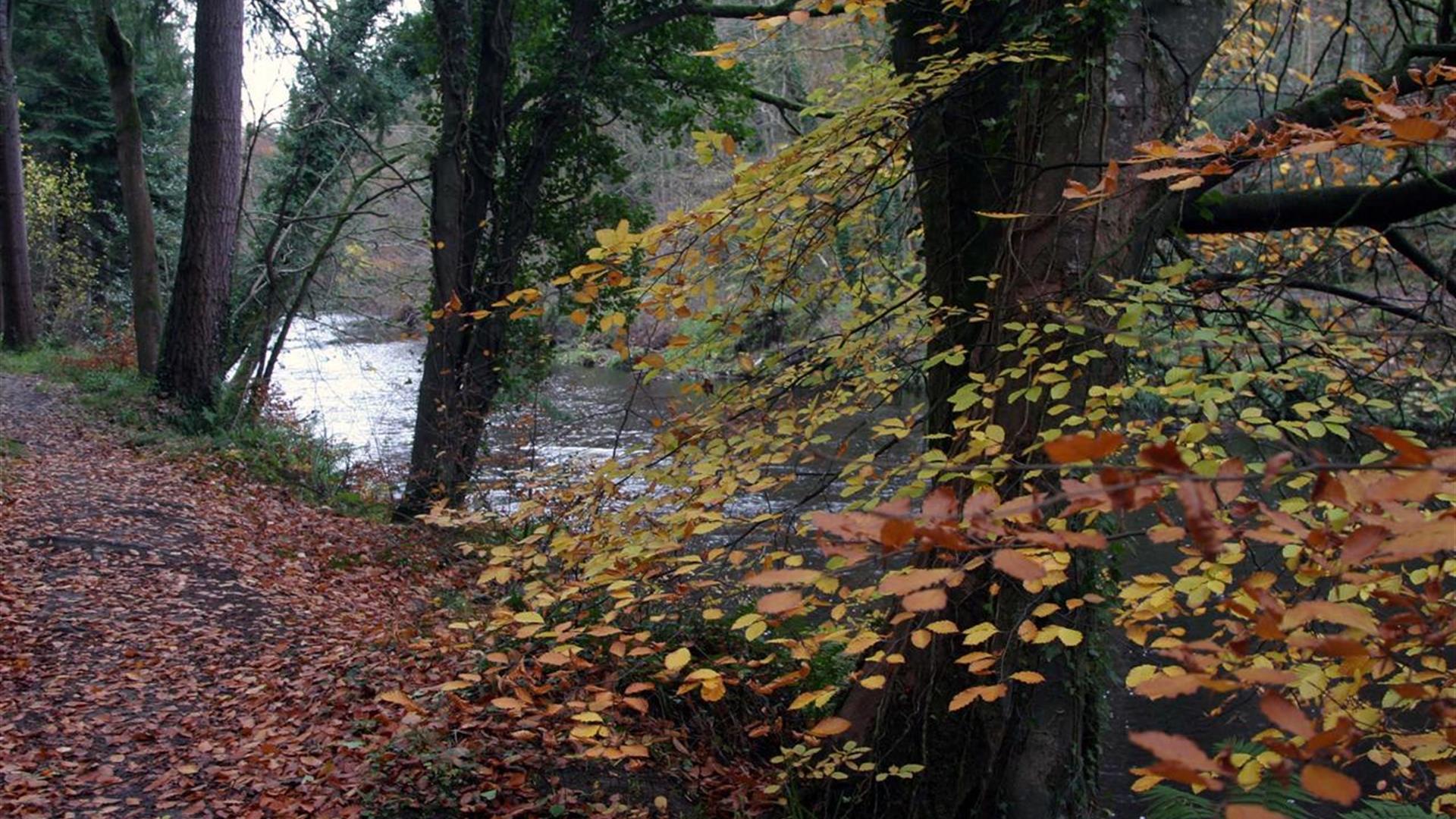
To stop his monstrous resurrection, he could not be buried in consecrated ground. Instead, he must be killed with a sword made of yew wood, buried upside down, and his grave encircled with thorns and heavy stones to prevent his escape.
Cathán followed the instructions, and Abhartach was finally trapped — but local legend holds that his restless spirit still lingers beneath the earth.
The Cursed Grave of Slaghtaverty
According to a lecturer in Celtic history at the University of UIster, Bob Curran, the real castle he lived in an be found between the towns of Garvagh and Dungiven, where a small hill now stands. He says that it was here that the fortress of a 5th or 6th-century chieftain with magical powers called the Abhartach once resided.


Today, the place believed to be Abhartach’s grave is a modest site known as Slaghtaverty Dolmen or The Giant’s Grave. Nestled in a field near the village of Slaughtaverty in Londonderry in Northern Ireland, it’s marked by an ancient stone surrounded by a ring of Hawthorn trees and undergrowth. It used to be more stones as remnants of an old monument, but these have been removed over time by local farmers for building purposes.
Locals claim the spot is cursed; farmers avoid working the land around it, and strange misfortunes are said to befall those who disturb the grave. Some say on misty nights, you can hear faint whispers, or catch the flicker of a shadow moving between the trees — as though Abhartach himself still walks, searching for blood.
In 1997, attempts were made to clear the land, but, if local tradition is to be believed, workmen who tried to fell the tree found that their brand-new chainsaw stopped for no reason on three occasions. When attempting to lift the great stone, a steel chain suddenly snapped, cutting the hand of one of the labourers and, significantly, allowing blood to soak into the ground.
The Dracula Connection
We first have the legend written down in Patrick Weston Joyce’s The Origin and History of Irish Names and Places from 1870. In modern versions of the lore, the story is said to be solved by an earlier Christian, and not a druid.
Intriguingly, scholars have speculated that Abhartach’s legend may have inspired Bram Stoker’s Dracula. Stoker, an Irishman born in Dublin, would have likely been familiar with the story of the blood-drinking undead chieftain. While Dracula is commonly associated with Vlad the Impaler and Eastern European folklore, it’s possible that the sinister figure of Abhartach left its own mark on Gothic horror’s most famous vampire.
Newest Posts
- The Utburd of Erstad: A Ghost That Led to the Court and Punishment

 After strange knocking and poltergeist activity made the people at Erstad Farm believe it was haunted. And when they asked the ghost what it wanted, it unraveled the lives of more than one person forever.
 - The Legend of the Witches of Llers Castle and the Vampire, Conde Estruch of Catalonia
 Was there an iberian vampire before the European vampire panic in Eastern Europe? Who was really Conde Estruch, the vampire of Catalonia, and what happened to the witches of Llers Castle the count was said to use as his lair.
 - The Haunted Pub Crawl through Dublin
 Join a haunted pub crawl through Dublin’s ancient streets for ghosts and a pint of Guinness. From plotting revolutionaries to somber writers, these pubs and bars are said to be a place where some of the patrons have been lingering for a long time.
 - The Utburd of Børholmen and Erika Larsdatter Bogen: A Haunting and Scam That Reached the Courtroom
 In 1852, the alleged psychic Erika Larsdatter Bogen, arrived at Børholmen, a small island in western Norway. She claimed that she had found the ghost and corpse of the dead child, and she named the mother who allegedly buried it. But what was the truth?
 - Most Haunted Places in Ireland
 Ghostly whispers in the old castle ruins, soldiers haunting the bloody battlefields and even the drums of pagan druids still lingering, Ireland is certainly a haunted country. This is only a small portion of the most haunted places in Ireland and the ghost stories behind them.
 - The Brown Clad Man Haunting Sande Old Vicarage
 Who is the ghostly priest in brown, haunting the old Vicarage in Sande? Legend says he still carries guilt for the young boy he failed that had tragic consequences.
 - El Dip: The Catalan Vampire Hound
 In the rural mountainside in Catalonia, Spain, there have long been talk about a vampiric beast of a hound that has tormented the livestock and the unfortunate person walking outside after dark. Could this legend be the one where other iberian vampire legends sprung from?
 - The Haunting of Caerphilly Castle – The Lady in Green and the Hag of Death
 A story of doomed lovers and haunted ivy leaves, the Lady in Green is said to haunt Caerphilly Castle in Wales together with the spirit of Gwrach-y-Rhibyn, wailing as an omen of death.
 - The Haunted Tunnels of Hegra Fortress
 After the battles during world war two, Hegra Fortress was a place that became known to withstand the Germans, although they too in the end had to raise the white flag. After the war, people started to believe that one of the fallen soldiers was still there, wandering the deep and damp tunnels.
 - Wolfe Tone Square: The Hanging Judge Who Could Not Rest
 In a cemetery turned into a public park, the Wolfe Tone Square is said to be haunted by John Toler, one of Ireland’s most haunted man and remembered as the Hanging Judge.
 - The Cabin Caretaker Still at the Mountain
 The old cabin high on Hardangervidda, Norway is said to be haunted by its very first caretaker. But although Krækkja DNT cabin is said to be his eternal home, it seems like the more people visiting, the more he retreats to the plateau.
 - Guajona: The Blood-Thirsty Entity of Iberian Folklore
 Preying on the blood of the young one, the vampiric Guajona from northern Spain is said to stalk the villages and valleys in Cantabria, thirsting for blood.

References:
The Abhartach / Irish Vampire: Terrifying Tale For 2025
Does Abhartach, the vampiric chieftain, still stalk the Derry hills?
Abhartach the Dwarf King | Emerald Isle Irish and Celtic myths, fairy tales and legends
Abhartach – Ireland’s Vampire King – by Siobhán Rodgers
11 thoughts on “The Legend of Ireland’s Vampire King Abhartach and the Haunted Giant’s Grave”