Tag Archives: the house of the seven gables

The Haunting Legacy of the Salem Witch Trials: Gallows Hill and Old Burying Point

Advertisements

Most people know about the Salem witch trials and the horror of the hunt. No wonder that haunted rumors about the place have formed in the aftermath of the trials and death. 

Along the northeastern shores of Massachusetts, the town of Salem is forever etched into the annals of American history as the site of one of the most infamous chapters of colonial-era terror: the Salem Witch Trials. This dark period in 1692 saw hysteria grip the Puritan settlement, leading to the tragic execution of innocent men and women accused of witchcraft. 

Read More: Check out all ghost stories from USA

Today, Salem is most known for this tragic ordeal. Places like The Haunted House of The Seven Gables in Salem is perhaps the most famous building in the town which inspired Nathaniel Hawthorn to write his novel. But the ghostly echoes of those who died are said to linger elsewhere in town, particularly at Gallows Hill and Old Burying Point, where the spirits of the accused are said to still roam.

Salem Witch Trials: The witch trials were a product of mass hysteria. But also the following interest, representation and stories about the trial has been somewhat fanciful. Representation of the Salem witch trials, lithograph from 1892.

The Historical Tapestry of Salem

Founded in 1626, Salem was initially a thriving Puritan settlement, built on religious conviction and a stringent moral code. Its early prosperity stemmed from a bustling port and a community tightly knit by shared beliefs. However, the seeds of paranoia and superstition were sown deeply within its society, setting the stage for one of the most notorious episodes in American history.

Read more: Check out all ghost stories related to witches and witch trials

By the late 17th century, tensions in Salem were running high. A combination of religious fanaticism, political instability, and a harsh frontier environment led to an atmosphere ripe for fear and suspicion. In this climate, the Salem Witch Trials erupted—a stark reminder of the dangers of mass hysteria and the consequences of unchecked fear.

The Witch Trials: A Tragic Descent into Madness

The Salem Witch Trials began in the spring of 1692 when a group of young girls in the town claimed to be possessed by the devil, accusing several local women of witchcraft. What followed was a frenzy of accusations, leading to the arrest of more than 200 people. By the time the hysteria subsided in 1693, 19 men and women had been executed by hanging, one man had been pressed to death, and several others had died in jail.

The Young Girls: The witch hunt started with Betty Parris (9), Abigail Williams (11), Ann Putnam Jr. (12), and Elizabeth Hubbard (17). The accusations centered around the concept of “affliction”, and the women accused of having caused physical and mental harm to the girls through witchcraft.

The Salem Witch Trials were fueled by a combination of fear, religious extremism, and the desire for social control. The accused were often those who stood out in the community—women who defied traditional roles, outcasts, or those who held properties that others coveted. The panic and cruelty that characterized this period left an indelible mark on Salem’s history, one that continues to resonate today.

Gallows Hill: The Site of Execution

“This was the field where superstition won her darkest triumph […] the high place where our fathers set up their shame, to the mournful gaze of generations far remote. The dust of martyrs was beneath our feet. We stood on Gallows Hill.”
Nathaniel Hawthorne, Alice Doane’s Appeal, 1835

Gallows Hill at the intersection of Manswell Parkway and Witch Hill Road was the site where the accused were believed to have been executed for centuries, according to local lore hanged from locust trees. They believed this was the spot much because historian Charles Wentworth Upham said so in 1867, although there were murmurs about that the place was not the correct one. According to legends, the ancestors of those involved in the Salem Witch Trials went to Gallows Hill and revealed the location for the dead to those who came after them. The writer Nathanial Hawtorn was one of them, being the many times great-grandson of Judge John Hathorn, the man responsible for sentencing the victims to the gallows for witchcraft. But how much of this local lore was actually true?

Salem, from the lookout on Witches’ Hill

Nevertheless the Gallows Hill and the area around has long been shrouded in mystery and legend. Screaming is said to come from the wooded area that surrounds the hill. The specter of a lady in white is said to appear in the night. 

According to the locals, they say that this place is a common spot for suicides as well. Paranormal researchers have long thought this fuels the other. The sadness of the area draws souls to it, and creates this haunted aura of the place. In October in 1992, there were almost 200 people from nearby churches gathered to “cleanse” the dark energy from the hill. Did they manage it?

Proctors Ledge: The Actual Location for the Executions

However, in 2016, it was proved that the exact place was Proctors Ledge, named after the victims John Proctor and his wife who died in the Salem Witch Trials. Proctor doubted the accusation of the girls and even proclaimed that any Devil in Salem was within the accusers – not the accused.

This exact place is a ledge on a small hill between Proctor Street and Pope Street in Salem, overlooking a Walgreens in a residential area. It got a memorial placed there in 2017. 

They were also said to have been hanged, not by locust trees, but on traditional gallows. 

Execution of Reverend George Burroughs: On August 19, 1692, Martha Carrier, George Jacobs Sr., George Burroughs, John Willard, and John Proctor were executed. Elizabeth Proctor was given a temporary stay of execution because she was pregnant.

The ghost tours and visitors have now started to accept the fact that this was the place and now direct their haunted focus on Proctor’s Ledge, which now starts to have the same haunted legends about the woman in white appearing to visitors, the disembodied voices and orbs floating around them. One thing about Proctor’s Ledge is that many believe that it also acted as a temporary burial ground for the victims before they were discreetly moved for a proper burial by their family members. So even if their bodies are no longer there, could their spirits be?

Proctors Ledge: Much more discreet than other memorial places, the actual location of the Salem Witch Trials was most likely here at Proctors Ledge. Wally Gobetz/Flickr

Old Burying Point: The Resting Place of the Accused

The Old Burying Point Cemetery, also known as Charter Street Cemetery, is one of the oldest cemeteries in the United States, dating back to 1683. Buried there are even passengers from the Mayflower. It is also the final resting place for many of Salem’s notable figures, including some of the judges involved in the Salem Witch Trials. 

The graveyard is said to have the spirits from the accused from the witch trials as well. But is this true? Is this the final resting place for the victims of the witch hunt? The short answer is, we simply don’t know for sure. While none of the accused witches were officially buried here and many were interred in unmarked graves or simply discarded according to lore. 

Now, is this part true? The same answer applies. After the hanging, there was a lot happening. Some say that the victims’ families discreetly took the hanged victims and moved them away to give them the proper Christian burial they were denied. Did they manage to sneak them into this graveyard as their final resting place? No matter what the truth is, the cemetery is still steeped in spectral lore.

Legend has it that the spirits of the accused roam the cemetery, seeking justice and acknowledgment for the wrongs done to them. Visitors to Old Burying Point often speak of ghostly apparitions, strange lights, and the sensation of an otherworldly presence. The cemetery, with its weathered tombstones and ancient trees, exudes an atmosphere of haunting beauty and melancholy.

At the graveyard, the same story of a ghost of a woman in white is said to haunt as well. A specter of one of the accused and murdered woman haunting her grave? Attracted to the final resting place to the people who sentenced her to death? 

The Ghost of the Judge Condemning the Salem Witches

Another one said to haunt this place is the ghost of Judge John Hathorne. He was asked to lead the trials and was harsh when questioning them all, convinced they were witches and in league with the devil. Among the locals he was known as the “hanging judge”, because of his tendency to send the accused to the gallows and abuse his power for his own gain. 

At the Salem Witch Trials he accused seven months pregnant Sarah Proctor of being a witch, sending her to jail where her baby died a few days after being born. He sentenced her to death, leaving her 4 year old daughter an orphan. Before she died, local lore say that she cursed the Reverend Nicholas Noyes presiding over her execution. “You are a liar. I am no more a witch than you are a wizard, and if you take away my life, God will give you blood to drink,”

Examination of a Witch: Painted in 1853 by T. H. Matteson, inspired by the Salem witch trials

Although falsely accused, one can almost wonder if the words uttered by Sarah Good ringed true for many of the ones in charge of her trial, as many of them are said to have died horrible deaths, like the Reverend who died of a hemorrhage that brought blood to his mouth. And the case with Judge Hathorn, who is said to have lingered in the world as a ghost.

His ghost is said to haunt the Old Burying Point Cemetery as well as the Witch House close by, made with the intention to keep witches and other paranormal creatures at bay. It used to belong to his friend, Jonathan Corwin. One can wonder how a ghost could step into a house like that, proving that the measures made to keep them out didn’t really work. 

Honoring the Accused: A Shift in Perspective

In modern times, Salem has transformed its legacy from one of persecution to one of remembrance and education. The city now honors the memory of the accused witches, emphasizing their innocence and the tragedy of their unjust treatment. Each October, during the annual Salem Haunted Happenings festival, thousands flock to the city to remember the victims and reflect on the lessons of the past.

The Salem Witch Trials Memorial, located near Old Burying Point, serves as a poignant tribute to the 20 individuals who lost their lives. The memorial features 20 stone benches, each inscribed with the name of an accused person and the method of their execution, symbolizing the enduring need to remember and honor their stories.

The Enduring Haunt of Salem and the Witch Trials

The haunting legends of Gallows Hill and Old Burying Point serve as stark reminders of the horrors of the Salem Witch Trials. The echoes of the past are palpable in these hallowed grounds, where the spirits of the accused are said to linger, a testament to the enduring impact of fear, injustice, and human suffering. Today, Salem stands not only as a historical site but also as a beacon of reflection, ensuring that the lessons of the past continue to resonate with future generations.

More like this

Newest Posts

References:

Gallows Hill in Salem, Mass – History of Massachusetts Blog 

The Ghosts of Proctor’s Ledge in Salem Massachusetts 

The Ghosts of Gallows Hill in Salem Massachusetts 

The Haunted House of The Seven Gables in Salem

Advertisements

In the eerie mansion in Salem of The Haunted House of the Seven Gables, also known as the Turner-Ingersoll Mansion, discover what lurks in darkness and uncover secrets behind its perpetual terror.

Step inside The Haunted House of the Seven Gables and explore its halls of perpetual terror and darkness. The house is a 1668 colonial mansion in Salem Massachusetts, a place known for being a place of mystery and witchcraft.  

From ghostly figures roaming the corridors to mysterious tales of hauntings, prepare to discover what lurks in this fascinating haunted house.

“But as for the old structure of our story, its white-oak frame, and its boards, shingles, and crumbling plaster, and even the huge, clustered chimney in the midst, seemed to constitute only the least and meanest part of its reality. So much of mankind’s varied experience had passed there,—so much had been suffered, and something, too, enjoyed,—that the very timbers were oozy, as with the moisture of a heart. It was itself like a great human heart, with a life of its own, and full of rich and sombre reminiscences.”
― Nathaniel Hawthorne, The House of the Seven Gables

Nathaniel Hawthorne’s Novel

The House of the Seven Gables is a real house that was known as The Turner House or the Turner-Ingersoll Mansion before the novel inspired by it came out. The thing that made it famous was the American author Nathaniel Hawthorne when he wrote a gothic novel inspired by the house in the 1850s. 

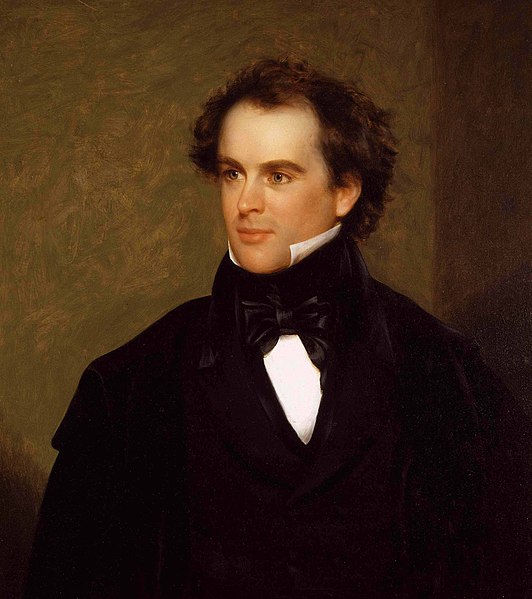
Nathaniel Hawthorne: (July 4, 1804 – May 19, 1864) was an American novelist and short story writer. His works often focus on history, morality, and religion. He wrote the novel The House of the Seven Gables inspired by the house in Salem Massachusetts he used to visit.

The novel follows a New England family and their home where he explores guilt, retribution and atonement. The story is filled with hints at the supernatural and witchcraft and influenced horror writers like H.P Lovecraft. 

Read Also: Find some novels about witchcraft like The House of the Seven Gables: Here

Hawthorne, most known for the novel The Scarlet Letter, was himself born in Salem and grew up hearing stories about the house. His great-great-great grandfather was one of the judges in the Salem Witch Trials which the house also had a connection to. 

Explore the Legends of The Haunted House

From legendary tales of cursed spirits trapping guests to mysterious hauntings that have been reported through the ages, explore the legends that make The Haunted House of the Seven Gables one of the most haunted locations in the world. Learn about the curses that lurk in its dark corners, and find out about the secrets this house has been concealing for centuries.

The house was built as a place for peace and quiet, but ended up being in the center of one of the most notorious witchcraft trials in 1692 to 1693 were over 200 people in the puritan New England town were accused of witchcraft. 

John Turner Jr. lived in the house at the time with his sisters and wanted to protect them from the hysteria of the locals that accused their neighbors, their friends and family for being witches and in league with the devil. A part of the protection was to build a hidden staircase with the fireplace. 

In later years there were also uncovered a hidden dining room and accounting room to hide if any in the family were ever accused of witchcraft. 

The Salem Witch Trials

The Salem Witch Trials was a product of mass hysteria that happened in the British Colonies as well as in Europe at the time. It all started when two small girls started having these fits of contorting bodies, making strange noises and speaking gibberish. 

The Salem Witch Trials: A series of hearings and prosecutions of people accused of witchcraft in 1692 and 1693. More than 200 people were accused. Thirty people were found guilty, 19 of whom were executed by hanging (14 women and five men). One other man, Giles Corey, was pressed to death after refusing to enter a plea, and at least five people died in jail.

This type of affliction seemed to spread to other girls and they were all diagnosed with witchcraft. And when the girls were interrogated, they started naming names about who cursed them, and a witch hunt began. 

A total of 14 women and 6 men were executed in the witch trials by hanging, one by being pressed to death. Another 5 died while in prison. 

Although the Turner family remained safe during those trials, the imprint and trauma of the witch hunt remained in all of Salem and ringed back for generations, something Hawthorne also discusses in his book. 

The Ingersoll’s and Hawthorns Ancestral Sins

After being in the Turner family for 3 generations it was sold to Captain Samuel Ingersoll as there were no remaining heirs. He had a daughter named Susannah, a cousin of Nathaniel Hawthorne who knew well and would come to hang out with. 

When inside the house, Hawthorne was inspired by the house and its quirky features and old history. There they also talked about their families involvement in a dark past. Hawthornes involvement in the Salem Witch Trials and Ingersoll’s involvement in slavery as an example. 

Susannah even advised him to put a W in his last name, which originally was Hathorne, to remove himself from his ancestral sin. Hawthorne often wrote about his guilt for his family’s involvement and in his most famed work, The Scarlet Letter, he even opens up with an analogy for it all. 

Is the House of The Seven Gables Haunted?

Mystery and terror await you as you attempt to uncover the secrets of The Haunted House of the Seven Gables. If you ask many of the tour guides, they will be quick to reply with a no. However, there are many who tell about another side of the story. 

One of the ghostly silhouettes that are reported to be seen is that of Susannah Ingersoll. There are not only one, but many paranormal activities that are said to take place within the old house. 

Today the dark wooden house is made into a museum and gets plenty of visitors that are looking for something paranormal, and many claim to have found it. A psychic visiting the house claimed to see a young boy play near the gables as well. Little footsteps can be heard from the attic followed by giggles and laughs.

A man can be seen climbing up and down the infamous staircase and lights are turning on and off and even the water faucets have a habit of turning on and on on their own. 

so, would you like to visit and see for yourself whether or not the house is haunted?

More like this

Newest Posts

References

House of the Seven Gables – Salem Ghosts

House of the Seven Gables – Wikipedia

The Haunted House of the Seven Gables

Witching Hour – 5 Books About Witches

Advertisements

Witches have been around as long as women have been around. At times, they have been cursed, at times, praised. Depending on the time, it is always about power though, and how to use it among the rest of the human population.

Even if they are after you we are still fascinated by witches, the power within seemingly normal people. And perhaps that is one of the things we are drawn to. Because if people posses this great power within, why not you as well?.

This is a reading list of some of the books containing witches that we love.

Witch Child

By Celia Rees (2009)

This book was one of the books that got this writer into books about witches. More than an adventure of the witch myth and legend it is an exploration about the consequences of it. It is also dealing with a lot of issues just from one story, with women, religion and Native Americans. I also loved the next book, Sorceress

Synopsis: Welcome to the world of young Mary Newbury, a world where simply being different can cost a person her life. Hidden until now in the pages of her diary, Mary’s startling story begins in 1659, the year her beloved grandmother is hanged in the public square as a witch. Mary narrowly escapes a similar fate, only to face intolerance and new danger among the Puritans in the New World. How long can she hide her true identity? Will she ever find a place where her healing powers will not be feared?

Read it here

Advertisements

The Bear and the Nightingale

By Katherine Arden

This first book of the Winternight Trilogy, was recommended to me by my creative writing lecturer. And, yes, thank you for that. This is sort of fantasy that is rare and witches that claimed their way to the throne so fast.

Synopsis: Beware the evil in the woods. . . In a village at the edge of the wilderness of northern Russia, where the winds blow cold and the snow falls many months of the year, an elderly servant tells stories of sorcery, folklore and the Winter King to the children of the family, tales of old magic frowned upon by the church. But for the young, wild Vasya these are far more than just stories. She alone can see the house spirits that guard her home, and sense the growing forces of dark magic in the woods. . .

Read it here

The Witching Hour

By Ann Rice

She changed the world’s view on vampires, and she didn’t shy away from writing about the witches either. In the series Lives of the Mayfair witches. It centers on a family of witches whose fortunes have been guided for generations by a spirit named Lasher. The series began in 1990 with The Witching Hour, which was followed by the sequels Lasher (1993) and Taltos (1994). All three novels debuted at No. 2 on The New York Times Best Seller list. Cool fun fact: Even some of her character cross over to the Vampire universe of hers.

Synopsis: It begins in our time with a rescue at sea.  Rowan Mayfair, a beautiful woman, a brilliant practitioner of neurosurgery—aware that she has special powers but unaware that she comes from an ancient line of witches—finds the drowned body of a man off the coast of California and brings him to life. 

As these two, fiercely drawn to each other, fall in love and—in passionate alliance—set out to solve the mystery of her past and his unwelcome gift, the novel moves backward and forward in time from today’s New Orleans and San Francisco to long-ago Amsterdam and a château in the France of Louis XIV.  An intricate tale of evil unfolds—an evil unleashed in seventeenth-century Scotland, where the first “witch,” Suzanne of the Mayfair, conjures up the spirit she names Lasher… a creation that spells her own destruction and torments each of her descendants in turn.

Read it here

Advertisements

The House of the Seven Gables

By Nathaniel Hawthorne

A classic one. it more suggest and hint at the supernatural to highlight the drama that enfolds, but nonetheless creates the same atmosphere many horror and supernatural writers strive all their life for.

Synopsis: This enduring novel of crime and retribution vividly reflects the social and moral values of New England in the 1840s. Nathaniel Hawthorne’s gripping psychological drama concerns the Pyncheon family, a dynasty founded on pious theft, who live for generations under a dead man’s curse until their house is finally exorcised by love. Hawthorne, by birth and education, was instilled with the Puritan belief in America’s limitless promise. Yet – in part because of blemishes on his own family history – he also saw the darker side of the young nation. Like his twentieth-century heirs William Faulkner and F. Scott Fitzgerald, Hawthorne peered behind propriety’s facade and exposed the true human condition.

Read it here

Witch of Portobello

By Paulo Coelho

A Paulo Coelho book is always filled with heart, thoughts and love. But do be careful of reading his work. There is always a danger of becoming “deep”.

Synopsis: How do we find the courage to always be true to ourselves-even if we are unsure of who we are?That is the central question of international bestselling author Paulo Coelho’s profound new work, The Witch of Portobello. It is the story of a mysterious woman named Athena, told by the many who knew her well-or hardly at all. Like The Alchemist, The Witch of Portobello is the kind of story that will transform the way readers think about love, passion, joy, and sacrifice.

Read it here

Advertisements

More like this

Newest Posts