Tag Archives: ouija

The Dark Origins of the Ouija Board: A Mysterious History of Spirit Communication

Advertisements

The Ouija Board has a long and winded history that has created its own lore and rules. What is really the truth behind the board, where spiritualism meets consumerism?

The Ouija board: a simple game to some, a portal to the unknown for others. Whether you see it as harmless fun or a dangerous tool of the occult, one thing is certain—the Ouija board has a long, eerie history that stretches across centuries and cultures. Behind the polished wooden planchette and alphabet-strewn board lies a tale of mysticism, deception, and perhaps even something sinister.

Although most people know what the Ouija board is, few people know its origin, according to Ouija historian, Robert Murch. Sit tight, light a candle, and let’s delve into the shadowy origins of the Ouija board. But be warned—some doors, once opened, are difficult to close.

Ouija Board: Painting by Norman Rockwell depicting a couple using a Ouija board. This painting was used for the cover of the May 1, 1920 issue of The Saturday Evening Post.

Ancient Spirit Communication: The Predecessors of the Ouija Board

Before Parker Brothers got their hands on it, the concept of talking to spirits through objects wasn’t new, although the notion that Ouija Board was an ancient thing was. Cultures across history have been obsessed with communing with the dead, and they weren’t shy about getting creative.

China’s Mystical Writing: Fu Ji (扶乩)

As early as 1100 AD, the Chinese had a form of “spirit writing” called fu ji, which involved using a suspended wooden or bamboo stylus to guide messages from beyond. Taoist monks and mystics believed the deceased could communicate through this method, leaving cryptic (and sometimes terrifying) messages for the living. Sound familiar? It should—it’s basically an ancient prototype of the Ouija board.

Read More: China’s Mystical Writing: Fu Ji (扶乩) – When Spirits Pick Up the Pen 

The Spiritualist Movement: A Victorian Obsession

Fast forward to the 19th century, when the world was gripped by a new obsession: Spiritualism. This was the golden age of séances, mediums, and all things ghostly. It largely started when the Fox sisters from New York claimed to be able to communicate with the dead. People were desperate to reach lost loved ones, and mediums capitalized on that desire. Knocks on walls, flickering candles, and even floating tables were all part of the supernatural spectacle.

Read More: The Spiritualist Movement: The Fox Sisters Who Started a Ghostly Revolution as a Prank

But let’s be real—not all mediums were exactly credible. Many were caught faking spirit communication, using tricks that would make even Houdini roll his eyes. But fraud or not, the demand was high, and the market was ripe for a faster, easier way to contact the dead.

Spiritualism and Table Turning: Medium William Marriott levitating table. Although communicating with the devil moved away from this, the part of sitting around a table lingers.

Birth of the Ouija Board: A Capitalist Séance

Enter businessman Elijah Bond, who saw dollar signs where others saw ghosts. In 1890, he, along with Charles Kennard and William Fuld, created the first commercial “talking board” for The Kennard Novelty Company: Their goal? To cash in on the Spiritualist craze with a device that lets anyone communicate with spirits.

One problem with Spiritualism and the communication with the dead, was that it was too slow to deliver the messages. There were more people wanting to talk with the dead than there were mediums to deliver the messages, besides, it could be expensive to attend a seance. 

The solution was to make a more effective way of communicating. Often the mediums would spell out the entire alphabet and wait for the spirit to knock when they reached the right letter. Too boring, so the board came with the entire alphabet. 

The idea of a talking board like this was already a popular thing in the spiritualist communities in Ohio and the press reported on these boards as far back as 1886. Together with the desperation and grief of the loss in the aftermath after the Civil War, the market was there for the taking. 

The more efficient ways of communicating with the dead piqued the interest of the men that would form The Kennard Novelty Company and would exclusively make the Ouija board. In the beginning it was the local coffin maker, E.C. Reiche from Prussia who made the boards. The business venture was a success. It was a tool to communicate with the dead in the easiest way possible.

The name “Ouija” is a whole mystery in itself. Many people think that it’s the combination of the French oui and the German ja. According to legend, the board named itself when Bond’s sister-in-law asked it for its name during an early session one night in 1890. Helen Peters was a strong medium according to Bond and claimed the word meant “good luck”.

It is also possible that it was because she was wearing a locket with a picture of a woman where the word was written next to it. Some have speculated that it was actually a picture of the famous writer, Ouida, that Peters really liked and just misread her name. 

She has since been known as Mother of the Ouija Board.

The Patent Office and the “Supernatural” Test

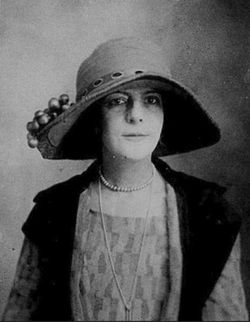
Mother of the Ouija Board: Helen Peters

Now here’s where things get extra weird. When Bond and his crew applied for a patent, the U.S. Patent Office was skeptical. The officials allegedly demanded proof that the board actually worked before granting a patent. So, Peters asked the board to spell out the name of the chief patent officer—who, mind you, they had never met.

It did.

They got their patent.

Coincidence? Trickery? Did Bond, who was a patent attorney, know of this officer’s name beforehand? Or something else?

The Ouija Board Divides the Peters Family

So what happened to Peters and Helen Peters who was a vital person when creating the board? According to the stories, she wanted nothing to do with the board after it created a rift within the family. 

Family heirlooms from the civil war went missing from her home and she asked the board who had taken them. According to Peter’s grandson, it was a family member, something the Ouija board had told them. Half the family believed it, creating a rift in the family that was never resolved and tore them apart. 

After this, she sold her stock in the company and told everyone until her dying day to never play the board, because it would lie. 

William Fuld: The Man Who “Died for the Board”

William Fuld, who took over production of the Ouija board in the early 1900s, was one of its biggest promoters. He cut ties with his brother in 1919 and never spoke again. The feud was so big, Isaac Fuld exhumed his baby daughter and reburied her in another cemetery. 

In 1927, Fuld fell to his death from the roof of a factory when he was overseeing an installation of a flag—one that he claimed the Ouija board told him to build to prepare for big business. He was expected to live through this injury, but the bumpy road to the hospital sent one of his fractured bones through his heart. On his deathbed, he begged his children to never sell the board out from the family. 

For decades, the Ouija board was just another quirky parlor game, sold alongside Monopoly and Clue. After Full died, people started to argue about who really was the inventor behind the board, and several rival boards appeared and failed to reach the cult status the Ouija have. Four decades after Full’s death, they sold the board out of the family.

A fun pastime for the whole family as well as a spiritual oracle. The more uncertain the times were, the more the board sold. During the first world war there was a surge in interest in the board as well as during Prohibition times. In the second world war, a single New York department sold over 50 000 boards over five months in 1944. During the Vietnam war, the Parker Brothers bought the game and two million boards were sold, more than Monopoly. 

It wasn’t until the mid-20th century that things took a sinister turn.

Hollywood’s Love Affair with the Ouija Board

If there’s one thing Hollywood does well, it’s making innocent things terrifying (looking at you, Annabelle). The 1973 horror classic The Exorcist sent the Ouija board straight into the realm of nightmares. In the movie, a little girl uses a board to talk with a spirit she thinks is Captain Howdy, unwittingly inviting a demon into her life. Suddenly, the board wasn’t just a game—it was a gateway to hell.

The Exorcist: After the use of the Ouija Board in the horror movie, many believed that the thing was the thing of the devil.

After that, reports of “Ouija-related hauntings” skyrocketed, appearing in over 20 films and appearing on countless shows. But this also affected how Ouija was seen in the real world. Stories of possessions, cursed homes, and terrifying encounters flooded the media. 

Religious groups condemned the board, and even today Catholics claim that the board is “far from harmless”, and that it is an occult practice and that “nothing positive can ever come from the use of Ouija board.”. Exorcists got busy, and Parker Brothers probably started questioning some life choices.

Real-Life Horror Stories (Or So They Say…)

Whether you believe in ghosts or not, the Ouija board has a long list of spooky anecdotes attached to it:

The “Zozo” Demon: Many people claim to have encountered a malevolent entity named Zozo through the Ouija board. He’s known for deception, threats, and generally ruining your night. Skeptics say it’s a case of the ideomotor effect (your muscles move the planchette unconsciously). Believers say, well…good luck sleeping.

Read More: The Demon Zozo: The Mysterious and Terrifying Entity of the Ouija Board

In 1930, a woman in Buffalo participated in a murder, supposedly on the encouragement of Ouija board messages.

Read More: The Ouija Board Murder in Buffalo

So, is it just a game? Or is something playing you?

The board has been through much criticism from religious groups, even burning. in Alamogordo, New Mexico in 2001, it was burned on bonfires along with copies of Harry Potter and Disney’s Snow White and Eminem CD’s.

Fearing the Ouija Board: A woman tosses a Ouija Board into a bonfire outside a church in New Mexico in 2001, after the church’s pastor urged parishioners to burn dozens of Harry Potter books and other types of literature and games they found offensive. // Source

The Science of the Ouija Board: A Trick of the Mind?

Of course, there’s a rational explanation for all of this. The Ouija board is often linked to the ideomotor effect, where tiny, unconscious muscle movements create the illusion that an external force is moving the planchette.

In simpler terms: your brain is tricking you. You think you’re not moving the planchette, but your subconscious is. Science has replicated this effect in multiple studies, proving that the board’s messages aren’t coming from ghosts—they’re coming from you and small muscular movement creating a large effect.

Boring? Maybe. But definitely less terrifying than summoning a demon.

What research of the board has shown though, is that with the help of Ouija board, participants have been able to answer more factual questions correctly than without it. 50% accuracy for vocal responses compared to 65% for Ouija Board responses. Read the entire research report

The subconscious working better than anything else, or something else coming to visit?

Final Thoughts: Should You Use a Ouija Board?

Look, I’m not here to tell you what to do. But let’s be real—whether you believe in spirits or not, the Ouija board has a reputation. If it’s just a board game, why do so many people have terrifying experiences with it? Why does it consistently pop up in stories of hauntings and possessions?

Maybe it’s just superstition. Maybe it’s the power of suggestion.

Or maybe…just maybe…some doors are better left closed.

People have tried to come up with rules for safe playing, like claiming you shouldn’t ask the board about God, where treasures are buried and when you are going to die. It is said that if you try to burn the board, it will scream at you, so the safe way to get rid of it is to break it into seven pieces, sprinkle it with holy water, then bury it. 

Hasbro, whose website warns: “Handle the Ouija board with respect and it won’t disappoint you!”

But hey, if you do decide to use one, don’t say I didn’t warn you. And for the love of all things spooky—never, ever forget to say goodbye.

More like this

Newest Posts

References:

The Ouija Board Can’t Connect Us to Paranormal Forces—but It Can Tell Us a Lot About Psychology, Grief and Uncertainty | Smithsonian 

The Dark History Behind Ouija Boards

Ouija board | Spiritualism, Divination, Supernatural | Britannica 

The Ouija board’s mysterious origins: war, spirits, and a strange death | Life and style | The Guardian 

https://www.sfomuseum.org/exhibitions/mysterious-talking-board-ouija-and-beyond

BBC NEWS | Entertainment | ‘Satanic’ Harry Potter books burnt 

BBC NEWS | Entertainment | ‘Satanic’ Harry Potter books burnt 

The Museum of Talking Boards: Ouijastitions

Earlier boards:

History of the Talking Board 

The Ouija Board Murder in Buffalo

Advertisements

Many horrible things have been blamed on the Ouija Board over the years. One of the most famous cases was the murder often named The Ouija Board Murder in Buffalo were a woman in Buffalo was killed after the Ouija Board pointed her out in a mission for revenge. 

In 1930, Buffalo, New York, was the backdrop for a chilling murder case that intertwined themes of jealousy, manipulation, and supernatural beliefs. This case, often referred to as the “Ouija Board Murder in Buffalo,” involved the tragic death of Clothilde Marchand, a respected artist and wife of sculptor Henri Marchand.

The Ouija Board Told them to do it

Lila Jimerson

In the fall of 1929, 66 year old Nancy Bowen and 36 year old Lila Jimerson had a Ouija Board session. The Seneca Native women lived on the Cattaraugus Reservation where Bowen was a tribal healer and Jimerson worked at the reservation school. 

Read More: Check out all ghost stories from the USA

Not long ago, Bowen’s husband had died and they tried to contact the afterlife to get an explanation. The loss of Bowen’s husband had really affected her and she was looking for answers in all the wrong places. The board started to move, and according to them, the spirit of her husband, Sassafras Charlie Bowen spelled out: “They killed me.”

When the women asked who they were, the answer was Clothilde and an address on Ripley Street in Buffalo. The board also added that she had short hair and was missing teeth. Since Bowen couldn’t read herself, Jimerson was guiding the planchette and spelled out the words. Turns out, the Ouija Board pointed them in the direction of someone they already knew. 

The Marchand Family

Henri Marchand, a 53 year old French-born artist renowned for his dioramas and wax models, relocated with his wife, Clothilde, and their children to Buffalo in 1925. She was a tiny woman who had given up her life as a painter to take care of their children. 

Henri was commissioned to create dioramas for the Buffalo Museum of Science, a project that required close collaboration with local communities, including the Seneca Nation. During this period, Henri developed a professional relationship with Lila Jimerson, a young Seneca woman who served as a model for his work. Little did Clothild know, his affairs would become the death of her. 

After the Ouija Board session, Bowen started to receive letters signed from a certain Mrs Dooley that no one knew who was. In the letter, it said that Clothilde Marchand was actually a witch who had hexed Sassafras Charlie, who was also a tribal healer, because she was jealous. After her witchcraft didn’t work, she had to kill him herself, the letter claimed. Bowen started to fear that she was next.

The Murder of Clothilde Marchand

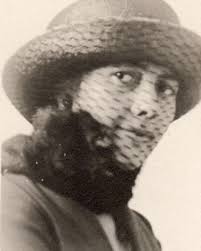
Nancy Bowen

On March 6, 1930, the Marchand household was shattered by violence. Bowen had tried to kill Clothilde with hexes and witchcraft instead, but when this didn’t work, she showed up to do the job herself. She knocked on the door and was let in as Clothilde recognized her from the reservation. Clothilde was found dead in their home on Riley Street, having suffered fatal injuries from a hammer and chloroform stuffed down her throat. She was found by her 12 year old son when he came home from school. 

The neighbors led the police to the reservation as many natives working as models came and went to their house and Jimerson was arrested. The investigation quickly led to Nancy Bowen, after Jimerson gave her name to the police, who confessed to the murder. 

Bowen revealed that she had been manipulated by Jimerson into believing that Clothilde was a witch responsible for the death of Bowen’s husband, Charlie. Driven by these manipulations, Bowen confronted and killed Clothilde. 

The Trials and Aftermath

The subsequent trials for the The Ouija Board Murder in Buffalo garnered significant public attention. Henri Marchand’s testimony revealed his numerous affairs, too many to count as he said in court, including his involvement with Jimerson.  He claimed getting romantically involved with the native women were necessary for his artistic endeavors as they would much easily take off their clothes for his modeling then. He also said that his dead wife was fully aware and supportive of his affairs, although nothing but his testimony says this. According to Jimerson, Marchand had said that he was tired of his wife and that this led to her planning to rid them of her. At the time of his wife’s murder, he was actually driving around with Jimerson. 

Jimerson faced two trials; the first ended in a mistrial due to her health issues, and the second concluded with her acquittal. Bowen pleaded guilty to manslaughter and was sentenced to time served. Henri Marchand relocated to Albany, remarried his 18 year old niece, and continued his work until his death in 1951. Jimerson lived out her days in Perrysburg, New York, passing away in 1972. Clothilde Marchand was laid to rest in an unmarked grave in Buffalo’s Forest Lawn Cemetery. 

They never found out who wrote the letters, but it didn’t match up with Jimerson’s handwriting. If they ever tested it at Marchand’s is unclear, but doubtful. Although the murder was convicted, was it really justice served in The Ouija Board Murder in Buffalo?

The Ouija Board Murder in Buffalo

This case highlights the complex interplay of cultural beliefs, personal relationships, and societal prejudices. A lot of the focus on The Ouija Board Murder in Buffalo ended up being on the Ouija Board and witchcraft and not about how an innocent woman lost her life, and the manipulation from external forces that led to it.

The Ouija Board Murder in Buffalo underscores how deeply held superstitions and manipulations can lead to tragic outcomes, and it serves as a poignant reminder of the consequences of jealousy and deceit. Still today, you can see the sculptures in many museums to this day, including the Buffalo Science, the Smithsonian as well as the State Museum. 

More like this

Newest Posts

References:

MURDER INCITED BY JEALOUS MODEL; Killing of Artist’s Wife Is Confessed by Two Indian Women in Weird Story of Witchcraft. CONSULTED OUIJA BOARDHer Love for Marchand Led Her to Induce an Aged Friend to Beat Mrs. Marchand to Death. Woman Served as Indian Model. Artist Said Love Was Not Returned. MURDER INCITED BY JEALOUS MODEL – The New York Times

OUIJA BOARD MURDER TO GO TO GRAND JURY; Indictments Will Be Sought Against Indians for Slaying Buffalo Artist’s Wife. – The New York Times 

Henri Marchand (sculptor) – Wikipedia 

The Ouija Board Murder, 1930 : r/HistoricCrimes

The Demon Zozo: The Mysterious and Terrifying Entity of the Ouija Board

Advertisements

A collective memory of people summoning an entity called Zozo has taken over the Ouija Board sessions. The demon who goes by many names is said to be conjured from the human mind, but there are still those claiming that the demon Zozo is something real to fear.

For as long as people have attempted to communicate with the spirit world, there have been warnings about entities that should never be contacted. Among the most feared is Zozo, a sinister and enigmatic presence said to haunt those who dare to use a Ouija board. 

The stories of the demon Zozo have become almost like a Christian symbol of what evil the occult and Ouija can bring from the darkness. Reports of encounters with Zozo stretch back centuries, some saying its older Sumerian or African origins, perhaps ancient Babylonian, but in the modern age, its legend has gained notoriety thanks to chilling firsthand accounts and online discussions. But who—or what—is Zozo? And is it truly a demon, or a product of human fear and suggestion?

Demon Lore: The first mention of a demon named Zozo comes from a French book of demonology. Detail from the frontispiece to the 1863 edition of Collin de Plancy’s Dictionnaire infernal — Source.

The Legend of the Demon Zozo

The name “Zozo” with this particular spelling, first appeared in historical texts in 1816, when a French occultist named Jacques Collin de Plancy documented a demon by that name in his book Le Dictionnaire Infernal, a sort of encyclopedia of demons. This is decades before the Ouija Board we know today existed, but there did exist other planchette writing said to communicate with spirits.

In the text, Zozo was described as a minor demon capable of possessing people and told about a girl in Teilly in France, possessed by no less than three demons called Mimi, Crapoulet and Zozo. Someone from the church reported it to the authorities and she was hospitalized. However, Zozo’s notoriety skyrocketed in recent decades due to countless accounts of individuals encountering the entity through the Ouija board.

The demon’s rise to infamy largely began in the early 2000s when Darren Evans, a paranormal enthusiast from Oklahoma, claimed to have been tormented by Zozo after using a Ouija board. Evans shared his experiences online, recounting how the entity terrorized him and his loved ones, leading to unexplained injuries, psychological distress, and even suicidal thoughts. Perhaps the worst was his claim that the demonic entity had almost drowned his baby daughter and infected her with an illness.

His accounts were disturbing enough to catch the attention of paranormal researchers, and since then, Zozo has been considered one of the most dangerous entities that can manifest through Ouija sessions.

Today there are countless alleged encounters retold on forums and throughout popular culture. Some are more haunting than others. 

How the Demon Zozo Manifests

Zozo Lore: Some sourcers will put the divorce of Laura Brooks Ellwanger and Walter K. Martin was a part of the Zozo lore from the early 1900. He was a famous palmist and fortune teller who often went by the name Zozo. And according to Laura, one of his many ex-wives, he “stole her soul” as she put it in the article. Although it was from marriage, not demonic possession. Source

Zozo allegedly communicates with people through Ouija boards, often spelling out its name repeatedly—”Z-O-Z-O”—in rapid succession. Some believe the name itself is a trick, meant to lure the unsuspecting into prolonged communication. Once engaged, Zozo’s behavior can range from mischievous to malevolent. Users have reported the following eerie patterns:

The planchette moving in rapid figure-eight motions, often associated with dark entities and them wanting to take control over the board.

Repeatedly spelling “Z-O-Z-O” or variations like “Zaza” or “Zo”

Sudden temperature drops and feelings of dread

Threats and violent messages appearing on the board

Physical attacks, such as scratches, bruises, and unexplained illnesses after contact

Disturbances in the home, such as shadow figures, nightmares, and poltergeist activity

Some who have encountered the demon Zozo claim that even acknowledging its presence can open a door to further hauntings. Others say that breaking contact improperly—such as not saying goodbye on the Ouija board—can result in lasting consequences.

Theories Behind the Demon Zozo

Zozo’s existence is a hotly debated topic among paranormal researchers. There are several theories about what, exactly, this entity might be:

Could the Demon Zozo be a True Demon from Ancient Times?

Many believers claim that Zozo is a malevolent demon that thrives on fear and negative energy. They cite the consistency of its manifestations and the similarities in reported encounters as evidence of a real supernatural force.

Those believing the demon is real says it goes under more than one name, where Mama, Zaza and Zoso are some of them. 

Those claiming that the demon Zozo is real, most often claim that it really is a misspelling and that his true name is Pazuzu. This is a Mesopotamian deity of the wind and said to be the king of demons and believed to be evil by the Babylonians and Assyrians. Also, interestingly, a protector demon for pregnant women in some of the mythology lore. The demon caused famine and attacked people by summoning locusts.

Being so old in mythology, there are plenty of variants and meanings the ancient people put on him. This is also the demon who possessed Reagan in The Exorcist and has perhaps become most known in the modern world as a demon seeking to possess people. 

Pazuzu (𒅆𒊒𒍪𒍪): In Assyrian and Babylonian mythology, Pazuzu was the king of the demons of the wind, and son of the god Hanbi. He also represented the southwestern wind, the bearer of storms and drought.

The Real Exorcism of Roland Doe

Talking about the demon Zozo and the Exorcist, we must revisit the exorcism of Roland Doe who the Exorcists was said to be inspired by. The name was a pseudonym, but his exorcism by the Catholic Church in the late 1940s in the US really happened. He was a 14 year old boy said to be possessed. His family was Lutheran, but his aunt was a spiritualist who showed him the Ouija Board. The aunt died and the family claimed that strange things started to happen and he went through several exorcisms.

Was he truly possessed? Or was he simply a disturbed boy throwing temper tantrums? Although most of the story behind the exorcism of Roland Doe was based on hearsay, it created the foundation of how the western world would look at demonic possession in the modern world. 

The Exorcist: Much of the demon possession and the story of Zozo comes from the book and movie The Exorcist based on the allegedly true possession of a boy playing with the Ouija Board.

Some occultists suggest that Zozo is not a demon but rather a malevolent spirit or trickster entity that delights in scaring and deceiving Ouija board users.

Mass Hysteria Through Popular Culture

Mass Hysteria and the Ideomotor Effect: Skeptics argue that the demon Zozo is nothing more than an urban legend fueled by the power of suggestion. The ideomotor effect—a psychological phenomenon where unconscious movements guide the planchette—may explain why so many people “contact” Zozo. The letter Z and the number 0 are located right next to each other, and chances that Zozo was created by random muscle motions is high. That is also why so many come back with spirit stories about Mama or Abba from the board as well. 

An Internet-Age Myth: The rise of online storytelling, horror forums, and viral ghost stories may have amplified the legend of Zozo, turning it into a modern folklore figure much like Slender Man or other creepypasta legends.

Read Also: The Philip Experiment: The Spirit Created by Scientists 

Some of the earliest entries of the demon Zozo was in 2009 from True Ghost Tales, an online forum telling allegedly true ghost encounters. Darren Evans who originally made the post told about an entity seemingly friendly, turning evil, threatening to hurt his loved ones. His post went viral, and although people chimed in with similar experiences, his became the foundation of a new urban legend. 

The Led Zeppelin connection: Further, a symbol etching out the name “Zoso” as a code for the god Saturn appeared in a banned occult book in 1521. This would later be copied by Led Zeppelin as the symbol for their guitarist Jimmy Page. Did he invoke a demon, or was he simply channeling the planet ruling his zodiac, Capricorn? The origin of the symbol remains a mystery for now.

Darren Evans appeared on TV-shows and also published a book based on his experiences, adding more and more details to his encounter with the legend. In 2012 a movie based on tales of the demon Zozo also was released and truly cemented the Zozo lore in popular culture.

Back to the story from 1816, many skip the part about the book where the author talks about how untrue the story the girl told, as she had previously been publicly whipped as punishment for telling false demon possession stories. She was sentenced to life imprisonment. Even though the author himself denied its existence, people still use the book as proof, elevating the lore to something older than a 2009 urban legend.

The Book of Demonology: Although the author of this book claims that the demon Zozo was nothing more than an elaborate lie centuries ago, he still believed demonic possession was real. Read the book here.

Evans’ story has also changed over time, now claiming he first met the demon in 1982 when he found a Ouija Board in a basement with the name engraved on the back of the board, sometimes he said on the front. He has since spent his time trying to find further proof that the demon Zozo is indeed older than what the urban legend it created was. 

How to Protect Yourself from the Demon Zozo

I AM ZOZO: A horror film based on the legend was made about five young people who play with a Ouija board and attract the attention of the malevolent Ouija demon ZoZo. Watch here

Although the truth of the matter is built on rather flimsy evidence, the belief in Zozo is today widespread and countless people across the world now believe it and claim to have encounters with this particular demon. Whether the demon Zozo is a genuine demonic force or a psychological phenomenon, its presence in paranormal lore remains undeniable, and you can now buy the proper Zozo Ouija Board specially designed for a demonic encounter. 

For those who believe in the supernatural, avoiding Zozo means exercising caution when using Ouija boards. Paranormal experts offer the following advice:

Never use a Ouija board alone.

Do not ask for a spirit’s name, as this can invite malicious entities.

Always say goodbye before closing a session.

If the demon Zozo appears, immediately end the session and cleanse the space with sage or protective prayers.

Do not challenge or provoke the demon Zozo, as this is said to increase its influence.

Because true or not, better to be safe than sorry, eh?

More like this

Newest Posts

References:

Zozo, the Ouija Board’s Most Famous Demon

Zozo Demon Legend & Link to Ouija Board and Led Zeppelin – Thrillist 

Who Is Zozo, The Demonic Spirit Supposedly Summoned Through Ouija Boards? 

Dictionnaire infernal/6e éd., 1863/Zozo – Wikisource

Dictionnaire infernal/6e éd., 1863/Possédés – Wikisource 

Dictionnaire infernal/6e éd., 1863/Possédés – Wikisource

Zozo phenomenon documented in new book | Paranormal Corner – nj.com 

Pazuzu – Wikipedia

Zozo the Demon – Believing the Bizarre 

Zozo Demon (episode) | Ghost Adventures Wiki

The Zozo Phenomena 

The Mystery of the Haunted Vallecas Case and the Death of Estefania Gutierrez Lazaro

Advertisements

The Vallecas Case and the Death of Estefania Gutierrez Lazaro was a case that left the Madrid police puzzled and the case was left unsolved. Just before and after the death of their daughter the family experienced strange things happening that they believed happened because her interest in the occult and that Estefania might have been possessed.

It’s a story that has captivated the world for decades- the terrifying tale of the Haunted Vallecas case in Spain and the death of Estefania Gutierrez Lazaro. In 1991, a family in the Vallecas district of Madrid claimed that their apartment was haunted by a malevolent spirit. Over the course of several weeks, they experienced a series of chilling incidents, including unexplained noises, objects moving on their own, and even physical attacks that ended in the death of one of their daughters. 

Read more: Check out all of our ghost stories from Spain

The Vallecas case attracted widespread attention from paranormal experts, skeptics, and the media alike, with many attempting to uncover the truth behind the haunting. But even now, more than 30 years later, the Haunted Vallecas case remains shrouded in mystery, with many questions left unanswered. 

Background of the Haunted Vallecas House

The Haunted Vallecas case took place in a modest apartment building located in the Vallecas district of Madrid, Spain. The specific place the hauntings happened was in an apartment on Calle Luis Marin No. 8.

The people living there had a teenage daughter called Estefania Gutierrez Lazaro that lived in the apartment together with her siblings and parents. She was 18 years old and had started to get into spiritualism in the time leading up to the hauntings, and she was especially into ouija boards. 

Read more: Check out all of our ghost stories set in Haunted Houses from around the world.

Estefania Gutierrez Lazaro used to organize some of her own sessions as well. Once she was playing the game with her friends at school when a teacher found them. They had been trying to contact the boyfriend of one of her friends that had died in a motorcycle accident. The teacher tore the Ouija board apart and the girls claimed to see smoke coming from the glass they had played with, and the friends claimed that Estefania inhaled it. 

The Start of Strange Happenings After the Ouija Board Session

The haunting of the Vallecas apartment began after this incident. Estefania started to suffer from insomnia and she had hallucinations and epileptic seizures no one could explain. Her parents tried to bring her to different hospitals, but nothing seems to work. 

The Haunted Vallecas Case: The tragic death of the teenager Estefania Gutierrez Lazaro from Madrid turned into a paranormal mystery.

Believers of the supernatural came to believe that the young girl was possessed after messing with the occult, something of a satanic panic that were common in the 80s and 90s. One of the theories was that the grandfather of the family wanted to take revenge on his daughter as they didn’t end things on good terms. 

She claimed she saw shadows of strange human forms in the night. They had no face and asked her to come with them. To where they were taking her she was unsure of.

The strange things continued to escalate to July 13th in 1991 when she attacked her sister Magdalena. The next day, Estefania had a seizure and was taken to the Gregorio Maraño Hospital in Madrid when she was already in a coma. She died the very same night, although the autopsy remained inconclusive and claimed it was a sudden and suspicious death. 

The Haunting of the Family of Estefania Gutierrez Lazaro

But the strange things in the apartment didn’t stop after Estefanias death. On the contrary, it escalated until it drove the family from their home. 

Soon after, the family claimed to hear strange noises coming from inside the walls of their apartment. They heard knocking, scratching, and even whispers. According to Juan Pedro, the sounds were so loud that they could be heard throughout the building. The family also claimed to see strange shadows moving around their home, and objects began to move on their own.

The mother climbed to hear the screaming voice of Estefania that called for her, as well as what sounded like an old man laughing. 

Glass would break, doors would open and close and objects would move, all without anyone touching it. The daughters would wake up with their wrists slammed against the wall. In 1992 Gutierrez called the police and a team led by inspector Jose Negri arrived on November 27th. The parents and children had run out of the building, even though it was pouring rain, they were terrified. They claimed that a huge shadow was watching them from the hallway and their crucifixes in the house moved. 

The Investigation of the Vallecas Case Begins

The police went into the apartment and started the investigation. It is this report that has caught the attention of occultists ever since. The police claimed that the wardrobe door opened by itself, even though it was locked, and almost hit the face of one of the agents. 

Loud noises came from the balcony, even though there was no one there. Strangest was the brown slime that hung on a bedside table no one knew where it came from. 

A crucifix that hung on the wall kept falling down to the ground. The police officers left the scene soon after, knowing that they couldn’t do anything about it. 

Two years after Estefania Gutierrez Lazaro death, on the 1st of November in 1993, a picture of her that hung on the wall in the living room caught fire. Only her face. The frame or other objects weren’t burned. The family soon sold the apartment and moved away. The people that took over are said to never have experienced something similar. 

Haunting After her Death: After Estefanía’s death, paranormal phenomena intensified in the Vallecas apartment. Concepción claimed to have seen upside-down crucifixes , glass shattering for no apparent reason, and heard her deceased daughter’s voice. Doors opening and closing on their own were common occurrences.

What Really Happened in the Vallecas Apartment?

Although the Vallecas case is one of the more famous cases to explore paranormal phenomena in Spain, there have also been put forward other theories to explain it all. As one of the taxi drivers in the neighborhood said once: They often talked about the case and agreed that there was something wrong with the family.

The first thing is the psychological factors that were at play within the family. Her mother was examined and she was found emotionally unstable and anxious with a need for attention. Could she have something to do with the hauntings that happened? Could she have exaggerated their experiences, or at worst, even constructed some of them?

An interesting thing is that when they interviewed Ricardo and Maximiliano Gutierres, two of Estefanas brothers, they rejected the idea that she was possessed by the devil. They spoke out about what happened and their sister together with the police inspector in 2018. They said that she had epilepsy, as well as their mother and that there was nothing supernatural about her. 

Crime Scene: Photo from the crime scene at EEstefania Gutierrez Lazaro’s home after her death and the events that occurred there. The medical report only indicated “sudden and suspicious death,” as coroner Pedro Cabezas put it.

Although she wasn’t diagnosed, she was taking medication for it. There were things the brothers were unable to explain, but even the thing about the burned picture they didn’t rule out the possibility that some of their family could be behind. 

Her sister Manuela claims that what they told back then was the real deal and that something more than just an illness had taken hold of their sister and apartment. 

The strange thing is the police investigation who knew nothing of the house before they entered and relayed a lot of what the family had experienced over the years in their official police report. 

The Legacy of the Haunted Vallecas Case

The Haunted Vallecas case has had a lasting impact on paranormal research and investigation. It has become one of the most well-known and studied cases in the field of parapsychology, with many experts using it as a reference point in their work.

The Vallecas case has also inspired countless books, movies, and television shows, with the story of the haunted apartment captivating audiences around the world.

Read More: Check out The Drummer of Tedworth, The Amityville Horror and The Legend of the Bell Witch for more articles about poltergeist.

Despite the passage of time, the mystery of the Haunted Vallecas case remains unsolved. It serves as a reminder of the power of the unknown and the enduring fascination that the paranormal holds for so many people.

The Netflix Movie Veronica

The events of the Vallecas Case and the death of Estefania Gutierrez Lazaro inspired the movie Veronica from 2017 from Netflix. It was made by Paco Plaza and gained huge popularity and renewed interest in the strange case. 

Veronica the Movie: Vallecas case was also the inspiration for the Netflix movie from 2017 with Sandra Escacena playing Estefania Gutierrez Lazaro.

The events detailed in the movie are based on the case, but of course have taken different liberties to tell a different kind of story. 

Conclusion of the Vallecas Case

The Haunted Vallecas case is a chilling and mysterious story that has captivated the world for decades. The strange occurrences that took place in that small apartment in Madrid continue to baffle investigators and skeptics alike, with no clear explanation for the haunting. The case serves as a reminder of the enduring fascination that the paranormal holds for so many people. It also highlights the importance of rigorous scientific investigation when it comes to studying the unknown.

Despite the passage of time, the mystery of the Haunted Vallecas case remains unsolved. It is a chilling reminder of the power of the unknown and the enduring fascination that the paranormal holds for so many people around the world.

More like this

Newest Posts

References:

The Vallecas case: the true story behind Veronica movie – Auralcrave

https://www.abc.es/madrid/20151013/abci-posesion-vallecas-confirma-policia-201510121742.html

Caso Vallecas: entre un suceso paranormal y drama humano en este inmueble madrileño — idealista/news

Así era ‘El expediente Vallecas’, el caso real en el que se inspira la película Verónica

Cuarto Milenio | Expediente Vallecas: Iker Jiménez visita la casa donde murió Estefanía en extrañas circunstancias

Lala Chus nos trae el terrorífico caso del ‘Expediente Vallecas’, la historia real que inspiró la película ‘Verónica’ | Europa FM