Tag Archives: execution

The Brazen Head: Dublin’s Oldest Pub and Its Restless Rebel

Advertisements

A rebel and freedom fighter for Irish independence is said to haunt his favorite pub, The Brazen Head in Dublin, where it is said he plotted his fight against the English. 

“For who was he, the uncoffined slain, /That fell in Erin’s injured isle /Because his spirit dared disdain/ To light his country’s funeral pile? remain unpolluted by fame /Till thy foes, by the world and by fortune caressed, /Shall pass like a mist from the light of thy name.”
– Percy Bysshe Shelley after searching for Robert Emmet’s grave in Dublin, believed now to be haunting The Brazen Head

Few places in Dublin carry as much history, or as many whispered ghost stories, as The Brazen Head near the river Liffey. Dating back to 1198 according to some, although some place it closer to 1754 starting as a coaching in. This ancient tavern has served rebels, poets, and outlaws for centuries.

Read More: Check out all ghost stories from Ireland

The old place is a popular place for live music as well as a few ghost stories. Its walls are thick with memory, its corners heavy with shadows, and its reputation as one of Ireland’s most haunted pubs is nearly as strong as its title as the city’s oldest.

Roman Kharkovski/Wikimedia

The Haunted Brazen Head

The most chilling tale tied to The Brazen Head begins in 1803, when Irish rebel Robert Emmet plotted his doomed uprising against British rule, according to the stories, right at this pub. It was here, over tankards of ale, that Emmet and his companions dreamed of freedom and revolution. 

Robert Emmet (born 1778, Dublin—died Sept. 20, 1803, Dublin) was an Irish nationalist leader who inspired the abortive rising of 1803, remembered as a romantic hero of Irish lost causes. He was captured on August 25, tried for treason, and hanged on Sept. 20, 1803.

The rebellion failed swiftly and brutally, and Emmet met his fate on nearby Thomas Street, where he was publicly hanged and then beheaded on the 20th September in 1803. Where he is buried is today unclear, but the legend says that he made his way back to the pub. 

According to legend, the blood from his execution ran down the hill and seeped toward his beloved pub, staining The Brazen Head forever in the memory of Dublin’s folklore.

Image: Addam Hardy

Emmet’s ghost, they say, has never truly left. Patrons claim that late at night, when the chatter has faded and the candles burn low, a spectral figure can be seen lingering in a shadowy corner of the pub. Dressed as if he were still preparing for rebellion, he is said to watch the room with wary eyes, forever on guard for the enemies who condemned him. Some visitors feel the weight of his gaze as they sip their drink, while others report a sudden chill that clings to the air, as though history itself had entered the room.

Yet The Brazen Head’s ghosts are not limited to Emmet alone. With more than 800 years of revelry, rebellion, and ruin within its walls, the pub has been a gathering place for countless souls who may not have fully departed. Whispers float along the stone walls, footsteps echo where no one walks, and the past often feels closer than the present.

For those who dare, a visit to The Brazen Head is not just a chance to raise a glass in Dublin’s oldest pub. It is an invitation to share a drink with history, to sit where rebels once planned their fates, and perhaps to catch a glimpse of a restless spirit still bound to the place he loved.

Newest Posts

References:

The Brazen Head | Haunted Pubs, Dublin, Ireland | Spirited Isle

The Brazen Head – Wikipedia 

Robert Emmet – Wikipedia

Story – Brazen Head 

The Eerie and Haunted History of Old City Hall in Toronto

Advertisements

Said to be haunted by numerous ghosts, the Old City Hall in Toronto, Canada is now known as one of the creepiest buildings in the city. From strange entities targeting judges’ robes in the stairs to the last executed prisoners in the country, the spirits of the building are said to linger. 

The eerie history of Old City Hall in Toronto has many believe that it is the most haunted building in the city. This Romanesque building of justice was constructed in the late 1800s and has served as a city hall, courthouse, and even a movie set. It was originally home to Toronto’s city council from 1899 to 1966 and was designated a National Historic Site of Canada in 1984.

Read More: Check out all ghost stories from Canada

Designed by prominent architect E.J. Lennox, known as the builder of Toronto, the building was constructed between 1889 and 1899, replacing the original city hall that stood on the same site on the corner of Queen and Bay street. The building features a clock tower that stands over 300 feet tall, making it one of the tallest structures in Toronto at the time and was such for the next 18 years.

Source

The Haunted Prison Cellar

The Old City Hall is known for its dark and eerie past, and many people believe that the building is haunted. There are several ghostly tales associated with the building, including reports of apparitions, strange noises, and unexplained occurrences. It is also said that some security guards will not venture into certain areas or floors late at night.

Source

The first place said to be haunted is the building’s basement. The cellars acted at one time as a holding center for prisoners and still today the old cells are still there. Because of this, it is no wonder that people believe this place was also a place of haunting, although the prisoners who spent time here didn’t stay for long. 

But could it be that some of their ghosts stayed for eternity? According to legends about the Old City hall,  the moans of the incarcerated have been heard as well. 

The Northwest attic that was used to store the City’s first record archive, is also a spot where a presence is felt, but no one is quite sure what it is. People who have been in the attic claim they are often suddenly overcome with a peculiar “feeling” that no one has ever managed to solve the mystery of. .

The Haunted Staircase and the Tugging Poltergeist

The rear staircase is one of the haunted locations within the building and has a lot of documentation and anecdotes. According to both visitors as well as working judges, the staircase is haunted by a poltergeist-like spirit that seems to enjoy tugging at judges’ robes. In addition to targeting judges specifically, visitors have been frightened by the sounds of footsteps walking up and down the stairs in the darkness of night when no one is supposed to be there. 

The haunting was first reported by Judge S. Tupper Bigelow (3 August 1901–13 June 1993), who said he would hear footsteps behind him and feel something pulling at his judicial robe. Perhaps it is also worth noting that this judge was one of the world’s leading authorities on Sir Arthur Conan Doyle, author of the Sherlock Holmes mystery novels, and loved a good story and strange occurrence. 

The same experience of the tugging ghost was however also said to have happened to Judge Pete Wilch.

Source

The Condemned Prisoners in Courtroom 33

Although there are several rooms within the building said to be haunted, none more than one of the old courtrooms where some of the prisoners learned their fatal fate. Courtroom 33 is said to be haunted by the spirits of the last men condemned to hang in Canada in 1962. 

Before 1961, murder carried a mandatory death sentence in Canada. In July 1961, the Canadian government adopted a law establishing two degrees of murder: capital murder and non-capital murder. Capital murder carried a death sentence, while non-capital murder carried a life sentence with parole eligibility after 10 years. 

Ronald Arthur Turpin was convicted of killing an officer and was charged with capital murder since the victim was a police officer. The Toronto Star reports Turpin to have said in his final hours “If our dying means capital punishment in this country will be abolished for good, we will not have died in vain.”

Arthur Lucas was the other prisoner executed alongside Turpin. He was convicted for killing an undercover narcotics agent, Therland Crater from Detroit in a Toronto hotel. He is also assumed to have killed 20-year-old Carolyn Ann Newman, Crater’s common-law wife, but was never tried in her death. Lucas was charged with capital murder since the crime was premeditated.

They were tried for separate crimes but had the same lawyer, Ross MacKay, who believed both men to be innocent or acted in self defense. Lucas maintained that he was framed for the murders of Crater and Newman, but also that “he’d done many other terrible things in his so-called career that it was just catching up with him.” 

They were both hanged at the Don Jail. The ghosts of Turpin and Lucas are also rumored to haunt the Old Don Jail, known for its inhumane living conditions and where they served time before their executions. 

Source

Haunted Nights in the Old City Halls of Toronto

On Halloween it has become a tradition for journalists to stay in courtroom 33 to see if they can experience any paranormal activity that is said to exist in the courtroom. In John Robert Colombo’s book Haunted Toronto, he tells of a pair of reporters that almost managed to spend the night but gave in by 4am. But then the reporters experienced what they described as “cool fogs” and weird noises that left them, at times, glued to the floor and they decided to pack up and leave.

Source

Old City Hall is a fascinating and eerie landmark in Toronto’s history. From its stunning architecture to its dark past and ghostly tales, the building has captured the imaginations of visitors and locals alike. In April 2025, the government moved out from the building and it will no longer serve as a courthouse. 

Newest Posts

References:

Old City Hall

Ronald Turpin – Wikipedia 

Arthur Lucas – Wikipedia 

The Murderess Haunting of The Calcasieu Courthouse

Advertisements

The Calcasieu Courthouse in Louisiana is said to be haunted by Toni Jo Henry, a notorious figure in local history who was executed there in 1942. Visitors often report unexplained occurrences like strange sounds as well as the smell of burning hair from the way she died.

The Calcasieu Courthouse in Lake Charles, Louisiana, is steeped in history since it was built in 1912. And the old Parish Court House on 1000 Ryan street is also believed to be haunted by the lingering spirit of its most infamous prisoner, Toni Jo Henry. She was the first, and for now, the only female executed by the electric chair in the state.

The Haunted Courthouse: Calcasieu Parish Courthouse in Lake Charles, Louisiana. Listed on the National Register of Historic Places. // Source. It is said that the court building is haunted by the murderer, Toni Jo who were put to death by the electric chair: Wikimedia

The Life and Crimes of Toni Jo

In the early 1940s, Toni Jo, a former sex worker, gained national notoriety for her cold-blooded murder of a man named Joseph P. Calloway. 

Her real name was Annie Beatrice McQuiston, and she had lived a rough life. After her mother died early on from tuberculosis, she ended up as a prostitute. She started out working in a factory, but after her foreman knew about her mother, fearing her to contaminate other workers,he fired her. When she told her father about what happened, he beat her up and she ended up leaving home in search of a new life.  

She fell in love with a man named Claude Henry, or simply Cowboy when she was working in a brothel, and it is said she got clean and wanted a new life in California. He, on the other hand, was a fugitive after killing a cop, awaiting 50 years in jail. She married him, but he was arrested soon after. 

Toni Jo wanted to get him out of the Texas jail he was serving time. She teamed up with a homeless man named Arkie and brutally tortured and killed a car salesman named Joseph Calloway who picked them up along the road in Jennings, Louisiana. 

They dumped the body in a ditch and went straight to a dive bar the same night. Drunk at a bar they bragged about it and the other people present reported them to the cops at once. 

Her charm and beauty couldn’t save her, as it took three grueling trials before a jury finally convicted her of the heinous crime three times. On November 28, 1942, Toni Jo made history as the first and only woman in Louisiana to be executed in the electric chair. And the place it happened was in The Calcasieu Courthouse.

She said in an interview right before her execution to the  the American Press’ Eliot Chaze:

“The victim does not return to haunt me. I never think of him. I’ve known all along it would be my life for his. I believe mine is worth as much to me as his was to him. I wonder, though, sometimes, why it’s legal now for another fellow to kill me.”

Outside, thousands of people had gathered. Some to see justice be done as the court had ordered, some supported her, thinking that killing her as well was no justice at all.

The Haunting of Toni Jo

Since her execution, tales of Toni Jo’s restless spirit have permeated the The Calcasieu Courthouse where the execution took place. Employees and visitors alike have reported feeling an unsettling presence, particularly in the areas where she spent her final days. Some have even claimed to smell the distinct and eerie scent of her perfume or even of burning hair, a grim reminder of her tragic end. There are also stories about hearing the sounds of her footsteps or even her dying screams.  

The ghost of Toni Jo Henry is said to be mischievous, often disrupting the daily routines of The Calcasieu Courthouse staff. Locked doors that were previously open, office equipment that malfunctions without explanation, and lights that flicker ominously are just a few of the strange occurrences attributed to her. Some workers have even reported hearing soft whispers and feeling an icy chill when passing through certain hallways.

Perhaps some have even seen her as she looked in her final moment in a simple white dress holding a white ivory crucifix. Her long black hair she got much attention for, cut off.

Face of a Killer: The case got a lot of attention by the media. Both for her terrible crime as well for her good looks. Here is a photo of Toni Jo Henry being held for press photographers by Sheriff Henry W. Reid on February 21, 1940. // Source

Toni Jo’s spirit seems determined to leave her mark on the place where she met her fate, making the Calcasieu Courthouse a focal point for ghost hunters and paranormal enthusiasts. The haunted legend of Toni Jo Henry continues to captivate and terrify those who walk the halls of the courthouse, ensuring that her story—and her presence—remain an indelible part of Lake Charles’ dark history.

More like this

Newest Posts

References:

Calcasieu Courthouse | Acadiana Historical 

The Story Behind the Outlaw That Haunts the Calcasieu Courthouse | by Maria | Horrifix | Medium

ABOUT US | Calcasieu Clerk 

Mysterious Happenings: Haunted Tales Surround Louisiana Courthouse

The Haunting Legacy of the Salem Witch Trials: Gallows Hill and Old Burying Point

Advertisements

Most people know about the Salem witch trials and the horror of the hunt. No wonder that haunted rumors about the place have formed in the aftermath of the trials and death. 

Along the northeastern shores of Massachusetts, the town of Salem is forever etched into the annals of American history as the site of one of the most infamous chapters of colonial-era terror: the Salem Witch Trials. This dark period in 1692 saw hysteria grip the Puritan settlement, leading to the tragic execution of innocent men and women accused of witchcraft. 

Read More: Check out all ghost stories from USA

Today, Salem is most known for this tragic ordeal. Places like The Haunted House of The Seven Gables in Salem is perhaps the most famous building in the town which inspired Nathaniel Hawthorn to write his novel. But the ghostly echoes of those who died are said to linger elsewhere in town, particularly at Gallows Hill and Old Burying Point, where the spirits of the accused are said to still roam.

Salem Witch Trials: The witch trials were a product of mass hysteria. But also the following interest, representation and stories about the trial has been somewhat fanciful. Representation of the Salem witch trials, lithograph from 1892.

The Historical Tapestry of Salem

Founded in 1626, Salem was initially a thriving Puritan settlement, built on religious conviction and a stringent moral code. Its early prosperity stemmed from a bustling port and a community tightly knit by shared beliefs. However, the seeds of paranoia and superstition were sown deeply within its society, setting the stage for one of the most notorious episodes in American history.

Read more: Check out all ghost stories related to witches and witch trials

By the late 17th century, tensions in Salem were running high. A combination of religious fanaticism, political instability, and a harsh frontier environment led to an atmosphere ripe for fear and suspicion. In this climate, the Salem Witch Trials erupted—a stark reminder of the dangers of mass hysteria and the consequences of unchecked fear.

The Witch Trials: A Tragic Descent into Madness

The Salem Witch Trials began in the spring of 1692 when a group of young girls in the town claimed to be possessed by the devil, accusing several local women of witchcraft. What followed was a frenzy of accusations, leading to the arrest of more than 200 people. By the time the hysteria subsided in 1693, 19 men and women had been executed by hanging, one man had been pressed to death, and several others had died in jail.

The Young Girls: The witch hunt started with Betty Parris (9), Abigail Williams (11), Ann Putnam Jr. (12), and Elizabeth Hubbard (17). The accusations centered around the concept of “affliction”, and the women accused of having caused physical and mental harm to the girls through witchcraft.

The Salem Witch Trials were fueled by a combination of fear, religious extremism, and the desire for social control. The accused were often those who stood out in the community—women who defied traditional roles, outcasts, or those who held properties that others coveted. The panic and cruelty that characterized this period left an indelible mark on Salem’s history, one that continues to resonate today.

Gallows Hill: The Site of Execution

“This was the field where superstition won her darkest triumph […] the high place where our fathers set up their shame, to the mournful gaze of generations far remote. The dust of martyrs was beneath our feet. We stood on Gallows Hill.”
Nathaniel Hawthorne, Alice Doane’s Appeal, 1835

Gallows Hill at the intersection of Manswell Parkway and Witch Hill Road was the site where the accused were believed to have been executed for centuries, according to local lore hanged from locust trees. They believed this was the spot much because historian Charles Wentworth Upham said so in 1867, although there were murmurs about that the place was not the correct one. According to legends, the ancestors of those involved in the Salem Witch Trials went to Gallows Hill and revealed the location for the dead to those who came after them. The writer Nathanial Hawtorn was one of them, being the many times great-grandson of Judge John Hathorn, the man responsible for sentencing the victims to the gallows for witchcraft. But how much of this local lore was actually true?

Salem, from the lookout on Witches’ Hill

Nevertheless the Gallows Hill and the area around has long been shrouded in mystery and legend. Screaming is said to come from the wooded area that surrounds the hill. The specter of a lady in white is said to appear in the night. 

According to the locals, they say that this place is a common spot for suicides as well. Paranormal researchers have long thought this fuels the other. The sadness of the area draws souls to it, and creates this haunted aura of the place. In October in 1992, there were almost 200 people from nearby churches gathered to “cleanse” the dark energy from the hill. Did they manage it?

Proctors Ledge: The Actual Location for the Executions

However, in 2016, it was proved that the exact place was Proctors Ledge, named after the victims John Proctor and his wife who died in the Salem Witch Trials. Proctor doubted the accusation of the girls and even proclaimed that any Devil in Salem was within the accusers – not the accused.

This exact place is a ledge on a small hill between Proctor Street and Pope Street in Salem, overlooking a Walgreens in a residential area. It got a memorial placed there in 2017. 

They were also said to have been hanged, not by locust trees, but on traditional gallows. 

Execution of Reverend George Burroughs: On August 19, 1692, Martha Carrier, George Jacobs Sr., George Burroughs, John Willard, and John Proctor were executed. Elizabeth Proctor was given a temporary stay of execution because she was pregnant.

The ghost tours and visitors have now started to accept the fact that this was the place and now direct their haunted focus on Proctor’s Ledge, which now starts to have the same haunted legends about the woman in white appearing to visitors, the disembodied voices and orbs floating around them. One thing about Proctor’s Ledge is that many believe that it also acted as a temporary burial ground for the victims before they were discreetly moved for a proper burial by their family members. So even if their bodies are no longer there, could their spirits be?

Proctors Ledge: Much more discreet than other memorial places, the actual location of the Salem Witch Trials was most likely here at Proctors Ledge. Wally Gobetz/Flickr

Old Burying Point: The Resting Place of the Accused

The Old Burying Point Cemetery, also known as Charter Street Cemetery, is one of the oldest cemeteries in the United States, dating back to 1683. Buried there are even passengers from the Mayflower. It is also the final resting place for many of Salem’s notable figures, including some of the judges involved in the Salem Witch Trials. 

The graveyard is said to have the spirits from the accused from the witch trials as well. But is this true? Is this the final resting place for the victims of the witch hunt? The short answer is, we simply don’t know for sure. While none of the accused witches were officially buried here and many were interred in unmarked graves or simply discarded according to lore. 

Now, is this part true? The same answer applies. After the hanging, there was a lot happening. Some say that the victims’ families discreetly took the hanged victims and moved them away to give them the proper Christian burial they were denied. Did they manage to sneak them into this graveyard as their final resting place? No matter what the truth is, the cemetery is still steeped in spectral lore.

Legend has it that the spirits of the accused roam the cemetery, seeking justice and acknowledgment for the wrongs done to them. Visitors to Old Burying Point often speak of ghostly apparitions, strange lights, and the sensation of an otherworldly presence. The cemetery, with its weathered tombstones and ancient trees, exudes an atmosphere of haunting beauty and melancholy.

At the graveyard, the same story of a ghost of a woman in white is said to haunt as well. A specter of one of the accused and murdered woman haunting her grave? Attracted to the final resting place to the people who sentenced her to death? 

The Ghost of the Judge Condemning the Salem Witches

Another one said to haunt this place is the ghost of Judge John Hathorne. He was asked to lead the trials and was harsh when questioning them all, convinced they were witches and in league with the devil. Among the locals he was known as the “hanging judge”, because of his tendency to send the accused to the gallows and abuse his power for his own gain. 

At the Salem Witch Trials he accused seven months pregnant Sarah Proctor of being a witch, sending her to jail where her baby died a few days after being born. He sentenced her to death, leaving her 4 year old daughter an orphan. Before she died, local lore say that she cursed the Reverend Nicholas Noyes presiding over her execution. “You are a liar. I am no more a witch than you are a wizard, and if you take away my life, God will give you blood to drink,”

Examination of a Witch: Painted in 1853 by T. H. Matteson, inspired by the Salem witch trials

Although falsely accused, one can almost wonder if the words uttered by Sarah Good ringed true for many of the ones in charge of her trial, as many of them are said to have died horrible deaths, like the Reverend who died of a hemorrhage that brought blood to his mouth. And the case with Judge Hathorn, who is said to have lingered in the world as a ghost.

His ghost is said to haunt the Old Burying Point Cemetery as well as the Witch House close by, made with the intention to keep witches and other paranormal creatures at bay. It used to belong to his friend, Jonathan Corwin. One can wonder how a ghost could step into a house like that, proving that the measures made to keep them out didn’t really work. 

Honoring the Accused: A Shift in Perspective

In modern times, Salem has transformed its legacy from one of persecution to one of remembrance and education. The city now honors the memory of the accused witches, emphasizing their innocence and the tragedy of their unjust treatment. Each October, during the annual Salem Haunted Happenings festival, thousands flock to the city to remember the victims and reflect on the lessons of the past.

The Salem Witch Trials Memorial, located near Old Burying Point, serves as a poignant tribute to the 20 individuals who lost their lives. The memorial features 20 stone benches, each inscribed with the name of an accused person and the method of their execution, symbolizing the enduring need to remember and honor their stories.

The Enduring Haunt of Salem and the Witch Trials

The haunting legends of Gallows Hill and Old Burying Point serve as stark reminders of the horrors of the Salem Witch Trials. The echoes of the past are palpable in these hallowed grounds, where the spirits of the accused are said to linger, a testament to the enduring impact of fear, injustice, and human suffering. Today, Salem stands not only as a historical site but also as a beacon of reflection, ensuring that the lessons of the past continue to resonate with future generations.

More like this

Newest Posts

References:

Gallows Hill in Salem, Mass – History of Massachusetts Blog 

The Ghosts of Proctor’s Ledge in Salem Massachusetts 

The Ghosts of Gallows Hill in Salem Massachusetts 

Agnes Sampson — The Wise Wife of Keith

Advertisements

The story of the ghost of Agnes Sampson, known as The Wise Wife of Keith in Scotland is a story where a simple midwife was accused of witchcraft so powerful she caused a storm trying to kill her own queen. 

Agnes Sampson was a Scottish healer and a purported witch. Sampson was born in the village of Kirktoun, East Lothian in Scotland and worked as a midwife. She was believed to have healing powers long before she was accused of being a witch. 

She became known as the Wise Wife of Keith and was involved in the North Berwick trials that happened during the 16th century, one of Scotland’s most notorious witchcraft trials. Agnes Sampson is also known for being one of the main accused at this trial. 

There were and still are many tales about who Agnes Sampson really was. Some of them are true tales, some tall tales. She is said to have been married three times, once to William Keith with whom she had two children. She is also said to have been married to two other men and had 14 children with each man. 

So how did this simple midwife become the center of a conspiracy of witches trying to sink the ships belonging to their new queen and threatening her own King? To find out we have to travel across the pond to the court in Denmark-Norway and their fear of black magic and a series of unfortunate events on the sea. 

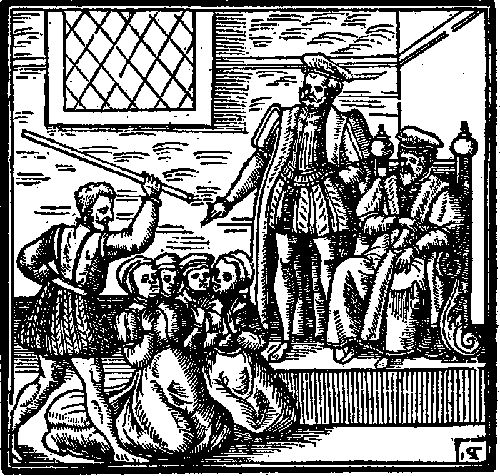
The King as the Judge: Suspected witches with Agnes Sampson kneeling before King James VI from the book Daemonologie (1597). He himself oversaw the trial and ended up sentencing many to be burnt as witches.

The Storm of Contrary Winds

By the autumn of 1590, Scotland was deep into witch hunts, and many of those sent to trial were questioned by the King himself. Today, the city of Edinburgh and the rest of the country is riddled with the memory of those who were burnt at the stake as a witch. King James VI, the son of Mary, Queen of Scots had just returned from Denmark-Norway where he had married Anne of Denmark who was only 14 at their wedding. 

Read Also

Edinburgh Castle Ghosts and Legends

Witches, dragons and ghosts, Edinburgh castle are said to have it all. The sound of bagpipe and drummers can be heard without anyone playing, and those accused for witchcraft as well as prisoners of wars are said to haunt the old castle.

Keep reading

The Danish court at this time was extremely wary of all things black magic and witchcraft. The fear of demons and witches had tightened the European continent and it was probably a fear that the Scottish King James adapted and brought back as well after spending time there. 

The King of Scotland was impatient awaiting his bride from Denmark to cross the seas after the wedding to stay by his side, but on her voyage to Scotland the fleet experienced heavy storms and ended up starting not only one, but two major witch trials that ended in several executions.  

A Series of Unfortunate Events

So how did a simple midwife like Agnes Sampson get accused of something that happened all the way over in Denmark? To this we have to go through the Danish court and the witch trials that happened there before it started in Scotland. 

Peder Munk of Estvadgård was a Danish navigator, politician and ambassador and in charge of carrying the fleet of 18 ships with Anne of Denmark to Scotland to bring her to her throne by her King. They set out on their voyage in 1589 from Copenhagen and were riddled with bad fortune, taking years to reach their final destination.

First they had to stop in a port in Norway to repair a leaking ship and had to stay there for a very long time, on their way to a very impatient king. When they reached The River Forth in central Scotland a ferry boat collided with one of the vessels in a storm and all of the passengers drowned. This was all attributed to witchcraft. 

Back in Denmark, the navigator Peder Munk blamed it all on witchcraft, especially on a certain woman whom he had insulted and believed to be the main witch behind the storms. This became the beginning of the Copenhagen witch trials, which ended in executing 17 people by burning. 

This inspired the King to hold his own trials, and it would be known as the North Berwick Witch Trials, and Agnes SAmpson was one of the main accused. 

Accused of Witchcraft

More than a hundred suspects were arrested in North Berwick, several of them confessed during torture and named other people. Agnes Sampson was accused by Gillis Duncan, another one of the accused. 

Duncan was really the one that linked the other accused of causing the storms that ended up sinking the Queens ships. She worked as a servant and confessed after torture that she was a witch and there were several more. The reason she was accused herself was that she was far too skilled of a healer in her master David Seton’s mind who also thought that Duncan had been sneaking out at night. 

Agnes Sampson ended up being one of the more significant accused persons, as an elderly and respected woman that had healed more than one in the local area. Many attributed their good health to her good work. Now, they all turned on her because of the rumors and her unfortunate circumstances. The fact that she was a widow with children and acted as an independent woman and educated midwife was a part of the indictment against her. She had also been accused of witchcraft and investigated before. 

Witches Sabbath: According to the accusers, Agnes Keith and the rest of her witch coven had met up and created a storm to keep a ship from Denmark arriving to Scotland, carrying Anne of Denmark.

The Wise Wife of Keith was imprisoned and put to torture for a long time before saying anything. She started off refusing to confess at first, but after a long time in the dark and in pain, she as the rest of the accused gave up. 

In the end she was brought before King James VI himself and a council of nobles at the Palace of Holyroodhouse. Sampson denied all the charges, but they kept torturing her until she said otherwise. Her head and body hair were shaved and she was pinned to the wall of her cell with a witches bridle. This was a torture instrument with four sharp prongs pressed into the mouth, meant to humiliate as well as hurt the ones wearing them. 

She was forced to stay awake with no sleep in her cell with a rope around her head, always reminded just how close to death she really was. And in the end, how freeing that prospect must have seen compared to the torture she went through. 

Finally, after all that torture, Agnes Sampson confessed to whatever they asked of her in front of her own king who oversaw the trial. In all she confessed to 53 indictments against her, including attending a Sabbat she led and that she was indeed a witch with supernatural power she used to harm others with. 

According to her testimony, she ended up saying she made a charm that caused a storm that ended up drowning Jane Kennedy. She sank a dead cat with parts of a dead man into the sea near Leith. The same charm she used to threaten the King and his wife on her voyage. 

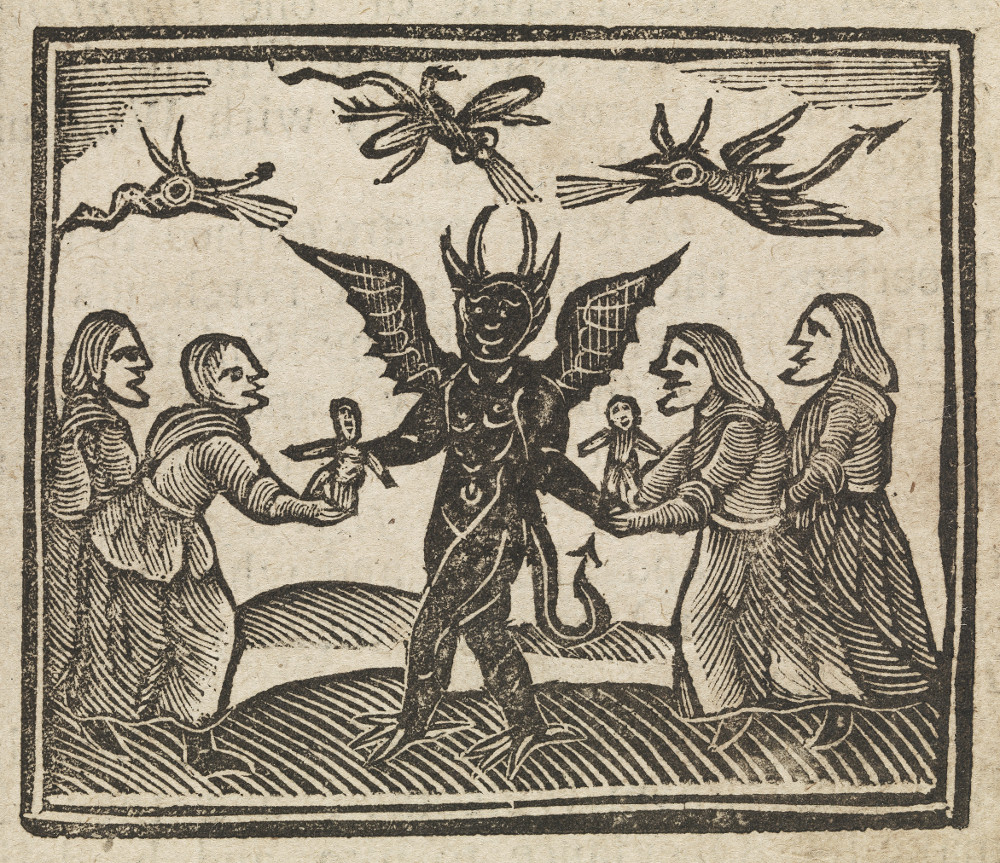
In League with the Devil: Depiction of the Devil giving magic puppets to witches, from Agnes Sampson trial and North Berwick Witch Trials where she and many others ended up being burnt as witches in 1591.

It was her last testimony that was her downfall in the King’s eyes. In it, she disclosed things he and his wife had on their wedding night in Oslo. A conversation she had no way of knowing:

“Item, the said Agnes Sampson confessed before the Kings Majesty sundry things which were so miraculous and strange, as that his Majesty said they were all extreme liars, whereat she answered, she would not wish his Majesty to suppose her words to be false, but rather to believe them, in that she would discover such matter unto him as his majesty should not any way doubt of. And thereupon taking his Majesty a little aside, she declared unto him the very words which passed between the Kings Majesty and his Queen at Oslo in Norway the first night of their marriage, with their answer each to other: whereat the Kings Majesty wondered greatly, and swore by the living God, that he believed that all the Devils in hell could not have discovered the same: acknowledging her words to be most true, and therefore gave the more credit to the rest which is before declared.”

— News from Scotland

Execution and Haunting

King James was allegedly not completely convinced of Agnes Sampson guilt until her last confession. After it however he changed his mind and sent her to be burned. On 28th of January 1591 she was taken to the scaffold on Castlehill where she was garroted before being burnt at the stake. 

Although the exact numbers of the executions are hard to be certain of, it is estimated that around 1500 people were killed as witches by the state of Scotland during this time. 

Agnes Sampson’s naked ghost is said to roam the castle grounds, bald headed roaming around the Palace of Holyroodhouse. 

More like this

Newest Posts

References

Lady Janet Douglas, Ghost of Glamis Castle

Advertisements

Lady Janet Douglas is said to haunt the Glamis Castle in Scotland after being burned at the stake after being entangled in court politics and being an enemy of the King. 

Glamis Castle is said to have inspired one of Shakespeare’s most famous plays, Macbeth, a play so haunted you are not supposed to say the title out loud inside of a theater. The old castle is located in Angus, Scotland, not far from Edinburgh and is considered one of Scotland’s most haunted castles.  

There are many mysteries surrounding this place, from the monster of Glamis, the ghost playing cards for the rest of the eternity and many more apparitions and legends. One of the ghosts residing in Glamis Castle is that of Lady Janet Douglas, also called Lady Glamis. 

Lady of the Castle

The story behind Lady Janet Douglas and her death is rooted in the bloody battle for power and revenge in 1500s Scotland. King James V was remembered as the vindictive king and of his paranoid fear of his nobility, leading to the death of many of them, Lady Glamis being one of them. 

King James V had Lady Janet Douglas accused of treason against him, although it was clear that the accusations were false. Her only crime was that she was the sister to the King’s stepfather, Archibal Douglas, Earl of Angus, which the king hated after having been imprisoned by him for years before escaping. 

Lady Janet Douglas: A portrait of the Lady Glamis as she was seen as a great beauty when she lived.

The Douglas and Stewart families had been battling for power in Scotland for generations. When King James V’s mother, Margaret Tudor became a widow, Archibald Douglas married her and took control over the kingdom as King James was just a child. 

Living as Archibald’s prisoner for years and having taken the power away from him, the hatred King James V had for the Douglases grew. His hatred for Angus extended to the whole family and he wanted them gone when he finally escaped. 

Charged for Murder and Treason

In 1528, upon the death of Lady Glamis first husband, John Lyon, 6th Lord of Glamis, Lady Janet Douglas was immediately summoned for treason, accused of supporting the civil war against the King and of poisoning Lyon who died on 17th of September 1528. 

Her being unwed left her vulnerable and a target for the King’s vengeance against her brother. Lady Glamis brother, the king’s stepfather was already exiled and King James had seized all his land and property he was once a prisoner in. Now he sought revenge on the one he could get his hands in.

Charges were eventually dropped, and Lady Glamis were free to go back to Glamis Castle. She went on to marry Archibald Campbell in 1532, having ceased all communication with her brother and the rest of the Douglas clan to prove her innocence in any plot against the King. 

Her Final Arrest

Lady Janet Douglas’ reprieve was short-lived, however, as in 1537, she was once again summoned away from Glamis Castle for treason, and this time the King was going to have her punished. There were several reasons as to why she was picked out, one of the reasons was because of her beauty. She was seen as a unique and one of a kind beauty among the nobles and when her first husband died, she had several suitors. 

One of them was William Lyon, a close friend of her first husband. His obsession for her only grew and when she married Campbell, it turned sour. He started whispering in the king’s ear about her plans to poison him, and the king, looking for any excuse to get back at the Douglases, listened intently. 

Lady Janet Douglas was imprisoned with her husband and her son John in a dungeon of Edinburgh Castle, a castle riddled with rumored ghosts as well. Her husband managed to escape from prison, but was later killed when he was found. 

This time, the charges brought against Lady Glamis included being in secret talks with the Douglas clan, attempting to poison the King. To capture Lady Janet Douglas was easy enough, but to convict her for being a witch was more difficult as Lady Glamis reputation was impeccable and a loved character.  

The Lady Burnt at the Stake

To gather enough evidence for a conviction, King James had Lady Janet Douglas family members and servants imprisoned and tortured until they gave answers that he wanted.

In later years she has been remembered as being an accused witch, but nowhere in her files does it say she was ever accused of witchcraft as well. Perhaps it would have been better for her, as those accused of witchcraft were often strangled before being burned. Traitors didn’t have that luxury. 

In the end they all talked and Lady Janet Douglas was convicted. When they led her out from the dungeon, she was nearly blind after being kept behind bars in the dark for so long. Lady Glamis was burned at the stake on 17 July 1537 by Edinburgh Castle and It is said King James forced her young son, John from her first marriage to watch her agonizing death before letting him go.

Lady Glamis’ son was also sentenced to death, but because of his young age, he was not to be executed until he reached eighteen. Luckily for John, the king died before then and was pardoned, reclaiming his property of Glamis Castle and becoming the seventh Lord Glamis.

The Haunted Glamis Castle

Not many years after Lady Glamis’ execution, reports about a gray lady started to appear around the Glamis Castle grounds and people kept seeing this ghost, believing it to be her.  The castle is not the only place her ghost is said to have been seen though. In Edinburgh Castle, were she was held captive and at last burned alive, there have been reports about a ghost reminding them about the Lady Glamis as well.

The Haunted Castle: There are many mysteries if you delve into the legends surrounding Glamis Castle, from the monster of Glamis, the ghost playing cards for the rest of the eternity and many more apparitions and legends.

Back at Glamis Castle, she has been reported around the Clock Tower as well as in the chapel of the castle. People report an atmosphere of great sadness when they have seen her kneeling at the altar. For a long time one seat in the chapel was reserved for her and no one was allowed to sit in that seat. 

Once, The James the old pretender, during the Jacobite Rising in 1716, a direct descendant of her killer saw her sitting there, still haunted by his forefathers actions. 

More like this

Newest Posts

References

Featured Image: Ian Robinson/Wikimedia

The Chief Executioner at Plaza Nueva

Advertisements

In his old workplace at Plaza Nueva, there is the ghost of an old executioner that is said to still walk over the plaza in Granada, Spain. It is said he is still dressed in his garb, as he is on his way to one of the executions for a day’s work. 

Have you ever felt a chill down your spine while walking through an old, dark street in Spain? It could be that the stories of haunted streets are true. Spain is known for its mysterious and dark history, and many of its cities have their own stories about spirits and ghosts lurking in the shadows. 

Plaza Nueva, a bustling square in Granada, has a long and storied history and is despite its name, the oldest square in Granada. Originally built in the 16th century, it has witnessed countless events and has been a central location for various activities over the years. It was one of the most important parts of the city with many games, bullfights and tournaments were held. 

Read more: Check out all of our ghost stories from Spain

However, it is also linked to the darker side of Granada’s past – executions. During the 19th century, Plaza Nueva was the site of public executions, where justice was carried out in front of a crowd. It is in this context that Maestro Lorenzo’s role as the Chief Executioner becomes significant.

The Chancellery of Court of Justice: A Place of Haunting Presence

The Chancellery of Court of Justice, located near Plaza Nueva, is a building steeped in history and mystery. Constructed in the 16th century, it has witnessed numerous trials and legal proceedings. 

Legend has it that many spirits still roamed the halls inside of the building as well as walking across the square outside where the condemned met their final end. 

Read more: Check out all of our ghost stories about places that were used as an execution ground: Dead Men Walking in Old Provost in Grahamstown, Paris’ Haunted Père Lachaise Cemetery, Unveiling the Dark History of the Tower of London and its Ghosts 

The Haunted Plaza Nueva: In Granada, Spain the Plaza Nueva is said to be haunted by the former Chief Executioner, Maestro Lorenzo, dressed for work in his uniform, ready for the next execution.//Source:Superchilum/wikimedia

The most famous ghost said to haunt this place is the ghostly figure of the Chief Executioner who is said to roam the corridors, forever trapped in a time when his role was to deliver death. He is seen dressed in the attire of an executioner, forever bound to the room where the garotte, a device used for strangulation, is still kept.

Many who have encountered his spirit describe a feeling of unease and an overwhelming sense of dread.

Maestro Lorenzo: The Chief Executioner of Granada

In the grim days of the 19th century, the role of the Chief Executioner was one of great responsibility, albeit a macabre one. The Chief Executioner was responsible for carrying out death sentences and ensuring that justice was served. They were skilled in various methods of execution, including beheading, hanging, and the use of the garotte. The Chief Executioner was seen as an ominous figure, feared by many and associated with death itself. 

The Executioner: It is believed that the ghost haunting the Plaza Nueva in Granada, Spain is that of Lorenzo Huertas. Here is the executions of anarchists in Xeres in 1892 by use of the garrote.

Maestro Lorenzo, as the Chief Executioner of Granada, held this position during a time of great unrest and upheaval in Spain. His name was Lorenzo Huertas and was known as the “Head Cutter”, was always dressed in a black cape with a wide brimmed hat. According to the stories about him it was said he always carried the garrotte Mariana Pineda, a liberalist heroine, was executed with in his pocket. 

It has been said he is still walking, dressed as if going to an execution and heading to the room where the garotte is still held. 

The Ghost of the Chief Executioner at Plaza Nueva

The legend of Maestro Lorenzo, the Chief Executioner of Granada, continues to intrigue and captivate those who visit Plaza Nueva and the Chancellery of the Court of Justice. His ghostly presence serves as a reminder of the darker chapters in Spain’s history and the haunting stories that persist to this day. 

The stories surrounding Maestro Lorenzo add an air of mystery and intrigue to the already enchanting streets of Granada. So, the next time you find yourself wandering through the historic streets of Spain, keep an eye out for the ghostly figure of the Chief Executioner, forever bound to Plaza Nueva in Granada.

More like this

Newest Posts

References:

Mysteries en la Real ChancilleríaThe 5 most Haunted Places in SpainPlaza Nueva in Granada – the Main Old City Square with Historic Buildings
El espíritu del ejecutor que recorre la Chancillería | Ideal
Lorenzo Huertas – Wikipedia, la enciclopedia libre

Haunting of the Executed at Plaza Mayor of Madrid

Advertisements

Spain has a long and bloody story, and this is especially true in Madrid. On Plaza Mayor in the city they used to have huge executions in public for people to cheer for. According to locals and tourists alike, it is said that the plaza is now haunted by the ghosts of the executed. 

Spain is home to a great many mysterious and dark places. Some of these places are said to be haunted by the ghosts of the past. For those with a penchant for the paranormal, exploring these haunted streets is an exciting adventure that will take you on a journey through some of Spain’s darkest and most mysterious locations.

Read more: Check out all of our ghost stories from Spain

Plaza Mayor in Madrid, where the whispers of the past resonate through the cobbled streets and is said to be one of the most beautiful squares in all of Spain. The place is usually a pit stop for a cup of cafe con leche, but the place has a terrible history. As night falls, the iconic square transforms into a haunting realm, revealing its ghostly secrets to those brave enough to venture into its depths. 

Main Square of Madrid History

The Plaza Mayor, located in the heart of Madrid, has a rich history that dates back centuries. Originally known as the “Plaza del Arrabal,” it served as the main market of the town in Madrid. Traders from far and wide would gather here to sell their goods, creating a bustling atmosphere that attracted both locals and visitors. 

However, tragedy struck in 1631 when a devastating fire engulfed the plaza, leaving it in ruins and several people dead. It was after this murderous fire that the strange rumors started circulating that maybe something evil and a sort of bad energy had gathered at this particular plaza. 

Plaza Mayor: The plaza is one of the main squares in Madrid and it thought to be haunted by all of the deaths that happened through executions and auto-da-fe’s in the past.

More than 50 houses perished and it took 3 days to extinguish the flames. People in Madrid thought that the fire had to be a curse of something diabolical sent to avenge those who had been executed in this place and they started to decorate it with virgins and saints to keep them at bay. But according to the legends, the ghost would not budge. 

The square was subsequently rebuilt and became the central hub for bullfights in Madrid, attracting crowds eager to witness the spectacle. It is said that the sound of a roaring bull from the fights are heard. 

Autos-da-fe in Madrid and Spain

During the Spanish Inquisition, the Plaza Mayor played a central role in the autos-da-fe, public ceremonies until 1765 where individuals accused of heresy or witchcraft were tried and punished. An auto-da-fé was the ritual of public penance carried out between the 15th and 19th centuries of condemned heretics and apostates imposed by the Spanish authority
Those who died by the garrote were executed by the Portal de Paños, by hanging in front of the Casa de la Panaderia and in the Casa de la Carniceria they were executed by ax. 

Read more: Check out all of our ghost stories about places that were used as an execution ground: Dead Men Walking in Old Provost in Grahamstown, Paris’ Haunted Père Lachaise Cemetery, Unveiling the Dark History of the Tower of London and its Ghosts 

These brutal events were often accompanied by public executions and served as a means for the Inquisition to maintain control and instill fear in the population. During the time of the inquisition  the places around could hear the screams coming from the accused witches, infidels and heretics. 

Auto-da-fe at Plaza Mayor: 1683 painting by Francisco Rizi depicting the auto-da-fé. The work represents an auto de fe celebrated in Madrid on June 30, 1680, during the reign of Charles II of Spain. The ritual was held in the Plaza Mayor and lasted a whole day.

Hundreds of people saw their last moments here on the cobble floor from their scaffold before they died.
It is said that the spirits of those who suffered unjustly during these dark times still wander the plaza, seeking justice and redemption.

Cirilo, the “official” ghost of the Plaza Mayor

Although it is believed the plaza is haunted by more than one ghost, there is one with a name that most people know of. One of the most famous ghostly legends associated with Plaza Mayor is the tale of Cirilo, the “official” ghost of the square. 

According to local lore, Cirilo was one of the first people executed in this location and after his execution it turned out that he was innocent against the charges brought to him. 

He has since been known to appear before those crossing the plaza late in the morning when there is almost no one there. Also tourists that don’t know anything about him and the drunk people on the weekend are his favorite people to appear before. 

Legends and Stories Surrounding Plaza Mayor

Over the years, countless visitors and locals have reported ghostly sightings and paranormal activity in Plaza Mayor. From strange orbs of light floating in the air to sudden drops in temperature, the plaza seems to be a hotbed for supernatural phenomena. 

Some have even claimed to have been touched or pushed by unseen hands, while others have heard disembodied voices whispering in their ears or even smelled something vile they could only blame the paranormal of. As you walk through the archways and soak in the ambiance, remember to keep your senses sharp, for you never know when you might encounter the ghostly inhabitants of this haunted square. 

More like this

Newest Posts

References:

Cirilo, el fantasma ajusticiado que vaga por la Plaza Mayor de Madrid

Plaza Mayor de Madrid – Wikipedia, la enciclopedia libreregbu.com –

The Haunted Natural History Museum in Bergen

Advertisements

There is not only one ghost story inside of the Natural History Museum in in the cobbled streets of Bergen in Norway. From everything from the ghost of a former zoologist, cursed Egyptian statues and an executed revolutionary, the museum has it all to see at the price of an entrance ticket. 

The Natural History Museum in Bergen, west in Norway, was built at the end of the 1800s at Nygårdshøyden close to the city center in the cobbled streets were it only seems to go uphill. On top of it all, close to the Dragon Top, you find the place that has been operating as a museum since it opened and has several famous collections from all over the world. And some of the artifacts are said to be of the haunted kind.

There have been reports about several strange and disturbing things occuring at the Natural History Museum in Bergen, especially at night time when there is no one around for many years, even from before the museum was built. Several people working as staff claimed to have heard footsteps and seen strange shadows and the exhibitions seems to have a will of its own and moves around when the lights are off and the living has gone home. 

The Resting Zoologist Haunting the Museum

The ones that have looked into the supposed hauntings have usually attributed it to a former zoology worker working at the Natural History Museum in Bergen named James Alexanderssøn Grieg. After he donated his skeleton to the museum after his death, strange things started happening. The people working there have a theory about him needing a place to rest as he was known for working long nights at the museum and frequently sleeping there as well. 

Night at the Museum: The museum is known for having things that looks a bit unnatural outside of its contexts and for some it can get a little scary, especially when the lights are out and the ghosts are out. One of the alleged ghosts is a former worker that donated his skeleton to the museum after he died. Here is from The Whale Hall: Natural History Museum in Bergen.//Source: Adnan Icagic © Universitetsmuseet i Bergen

But there can be someone older that has taken the steps inside the museum as well. Because, even though the museum itself only opened in the 1800s, the location it is built upon has a much longer history. 

Rakkerdammen or the Swamp of the Executed

Outside in the garden belonging to the Natural History Museum in Bergen, there is a small pond known as the Rakkerdammen with only a couple of water lilies to show for its once grandeur. It was here long before the building was made and perhaps it will stay there long after, although it is much smaller now than it used to be. 

Rakkerdammen used to be a swamp that were much larger and it was also the place where they executed people. Rakke means executioner and Dammen means The Pond. Many convicts met their unfortunate end at this place. 

A long time ago, children were warned to not go near the swamp as they were told that the ghost of the executed people would drag them into it. According to the legends, there are some of the executed that are still haunting the place. Perhaps the children are not warned to go close to the pond today, and the warnings have been forgotten.

Rakkerdammen in the Botanical Garden: Outside of the Natural History Museum in Bergen you will find a small pound thought to be haunted by the people that died there when it was used as a place for executions: //Source//May Lis Ruus 29.05.2013

The last execution at Rakkerdammen took place in 1803 when Anders Lysne from Lærdal led a farmers’ revolt against the forced military service. For this he was beheaded at this place. 

Along with former workers at the museum and revolutionaries, there are also reports about the ghost of a monk haunting the church exhibition area. Who this monk is suppose to be or from were he originated from is uncertain, but the story goes that he shows himself in the darkest of nights.

The Haunted Egyptian Statues that Moves

Perhaps the strangest thing happening at the Natural History Museum in Bergen is the moving statues that are believed to be the most haunted, and the little statues even made the national news because the staff working in the museum was so freaked out by them.  

Inside the Natural History Museum in Bergen they have a huge collection of Egyptian artifacts they started collecting as soon as the museum opened. Some of them are 3000 year old statues that are concealed inside a glass case that is the location of the haunting. 

Restless Statues in the Museum: The ushabti or shabti was a funerary figurine used in ancient Egyptian funerary practices. Ushabtis were placed in tombs among the grave goods and were intended to act as servants or minions for the deceased, should they be called upon to do manual labor in the afterlife. The figurines frequently carried a hoe on their shoulder and a basket on their backs, implying they were intended to farm for the deceased. They were usually written on by the use of hieroglyphs typically found on the legs. They carried inscriptions asserting their readiness to answer the gods’ summons to work. Source// The NRK article of the Shabti at The Natural History Museum in Bergen

The Natural History Museum in Bergen opened the exhibition in 2001 and the staff noticed soon after opening that something strange was happening with the statues. When the guard at the museum came to work, he kept noticing strange things happening. Allegedly they turn and move around inside the glass, but the staff have no idea how it is happening. 

The glass the statues is locked and no one have been close to the statues at all except the staff working there. Still, they kept moving, bit by bit until it became so noticable the staff couldn’t ignore it any longer. One of the statues has moved over five centimeters and turned towards the door. Three of the total seven statues are about to turn. 

The staff at the Natural History Museum in Bergen tried to speculate how this can be explained by something else than the supernatural. 

Maybe there are vibrations in the floor, but why is it just on this floor and in this glass case they move? asked Saure, one of the staff. Perhaps someone was pulling a prank, but they knew everyone that had access to them. And when you know the history of the little statues, you know they have a rumor of being haunted.

The Runaway Shabtis at the Natural History Museum in Bergen

The statues in question are shabtis , or death helpers and had, according to legend, magic powers. They were put in the coffins together with the mummies with the idea that they would work for the dead one in the coffin when they reached the death realm. Rich people had maybe over 300 shabtis statues buried with them, while poor people had maybe one or two, if any. 

But what exactly are they? Many believe that the Egyptians used these statues to entrap souls of servants or family to make them more manageable to travel with them to the afterlife. That is why the shabtis is thought in many ways to carry the souls of servants of the rich.

Read Also: More haunted stories from Egypt like: Khonsuemheb and the Ghost of Theban Necropolis

The shabtis statues were brought up from the basement of the Natural History Museum in Bergen where they had been gathering dust for over 100 years. 

But it isn’t just the shabtier statues that are restless inside their glass cases. There is also a female God figure in wood that appears to have turned 180 degrees and facing towards the wall in the case. Specks of dust show she has moved many centimeters already, although other figures in the same glass case have not moved at all. Is this also a case of vibration of the class cage solely?

The Natural History Museum in Bergen is not the only place where the shabtis statues have exhibited strange things when left alone. Hans Frode Storaas, responsible for the Egyptian collection at the Natural History Museum in Bergen, said he was contacted by many having experienced the same.

People from all over the world contacted him about similar experiences with the shabtis. And several merchants in Egypt wouldn’t have them exhibited in their shop because of strange things happening. He told this to the NRK broadcast site in 2012. 

So if you have a look at the Egyptian collection of the museum, don’t only look at the huge statues, mummies and coffins in the collection. Have a look at the smaller ones instead and see if there is a trail of dust that shouldn’t be there.

More like this

Newest Posts

References

Her er Norges mest kjente spøkelser – NRK Vestland

Dødens hjelpere spøker – NRK Vestland

https://www.ilovebergen.net/bergen/the-most-haunted-places-in-bergen/

A Royal Haunting at Christmas

Advertisements

Every Christmas, the royal ghost of Anne Boleyn is said to visit her childhood home as a spirit.

One of the more famous ghosts that know how to travel, is the ghost of the infamous Anne Boleyn. Most known for the wedge between the State of England and the Catholic Church in the time of the Tudors. The peoples perception of her at the time was awful, and it would be understandable if she felt some sort of resentment or sorrow for how her life ended, even in the afterlife.  

A Well Travelled Ghost

Anne Boleyn: The ghost of the former queen has been spotted many places in the UK after her death.

As ghost sightings go, perhaps the Tower of London is a more well known place for ghost sightings of her, as this was the place she was held imprisoned and executed. But it is far from the only place paranormal sightings of the former Queen have been spotted in the UK. She has also been spotted in Windsor Castle, Hampton Court and Rochford Hall to just name a few. But in the spirit of Christmas, we are going to have a look at where the royal ghost spends her Christmases in the afterlife. 

Every Christmas she is said to make an appearance at Hever Castle, at least it is now expected. Christmas was supposedly her favourite time and Hever Castle was her childhood home with good memories. And contrary to how her ghost is seen at other locations, headless and darkly dressed for instance, it is said she is seen as more happy and content when spotted here.

Christmas at Hever Castle

The castle was built in 1270 in the rural part of Kent, and although relatively small compared to many other castles we can see in England, it came to play a big part in England’s’ history as it was the seat of the Boleyn family. This is also the place where Anne and Henry first met, when he was still married to Queen Catherine of Aragon, and had an affair with her younger sister, Mary. 

Advertisements

She is often reported to be seen under a big oak tree that stands on the castle ground. This is the place Anne and Henry spent a lot of time courting. Although the ending for the couple was one of the most dramatic break ups in British history, the courting seems to have been genuine. Henry is said to have written her at least seventeen letters, begging her to be his, and the length he went to marry her, spoke to how much he wanted her in his life. 

The Tragic Ending

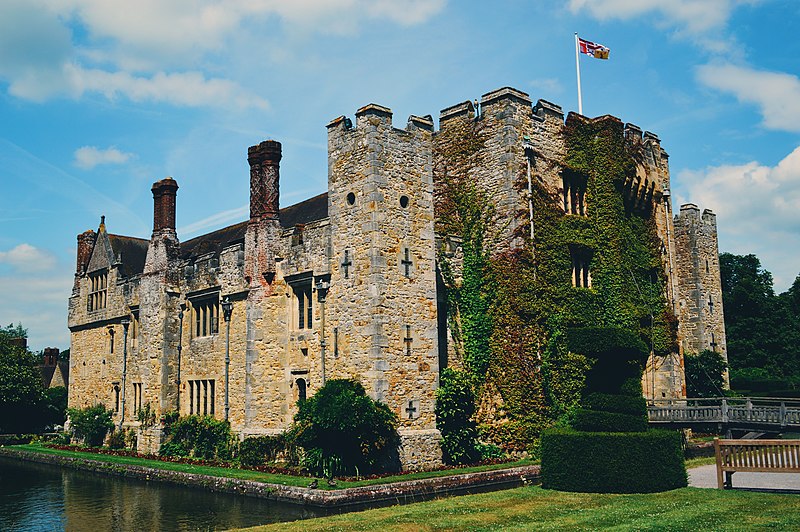
Hever Castle: This is the childhood home of Anne Boleyn and were she is seen every Christmas. It is now open to public.
Photo: Hever Castle, Kent/ijclark

Although they did get together in the end, their match was a very unpopular one. In order to divorce the queen, he had to part with the Catholic Church, and Anne was in the public eye a witch, a heretic and a seducer that was a danger to the empire and papal law. They never had a son, but their child Elizabeth the first turned out to be one of England’s longest reigning queens. 

But after several miscarriages, never ending gossiping and pressure from all sides, their love turned sour and in the end, Henry found another one and decided to get rid of Anne, in a most dramatic way. On the charges of treasury and adultery and incest with her brother, she was sent to the Tower of London and sentenced to death. On May 19th in 1536, she was executed by beheading at the Tower. 

Popular Sightings

With a such an accessible place with such a famous ghost, the reports about sightings has been plentiful. Like in 2015, when a tourist at the castle captured something on camera he was certain had to be the former queen by the fireplace.

The Ghost: Liam Archer captured this photo in 2015, convinced it was the ghost of the queen.
Photo: Liam Archer/Daily Mail

‘I believe there is something important historically inside the fireplace she wants me to recover.’, Mr Archer that took the picture told the papers at the time.

Who is to say for what reason Anne has to haunt her childhood home, let alone England as a whole? In any case, her imprints on the course of the history, religion and the royal line, was irrevocably shaken by her life and work.

It has also been said she has been seen walking across the beautiful bridge on the premise that crosses River Eden, perhaps on her way home to the place of her happy and innocent childhood.

Advertisements

More like this

Newest Posts

References

Anne Boleyn’s ghost captured on camera at Hever Castle

Ghost of Anne Boleyn at Hever Castle