Tag Archives: curse

Hauntings at the Penkaet Castle in Scotland

Advertisements

The Penkaet Castle in Scotland has its fair share of hauntings and is the home of not only one ghost, but several with its story of witchcraft, murder and royalty. 

Whether it’s a creaking door in an old castle or a cold chill down your spine in an abandoned building, many Scots have experienced paranormal activity during this festive season. As we explore Scotland’s age-old legends and curious customs this Christmas, let us not forget to look out for its ghosts too.

Penkaet Castle is a historic castle located in the Scottish Borders that is also known as Fountainhall near Haddington in Lothian, Scotland. The castle dates back to the 16th century and was originally built as a tower house by the Ker family. Over the years, the castle has been expanded and renovated, and today it stands inside in a walled garden as a magnificent example of Scottish architecture.

It also stands as a haunted castle and many have claimed to have heard screams and moans from voices in the corners and things being moved without any living having been there. 

History of Penkaet Castle

The Ker family were a prominent Scottish family who owned Penkaet Castle for many years. The castle was built in the 16th century as a tower house, and was expanded over the years to include additional wings and a courtyard. The castle was used as a residence for the Kers until the 18th century, when it was sold to the Pringles.

Penkaet Castle: The castle pictured from 1898 in Pencaitland in East Lothian in Scotland. It has several ghost stories attached to it.

The Pringles were another prominent Scottish family, and they continued to use the castle as a residence until the 20th century. During this time, the castle was renovated and updated to include modern amenities, such as electricity and running water. The castle was eventually sold to a private owner in the 1960s, and today it is a private residence.

Ghost of the Beggar that Cursed the Castle

One of the ghosts said to haunt the halls is the spirit of Alexander Hamilton. He was a beggar that was accused of witchcraft after the lady of the house, Lady Ormison and her eldest daughter died of a mysterious illness. 

It was believed that Alexander Hamilton had cursed them both after he was thrown off their property when he came to beg and had to go back empty handed. 

Because of how they had cruelly turned him away, it is said he returned and bound the gates with blue thread, which was some form of witchcraft he had used to kill the two women.  

Two days later the woman who turned him away died together with her daughter. An arrest order was put on Hamilton and he was caught and convicted. For this he was executed in Edinburgh on Castle Hill. 

Read Also: He is not the only convicted and executed on Castle. Read more about this is: Edinburgh Castle Ghosts and Legends and our stories about Witches

After his death, the ghost of Alexander Hamilton has been reported being seen close to the castle, perhaps vengeful of the family that sent him to his death and returned to the place of the crime. Question is, whose crime? His, or those who accused him for something like that?

The Murdered John Cockburn

A ghostly banging on the doors, moving of the furniture and strange footsteps are also thought to be the ghost of John Cockburn that once belonged in the house that har haunted by his bad conscience and then in turn, haunting the Penkaet Castle.

According to the legend, he killed his relative, John Deton and because of his bad conscience over what he did, he is still haunting the castle today. And people who have lived in the castle were often disturbed by a strange sound of something being dragged along over the floor. 

He has also been seen as the ghost of a man coming out from one of the cupboards and walking across the room before vanishing through the wall. 

When this was supposed to have happened is unsure, but it is said that a Sir George Cockburn of Ormiston sold the castle and the rest of the land to the Pringill family in 1635, so it must have been before this probably. 

The Ghost in the Fireplace

Sir Andrew Lauder’s family owned the estate from the end of the 1600s up to 1922. He claimed to have seen something that looked like a ghost upstairs by the fireplace when he was a child. 

He remembered the incident all the way through adulthood and thought the ghosts might have been one of his ancestors of the Lauder family. 

The Christmas Hauntings at Penkaet Castle

The legends about the castle being haunted really started getting attention when Professor Holbourn and his wife bought the Penkaet Castle in 1923. 

Many of the ghost stories from the room they called King Charles Bedroom comes from them, their family and the guests that had to stay the night at Penkaet Castle. 

It was said to have been haunted all year around, but there is in particular one Christmas in 1923, the Holbourn family remembered when a piece of wood carved with the family crest. They all saw it move on its own leaning away from the wall. It paused for a little moment before it returned to were it would be. Whatever happened that christmas is uncertain, but it led them to believe that the place was most definitely haunted.

The Haunted Bed of King Charles I

One of the rooms said to have an extra touch of hauntings is the room that has a bed King Charles I used. The bed is decorated with a copy of his death mask that was given to the owners in 1923 by his students. 

The King Haunting the Bed: One of the bed in Penkaet Castle they think is haunted with the death mask of King Charles I on one of the bed posts.

The story goes that the maid of the house would notice that the bedclothes of the bed would be found like if someone had slept in the bed, even though she knew very well no one hadn’t. The bed itself would move around in the room and sometimes people even claimed to have heard noises coming from the bed as if someone was actually sleeping there. 

In 1924 there was a guest coming to the castle that was put up in the room with the bed. When they entered it, the bed was already a mess, even though the housekeeper knew she had tidied the bed just moments before showing the guest in.  

More like this

Newest Posts

References:

Penkaet Castle | Fountainhall | The Castles of Scotland, Coventry | Goblinshead

Nightmare before Christmas: The history of festive ghost stories

Penkaet Castle – Mysterious Britain & Ireland

The Dark and Haunted Towers of Zvíkov Castle

Advertisements

The beautiful Zvíkov Castle in the Czech Republic is thought to be haunted by a demonic imp that resides inside of the old castle towers as well as a residence Lady in White and a hellhound guarding a secret entrance. 

Nestled on a rocky outcrop above the confluence of the Vltava and Otava rivers in the Czech Republic, Zvíkov Castle is a magnificent fortress steeped in history and often called The King of Czech Castles

Its majestic towers and formidable walls have withstood the test of time, bearing witness to centuries of political intrigue, battles, and conquests that shaped the country. But beneath the Zvíkov Castle’s grandeur lies a darker side, one that is shrouded in mystery and haunted by legends of ghosts, curses, and malevolent spirits. 

The role of Zvíkov Castle in Czech History

Zvíkov Castle has a rich and fascinating history, one that is full of political intrigue, battles, and conquests all the way from the Bohemian Přemyslid dynasty. The castle played a key role in many of the major events that shaped the history of medieval Bohemia, including the Hussite Wars, the Thirty Years’ War, and the rise of the Habsburgs.

Zvíkov Castle played a significant role in the history of medieval Bohemia and the Czech Republic. The castle built with water all around was a key stronghold for the Rosenbergs, who were among the most powerful and influential families in the region. It was also a center of political and cultural activity, hosting many of the most important figures of the time.

Source

During the Hussite Wars, Zvíkov Castle was besieged by Hussite armies, who attempted to storm the castle’s walls. The castle’s defenders held out for several months, but were eventually forced to surrender. The castle was later destroyed by the Hussites, but was rebuilt by the Rosenbergs in the 16th century.

Today, Zvíkov Castle is a popular tourist attraction, drawing visitors from around the world to explore its history, architecture, and legends. The castle’s haunting beauty and rich history make it a must-visit destination for anyone interested in the dark and mysterious side of Europe’s past.

The Imp Haunting the Towers

Zvíkov Castle is renowned for its ghostly sightings and paranormal experiences. Visitors to the castle have reported seeing shadowy figures moving through the halls, hearing strange noises and footsteps, and feeling cold spots and sudden drops in temperature. Some have even claimed to have been touched or pushed by unseen hands.

One of the ghosts said to be haunting the castle is called the Zvikov’s Imp. He is said to be haunting the ancient tower Markomanka, a tower with mysterious markings or runes in the stones. He has also been reported to haunt another tower called Hlíza or The Black Tower.

Read More: Check out all of the ghost stories from the haunted castles around the world

Stories have been circulating about him for hundreds of years and is known for playing tricks on people like punching, poking, moving their objects or tripping them. 

It is said that people that have visited the castle tell about seeing strange things in their photoes when coming home as well as experiencing technical issues. 

Animals are also said to be affected and have shown bizarre behavior, almost like possessed

This story most likely comes from the stories about the Rarášek from Slavic folklore. Described as a sort of imp or a trickster spirit. The legend of the Zvíkovský rarášek has been told since 1597 when they were doing work in the Markomanka Tower that is also the oldest part of the castle. 

It was said that the workers were driven out from the evil spirit, and that it has since haunted the Throne Room at midnight. 

Dead Within a Year

Another story told about the Zvíkov Castle is that anyone that sleeps over in the main tower is said to die within a year. Perhaps one of the demonic imps more deadly tricks?

Another thing to beware is down in the catacombs of the castle where it is said that bloody hellhounds roam and have been blamed when some hear strange howling in the night. According to the legends there is a secret passage they are guarding from the gothic chapel of St. Anne from the 1200s. 

The Legend of the White Lady

Another one of the enduring legends of Zvíkov Castle is that of the White Lady, a ghostly apparition that is said to haunt the castle’s halls, although she is said to not be as demonic as the other strange occurrences from the castle. 

Many visitors to Zvíkov Castle have reported seeing the White Lady, dressed in a flowing white gown, gliding through the castle’s rooms and appearing in the stairs. Some have even claimed to have heard her weeping and 

Conclusion and final thoughts

Zvíkov Castle is a hauntingly beautiful fortress steeped in history and legend. Its dark past is a testament to the trials and tribulations of medieval Bohemia, and it’s haunted legends continue to intrigue and fascinate visitors to this day. So, gather your courage, and join us on a journey into the heart of one of Europe’s most haunted castles.

More like this

Newest Posts

References:

Featured Image

Zvíkov (hrad) – Wikipedie 

A Haunted Czech Castle and its Demonic Imp – Journalnews 

Zvíkov Castle – Wikipedia 

The Cursed Gran Teatre del Liceu in Barcelona

Advertisements

Built on supposedly cursed ground, this theater in Barcelona has faced many tragedies. After several fires trying to close the doors of Gran Teatre del Liceu, people have come to believe that the building is haunted possibly by a curse they have no idea how to break. 

Spain is known for its ancient theaters and the stories of ghosts that haunt them. Many people have reported sightings of strange figures and other paranormal activities in these theaters that just don’t want to let the past go.

Read more: Check out all of our ghost stories from Spain

The haunted theaters in Spain are an interesting subject to explore. They offer a glimpse into the history of the country as well as a chance to explore the supernatural world. From tales of ghostly apparitions to mysterious sounds and unexplainable events, these theaters have something for everyone who is interested in exploring the unknown.

Oftentimes, the cursed places call for attention to the places history, and the street where this cursed theater is located, has a long one. 

The Bustling La Rambla in Barcelona

All the way since the middle ages La Rambla has been a center of Barcelona’s urban life with markets, festivals and sports as well as more serious and sinister things. 

The Haunted Gran Teatre del Liceu: The theater in Barcelona is thought to be built on cursed ground and have gone through many difficulties and mysterious incidents.

According to legend, this old theater in Barcelona was built upon cursed ground in 1847. During the middle ages, it is said that the place was used for executions and was therefore haunted and cursed. 

What we do know is that the gallows in La Rambla, las forca de la Rambla were placed by the entrance to La Boqueria on the same street right around the corner from where the theater is today.

Gran Teatre del Liceu – the Oldest Running Theater in Town

The Grand Theatre of the Lyceum is usually only known as El Liceu located on La Rambla and is the oldest running theater in Barcelona and from its opening  until 1989 the Liceu was the largest opera house in Europe that could seat 2 338 people.

Read more: Check out all of our ghost stories about haunted theaters like The Mysterious Ghost Stories of The Haunted Dock Street Theater, The Ghost of Theatre Royal Drury Lane, The Friendly Ghost Octavia at Den Nationale Scene or The Legend of the Phantom of Opéra Garnier

The theater was built in an unused Monastery and ended up being associated with the aristocracy and upper-middle class. This also drew people to the theater that wanted to end the upper class regime. 

The Killed Monks in the Ground

Long before it turned into a theater, the place was an abandoned convent. The Virgen de la Buena Monastery of the Trinitarian order was built in 1662. 

The Trinitarian order was begun for their mission to free christian that were in captivity by muslims. This was a time with many crusades to the middle east and Spain were also overtaken several places south in Spain by muslims.

There is also a legend that it was the place where there was a convent there with Trinitarian monks that were killed during a riot that happened there. The dead monks were buried under the ground where they were killed. 

Whether this legend is true, is uncertain, but there certainly were riots happening in Barcelona that targeted religious buildings. When there was riots in Barcelona in 1835, the convent was lit on fire and burned and the monks left the place. 

The Trinitarian convent building was then rebuilt into the theater. No matter if the story of the execution grounds or the murdered monks are true, it is used as a base to explain the legend that the theater is cursed and the reason why the building has seen so many tragedies over the years.

The Many Fires in the Cursed Theater

The first major tragedy that happened was when the building was severely damaged by a fire in 1861 that started in the tailor workshop, the people blamed it all on the curse. Was perhaps it from the curse of the monks? Were they fed up by the celebration of something so pagan like the carnival? Were their graves disturbed when they built the building?

It was in the middle of the carnival celebrations and everyone wore masks and it could have been anyone. Among the smoking ruins the police found an ominous note that said: An owl I am, alone I am. If you build it again, I’ll burn it again. 

Could it just be a paper from the many plays in the building? could it be something more ominous and connected to the curse?
Despite the warnings, they quickly rebuilt the opera house and opened again on 9th of April 1861. Only the facade, the entrance hall and the foyer called Mirrors Hall remained from the old theater and the building awaited its curse to hit once again. 

The Bombing of the Anarchist

In 1893 tragedy struck again when 20 people died as they were killed by an anarchist named Santiago Salvador. He threw two Orsini bombs into the stalls and watched it all explode and the bombing shocked Barcelona and became a symbol of the turbulent time of social unrest the country was in.

The theater opened again on 18th of January in 1894, but the seats that those who were killed in the bombing were not used for many years after this. 

Could we really put this terrorist act on the supposed curse of the building? 

The Last Fire of the Theater

In 1994 the building burned to the ground because of another fire. Apparently it happened when a spark accidentally fell on the curtain during a respiration. The theater was once again being rebuilt in 1999 with new and improved facilities. 

During the almost 30 years since its last reopening the theater has had no more damaging scandals and the building has remained intact. 

Is the curse now lifted, or will the place in fact burn down once again? There is an additional legend about the place. During the riots, the nearby convent of Mount Sion shared the same fate as the Trinitarian monastery. According to the legend, the prioress had a ring that was buried in the foundations of the new theater and cast a curse upon the place. 

It is said that the danger will continue to loom over the theater until someone finds the ring of the prioress of Mount Sion in the foundations, and as of yet, there are no one that has found it.  

More like this

Newest Posts

References:

La maldición del Liceo

La eterna maldición del Liceu de Barcelona

Estos son los conciertos del Primavera que puede ver gratis (por streaming)

Walking the city. Barcelona as an urban experience

A Brief History of Gran Teatre del Liceu in Barcelona

https://books.google.no/books?id=1t-sDwAAQBAJ&pg=PT195&lpg=PT195&dq=las+forca+de+la+Rambla&source=bl&ots=yhJMDSDGsQ&sig=ACfU3U0TnxC7xEwSZxH4t05q5yaXdof5Yg&hl=no&sa=X&ved=2ahUKEwiOzK2qkKz_AhUa6CoKHWNIAb8Q6AF6BAgfEAM

13 Barcelona Haunted Houses & Places that will creep you out

Haunted and Mysterious Places in Barcelona | 19 Local LegendsLiceu – Wikipedia

Palazzo Ca’Dario – The Cursed Palace in Venice

Advertisements

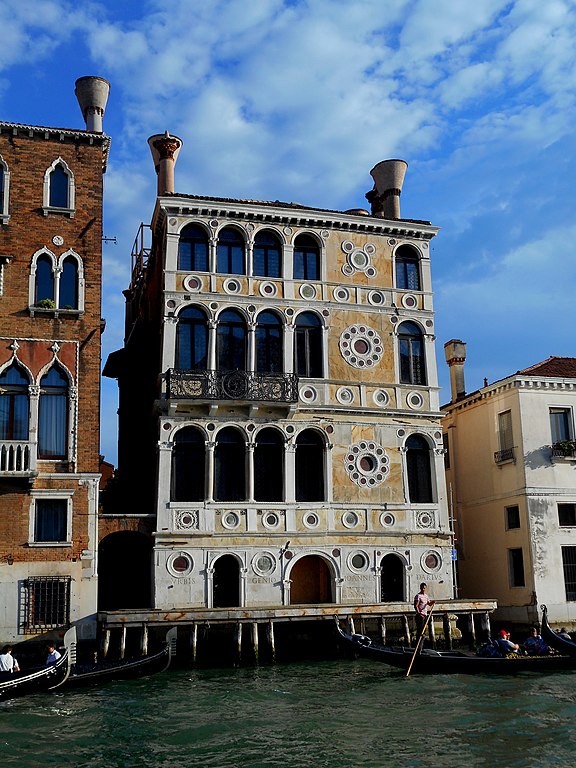
Along the Grand Canal in Venice there is this gothic palace called Palazzo Ca’Dario. For centuries the owners have met an unfortunate end and today it is most known as the most cursed palace in Venice.

Taking a walk in Venice’s narrow streets or from a boat on the shallow canals, there are many spectacular buildings towering over the shallow canals. Each with its long and sometimes dark history. 

One of these wonderful buildings is the small, but exquizit palace in Venetian gothic style named Ca’Dario on the Canal Grande. It has a marvelous facade of Istrian stone and is decorated with marbles and medallions. 

Read More: Check out all of the ghost stories from Italy

Palazzo Ca’Dario is often for sale, it is said though, as the owners don’t seem to linger for too long in this place, something that doesn’t happen very often in Venice. But for this particular palace, there is a very particular reason for its vacancy. According to local venetians, the place is cursed and has been for centuries. 

The Palazzo Ca’Dario is often called the house that kills and is today, perhaps one of the most famous cursed houses to this day. The owner that takes up residence in the palace will soon after meet a violent death or at least live to be ruined. 

The Dario Family

For evidence for this legend, or perhaps more accurately, the reason for this legend behind Palazzo Ca’Dario, is the track record of owners that died in horrific ways or lost all of their fortune, tracing back to the 16th century to modern day. 

According to legend, it all started with the daughter of Giovanni Dario. Giovanni Dario was the Secretary of the Senate of the Republic of Venice and built Palazzo Ca’Dario in the 15th century. On the facade of the palace there is an inscription that reads Urbis Genio Joannes Darius, meaning Giovanni Dario to the Genius of the City. 

His daughter Marietta Dario was the first person to have died in a horrible way. After her husband Vincenzo went bankrupt and in some variation of the story, stabbed to death, she fell into a darkness she didn’t manage to climb out from. She committed suicide it that very palace her father built. Not long after their son followed after being murdered in Crete by assassins. 

The Curse Continues to this Day

Since then there have been over 10 dramatic deaths connected to the owners of Palazzo Ca’Dario, and even people like Woody Allen, who considered buying the house, refused after he heard about the curse of the house. The owners don’t necessarily have to live in the palace to be struck by the curse, they simply have to buy it. 

The Barbaro family was one of the families that lost all of their fortune shortly after they bought the place. 

In 1842, an Englishman named Radon Brown lost all of his money as well and committed suicide together with his male lover after their romantic relationship were revealed. A very similar fate fell upon the American Charles Briggs who were accused of being gay living their. Together with his lover, they fled to Mexico, but his lover died by suicide. 

The Cursed Palace: Palazzo Ca’Dario as it is today along the Grand Canal in Venice. For so many centuries it has been considered to be one of the most cursed places in the entire city of Venice as the owners have often met an unfortunate end.

The French poet Henri de Régnier lived there until he was so seriously ill he had to return back to France. The manager of The Who, Christopher Lambert was also one of the owners that seemed to get ill after purchasing the house in the early 1970s. 

In 1979, Fillippo Giordano delle Lanze, a count from Turin was killed by his lover inside the palace. His lover, a Croatian sailor fled to London were he in turn was murdered. 

In the 1980’s a financier named Raul Gardini bought the place. He was later found guiltu of being implicated in the Tangentopoli government corruption scandal and committed suicide in 1993. 

The Reason Behind the Curse of Palazzo Ca’Dario

Why is Palazzo Ca’Dario so cursed you asked? There are several legends to it. Some claim it is from the original death of the daughter of Dario that is still echoing as a curse in the building, some say it is a building built on top of an old Templar cemetery or built on a crossroad. 

Perhaps, there is more to say about who can afford to live in a palace in the first place, and how far they fall when they lose everything. 

There is noted however by people that the inscription on the facade praising the builder of Palazzo Ca’Dario to mean something completely different as an anagram. Sub ruina insidiosa genero, meaning I bring treacherous ruins to those who live under this roof

The Palazzo Ca’Dario on the Canal

As the sun sets over the shimmering waters of the Grand Canal, a sense of foreboding surrounds Palazzo Ca’Dario. The legacy of tragedy and misfortune that has plagued its owners for centuries continues to cast its dark shadow upon the palace. The curse, intertwined with the very fabric of the building, has become an indelible part of Venice’s history.

Despite the tales of doom and the cautionary whispers of locals, there are always those who are drawn to the enigmatic allure of Palazzo Ca’Dario. Through the years, the curse has claimed its victims with ruthless precision. Lives lost, fortunes squandered, and dreams shattered. The hallways echo with the silent cries of the past, a testament to the insidious nature of the curse that has plagued this cursed palace.

Legends and theories abound, attempting to unravel the origins of the curse. Is it the tortured spirit of Marietta Dario, unable to find peace after her tragic demise? Or does the curse stem from a darker force, buried deep within the ancient foundations, waiting to consume those who dare to call it home?

Perhaps one day, the curse will be broken, the darkness lifted from this ill-fated palace. But until then, Palazzo Ca’Dario remains a testament to the fragility of human existence, a haunting reminder that some places are best left to the whispers of legends and the pages of history.

More like this

Newest Posts

References

Venice Legends and Ghosts

https://www.atlasobscura.com/places/palazzo-dario

The Cursed Columns at St. Mark’s Square

Advertisements

At St. Mark’s Square in Venice there are two columns placed. And if you believe old folklore you can’t pass between them, or you’ll be cursed. 

The two columns at St. Marco Square, or locally known as: Colonna di San Todaro, is wonderful to look at and one of the main places tourists visit as they wander around in the city between the majestic Doge Palace and the famous bell tower.

However, the origin of these columns is not a happy one as they are a reminder of what war nation Venice once was. They were transported to Venice in the 1100s after the Venetians sacked the city of Constantinople. 

There were originally 3 of them, but the last one sank into the sea on the voyage. They even hired a special sea master to look for the third one for almost 20 years, but the column was forever swallowed somewhere in the Venetian lagoon. 

The 2 remaining ones were put on the square by a man named Niccolo Barattieri. For a long time this was the only place where you were allowed to gamble in the city, which was strictly forbidden, because that was what Barattieri wanted as thanks for putting up the two remaining columns safely. 

It was then later used as a place for executions. Between the two columns the thieves, enemies of the Republic, murderers, heretics and others were parade before being executed as a spectacle for the entire city. 

Because of this the columns are considered cursed because of all of the people that died between them. And according to legend, you can be too if you pass between them. 

Advertisements

More like this

Newest Posts

References

Lac de Paladru and the Ancient City of Ars

Advertisements

Discover one of France’s most beautiful natural wonders, Lac de Paladru or the Blue Lake. A place of wonder as it is said that it was once a place of the Ancient City of Ars that suddenly disappeared after it was cursed.

The beautiful Lac de Paladru is one of Southeastern France’s most stunning natural wonders. From its lush forests around to its many attractions and its abundance of fish, this lake has something for everyone, including some paranormal rumors about how an ancient city that once stood where the lake is, suddenly disappeared.

The Blue Lake

Lac de Paladru is a picturesque lake located in the Isère region of France that is nicknamed the Blue Lake because of its bright color. The 36 meters deep lake was formed by two rivers, the Paladru and the Séranne, which irrigated this area for centuries before. 

Lac de Paladru: The beautiful blue lake in France may hold entire settlements within its depth.//Source: wikimedia

The lake itself dates back to the 10th century and has since become renowned for its beauty, making it a popular destination for locals and tourists alike. Whether you want to explore its history or practice some fishing, Lac de Paladru offers something for everyone, even a local legend or two.

Legends of a Sunken Village

Many of the legends coming from the lake, comes from the myths of the Ancient city of Ars that once stood where the lake is now. It is said that it was a great city with riches and existed under the Holy Roman Empire. 

We do know that there were settlements to places that now are covered by the blue lake, but how big they were, and for what reasons the settlements disappeared is still up to debate.

The written accounts and locals called the city for Ars that means burned in French and the popular opinion was that it disappeared after a volcanic eruption and turned to ash. But even before the city supposedly disappeared there were written accounts of it by that name. Whether the name gave rise to legend or its faith were simply written under the stars is hard to tell. 

But did this city really exist? There are those saying it really did, although perhaps more of a village and interestingly enough, there is archaeological excavation that shows that there are abandoned settlements after a flooding of the lake around 1040. 

The Peasant Knights of Lake Paladru

What we do know is that at the beginning of the 11th  century, the Lac de Paladru had a lower level than today. Around the year one thousand, probably in 1008, about sixty settlers built a fortified wooden habitat on a chalk beach.

It was settled by farmers and craftsmen that had a second mission. They were also chosen to defend the territory as knights, and are remembered in songs and legends today. As the water rose gradually, the peasant knights eventually left the settlement around 1040. 

Is this the settlement that gave rise to the legend of the City of Ars, or was it something completely separate?

The Ancient City of Ars

The settlement of the peasant knights around Lac de Paladru are well documented in writing and archeological findings, but we can also find stories and remarks about this City of Ars as well throughout the times. 

But what really happened to it? Did there really exist a place like it? There are plenty of legends tied to the mythical city, and some of them were written down by Louise Drevet who published it in her book Les Légendes de Paladru from 1896. 

The Legend of the Pilgrim’s Curse

One of the legends tells that the Ancient City of Ars was a proud, rich and greedy city by Lac de Paladru that didn’t care for other outsiders. And in an almost biblical manner, it also led to its destruction. 

Once a pilgrim wandered to the Ancient City of Ars near the lake and was only met with cold inhospitality even though he was starving and exhausted. Except for two women, a mother and her daughter who gave him food and shelter. 

This angered the pilgrim so much that he put a curse on the village that was first heard by the ringing of the golden church bell, opening a chasm that swallowed the hostile village and sent it to the bottom of the lake. 

Only the two hospital women are spared from his curse and it is said you can still hear the sound of the bell from the bottom of the lake. 

The Legend of the White Lady

There is no complete legend in France without the appearance of the Dame Blanches, or the Lady in White. 

The beautiful Countess of Ars accompanied by her young lover will plead the cause of her village with the Emperor Frederic Barbarossa of the Holy Roman Empire. He ruled the Empire from 1155 until his death in 1190. 

The Ancient City of Ars wanted to be free from the emperor and the Countess of the city was chosen to go to the Emperor Frederic Barbarossa in today’s Germany to ask him in person.

Emperor Frederic Barbarossa agrees to spare the village on condition that the countess of Ars marries his nephew. The Countess accepts, although it’s not what her heart wants, and returns to her village. 

Here there are more than one version of what happens. In one version of the legend, she returns to her village but sees that it’s completely destroyed by an earthquake and a volcanic eruption, and her sacrifice was all in vain. 

The White Woman of the City of Ars: According to the legend, there was no city when the countess of Ars returned and she was never seen again. jsamwrites/wikimedia

Both her and her lover take a boat to try to return to it, but there is nothing to return to. Some versions say they just kept the boat floating, reaching new shores and disappearing together. Some say that the boat never returned from the lake, and they both perished in the blue lake. 

The Legend of the Chevalier d’Ars

Another legend that tries to explain the city engulfed by the Lac de Paladru is that of the Chevalier d’Ars from the village. He was chosen by the beautiful Béatrice de la Buisse as her man and it sent another man into a fit of rage and jealousy. 

The lord of Maurienne had wanted that position for himself and decided to take extreme measures for his revenge. He sold his soul to the Devil himself and in return, the village of Ars were cursed and engulfed.

Still Water with Deep Secrets

Locals still tell tales about old fishnets, pottery and other things that don’t belong to them at all. And under the still waters of the blue waters of Lac de Paladru, the legends of the mythical City of Ars continue to ring the ghostly bells for anyone to hear.

More like this

Newest Posts

References

Legendes | Lac de Paladru | France

La légende de la Dame Blanche | Villes et Pays d’art et d’histoire en Auvergne-Rhône-Alpes

La légende d’Ars, ville engloutie | Dossier

Habitat fortifié de Colletière — Wikipédia

https://en.wikipedia.org/wiki/Frederick_Barbarossa

Lac de Paladru – Wikipedia 

Lac de Paladru — Wikipédia 

The Bell-Ringer At St. Mark’s Square

Advertisements

At the famous Bell Tower at St. Mark’s Square in Venice, the ghost of a former Bell-Ringer is haunting the place, trying to sound the bells one more time. 

Walking the narrow streets and alleys of Venice, there are tales of a skeleton still walking among us, rattling his bones and asking for alms. This is said to be along Bressana Court at SS. Giovanni and Paolo. 

It is said it is the skeleton of one of the last The Bell-Ringer at St Mark, or Campanile di San Marco, one of the more popular tourist spots in Venice. The Bell-Ringer was said to be a very tall man, ringing the bell of the St. Mark’s Campanile, a huge bell-tower on St. Mark’s square. The bell tower is one of the standing symbols of the republic and the highest point in the city.

Read More: Check out every ghost story from Italy

From here, Galileo Galilei sat in 1609 and demonstrated his telescope and from here Goethe saw the sea for the first time in 1786. Although the tower has been destroyed many times, the Venetians have always rebuilt it just as it was. 

When the almost 100 meter high tower was changed into a bell tower in the 1100s, it wasn’t just to ring bells. It worked as a watch tower and lighthouse before being turned into just the belltower. This was where The Bell-Ringer was working, ringing the five bells every day at the right time.  

The Bell-Ringer was not a content man though and according to the legend, he was easily led. He allegedly sold his bones out of greed to a scientist. The Bell-Ringer agreed to it and accepted the advanced payment, and started to go out every night drinking himself to an early death.  

After his death, it is believed that The Bell-Ringer regretted taking the offer of giving his skeleton away to a scientist. Because of this he was condemned to wander at night in his skeleton form until he had enough money to buy himself free from the curse he brought on himself. 

To this day you can see the actual skeleton of the bell-ringer in the Venice’s Natural History Museum. According to the legend however, the skeleton leaves the museum at night, trying to do his job, ringing the twelve bells of the St. Mark’s Campanile. 

More like this

Newest Posts

References

Haunted Venice – Legends, Mysteries and Stories

Venice Legends and Ghosts

The Red Man haunting the Jardin Tuileries in Paris

Advertisements

In the beautiful Gardens of Tuileries outside of the Louvre in Paris there is sometimes spotted a Red Man. This is thought to be the ghost of Jean l’Ecorcheur, an assassin to Catherine de Medici who ended up being assassinated himself.

The Tuileries Palace was a royal palace directly in front of the Louvre Palace before it was burnt down in 1871 by the Paris Commune, a French revolutionary government that seized power between March to May that year. 

It was built by Queen of France, Catherine de Medici in the 1500s after her husband died to have space for a large garden. Today, the only thing that remains of it is the Tuileries gardens that covers the ground around the Louvre until the Seine and the Place de la Concorde, and if we are to believe the legend, the ghost of the The Red Man. 

Read More: Check out all ghost stories from France

It is in this stately garden that reports that go over centuries tell about the ghost of a red clothed man appearing throughout history to the visitors. And if we are to believe the legend, the ghost belongs to one of the assassins to the Queen of France.

The Tuileries Palace: Was a royal palace the royal family lived in next to the Louvre Palace. It was burned down by revolutionaries and legend has it that one of those working for the royal court cursed those living inside of the palace as long as it existed. Here the burning of the palace is depicted.

Queen of France Catherine de Medici

One of the people who are supposedly haunting the Louvre was one of the henchmen belonging to Queen Catherine de Medicis who ruled as queen in France from 1547 to 1559 at a time when the country was at constant edge because of brewing civil and religious wars. 

Although her husband, Henry allowed her almost no political power or influence as his queen, she found her own way and is regarded as one of the most powerful and influential women in Europe. 

Catherine De Medici: The Queen of France were a highly controversial queen during her reign, but managed to be a strong political figure in a time of unrest. Portrait by Germain Le Mannier.

She was also known for being interested in the occult, especially because she had problems conceiving in the start, something people attributed to witches among other things people found “unnatural” in a woman. She was also linked to being the creator of the Satanic Black Mass, teaching her son in the Dark Arts as well as being Italian. 

The Butcher Jean the Skinner

Who can this The Red Man be? What we know is true however, was that Catherine had a political agenda and needed people to put that agenda into life. But to act on the Queen’s behest came with great danger. 

The most famed legend of the identity of the The Red Man is about a man named Jean. Jean l’Ecorcheur was a butcher living in the palace and Catherine de Medici’s hired assassin to kill on her demand, both for political as well as various occult reasons according to the legends. Through his work as a butcher as well as assassin, Jean l’Ecorcheur earned his charming nickname, Jean the Skinner or the Flayer. 

Acting as the Queen’s henchmen, he also knew about her and the royal family’s secrets, which were plentiful and the Medici family was known to be a scheming family as well and Catherine de Medici had more enemies than most. Because she feared he would spill these dark secrets, she had him murdered before it happened. There are also rumors that she did it because he tried to quit or make her pay up. Nevertheless, he died a bloody death, but it wasn’t the end of him.    

He was according to legend killed by a man named Neuville in the Tuileries garden where he lived in a hut. Neuville left the corpse in the garden, but when he returned, he was gone. 

The Curse on the Royals of The Tuileries Palace

Catherine de Medici was according to popular belief a spiritual woman with a strong belief in the occult and she went to her astrologist Cosme Ruggieri who had a vision. In the vision the astrologist claimed that Jean would haunt the garden and had cursed all those living there. 

Legend has it that The Red Man rose from the dead and cursed all the French Royals who lived in the palace that were the cause of his death. After this they say many of them died under mysterious circumstances they blamed on Jack the Skinner’s ghost and curse and he was reportedly seen before many deaths almost like a dark omen. 

After this he became known as the Red Man, or the L’Homme Rouge of the Tuileries and if we are to believe the legends, he is still dressed in red and haunts the Tuileries Garden. 

Many claimed to have seen the Red Man before King Henry IV was assassinated on 14th of May in 1610, when Louis XIV died of gangrene in 1715. 

The Red Man was also seen before Louis XVI was executed by the guillotine as a traitor in 1739 during the French Revolution. 

The Lady in waiting for Marie Antoinette supposedly saw The Red Man a few days before the Tuileries Palace was stormed in 1792 in the Salle des Gardes and there is even a written account of it:

“Marie Antoinette’s women were sitting in the Salle des Gardes, when they became suddenly aware of the presence of a small man clothed from crown to heel in scarlet, who looked at them with such unearthly eyes that they were frozen with terror. They rushed to the apartments of the Madame la Dauphine and related their adventure.”

Fleeing the Palace: The Royal Family saw a lot of unrest over the generation, none greater than the many French Revolutions. Louis Philippe and the French royal family fleeing the Palace of Tuileries during the French revolution of 1848

Even Napoleon Bonaparte claimed to have seen what could have been him several times during his reign as the head of the state in France, before the battle of the Pyramids, the Battle of Wagram at his coronation and lastly at the battle of Waterloo. And although he wasn’t really a part of the royal family, he did reside in the palace as the king of some sort. 

However, in many sources they claim that The Red Man was acting more like a warning omen about danger to come than a vengeful spirit after his revenge. 

The Last Sightings of the Red Man

Written accounts went on for ages until the Tuileries Palace burned to the ground in 1971. Twelve men were ordered by Jules Bergeret to pour petroleum, tar and turpentine and light the palace on fire, burning it to the ground. And with tearing the once royal palace, did they perhaps succeed in breaking the curse of Jean the Skinner?

More like this

Newest Posts

References

Red Man: The Tuileries Palace Ghost – Geri Walton

Paranormal Paris: The Legend of the Red Man of Tuileries Palace

Phantom of the Queen’s Assassin

The Burning Skeleton in Venice

Advertisements

In Cannaregio district in the city of Venice, there is a burning skeleton of a mean man that is cursed to haunt the city around Campo de l’Abazia. 

Walking around the picturesque streets and canals in Venice you might think you are so safe. There are people everywhere and the windows so close to the street are always open. Wandering over the curved bridges and walking over the old cobblestone, you might not even notice other people as you are so preoccupied by the wonderful old architecture in the Cannaregio district. But you should never feel too safe. 

Read More: Check out every ghost story from Italy

According to old Venetian legend, there is a story about the ghost of a man still haunting the streets, especially around Campo de L’Abazia where he made a sin so great, he was cursed to walk around the area for eternity. He comes in the shape of an old man with a big bag on his back, begging for help. According to legend you must never help him, and whatever you do, never look him in the eyes. If you do this, he will turn into the burning skeleton and frighten you, maybe even to death?  

The skeleton is said to be of the usurer or a moneylender known as Bartolomeo Zenni that was so mean that he was condemned to be transformed into the burning skeleton. He lived in the 1400s, a time where Venice and Milan fought off territory in Northern Italy. Venice was at this time one of Europe’s wealthiest and most powerful cities. The Renaissance period which would change the world forever had just begun to take root in Italy and would bring them into a new area. 

Amidst all of these world changing events, everyday life went on in the streets of Venice, for people like Bartolomeo Zenni on Campo de L’Abazia. But tragedy struck the small neighborhood. 

On 13th of May in 1437, a fire broke out at Campo de l’Abazia and several of the houses were engulfed in flames. The neighbors of Bartolomeo Zenni asked him to help them, trying to save their children from the fire that was devouring everything. Bartolomeo Zenni refused to help his neighbors and instead grabbed all of his gold and jewels to save himself. Perhaps he escaped the fire safely, but in the afterlife, he will never escape from the fire as he was cursed to haunt these streets forever without a coin of gold to his name. 

So if you walk these cobbled streets and someone asks for your help, do you offer it?

More like this

Newest Posts

References

Haunted Venice – Legends, Mysteries and Stories

Venice Legends and Ghosts

The Ghosts Within the South Bridge Vaults

Advertisements

A paranormal investigator’s dream, the South Bridge Vaults in Edinburgh have been investigated for its hauntings on many occasions and many have left with a feeling of having experienced something paranormal and ghostly in the dark. 

In the late 18th century Edinburgh was a growing community with a limited space in the Old Town nicknamed Old Reeky because of the bad smell and old buildings. The city is built around seven different hills and there are five main bridges connecting the slopes and hills of the town. That is also the reason for the high rise buildings of Edinburgh were they chose to build on top of the old to utilize the uneven location of the city. 

The people of Edinburgh started to utilize the spaces under the South Bridge in the Old Town to make more room for business. The spaces within the archers under the bridge are also known as the Edinburgh Vaults or Niddry Street Vaults as well as just the South Bridge Vaults. 

Advertisements

They look like a series of chambers next to each other and are actually of the 19 archers underneath the South Bridge. It was supposed to be a place with respectable businesses, but ended up becoming some of the more haunted corners of the very haunted city. 

The Cursed South Bridge

According to legend, the place was cursed already from the start. The South Bridge that was built to connect the old town with the new town was completed in 1788, and already at the opening of it the locals deemed it as cursed. 

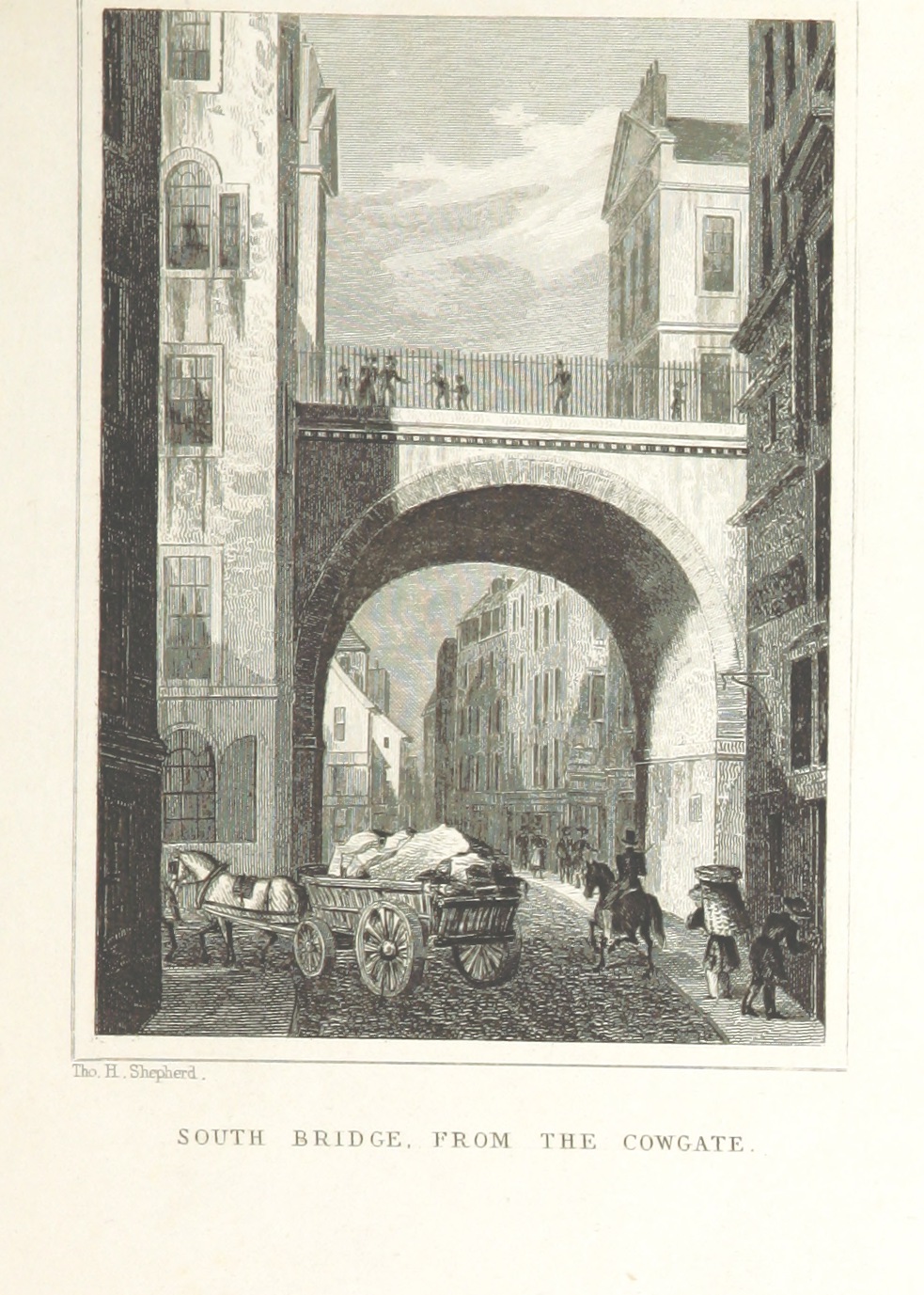
The South Bridge: The largest arch of the bridge, seen from the Cowgate.

It was seen as a grand opening and one of the respected Judge’s wives had been selected to be the first resident to cross the bridge as she was the city’s oldest resident. However, she died before the opening. To keep their promise to the elderly woman though, they decided she after all would be the first person to cross the bridge, although it was in her coffin. 

The locals in Edinburgh were scared, now thinking that the bridge was cursed because of the unusual opening of the bridge. And looking back at all that happened on the bridge and in the vaults beneath it, perhaps it indeed was. 

In the start, the South Bridge Vaults underneath the bridge were mostly used as taverns, workshops and as storage space for merchants. However it wasn’t long before the well respected businesses started leaving the area because of the poor facilities. The building of the bridge and the vaults underneath had been constructed on a low budget and even the construction itself had been rushed. Therefore they had taken no precaution to seal the surface against water and built it with porous limestone and the place became a damp and dark place which constantly flooded. 

The Damp and Dark Underworld of the Vaults

No later than 10 years after the bridge and the vaults opened, respectable businesses like shoemakers, goldsmiths started leaving the area and those that could afford it relocated elsewhere as the murky vaults flooded and the sunlight never shone inside the South Bridge Vaults. It was a place no one wanted to be, and only those that had no other choice remained. 

Advertisements

There was also a slum where the poorer people in town started to take over as the surrounding Cowgate area had developed into a slum during the industrial revolution. Crime, filth, poverty and murders were key words to explain the place as no sunlight came through.

More illicit businesses started to pop up in the area like brothels, shady pubs, gambling dents and illegal whiskey distilleries, turning the place into the red light district of the town.

The Legends of the Serial Killers Burke and Hare

A lot of horrible things happened inside these vaults during this time. Most of it, we will never know for sure. Legends however will be told. The South Bridge Vaults were where the body snatchers Burke and Hare were supposedly finding their bodies as well as killing them to sell them off to medical schools. 

The Burke and Hare murders: The serial killings were sixteen murders committed over a period of about ten months in 1828 in Edinburgh, Scotland. They were undertaken by William Burke and William Hare, who sold the corpses to Robert Knox for dissection at his anatomy lectures. Here depicted in an etching of Burke murdering Margaret Docherty (also known as Margery Campbell) by Robert Seymour.

Although this legend is often passed down as fact, there is no actual evidence that the South Bridge Vaults was the exact place they got their bodies from, although very likely. The place to find poverty struck people and those that no one would miss if they suddenly ‘disappeared’ was inside the dark and damp vaults.

The Rediscovery of the South Bridge Vaults

At one point during the 1800s, exactly when is unsure, they emptied the vaults for people and started to dump tons of rubble in the vaults, sealing them completely off and making them inaccessible for the public and were kind of forgotten for a long time. 

Advertisements

It wasn’t until the 1980s the tunnels to the vaults were rediscovered by a former Scottish rugby player named Norrie Rowan when he found one of the tunnels while he was renovating his flat. He spent the rest of his days excavating the vaults and rediscovering its history to make it accessible for the public once again. 

The Ghosts of the South Bridge Vaults

There are many stories about who haunts the place today as the vaults have reopened and daily groups of tourists and paranormal investigators are taken down to the vaults to uncover the dark history. 

Many people met their tragic fate on a daily basis down there in the vaults as well as suffered from horrible tragedies that affected the entire town. Like the Great Fire of Edinburgh  that lasted for five days after it started in 1824 and took the lives of at least 13 people. There are many stories about victims that were trapped inside the chambers and suffered horrible consequences from then. Although there is no paper trail on this tale though. 

There are many tourists that claim to have captured evidence of something paranormal going on, and they even make the newspapers from time to time. The same reports comes from the paranormal investigators that go down into the vaults and come back with what they see as proof of hauntings going on. 

Advertisements

Here are some of the ghosts that are said to haunt the vaults until this date and have gathered enough reports to be a part of the haunted ghost tour in Edinburgh: 

The Aristocrat

One of the first ghosts that people have reportedly seen over the years is that of the Aristocrat. He is said to be a rich gentleman with a tall black hat and a beard. He is not seen as the most angry spirit as he is known for grinning at visitors while leaning against the wall. People do have a tendency to feel uneasy in his presence though, according to those who claimed to have seen him. 

The Happy Shoemaker

There is also a room that is believed to belong to a shoemaker from that time that is said to still practice his profession as a shoemaker.

He is described as a man in his 50s and is one of the ghosts that are said to be friendly and are often seen smiling and laughing by visitors while he happily carries on with his shoemaking while wearing an apron.  

The Veiled Woman

In the room with the shoemaker known as The Room of the Cobbler, there is a meaner spirit though and is known as the veiled woman. She is believed to throw small stones at visitors as well. She is seen as a young woman dressed in black while wearing a veil in the north west corner of the Cobbler’s Room. 

Women have also reported about feeling an intense rush of grief, anger and a sudden and unexplained abdominal pain, which has left many to believe it is a woman that lost her child in a horrible way and she is still grieving. 

The Caretakers Room

In one of the chambers there are reports of a man sitting by the fireplace. He apparently looks like one of the more chill spirits in the place as well with a drink in his hand and legs stretched out. By his side he has a dog that is reported to brush up against people’s legs or sniff them. 

Little Jack

Then there is the small boy named Jack or James that are often spotted in the Wine Vault. He is mostly seen as a blonde curly boy around 6 or 8 years old, wearing a blue suit with the classic knickerbocker trousers. Some sources want to connect him to a missing child case from 1810. 

He is often playing with a red ball at times and is known to try to hold the hands of female visitors and likes to play around if there are children around. Allegedly, if he spots a person he doesn’t want to enter the South Bridge Vaults he will tuck their sleeves or coat when entering the Blair Street Corridor. 

According to the guides down in the vaults, he is afraid of one of the more well known ghosts wandering the narrow alleys and small chambers. And that is that of Mr. Boots or also known as The Watcher. 

Advertisements
The Watcher

Perhaps the most well known ghost in the South Bridge Vaults is that of The Watcher. There is a theory that he was a watchman and that is the reason he is known as The Watcher. Or maybe it’s because he always looks as if watching over something.  

There are also alternative legends over the years that have tried to explain his presence, and many are also claiming him to be one of the slum landlords or even one of the body snatchers that hid his stolen bodies in the chamber known as The White Room. Today we can only speculate. 

He is also called Mr Boots because of how many people in the vaults have experienced him. They can hear loud footsteps in The White Room or in the Niddry Street Corridor which is known as the most active place in all of the vaults.

His face has never been seen as it is hidden, blacked out or he is showing himself to the public with his back. He is supposedly this tall, slim and dark figure with a long flowing coat with his long hair in a ponytail. Sometimes he wears a hat and long boots. Sometimes he carries rattling keys and his breath smells disgusting of rotten teeth and whiskey. 

People experiencing stuff within the vaults often get the feeling that he is trying to get them out from the narrow and claustrophobic spaces. Batteries on cameras die or malfunction when he’s present and he is known to push or pull people towards the exit as well as the phrase ‘Get Out’ has been heard on several occasions. 

The Stone Circle

There are also rumors about an evil demon trapped inside one of the stone circles in one of the chambers. This is were the late Wiccan High Priest, George Cameron known as The Hermit set up his temple in the 90’s. It was in one of the vaults that have historic connection to the torturing of witches somehow. 

According to him, he was trying to rid it from evil and built the stone circle which still stands today. He failed, however, to remove the evil that were supposed to be in the vaults and Cameron abandoned the room after he recommended to seal up the room to protect people from the evil within it. It is not sealed though as it is one of the stops on the tour through the vaults. 

The Experience of the Hauntings

No matter the real story of the ghosts in the South Bridge Vaults and the true horror the people living there went through, the vaults itself are an interesting walk through time and history. And perhaps if you choose to go down into the dark chambers you too will hear the same that many claim to have on recordings and etched into their memories. The eerie sound of what can sound like children yelling and crying along with hushed voices and shuffling footsteps. 

Advertisements

More like this

Newest Posts

References

Edinburgh’s most haunted locations | The Scotsman

Niddry Street Vaults Ghost Hunts,

Edinburgh’s South Bridge and Vaults

Underground Edinburgh Tour of South Bridge Vaults Review

The Watcher, The South Bridge Vaults Edinburgh’s Most Haunted

https://thelittlehouseofhorrors.com/edinburgh-vaults-south-bridge/