Tag Archives: church

The Ghost Procession of Basel and the Dance of Death

Advertisements

Mirroring the famous Dance Macabre mural that used to hang on the walls near the Predigerkirche in Basel, it is said that plague victims were buried in the patch of grass outside of the church. Legend has it that when the city needs it, the dead will rise from it in a macabre procession, as a warning of an oncoming disaster. 

In the heart of Basel’s old town, amid narrow cobbled streets and Gothic church spires, there lingers a memory too grim to fully fade of the plague and the deaths of thousands of people, rich, poor, young or old, the death didn’t discriminate. It clings to the city like mist to the Rhine, a shadow of death and ancient disease that once brought the living to their knees. 

Read More: Check out all ghost stories from Switzerland

The story’s origin lies in one of Basel’s darkest chapters: the Black Death and it claims that it’s victim will rise from their graves if the city ever needs a warning from the afterlife. 

Predigerkirche: © Roland Fischer, Zürich (Switzerland) – Mail notification to: roland_zh(at)hispeed(dot)ch / Wikimedia Commons / CC-BY-SA-3.0 Unported

A City Marked by Death

The 14th century was an era of unimaginable horror for Basel as it was for the rest of Europe. In 1314, a virulent wave of the plague swept through the city, carrying away thousands within weeks. The death was swift and cruel — marked by hideous black buboes beneath the arms and around the groin, followed by high fever and swift decline. 

The Dance of Death: (1493) by Michael Wolgemut, from the Nuremberg Chronicle of Hartmann Schedel

Thirty-five years later, the plague returned with even greater ferocity. The city’s cemeteries overflowed, and in desperation, the dead were buried hastily in mass graves, especially in the burial grounds surrounding the Predigerkirche (Church of the Preachers).

It was amid this devastation that The Basel Dance of Death (Basler Totentanz) was born. Beautiful art depicting horrible death.

The Dance of Death Mural

In the 15th century, as plague continued to haunt Europe, a long, striking mural was painted along the inside of the cemetery wall near the Predigerkirche. The Dance of Death was no gentle allegory. Here, death came for all, beggar and merchant, soldier and king. They were all depicted as skeletal figures leading the living in a grim, final waltz. It was a stark, public reminder that death makes no distinction of rank or wealth.

Danse Macabre of Basel: Watercolor copy by Johann Rudolf Feyerabend, 1806 : bottom left. Historisches Museum of Basel.

Miraculously, the mural survived the iconoclasm of the Reformation, was restored in the 17th century, and eventually dismantled in 1805, though parts of it survive in reproduction. But the mural’s power was never solely in paint and plaster and it became a living legend, one that the people of Basel claimed could still be seen, in another form, when darkness fell.

The Procession of the Restless Dead

According to local lore, the countless plague victims interred hurriedly in the soil before the Predigerkirche (Church of the Holy Spirit). Today it is a small patch of grass right in front of the church, said to house thousands of people buried after the plague. According to the legend, they do not sleep peacefully. 

When Basel stands on the brink of danger, be it war, famine, disease, or other calamity it is said that the plague dead rise from their mass graves. Silently, in the dead of night, they form a ghostly procession, a macabre parade of spectral figures shrouded in rotting shrouds and hollow eyes, marching through the old city streets.

This ghostly cortege begins at the site of the old Dance of Death mural, winds its way through the alleys, and returns to the churchyard before dawn. Some accounts claim that one can hear the faint rattle of bones, the dragging of weary feet, and the mournful tolling of an unseen bell.

In keeping with the ancient mural’s message, the procession is democratic in its horror where peasants, noblemen, clerics, and merchants march side by side, bound by death and decay march.

Newest Posts

References:

Basler Phänomene: Spuk, Phantome, Poltergeister | barfi.ch

Happy Halloween! 🎃 Ein Streifzug durch Basels grusligste Orte — Bajour

The Lost City of Dode

Advertisements

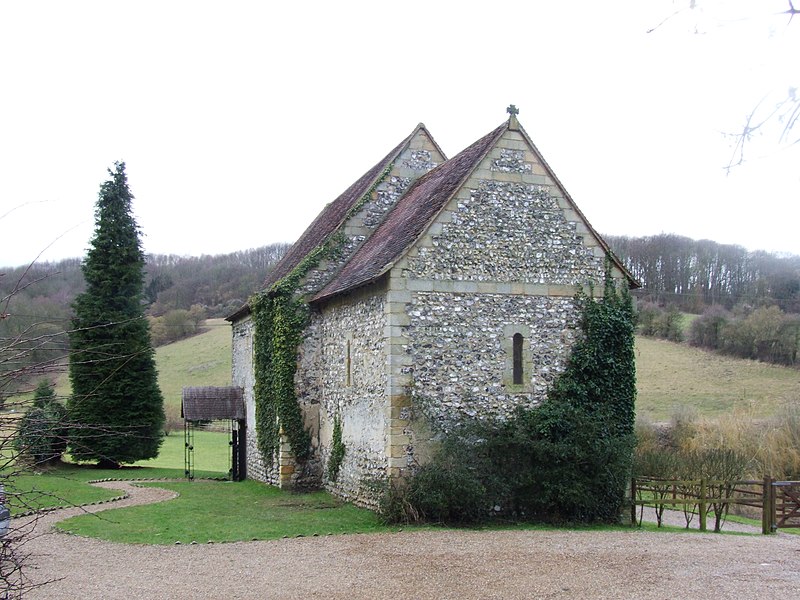
In the heart of the British countryside, the past of the plague, death and history haunts the desecrated church. But amid the mystery of the paranormal and pagan ley lines, the once cursed site has found back to being sacred. 

There are a lot of magical and mysterious things surrounding the church that stands in solitude in the countryside in Kent. The original building on top of the hill was built around 1100 during William the second rule. But the man made ground it was built on has perhaps been used as a holy place to gather long before Christianity reached the British shores. 

Around this church there also used to be a village, alive and thriving. But together with the black death the villagers were swept away, and with them, the village of Dode died as well. 

Ley Lines and Ghosts

Haunted church: Dode church was left abandoned for centuries with rumours of being haunted and used for black magic rituals.
Source: Chris Whippet

All left from the lost village of Dode is the old Norman church that is said to be haunted by a little girl. This is not the only paranormal and mystical rumours surrounding this place, this particular church. The old ruins are built on not only one, but eight ley lines, mystical lines that allegedly connect several holy buildings, monuments and places around the world according to modern paganism.

The place is filled with history as archeologists have found evidence of it being inhabited since the roman empire, perhaps even much further back in time. 

The church was eventually not used as a place of worship and they changed the name of the land it was built on. Because of the rumours about it being cursed, the name Holy Hill was changed to Holly Hill as no one felt the presence of anything holy there anymore, as rumours and legends of it being cursed grew.

The Dodechild

But who was this ghost said to haunt the abandoned church? Legend has it it was the last survivor of Dode village. After the Black Death in the 14th century, the village of Dode was abandoned. Nature claimed back the signs of living, leaving only the church as proof humans once lived there.

Advertisements

However, there was still one of the villagers left. A seven year old girl was one of the last survivors in the village, seeing how everyone was being taken by the plague. She took refuge inside the church, eventually dying herself, but never really leaving. And according to local legends, she would appear on the first Sunday morning of every month, haunting the grounds of were her and her entire village perished in the plague that killed millions of people across Europe. 

Since the time of the plague, the village was abandoned, the church forgotten and time, weather tore down the roof, the stones taken to build a medieval church nearby. It was only known as the haunted and lost place to the locals. It was believed the place was a cursed one, and that it was used for black magic rituals. Thus the Holy Hill was renamed Holly Hill and the church boarded up, taken apart and left for centuries until someone would find the place sacred once more. 

A Sacred Place for All

Wedding: The church is now used as a wedding venue for all types of ceremonies.

The church was rebuilt in the 90s after being abandoned for centuries, with the vision of bringing the holiness back to it and the work to get it back to how it would have looked originally began. With the restoration, life also came back into the hidden valley. Although this time, not a strictly catholic religious house as it used to be, but more of a sacred place for all, both for Catholics, members of the Church of England and pagans alike. 

Since then it has been a venue for weddings, making it a place for eternal love declarations, bringing the serenity back over the once holy hills. Other events such as baby namings, memorials and other cultural events also takes place in it, as long it is more of a spiritual than religous event.

And with the new life that has been breathed into the valley and nearby woodland, the ghost of the little girl also has been seen less and less.

Advertisements

More like this

Newest Posts

References

One man’s revival of ancient English rites

‘Ghost village’ 72 mins from London that was destroyed by the Black Death 

Ley line

Ghost of the Cathedral — The Bloody Monk in Nidarosdomen

Advertisements

From medieval times, history and bloody memories lingers in one of the only and longest standing cathedrals in Norway. This is the story of the Bloody Monk in Nidarosdomen and the haunting of the Cathedral.

Once upon a time in history, the Nidarosdomen in Norway was the most visited place for pilgrimage in Northern Europe and is situated in Trondheim in Norway. People came a long way to seek salvation, peace and God in that holy place. That was those days and today it is mostly a big tourist attraction as well as some of Norway’s most well known buildings.

Nidarosdomen in Trondheim: The Cathedral has been rebuilt many times and started as a wooden chapel and the cathedral was finished by the 1320s. This is Nidarosdomen from 1821 by Carl Johan Fahlcrantz. This was how the cathedral looked before its major restoration and additional towers and much more like how it would have looked in medieval times.

Perhaps far from it today, Norway was a country of Catholics in medieval times, having nearly rid itself with its pagan roots of the Vikings and Norse Mythology, much later than rest of Europe perhaps. It was a church, much more mysterious than the one today that built upon both the learned Catholic as well as the pagan viking traditions.

Read more: Check out all of our ghost stories from Norway

Today the monasteries in Norway is from ancient times and most of them are turned to ruins, made to museums and stands as a memory of the power the catholic church once had of the country. Other cathedrals and churches from the time like Nidarosdomen were transformed to act as a house of God, even after the country became protestant.

The Haunted Cathedral in Trondheim

A place where the fantastical cathedrals continues its mission in a new suit is the Nidarosdomen, in the heart of Trondheim and one of the countries most precious religious buildings. But one can still hear the echoes of the past in the big halls and the memories of the monks still lingers in the walls.

Read More: check out our other ghost stories about ghost monks in Norway like The Ghost Monks at Lyseklosteret and The Haunted Natural History Museum in Bergen

Monks were men that gave up most of the earthly life to serve their lives in God’s service. They forsake the right to marry, have children and own properties in their name. The monks became anonymous, one of many and a part of an order with a strong hierarchy. They all dressed the same as their order, in robes to hide, to look the same. Even the face could be covered to not give away the identity. And at least on of these monks are said to still be wandering the halls of the cathedral in Trondheim.

The Bloody Monk: The Cathedral Nidarosdomen in Trondheim, Norway is said to be haunted by the ghost of The Bloody Monk. Tales of ghosts that looks like monks or nuns are often reported on appearing in old churches and even just the ruins of them, haunting after a great dishonor to their faith was done or perhaps they themselves couldn’t live the strict life of a monk without a sin?

Nidarosdomen is built over the burial site of King Olav II (c. 995–1030, reigned 1015–1028), who became the patron saint of the nation after his death as he was the one who really brought Christianity to the country, and is the traditional location for the consecration of new kings of Norway.

Over centuries the cathedral grew from a small chapel to one of the biggest churches in Norway. It has withstood fires, the reformation, the roof blowing off and if we are to believe the rumours, it has even managed to preserve one of the long residence ghosts.

The Bloody Monk in Nidarosdomen

The first encounter we have found on the monk haunting the Nidarosdomen, comes from the month of January in 1924. It is a cold day in the city of Trondheim and the stone walls do little to keep the cold winter outside from the Maria Chapel in Nidarosdomen. Still, the people flock to Sunday service, now turned to a protestant church.

Read More: Check out all our ghost stories about Haunted Monasteries and Churches from all over the world like The History and Legends of the Haunted Abbaye De Mortemer, Dracula and Ghost Nuns in Whitby Abbey and The Evil Bishop Against the Maiden in Love – The Ghost of Haapsalu Castle.

The congregation gathered together in the hall in prayer and song. Perhaps that is what brought the The Bloody Monk in Nidarosdomen forward this day? A hymn sung for centuries, a prayer heard this Sunday that acted as a summoning for ghosts? Was is the chanting voices from the whole congregation joined in the song as a choir? Something the monk recognized from the time he was alive?

People were gathering, chanting songs and prayers as the monk themselves once did, wandering with their incense? It’s hard to know exactly what with this particular sermon that brought him out. But since then, he has been a ghost observed many times in the cathedral and has been dubbed The Bloody Monk.

Holy Church: The Cathedral of Nidarosdomen is important for Norwegian christians as it is the resting place to one of the greatest saints in Norway, King Olav the Holy that died on the battlefield after bringing the religion to the country. After his death it was said his hair and nails continued to grow after death. Is it the holiness of the cathedral that keeps the ghosts haunting it, or is the place just built upon haunted ground already?

Marie Gleditch, wife of the bishop was the one that saw The Bloody Monk first. She claimed she saw a ghostly figure glide through the crowd gathered for service. She described him as a middle aged man with the monk robe hanging over him. This would not have been an unusual sight in medieval times, but in 1924, long after the monk orders had disbanded, this was not normal. Furthermore, Gleditch described the The Bloody Monk in Nidarosdomen to have glowing eyes when she got a better look. But perhaps more striking is that he had a bloody stripe across over his throat, almost as if it was cut right through, giving him his name.

The Ancient Chant of the Ghost Monk

What really happened to this ghost? Was he really beheaded as the bloody throat would suggest? Was he murdered in cold blood? Or perhaps executed for a crime? We will probably never now as details of who came and went to this place was too may to count and keep track of.

Since that time, the ghost of The Bloody Monk in Nidarosdomen with glowing eyes have created headlines several times in the country. It was for instance also seen by a bishop Alex Jonson who saw the figure in the cathedral in 1933. The Bloody Monk has perhaps become one of the more famous ghosts in Norway and people have visited the cathedral, just to try to get a glimpse of The Bloody Monk.

In 1966 a guy named Jon Medbøe forward with his story when he claimed to have encountered The Bloody Monk with his students when they had nightly walks in the cathedral and could hear something that sounded like footsteps dragging over the floor as well as a mysterious chant.

Medbøe who was a music historian and tried to pinpoint exactly what the music was like. He claimed the monk chanted a song, more specific, a choir song from the middle ages. A well known melody from the composer Perotinus from 1208. Was this perhaps the song that was played in 1924? Or something similar?

The Chanting Monk: This is one of Perotinus compositions and gives an idea of the type of chanting The Bloody Monk were doing. Perhaps this or something similar is the reason he is haunting the Cathedral?

Several have tried to come to the bottom of this mystery and after these modern sightings, it was written a lot about it it, even in German magazines. Who was this lonely monk, still wandering the halls, chanting old forgotten songs? How did he die? Even famous Norwegian, like horror writer Andre Bjerke tried to get into the cathedral to film it for a series of paranormal places he did, but he didn’t gain entrance. The church was not really forthcoming with information when it had anything to do with the Bloody Monk’s ghost. Medbøe was banned from his nightly trios into the cathedral after all the fuss it created.

Nidarosdomen tried for decades to cover the story of The Bloody Monk haunting Nidarosdomen up and shift its focus to it being an active church, not a common ghost house. So perhaps the Nidarosdomen still holds onto old traditions, more mystics and secrets we are not meant to know.

More like this

Newest Posts

References:

Nidaros Cathedral – Wikipedia

Munken i Nidarosdomen – Wikipedia  

28th of December – The Original Friday 13th

Advertisements

On the Christian Calendar, apparently the 28th of December is the most unluckiest day on the calendar. The day was remembered as a sort of Friday the 13th. after a massacre of innocent children happened. This is the story of Childermass.

Once upon the time, the 28th of December was a day known as Feast of the Holy Innocent or Childermass. Why was it called Childermass? A bit odd name for a church day, but certainly the most fitting because of its backstory. The reason behind the name tells a sad story on tops of the memory of dead children.

The Massacre of Innocent in Bethlehem

“Herod the King, in his raging,
Charged he hath this day;
His men of might, in his own sight,
All children young, to slay.”

– The Coventry Carol

28th of December, or Childermass remembers the day when King Herod commanded the slaughter of all the young male children under the age of two in Bethlehem. The sources of this happening is what we have been told in the Bible as told in Matthew 2:16. 

The Romans appointed him King of Judea in 37 B.C, and King Herod executed the children to prevent the new King of the Jews to rise that was foretold in the Old Testament.

Read Also: Check out more Haunted and Unlucky Numbers her in the Moonmausoleum.

Most of the biblical scholars tend to believe the story of the massacre of the children is a myth, but the Church thinks differently and remember the day as it was a real thing that happened. The christian scholars think that the slaughtered children are the first Christian martyrs and are celebrated like that.

Childermass and the slaughter of innocent: The Massacre of the Innocents painted between 1582 and 1587 by Jacopo Tintoretto. It depicts the massacre that was believed to have happened in Bethlehem on 28th of December and is remembered as Childermass or Feast of the Holy Innocents.

In the western church the date is marked to be on 28th of December. In the eastern church it is marked on the 29th of December. Why then do we keep remembering this day that maybe didn’t even happen, perhaps even today? According to a CBC article on the matter, a Dr. Gary Waite, teaching about European religion, witchcraft and the devil says:

“In the medieval era, every household would have experienced the death of a child, The feast of the Holy Innocents would have spoken to an experience that almost all families shared.”

Advertisements

And even though the church never intended that the 28th of December was going to be remembered to be an an unlucky one, folk traditions, fears and believes were not easily persuaded.

The Childermass day was considered cursed by many. In Francis Kildale’s glossary from 1855, he called it: “that the day of the week on which it falls is marked as a black day for the whole year to come.”

Superstitions of the Childermass Day

No ships were supposed to take off from the ports on 28th of December and it was considered omen for weather. The Childermass day was also a day one didn’t get married and it was dangerous for children just in general. Up until the seventeenth century it was considered good luck to beat the child with a stick on childermass to remember the suffering of Jesus.

Read More: Check out more Sailors Superstitions

Childermass, or the Holy Innocents Day is not really celebrated much today though, and the feeling that the day is unlucky has also dwindled over the years. In some household it is a day were the youngest gets all the power for the day, and in Mexico it is a day for younger people to prank the older.

Today we don’t really head the old superstitions of the olden days. Although. The number 13 is actually neglected on buildings storey buildings and the likes. So… What made the 28th any different?

Advertisements

More like this

Newest Posts

The Evil Bishop Against the Maiden in Love – The Ghost of Haapsalu Castle

Advertisements

There is a ghost story that a Lady in White is haunting Haapsalu Castle in Estonia. According to the legend, she was walled up alive inside of the walls when the Bishop discovered her true identity. Her crime? She fell in love.

The ghost of the Lady in White is a wide spread thing in Europe. Every country and even region have their own local version on it. Many are haunting the old castles, cathedrals and mansions scattered across the universe. Some are haunting the waterfalls, some haunts whole families. Estonia is no exception and according to legend, their White Lady is found in Haapsalu Castle.

Sitting in the midst at the cusp of the eastern Europe Baltic heritage as well as so far north, the culture of Estonia is somewhat of a mix of the two. Many consider themselves more Nordic than Baltic, being so influenced by both Sweden and Finland, they have a rich and varied lore still alive and well today.

The Haunted Haapsalu Castle

On the western shore, the sleepy seaside town of Haapsalu is best known for its warm seawater, curative mud and peaceful atmosphere facing the Vaiinameri Sea. Salt mud spas frequented by the Russian Romanov family still operate. Everything is made for a relaxing weekend and a nice holiday for sunny days. Just don’t go to the Haapsalu Castle, it’s haunted.

Read More: Check out all of our ghost stories from Haunted Castles around the world

In the 13th century in the coastal city of Haapsalu, a castle and a cathedral was built from 1279 and it’s the only one of its kind preserved today. It was also known as Haapsalu piiskopilinnus, or more simply Bishop’s Castle. It was to be the new seat of the Bishopric of Ösel-Wiek, were God’s law was the lands law. So it was a sort of royal as well as godly position, and the design of the castle was as well.

The Haapsalu Castle by night: The castle in Haapsalu is said to be haunted by a lady in white that still lingers long after her death. She is perhaps the most well known ghost in Estonia. Here is a picture from Haapsalu Castle in the dark, or, at least what is left, is still there. Photo:Sergei Gussev/

It was not a particular popular way of ruling as the last seat they had ruled from in Perona, where the Lithuanians burned his home down to the ground. Although he needed the place quick as his previous residence had been burned down, the whole castle took around 300 years to complete with the attached cathedral and monastery to it.

The position of Bishopric of Ösel-Wiek changed hands all up to the 1500s, and in 1279, the Bishopric of Ösel-Wiek was Hermann of Buxhoeveden. It was also then he founded the castle and probably the bishop who is talked about in the legend of the Lady in White in Haapsalu Castle.

The life there, especially in the episcopal castle, was a strict one. Every canon working and living there in the monasteries were meant to live a chaste and virtuous life according to the monastery rules.

Read Also: Check out our ghost stories from all of the churches and monasteries from around the world.

Meeting women in the Haapsalu Castle was therefore strictly forbidden and punishable by death. The castle forbade all access for women and the monks rarely ventured outside to test their vows. But all of these rules is useless, love will always find a way.

The Maiden and the Canon in Love

The Forbidden Love inside of the Castle Walls: One of the monks was on a walk outside of the castle walls when he fell in love with a woman he brought back to the castle with him.

As legend of the White Lady Haapsalu Castle tells, one of the canon working there fell in love with a girl when he was outside of the castle walls. When it was clear they had to be together no matter what, he brought her with him to the Haapsalu Castle.

As there was a strict no women allowed policy, they had to disguise her so that no one would now her true identity. She went undercover and was working as a choirboy for a while to be able to meet and have a relationship with him.

They were then able to meet and talk and be in each others lives as long as they were able to pass her off as a boy to the rest of the men living there. They had no other choice if they wanted to be together. He had taken a vow to god that couldn’t be broken, and she had no way of following him with being herself.

Read Also: Check out more ghost stories about love that goes wrong with The Lady Nak of Phra Khanong — Thailand’s Famous Ghost Mae Nak, The Hauntings of the Chute de la Dame Blanche or Botan Dōrō – Tales of the Peony Lantern.

Their little scheme worked for a while. That is, until the bishop came back to the castle and their whole world came crashing down.

The bishop had been away for some time while this was going on and when he returned, a young choirboy caught his eye. Something was off, and even though they had been able to fool the rest he caught on to the deceit.

Perhaps he wasn’t the only one who knew, but everyone else had left them in peace as long as it was discreet. These details we’ll never know for sure. The bishop however couldn’t be fooled and he ordered an investigation, finding out the singer’s gender and found her to be a woman.

Starving to Death inside of Haapsalu Castle Walls

Sightings of the White Lady: The ghost of the Lady in White in Haapsalu Castle has been spotted in the chapel for a long time. Photo: Sander Säde

When the girl was found out, the bishop summoned his council to decide on their punishment. The boy was sentenced to prison were he was going to starve to death. But the girl got the worst end of the deal according to some.

She was to be put immured inside of the walls of Haapsalu Castle. The chapel was under construction at the time and they made a space where they could wall her up. They gave her a single piece of bread and mug of water before they closed up the wall with her inside and left her to die.

Read Also: This was a crime that happened from time to time. To hear more ghost stories about women being buried alive inside the walls, have a look at The Finnish Maiden of Olavinlinna Castle or Dracula and Ghost Nuns in Whitby Abbey

For several days her cries for help, her banging on the walls rung throughout the castle. No one came to her aid and everyone just passed the wall in silence, ignoring the screams that grew fainter and fainter.

Who know what she must have been thinking. She probably didn’t know she would die the way that she had been living since she arrived at Haapsalu castle, hidden inside of the castle walls.

Eventually, she died. But her soul, according to legend, remained and came back as a ghost.

Haunting the Chapel During Full Moon

Now the White Lady can move through the walls. In Haapsalu Castle there was built a chapel still standing today, and this girl is always seen at the inner wall of it, or standing by the Baptistery window around the place she is said to have been walled up.

Read Also: Check out the ghost story of the old Japanese practice of walling people up inside of walls of buildings in O-shizu, Hitobashira — The Human Sacrifice of Maruoka Castle

Whether some have actually done some digging and looked if there actually is a walled up skeleton inside of the chapel wall, is unknown.

The sightseeing of this Lady in White are always around full moons, particularly in August, when it is said is when the Bishop returned to Haapsalu Castle and she was walled up inside of the walls. Why full moon? Did it all happen during a full moon? Perhaps because of the legends that strange things happen during full moons? Or perhaps it was the imagination of the writer Carl Russwurn who popularized the legend, or perhaps even made it up?

Full Moon Haunting: It is said that the ghost of the Lady in White comes out and shows herself during the hot August full moons. Photo by Ben Mack on Pexels.com

The Lady in White is not said to do anything in particular other than to mourn her lost love and life that were taken from her because of the verdic of one man.

Coincidentally, the sightings of her in Haapsalu Castle happens during full moon in the hot August nights. This sightings is also said to happen when a music festival is held in her honor, called: The White Lady Days.

More like this

Newest Posts