Tag Archives: black death

The Curse of the Robber Knight Junker Kuoni: Neu-Bechburg’s Restless Spirit

Advertisements

Hidden in the valleys of Switzerland, the Neu-Bechburg Castle is said to be haunted by the Robber Knight, Junker Kuoni who was walled up inside a secret chamber in the castle.

High above the town of Oensingen in Switzerland’s canton of Solothurn, the brooding ruins of Neu-Bechburg Castle watch over the valley like a silent sentinel for centuries. It has been the home of knights and Barons, the seat of the Bishop of Basel before falling from grace, becoming a poor house and an inn among other things. 

Read More: Check out all ghost stories from Switzerland

Oensingen is in the Swiss Plateau at the foot of the Jura Mountains with green forests as far as the eye can see. Yet Neu-Bechburg Castle’s ancient stones carry more than just the weight of history over the Roggen River — they harbor a dark legend that has plagued the castle for centuries: the curse of the robber knight Kuoni.

Neu-Bechburg Castle: The haunting ruins of Neu-Bechburg Castle in Switzerland, where the legend of the Robber Knight Kuoni endures.

The Bandit Knight Junker Kuoni of Neu-Bechburg Castle

Neu-Bechburg Castle was built in 1250 by the Lord of Bechburg before changing hands several times. It went to the Counts of Frohburg, Nidau, Thierstein, Kyburg and Buchegg. It used to be the most important place in Switzerland in Roman times. In 1415, the castle and lordship were sold to Bern and Solothurn. In 1463, the castle became the full property of Solothurn and a bailiff’s seat was established.

Swiss jura: Scenic view of the lush Swiss landscape surrounding the Neu-Bechburg Castle, where the legend of the Robber Knight Kuoni unfolds.

In the 14th century, Neu-Bechburg was home to Junker Kuoni, an infamous knight-turned-bandit who ruled the surrounding lands through violence and fear. Tales of his cruelty spread swiftly — of caravans ambushed on mountain roads, travelers vanishing into the forests, and innocent villagers stripped of their meager belongings. His crimes grew so terrible that even his fellow nobles could no longer tolerate his presence.

According to legend, Kuoni’s reign of terror ended in a fittingly grim fashion. Betrayed by his own men and captured by the local townsfolk, the robber knight was bricked up alive within the castle walls, left to die slowly in suffocating darkness. 

There is also a much more detailed version of the story, telling that the knight was actually taken by the plague. It came to the village and the locals feared for it spreading. Some say they confined him in a small house on the south side of the fortified tower, in what was the tower guard’s house. Some sources said he was fed through a narrow slit, getting more and more sick and he eventually died. And after he died, this slit was also walled up. 

Read Also: Check out The Headless Ghost of Reichenstein Castle and The Lost Castle of Hollerwiese for more mysterious castle’s where an evil robber is said to haunt.

When or where in the castle has various sources telling different things. It is said that it was in the east or south tower and it happened in 1408. Maybe. Did he die because the people around him wanted to put an end to his cruel ways, or was it actually a deadly disease he succumbed to?

Since that day, Neu-Bechburg has never truly been at rest.

The Haunting of Neu-Bechburg Castle

The Neu-Bechburg Castle changed owners several times and, in 1635, it temporarily became the seat of the Bishop of Basel. It fell into ruins when the French invaded and the place lost its place and importance, before being restored again. In 1835 it was acquired by Johannes Riggenbach. His son Friedrich restored the castle from 1880 onwards now owned by the Neu-Bechburg Castle Foundation.

Visitors to the crumbling fortress speak of chilling drafts in sealed rooms, disembodied whispers in the dead of night, and an oppressive presence that clings to certain corridors. Electrical equipment fails and photographs turn black. He also occasionally plays small pranks, locks doors, and otherwise mostly wanders through the castle.

Castle caretaker, Patrick Jakop has said of his own experiences when he heard footstep above him: 

“I went up the stairs as fast as I could. I was upstairs for a few seconds, but there was no one there. I searched every cupboard, but there was simply no one,”

During a Brazilian wedding being celebrated at the Bechburg, the water pipe to the well was blocked. A voodoo priestess was among the guests. She told Jacob that an unhappy soul was lurking in the pipe. “I called out to the spirit in the well: If you don’t like it here, then just go away,” the castle warden continues. And lo and behold: “There was a gurgling, a bang, and a sudden rush of water. The pipe was clear again.”

Neu-Bechburg Castle: illuminated at night, a haunting sentinel over the valleys of Switzerland, tied to the legend of the Robber Knight, Junker Kuoni.

Several mediums and ghost hunters have tried to get to the bottom of it. Even in modern times, technology seems to falter in the castle’s shadow. In 2002, a Swiss television crew set out to film a historical documentary at Neu-Bechburg. When they brought X-ray equipment to scan what was believed to be Kuoni’s burial niche, the machinery inexplicably failed — screens flickered to black, batteries drained without cause, and strange, muffled knocks came from the walls.

Read More: Check out all ghost stories from haunted castles around the world

The tale of the robber knight is not the only thing said to haunt the castle and not the only horrible death if we are to believe the rumours. There was a dungeon in the east tower, and the so-called witch’s cage in the west tower. The stories vary from children claiming to have seen a ghost to visitors reporting a weeping woman in the castle fountain.

The Truth of the Robber Knight

What are the facts we’re dealing with when talking about Kuoni? There is no historical evidence of him having existed, and there is no physical evidence that he is in fact walled up inside a wall of the castle. And when we talk about the bubonic plague, we often talk about it hitting Switzerland in 1349 when the plague reached Bern, Zürich, Basel and Saint Gallen.

To this day, locals claim the spirit of Kuoni stalks the ruins, restless and bitter. He’s blamed for sudden gusts that snuff out lanterns, the sharp, metallic scent of blood in the air on misty nights, and eerie, unexplained noises when the castle is supposedly empty. The legend endures — a whispered warning to those who dare trespass in Neu-Bechburg’s shadow.

For in these ancient stones, it seems, Kuoni’s curse lives on.

Newest Posts

References:

Mysteriöses Gemäuer – Das Spukschloss ob Oensingen – Schweiz aktuell – SRF

Kuoni, der Geist von Schloss Neu-Bechburg – 20 Minuten

Schloss Neu-Bechburg in Oensingen SO: Patrick Jakob ist hier Hauswart

The Lost City of Dode

Advertisements

In the heart of the British countryside, the past of the plague, death and history haunts the desecrated church. But amid the mystery of the paranormal and pagan ley lines, the once cursed site has found back to being sacred. 

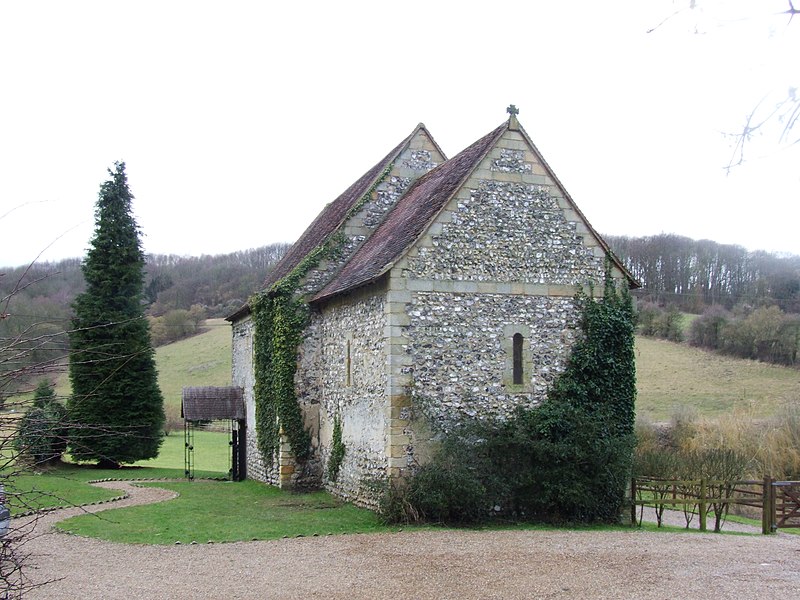
There are a lot of magical and mysterious things surrounding the church that stands in solitude in the countryside in Kent. The original building on top of the hill was built around 1100 during William the second rule. But the man made ground it was built on has perhaps been used as a holy place to gather long before Christianity reached the British shores. 

Around this church there also used to be a village, alive and thriving. But together with the black death the villagers were swept away, and with them, the village of Dode died as well. 

Ley Lines and Ghosts

Haunted church: Dode church was left abandoned for centuries with rumours of being haunted and used for black magic rituals.
Source: Chris Whippet

All left from the lost village of Dode is the old Norman church that is said to be haunted by a little girl. This is not the only paranormal and mystical rumours surrounding this place, this particular church. The old ruins are built on not only one, but eight ley lines, mystical lines that allegedly connect several holy buildings, monuments and places around the world according to modern paganism.

The place is filled with history as archeologists have found evidence of it being inhabited since the roman empire, perhaps even much further back in time. 

The church was eventually not used as a place of worship and they changed the name of the land it was built on. Because of the rumours about it being cursed, the name Holy Hill was changed to Holly Hill as no one felt the presence of anything holy there anymore, as rumours and legends of it being cursed grew.

The Dodechild

But who was this ghost said to haunt the abandoned church? Legend has it it was the last survivor of Dode village. After the Black Death in the 14th century, the village of Dode was abandoned. Nature claimed back the signs of living, leaving only the church as proof humans once lived there.

Advertisements

However, there was still one of the villagers left. A seven year old girl was one of the last survivors in the village, seeing how everyone was being taken by the plague. She took refuge inside the church, eventually dying herself, but never really leaving. And according to local legends, she would appear on the first Sunday morning of every month, haunting the grounds of were her and her entire village perished in the plague that killed millions of people across Europe. 

Since the time of the plague, the village was abandoned, the church forgotten and time, weather tore down the roof, the stones taken to build a medieval church nearby. It was only known as the haunted and lost place to the locals. It was believed the place was a cursed one, and that it was used for black magic rituals. Thus the Holy Hill was renamed Holly Hill and the church boarded up, taken apart and left for centuries until someone would find the place sacred once more. 

A Sacred Place for All

Wedding: The church is now used as a wedding venue for all types of ceremonies.

The church was rebuilt in the 90s after being abandoned for centuries, with the vision of bringing the holiness back to it and the work to get it back to how it would have looked originally began. With the restoration, life also came back into the hidden valley. Although this time, not a strictly catholic religious house as it used to be, but more of a sacred place for all, both for Catholics, members of the Church of England and pagans alike. 

Since then it has been a venue for weddings, making it a place for eternal love declarations, bringing the serenity back over the once holy hills. Other events such as baby namings, memorials and other cultural events also takes place in it, as long it is more of a spiritual than religous event.

And with the new life that has been breathed into the valley and nearby woodland, the ghost of the little girl also has been seen less and less.

Advertisements

More like this

Newest Posts

References

One man’s revival of ancient English rites

‘Ghost village’ 72 mins from London that was destroyed by the Black Death 

Ley line

5 Pandemic Movies to Watch during the Pandemic

Advertisements

In these times so many of us turn to these horrible movies that reflect our time. Pandemic movies have never been watched so much as now. Why is it so that a real threat leads to a thirst to watch more about it? Is it the feeling of being prepared that makes us seek out these movies? Is it assurance that at least we don’t have it that bad, or is it more the recognition, and that these movies are not as far fetched as they once were? So here are five, non-zombie pandemics to get us through quarantine.

The Crazies (2010)

This is a remake of the classic from 1973 with the same name. It did really well to be a remake of George A. Romero. Starring Timothy Olyphant and Radha Mitchell, it focuses on a fictional Iowa town that becomes afflicted by a military virus that turns those infected into violent killers.

After a strange and insecure plane crash, an unusual toxic virus enters a quaint farming town. A young couple are quarantined, but they fight for survival along with help from a couple of people.

Advertisements

Children of men (2006)

London, 2027. In this dystopian world, humans have been incapable of reproducing for eighteen years for an unknown reason and been ridden with the flu epidemic. Britain is the one remaining civilized society on the planet, which has resulted in people wanting to immigrate there. As such, it has become a police state in order to handle the immigrants, who are placed into refugee camps. A former activist is tasked to get the only pregnant woman to a safe place.

Advertisements

Carriers (2009)

Starring Chris Pine and Piper Perabo, this dystopian roadtrip movie has gained new life after the Corona virus put people in quarantine to watch movies.

As a lethal virus spreads globally, four friends seek a reputed plague-free haven. But while avoiding the infected, the travelers turn on one another.

Black death (2010)

This movie stars some Game of Thrones actors, including Sean Bean and Carice van Houten as well as Eddie Redmayne. You can probably guess how well Sean Bean fares in this movie. Set during the time of the first outbreak of bubonic plague in England, a young monk is given the task of learning the truth about reports of people being brought back to life in a small village.

Advertisements

It comes at night (2017)

This movie was written and directed by Trey Edward Shults. Shults began writing the film after the death of his father as a way of dealing with the pain. And it is mostly about a family. Well, set in an dystopian pandemic ravaged world.

Secure within a desolate home as an unnatural threat terrorizes the world, a man has established a tenuous domestic order with his wife and son. Then a desperate young family arrives seeking refuge.

Advertisements

More like this

Newest Posts

The Plague of the Past (?)

Advertisements

In these strange and scary pandemic times, its nice to live in a world of modern health care, science and the wide spread information about the internet. But pandemics and epidemics have always been a part of the human experience through history, and it’s really just in the last couple of centuries, we’ve really been able to combat the spread of viruses. So in that regard, we took a look at past pandemics and epidemics and how they affected the society and how they at that time, tried to combat it.

The plague of Justinian (541-542 AD)

St Sebastian pleading for the life of a gravedigger afflicted with plague during the 7th-century Plague of Justinian.
(Josse Lieferinxe, c. 1497–1499)

This plague is the first well documented occurrence of a wide spread pandemic. And according to some historians, the most deadliest. In 2013 it was confirmed that the bacteria was the Yersinia pestis, the same that caused the Black death.

“During these times, there was a pestilence, by which the whole human race came near to being annihilated” – Procopius

The name comes from the Emperor Justinian of the Byzantian empire, a peasant son that had been chosen as emperor Justin, his uncle, to rule in these times. Justinian and members of his court, physically unaffected by the previous 535–536 famine, were afflicted, with Justinian himself contracting and surviving the pestilence. He was said to have been a stern and vicious ruler in the plague times, not budging on collecting the taxes from his starving and sickly farmers.

Mosaic of Justinianus I – Basilica San Vitale (Ravenna)
Photo by: Petar Milošević 2015

Merchant ships from Egypt came into the city of Constantinople the seat of the Roman Empire, carrying infected rats in the grain ships. We have a lot of first hands accounts of the Byzantine historians, like Procopius. He recorded that at its peak, the plague killed 10 000 people in the city of Constantinople, daily. There was no room to bury the dead, the bodies had to be stacked on top of each other. In the streets, in the houses, unburied, left unattended, feared. No one was left to bury them. There was no room for funeral rites and the once so great city reeked of death.

Proocopicus, hated the Emperor Justinius, and blamed him in his “Secret History”, claiming the emperor was a demon that created the plague, or at leas, was a punishment for his malice. He told of supernatural beings in human disguise that spread the disease after appearing to people. He claimed other dies after seeing visions in dreams, or heard voices, telling them that they would be getting the plague.

1975. This patient presented with symptoms of plague that included gangrene of the right hand causing necrosis of the fingers. Author=CDC/Dr. Jack Poland

In the end, the tombs were filled, so the soldiers built trenches for the bodies to be thrown in. That too failed, as it in the end, was no where left to dig. In the end the people carried the bodies of the dead down to the sea and threw them in to rid themselves of the stench of death and piling of bodies.

In the VIth century the inhabitants of Philippi embarked on the construction of an imposing basilica on the site of the town’s palaestra; the size of the planned building clearly exceeded the needs of the town, thus indicating that Philippi attracted many pilgrims. In 547 the so-called Justinian plague devastated the countries of the Mediterranean basin and in the early VIIth century an earthquake struck the region of Philippi; these two catastrophic events could have halted the completion of the basilica, standing as a proof and evidence on how plagues can alter the history as intended.
Advertisements

The Black Death (1347-1351)

Physician attire for protection from the Bubonic plague or Black death from 1656. A so called plague doctor. The purpose of the mask was to keep away bad smells, known as miasma, which were thought to be the principal cause of the disease, before it was disproved by germ theory.

It swept cross Europe in medieval times, laying towns, countries, cultures and riches in ruins. It did not start in Europe, but it remained as an imprint on it, to this today, some would even claim, a fear for it, that still rings today. And in the western world, every plague since then, has been compared to the infamous Black Death. So many myths, so many legends spun around it, who was to blame, were did it come from. It left plague pits, its own cemeteries and around 25 million dead in Europe alone.

People would die suddenly. They would be in the market, at work, at home, and the, suddenly fall dead of the illness. Doctors refused to attend the patients and priests declined administering last rites. Even worse, healthy people from families would often leave their infected loved ones to die and escaped to other places.

Contemporary sources say that the plague originated in Mongolia. It traveled all the way before it hit Europe in full force in 1347/48 along the coast. Giovanni Boccaccio, most known for his book, Decameron, was a first hand witness to the plague. In his book, he describes the harsh reality of it:

“The pestilence was so powerful that it was communicated to the healthy by contacting the sick, the way a fire close to dry or oily things will set them aflame.”

They established their camps in fields near towns and held their rituals twice a day. The ritual began with the reading of a letter, claimed to have been delivered by an angel and justifying the Flagellants’ activities. Next, the followers would fall to their knees and scourge themselves, gesturing with their free hands to indicate their sin and striking themselves rhythmically to songs, known as Geisslerlieder, until blood flowed. Sometimes the blood was soaked up in rags and treated as a holy relic. Painting by Pieter van Laer (1599–after 1641 ) from ca. 1635.

In Milan, if a person was found to be infected, they would close them inside the house, the house would be walled up, windows and doors filled with bricks, with all the people still inside.

Several people were blamed of the disease. Jews were burned throughout Germany or banished. In Esslingen, the Jews gathered in their synagogue and set it on fire. In Strasbourg the town counsel tried to protect them, but they were burned in their own cemetery.

The pestilence paved way to a scary brotherhood, The Flagellants, the Brethren of the Cross. Devout Christians looked at the plague as a punishment from God fro their sins. In Germany, this movement spread like the plague itself. They wore dark clothes with red crosses, hiding their face and walked in a line behind their leader. They would parade in a circle before throwing themselves on the ground, the leader beating them all for their sins. Then they would get up before beating themselves with a scourge, a stick with three tails with knots. They would whip their backs bloody. This they hoped, would appease God. Many died from these marches that raged in Germany and France.

Advertisements
Theodor Kittelsen – Pesta i trappen, 1896 (Pesta on the Stairs).

The plague reached far, even to outskirts countries like Iceland and Greenland, The plague managed to hit Norway in 1349 when a wool-carrying ship from England halted at Bergen port. Within days, the entire ship crew were dead and then the rampage started in rest of Norway. Norwegian called the plague “pest”. Folklore thought that the plague was an old woman, “Pesta” and that she came to town with either a rake or a broom. If she used her broom, everyone would die. If she used the rake, some would live. Today, people are named after the deserted and dead farms. Ødegård (desolate farm), a common surname among Norwegians to this date.

This wasn’t the last Europe saw of the plague however. It came and went in waves during the next centuries.

The Third Plague (1855 to the 1950s)

This plague started in Yunnan, China, and eventually led to the discovery of a cure for it. It was then the connection to rats were discovered and a more planned combat against the plague could go forth.

Picture of Manchurian Plague victims in 1910 -1911 that has been historically mislabeled as “Body disposal at Unit 731” A much higher resolution photo, with Russian text stating that these were “Dead plague bodies held in storage awaiting scientific research” can be seen here.

Shi Tao-nan wrote a poem about the plague called: Death of Rats.

Dead rats in the east,
Dead rats in the west!

As if they were tigers,
Indeed are the people scared.

Few days following the death of the rats,
Men pass away like falling walls!..

The coming of the devil of the plague
Suddendly makes the lamp dim,

Then it is blown out,
Leaving man ghost and corpse in the dark room

The writer of the poem died of the plague only days after it was written.

The plague continued to rage, from Hong Kong it spread with ships to the world. To US, Latin America, India and South Africa. India was particularly hit by the plague, and over the next thiry years, over twelve million people died of it in India alone. It died out in the 1950s. In 1894 the Hong Kong doctore, Alexandre Yersin found evidence of the Yersinia Pestis as in the Justinian plague and Black Death.

Today, fewer than 200 people die of the plague worldwide each year, mainly due to lack of treatment. Plague is considered to be endemic in 26 countries around the world, with most cases found in remote areas of Africa. The three most endemic countries are Madagascar, the Democratic Republic of the Congo and Peru. The latest victim to it being a couple in Mongolia after eating the raw kidney of a rodent. Commonly considered a folk remedy for good health.

Advertisements

More like this

Newest Posts

Sources

Orent, Wendy. Plague: the Mysterious Past and Terrifying Future of the Worlds Most Dangerous Disease. Place of publication not identified: Free Press, 2012.

https://www.history.com/news/6-devastating-plagues

https://en.wikipedia.org/wiki/Third_plague_pandemic

https://en.wikipedia.org/wiki/Timeline_of_plague