Tag Archives: monastaries

The Ghost of Kathleen who Loved St. Kevin in Glendalough

Advertisements

In the Monastic City of Glendalough in Ireland, the ghost of Kathleen is still haunting the place as her love for the hermit, St. Kevin went wrong. Did he really just reject her? Or did he in fact kill her as well?

“In Glendalough, there lived an auld saint, renowned for his learning and piety, his manners were curious and quaint, and he looked upon girls with disparity.”
The Glendalough Saint

In the heart of the enchanting Glendalough in the valley between two lakes, nestled amidst the lush landscapes of County Wicklow, Ireland, lies a centuries-old legend that continues to cast its spectral spell in the place called the Monastic City. 

Glendalough is where one of the earliest monastic settlements was founded by St. Kevin in the 6th century. He was known for his hermit life and pious look at life in prayer and meditation. It is said he died when he was 120 years old and has a lot of strange and mystical legends surrounding him and his life. 

Two Tales of Love and Remorse

One of the legends is the tale of the ghost of Kathleen haunting the monastic site of Glendalough. She is said to be a woman wearing red whose ethereal presence has etched itself into the annals of Irish folklore and was also published in ‘Haunted Ireland: A Select book of famous Irish ghost stories’ by Leo Bowes in 1975.

St: Kevin

There exist two versions of Kathleen’s haunting narrative, each weaving a unique tapestry of love, desire, and redemption.

Kathleen the Seductress

In the first version, the story unfurls with a local maiden named Kathleen, captivated by the youthful and handsome St. Kevin who was living as a hermit and not looking for earthly love. Although she knew this she sought to seduce the holy man. Yet, St. Kevin, resolute in his faith, rebuffed her advances. 

When she didn’t give up her advances though, he plucked stinging nettles and stung Kathleen upon her face, arms, and feet until her senses returned. Overwhelmed by remorse and shame of what she had done, Kathleen fell to her knees, pleading for forgiveness. St. Kevin, ever the symbol of mercy, offered up prayers to help her see the error of her ways. 

His prayers found favor with the heavens, and Kathleen underwent a profound transformation, becoming a “sincere convert” to the path of righteousness and to lead a pure life from then on.

Kathleen the Witch

The second version of this beguiling legend paints a darker portrait of Kathleen, one of obsession and tragedy. In this rendition, Kathleen, possibly a practitioner of the dark arts and a witch, became so infatuated with the young St. Kevin that she followed him to his remote cave, perched high upon the side of Lugduff Mountain, now known as St. Kevin’s Bed. 

St. Kevin’s Cell: was a stone structure located on a rocky spur above the lake. Only its foundations remain today, and it may have had a stone-corbelled roof. St. Kevin’s Bed is a cave in the rock face, situated about 8 meters above the Upper Lake’s level on its southern side, near The Spinc cliffs. It was traditionally considered a retreat for St. Kevin and later for St. Laurence O’Toole. Partly created by human hands, the cave extends 2 meters into the rock.

This is a cave in the rock on the south side of the Upper Lake and was reportedly a retreat place for St. Kevin spent large parts of his life alone. 

Read More: Check out all of the stories about Witches at the MoonMausoleum.

Fueled by anger that she had forced her way into his holy place of solitude, St. Kevin pushed Kathleen over the precipice of the mountain cliff, where she met her untimely end in the waters below, drowning.

This is the version we find in the folk song about this legend as well, that were made famous when The Dubliners sang it:

Eerie Apparitions in Glendalough

Through the ages, the spectral presence of Kathleen has manifested itself to those who tread the hallowed grounds of Glendalough, leaving an indelible mark on the fabric of local history and lore.

The Wicklow People newspaper, in an article dated April 25th, 1975, documented three chilling sightings of this enigmatic ghostly figure.

Read More: Check out all of the ghost stories from Ireland

The first account speaks of a couple who visited Glendalough on All Souls’ Day in 1970. Armed with their camera, they captured the serene beauty of the landscape. Upon developing their photographs, an unexpected and unsettling sight emerged—a weathered old woman, shrouded in a shawl, standing just a few feet away from the photographer’s fiancé.

St. Kevin’s Church: It is commonly referred to as St. Kevin’s Kitchen, although it was not used for cooking. Its original purpose is unknown although it may have been used to house relics of St. Kevin.

The second sighting involves an American visitor and her daughter, who embarked on a tour of the site in November 1974. When the film from their trip was developed, their images revealed an astonishing figure—a woman draped in a long red gown and shawl, her steps quickening along a path leading to the ancient tower.

The third report comes from Dick Fuller, an American who chose to spend St. Patrick’s Day in Ireland in March 1975. During his visit to Glendalough, he bore witness to something truly extraordinary and said this of their encounter:

My wife had gone to see if the gift shop was open, while I visited the cemetery. I walked from the entrance to the Tower and went around to see if I could read the inscription on the back of the stones. I glanced around to see if my wife was joining me and, as I did so, I saw a red figure moving from the left to the right, towards a fallen down building. I thought it was another person in the cemetery. I walked towards the ruins, expecting to see a person dressed in red, but there was no one there’. He continued ‘Since there was only one entrance the person couldn’t have appeared without passing me… as far as I am concerned, I saw a ghost.

The Monk in Black Robe

The ghost of Kathleen in Red is not the only ghost said to haunt the ancient place though. More recently there have been reports about seeing someone that looks like a monk wearing a black robe. 

This comes from a camping trip in the early 2000 when a group of friends decided to set up a tent on the ancient site. They fled soon enough though when they heard footsteps and suddenly saw a group of monks standing close to them, watching them. 

Glendalough Mysterious Charm

In the Glendalough, where the mists caress the ancient stones and the wind whispers tales of old, we find the conclusion to the haunting legend of Kathleen and St. Kevin.

While the truth about Kathleen’s fate remains shrouded in mystery, the legacy of her ghostly presence lives on. In the Monastic City of Glendalough, visitors still report inexplicable sightings and eerie encounters, as if Kathleen’s spirit lingers, eternally bound to the place that holds both her love and her tragedy.

Although the stories differ, whether depicting Kathleen as a seductress seeking redemption or a witch consumed by obsession, the underlying message remains the same. Love, desire, and remorse intertwine in the tapestry of this haunting tale, reminding us of the power of our choices and the consequences they bear.

Glendalough: A glacial valley known for its Early Medieval monastic settlement, established in the 6th century by St. Kevin. The valley was the site of a galena lead mine from 1825 to 1957. Today, Glendalough serves as a recreational area, offering opportunities for picnics, hiking on well-maintained trails of various difficulty levels, and rock-climbing.

As the ghostly figure of Kathleen continues to materialize in photographs and stories, the ethereal beauty of Glendalough’s landscape becomes intertwined with her spectral presence. Her apparition, dressed in red, stands as a reminder of the longing and heartache that transcends time, leaving an indelible mark on those who encounter her.

And as the misty veil of Glendalough parts to reveal the specter of St. Kevin, a monk in a black robe, it becomes evident that the Monastic City holds more secrets than can be comprehended. The sightings of this enigmatic figure, together with Kathleen’s ghost, add to the mysterious charm that permeates the air, captivating and intriguing all who venture into this ancient place.

As the sun sets over the ancient ruins, and the shadows lengthen, the ghostly whispers of Kathleen and St. Kevin still resonate through the valley. Glendalough remains a place of intrigue and fascination, inviting all who are drawn to its enigmatic charm to experience the ethereal touch of Kathleen’s ghost, forever wandering the sacred grounds of her lost love.

More like this

Newest Posts

References:

The Ghost of Glendalough – County Wicklow Heritage 

Kevin of Glendalough – Wikipedia 

Glendalough | Haunted Wicklow, Ireland | Spirited Isle 

The Cursed Gran Teatre del Liceu in Barcelona

Advertisements

Built on supposedly cursed ground, this theater in Barcelona has faced many tragedies. After several fires trying to close the doors of Gran Teatre del Liceu, people have come to believe that the building is haunted possibly by a curse they have no idea how to break. 

Spain is known for its ancient theaters and the stories of ghosts that haunt them. Many people have reported sightings of strange figures and other paranormal activities in these theaters that just don’t want to let the past go.

Read more: Check out all of our ghost stories from Spain

The haunted theaters in Spain are an interesting subject to explore. They offer a glimpse into the history of the country as well as a chance to explore the supernatural world. From tales of ghostly apparitions to mysterious sounds and unexplainable events, these theaters have something for everyone who is interested in exploring the unknown.

Oftentimes, the cursed places call for attention to the places history, and the street where this cursed theater is located, has a long one. 

The Bustling La Rambla in Barcelona

All the way since the middle ages La Rambla has been a center of Barcelona’s urban life with markets, festivals and sports as well as more serious and sinister things. 

The Haunted Gran Teatre del Liceu: The theater in Barcelona is thought to be built on cursed ground and have gone through many difficulties and mysterious incidents.

According to legend, this old theater in Barcelona was built upon cursed ground in 1847. During the middle ages, it is said that the place was used for executions and was therefore haunted and cursed. 

What we do know is that the gallows in La Rambla, las forca de la Rambla were placed by the entrance to La Boqueria on the same street right around the corner from where the theater is today.

Gran Teatre del Liceu – the Oldest Running Theater in Town

The Grand Theatre of the Lyceum is usually only known as El Liceu located on La Rambla and is the oldest running theater in Barcelona and from its opening  until 1989 the Liceu was the largest opera house in Europe that could seat 2 338 people.

Read more: Check out all of our ghost stories about haunted theaters like The Mysterious Ghost Stories of The Haunted Dock Street Theater, The Ghost of Theatre Royal Drury Lane, The Friendly Ghost Octavia at Den Nationale Scene or The Legend of the Phantom of Opéra Garnier

The theater was built in an unused Monastery and ended up being associated with the aristocracy and upper-middle class. This also drew people to the theater that wanted to end the upper class regime. 

The Killed Monks in the Ground

Long before it turned into a theater, the place was an abandoned convent. The Virgen de la Buena Monastery of the Trinitarian order was built in 1662. 

The Trinitarian order was begun for their mission to free christian that were in captivity by muslims. This was a time with many crusades to the middle east and Spain were also overtaken several places south in Spain by muslims.

There is also a legend that it was the place where there was a convent there with Trinitarian monks that were killed during a riot that happened there. The dead monks were buried under the ground where they were killed. 

Whether this legend is true, is uncertain, but there certainly were riots happening in Barcelona that targeted religious buildings. When there was riots in Barcelona in 1835, the convent was lit on fire and burned and the monks left the place. 

The Trinitarian convent building was then rebuilt into the theater. No matter if the story of the execution grounds or the murdered monks are true, it is used as a base to explain the legend that the theater is cursed and the reason why the building has seen so many tragedies over the years.

The Many Fires in the Cursed Theater

The first major tragedy that happened was when the building was severely damaged by a fire in 1861 that started in the tailor workshop, the people blamed it all on the curse. Was perhaps it from the curse of the monks? Were they fed up by the celebration of something so pagan like the carnival? Were their graves disturbed when they built the building?

It was in the middle of the carnival celebrations and everyone wore masks and it could have been anyone. Among the smoking ruins the police found an ominous note that said: An owl I am, alone I am. If you build it again, I’ll burn it again. 

Could it just be a paper from the many plays in the building? could it be something more ominous and connected to the curse?
Despite the warnings, they quickly rebuilt the opera house and opened again on 9th of April 1861. Only the facade, the entrance hall and the foyer called Mirrors Hall remained from the old theater and the building awaited its curse to hit once again. 

The Bombing of the Anarchist

In 1893 tragedy struck again when 20 people died as they were killed by an anarchist named Santiago Salvador. He threw two Orsini bombs into the stalls and watched it all explode and the bombing shocked Barcelona and became a symbol of the turbulent time of social unrest the country was in.

The theater opened again on 18th of January in 1894, but the seats that those who were killed in the bombing were not used for many years after this. 

Could we really put this terrorist act on the supposed curse of the building? 

The Last Fire of the Theater

In 1994 the building burned to the ground because of another fire. Apparently it happened when a spark accidentally fell on the curtain during a respiration. The theater was once again being rebuilt in 1999 with new and improved facilities. 

During the almost 30 years since its last reopening the theater has had no more damaging scandals and the building has remained intact. 

Is the curse now lifted, or will the place in fact burn down once again? There is an additional legend about the place. During the riots, the nearby convent of Mount Sion shared the same fate as the Trinitarian monastery. According to the legend, the prioress had a ring that was buried in the foundations of the new theater and cast a curse upon the place. 

It is said that the danger will continue to loom over the theater until someone finds the ring of the prioress of Mount Sion in the foundations, and as of yet, there are no one that has found it.  

More like this

Newest Posts

References:

La maldición del Liceo

La eterna maldición del Liceu de Barcelona

Estos son los conciertos del Primavera que puede ver gratis (por streaming)

Walking the city. Barcelona as an urban experience

A Brief History of Gran Teatre del Liceu in Barcelona

https://books.google.no/books?id=1t-sDwAAQBAJ&pg=PT195&lpg=PT195&dq=las+forca+de+la+Rambla&source=bl&ots=yhJMDSDGsQ&sig=ACfU3U0TnxC7xEwSZxH4t05q5yaXdof5Yg&hl=no&sa=X&ved=2ahUKEwiOzK2qkKz_AhUa6CoKHWNIAb8Q6AF6BAgfEAM

13 Barcelona Haunted Houses & Places that will creep you out

Haunted and Mysterious Places in Barcelona | 19 Local LegendsLiceu – Wikipedia

The Murder Monk in Franziskaner-Klosterkirche

Advertisements

In the ruins of the Franziskaner-Klosterkirche in Berlin, there is a legend of a murderous monk haunting the place, after he ended up murdering his own son. 

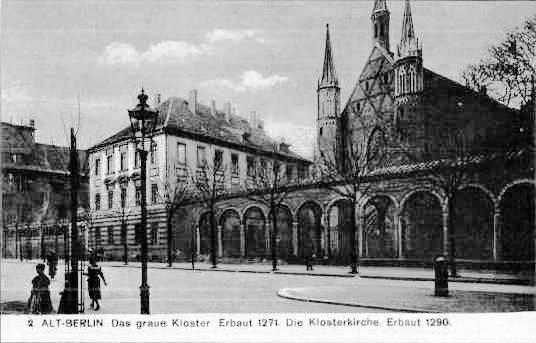
The old ruins of the once great Franziskaner-Klosterkirche was a Franciscan monastery since the 1200s and was before its destruction the most important medieval building in Berlin. 

Read More: Check out all of our ghost stories from Germany

Franziskaner-Klosterkirche was bombed to ruins by the allies during the last day of the second world war in 1945. It was probably one of the oldest buildings in the city. Still today it is a part of the city landscape though, just by the Alexanderplatz in the city center of Berlin. 

The Runaway Knight Roderich

But the monks of Franziskaner-Klosterkirche have been gone for years and the only ones living there now are ghosts. The most famous ghost in the ruins of the monastery was once a knight named Roderich. He became a monk when he was running away from the father of his one night stand. The father was enraged as he had dishonored his daughter and was after him. 

Franziskaner-Klosterkirche: The monastery was also called Graues Kloster (The Gray Monastery) and was in use even after the reformation and used as a school. This is from a postcard around 1910.

On the run, the knight turned monk broke his leg and kept walking with a limp. From then on everyone called Roderich the limping monk, and he was not a popular one. 

Because of his injury and his unfortunate circumstances isolated in the monastery, Roderich grew bitter over the long years. He didn’t get along with the other monks either and paid two criminals to murder one of the other monks in the monastery. He blamed the murder on some Knights Templar who ended up being executed for it. 

The Murderous Monk in Franziskaner-Klosterkirche

Another monk was sent to the Franziskaner-Klosterkirche called Bernhard. He entered because of the grief he had of his miserable love that turned out badly. He loved and wanted to marry a woman, but as the cruel fate would have it, it turned out she was his sister, and he was unable to go on outside of the monastery. 

Read More: Check out all of the ghost stories from Haunted Monasteries

Bernhard was a skeptical person though and had his own theory of the murder of the monk Roderich had killed in Franziskaner-Klosterkirche. When Bernard met Roderich he told him that he didn’t believe that the Knights Templar was behind the murder of their fellow monk brother. 

This was the nail in the coffin for Bernhard and Roderich locked him up in a dark cellar of the monastery to cover his crime when he was found out, ending up killing him so he wouldn’t spill his secret. 

The Ultimate Sin

While this is going on, the two criminals Roderich hired came clean and confessed to what really happened when they murdered the monk and it was in fact Roderich that was behind it all. The anger and rage against Roderich grew and an angry mob stormed the monastery, searching for Roderich to put things right. 

The angry mob found him kneeling in the cellar next to the dead body of Bernhard. After he had killed Bernhard, Roderich went through Bernhards stuff and found a letter from Bernard’s mother. This was a woman who Roderich knew intimately and it was Roderich’s former lover telling him that Roderich in fact was the father of Bernhard. 

Overcome with grief and regret he confessed at once and was killed on the spot without a trial. 

Since then, Roderich has been haunting the Franziskaner-Klosterkirche, even after it all turned to ruins. He can be heard wailing in the night from the outside of the monastery, unable to atone for his sins of killing his own son in cold blood to cover his own tracks. 

More like this

Newest Posts

References

Franziskanerkloster in Berlin: Ruine ist Schauplatz einer düsteren Legende

The Haunting Ghost of the Nun at the University of Castile-La Mancha

Advertisements

At the University of Castile-La Mancha, a chilling secret lies hidden. Brace yourself for a hair-raising encounter with the ghostly nun that has been haunting the halls of this historic institution for centuries. 

From sightings by students and faculty to spine-tingling encounters in the dead of night, the ghost of the nun at the University of Castile-La Mancha has become a legend that continues to send shivers down the spines of all who dare to walk its haunted corridors. 

The University of Castile–La Mancha (UCLM)

Located in the heart of Spain, the University of Castile–La Mancha (UCLM) is a renowned educational institution with a rich history dating back centuries. Situated in the picturesque city of Ciudad Real, the university is known for its stunning architecture and vibrant academic community. However, beneath its serene facade lies a sinister secret that has fascinated students, faculty, and locals alike for generations.

Read more: Check out all of our ghost stories from Spain

There are several places people claim to have seen ghosts on the campus. One location is at the office of the president of the university, which is the building where the convent was and is, according to rumors, haunted by nuns. 

A Former Nun Convent

One of the most intriguing aspects of the University of Castile-La Mancha is its historical connection to a former convent. The building that now houses the university was once a sanctuary for nuns, providing a sheltered haven for devout women in search of spiritual enlightenment. 

As the years passed, the convent transformed into an educational institution, retaining remnants of its religious past. It is within the walls of this converted convent that the ghostly nun is said to wander, her ethereal presence haunting those who cross her path.

Read more: Check out all of our ghost stories about nuns haunting the world like Wessobrunn Abbey’s Ghosts, Dracula and Ghost Nuns in Whitby Abbey or The Haunting of The House of Hohenzollern

Over the years, countless individuals have reported eerie sightings and unexplainable encounters with the ghostly nun. Students have spoken of hearing soft footsteps echoing through the empty corridors, accompanied by an overwhelming feeling of unease.

Others claim to have seen a shadowy figure dressed in religious garb, her face hidden beneath a ghostly veil. These chilling accounts have only served to deepen the mystery surrounding the ghost of the nun, leaving many to question the boundaries between the living and the dead.

People claim to see strange figures walking through the building hallways. There are also reports on the doors that seem to open and close by themselves. 

The enduring mystery of the ghost of the Nun

Despite the countless stories and accounts surrounding the ghost of the nun at the University of Castile-La Mancha, the truth behind her haunting remains elusive. Is she merely a figment of the imagination, a product of collective fear and superstition? Or is there something more sinister at play within the walls of the university? Perhaps we will never know the true origins of this ghostly presence, but one thing is certain: her legacy continues to captivate and terrify all who encounter her. 

Read More: Check out the haunted legends from schools all over the world like Madam Koi Koi and The School Hauntings in Nigeria and The Kong Kong Ghost

The ghost of the nun stands as a testament to the enduring power of folklore and the human fascination with the unknown. As long as the University of Castile-La Mancha exists, her spectral presence will continue to haunt its halls, forever reminding us of the thin veil that separates the living from the dead.

More like this

Newest Posts

References:

Cuarto Milenio y los fantasmas de la Universidad de Castilla-La Mancha en San Pedro – ENCLM

Matlein: Spanish spooky stories.

The Devil’s Monastery in Carmona

Advertisements

The ruins of Huerta de San José Monastery in Carmona, Seville were once thought to be haunted by demons and the devil himself. After a horrible tragedy that ended in the death of all the monks, the place has been known as The Devil’s Monastery or the Monastery from Hell. 

Spain is famous for its haunted history and tales of angels and demons. With its rich history and diverse culture, there are many places that are said to be haunted. In Carmona in Seville, Spain there is the ruins of a monastery that is said to be cursed by the devil himself. 

Read more: Check out all of our ghost stories from Spain

The church known as The Devil’s Monastery is known for the mysterious and spooky presence of a ghost, who is rumored to have been lingering there for centuries. The stories surrounding this The Devil’s Monastery are fascinating and are sure to give you chills down your spine. In this blog post, we will explore the history of the haunted church in Spain and the ghost that haunts it.

The Monastery from Hell

Huerta de San José Monastery, belonged to the religious order of the Carmelites of Saint Joseph. The cloister dates back to the 17th century but was never completed. The building close to the small and sleepy village was only used for a couple of decades before a horrible tragedy befell the monastery. 

Read more: Check out all of our stories from Haunted Monasteries and Churches from all around the world.

A group of Franciscan-Dominican friars came to the hilltop to build their monastery to both be a convent as well as a boarding school for the locals. Here they would serve the words of their lord in peace. But the fact was that their dream about Huerta de San José Monastery would never be true and the convent would never be remembered as the place of god, but The Devil’s Monastery.

In 1680, Don Jaime Malvidas joined the convent as a new monk. According to the documents that were made from the case about the Huerta de San José Monastery at the time, Maldives woke up in the morning and found out his door was bolted from the outside.

The fact that the door was locked wasn’t an unusual thing, as the Dominican monks had a habit of locking themselves in after Vespers before opening the doors in the morning. But this time, there was no one there to open it. 

He tried to meditate as he waited for morning, but the sound of steps outside made him curious. They stopped right outside and the door was opened with a bang. But when he looked outside, he found no one. 

He thought maybe he was late for mass and hurried toward the chapel they were building. But there was no one. The only thing he heard was a wailing he almost thought came from himself. He started to investigate and went down into the basement. There he found all of the friars hanging from hooks, all dead. 

And according to his testimony he also said this:  I, gentlemen, upon seeing that infernal and bloody setting, began to see some small beings, who crowded around the dead bodies, ate their meat.

A fire broke out in now The Devil’s Monastery, and the monk ran out screaming that Satan was here. Some say that the monk really did meet the devil in the basement and left him alive to tell the world about his arrival. No one believed him and he was arrested after reporting it all to the authorities.

Satan Appearing in Huerta de San José Monastery

The next day the locals approached the burnt The Devil’s Monastery with crosses and bibles burying the dead monks. As they did it was as the sky darkened and what seemed like the face of Satan himself appeared between two columns of Huerta de San José Monastery.

Carmona City: The entire city had to live with the after effects of the cursed monastery. For years the city tried to repent for what happened that night in the convent.

They entered the building with their protection, but it was all for nothing as Satan was watching from the bell tower. He threw them around “like dolls” according to the documents. but an earthquake forced them out and further damaged the building. 
Huerta de San José Monastery was purged with salt and the whole city had two years of masses to absolve them from the evil they had encountered those days. 

Read more: Have a look at the story about Haunting in Hardtkapelle Wielenbach where the devil also is said to have appeared. 

In the ruins of what is left of the The Devil’s Monastery, it is said the souls of the murdered monks are still trapped inside and haunt the place, all the documents signed by the Archbishop of Jerez. 

The Ghost of The Devil’s Monastery

People that have visited the ruins of The Devil’s Monastery claim to have heard whispers and ghostly silhouettes of the monks. Gregorian voices and chants have been heard as well as strange lights floating around the place. 

Today the ruins of Huerta de San José Monastery is abandoned except for those wandering in the outskirts of the nearby village or the nightly ghost tours they have to try to catch a glimpse of the murdered monks trapped forever where they died. 

More like this

Newest Posts

References:

El misterio del ‘Monasterio del Diablo’

Monasterio Huerta de San José – Carmona

Huerta de San José monastery, Carmona, Spain, December 2017 | Derelict Places – Urban Exploring Forum

Abandoned Devil’s Monastery, Seville, Spain

Ten paranormal places that you can actually visit in Spain

The Chanting Monks Haunting La Boquería Market

Advertisements

Every year it is said that a procession of ghost monks are haunting La Boquería market in Barcelona. They are still mad about how the monks that lived in the monastery that were there behaved, and the story is that it ended bloody. 

The thought of a haunted place is enough to make many people shiver. Some people love nothing more than to explore the creepy corners of spooky locations, while others run the other way. But what happens when a church is haunted? In Spain, there is a former monastery that has been the subject of many spine-chilling stories. The haunted church is known for the ghost that is said to be lingering there. Are these stories true or just a legend?

Read more: Check out all of our ghost stories from Spain

Right by the bustling La Rambla in Barcelona there is a famous food market called La Boquería or The Mercat de Sant Josep de la Boqueria. Fresh vegetables, traditional food, al within the enclosed marked that has become a staple of Barcelona landmarks now. But there used to be a time were it was a place of worship, and ended with a visit from the devil himself.

La Boquería Marked: Today the place is a bustling marked for food and no one really pays any attention to the haunted legends about this place. But it is said that every year a procession of ghost monks wanders and chants after the devil himself made an appearance in the monastery that used to be there.

The first mention of the La Boquería is from 1217 when a few tables were put up by the old city gate to sell meat. Until the 1800s the market wasn’t officially recognized and not enclosed as it is today. It was simply growing and spreading until the city decided to make a roof over the stalls and recognize it as a proper marked. 

La Boquería market was built on top of an old monastery built by the Carmelites Descalços in 1586. There was a time in Barcelona filled with riots towards the monesteries and churches and it is from this place the ghost story takes place. 

The Broken Traditions in the Monastery

The haunting incident happened in 1835 and according to the stories the monks had become too relaxed in their ways of worship. Their whole tradition was built on prayer and celebrating their patrons and weren’t even praying on the date of their patron saint Our Lady of Carmen. 

Read more: Check out all of our stories from Haunted Monasteries and Churches from all around the world.

There was only one monk who cared about their lacking ways and spoke up about it to the higher ups. But the convent prior didn’t care about the young monks’ warnings and the monks relaxed ways continued until the warnings came back to haunt them. 

According to legend the place became haunted when a group of dead friars suddenly appeared to the brothers of the convents, singing to them, perhaps cursing them, perhaps warning them about their oncoming demise?

The Chanting Skeleton Monks

One night the monks in the convent woke up by the chanting and went to the church where the sound came from. They found a choir of skeletal monks singing a sinister psalm, one more sinister than the other to the monks of the monastery. The skeleton monks chanting to them were all dead brothers of the order that used to live in the convent.

The living monks waited in terrified silence until the singing was over before they lit up the candles and led the ghosts back to their tombs in the convent cemetery. The tombs of the skeleton monks were already open and didn’t close before the chanting skeleton monks returned from their nightly choir session.

The Murder of the Monks

Why did the ghost monks appear to them? What did they want, chanting sinister psalms to their living brothers? There are several stories about what happened, and they all ended in fire and blood.  

One version of the legend is that the monks returned to where the choir had been singing and found the young monk that had complained about the lack of prayer dead. Why he died and by what means was never found out. There is also a version that tells that he was the only survivor of his brothers. Because what happened next was a bloodbath.

The Chanting Monks: Only one monk is said to have spoken up about not honoring their traditions and responsibilities as monks. The monks were all murdered in a riot after he warned them in the place were the La Boquería market today is.

Because, ten days after the apparition of the ghostly friars chanting their ghost songs, the monastery was attacked and burnt to the ground in the riots and the monks that lived there were all killed. It was because of riots that happened against religious buildings at the time and the day was remembered as Burning of the Convent

There is a really complex and long history of why the convents were attacked. Barcelona was in a state of unrest, and a riot were culminating under the lid, only waiting for a chance to blow up.

The riots started after an especially bad bullfight in El Torrin which was a bullring in Barcelona not too far from La Boquería market. The angry people watching the bullfight turned into a mob and started rioting, dragging decapitated heads of the bulls around the city and set fire to churches. And the convent were La Boquería is now standing was dragged into the mess.  

The Chanting Annual Ghosts at La Boquería

After the destruction of the convent the city of Barcelona decided to expand on the La Boquería market to fill the empty void the convent left. The blood bath was soon forgotten, and people returned to discuss meat and vegetable prices across the stalls, not vague talk about ghost monks and the devil appearing… at least for most of the year. 

According to legend the monks come back every year to haunt the La Boquería marked on the place were the monastery was. On the day the monastery was burned, July 25th, you can still hear the ghostly voices of the monks singing through the whole market. 

There are also those that say that the singing on La Boquería market happens on July the 15th on Our Lady of Carmen’s Eve. 

More like this

Newest Posts

References:

The Gothic Arch of Sant Adrià: Gateway to Barcelona

History of the Boqueria | Market of the Ramblas of Barcelona

La Boqueria – Wikipedia

13 Barcelona Haunted Houses & Places that will creep you out

Haunted and Mysterious Places in Barcelona | 19 Local Legends

Halloween: Spain’s most haunted places – The Local

Visiting Spain’s Most Haunted Locations | Right Casa Estates

Wessobrunn Abbey’s Ghosts

Advertisements

This I found, from men, as the foremost wisdom,
That neither earth there was, nor sky above;
Nor tree, nor hill there was.
Nor stars there were; nor shone the sun.
Nor moon-light there was, nor the salty sea.
Nothing there was: neither end, nor limit.
And there was the One Almighty God,
The mildest of men; and many were with them,
Godly Ghosts: and God the Holy.
From the Wessobrunn Prayer, the earliest known poetic works in Old High German from the 8th century.

The Benedictine Wessobrunn Abbey is steeped in history and legends. According to stories, the monastery has been haunted for centuries. From martyred monks to a disobedient nun, their ghosts still haunt the holy place. 

In 955, the Hungarians invaded part of today’s Germany and wanted to draw the German army out in the open and destroy it. 

On their way they came across the Wessobrunn Abbey and burned it all down to the ground. Three of the monks managed to flee to Andechs with their sacred relics they had kept in the Abbey. Abbot Thiente and six of his monks never got out alive though and suffered martyrdom, dying for their faith. 

After the defeat of the Hungarians on the Lechfeld, the spiritual life in Wessobrunn Abbey goes into a shadow period. Not much is known about when the first monks started coming back to the place after the sacking. 

Today there is a cross commemorating the martyrs just above Wessobrunn. Legend has it that the six dead monks have haunted the place ever since. 

The New Wessobrunn Abbey

It was not the last time the abbey was burnt down, and it was not the last time they decided to rebuild it either. Close to the site where the former Wessobrunn Abbey once stood, they built a new one, continuing the tradition of a monastery at the place. 

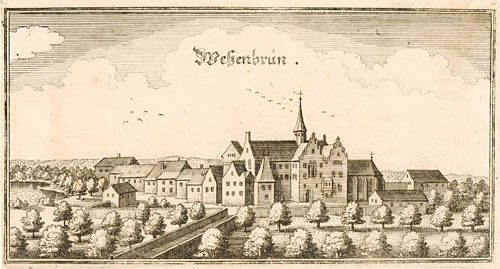
Wessobrunn Abbey: There have been a monastery at this place for a long time. Here a depiction of how it looked like in 1640, centuries after the ghosts started haunting the place.

The monastery of Wessobrunn, near Weilheim in Bavaria had been founded in the 8th century. From 1100 the community of male monks was joined by a sisterhood as well and it included both a community of nuns and monks. There are also legends about one of the nuns in the abbey haunting the place as a ghost. 

The Ghost of the Nun

According to this legend there was a nun in the 13th century who might have been a sister of Knight Joseph Diethalm von Wileyhin, the last Count of Weilheim. It is said she entered Wessobrunn Abbey after her brother’s death in 1211. 

But the way of the sisters is not for everyone and according to the stories, she broke one of her vows of the order. Nuns had to live by strict rules of Chastity, Poverty and Obedience. Exactly what type of vows she broke are unclear, but it scared her so that she ran off. She hid in an underground passage back at her family’s home in Göterlberg. 

Without seeing the sun ever again, she died shortly after and her remains were not found until many years had come and passed. From then on it is reported of sightseeings of a nun around the castle as well as her old abbey, crying in the hallways, still in her nuns’ habit. 

Up until the 1800s it was said that locals threw spruce cones into a hollow said to be the former corridor where the nun hid on her escape from the Wessobrunn Abbey to scare away the ghost. 

Today there are still a cluster of Benedictine nuns living after God’s words within the walls of the abbey, still seeing their long dead sister walking the halls. 

More like this

Newest Posts

References

Die spukende Nonne (Kloster… – Der Märchenonkel | Facebook

The History and Legends of the Haunted Abbaye De Mortemer

Advertisements

Discover the secrets and legends of Abbaye De Mortemer, an infamous haunted abbey in rural France. Explore its haunting history from Dames Blanches, ghost monks, werewolves and a goblin cat guarding a treasure.

Hidden deep within the French countryside lies the Abbaye De Mortemer, an ancient structure with a chilling past. The former Cistercian Monastery in the Forest of Lyons is the home to eerie sightings and ghostly apparitions.

Origins of the Abbaye De Mortemer

Established in 1134, the Abbaye De Mortemer was an ancient abbey that was a gift to the Cistercians by Henry I of England. 

Read Also: There are many supposedly haunted abbeys and monasteries around the world. Check them out: Here

The name comes from the stagnant water of the lake that was dug out by the monks. It was called the Dead Pond which in French is Morte Mare. 

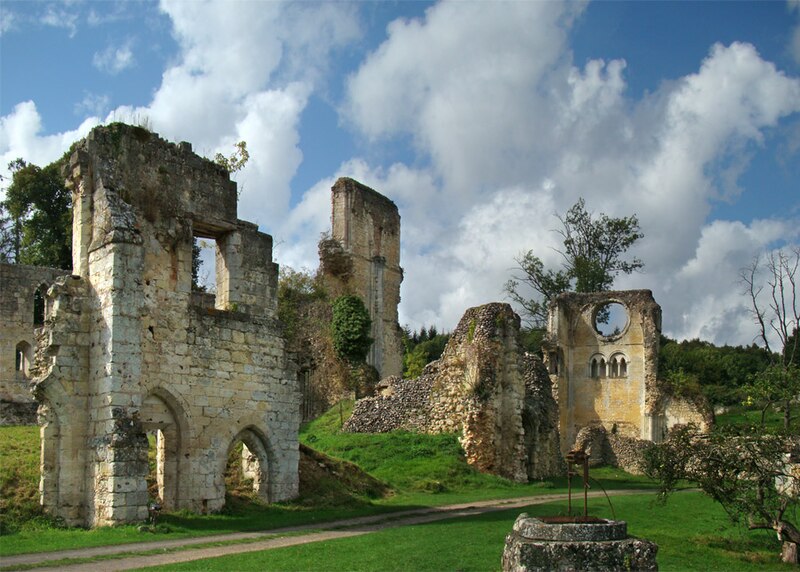
Abbaye De Mortemer Ruins: Most of the once grand abbay in France is now only ruins and is said to be haunted by more than one ghost. //Source//Wikimedia/Tango7174

Who owned the abbey depended on who owned the land from year to year. It was founded by the English king, but ended up under the French crown after the Hundred Year War ended in 1453. 

It held out despite it falling into disrepair until 1790 when it was dissolved under the French Revolution. Only 4 monks remained alive living in the abbey. They would end up remaining there, even in their afterlife.  

Dame Blanches of Mathilde I’Emperesse

The one thought to be haunting the place is the daughter of Abbaye De Mortemer founder, Mathilde I’Emperesse or Matilda of England.

Her father was King Henry I of England and she was one of those with a claim to the English throne in the civil war between England and Normandy between 1138 and 1153 which was known as The Anarchy

Why she is haunting this abbey is unclear as she died at an old age far away. She had close ties to this abbey as it was said she was a very spiritual woman and the order of the Cisterican monks because of the importance of the Virgin Mary, a saint of great importance to her. 

A picture supposedly depicting her ghost got well known in 1999, however French television has since debunked the image as lighting trickery. 

According to legend she walks by the ancient pools and mist is created on them. By local lore you do best to look away if you spot her. If she wears black gloves it means bad luck and misfortune. If she is wearing white, there is a happy event in the coming year. If you see her twice though you are condemned to death. 

The Helpful Ghost Monks

People have reported a number of sinister legends and stories about the Abbaye De Mortemer. One popular story involves sightings of the infamous Black Monks, which are said to appear on dark nights in the abbey’s ruins. 

This is believed to be the ghosts of four monks who were murdered during the French Revolution in 1789 when the churches and abbeys were robbed for their wealth to fund the revolution and the monks were hunted down and dragged to the old cellar were the last brothers of the orders were massacred. 

Other visitors have experienced ghostly apparitions, chills, strange voices, and other forms of supernatural activity. Both the Delarue family that were going to move into the former abbey reported about seeing the monks as well as an English paratrooper in the second world war. 

He said that he was spotted by the enemy and was running around in the forest to hide. A monk came forward and guided him to safety before disappearing. The people at The Resistant Cell the paratrooper found, knew it had to be a monk from the Abbey. 

The Goblin Cat Haunting the Treasure

The haunted abbey is also said to be the home to a certain Goblin cat you can meet in the ruins in the form of a black cat. 

According to the legend, the cat is guarding a certain treasure of the abbey said to be so grand it could restore the abbey to its former glory. 

The She-Werewolf

One of the most famous legends concerning the Abbaye de Mortemer is the story of a werewolf haunting its grounds. According to legend, a cursed woman transformed into a wolf every night and terrorized all who crossed her path. 

This was thought to be a female werewolf known as the Garache in French Folklore with yellow eyes. This is the only tale of a Garache in Normandy apparently, a weird thing perhaps as French Folklore is filled with legends of shape shifting werewolves. 

A man named Roger Saboureau was out poaching in the forest in 1884 when he encountered this werewolf and he shot it dead without hesitation. 

When the Garache died though it returned to its human form and he saw it was his own wife. 

The Demonic Pink Room

In 1863 the building, restored somewhat and made into a family home, was bought by a rich Parisian named M.Delarue. He moved into the place with his wife and two children, but they soon found that it wasn’t without its history. 

One of the most notorious stories revolves around Abbaye De Mortemer’s so-called “Pink Room.” The room is mentioned by some of the owners who experienced so much hauntings it even broke an engagement. 

A young girl who was the fiance of the son, Charles Delarue, the owner of the building and living there came to stay with them once. She was given the pink room as it was the only one available. She was found in the morning, terrified of all the paranormal activity that had happened during the night. She announced she would never live there, broke off the engagement and hurried back to Paris. 

M.Delarue’s daughter had been a nurse during the First World War and told her father she had never been afraid in the trenches and would not be afraid of the pink room either. She made it her own and lived in it, but said that she always felt observed, but not threatened in the same way the former fiance of the family had. 

The Exorcism of the Abbey

The Delarue family stayed in the former abbey for quite some time, but in 1921 they thought it was about time with an exorcism. Not the first one though, and they called once again upon Abbé Humbolt who had done the previous ones also. 

They ordered another exorcism of the Pink Room and the Abbey and it did become quiet for some time. But then it started again. How is it today?

More like this

Newest Posts

References

Mortemer Abbey – Wikipedia

Tales and legends – Mortemer Abbey 

The unquiet soul of Abbaye de Mortemer | History, ghosts and ruins

Empress Matilda – Wikipedia 

The Ghost Monks at Lyseklosteret

Advertisements

In the ruins of Lyse Abbey there are rumors about the ghost monks haunting the ruins as well as a white lady roaming the roads around it. 

Lyse Abbey or Lyseklosteret is a former cistercian monastery that was built in Os, right outside of Bergen in Norway. There are only ruins of it today, as many of the monasteries were destroyed during the reformation from catholicism to protestantism in 1536. 

In 1578 stones were removed from the monastery and shipped to Denmark and used in Kronborg Castle, as Norway at the time was a colony in Denmark. The stones were also used to build the Rosenkrantz tower in Bergen.  

Ghost Monks

The monastery called  Coenobium Vallis Lucidae ( The Monastery in the Valley of Light) in Latin and named after the fjord, Lysefjorden (The Light Fjord) was founded by English monks in  From Fountain Abbey in North Yorkshire 1146 and the building was built over the next hundreds of years. They also brought fruits like apples to Hardanger, a place now renowned for its tasty apples. 

Lyse Abbey: The ruins of the old monastary is said to be haunted by ghost monks// source

It is said that the monks that first built the monastery never left and haunts the location even to this day. Many have reported about seeing cloaked silhouettes walking about as if they are working on the building. 

There have also been heard moans from the ruins of the once great monastery, especially on foggy nights, making people believe that the old ruins are haunted by Ghost Monks. 

Lyse Abbey is not the only place supposedly haunted by a monk in Norway. Read also about the ghost monk haunting Nidarosdommen. 

The White Lady In the Ruins

The ghost monks are however not the only ones that are rumored to haunt the place. Apparently there are stories about a “white lady” that walks around in the ruins of the monastery at night time and in the evening. According to legend there was a terrible accident involving a tractor in 1960 when she was bicycling along the road nearby and a tractor ran her over. 

It is unclear if it actually was an accident since it was her neighbor driving the tractor. Anyway, since then, there have been multiple reports about a woman in white around the weeks leading up to Christmas, often described as a white morning robe, wandering restless around the monastery, just looking straight ahead. 

More like this

Newest Posts

References

Her finner du spøkelser i Bergen – Let’s get lost

Lysekloster – Wikipedia

Kven er den skumle dama som skremmer vatnet av folk ved Lysekloster-ruinane?

Ghost of the Cathedral — The Bloody Monk in Nidarosdomen

Advertisements

From medieval times, history and bloody memories lingers in one of the only and longest standing cathedrals in Norway. This is the story of the Bloody Monk in Nidarosdomen and the haunting of the Cathedral.

Once upon a time in history, the Nidarosdomen in Norway was the most visited place for pilgrimage in Northern Europe and is situated in Trondheim in Norway. People came a long way to seek salvation, peace and God in that holy place. That was those days and today it is mostly a big tourist attraction as well as some of Norway’s most well known buildings.

Nidarosdomen in Trondheim: The Cathedral has been rebuilt many times and started as a wooden chapel and the cathedral was finished by the 1320s. This is Nidarosdomen from 1821 by Carl Johan Fahlcrantz. This was how the cathedral looked before its major restoration and additional towers and much more like how it would have looked in medieval times.

Perhaps far from it today, Norway was a country of Catholics in medieval times, having nearly rid itself with its pagan roots of the Vikings and Norse Mythology, much later than rest of Europe perhaps. It was a church, much more mysterious than the one today that built upon both the learned Catholic as well as the pagan viking traditions.

Read more: Check out all of our ghost stories from Norway

Today the monasteries in Norway is from ancient times and most of them are turned to ruins, made to museums and stands as a memory of the power the catholic church once had of the country. Other cathedrals and churches from the time like Nidarosdomen were transformed to act as a house of God, even after the country became protestant.

The Haunted Cathedral in Trondheim

A place where the fantastical cathedrals continues its mission in a new suit is the Nidarosdomen, in the heart of Trondheim and one of the countries most precious religious buildings. But one can still hear the echoes of the past in the big halls and the memories of the monks still lingers in the walls.

Read More: check out our other ghost stories about ghost monks in Norway like The Ghost Monks at Lyseklosteret and The Haunted Natural History Museum in Bergen

Monks were men that gave up most of the earthly life to serve their lives in God’s service. They forsake the right to marry, have children and own properties in their name. The monks became anonymous, one of many and a part of an order with a strong hierarchy. They all dressed the same as their order, in robes to hide, to look the same. Even the face could be covered to not give away the identity. And at least on of these monks are said to still be wandering the halls of the cathedral in Trondheim.

The Bloody Monk: The Cathedral Nidarosdomen in Trondheim, Norway is said to be haunted by the ghost of The Bloody Monk. Tales of ghosts that looks like monks or nuns are often reported on appearing in old churches and even just the ruins of them, haunting after a great dishonor to their faith was done or perhaps they themselves couldn’t live the strict life of a monk without a sin?

Nidarosdomen is built over the burial site of King Olav II (c. 995–1030, reigned 1015–1028), who became the patron saint of the nation after his death as he was the one who really brought Christianity to the country, and is the traditional location for the consecration of new kings of Norway.

Over centuries the cathedral grew from a small chapel to one of the biggest churches in Norway. It has withstood fires, the reformation, the roof blowing off and if we are to believe the rumours, it has even managed to preserve one of the long residence ghosts.

The Bloody Monk in Nidarosdomen

The first encounter we have found on the monk haunting the Nidarosdomen, comes from the month of January in 1924. It is a cold day in the city of Trondheim and the stone walls do little to keep the cold winter outside from the Maria Chapel in Nidarosdomen. Still, the people flock to Sunday service, now turned to a protestant church.

Read More: Check out all our ghost stories about Haunted Monasteries and Churches from all over the world like The History and Legends of the Haunted Abbaye De Mortemer, Dracula and Ghost Nuns in Whitby Abbey and The Evil Bishop Against the Maiden in Love – The Ghost of Haapsalu Castle.

The congregation gathered together in the hall in prayer and song. Perhaps that is what brought the The Bloody Monk in Nidarosdomen forward this day? A hymn sung for centuries, a prayer heard this Sunday that acted as a summoning for ghosts? Was is the chanting voices from the whole congregation joined in the song as a choir? Something the monk recognized from the time he was alive?

People were gathering, chanting songs and prayers as the monk themselves once did, wandering with their incense? It’s hard to know exactly what with this particular sermon that brought him out. But since then, he has been a ghost observed many times in the cathedral and has been dubbed The Bloody Monk.

Holy Church: The Cathedral of Nidarosdomen is important for Norwegian christians as it is the resting place to one of the greatest saints in Norway, King Olav the Holy that died on the battlefield after bringing the religion to the country. After his death it was said his hair and nails continued to grow after death. Is it the holiness of the cathedral that keeps the ghosts haunting it, or is the place just built upon haunted ground already?

Marie Gleditch, wife of the bishop was the one that saw The Bloody Monk first. She claimed she saw a ghostly figure glide through the crowd gathered for service. She described him as a middle aged man with the monk robe hanging over him. This would not have been an unusual sight in medieval times, but in 1924, long after the monk orders had disbanded, this was not normal. Furthermore, Gleditch described the The Bloody Monk in Nidarosdomen to have glowing eyes when she got a better look. But perhaps more striking is that he had a bloody stripe across over his throat, almost as if it was cut right through, giving him his name.

The Ancient Chant of the Ghost Monk

What really happened to this ghost? Was he really beheaded as the bloody throat would suggest? Was he murdered in cold blood? Or perhaps executed for a crime? We will probably never now as details of who came and went to this place was too may to count and keep track of.

Since that time, the ghost of The Bloody Monk in Nidarosdomen with glowing eyes have created headlines several times in the country. It was for instance also seen by a bishop Alex Jonson who saw the figure in the cathedral in 1933. The Bloody Monk has perhaps become one of the more famous ghosts in Norway and people have visited the cathedral, just to try to get a glimpse of The Bloody Monk.

In 1966 a guy named Jon Medbøe forward with his story when he claimed to have encountered The Bloody Monk with his students when they had nightly walks in the cathedral and could hear something that sounded like footsteps dragging over the floor as well as a mysterious chant.

Medbøe who was a music historian and tried to pinpoint exactly what the music was like. He claimed the monk chanted a song, more specific, a choir song from the middle ages. A well known melody from the composer Perotinus from 1208. Was this perhaps the song that was played in 1924? Or something similar?

The Chanting Monk: This is one of Perotinus compositions and gives an idea of the type of chanting The Bloody Monk were doing. Perhaps this or something similar is the reason he is haunting the Cathedral?

Several have tried to come to the bottom of this mystery and after these modern sightings, it was written a lot about it it, even in German magazines. Who was this lonely monk, still wandering the halls, chanting old forgotten songs? How did he die? Even famous Norwegian, like horror writer Andre Bjerke tried to get into the cathedral to film it for a series of paranormal places he did, but he didn’t gain entrance. The church was not really forthcoming with information when it had anything to do with the Bloody Monk’s ghost. Medbøe was banned from his nightly trios into the cathedral after all the fuss it created.

Nidarosdomen tried for decades to cover the story of The Bloody Monk haunting Nidarosdomen up and shift its focus to it being an active church, not a common ghost house. So perhaps the Nidarosdomen still holds onto old traditions, more mystics and secrets we are not meant to know.

More like this

Newest Posts

References:

Nidaros Cathedral – Wikipedia

Munken i Nidarosdomen – Wikipedia