An online magazine about the paranormal, haunted and macabre. We collect the ghost stories from all around the world as well as review horror and gothic media.
The Forbidden City in Beijing still has some parts that are off limits for tourists, but they can never block the path to the alleged ghosts that are said to linger. These Imperial Palaces are said to be haunted by former concubines, and according to legend, possibly cursed as well.
The Forbidden City in Beijing still has some parts that are off limits for tourists, but they can never block the path to the alleged ghosts that are said to linger. These Imperial Palaces are said to be haunted by former concubines, and according to legend, possibly cursed as well.
Built in the early 1400s, Beijing’s Forbidden City, or Zijin Cheng in Chinese (紫禁城), literally means the purple forbidden city and is a complex of majestic buildings and grounds that bears witness to the rise and fall of China’s powerful emperors and countless of people that lived and worked inside of the imperial walls.
Chock-full of ancient secrets, cultural treasures, and hidden stories, this UNESCO World Heritage Site is one of Beijing’s most iconic attractions where almost 20 millions visit each year and according to the legends, it is supposedly haunted, although in 2015, the Forbidden City publicly went out to deny these rumours.
Read More: Check out all of the ghost stories from China
The Forbidden City is only open in the daytime and closes its door at 5 usually except from a few special occasions. This fact has gotten people to speculate that the reason for it is the paranormal activity that happens during the night inside of the Imperial Palace.
Beijing’s Forbidden City
The Imperial Palace, known as the Forbidden City, dates all the way back to 1406 and was the former imperial palace and a winter residence of the Emperor of China from the Ming Dynasty to the Qing Dynasty when Yongle Emperor moved the capital from Nanjing to Beijing.
Filled with over 980 buildings including centuries-old palaces, gardens, and monuments, this site can tell us a lot about the grandeur of China’s dynastic rulers enclosed by a 10 meter high wall.
Members of the ruling family, aristocrats, and high-ranking officials would live in one of the nine inner court halls at the Palace. Each hall was responsible for holding different types of ceremonial gatherings or major events arranged by the Emperor himself.
There is no one living i the Forbidden City anymore. China’s last emperor, Puyi, was evicted after a coup in 1924, and the palace complex was turned into one massive museum you can visit today.
Ghosts of the Forbidden City
Confucius once said: “Respect the ghosts and gods, but keep away from them.” This can seem to be a bit tricky at this location however, as it is said to be plentiful of ghosts around the Forbidden City.
Rumors of mysterious phenomena have swirled around the Forbidden City for centuries, especially in the western parts of the place at it is said to have a strong Yin energy. As the palace was once reserved for China’s imperial family, it’s believed to be haunted by their ghosts and other supernatural occurrences.
Given its immense history and cultural significance, it’s only natural for the Imperial Palace to be filled with tales of ghosts and spirits. When the palace was due for renovation in the 1940s, the guards that were placed outside of it had tales to tell when they returned about strange animals running around as well as the ghosts of people that had died in the palace.
According to stories told by the eunuchs that used to work in the palaces, the haunted places in the Forbidden City included a passage behind Yonghe Palace where ghosts strangle their necks. There were also said to be a well outside Jinghe Gate where a group of female ghosts live. Fortunately there was an iron plate on Jinghe Gate to suppress them, otherwise they would come out every day. In the middle of Sanhai On the Jin’ao Jade Bridge it was said that every three years a person walking over it would be pulled down by a ghost under the bridge.”
There are tales about hearing a strange flute music heard in the dark hours in the empty city, but perhaps it’s the story about the weeping women that are most told.
But why is the Forbidden City said to have been haunted? Surely 600 years of deaths would warrant a place perfect for ghosts, but it is also speculated that the place was cursed to begin with.
The Forbidden City is Cursed?
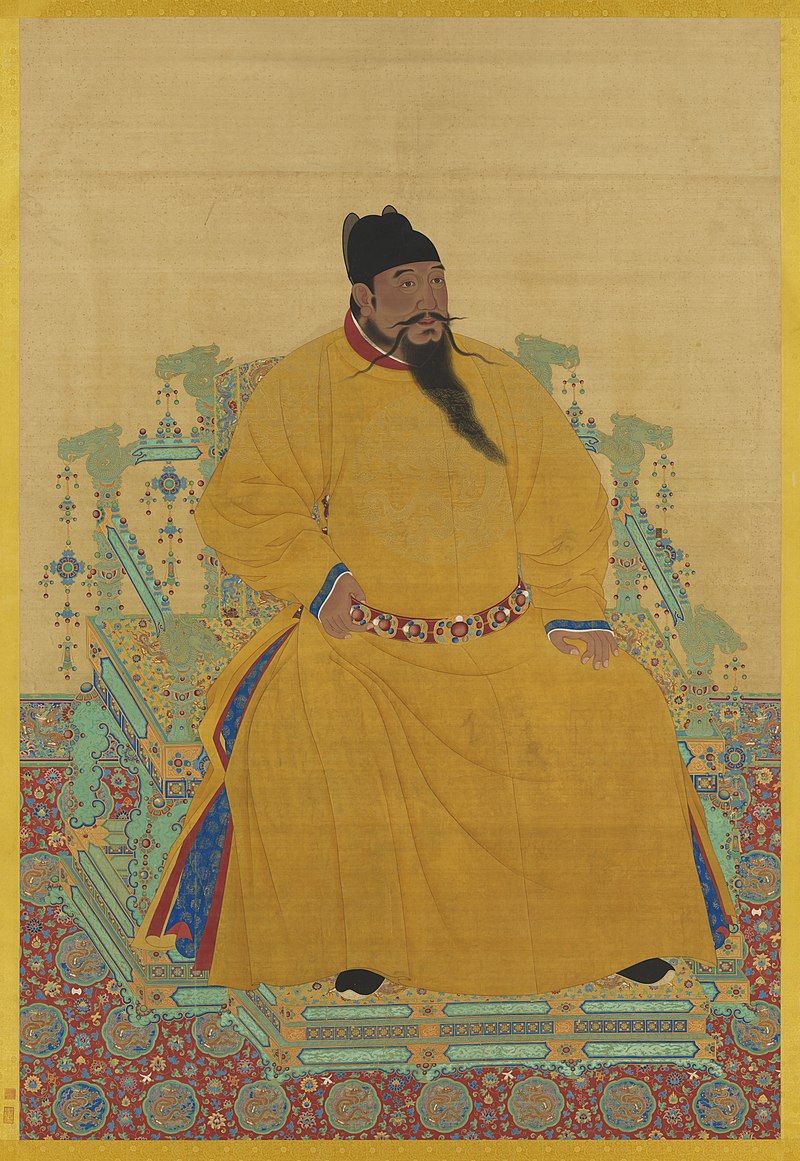
The Yongle Emperor, also known as Zhu Di, was the third emperor of the Ming dynasty. He reigned from 1402 to 1424.
Emperor Yongle did a lot of great things during his reign, including making Beijing the capital, building the Forbidden City for over 15 years, surrounding himself with global masters of philosophy, religion and did long strides in making peace and war with neighboring countries. He is however remembered as an emperor that always sought out power and for his cruelty to his subjects.
He spent most of his reign asserting his claim to the throne, as he was for many seen as a usurper as his nephew Jianwen was really in line for the throne.
After he took the throne from him he killed the palace’s servants and loyalists that could bear any doubt about his position as emperor. The nephew he burned to death.
When he was opening the Forbidden City he invited nobles from all around to show them he was the true emperor and cement his claim to the throne in the splendor of the newly founded Imperial Palaces. But his grandeur was built in top of a huge scandal that are said to have left a haunted imprint on it ever since.
The Massacre of his own People
Over 2 800 concubines, servant girls and eunuchs belonging to his harem were executed to suppress a sex scandal that would humiliate Emperor Yongle when he was going to show the banquet in the newly built imperial city in 1421 when the opening ceremonies were being held on New Years Eve.
One of his favorite concubines had been found after taking her life. She had an affair with one of the eunuchs, and the shame for the Emperor was that he didn’t have his subjects in order and didn’t have control.
Chinese Imperial Concubines: Chosen for their beauty, grace, and other qualities, concubines lived within the imperial palace and were often selected from noble families to serve the emperor. These women could attain various ranks within the hierarchyand played a vital role in the continuity of the imperial lineage. While they enjoyed privileges and luxuries, they also faced intense competition, intrigues, and strict rules within the palace. Their lives were marked by both opulence and limitations, reflecting the intricate dynamics of the imperial court in ancient China.
A few years later a fire took down over 250 buildings after the lightning struck it and killed numerous men and women as well. It was speculated that this was damnation and a punishment for his evil acts that no lucky charms could prevent.
Emperor Yongle fell into a depression, og this or something else is not for certain. He died a few years later in 1424. A clause for the concubines was that they would never take another man, and the only way to ensure it was that they would die along with the emperor. So when he died, he collected 15 of his favorite concubines and their servants and hung from a silk noose in the Forbidden City.
It would be another 15 years before the new Emperor rebuilt the destroyed halls, but would reside there until 1911 when the imperial rule was ended by revolutionaries.
The Yin Yang Alley
Inside of the Forbidden City, there is one particular place that are said to host more paranormal activity than other. The Yin Yang Alley was originally called East Tongzi Alley and is today sealed off to visitors. It is said that the sound of footsteps walking down the alley is heard at night.
There is one picture a visitor manage to take of the place, showing that the alley now is mostly covered in weeds and dust.
The Yin Yang Alley: This is a picture someone manage to take through the crack of the door, showing the Yin Yang Alley.
There is one story about the ghosts walking the lane from the 1960s. This was a time the nation aimed to eradicate religion and discouraged belief in the supernatural. A young man was stationed within Beijing’s Forbidden City as a soldier, dismissing ghosts and deities, decided to challenge these notions.
He learned of the infamous Yin-Yang Alley within the Forbidden City, a place teeming with ghostly legends, and determined to venture through it at night to defy the old, feudal beliefs. The man embarked on a daring journey to the most haunted spot in the Forbidden City and decided to take a walk there at night.
When his comrades asked him the next day how his walk through the haunted lane had been, he turned pale. He asked them never to speak of it again.
The young man’s experience soon became a topic of discussion, as he recounted his eerie encounter with an unseen entity that led to a deterioration in his health, a loss of appetite, and a series of inexplicable afflictions.
The Concubine Ghosts
One story that keeps being repeated is that of the crying women, and in the Forbidden City, there were plenty of them throughout the years. Many speculate it is the ghost of one or more concubines as the crying woman is often seen in or around the quarter for the imperial concubines.
This story spread like wildfire in 1992, when some tourists insisted that they had gotten the concubines on camera close to the Zhenfell Well. News media got hold of the story and there was even a special investigation, even though they concluded with that there was something in the paint creating this phenomenon, the story continued.
The Concubine Ghosts: The story is often illustrated with this picture of four seemingly looking ghostly figures walking in front of the red wall. But what is the truth behind these pictures?
The investigation claimed that the iron tetroxide in the red paint acted like a camera when the light ionizes the air. So that if a palace maid was walking past at one time, her figure would be preserved until next time light, like a camera flash would reflect this. It is also said that it was a thunderstorm that day that could also activate this.
However, it is most likely just an edited version of this photo under. It is also said that the story bears a striking resemblance to the 1981 ghost movie Qian Ying or Shadows of a Ghost by Baochang Guo. The movie is about an old mansion that has been sealed off for years, re-opens as a museum. A ghost is sighted by the museum’s guide and a quest to get to the bottom of the mystery starts.
The Palace Maids: This picture taken by a foreigner in 1910 of Qing Dynasty Palace Maids going shopping have also been connected to the ghosts of The Forbidden City and is most likely the origin photo of the viral ghost photo.
Although the viral story of the ghosts in the pictures were inspired by 80s movies and books, there have always been talk about seeing ghosts of women in the Forbidden City. One young man once insisted that he had seen one of these crying women, dressed in all white , walking the grounds. He approached her and tried to speak to her from behind, but she didn’t hear, and didn’t even turn around.
There are also some that claim that the weeping women, or perhaps something else entirely. The story is that one night in 1995 there was a woman, this one reportedly dressed in all black with long black hair. One night a guards were watching TV when two of his colleagues burst in, their face white of fear. The guards all thought the woman they had seen was a thief and chased her around within the Forbidden City. When they cornered her, she turned around and revealed that she had no face before disappearing.
When they together tried to find her, there was no trace of a woman ever having stepped into the Imperial Palace.
The ghost of the Concubines Haunting the Forbidden City: One of the most common told story is the sightings of women haunting the place, or the sound of them weeping. It is believed that it could be the ghosts of the many concubines that met a tragic end at the Imperial Palace.
But who could it be that is haunting the Imperial Palace? One famous story is about a ghost concubine from the Ming dynasty. Consort Zhen was also known as the Pearl Concubine and was believed to be the most beautiful woman in the palace born in 1876. The emperor fell in love with her, but their relationship was forbidden by the strict rules of the imperial court.
They used to meet secretly in a hidden garden inside the palace, but one day the empress discovered them. Legend has it that she was drowned in a well on the orders of Empress Dowager Cixi. Out of jealousy, the empress ordered the concubine to be executed and her body was thrown into a well in the palace grounds when she was only 24 years old. It is said that the ghost of the concubine still haunts the Forbidden City. She seeks revenge against the empress who betrayed her.
The Hidden Room in the Imperial Palace
Another legend that are told is about a supposed hidden room within the palace. A group of construction workers found a hidden room in a palace they were renovating. Inside, they discovered a pile of bones and a note saying it was the body of a traitor who plotted against the emperor.
After that, strange things started happening. The workers heard eerie whispers and footsteps, and some even saw the ghostly figure of a man in imperial robes. They refused to work in the haunted building, so it was left abandoned.
The Ghosts of Beijing’s Forbidden City
In conclusion, Beijing’s Forbidden City stands as a magnificent testament to China’s imperial past, with its grandeur, secrets, and hidden stories. As millions of visitors flock to this UNESCO World Heritage Site each year, they are captivated by its architectural beauty and cultural significance. However, beyond the ornate palaces, gardens, and monuments lies a realm of mystery and intrigue.
Amidst the eerie silence of the Forbidden City, stories abound of strange flute music resonating through the night and the lamenting cries of weeping women. The souls of these concubines, trapped in a realm between the living and the dead, evoke a sense of both sorrow and intrigue. Some have even spoken of encounters with spectral figures, dressed in white or black, their presence leaving a chilling impact that defies explanation.
While the Forbidden City remains a daytime attraction for tourists, one cannot help but wonder about the secrets concealed within its walls during the night. It is a realm where the past intertwines with the present, where the ethereal and the earthly coexist. The tales of ghosts and curses serve as a reminder that even the most majestic and revered places can hold hidden dimensions beyond our comprehension.