An online magazine about the paranormal, haunted and macabre. We collect the ghost stories from all around the world as well as review horror and gothic media.
From poltergeists, ghostly monks, nuns and knights as well as a procession of skeletons, some of the most haunted places in Basel, Switzerland are said to be centuries old. Let’s have a closer look on some of them.
From poltergeists, ghostly monks, nuns and knights as well as a procession of skeletons, some of the most haunted places in Basel, Switzerland are said to be centuries old. Let’s have a closer look at some of them.
Beneath Basel’s charming medieval streets, vibrant culture, and picturesque riverbanks lies a darker, more unsettling layer of history—one whispered about in hushed tones and kept alive through ghost stories passed down for generations. As one of Switzerland’s oldest cities, Basel is steeped in centuries of war, plague, and religious upheaval, leaving behind more than just ruins and gravestones. From restless spirits in ancient cloisters to poltergeists in quiet apartments, this city is home to eerie legends that refuse to fade and some of the most haunted places in Basel.
The Restless Spirits of Kleines Klingental: Basel’s Haunted Nunnery
Museum Klingental Basel: The old nunnery is said to be haunted by the sinful nuns that used to live there, centuries ago and one of the most haunted places in Basel.// Source: Mikatu/Wikimedia
The former Dominican cloister of Kleines Klingental in Basel, once a house of piety, became a notorious retreat for wealthy, noble-born nuns whose lives allegedly strayed far from monastic vows. Rumors of secret lovers, drowned infants, and defiance of church authority plagued its reputation.
After the Reformation, the cloister was turned into military barracks, where soldiers reported chilling hauntings: ghostly nuns praying, wailing, and wandering the halls in sorrow, still seeking forgiveness for their sins. Today, the site houses the Kleines Klingental Museum, but tales persist of phantom nuns, flickering lights, and shadowy figures that suggest the past has yet to release its grip on this once-sacred ground.
In the heart of Basel’s Old Town, the Spießhof Building harbors the chilling legacy of David Joris, a 16th-century Dutch Anabaptist preacher who fled persecution only to meet a gruesome fate after death. Living under a false name, Joris built a secret life in Basel before his heretical beliefs were posthumously revealed. In a dramatic act of vengeance, his corpse was exhumed, beheaded, and burned—an attempt to erase him from salvation. Since then, his headless ghost, often seen with two eerie black dogs, is said to haunt his former home. Mediums and witnesses claim he won’t rest until his name is cleared, cementing his place as one of Basel’s most enduring and unsettling phantoms.
The Restless Gatekeeper of the Rhine Gate in Basel
In 17th-century Basel, a troubled gatekeeper at the Rhine Gate lost his beloved young daughter when she drowned in the river, a tragedy he witnessed but was too drunk to prevent. Consumed by grief and guilt, he later died—likely by suicide—and was denied burial in consecrated ground beside her at St. Martin’s Church. Instead, he was interred among outcasts at Klingental.
Yet his spirit found no rest; legend holds that his ghost still haunts the churchyard, silently keeping vigil by his daughter’s grave, a spectral figure glimpsed beneath the moonlight, forever bound by sorrow and denied peace.
The Ghostly Monk of Spittelsprung (Münsterberg) in Basel
Back at a time when the hills of Münsterberg were called Spittelsprung in the old parts of Basel, Switzerland, a haunting tale emerged about a spectral monk. This ghostly figure would glide silently through the streets, frightening children while immersed in silent prayers, oblivious to the living around him.
He was often seen illuminated faintly by candlelight, engrossed in his breviary, and indifferent to the fear he instilled in children watching from the shadows. Only when confronted by an adult would he vanish, leaving behind the scent of candle wax.
The reasons for the monk’s haunting remain a mystery—was he a victim of the plagues, seeking penance for sins, or perhaps a witness to grim events? The story of another haunting monk from the 1626 poorhouse adds to the intrigue, where travelers would watch in terror as he glided through their rooms.
Knightly Ghosts Haunting St. Johanns-Vorstadt by the Rhine River
In Basel’s St. Johann district—once home to the medieval Commandery of the Knights of St. John—ghostly legends linger beneath the modern apartments now standing there. Once filled with crusader knights and sod wells, the area was long haunted by the phantom of an armored rider galloping through the Ritterhaus courtyard, ghostly apparitions of a pale-faced man, a cloaked lady, and even a spectral white dog. Most chilling were the cries of a child said to echo from the depths of an old well.
Though the original knightly buildings were demolished by 1929 and archives lost, eerie sightings and stories continue to haunt the district, keeping its haunted past alive and still considered one of the most haunted places in Basel.
The Knocking Ghost of Utengasse 47: Basel’s Poltergeist Case
Utengasse 47: Considered to be one of the most haunted places in Basel
In 1929, a small apartment at Utengasse 47 in Basel’s Kleinbasel district became the center of one of Switzerland’s most infamous poltergeist cases. What began as unexplained knocking sounds soon escalated into terrifying disturbances that seemed to center around a ten-year-old boy named Marcel.
Despite multiple investigations by police, doctors, and even spiritualists, no source for the strange rapping and chilling atmosphere could be found. Marcel’s intense reactions and the persistence of the disturbances, even under observation, only deepened the mystery. As public anxiety mounted, the Basel authorities took the unusual step of ordering the apartment vacated—an extraordinary measure during a housing shortage. Though the building still stands today, no further incidents were reported, and the haunting remains an unsolved and eerie chapter in the city’s folklore.
The Restless Dead Buried Inside of Basel’s Double Cloister
The Double Cloister of Basel Minster, a serene courtyard by day, is said to transform into a haunting ground by night, echoing with the restless spirits of those entombed within its ancient walls and said to be one of the most haunted places in Basel. Among them are two infamous specters: Emanuel Büchel, a respected artist and baker believed to have been buried alive, whose ghost moans and wheezes beneath the stone floors; and Master Tailor Schnyyder Hagenbach, a cruel man in life whose malevolent spirit is said to slap unsuspecting passersby without warning.
Once a sacred site filled with altars and later a cemetery for the city’s elite, the cloister has long been steeped in death and memory. Though modern life carries on just beyond its arches, many locals still avoid the cloisters after dark, wary of the unseen hands and the whispered echoes of Basel’s darker past.
Mirroring the famous Dance Macabre mural that used to hang near the Predigerkirche in Basel, legend claims that plague victims buried in the nearby grass will rise in a ghostly procession to warn the living of impending disasters.
In Basel’s old town, a haunting memory of the plague remains, as thousands perished indiscriminately during the Black Death. The city’s dark history is marked by the rapid deaths caused by the disease and the need for mass graves, particularly around the Predigerkirche.
The Dance of Death mural, painted in the 15th century, depicted skeletal figures leading both the rich and poor alike in a dance, emphasizing that death spares no one. Though the mural was dismantled in 1805, it became a legend, claiming that the dead rise in times of danger.
Local lore states that the plague victims buried near the Predigerkirche do not rest peacefully. When Basel faces calamity, they are said to rise and march in a spectral procession through the streets, symbolizing death’s universal reach, uniting all in decay regardless of their former status.
The Dream of the Basel Rhine Bridge about the Buried Treasure
The Emmental: is a valley in west-central Switzerland, forming part of the canton of Bern, mostly made up by farmers and known for its cheese and pottery. Rafrüti is mostly known for being the place where the first and second latest meteorite was found in Switzerland.
The tale of “The Dream of the Basel Rhine Bridge” tells of a poor farmer from the Emmental who dreams of finding gold at the Mittlere Brücke in Basel were the bridge is considered one of the most haunted places in Basel. After several nights of the same dream, he decides to make the journey to Basel, where he searches for the treasure on the bridge without success. A policeman, noticing his distress, shares a dream about treasure in Rafrüti, prompting the farmer to return home. He digs in his kitchen and uncovers a pot of gold with the help of a mysterious black figure, appearing like a ghost to him.
The figure offers him three piles of gold to choose from but warns him to decide wisely. Instead of choosing, the farmer combines the piles and vows to share the wealth as he sees fit. The figure then disappears, and the farmer’s family lives in comfort thereafter, proving that the bridge indeed brought him fortune.
The Gray Ghost of Claraplatz: Kleinbasel’s Neighborhood Spirit
The Gray One, a haunting spirit, is said to linger around houses in Kleinbasel, Switzerland, especially in the now-demolished Abbess’ Court. The ghost was not confided into a single home, and was one of the more famous ghosts in the city and Abbess’ Court one of the most haunted places in Basel. This eerie ghost, dressed in traditional Franconian garb, particularly troubled the Schetty family in the 19th century, appearing in their daughters’ bedroom and causing unsettling disturbances throughout the house.
The ghost would often retreat to the attic, creating loud noises that disturbed the family. To keep the ghost away, locals painted a pentagram at the house’s threshold, but it’s unclear if this truly worked. After the death of Joseph Schetty, the family patriarch, his ghost was also reportedly seen in the house. Despite the Abbess’ Court being demolished in 1951, legends of haunting phenomena persisted in the area, with reports of phantom footsteps and sightings of a gray figure near the old foundations.
The Evil Eye of Rebgasse: Curses, Shadows, and an Exorcism in Basel
Haus Zur Alten Trotte: The haunted house on Rebgasse 38 in Basel, was said to have had an exorcism twice and considered to be one of the most haunted places in Basel. // Source: Laloom/Wikimedia
The Kleinbasel neighborhood in Basel, Switzerland, is known for its haunted history, particularly at Rebgasse 38. This house, also known as the Haus zur alten Trotte, was home to many ghostly encounters, including spirits associated with a former couple who lived there from 1888 to 1907. Two main ghosts were reported: Grethi Beck, a former maid who was believed to have the Evil Eye, and the deceased wife of Pastor Johann Jakob Übelin, who returned as a ghost after his infidelity.
Despite attempts by local clergy to suppress belief in hauntings, the presence of these spirits persisted, prompting the famous exorcist Johann Jakob von Brunn to be called upon. He successfully banished Grethi Beck’s spirit, though sightings of her continued, and the haunting by Übelin’s wife also lingered until she was expelled.
Although the hauntings ceased, the house retained its ghostly reputation, and the location of Rebgasse 38 is now a kindergarten. The tales of the hauntings continue to live on through local folklore and ghost tours, suggesting that the shadows of Kleinbasel’s past may never fully fade.
Ghosts of the New Moon: The White Death and the Restless Shadows of Basel
Markgräflerhof Palace: An engraving of the Markgräflerhof Palace from 1845 were the White Death was said to roam and being one of the most haunted places in Basel.
In Basel, the ghost known as Weisse Tod, or The White Death, haunts the area around the historic Markgräflerhof building. This terror manifests during the new moon when the veil between the worlds is said to thin, prompting the city’s restless spirits to rise. Locals believed that every new moon, The White Death would emerge from a nearby hole, peering into homes with its dark eye sockets, and those who met its gaze would soon fall ill, as if marked for death.
The Markgräflerhof, built in the early 1700s, was once tied to various rumors, including the suggestion that its haunting is linked to the building’s past as a hospital or an asylum. Compounding the legend, tuberculosis was often referred to as The White Death, possibly intertwining fears of disease with ghostly lore.
Additionally, another ghost appears at an old urban fountain near the Rhine, a man in dark garments whose presence evokes mystery and sorrow, believed to be a soul lost to the river. Each new moon, the church bells toll extra hours to ward off restless spirits, but even as modernity transforms the city, the supernatural aura persists, suggesting the new moon still belongs to the dead in Basel.
The Basilisk of Basel: The Beast Beneath Gerberberglein
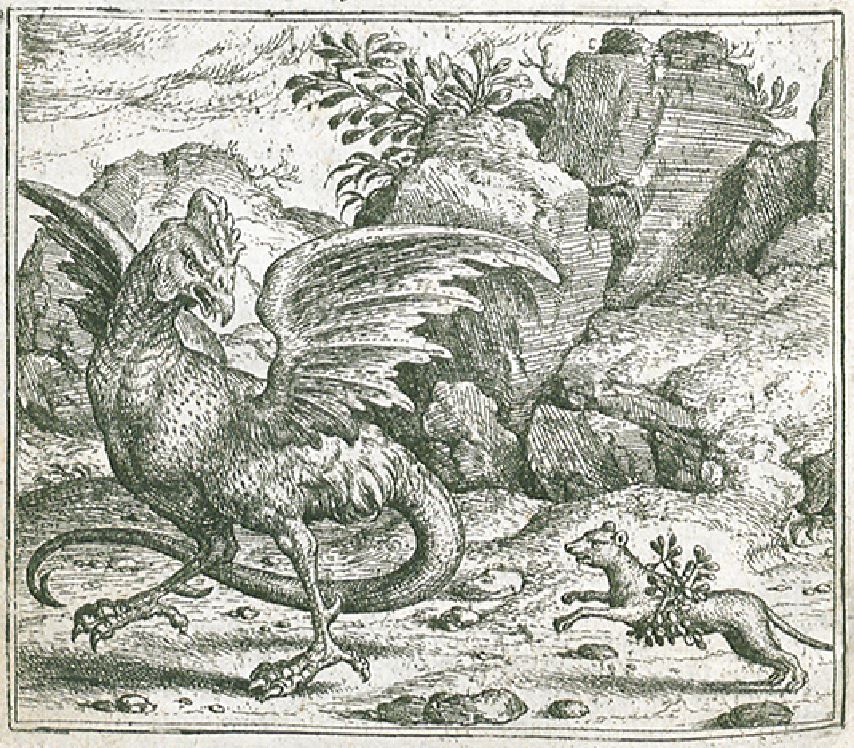
Beneath the quiet street of Gerberberglein in central Basel, legend tells of a deadly basilisk—a mythical creature part serpent, part rooster, with a gaze so lethal it could kill. Said to have lived in a cave beneath the city, the beast terrified locals until a brave apprentice used a mirror to turn the creature’s power against itself. Though the cave was sealed long ago, the basilisk lives on in Basel’s identity, with its fearsome image adorning fountains and railings throughout the city.
From spectral knights riding through vanished courtyards to sorrowful moans echoing in cathedral cloisters, Basel’s haunted places are more than just eerie tales—they are echoes of a city that remembers its dead. Whether rooted in history, folklore, or something stranger still, these stories remind us that even the most beautiful places can hide unsettling secrets. So if you ever find yourself wandering Basel’s narrow alleys at dusk or standing alone on the Mittlere Brücke under a full moon, don’t be surprised if the past comes whispering. After all, in Basel, the line between the living and the dead is thinner than you think.
Old cities carry old ghost stories, and Bern in Switzerland is no exception. From the old buildings filled with history to the depth of the Aare river, here are some of the most haunted places in Bern.
Centuries after the vampire panic starting with the death of Petar Blagojević, another vampire was said to haunt the Serbian village, Kisiljevo. Who was Ruža Vlajna and what happened to her?
Said to be the mass burial place for the dead Irish Independence rebels from 1798, the Croppie’s Acre in Dublin is said to be haunted by their lingering souls.
Once a green paradise, the legend says the fairies protected the people of Val Gerina valley in the Swiss alps. Driven by greed to impress a woman however, the son meant to continue the tradition and friendship with the fairies, brought it all down.
Haunted by its former Fellows, Trinity College in Dublin is said to be filled with eerie spirits where even the bell tolls after dark when the shadows take over campus.
A true story morphed into a fairytale, the life and death of the French Countess Marie Louise St. Simon-Montleart has become the stuff of legends. Buried in the forest close to Wildegg Castle in Switzerland, it is said she is haunting the castle and the forest, her sanctuary.
Crossing through the Jura Mountains in Switzerland, an urban legend about the ghost of a lady in white is said to have haunted the Belchen Tunnel and was widely known and written about in the 80s. Question is, is she still haunting the tunnel?
After falling to his death trying to escape the debtor’s prison, The Marshalsea Barracks in Dublin, it is said the ghost of Pat Doyle is haunting the remaining walls of the ruins.
Planted to mark the mass grave of plague victims, the Linden Tree in the Aargau valley in Switzerland has become a famous landmark. In the night though, it is said that the ghosts buried underneath it crawls from the ground to haunt as a warning for any oncoming tragedies.
A rebel and freedom fighter for Irish independence is said to haunt his favorite pub, The Brazen Head in Dublin, where it is said he plotted his fight against the English.
The black cat in European folklore is shrouded in mystery and magical lore. From the old parts of Bern, ghost stories of ghostly black cats linger in the shadows, reminding about the old fear the feline specter used to hold over people.