Tag Archives: spiritualism

Books Written by Ghosts and Channeled Texts

Advertisements

You probably have heard about Ghost writers, but have you heard about books written by ghosts? Over the years, there have been books and channeled texts that come from the afterlife. These books and the mediums that penned them claim that they were actually written by famous writers as well as long dead and unknown ghosts. 

Through the popularity of spiritualism and mediums at the turn of the century, some books were written through a medium either using a Ouija board or through automatic writings. There were also a surge of writings like this in the spiritual revival period of the 70s.

When you find these strange ghost books in the library, they are often cataloged under the writer’s name, not the medium. They are also known as the last written work of said author if they ever were published because none could prove that they didn’t write them. 

Books written by ghosts: The art of channeling texts challenges the question: who owns this piece of work? The medium who writes it down, or the author the medium claim the text comes from?

Here are some examples of books written by ghosts, or at least that people claim are written by spirits long dead:

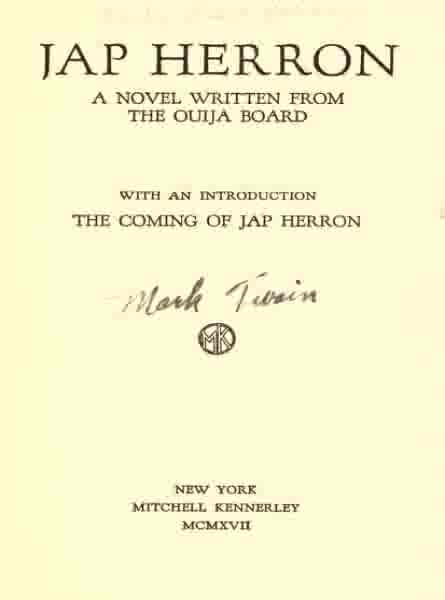
Mark Twain: Jap Herron: A Novel written from the Ouija Board

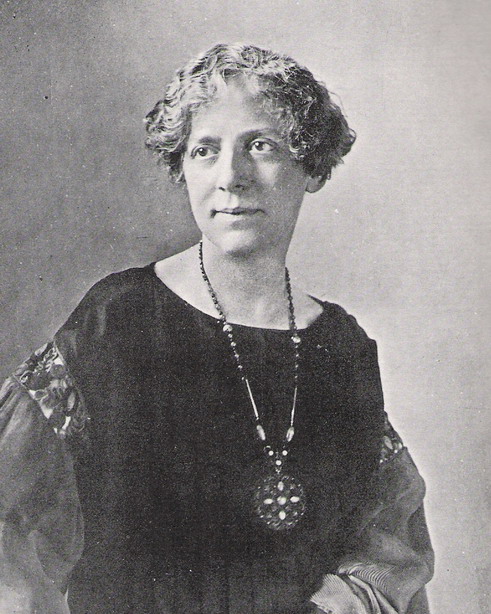
Seven years after his death, the medium Emily Grant Hutchings together with Lola Hayes, claimed that a book was dictated to them from American author, Mark Twain.

The books written by ghosts was published in 1917 after a two year communications through the ouija board according to Hutchings. The book came into notoriety when the New York Times published a piece on it, and many found the story indeed in Twain’s spirit.

Spiritism was at its peak and it was not an uncommon thing that books were written by ghosts and it was only one of a few books published in that year that came through a medium as a channeled text, although Mark Twain was definitely one of the more well known authors. 

However, the daughter of Mark Twain, Clara Clemens did not find this publication to be that of her father and tried to take the case to court. She managed to get Hutching to stop publishing the book and have copies of it destroyed. 

Check out further and read the book

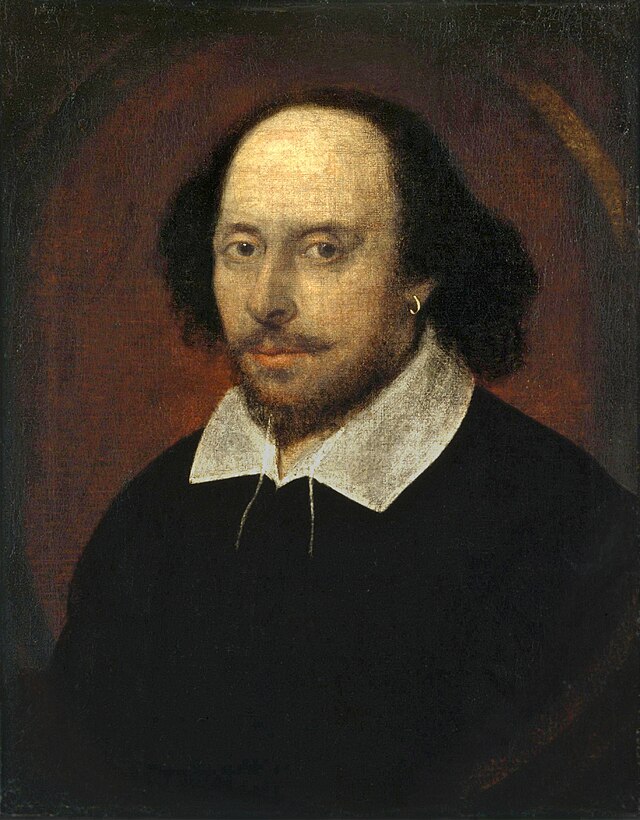
The Writings of Shakespeare’s Spirit

According to the library, there are in fact more than one book written by Shakespeare spirit like in the book Shakespeare’s Revelations and My Proof of Immortality. And in Shakespeare’s bibliography there are more than one volume of books written by ghosts.

The Ghost Writer: These are two of the books allegedly written by Shakespeare’s ghost: Shakespeare’s Revelations and My Proof of Immortality.

It was actually through the medium Sarah Taylor Shatford these works were produced. She was a poet herself, and published the first book of poems in 1919, filled with poems reflecting the wartime, and encouraged readers to follow a Christian life. 

Shatford said that she first encountered the voice of Shakespeare through the Ouija board, but later through a Clairvoyant, where he was basically talking through her. 

Check out the book: Shakespeare’s Revelations

This is not the only medium/writer that claims to have been the ghost writer of the great Shakespeare. In 1920, Gregory Thornton published Sonnets of Shakespeare’s Ghost. This piece of work was closer to Shakespeare’s voice we can find in his other writings from his living days. It turned out, Thornton was actually a pseudonym for a literature professor named T.G Tucker. 

Check out the book: Sonnets of Shakespeare’s Ghost

But it wasn’t only poems Shakespeare allegedly wrote from the afterlife. In 1916, an author by the name Lincoln Phifer self published Hamlet in Heaven, a sequel to Hamlet. Apparently, Phifer received the writings from Shakespeare like he would have a telephone call. 

Check out the Book: Hamlet in heaven : a five act play purporting to have been written by William Shakespeare by automatic writing through the hand of Lincoln Phifer

Ian Fleming and the James Bond Novel Written by his Ghost

In 1964, Ian Fleming, most known for the James Bond novels, died. But it wasn’t the last James Bond novel written under his name. In 1970, a manuscript from a middle aged woman named Vera came to the author’s brother, Peter Fleming’s attention. In 1970 a retired bank officer only known as Mr. A and his daughter, known as Vera, claimed to have transcribed works from the afterlife by more than one deceased authors. The most well known case and novel was called Take over: A James Bond Thriller and was apparently written by his brother’s ghost. 

Vera started corresponding with the dead once after her mother’s death and had allegedly no literary background or desire to write fiction. She continued to explore this medium and found her handwriting becoming her mothers, writing her mother’s words to her from beyond the ground. 

Her mother started to dictate late authors works of fiction, including Arthur Conan Doyle, H.G Wells and Ian Fleming. 

Peter Fleming read the script they claimed was that of his lost brother, but was very skeptical as it was nothing like his brother’s writing. Even though he was skeptical, he was fascinated by Vera and how she wrote on a pad during her seances. 

W. Somerset Maugham Ghost Novel

The work of Ian Fleming was not Vera’s last work though. In 1971, Vera started to transcribe a full length novel by W. Somerset Maugham. He was the author of works like Of Human Bondage, The Painted Veil and The Moon and Sixpence, and now, he had allegedly books written by his ghost.

It was given to Peter Fleming as well, who remarked how the style of the author had changed dramatically since his death. But before she finished transcribing the novel, her husband died. After this, she devoted her time exclusively to correspond through automatic writing with her deceased husband. 

Pearl Lenore Curran Channels the Writings of Patience Worth

Pearl Curran and her books written by ghosts: (February 15, 1883 – December 2, 1937). A picture from around 1926. In addition to writing her books it was said the spirit of Patience worth also foretold Pearl’s death of pneumonia.

Patience Worth was allegedly a spirit contacted by Pearl Lenore Curran, a remarkable woman whose intriguing journey began in Illinois. However, she spent her formative years in Texas, which greatly influenced her character and perspective on life. Starting in July 1912, Pearl Curran, along with her friend Emily Grant Hutchings, embarked on an unusual adventure as they began using the Ouija Board, a mystical tool that they believed would help them communicate with the beyond. According to their accounts, they soon made contact with several spirits, each bringing their own unique messages and stories from the afterlife.

Among these spirits, it was on June 22, 1913, that the spirit known as “Pat-C” began to make her presence felt, captivating Pearl and Emily with her eloquence and personality. This marked the beginning of a profound exploration of spirituality and creativity, ultimately leading to the publication of numerous works believed to be dictated by Patience Worth through Pearl’s hand.

This purported relationship produced several novels, poetry and prose which Pearl Curran claimed were delivered to her through channeling the spirit of Patience Worth. This case is very different from the mediums claiming to channel the likes of Shakespeare, Fleming and other well known best sellers. This was a complete unknown female spirit with little details around her. It was said she was from England, but not specified any more than that. She apparently lived from 1649–94 and voyaged to America by boat. Pearl later alluded that Patience had actually been killed by Natives.

Pearl and Patience together wrote several novels including TelkaThe Sorry TaleHope TruebloodThe Pot upon the WheelSamuel WheatonAn Elisebethan Mask among some of their work.

She continued to communicate through Pearl until November 25, 1937. Psychologists and skeptics who have studied Curran’s writings are in agreement that Patience was a fictitious creation of Curran, a product of her imagination that reflected her personal struggles and desires. Although debunked in the eyes of many, the case of Pearl and Patience’s authorship continues to intrigue people, sparking lively debates about the nature of reality and the complexities of the human psyche.

Check out the Books: Hope Trueblood or The Pot Upon the Wheel

The Changing Light at Sandover by James Merrill and Spirits

The Changing Light at Sandover: Sandover received the National Book Critics Circle Award in 1983. It is also one of the books written by ghosts.

James Ingram Merrill (March 3, 1926 – February 6, 1995) was an American poet who won the Pulitzer Prize for poetry in 1977 for Divine Comedies. His work is divided into two main styles: the early polished lyric poetry and the later epic narrative about communicating with spirits and angels, titled The Changing Light at Sandover (published from 1976 to 1980). So in contrast to the many other channeled text, he was already a well respected author.

His first contact and writings from the afterlife was Voices from the Other World, first published in book form in The Country of a Thousand Years of Peace (1959).

The Changing Light at Sandover is a 560-page epic poem by James Merrill (1926–1995), widely regarded as one of his most significant works. Sometimes described as a postmodern apocalyptic epic, the poem was published in three volumes from 1976 to 1980. A lot of the installments in this work ended up coming from ‘the other side’.

With his partner David Jackson, Merrill spent more than 20 years transcribing purportedly supernatural communications during séances using a Ouija board, a process that not only influenced the structure and themes of the poem but also invited readers to ponder the boundaries between the living and the dead. The work intricately weaves together elements of mythology, philosophy, and personal history, reflecting Merrill’s keen interest in the nature of existence and the passage of time while simultaneously offering a commentary on the human condition through rich imagery and eloquent verse.

Check out the Book: The Changing Light at Sandover: Including the whole of The Book of Ephraim, Mirabell’s Books of Number, Scripts for the Pageant and a new coda, The Higher Keys

More like this

Newest Posts

References

Sonnets by Shakespeare…’s spirit? – The Collation

Jap Herron: A Novel written from the Ouija Board (1917) 
Book Review – Jap Herron 

Georgiana Houghton and her Spirit Drawings in Watercolor

Advertisements

From beyond the veil, some mediums claimed that ghosts and spirits guided them to paint and draw. One of them was Georgiana Houghton and her spirit drawings.

Now mainly referred to Spiritualist art, spirit art, mediumistic art or psychic painting, this was and to a certain extent, still is a form of painting or drawing highly influenced by spiritualism. Spiritualism was a movement where connecting with the spirit world was both a performative and at times lucrative business. And the mediums that held these seances had different ways of reaching out to the spirits. One of the ways was by the pen. 

Advertisements

Although perhaps not the psychic or spiritual part of the art is put much weight in today, the movement had a huge impact on modern art as part of the abstract art department. There are perhaps more famous men behind this genre of abstract art known today, like Piet Mondrian, Vasily Kandinsku, Kasimir Malevish and František Kupka. 

Often overlooked goes the women that may have been the pioneers within this type of paintings and drawings, decades before the textbook pioneers. One of them is Georgiana Houghton (1814–1884)

The Artist and the Medium

The Spiritualist painter: Georgiana Houghton was both a medium and a trained artist.

She was a British artist and medium born on Las Palmas de Gran Canaria, but moved and lived in London. She was remembered more like an eccentric amateur artist that was more known for her medium role than of an artist. And she gave more credit to the spirits that guided her paintings than to herself as their creator. 

This is also where she produced her first abstract work, or as they called it then, spirit drawings. Many of the pieces remind more of 196 or 1970 psychedelic art then Victorian from the 1860s and 70s. In 1859 she started having these private seances where she allegedly were guided to paint by different spirits and celestial beings. 

Precipitated Paintings

Often, these particular paintings would come during a seance where the medium claimed that it was in fact spirits that guided the artist to produce the paintings. 

When spiritism was at its peak of popularity, it was very common for the mediums to sketch a portrait of the spirit they were in contact with during their seances. Another form of this was by automatic drawing where mediums and other practitioners controlled the body of the artist. 

Georgiana Houghton started her spirit art career first by drawing and then with watercolors. She was one of those relying on an automatic process where she told she was directed by spirits. First she drew flowers and fruits, and was somewhat of a floral artist. This was the one way of painting that was looked at as more of a respectable practice for Victorian artists. But then her style turned to something else entirely. 

Advertisements

The floral pictures evolved to project the spiritual experience more than objects of the natural world. She had complex pictures with several layers, colors and details. She described the abstract shapes she found in her and colors as sacred symbolism

Not only was spiritualism on the edge of what was perceived as ordinary, at this time, the abstract way of painting was still not a concept, so the reception of the paintings was received more as a curious rarity than art. 

In the beginning, Houghton claimed that it was her dead family members like her sister Zilla that guided her, but as her work evolved, so did her artist spirit guides. And she would later claim that it was the likes of Renaissance artists Titian and Correggio that led her brush. 

The Frauds and the Performers

Spirit photographs: She was not only a painter that drew her seances. Here she is posing for a photograph, also used a lot within the spiritism movement.

She started gaining quite the notoriety for her paintings and even held an exhibition at the New British Gallery in Bond Street in London in 1871. Although it perplexed the visitors and was an eye opener for many of those watching the exhibition, it was not a commercial success at all. It almost bankrupted Houghton.

Despite this, she spent every day for around three months talking about her paintings to visitors and discussing the meaning behind her sacred symbols and what they could have meant. 

In 1882 she published the book: ‘Chronicles of the Photographs of Spiritual Beings and Phenomena Invisible to the Material Eye’. This book featured spirit photographs from many well known spirit photographers that were active in the 1870s like  Agnes Guppy-Volckman, Stainton Moses and spiritualists Alfred Russel Wallace and William Howitt.

There were also pictures from Frederick Hudson, well known for being the first spirit photographer in Britain, but also a well known fraudulent one that was exposed already in the 1870s. The book itself was heavily criticized for featuring dubious pictures where the pictures themselves were unconvincing and could be replicated with double exposure and . 

Her Legacy as the Artist and not the Eccentric

Now, the collection is missing many of her works. Because it is not the museums, galleries or art historians that kept her legacy intact. Most of her works were kept by the Victorian Spiritualists Union in Melbourne. Like so many other women’s achievements they are kept hidden in their diaries, botanical albums and embroideries that not often are looked at as real art. And the irony that she attributes her work to the likes of ghost men speaks echoes with a bitter aftertaste today. 

Although more known for her medium role than that of an artist, her work speaks for itself. Especially when we look at the way the art movement moved in the modern world, and her art were so ahead of its time. In 2016, the The Courtauld Gallery held an exhibition of her paintings where they acknowledged, not only the curious and peculiar origin story behind the paintings, but her craftsmanship and artistry as well. Because no matter how we feel about the spiritualism part, we cannot ignore how in modern art, the pieces we watch in a gallery, can help us see past the realism of the world and our thinking and reach a place in our sub consciousness we otherwise couldn’t see.

Some of Georgiana Houghton Spirit Drawings:

Advertisements

More like this

Newest Posts

References

 Image courtesy of Victorian Spiritualists’ Union Melbourne Australia

Georgiana Houghton 

Spiritualist artist Georgiana Houghton gets UK exhibition | Painting | The Guardian

The Ghost that Designed Iulia Hasdeu Castle

Advertisements

Through the power of spiritualism, the bereaved father built a castle designed by the ghost of his dead daughter. And today, the Iulia Hasdeu Castle still stands as a mysterious and haunted place. 

Iulia was the beloved daughter of Bogdan Petriceicu Hasdeu (1838-1907) in Romania. He was a Romanian scholar of both history, philology and a great writer. Iulia was somewhat of a prodigy child as well and read by the age of two. Like her father, she was fluent in many languages and spoke French, English and German fluently by the time she was eight. At only 16, she got her degree in philosophy with plans to continue her studies in Latin and Greek Languages at the prestigious University of Sorbonne. 

Advertisements

But then on the 29th of September 1888, just a month before her 19th birthday, she tragically died of tuberculosis, a tragic but common way to die in this time. She left behind her many poems, manuscripts and plays to her father who couldn’t move on with his life. That is when he turned to less common ways to keep in contact with his dead daughter.

The Seances to Get in Touch with her Spirit

He was deeply in grief and turned to spiritualism to get in contact with his beloved and missed daughter. There are recordings of over a hundred summaries of these sessions, saying something about his obsession with it.

The Ghost: Portrait of the young prodigy Iulia Hasdeu.

And after he moved to Câmpina which is a bit further north from Bucharest , he spent the time at seances together with the metropolitan bishop, three generals and a processor. All in hope to get a glimpse of his daughter.

He also built an altar for her in their family vault at the Bellu Cemetery in Bucharest that looks more like a Greek temple to pay tribute to her. But this altar was not enough for him to keep as a memento and after six months of trying to reach her in the spirit world, he made contact, and she gave him instructions to build a castle that would later be known as Iulia Hasdeu Castle. 

Together with his wife, they went to a mansion in Câmpina they decorated as almost a temple to their dead daughter to sort of keep a part of her with them in this world after it was built. He named it Second of July after his two Iulias as his belated daughter was named after his beloved wife.

Then the plans of the castle started to take form. Hasdeu claimed that he had received messages about the building plans for it through the spiritualism seances he took part in. 

The Building Designs of Iulia Hasdeu Castle from Beyond

Work on the Castle began in 1893 and took a lot of Hasdeus’ time, energy as well as wealth. It is more of a folly house than a full fledged castle. She would advise him to use the numbers three and seven, something she considered to be magical numbers. That is why these numbers repeat themselves throughout the building with three underground rooms, three towers and seven steps to every staircase. 

The building was completed in 1896 and has since seen its fair share of tragedy befall it. It required a lot of reparation, even when Hasdeu was alive. During the first world war as well as the second world war, the earthquake in 1977 where it suffered many damages. But the castle fought back. There even is a legend to this that during the second world war, the Germans tried to loot the place, but failed as they were ‘struck by some mysterious force.’

Spiritualism: During the turn of the century, seances and spiritualism was a big thing. This is a Seance scene in the classic German silent film Dr Mabuse (1922). People would get together with a medium in hope to make contact with a spirit beyond the grave.

Today the Iulia Hasdeu Castle is still a sort of altar in Iulias memory. With her personal belongings as well as transcripts of the seances that her father attended. The castle itself is described to have a spooky vibe over it, perhaps because there are entire rooms designed specifically for spiritualists rituals, with seats made for the attending ghosts. A shrine like this was bound to get more sinister rumors about it, and it was claimed that Hasdeu used it to worship Satan rather than memorializing Iuelia. 

The Ghost of Iulia

The Iulia Hasdeu Castle is not the only place she is reported of haunting. Also back at the cemetery in Bucharest, the ghost has been spotted, dressed in all white while walking through the cemetery in Bucharest holding daisies. 

Back In Câmpina at the castle they have also felt her presence. In the night there is the sound of piano playing with the applause and cheering from an old man. So many rumors that the museum itself had troubles finding someone to take the nightshift at the museum. 

Advertisements

More like this

Newest Posts

References

Discover Iulia Hasdeu Castle | Daytrip

Iulia Hasdeu Castle: The Eerie Romanian Castle Designed by a Ghost

Iulia Hasdeu Castle, where mystery and culture go together

Iulia Hasdeu Castle

Iulia Hasdeu Castle: Spiritism, romance and science all in one – The Romania Journal

http://www.muzeulhasdeu.ro/index.php?meniu=71

Games to play in the dark

Advertisements

This is a list of games that have been played for a long time, or new. Some are old in its new form. Many of these games are best played in the dark in the middle of the night, far from any other sounds. Some you are tired of, as we do with old games, some are always a welcomed suggestion to do.

Light as a Feather

This is a very old game. Or rather, more than a game, perhaps we would call it more of a party trick in these days. But it has been played as far back as in 1665, at least! It is still popular today, in modern day, most popularized by the books and HBO series by the same name.

The game is a circle of children (or adults, hey!) that invokes a spirit or something to lift someone lying down in the middle. When it works, it is af the child can lift their friend with only one finger.

Rules

One participant lies flat on the floor, and then the others space themselves around him or her, each placing one or two fingertips underneath the participant’s limbs. The person closest to the head commonly begins by saying, “She’s looking ill,” which is repeated several times, and followed by, “she’s looking worse,” which is also repeated several times. The general direction of the call-and-repeat describes how the prone person is looking worse and worse, followed by saying “she is dying,” and, finally, “she is dead”.

All versions of the game end with the phrase “light as a feather, stiff as a board” chanted by the entire group, as they attempt to lift their companion’s body using only their fingertips. Some versions omit the story entirely and only the “light as a feather…” chant is used. Allegedly, after these repetitions, the person being lifted will seem lighter or even entirely weightless.

Another variation of the game takes place with one person seated in a chair. Four volunteers agree to stand around the sitter, two on the sitter’s left side and the other two on his/her right. Each of the four places two fingers under each corner of the chair’s seat and the four together will attempt to lift the chair and sitter, which generally fails. The volunteers will then perform some small ritual, usually involving rubbing their hands together or circling the chair in various direction (counter-clockwise, walking backwards, etc.) After this ritual, the volunteers hold their hands over the sitter’s head to “transfer” energy into the sitter, which will presumably make him/her weightless. The lifters then retry lifting the sitter the same way as before. Also, it can be that the lifters lift the person sitting in the chair; doing the rest of the ritual as so but holding at the four main points of the body (Under the knees on each side and under the shoulders.)

source

Advertisements

Bloody Mary

A classic tale, probably a bit boring if you have played it a million times. But the game is old and have been played in many different times. Perhaps one should try that? Perhaps it would work better then? Or… better not.

Historically, the divination ritual encouraged young women to walk up a flight of stairs backward holding a candle and a hand mirror, in a darkened house. As they gazed into the mirror, they were supposed to be able to catch a view of their future husband’s face. There was, however, a chance that they would see a skull instead, indicating that they were going to die before they would have the chance to marry.

In the ritual of today, Bloody Mary allegedly appears to individuals or groups who ritualistically invoke her name, repeatedly chanting her name into a mirror placed in a dimly-lit or candle-lit room. In some traditions the name must be repeated thirteen times (or some other specified number of times, very often 3 times in movies, probably to save time). The Bloody Mary apparition allegedly appears as a corpse, witch or ghost, can be friendly or evil, and is sometimes “seen” covered in blood. The lore surrounding the ritual states that participants may endure the apparition screaming at them, cursing them, strangling them, stealing their soul, drinking their blood. 

Some variations of the ritual call Bloody Mary by a different name—”Hell Mary” and “Mary Worth” are popular examples.

source

Advertisements

The Hyakumonogatari Kaidan

This one is a pretty cool one. Although it excact origins are a bit unclear, it was believed that it was first played among the samurai class as a test of courage in old Japan.

The game was played as night fell upon the region using three separate rooms. In preparation, participants would light 100 lights in the third room and position a single mirror on the surface of a small table. When the sky was at its darkest, guests gathered in the first of the three rooms, taking turns orating tales of ghoulish encounters and reciting folkloric tales passed on by villagers who claimed to have experienced supernatural encounters. These tales soon became known as kaidan. Upon the end of each kaidan, the story-teller would enter the third room and extinguished one light, look in the mirror and make their way back to the first room. With each passing tale, the room slowly grew darker and darker as the participants reached the one hundredth tale, creating a safe haven for the evocation of spirits.

However, as the game reached the ninety-ninth tale, many participants would stop, fearful of invoking the spirits they had been summoning.

source

Advertisements

Oujia Board

This is a rather facinating story of spiritualism, capitalism and a great scam that made people millions, and billions scared of a board game. But that must be another time. The game itself is pretty fun, even though people still swear of its demonic and spiritual powers. The official owner of the official Oujia Board is Hasbro, and this is the official rules from Hasbro (the owner of the patent).

Set up

  • If desired, set the mood by dimming the lights or turning them off.
  • Before using the Oujia Board, wipe it with a dry cloth to remove dust and moisture.
  • Sit opposite another player or gather around the board if more than two are playing.
  • Set the Ouija board either on the players laps or on a small table between and within reach of the players
  • Additional players are encouraged to look on and take note of the Oujia Board’s responses.
  • Set the Planchette in the center of the Oujia Board.
  • Place two fingers lightly on the Planchette.
  • Now, concentrate

What now?

Players take turns asking questions and all should agree to the question being asked. Ask only one question at a time. Ask your questions slowly and clearly. And wait to see what the Planchette spells out for you.

If nothing happens, try asking another question. Allow one to five minutes for an answer to come.

source

Advertisements

The Midnight Game

Ok, so this one bugs me, and it thrills me. It has been a huge success and got its own movie, but still. Well, anyway, it claims to be a pagan ritual, not specifying though, what pagan religion considering every other religion beside the religion you follow is pagan. But anyway, considering it isn’t any trace of this game from before the 2010s, it is highly unlikely. But fun nonetheless. But there are a hell of lots rules, so we will just post them as they are written on the creepy pasta page so not to make any mistakes.

Instructions

PREREQUISITES:

It must be exactly 12:00 AM when you begin performing the ritual. Otherwise, it will not work.

MATERIALS:

You will need a candle, a piece of paper, a writing implement, matches or a lighter, salt, a wooden door, and at least one drop of your own blood. If you are playing with multiple people, they will need their own of the aforementioned materials and they will have to perform the steps below accordingly.

STEP 1:

Write your full name (first, middle, and last) on the piece of paper. Put at least one drop of blood on the paper. Allow it to soak into the paper.

STEP 2:

Turn off all of the lights in the place you are doing this. Go to your wooden door, and place the paper with your name on it in front of the door. Now, take out the candle and light it. Place it on top of the paper.

STEP 3:

Knock on the door twenty-two times. The hour must be 12:00 AM upon the final knock. Then, open the door, blow out the candle, and close the door. You have just allowed the “Midnight Man” to enter your house.

STEP 4:

Immediately relight your candle.
This is where the game begins. You must now lurk around your now completely dark house, with the lit candle in your hand. Your goal is to avoid the Midnight Man at all costs, until 3:33 AM. Should your candle ever go out, that means the Midnight Man is near you. You must relight your candle in the next ten seconds.

If you are not successful in doing this, you must then immediately surround yourself with a circle of salt. If you are unsuccessful in both of your actions, the Midnight Man will create a hallucination of your greatest fear, and rip out your organs one by one. You will feel it, but you will be unable to react.

If you are successful in creating the circle of salt, you must remain in there until 3:33 AM.
If you are successful in relighting your candle, you may proceed with the game. You must continue to 3:33 AM, without being attacked by the Midnight Man, or being trapped inside the circle of salt, to win the Midnight Game. The Midnight Man will leave your house at 3:33 AM, and you will be safe to proceed with your morning.

ADDITION:

Indications that you are near the Midnight Man will include sudden drop in temperature, seeing a pure black, humanoid figure through the darkness, and hearing very soft whispering coming from an indiscernible source. If you experience any of these, it is advised that you leave the area to avoid the Midnight Man.

DO NOT turn any of the lights on during the Midnight Game.

DO NOT use a flashlight during the Midnight Game.

DO NOT go to sleep during the Midnight Game.

DO NOT attempt to use another person’s blood on your name.

DO NOT use a lighter as a substitute for a candle. It will not work.

AND DEFINITELY DO NOT attempt to provoke the Midnight Man in ANY WAY.

Even when the game is over, he will always be watching you…

Good luck, you are going to need it.

Source

Advertisements

More like this

Newest Posts