Once, a plague ridden Lindworm was said to crawl out from the darkness, and attack the people of Munich. After defeating the dragon, and ridding themselves of the plague, a ceremonial dance has been danced through the city for over 500 years.
When the Black Plague hit Munich in 1349, almost half the population of the city fell victim to it. Some historians claim that the Black Death struck Munich up to 25 times between the mid-14th and late 17th centuries – a period of approximately 350 years. During these years, many legends and tales about what caused it spread.
Read More: Check out all ghostly legends fromGermany
Right by the church at the north site of Marienplatz, the New Town Hall still bears the images of the legend of the dragon. This dragon was once said to have brought the plague to Munich with its poisonous breath.
The New Town Hall:Neues Rathaus is a town hall that forms the northern part of Marienplatz in Munich, Bavaria, Germany. It hosts the city government including the city council, offices of the mayors and a small portion of the administration. In 1874 the municipality left the Old Town Hall for its new place.
The Wurmeck Corner of New Town Hall
At the western corner of the New Town Hall, a large dragon climbs the neo-Gothic tower called the Wurmeck Tower, first completed in 1906. The three stone reliefs above the fearsome dragon tell the legend. According to this legend, a lindworm crawled out of the earth in the city center, possibly even at this corner of the former marketplace, and spread the plague.
The Lindworm:The Lindworm is a snake- or dragon-like mythical creature in German folklore. The lindworm is usually bipedal, but four or more legs are also possible. It resembles a dragon and is sometimes referred to as a subspecies. It has no wings or only short ones and is mentioned primarily in old Germanic sagas.
In the central panel, the lindworm, or dragon ascends while a citizen falls to the ground, struck by the animal’s poisonous breath, while women and children flee to the sides. On the left, mercenaries and citizens prepare for battle against the dragon, loading a cannon.
The Basilisk:One of the four putti on the Marian column erected in 1638 in Munich’s Marienplatz also commemorates the fight against the plague. The basilisk, a mythical creature, symbolizes the deadly disease. a plague epidemic occurred in Munich around 1635, killing approximately one-third of the population – roughly 7,000 of Munich’s 22,000 inhabitants. // Image
After the Lindworm landed in the market square, courageous Munich residents shot him down with a cannon. Even after the dragon was defeated, no citizen dared venture onto the streets again except one.
Plague Sites Around in Munich: The cross at Franz-Prüller-Straße 12 is probably a so-called plague cross. These were used during plague epidemics to mark houses where all the inhabitants had succumbed to the disease. The cross in the Au district are often said to date back to the plague epidemic that lasted from 1517 to 1519. // Image
Another version of the Lindworm Legend of Munich goes like this:
In the year 1463, a plague-riding lindworm flew in from the Schwabing Gate and settled at the corner of the marketplace. Great terror ensued, and no one knew what to do until the mighty Duke Christoph came galloping down from Grünwald Castle and slew the dreadful creature. This and more of folklore could be found in a 1921 book called: “The Adventures of Duke Christoph.”
The Lively Coopers and their Plague Dance
The coopers are also depicted on the tower. Because the coopers lived and worked in the outer districts of the city due to the unpleasant smell of pitching the barrels, and because they inhaled the essential oils released when pouring the pitch into the barrels, they were better protected than many others.
The coopers were left without work when no one dared to go outside after the plague subsided. One of them, whom tradition calls “Master Martin,” said to himself, “Someone has to make a start,” and resolved “to revive the old coopers’ guild dance and lure people out of their houses.
They were the first to dance through the streets after the Black Death had ravaged the city, to lure people back outside. This dance was called The Schäffler dance and still to this day, the dance performs is about fighting fear and overcoming the plague.
The Schäffler Dance:This is a guild dance of the coopers (barrel makers), who dance prescribed figures to music. It originated in Munich and The Munich Schäffler dance was first documented in 1702. From 1830 onwards, the custom spread beyond Munich through traveling journeyman coopers and is now common in many places in Old Bavaria and Bavarian Swabia. It only performs every 7 years, and the next one would be in 2033. Besides an alleged recurrence of the plague every seven years, the lucky number “7”, and an order from Duke William IV, a schedule of guilds for their customs is also among the possible reasons for the cycle.
There is a legend that claims the dance was first performed in Munich in 1517 during a plague epidemic. It is doubted that there was even a plague epidemic in Munich in 1517, as the death registers for that year do not show any unusually high death rates.
The Dancers:Originally, only unmarried journeyman coopers with impeccable character were allowed to participate in the Schäffler dance; master coopers and their sons were not permitted. Besides the dancers, there are lead dancers, barrel bangers, jesters, and hoop swingers. Apart from the jesters, who wear colorful costumes , everyone is dressed in the cooper’s costume with black shoes, white knee socks, black breeches, a leather apron, a red jacket, and a green cap with a white feather plume.
The legend is attributed to the house name Wurmeck, which refers to the medieval burgher house at Marienplatz 3, located on the same site, that was demolished to make way for the town hall. A list of corner house names from 1725 mentions that a lindworm was attached to the corner house; a relief of Saint George slaying the dragon is documented from a later period.
Or just maybe, it all started with a murderous dragon coming to town, trying to spread the plague in Munich.
Said to haunt the area around The Hubertus Chapel in the vast Ebersberg Forest in Bavaria, Germany, the Lady in White is seeking revenge for those refusing her a ride. But is she truly the only thing haunting this old and mystic forest?
Once, a plague ridden Lindworm was said to crawl out from the darkness, and attack the people of Munich. After defeating the dragon, and ridding themselves of the plague, a ceremonial dance has been danced through the city for over 500 years.
Fantastical legends foretelling the Black Plague exist throughout Europe that would leave whole cities without any living. In Munich, Germany, a legend talks about a mysterious black hooded figure at the cemetery of St. Peter’s church being the omen of death.
From the despair of a mother dying in childbirth, a blood thirsty spirit rises in her place. With her alluring appearance and ability to transform into flying entities, she is one of the feared vampires from Malay folklore.
Before their deaths, members of the royal Wittelsbach family claimed to have seen the mystical Lady in Black appearing to them. Although the woman behind the black clothing is a mystery, her message has been clear: in the soon future, you will die.
From within the old city gate, Sendlinger Tor in Munich, it is said that the voice of the ghost is haunting its remains. If you listen carefully, it is said the laments of the man walled up inside of the gate lingers.
Known as the last witch of Munich, Theresia Kaiser was condemned to death in 1701. Still, her legend and what happened to her accuser bares a haunted mystery of what really happened to this young teenager at trial.
In the thick and dark jungle in the mountainous regions in Thailand, it is said something ghostly lingers. The Kong Koi ghost is said to be thirsty for travellers’ blood. But what exactly lurks behind the trees?
Through the city gates in Munich on dark evenings, people have long talked about being chased by a ghost around the Maxtor gate and the surrounding square, only described as a fat and pale man.
In a forest near Kemoding in Germany, the pregnant Anna Schwarzenberger was murdered. Since then, people have spoken of the White Lady of Köhlholz, who finds no peace. A cross now stands as a reminder of this event.
Fantastical legends foretelling the Black Plague exist throughout Europe that would leave whole cities without any living. In Munich, Germany, a legend talks about a mysterious black hooded figure at the cemetery of St. Peter’s church being the omen of death.
When the Black Plague hit Munich in 1349, almost half the population of the city fell victim to it. Some historians claim that the Black Death struck Munich up to 25 times between the mid-14th and late 17th centuries – a period of approximately 350 years. During these years, many legends and tales about what caused it spread.
Read More: Check out all ghostly legends fromGermany
One of these legends goes, one evening in 1349, a maid was on her way to her employer’s house on Kaufinger Street, one of the oldest streets in Munich. Today it’s one of the most important high end shopping streets in Munich, but back then, there was no street lighting or paved roads yet, only a narrow path of red bricks for pedestrians along the frontages of the houses. As it was already getting dark, she took a shortcut through the cemetery at Old Peter’s Church.”
St. Peter’s Church:St. Peter’s Church , also known as Peterskirche , is the oldest parish church in Munich . The earliest structure likely dates back to the 12th century, while the Gothic building was consecrated in 1294. Its 91-meter-high tower, popularly called “Old Peter ,” is one of the city’s landmarks. In the 15th century (1487), St. Peter’s also had its own cemetery (“gotzacker”). During the Second World War, the church was so badly damaged that only the stump of the tower and remnants of the choir remained.
As she ran through the graves, she suddenly noticed, in the glow of a small light, a black, ragged figure sitting on a grave. Seized by sudden terror, she ran on, but when she turned around, she saw the figure floating toward her. She hurried on, hearing bony fingers tapping in rhythm. Finally, she reached the merchants’ house, slammed the door shut, and locked it behind her. But there, sitting on the step before her, the black man grinned at her with a pale face: “I am the Black Death.”
Black Death in Munich:Munich experienced six waves of the plague epidemic from 1349 to 1634. In 1349, the mob spread the false story that the Jews had poisoned the wells and thus caused the plague. “the Jews were burned, slaughtered, dismembered, and otherwise butchered and killed as a result of wicked slander.” Munich merchants maintained good relations with Italian trading cities, especially Venice, as early as the 14th century, making it quite possible that the plague pathogen entered the city via this route.
Soon after, a Munich man was found dead. His body was bruised and misshapen. Following a vague premonition, he was taken to the doctor and he declared the plague had come to the city. A week later, all the inhabitants of the house the maid had run into had died of the plague, which spread from there throughout the entire city.
The Old Peter Spire:The spire, for example, is slightly twisted. “The story goes that the devil once stormed into the church. The brave watchman beat him with a wooden cross until he was able to drive him away – the building itself probably suffered some damage in the process.” “The devil’s kick is said to have bent the cross.” In reality, under Ludwig II, the cross was turned to prevent the strong westerly winds from bending it further.
In 1349 alone, almost 5,000 Munich residents, half the city’s population, died of the Black Death, often within just a few days. It is estimated that one in ten inhabitants of what is now Germany died during this pandemic.
Said to haunt the area around The Hubertus Chapel in the vast Ebersberg Forest in Bavaria, Germany, the Lady in White is seeking revenge for those refusing her a ride. But is she truly the only thing haunting this old and mystic forest?
Once, a plague ridden Lindworm was said to crawl out from the darkness, and attack the people of Munich. After defeating the dragon, and ridding themselves of the plague, a ceremonial dance has been danced through the city for over 500 years.
Fantastical legends foretelling the Black Plague exist throughout Europe that would leave whole cities without any living. In Munich, Germany, a legend talks about a mysterious black hooded figure at the cemetery of St. Peter’s church being the omen of death.
From the despair of a mother dying in childbirth, a blood thirsty spirit rises in her place. With her alluring appearance and ability to transform into flying entities, she is one of the feared vampires from Malay folklore.
Before their deaths, members of the royal Wittelsbach family claimed to have seen the mystical Lady in Black appearing to them. Although the woman behind the black clothing is a mystery, her message has been clear: in the soon future, you will die.
From within the old city gate, Sendlinger Tor in Munich, it is said that the voice of the ghost is haunting its remains. If you listen carefully, it is said the laments of the man walled up inside of the gate lingers.
Known as the last witch of Munich, Theresia Kaiser was condemned to death in 1701. Still, her legend and what happened to her accuser bares a haunted mystery of what really happened to this young teenager at trial.
In the thick and dark jungle in the mountainous regions in Thailand, it is said something ghostly lingers. The Kong Koi ghost is said to be thirsty for travellers’ blood. But what exactly lurks behind the trees?
Through the city gates in Munich on dark evenings, people have long talked about being chased by a ghost around the Maxtor gate and the surrounding square, only described as a fat and pale man.
In a forest near Kemoding in Germany, the pregnant Anna Schwarzenberger was murdered. Since then, people have spoken of the White Lady of Köhlholz, who finds no peace. A cross now stands as a reminder of this event.
Planted to mark the mass grave of plague victims, the Linden Tree in the Aargau valley in Switzerland has become a famous landmark. In the night though, it is said that the ghosts buried underneath it crawls from the ground to haunt as a warning for any oncoming tragedies.
High on a quiet ridge in the canton of Aargau, between the whispering woods and gentle slopes of the Swiss countryside, stands a tree unlike any other. Towering, ancient, and impossibly wide, the Linden Tree of Linn—or Linner Linde is said to possibly be around 800 years old. It’s not just one of the largest and oldest trees in Switzerland; it is a living legend, a relic of both unimaginable tragedy and eerie mystery.
Read More: Check out all ghost stories from Switzerland
This is the legend from this beautiful village in the canton of Aargau, passed down by Ludwig Rochholz (1836–1892) and it is said that in the long nights of fall and winter, the dead will rise and roam the fields and coming back to their old village.
The Linner Linden: The majestic Linden Tree in the Jurapark, Aargau valley, a living symbol of history and local legend. // Ginkgo2g/Wikimedia
The Plague Victim’s Linden Tree
Planted in the aftermath of one of Europe’s darkest chapters, the Black Death, the Linner Linde is said to have grown from grief and memory. Around the year 1350, when the bubonic plague ravaged the continent and swept through the remote Alpine valleys, the tiny village of Linn was not spared. Or was it in fact at a later time when the plague hit again and again? Some say that it was planted in the middle of the 16th century in memory of the victims of the plague epidemics. Sources claim different things.
The disease moved like a shadow across the land, taking entire families in a matter of days. According to enduring local lore, only one lone survivor remained after the plague had claimed every soul in the village.
Grief-stricken and entirely alone, this unnamed survivor dug graves for the dead—perhaps his family, friends, and neighbors—and buried them in a mass grave at the heart of Linn as it was impossible to get them all to the cemetery. To mark the resting place and to honor the memory of the fallen, he planted a linden sapling. As the tale goes, he prayed the tree would stand guard over the village and protect future generations from the same fate. That tree, now more than 650 years old, still spreads its colossal limbs above the village, its twisted trunk reaching nearly 11 meters in circumference, its presence as solemn as it is majestic.
The Haunted Linden Tree
But as much as the Linner Linde is revered for its protective symbolism and deep roots in local history, its ghostly associations run just as deep. On misty evenings or moonless nights, villagers speak in hushed voices of strange occurrences beneath its boughs. Lanterns flicker without wind. Footsteps echo when no one walks. Soft, sorrowful murmurs—some say prayers, some say weeping—rise from the earth where the plague victims were laid to rest. On more than one occasion, passersby have claimed to see pale figures seated silently on the surrounding benches, vanishing into the morning light like dew.
Legends say that the souls buried beneath the tree are restless—not malicious, but bound to the land by the trauma of their deaths. Some even believe that the linden itself has absorbed their sorrow, giving it an otherworldly aura that draws both the curious and the grieving. During certain village festivals, elders insist on leaving offerings at the base of the tree: bread, wine, and flowers, in quiet communion with the unseen.
Yet not all stories are grim. Some say the tree whispers wisdom to those who sit beneath it in solitude. It has become a place of solace, reflection, and even romance. Couples have been married under its branches, babies blessed at its roots, and old villagers have chosen to take their last walks toward its embrace. It is both grave marker and guardian, sanctuary and spectral portal.
Said to haunt the area around The Hubertus Chapel in the vast Ebersberg Forest in Bavaria, Germany, the Lady in White is seeking revenge for those refusing her a ride. But is she truly the only thing haunting this old and mystic forest?
Once, a plague ridden Lindworm was said to crawl out from the darkness, and attack the people of Munich. After defeating the dragon, and ridding themselves of the plague, a ceremonial dance has been danced through the city for over 500 years.
Fantastical legends foretelling the Black Plague exist throughout Europe that would leave whole cities without any living. In Munich, Germany, a legend talks about a mysterious black hooded figure at the cemetery of St. Peter’s church being the omen of death.
From the despair of a mother dying in childbirth, a blood thirsty spirit rises in her place. With her alluring appearance and ability to transform into flying entities, she is one of the feared vampires from Malay folklore.
Before their deaths, members of the royal Wittelsbach family claimed to have seen the mystical Lady in Black appearing to them. Although the woman behind the black clothing is a mystery, her message has been clear: in the soon future, you will die.
From within the old city gate, Sendlinger Tor in Munich, it is said that the voice of the ghost is haunting its remains. If you listen carefully, it is said the laments of the man walled up inside of the gate lingers.
Known as the last witch of Munich, Theresia Kaiser was condemned to death in 1701. Still, her legend and what happened to her accuser bares a haunted mystery of what really happened to this young teenager at trial.
In the thick and dark jungle in the mountainous regions in Thailand, it is said something ghostly lingers. The Kong Koi ghost is said to be thirsty for travellers’ blood. But what exactly lurks behind the trees?
Through the city gates in Munich on dark evenings, people have long talked about being chased by a ghost around the Maxtor gate and the surrounding square, only described as a fat and pale man.
In a forest near Kemoding in Germany, the pregnant Anna Schwarzenberger was murdered. Since then, people have spoken of the White Lady of Köhlholz, who finds no peace. A cross now stands as a reminder of this event.
Mirroring the famous Dance Macabre mural that used to hang on the walls near the Predigerkirche in Basel, it is said that plague victims were buried in the patch of grass outside of the church. Legend has it that when the city needs it, the dead will rise from it in a macabre procession, as a warning of an oncoming disaster.
In the heart of Basel’s old town, amid narrow cobbled streets and Gothic church spires, there lingers a memory too grim to fully fade of the plague and the deaths of thousands of people, rich, poor, young or old, the death didn’t discriminate. It clings to the city like mist to the Rhine, a shadow of death and ancient disease that once brought the living to their knees.
The story’s origin lies in one of Basel’s darkest chapters: the Black Death and it claims that it’s victim will rise from their graves if the city ever needs a warning from the afterlife.
The 14th century was an era of unimaginable horror for Basel as it was for the rest of Europe. In 1314, a virulent wave of the plague swept through the city, carrying away thousands within weeks. The death was swift and cruel — marked by hideous black buboes beneath the arms and around the groin, followed by high fever and swift decline.
The Dance of Death: (1493) by Michael Wolgemut, from the Nuremberg Chronicle of Hartmann Schedel
Thirty-five years later, the plague returned with even greater ferocity. The city’s cemeteries overflowed, and in desperation, the dead were buried hastily in mass graves, especially in the burial grounds surrounding the Predigerkirche (Church of the Preachers).
It was amid this devastation that The Basel Dance of Death (Basler Totentanz) was born. Beautiful art depicting horrible death.
The Dance of Death Mural
In the 15th century, as plague continued to haunt Europe, a long, striking mural was painted along the inside of the cemetery wall near the Predigerkirche. The Dance of Death was no gentle allegory. Here, death came for all, beggar and merchant, soldier and king. They were all depicted as skeletal figures leading the living in a grim, final waltz. It was a stark, public reminder that death makes no distinction of rank or wealth.
Danse Macabre of Basel: Watercolor copy by Johann Rudolf Feyerabend, 1806 : bottom left. Historisches Museum of Basel.
Miraculously, the mural survived the iconoclasm of the Reformation, was restored in the 17th century, and eventually dismantled in 1805, though parts of it survive in reproduction. But the mural’s power was never solely in paint and plaster and it became a living legend, one that the people of Basel claimed could still be seen, in another form, when darkness fell.
The Procession of the Restless Dead
According to local lore, the countless plague victims interred hurriedly in the soil before the Predigerkirche (Church of the Holy Spirit). Today it is a small patch of grass right in front of the church, said to house thousands of people buried after the plague. According to the legend, they do not sleep peacefully.
When Basel stands on the brink of danger, be it war, famine, disease, or other calamity it is said that the plague dead rise from their mass graves. Silently, in the dead of night, they form a ghostly procession, a macabre parade of spectral figures shrouded in rotting shrouds and hollow eyes, marching through the old city streets.
This ghostly cortege begins at the site of the old Dance of Death mural, winds its way through the alleys, and returns to the churchyard before dawn. Some accounts claim that one can hear the faint rattle of bones, the dragging of weary feet, and the mournful tolling of an unseen bell.
In keeping with the ancient mural’s message, the procession is democratic in its horror where peasants, noblemen, clerics, and merchants march side by side, bound by death and decay march.
Said to haunt the area around The Hubertus Chapel in the vast Ebersberg Forest in Bavaria, Germany, the Lady in White is seeking revenge for those refusing her a ride. But is she truly the only thing haunting this old and mystic forest?
Once, a plague ridden Lindworm was said to crawl out from the darkness, and attack the people of Munich. After defeating the dragon, and ridding themselves of the plague, a ceremonial dance has been danced through the city for over 500 years.
Fantastical legends foretelling the Black Plague exist throughout Europe that would leave whole cities without any living. In Munich, Germany, a legend talks about a mysterious black hooded figure at the cemetery of St. Peter’s church being the omen of death.
From the despair of a mother dying in childbirth, a blood thirsty spirit rises in her place. With her alluring appearance and ability to transform into flying entities, she is one of the feared vampires from Malay folklore.
Before their deaths, members of the royal Wittelsbach family claimed to have seen the mystical Lady in Black appearing to them. Although the woman behind the black clothing is a mystery, her message has been clear: in the soon future, you will die.
From within the old city gate, Sendlinger Tor in Munich, it is said that the voice of the ghost is haunting its remains. If you listen carefully, it is said the laments of the man walled up inside of the gate lingers.
Known as the last witch of Munich, Theresia Kaiser was condemned to death in 1701. Still, her legend and what happened to her accuser bares a haunted mystery of what really happened to this young teenager at trial.
In the thick and dark jungle in the mountainous regions in Thailand, it is said something ghostly lingers. The Kong Koi ghost is said to be thirsty for travellers’ blood. But what exactly lurks behind the trees?
Through the city gates in Munich on dark evenings, people have long talked about being chased by a ghost around the Maxtor gate and the surrounding square, only described as a fat and pale man.
In a forest near Kemoding in Germany, the pregnant Anna Schwarzenberger was murdered. Since then, people have spoken of the White Lady of Köhlholz, who finds no peace. A cross now stands as a reminder of this event.
After a common feud between two men, a ghost was created to torment the people on Hleiðrargarðs farm. Thus, the Hleiðrargarðs-Skotta and her legendary haunting started, some say it even escalated in her starting a plague, killing both cattle and men.
Around 1740 to 1770 there lived in the northern part of Iceland, at Árgerð a farmer named Sigurður Björnsson. People thought of him as a sensible man, although, it is said that once, in early summer of 1764, he went west under the Glacier to trade fish and got into trouble of the ghostly kind. .
Read more: Check out all ghost stories fromIceland
He met a certain man, often said to be Reverend Benedikt Pálsson in Miklagarðu, that he disagreed with about business and a quarrel arose between them, escalating into a fight. Sigurður was strong and forceful in his dealings, and he threw the other under him and gave him some blows. When the man stood up, he swore an oath against Sigurður and said he would repay him before the year was out before he left.
The Creation of The Hleiðrargarðs-Skotta
Since then they were great enemies and fought a fight no one was winning. Once Sigurður got the upper hand over the priest, and the priest took it very badly, and therefore once set out west to Hjarðarholt to visit his brother Gunnar. He was known as the most skilled in magic in the country at that time. Benedikt told him everything about his dealings with Sigurður Björnsson and asked for his aid. Gunnar promised him this, and after that Benedikt rode home.
In the spring Sigurður moved to Hleiðrargarður, for he bore the priest’s oppression badly. That spring someone came to the priests window at Mikligarður and called the priest outside. Gunnar, his brother, had awakened a ghost three nights after she had died. She said he had signed her with the cross and given her the sacrament before she left home. She said she was 25 years old, but that it had been fated for her to live 100 years if all had gone as destined. She immediately asked him what she should do. He said: “Go to Hleiðrargarður and kill Sigurður Björnsson.”
Fylgur/Fylgja: The Old Norse Ghost
There were many different types of ghosts in Norse mythology and that the vikings believed in. One of them was the Fylgjur or Fylgja ghost, or Attending Spirits that we can find traces back in Iceland since the 12th century. These were originally a ghost of a very physical substance that interacted with the real world as if they were a part of it still.
Read Also: Check out theIrish Fetch ghost, that has a huge resemblance to the norse Fylgja.
Fylgja attached themselves to people that they haunted. They could also attach themselves to buildings or even entire towns. Many stories also talk about it being a generational haunting where the ghost decides to haunt all of the descendants of the original person it cursed. Most often the female line of the family. Perhaps because of its origin as a female spirit.
Icelandic Ghosts and Ghouls: Fylgja or the draugr ghosts attached themselves to people that they haunted. They could also attach themselves to buildings or even entire towns. Many stories also talk about it being a generational haunting where the ghost decides to haunt all of the descendants of the original person it cursed. Most often the female line of the family. // An illustration to the Icelandic legend of the Skeleton in Hólar Church (Beinagrindin í Hólakirkju). From Icelandic Legends : Collected by Jón Arnason, illustrated by Jules Worms.
In the Fylgjur stories from the middle ages, the spirits could be a beneficial one, almost like a messenger to help with the person’s path of life, some sort of totem animal or guiding spirit. But when the folklorist of Iceland started collecting old oral tales from farmers in the 17th century, the Fylgjur ghosts had drastically changed from its pagan old norse roots, throughout time, religious belief and superstition.
One thing that really changed was the Fylgjur’s purpose of haunting the living, and it was rarely to be of any help. Many stories talk about how they were wronged and it caused their death. They then came back to take revenge and were dangerous, even deadly.
Female Icelandic Ghosts
One of the popular names for the female ghosts was Skotta that really means to dangle, like hair or a tail. This comes from the traditional Icelandic headwear women wore together with the Faldbúningur dresses worn since the 17th century. Except the ghosts are said to have the headgear on backwards so it streams behind her like a tail.
The Skotta Ghost: Icelandic woman in the 18th century faldbúningur with the spaðafaldur cap that the Skotta often are described wearing.
Skotta falls under the Old Norse Mythology of a Fylgja, that were supernatural spirits that followed or latched onto people. They could be animals, they could be goddesses or come in dreams.
But the tales of the Fylga evolved and when we read about Skotta, they were not like totem animals or someone coming with your prophecy like in the old sagas. Icelandic ghosts are often described as being not like apparitions, but in real flesh that interacted with the living. And when we read about Skotta, the female version, she was highly dangerous and also deadly.
The Haunting of The Hleiðrargarðs-Skotta
At this time there lived at Krýnastadir, the next farm to Hleiðrargarður, a man named Hallur, called Hallur the Strong; he was second-sighted and had often seen ghosts and dealt with them. It is said that one evening in the autumn following the summer when Sigurður came back from the dried-fish journey, Hallur was standing outside in his farmyard. Then Hallur saw a ghost in the shape of a girl coming along the road; she was small of stature, in a red bodice and a brown skirt that only reached to her knees, with a tasselless cap and short clothing. When the girl saw Hallur, she meant to turn aside, but he stepped in her way and asked who she was. She said her name had been Sigríður Árnadóttir or Sigga. He asked where she came from and where she was going. She said: “To Hleiðrargarður.” “What are you to do there?” “To kill Sigurður Björnsson,” she said. In some versions Hallur struck her across the cheek so that she tumbled down. She then ran on her way, and sparks flew from her steps.
He was a man of great stature and very skilled in magic, but he was also a great enemy of his neighbor Sigurður. Hallur later said that Skotta would not have gone farther had he been a greater friend of Sigurður.
Hleiðargarður is the nearest farm to Sandhólar. One day, during a winter vigil at Sandhólar, a screen window was placed over the bed of an old woman who was in the bathroom. The old woman vaguely hears what is being said on the window and asks who is outside and she hears it said: “Sigga. Sigga” – and is asked at the same time: “Where is Hleiðargarður?” The old woman says that it is the next farm up the hill and then she takes the screen off so that she can see this Sigga. The moonlight was outside and the old woman saw that she was sitting by the window and was squinting at the moon.
That same evening Sigurður lay in his bed, and it so happened that there was a window above it. The other people in the sleeping-room were awake. Sigurður suddenly sprang to his feet and asked: “Who called me?” He was told that no one had called him. He lay down in his bed again and fell asleep, but sprang up again as soon as he had slept and said that surely someone had now called him. He was told again that it was not so. When he had lain a little while, people saw him look out the window and heard him say: “Ah! So that is how it is?”
He went then to the door of the sleeping-room, lifted the open door with one hand, and turned himself aside at the doorway, and people heard him say loudly: “If there is anyone here who wishes to find Sigurður Björnsson, there he is,” and at the same time he pointed with his other hand at a foster-boy or shepard, Hjálmar, who was sitting and carding wool on the bench opposite the doorway.
Immediately the boy was flung off the bench and onto the floor; he rolled about there with commotion and contortions as though he were being strangled. Then Sigurður demanded a whip and flogged the boy all around; then he calmed down a little and was laid up into bed again. His body seemed then swollen and bruised; he suffered such fits three or four times that night, and gradually from then on until early in the winter, when in one such fit the boy died. His corpse seemed greatly swollen and bloated, with plainly visible black finger-marks of the ghost.
After this the ghost followed Sigurður and his children and even all the people of Hleiðrargarður. She liked to walk around Hleiðarður with lighted torches looking for him, but for some years Sigurður avoided her. But he was never with the common people after she came to him. He was often seen in the summers alone walking around the field.
Often second-sighted men saw this girl who was called the Hleiðrargarð-Skotta, named after her cap from which the tail stood up from her head. She was most often seen peering up over some beam, especially in people’s doorways, and a cat was said to flee there at the same time. Sigurður always defended himself against her, but she killed his livestock little by little. Even the sheep at neighboring farms were taken and were so bruised and blue and entirely unfit to eat. She was credited with killing one man, Sigurður of Nes, a good farmer; he fell into epilepsy and died of it.
Binding the Skotta
When her violence began to grow so fierce, a beggar from under the Glacier came into the district, named Pétur and commonly called Glacier-Pétur. He was very skilled in sorcery, but always used his art well. Pétur said he would help him against this devil, and one night he went away, took the ghost with him, and bound it to a great earth-fast stone in a place between Strjúgsá and Vallir in Saurbær parish, which is called Varmhagi. There the ghost could do no harm for a long time, but its wailing was often heard at night, and men could not go near the place; they would then be struck with nausea, dizziness, and confusion, even in bright daylight. This was said to have been the beginning of the plague in Eyjafjörður.
There is also a version that tells that a certain Jón in Kræklingahlíð promised to bind Skotta if he would marry Sigurður’s daughter. Sigurður promised so, and Skotta was bound in Varmhagi. In Varmhagi there were two grazing houses, one from Saurbær and the other from Háls. While Skotta was bound, cattle were killed in the grazing houses one after the other until everything was dead.
Men say that Sigurður did not fulfill his promise to Jón, and therefore Jón loosened Skotta again. Others say that her bonds must have come loose of themselves, but some say that she is still bound as at first when Jón or Pétur bound her.
Between the years 1806 and 1810 the priest in Saurbær, named Reverend Sigurður, built a sheep-house not far from this place, for the grazing there was good. The first night sheep were housed in this building, one ewe was killed, and more afterward; people found on the sheep the same appearance and signs as on those that the ghost had previously harmed, and so they began to think that its bonds had begun to loosen. But whatever the case, sickness and death in the sheep began to spread gradually throughout Eyjafjörður, and it was called a plague, but for a long time now it has been instilled in people that it cannot have been caused by the ghost.
It is said that once a shepherd-girl from Háls went searching for sheep. She did not come home as usual. A search was made for her, and she was at last found up in the mountains. She was then all blue and bloody, but still alive. She was asked how she had been treated. She said that a woman had led her there. She described this woman so that all knew it was Skotta. Afterwards she died.
Skotta Catches Sigurður
It is said by some that Sigurður kept a covering over himself so that Skotta did not recognize him. Once he was in the trading town and was on his way home again. Someone then called him by his full name. Skotta was present and heard it. She then leapt onto the horse behind him and broke his back. Some say that Sigurður thus lost his life.
It is said that she follows the family of Hleiðrargarður, and some believe they still see her, but she is said to have greatly faded. Some say that ghosts grow in power during the first third of their lifetime, remain steady in the second, and fade in the third, and then die away when they have reached a hundred or 120 years. So perhaps they are finally free from her now?
Said to haunt the area around The Hubertus Chapel in the vast Ebersberg Forest in Bavaria, Germany, the Lady in White is seeking revenge for those refusing her a ride. But is she truly the only thing haunting this old and mystic forest?
Once, a plague ridden Lindworm was said to crawl out from the darkness, and attack the people of Munich. After defeating the dragon, and ridding themselves of the plague, a ceremonial dance has been danced through the city for over 500 years.
Fantastical legends foretelling the Black Plague exist throughout Europe that would leave whole cities without any living. In Munich, Germany, a legend talks about a mysterious black hooded figure at the cemetery of St. Peter’s church being the omen of death.
From the despair of a mother dying in childbirth, a blood thirsty spirit rises in her place. With her alluring appearance and ability to transform into flying entities, she is one of the feared vampires from Malay folklore.
Before their deaths, members of the royal Wittelsbach family claimed to have seen the mystical Lady in Black appearing to them. Although the woman behind the black clothing is a mystery, her message has been clear: in the soon future, you will die.
From within the old city gate, Sendlinger Tor in Munich, it is said that the voice of the ghost is haunting its remains. If you listen carefully, it is said the laments of the man walled up inside of the gate lingers.
Known as the last witch of Munich, Theresia Kaiser was condemned to death in 1701. Still, her legend and what happened to her accuser bares a haunted mystery of what really happened to this young teenager at trial.
In the thick and dark jungle in the mountainous regions in Thailand, it is said something ghostly lingers. The Kong Koi ghost is said to be thirsty for travellers’ blood. But what exactly lurks behind the trees?
Through the city gates in Munich on dark evenings, people have long talked about being chased by a ghost around the Maxtor gate and the surrounding square, only described as a fat and pale man.
In a forest near Kemoding in Germany, the pregnant Anna Schwarzenberger was murdered. Since then, people have spoken of the White Lady of Köhlholz, who finds no peace. A cross now stands as a reminder of this event.
Hidden in the valleys of Switzerland, the Neu-Bechburg Castle is said to be haunted by the Robber Knight, Junker Kuoni who was walled up inside a secret chamber in the castle.
High above the town of Oensingen in Switzerland’s canton of Solothurn, the brooding ruins of Neu-Bechburg Castle watch over the valley like a silent sentinel for centuries. It has been the home of knights and Barons, the seat of the Bishop of Basel before falling from grace, becoming a poor house and an inn among other things.
Read More: Check out all ghost stories from Switzerland
Oensingen is in the Swiss Plateau at the foot of the Jura Mountains with green forests as far as the eye can see. Yet Neu-Bechburg Castle’s ancient stones carry more than just the weight of history over the Roggen River — they harbor a dark legend that has plagued the castle for centuries: the curse of the robber knight Kuoni.
Neu-Bechburg Castle: The haunting ruins of Neu-Bechburg Castle in Switzerland, where the legend of the Robber Knight Kuoni endures.
The Bandit Knight Junker Kuoni of Neu-Bechburg Castle
Neu-Bechburg Castle was built in 1250 by the Lord of Bechburg before changing hands several times. It went to the Counts of Frohburg, Nidau, Thierstein, Kyburg and Buchegg. It used to be the most important place in Switzerland in Roman times. In 1415, the castle and lordship were sold to Bern and Solothurn. In 1463, the castle became the full property of Solothurn and a bailiff’s seat was established.
Swiss jura: Scenic view of the lush Swiss landscape surrounding the Neu-Bechburg Castle, where the legend of the Robber Knight Kuoni unfolds.
In the 14th century, Neu-Bechburg was home to Junker Kuoni, an infamous knight-turned-bandit who ruled the surrounding lands through violence and fear. Tales of his cruelty spread swiftly — of caravans ambushed on mountain roads, travelers vanishing into the forests, and innocent villagers stripped of their meager belongings. His crimes grew so terrible that even his fellow nobles could no longer tolerate his presence.
According to legend, Kuoni’s reign of terror ended in a fittingly grim fashion. Betrayed by his own men and captured by the local townsfolk, the robber knight was bricked up alive within the castle walls, left to die slowly in suffocating darkness.
There is also a much more detailed version of the story, telling that the knight was actually taken by the plague. It came to the village and the locals feared for it spreading. Some say they confined him in a small house on the south side of the fortified tower, in what was the tower guard’s house. Some sources said he was fed through a narrow slit, getting more and more sick and he eventually died. And after he died, this slit was also walled up.
When or where in the castle has various sources telling different things. It is said that it was in the east or south tower and it happened in 1408. Maybe. Did he die because the people around him wanted to put an end to his cruel ways, or was it actually a deadly disease he succumbed to?
Since that day, Neu-Bechburg has never truly been at rest.
The Haunting of Neu-Bechburg Castle
The Neu-Bechburg Castle changed owners several times and, in 1635, it temporarily became the seat of the Bishop of Basel. It fell into ruins when the French invaded and the place lost its place and importance, before being restored again. In 1835 it was acquired by Johannes Riggenbach. His son Friedrich restored the castle from 1880 onwards now owned by the Neu-Bechburg Castle Foundation.
Visitors to the crumbling fortress speak of chilling drafts in sealed rooms, disembodied whispers in the dead of night, and an oppressive presence that clings to certain corridors. Electrical equipment fails and photographs turn black. He also occasionally plays small pranks, locks doors, and otherwise mostly wanders through the castle.
Castle caretaker, Patrick Jakop has said of his own experiences when he heard footstep above him:
“I went up the stairs as fast as I could. I was upstairs for a few seconds, but there was no one there. I searched every cupboard, but there was simply no one,”
During a Brazilian wedding being celebrated at the Bechburg, the water pipe to the well was blocked. A voodoo priestess was among the guests. She told Jacob that an unhappy soul was lurking in the pipe. “I called out to the spirit in the well: If you don’t like it here, then just go away,” the castle warden continues. And lo and behold: “There was a gurgling, a bang, and a sudden rush of water. The pipe was clear again.”
Neu-Bechburg Castle: illuminated at night, a haunting sentinel over the valleys of Switzerland, tied to the legend of the Robber Knight, Junker Kuoni.
Several mediums and ghost hunters have tried to get to the bottom of it. Even in modern times, technology seems to falter in the castle’s shadow. In 2002, a Swiss television crew set out to film a historical documentary at Neu-Bechburg. When they brought X-ray equipment to scan what was believed to be Kuoni’s burial niche, the machinery inexplicably failed — screens flickered to black, batteries drained without cause, and strange, muffled knocks came from the walls.
Read More: Check out all ghost stories from haunted castles around the world
The tale of the robber knight is not the only thing said to haunt the castle and not the only horrible death if we are to believe the rumours. There was a dungeon in the east tower, and the so-called witch’s cage in the west tower. The stories vary from children claiming to have seen a ghost to visitors reporting a weeping woman in the castle fountain.
The Truth of the Robber Knight
What are the facts we’re dealing with when talking about Kuoni? There is no historical evidence of him having existed, and there is no physical evidence that he is in fact walled up inside a wall of the castle. And when we talk about the bubonic plague, we often talk about it hitting Switzerland in 1349 when the plague reached Bern, Zürich, Basel and Saint Gallen.
To this day, locals claim the spirit of Kuoni stalks the ruins, restless and bitter. He’s blamed for sudden gusts that snuff out lanterns, the sharp, metallic scent of blood in the air on misty nights, and eerie, unexplained noises when the castle is supposedly empty. The legend endures — a whispered warning to those who dare trespass in Neu-Bechburg’s shadow.
For in these ancient stones, it seems, Kuoni’s curse lives on.
Said to haunt the area around The Hubertus Chapel in the vast Ebersberg Forest in Bavaria, Germany, the Lady in White is seeking revenge for those refusing her a ride. But is she truly the only thing haunting this old and mystic forest?
Once, a plague ridden Lindworm was said to crawl out from the darkness, and attack the people of Munich. After defeating the dragon, and ridding themselves of the plague, a ceremonial dance has been danced through the city for over 500 years.
Fantastical legends foretelling the Black Plague exist throughout Europe that would leave whole cities without any living. In Munich, Germany, a legend talks about a mysterious black hooded figure at the cemetery of St. Peter’s church being the omen of death.
From the despair of a mother dying in childbirth, a blood thirsty spirit rises in her place. With her alluring appearance and ability to transform into flying entities, she is one of the feared vampires from Malay folklore.
Before their deaths, members of the royal Wittelsbach family claimed to have seen the mystical Lady in Black appearing to them. Although the woman behind the black clothing is a mystery, her message has been clear: in the soon future, you will die.
From within the old city gate, Sendlinger Tor in Munich, it is said that the voice of the ghost is haunting its remains. If you listen carefully, it is said the laments of the man walled up inside of the gate lingers.
Known as the last witch of Munich, Theresia Kaiser was condemned to death in 1701. Still, her legend and what happened to her accuser bares a haunted mystery of what really happened to this young teenager at trial.
In the thick and dark jungle in the mountainous regions in Thailand, it is said something ghostly lingers. The Kong Koi ghost is said to be thirsty for travellers’ blood. But what exactly lurks behind the trees?
Through the city gates in Munich on dark evenings, people have long talked about being chased by a ghost around the Maxtor gate and the surrounding square, only described as a fat and pale man.
In a forest near Kemoding in Germany, the pregnant Anna Schwarzenberger was murdered. Since then, people have spoken of the White Lady of Köhlholz, who finds no peace. A cross now stands as a reminder of this event.
The Hospital of the Five Wounds in Seville, Spain is said to be haunted by both the many victims of the plague as well as a vicious nun called Sister Ursula that was so horrible towards her patients, she is cursed to be stuck in her afterlife as a ghost.
In 1965 Manuel Moreno was admitted to Hospital of the Five Wounds and had snuck out in the corridor to smoke in secret. He suddenly felt cold and the cigarette went out. When he turned he was faced to face with a nun looking at him disapprovingly. Scared, he ran off, knowing that it was a ghost he had encountered and ran to tell the nurses. They didn’t believe him, and the superior nun told him, “do you see how it is not good to smoke?”. Since that day, Moreno never touched a cigarette, but countless eyewitnesses would go on to see the ghosts that are said to haunt the Hospital of Five Wounds.
Today the building that was once a hospital called Hospital de las Cinco Llagas that means The Hospital of the Five Wounds is used to host the Andalucian Parliament in Seville, Spain. It is also known as Hospital de la Sangre, which means Hospital of Bloods.
Read more: Check out all of our ghost stories from Spain
You can find this old building between the Arab Walls and the Basilica de la Macarena in Seville. At the time of construction Hospital of the Five Wounds was the biggest in Spain and it was in its day the biggest hospital in Europe together with the Hospital Mayor of Milan in Filerete.
The building is old and was first started in the 1500s as a hospital for women. So the only patients were women, with the exception for poor men that had nowhere to go. But that would all have to wait when the plagues started ravaging Spain the following centuries.
The Plague and the Hospital of Blood
Throughout the years, the hospital was the place that faced the consequences of the illness, wars and death. The second half of the 17th century in Spain was particularly hard with drought, plagues and intense rainfall that worsened the life and health of the people.
Seville was the most affected city in the country of this disease and it is estimated that a quarter of Seville’s population died during the plague, and the hospital was where everyone was brought. Of the around 25 000 of the plague patients that passed through the hospital only around 3000 walked out alive. Even the staff couldn’t live through the pandemic and more than 800 priests died, and 80 percent of the doctors that tried to cure them.
Although the Hospital of the Five Wounds is huge, the sickness was so many that the dead were piled on the esplanade and in the huge courtyards of the hospital. It was after this horrible plague that the hospital started to get known for its second name, The Hospital de la Sangre.
Closing the Hospital of the Five Wounds
Bad economy and another plague hit the Hospital of the Five Wounds in the 19th century and different wars also affected the hospital that had to lay off staff on several occasions due to the economy.
The Hospital of the Five Wounds: Today the former hospital is used for the Parlamento de Andalucía. (Antiguo Hospital de las cinco llagas)//Source: Anual/wikimedia
The building functioned as a hospital until 1972. For years after, the grand building in the style of Spanish Renaissance was left abandoned. The place was huge, but it was in a terrible state not fit for modern hospitals.
In 1992 they started to restore the Hospital of the Five Wounds to be used once again and the Parliament in Andalucia moved into it.
Hauntings at the hospital
For many years there were unexplainable and strange events that happened. Over the years there have been a lot of investigations into the haunted rumors of the Hospital of the Five Wounds. It is even said there worked a security guard there that refused to make his rounds at night alone in the building.
Even the former president of the parliament, Plácido Fernández Viagas claimed to have experienced something paranormal while working as an elected member in the building.
It was said that the Hospital of the Five Wounds was haunted by soldiers that died from their war wounds, plague victims, women that died giving birth. Together they have formed a sense of presence in the old building, still wandering the halls they thought would help them heal from their ailments.
The Ghost of Sister Ursula
The most impressive thing about the Hospital of the Five Wounds is without the church with its latin cross. The hospital was run by an order of nuns of the Order Charity.
The paranormal activity was blamed on the legend of Sister Ursula. She was a nun of the Order of Charity that used to work in the hospital when the plague ravaged the city during the 17th century, and we have written accounts that she was there around 1734 and 1738.
She is no longer a healing nun though, and roams the hall of Hospital of the Five Wounds to scare and seek to cause pain to those in the building. Apparently she was a ruthless and abominable soul while she was alive, even though she was at the hospital to nurse.
According to the stories, she demanded inhuman discipline from those around her and was cold and heartless with a bad temperament. Many of her patients would die just right after she had been attending to them. Some of them were not even terminally ill.
According to the legend, she died during the plague and started appearing in the corridors at night. She was still dressed in her habit and carried a set of keys on her belt that would rattle and make a ruckus as she roamed the halls.
This was witnessed in a June day in 1968 when the 40 year old Antonio Rodríguez was in a hospital bed and spotted the nun:
“it was late, the pain in my leg did not let me sleep and I was awake, in front of me, right in front of my bed something began to “shine” which I called my attention, little by little a human body was formed that wore a habit, it was a transparent nun who began to walk down the hall, the metallic jingle of her key ring full of keys resounding, as if she were doing a round on the sick…”
Especially right after the Hospital of the Five Wounds closed down in 1972 it was said by the neighbors that they saw a nun wearing ancient clothes wandering around the hospital. Perhaps she was confused about where everyone went off to and not having anyone to bother anymore. Perhaps the fact that the parliament moved into the building suits her perfectly.
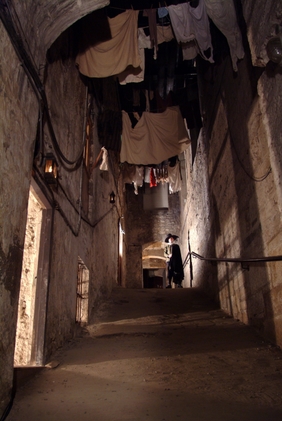
Scratching sounds from the chimney, plague victims left for dead and floating heads, the haunted underground of alleyways known as Mary King’s Close haunts under the city.
Today much of what you see of Edinburgh is an old town built on top of an even older town. Right opposite St Giles Cathedral you will find The Mary King’s Close or alleyways which are said to be haunted.
It used to be a normal street in the old town by the Royal Mile with narrow alleyways and cobbled streets. It was named after a successful business woman named Mary King working as a fabric merchant in the 1630s.
Advertisements
So first off, what is a close? A close was a private area that got locked up at night to keep unwelcomed out. The richer lived on the top floors, away from the stench of the sewer and where most light came through the claustrophobic streets.
The Plague
During the 1645 plague the city became overrun with rodents carrying diseases and it hit the Mary King’s Close pretty hard. They would hang out white sheets to show they were infected and in need of food and a plague doctor. Only the bravest plague doctors, one named Dr George Rae dared to venture into the close filled with plague ridden people.
Victims of the disease were quarantined and left for dead to die in the streets. One by one the residents either died or left the Close and were relocated to Burgh Muir, and they didn’t return until almost 40 years after the plague hit its peak. When they returned however, everything seemed to have changed. Since then there have been reports about strange things going on in the underground narrow streets.
Plague Doctor: On the 13th of June 1645, Dr George Rae was appointed as Edinburgh’s second Plague Doctor. During the plague he went around to treat the plague victims. He cut open and cleaned out the puss from the swellings caused by the bubonic plague. He would then burn the wound to catheterize it. He was considered to be one of the more successful doctors during the plague.
What was it that made people see ghosts during this time? Was it the plague victims that were left behind? Or could it be the methane gas from the polluted march right by that caused everyone to see things?
Many tell the tale that it was to cover up the corpses of the plague victims that they built another street on top of it. The true story though is that they built the new street on top of the decaying old one in the 17th century to make a place where tradesmen could be.
Advertisements
Life continued to go on underneath the surface though as not everyone wanted to leave. The last residents didn’t leave Mary King’s Close until 1902. And if we believe the legends, the last resident named Andrew Chesney never truly left as he is said to be one of the ghosts that haunts the place.
The Hauntings of The Colthearts
Back to the aftermath of the plague. Decades had passed since the plague had reached its peak and people started to return to the Mary King’s Close. But as mentioned earlier, the place had started gaining a notorious rumour of being haunted. And that was according to the residents themselves.
Claustrophobic: The narrow streets of Mary King’s close.
In 1685 a well respected lawyer named Thomas Coltheart moved into the close together with his wife. But their stay was not a happy one at all times.
The maidservant ran off claiming the house was haunted. And it was not long until Coltheart and his wife also noticed strange things. According to them when the Mrs. Coltheart sat reading her bible, she saw a head without a body float in the house, causing the wife to faint.
First, Thomas Coltheart didn’t believe her when she tried to explain. But It returned later that night with the spirit of a child and a floating severed hand beckoning them to come towards them. They tried to pray the spirits away, but to no avail.
Lastly they saw the spirit of a dog running after a ghost cat, creating a chaos of spectres and noises that night. And according to them, that was not the only time they were bothered by the spirits.
Apparently they claimed that the dog returned again and again, not leaving them in peace,
Surprisingly, the couple chose to never leave the Close and stayed there until their death. Needless to say, it turned them mad according to some sources. Or did the madness create the visions?
Abandoned Annie
One of the ghosts that are suppose to haunt the place is that of Abandoned Annie. She is the ghost of a little girl that is allegedly reaching out to grab your hand in the darkness.
She was named that by the Japanese psychic Aiko Gibo who visited the Mary King’s Close in 1992 and found the child ghost crying in a corner of a room. Aiko claimed that Annie was a plague victim who was abandoned by her parents. According to the psychic Annie wanted a doll to not feel so lonely.
Today she has her little altar in what is now known as Annie’s Room with thousands of dolls, toys and money left by her visitors. They are all collected by the city council to donate to and help sick children.
Visit the Underground
The Close was mostly forgotten after the last residents moved out and they didn’t really remember the old place until they once knocked through the walls during construction.
The place was not opened for the public until 2003, but is now perhaps more busy than it was before they closed it up. Today you can access the underground alleyways from the Royal Mile as a tourist attraction. You can now experience the uniquely preserved cobbled streets as it would have been before the 1800s.
The haunted Poveglia Island has always been a place for the unwanted. It has been a place for plague victims, a psychiatric hospital and burial ground. Today it’s known for being one of the most haunted places in the world.
Today, even fishermen avoid the Poveglia Island, not only because it is forbidden to go there. On clear days you can allegedly see skulls and bones under the surface. If a skull is caught in the fishing net, the fisherman will just dump it all back into the sea. There are no fish that are worth taking from the cursed plague island.
The Plague Island
Most of the legends started when the government closed off the whole island because of cases of the plague. There have been found numerous plague pits of dead bodies. Over the years it turned into a dumping ground of the undesired to isolate them from the rest of the population. According to locals there have been over 160 000 deaths on the island of no return. According to the legends, the ground on Poveglia Island consists of half dirt and half human ashes.
The Plague Island: Plague mask and tools for disinfecting letters discovered on Poveglia island by Theodor Weyl in 1889.
People with the plague were shipped off to this island, both the dead as well as those still alive. From 1776 it was used as a quarantine station for ships that were coming and going from Venice, although it had been used as a quarantine station way before that as well. Most notably in 1348 when Venice was hit with the Bubonic Plague, more commonly known as the Black Death. It is said you had to stay on the island for 40 days to see if you would die or survive. The word quarantine comes from the Italian quaranta, meaning 40.
The Vampires on Poveglia Island
Because of the death toll the island saw, the locals started calling it the Island of Ghosts. But it wasn’t the only fear the Venetians had of the dead that had their final resting place there. They were also afraid of Vampires living on the Poveglia Island.
When people rediscovered these mass graves of the plague pits, they noticed something strange about some of the skeletons. Some were found with large rocks between their jaws, and it is believed that the Venetians did this because they believed they were vampires.
A scientific explanation of this of course is the decomposition gasses that caused internal organs to rupture. Sometimes, blood came out from these organs and out from the dead bodies mouth. So when the Venetians opened up the plague pits to put more people into it, they were sometimes met with dead bodies with bloody mouths, looking like they had just been feasting on human flesh. That is at least what we hope happened, as the paranormal explanation is so much worse.
The Mad Doctor in the Belltower
In 1922 the whole Poveglia Island turned into an asylum to hide away the mentally ill. Because a cursed island is not complete before having operated as an asylum. The patients supposedly reported seeing ghosts of the plague victims all the time, but who would take a pshycriatic patient’s visions of ghosts seriously in an asylum?
But it wasn’t only plague victims from the past that were torturing the patients. Their doctors were as well. According to legends, there was this one doctor who took to experiment and torture his patients in the bell tower. Apparently he used to do these crude lobotomies with a hammer and a chisel into the patient’s brain.
Cursed Asylum: View of Poveglia in the Lagoon of Venice. Closeup of the Hospital and the belltower.//source//Chris 73
Exactly what happened in the bell tower with the patients, we will never really know. He himself died when he fell from that very same tower sometime in the 1930s. Some say he went mad and threw himself off, some say it was the angry spirits of those he tortured and killed who drove him to it.
The fall from the tower itself didn’t kill him immediately, but he died from the wounds not long after. Together with his victims, he now haunts Poveglia Island that no one returns from.
The mental hospital closed down in 1968 and Poveglia Island has been vacant ever since. Or has it?
The Ghost of Little Maria
Although the fishermen in the lagoon try to stay away from Poveglia Island, it is impossible not to hear the screams and the moans coming from it at times. Even the bell from the bell tower can be heard at times, even though the bell was removed from the towers years ago.
One of the more known ghosts is called ‘Little Maria’. she has been spotted on Poveglia Island for more than 400 years now and is considered to most likely have been one of the plague victims that never returned. She is forever doomed now to walk along the beach on Poveglia Island as she cries for help to get away.
The Forbidden Island
Getting there is hard as Poveglia Island is off limits and its remaining buildings in desperate need of repair. This is fuelling the legends of the island being haunted. But does anyone really want to stay on the island themselves? It is said to be a haunted place by the locals, believing that the very soil, mixed with the ashes of people laid to rest there, made the very ground cursed.
In the heart of the British countryside, the past of the plague, death and history haunts the desecrated church. But amid the mystery of the paranormal and pagan ley lines, the once cursed site has found back to being sacred.
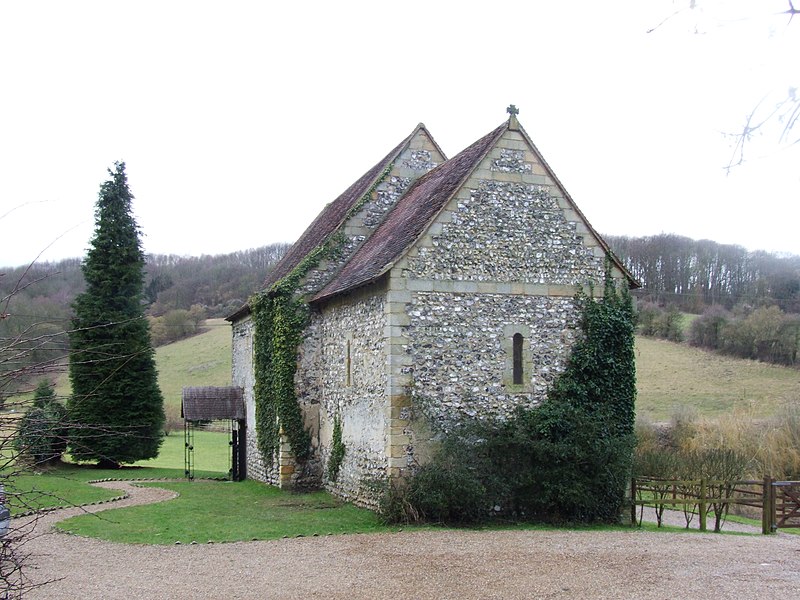
There are a lot of magical and mysterious things surrounding the church that stands in solitude in the countryside in Kent. The original building on top of the hill was built around 1100 during William the second rule. But the man made ground it was built on has perhaps been used as a holy place to gather long before Christianity reached the British shores.
Around this church there also used to be a village, alive and thriving. But together with the black death the villagers were swept away, and with them, the village of Dode died as well.
Ley Lines and Ghosts
Haunted church: Dode church was left abandoned for centuries with rumours of being haunted and used for black magic rituals. Source: Chris Whippet
All left from the lost village of Dode is the old Norman church that is said to be haunted by a little girl. This is not the only paranormal and mystical rumours surrounding this place, this particular church. The old ruins are built on not only one, but eight ley lines, mystical lines that allegedly connect several holy buildings, monuments and places around the world according to modern paganism.
The place is filled with history as archeologists have found evidence of it being inhabited since the roman empire, perhaps even much further back in time.
The church was eventually not used as a place of worship and they changed the name of the land it was built on. Because of the rumours about it being cursed, the name Holy Hill was changed to Holly Hill as no one felt the presence of anything holy there anymore, as rumours and legends of it being cursed grew.
The Dodechild
But who was this ghost said to haunt the abandoned church? Legend has it it was the last survivor of Dode village. After the Black Death in the 14th century, the village of Dode was abandoned. Nature claimed back the signs of living, leaving only the church as proof humans once lived there.
Advertisements
However, there was still one of the villagers left. A seven year old girl was one of the last survivors in the village, seeing how everyone was being taken by the plague. She took refuge inside the church, eventually dying herself, but never really leaving. And according to local legends, she would appear on the first Sunday morning of every month, haunting the grounds of were her and her entire village perished in the plague that killed millions of people across Europe.
Since the time of the plague, the village was abandoned, the church forgotten and time, weather tore down the roof, the stones taken to build a medieval church nearby. It was only known as the haunted and lost place to the locals. It was believed the place was a cursed one, and that it was used for black magic rituals. Thus the Holy Hill was renamed Holly Hill and the church boarded up, taken apart and left for centuries until someone would find the place sacred once more.
A Sacred Place for All
Wedding: The church is now used as a wedding venue for all types of ceremonies.
The church was rebuilt in the 90s after being abandoned for centuries, with the vision of bringing the holiness back to it and the work to get it back to how it would have looked originally began. With the restoration, life also came back into the hidden valley. Although this time, not a strictly catholic religious house as it used to be, but more of a sacred place for all, both for Catholics, members of the Church of England and pagans alike.
Since then it has been a venue for weddings, making it a place for eternal love declarations, bringing the serenity back over the once holy hills. Other events such as baby namings, memorials and other cultural events also takes place in it, as long it is more of a spiritual than religous event.
And with the new life that has been breathed into the valley and nearby woodland, the ghost of the little girl also has been seen less and less.
An online magazine about the paranormal, haunted and macabre. We collect the ghost stories from all around the world as well as review horror and gothic media.


 Said to haunt the area around The Hubertus Chapel in the vast Ebersberg Forest in Bavaria, Germany, the Lady in White is seeking revenge for those refusing her a ride. But is she truly the only thing haunting this old and mystic forest?
 Once, a plague ridden Lindworm was said to crawl out from the darkness, and attack the people of Munich. After defeating the dragon, and ridding themselves of the plague, a ceremonial dance has been danced through the city for over 500 years.
 Fantastical legends foretelling the Black Plague exist throughout Europe that would leave whole cities without any living. In Munich, Germany, a legend talks about a mysterious black hooded figure at the cemetery of St. Peter’s church being the omen of death.
 From the despair of a mother dying in childbirth, a blood thirsty spirit rises in her place. With her alluring appearance and ability to transform into flying entities, she is one of the feared vampires from Malay folklore.
 After being drowned in the river by Radlsteg in Munich, it is said that the ghosts of the discarded cats are still roaming and following passerby’s.
 Before their deaths, members of the royal Wittelsbach family claimed to have seen the mystical Lady in Black appearing to them. Although the woman behind the black clothing is a mystery, her message has been clear: in the soon future, you will die.
 From within the old city gate, Sendlinger Tor in Munich, it is said that the voice of the ghost is haunting its remains. If you listen carefully, it is said the laments of the man walled up inside of the gate lingers.
 Known as the last witch of Munich, Theresia Kaiser was condemned to death in 1701. Still, her legend and what happened to her accuser bares a haunted mystery of what really happened to this young teenager at trial.
 In the thick and dark jungle in the mountainous regions in Thailand, it is said something ghostly lingers. The Kong Koi ghost is said to be thirsty for travellers’ blood. But what exactly lurks behind the trees?
 Through the city gates in Munich on dark evenings, people have long talked about being chased by a ghost around the Maxtor gate and the surrounding square, only described as a fat and pale man.
 In a forest near Kemoding in Germany, the pregnant Anna Schwarzenberger was murdered. Since then, people have spoken of the White Lady of Köhlholz, who finds no peace. A cross now stands as a reminder of this event.
 As one of the shapeshifting vampiric witches of the Caribbean, the Soucouyant has been the nightmare for generations and the fear lurking in the dark.